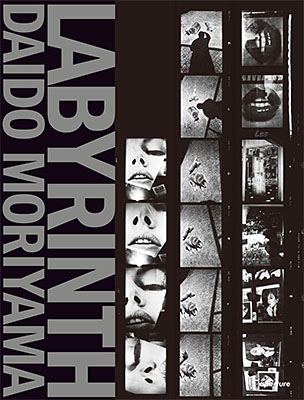
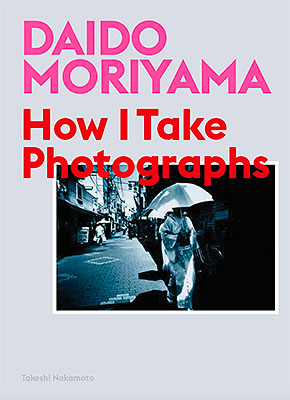
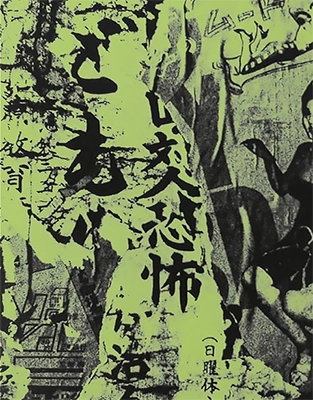
Daido Moriyama: How To Tokyo At Night immerses readers in the restless atmosphere of Tokyo after dark through the unmistakable visual language of Daido Moriyama. For decades, Moriyama has transformed the streets of Japan into a psychological landscape of movement, desire, isolation, and fleeting encounters. In this compact yet evocative publication, the celebrated photographer guides viewers through the city’s nocturnal pulse as though unfolding a cinematic journey over the course of a single wandering night.
Although the photographs span several years, the sequence of images creates the sensation of continuous motion, like fragments of an unfinished film. Neon reflections, blurred passersby, alleyways, signage, shadows, and anonymous figures emerge from the grainy darkness with an almost hallucinatory intensity. Moriyama’s signature high-contrast black-and-white aesthetic remains central to the experience, transforming ordinary streets into emotionally charged spaces where beauty and disquiet coexist. His camera drifts through entertainment districts, side streets, and hidden corners of the city with the instinct of both observer and participant.
Since emerging as a leading voice of postwar Japanese photography during the late 1960s, Moriyama develops a visual language rooted in spontaneity and fragmentation. Influenced by underground culture, cinema, and the rapid urbanization of Japan, his work rejects polished composition in favor of raw immediacy. The rough textures, blurred forms, and stark contrasts found throughout How To Tokyo At Night reflect this enduring philosophy, where photography becomes less about documentation and more about sensation, memory, and perception.
Produced in a limited edition of five hundred copies, the book itself carries the tactile qualities associated with carefully crafted artist publications. Printed in rich duotone on matte art paper and bound with silkscreen-printed boards, it echoes Moriyama’s long-standing interest in the physicality of the photographic image. Published alongside his exhibition at POST in Tokyo, How To Tokyo At Night stands as both an object and an experience—an invitation to wander through the luminous and unstable terrain of one of photography’s most enduring urban visions.
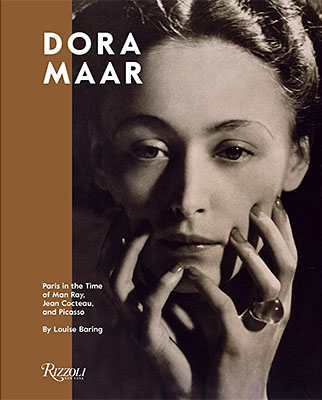
For the first time, a comprehensive exploration of Dora Maar’s enigmatic photography reveals her as an extraordinary and influential artist in her own right.
Dora Maar (born Henriette Théodora Markovitch, 1907–1997) was active at the height of Surrealism in France. She was recognized as a key member of the movement and maintained professional relationships with many of its prominent figures, such as André Breton, Brassaï, Henri Cartier-Bresson, and Man Ray. However, her standing as the one-time muse and mistress of Pablo Picasso—his famous “Weeping Woman”— has long eclipsed her creative output and minimized her influence.
Richly illustrated with 240 key works showcasing Maar’s inimitable acumen as a photographer, this book examines the full arc of her career for the very first time. Subjects include her innovative commercial and fashion photography, approach to the nude and eroticism, engagement with political groups, interest in socially concerned photography, affiliation with the Surrealist movement, and hitherto unknown work from her reclusive late career, providing a dynamic and multifaceted examination of an important artist.
This volume is published to accompany an exhibition on view at the Centre Pompidou Paris, France June 5 to July 29, 2019; the Tate Modern London, United Kingdom November 19, 2019, to March 15, 2020; and the J. Paul Getty Museum at the Getty Center April 21 to July 26, 2020.
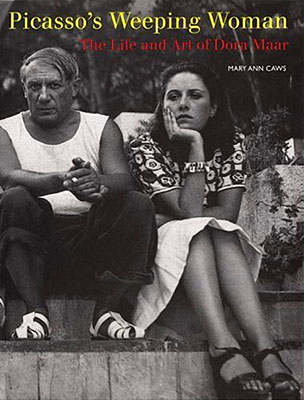
An exquisite volume on the beautiful, talented, and mysterious Dora Maar, showcasing her Surrealist photography, her life with Pablo Picasso, and her friendships with Surrealists in 1930s Paris.
Highly regarded as a Surrealist photographer in the 1930s, Dora Maar was a fellow student with Henri Cartier-Bresson and friends with Brassaï, Man Ray, Jean Cocteau, and André Breton, the charismatic leader of the Surrealists.
When Maar met Picasso in the mid-1930s, she became the most influential of his many muses, inspiring much of what is considered to be his best work. But during the ten years they were together, she abandoned her career as an acclaimed professional photographer and instead photographed Picasso, including her famous series of him painting Guernica.
While Maar was considered an influential Surrealist photographer, most of her work vanished from the public eye once she stopped creating it in the late 1930s. Now, this volume restores her photographs to their place in history, featuring a treasure trove of incredible and never-before-published images.
An important look at Surrealist photography, Dora Maar is also beautifully illustrated with photographs celebrating Maar’s friendships with leading artists and intellectuals of the day, such as Georges Bataille (Maar’s former lover), glamorous Nusch Éluard and her husband, the poet Paul Éluard, and arts patron and hostess Marie-Laure de Noailles, evoking the atmosphere of 1930s and ’40s artistic Paris.
Brings together the work of the surrealist photographer and artist while documenting her seven-year affair with Pablo Picasso, and considers her role as a friend and sexually unconventional woman.
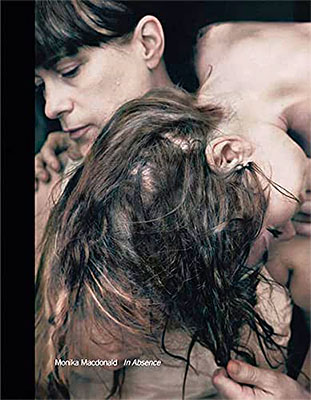
"I am not so fond of the idea of taking pictures. But I always return to it. The sense of getting close to something that has no words. This is why I continue. I balance between different worlds that I am trying to relate to. My pictures are memories. To have access to the feeling of solitude and vulnerability. To be allowed beyond sanity, far away from what is called reality." -- Monika Macdonald
The women portrayed in In Absence, have one thing in common: Their need to continue to live the solitary life and the intimate search for their own identity. Monika Macdonald's own words perfectly set the tone for experiencing the images included in In Absence. She says, 'there is a kind of erotic magnetism emanating from the people portrayed, rather than originating in the eye of the beholder. Instead of enticing interaction, it is an invitation to peek into a private world.' Here, through tender touches between people to moments of intimacy experienced between one person and their own thoughts, the theme of privacy is explored.
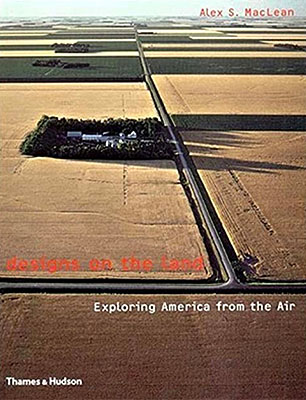
The tradition of aerial photography arose from a keen nineteenth-century desire to see "the world in motion." Starting with Nadar's photographic balloon trips, airborne experimentation with landscapes and cityscapes continued through great photographers from Steichen to Burkhardt.
With Alex MacLean, we enter a different world. For thirty years, this committed photographer has portrayed the history and evolution of the American land, from great desert spaces to agricultural patterns to city grids. A trained architect who is closely involved in landscape heritage protection issues, MacLean has set out to create a series of pictures that show and explain the universal history of town and countryside. What he has to say maybe invigorating or alarming, but it always raises the issue of the landscape's future.
This new collection of exemplary photographs taken across the American landscape reflects MacLean's passionate interest in the effects of time, geological movements, shifting landscapes, redeployment, pollution, urban sprawl, and the overlapping of surfaces and activities. More than 400 color photographs reveal in a unique way the physical splendor of America: both the beauty of the ongoing inhabiting of the land and the potential for modern planning to create spectacular environments.
The rise in sea level is a visible and remorseless indicator of global warming, the consequences of which can be experienced worldwide – in contrast to other effects of climate change that are not yet noticeable at a larger scale.
The book illustrates, in an impressive way, the ecological, commercial, and social impact associated with the rise in sea levels, taking the examples of the American East Coast and the Gulf of Mexico: the author has documented this region from his Cessna between 2005 and 2018 using large-format aerial photography. The pictures illustrate the different conditions of the areas documented at different times of the year, before and after major weather events, and thereby provide evidence of how dramatically the geography and landscape are altered due to climate change.
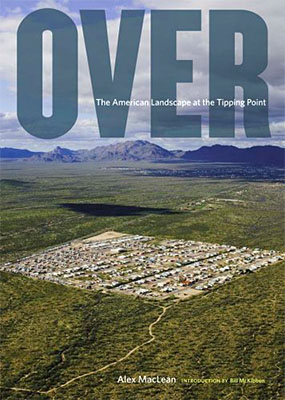
For more than 30 years, Alex MacLean's aerial photographs have captured the evolution of the American landscape and the complex relationship between its natural and constructed environments that contribute to climate change. Over: The American Landscape at the Tipping Point is an ambitious and visually breathtaking catalogue of the extraordinary patterns and profound physical consequences brought about by natural processes and human intervention.
The book allows readers to visualize climate change and our culture's excessive use of resources and energy, which account for our oversized carbon footprint. It demonstrates the extent to which the human ecosystem, and our economic and social well being, are dependant upon our wise use of land and its resources. Over is divided into sections covering such as Atmosphere; Way of Life; Automobile Dependency; Electricity Generation; Deserts; Water Use; Sea-Level Rise; Waste and Recycling; and Urbanism. MacLean's powerful photographs and insightful text make it clear that maintenance of the current American lifestyle is incompatible with a planet of diminishing natural resources and a finite atmosphere. Over compels us all to reconsider our basic assumptions about how we live, work, and play, and reveals that, while the challenges we face today are not insurmountable, the future depends on our collective vision, passion, and commitment.
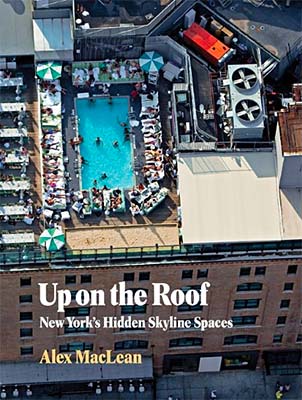
Pilot and photographer Alex MacLean has flown his plane over large areas of the United States, documenting the landscape from beautiful agricultural patterns to geometric city grids. In his new book, he directs his lens at the rooftops of New York City, showing the great complexity and life of the roofs of New York's buildings.
Depicting not only the city's famous water towers, but pools, tennis courts, gardens, sunbathers, art, and restaurants up in the air, MacLean's powerful images give readers a glimpse of a part of the city that usually remains hidden. His photographs leave little doubt about New York City's "green" potential and the belief that improved outdoor spaces above lead to more livable cities below. Maps and captions help the reader to easily locate the photographs, and an essay by Robert Campbell puts MacLean's work into context. Whether you are new to the city native born, this fascinating look at hidden New York will be a revelation.
From portraits of craftsmen in action to Tokyo nightlife: a decade of photography by Michael Magers.
New York–based photographer and journalist Michael Magers (born 1976) travels the world taking photographs for Time, Vogue Italia and Huck magazine. Independent Mysteries, Magers' first photobook, collects his photographs from the past decade, from places such as Japan, Cuba and Haiti. Over the years, Magers has shot subjects ranging from the nightlife of the world's cities, craftspeople at their work and the intimacy of the bedroom. His photographs each demonstrate a master's approach to craft, eschewing showy flourishes for the detail that unites the work. For example, in a portrait of the tattoo artist Horiren 1st contemplating her work on a customer's back, the room goes out of focus, the tools of her work legible yet fuzzy in comparison to the sharp focus on the ends of their use.
This volume contains contributions by past collaborators such as Cage the Elephant's Matthew Schultz, Matthew Goulding, author of the Eat This, Not That columns and books, photographer Larry Fink and others.
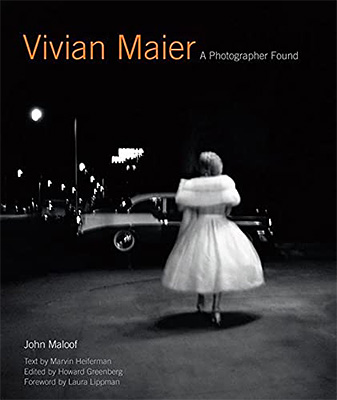
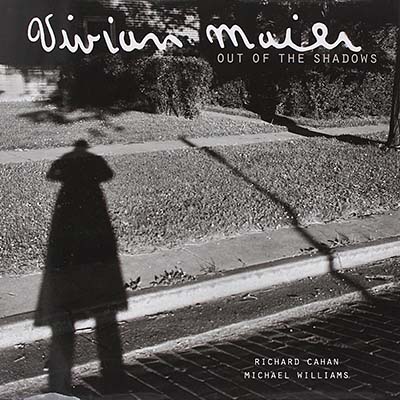
The definitive monograph of American photographer Vivian Maier, exploring the full range and brilliance of her work and the mystery of her life, written and edited by noted photography curator and writer Marvin Heiferman; featuring 250 black-and-white images, color work, and other materials never seen before; and a foreword by New York Times bestselling author Laura Lippman.
Vivian Maier's story-the secretive nanny-photographer during her life who becomes a popular sensation shortly after her death-has, to date, been pieced together only from previously seen or known images she made and the handful of facts that have surfaced about her life. During her lifetime she shot more than 100,000 images, which she kept hidden from the world. In 2007, two years before her death, Chicago historic preservationist John Maloof discovered a trove of negatives, and roll upon roll of undeveloped film in a storage locker he bought at auction. They revealed a surprising and accomplished artist and a stunning body of work, which Maloof championed and brought to worldwide acclaim.
Vivian Maier presents the most comprehensive collection and largest selection of the photographer's work-created during the 1950s through the 1970s in New York, Chicago, and on her travels around the country-almost exclusively unpublished and including her previously unknown color work. It features images of and excerpts from Maier's personal artifacts, memorabilia, and audiotapes, made available for the first time. This remarkable volume draws upon recently conducted interviews with people who knew Maier, which shed new light on Maier's photographic skill and her life.
Presenting her breathtaking photographs alongside revealing interviews with those who knew her best, this volume is the first attempt to put Vivian Maier's work in context and create a moving portrait of her as an artist. Though she created more than 120,000 negatives during her lifetime, only a few were ever seen by others.
Shortly after her death in 2009, the first group of her unseen photographs--gritty with humanity and filled with empathy and beauty--were shown online. What followed was a firestorm of attention, catapulting Maier from previous obscurity to being labeled as one of the masters of street photography. Her work has appeared in numerous museum exhibits and a feature-length documentary on her life and art has already been planned. Features more than 300 duotone photos printed on 105# paper with flood varnish.
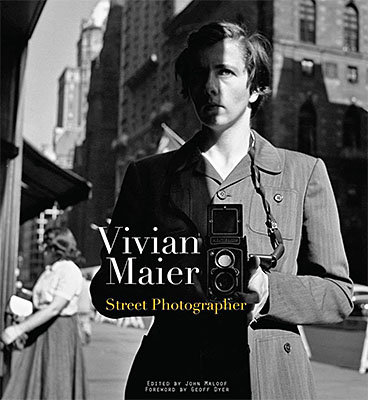
A good street photographer must be possessed of many talents: an eye for detail, light, and composition; impeccable timing; a populist or humanitarian outlook; and a tireless ability to constantly shoot, shoot, shoot, shoot and never miss a moment. It is hard enough to find these qualities in trained photographers with the benefit of schooling and mentors and a community of fellow artists and aficionados supporting and rewarding their efforts.
It is incredibly rare to find it in someone with no formal training and no network of peers. Yet Vivian Maier is all of these things, a professional nanny, who from the 1950s until the 1990s took over 100,000 photographs worldwide-from France to New York City to Chicago and dozens of other countries-and yet showed the results to no one. The photos are amazing both for the breadth of the work and for the high quality of the humorous, moving, beautiful, and raw images of all facets of city life in America's post-war golden age. It wasn't until local historian John Maloof purchased a box of Maier's negatives from a Chicago auction house and began collecting and championing her marvelous work just a few years ago that any of it saw the light of day.
Presented here for the first time in print, Vivian Maier: Street Photographer collects the best of her incredible, unseen body of work.
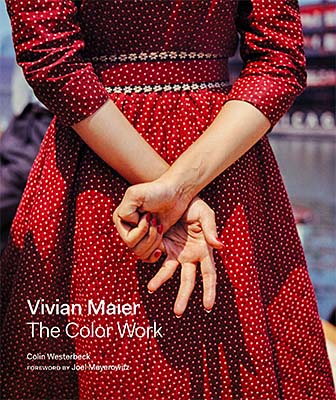
The first definitive monograph of color photographs by American street photographer Vivian Maier.
Photographer Vivian Maier's allure endures even though many details of her life continue to remain a mystery. Her story-the secretive nanny-photographer who became a pioneer photographer-has only been pieced together from the thousands of images she made and the handful of facts that have surfaced about her life. Vivian Maier: The Color Work is the largest and most highly curated published collection of Maier's full-color photographs to date.
With a foreword by world-renowned photographer Joel Meyerowitz and text by curator Colin Westerbeck, this definitive volume sheds light on the nature of Maier's color images, examining them within the context of her black-and-white work as well as the images of street photographers with whom she clearly had kinship, like Eugene Atget and Lee Friedlander. With more than 150 color photographs, most of which have never been published in book form, this collection of images deepens our understanding of Maier, as its immediacy demonstrates how keen she was to record and present her interpretation of the world around her.
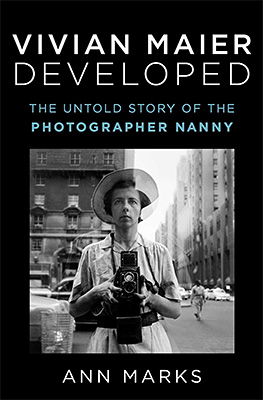
The definitive biography that unlocks the remarkable story of Vivian Maier, the nanny who lived secretly as a world-class photographer, featuring nearly 400 of her images, many never seen before, placed for the first time in the context of her life.
Vivian Maier, the photographer nanny whose work was famously discovered in a Chicago storage locker, captured the imagination of the world with her masterful images and mysterious life. Before posthumously skyrocketing to global fame, she had so deeply buried her past that even the families she lived with knew little about her. No one could relay where she was born or raised, if she had parents or siblings, if she enjoyed personal relationships, why she took photographs and why she didn’t share them with others. Now, in this definitive biography, Ann Marks uses her complete access to Vivian’s personal records and archive of 140,000 photographs to reveal the full story of her extraordinary life.
Based on meticulous investigative research, Vivian Maier Developed reveals the story of a woman who fled from a family with a hidden history of illegitimacy, bigamy, parental rejection, substance abuse, violence, and mental illness to live life on her own terms. Left with a limited ability to disclose feelings and form relationships, she expressed herself through photography, creating a secret portfolio of pictures teeming with emotion, authenticity, and humanity. With limitless resilience she knocked down every obstacle in her way, determined to improve her lot in life and that of others by tirelessly advocating for the rights of workers, women, African Americans, and Native Americans. No one knew that behind the detached veneer was a profoundly intelligent, empathetic, and inspired woman—a woman so creatively gifted that her body of work would become one of the greatest photographic discoveries of the century.
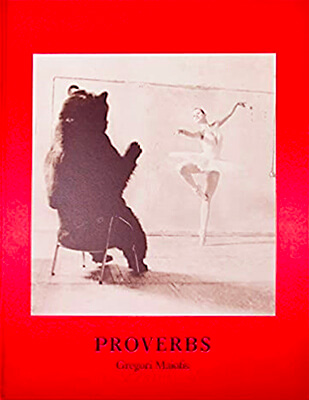
'Proverbs' is an ongoing series of photographs in which the artist focuses on universal truths. Using trained circus animals in many of his images from a gargantuan brown bear to monkeys, dogs, lions and most recently, elephants in settings absent of artifacts or other cultural information, Maiofis offers visually poignant, strike to the heart-of-the-matter images. (His latest work, Closed Mouth Catches No Flies, was an image that Maiofis had visualized very early on, but it wasn t until years later that he finally met a lion tamer who, as part of his performance, actually puts his head in the mouth of a lion.)
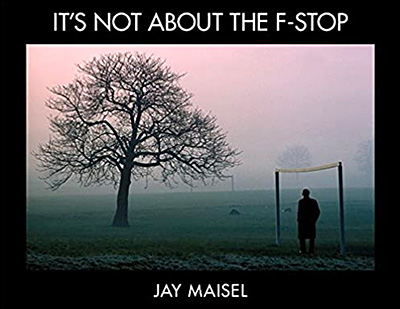
Jay Maisel has been hailed as one of the most brilliant and gifted photographers of all time. But he is also much more than that&;he is a mentor, teacher, and trailblazer to many photographers, and a hero to those who feel Jay&;s teaching has changed the way they see and create their own photography. He is a living legend whose work is studied around the world, and whose teaching style and presentation garner standing ovations and critical acclaim every time he takes the stage.
In his first educational book, Light, Gesture, and Color, Jay put his amazing insights and learning moments from a lifetime behind the lens into a book that communicated the three most important aspects of street photography: light, gesture, and color. Here, in It&;s Not About the F-Stop, Jay builds on that success to take you beyond the buttons and dials on your camera to continue to teach you how to &;see&; like a photographer, and how to capture the world around you in a way that delights, intrigues, and challenges the viewer. Each page unveils something new and inspires you to rethink everything you know about the bigger picture of photography. This isn&;t a book about f-stops or ISOs. It&;s about seeing. And nobody communicates this, visually or through the written word, like Jay Maisel.
A master photographer's love affair with his home city.
New York has been the subject for countless photographs. But few have had a feel for the city that Jay Maisel has.
Jay has been photographing New York since the '50s. His home is located far downtown, but he has shot every part of the city -- from street level, looking down from rooftops and bridges. His aerial shots are moody, poetic, amazing by turns.
This book is filled with spectacular sights -- marathon runners on bridges, sunlight and moonlight reflecting off mirror walls onto the river, the awesome mass of skyscrapers bunched against blue skies. It's also about New York's people. It has the most surprising faces and details you'll see in any book about cities, gleaned from a lifetime of being on the scene.
Jay Maisel, hailed as one of the most brilliant, gifted photographers of all time, is much more than that. He is a mentor, teacher, and trailblazer to many photographers, and a hero to those who feel Jay’s teaching has changed the way they see and create their own photography. He is a living legend whose work is studied around the world, and whose teaching style and presentation garner standing ovations and critical acclaim every time he takes the stage.
Now, for the first time ever, Jay puts his amazing insights and learning moments from a lifetime behind the lens into a book that communicates the three most important aspects of street photography: light, gesture, and color. Each page unveils something new and challenges you to rethink everything you know about the bigger picture of photography. This isn’t a book about f-stops or ISOs. It’s about seeing. It’s about being surrounded by the ordinary and learning how to find the extraordinary. It’s about training your mind, and your eyes, to see and capture the world in a way that delights, engages, and captivates your viewers, and there is nobody that communicates this, visually or through the written word, like Jay Maisel.
Light, Gesture & Color is the seminal work of one of the true photographic geniuses of our time, and it can be your key to opening another level of understanding, appreciation, wonder, and creativity as you learn to express yourself, and your view of the world, through your camera. If you’re ready to break through the barriers that have held your photography back and that have kept you from making the types of images you’ve always dreamed of, and you’re ready to learn what photography is really about, you’re holding the key in your hands at this very moment.
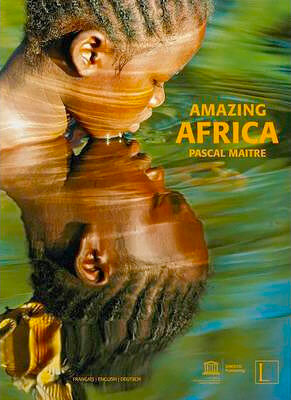
For 30 years and with deep journalistic passion, French photographer Pascal Maitre has put Africa, this most exciting continent, on his agenda. His watchful and incorruptible eye has found fascinating, captivating images in places where political and social upheaval have shaken the world.
The pictures were published in prestigious magazines such as 'GEO', 'Paris Match', 'L'Express', 'Stern' and 'National Geographic'. Maitre's subtle use of angle, light, contrast and colour documents Africa touchingly, full of magic and fascination, with a deep respect for the African people.
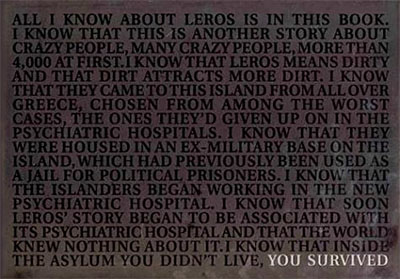
The Greek island of Leros was for 20 years and more the site of the world's most notorious and brutal asylum for the insane. The Magnum photographer Alex Majoli has chronicled its inmates and their return to a sane world and integration into society, the work of the famed Italian psychiatrist Franco Basaglia.
Leros raises a number of questions. How could such a regime have existed? And how could anyone have survived it? This book was given the Judges' Special Recognition in the best books category of the International Pictures of the Year Awards 2003 and included in the PDN Photography Annual 2003 in the best books category.
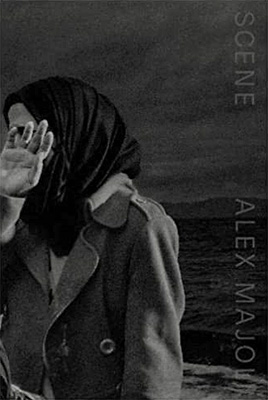
This photographic story is a personal exploration of loss, separation, heaven and hell. Inspired by Pirandellos play Six Characters in Search of an Author , Majoli elaborates on the notion that we are all actors of life.
Divided into three chapters; chapter one, Persona, consists of individual black and white photographic portraits, whilst chapter two, Libera Me, is a surrealist composition of Latvian landscapes, with which Majoli explores the idea of paradise. The third chapter, Lacrimosa, is in colour, and emerges from Majolis exploration of the memorials of the genocide in Rwanda, and their associations with the idea of hell.
This large format book focuses on the first chapter, Persona. In the twenty portraits only the face is visible, lit with a light that always shines from above, as if it were a divine light. Dramatic in nature, they suggest the notion of judgement, the question of what awaits us after we die and the idea that we are all going to be judged on the day of our death.
For eight years and across several continents, Alex Majoli has been photographing events and non-events. Political demonstrations, humanitarian emergencies, and quiet moments of everyday life. What holds all these images together is a sense of theatre. A sense that we are all actors, all playing the parts that history and circumstance demand of us. Majoli’s photographs result from his own performance. Entering a situation, he and his assistants slowly go about setting up a camera and lights. This activity is a kind of spectacle in itself, observed by those who will eventually be photographed. Majoli begins to shoot, offering no direction to the people before his camera. This might happen over twenty minutes. It might be an hour or so.
Perhaps the people adjust their actions in anticipation of the image to come. Perhaps they refine their gestures in self-consciousness. Perhaps they do not. The representation of drama and the drama of representation become one. The camera flash is instantaneous and much stronger than daylight. But all this light plunges the world into night, or moonlight. The world appears as an illuminated stage. Everything seems to be happening at the end of the day. Just when the world should be sleeping, it offers a heightened performance of itself.
We never really see people or places: we see the light they reflect. And the quality of that light affects how we understand them.
Internationally renowned photographer Christopher Makos compiles here the finest of his black and white photography. With startling innovation and an eye for the cutting edge, Makos has made an extraordinary contribution to modern photography, continuously pushing the boundaries of his medium.
Everything: The Black and White Monograph celebrates the work and influence of the man Andy Warhol called "the most modern photographer in America." Everything is a comprehensive survey of Mako's photographic work from 1973 to the present. As Peter Wise writes, it is a collection of images "so distinctly of a particular moment that a whole context is encapsulated" that communicate "something singular about a cultural moment."
This compilation, the first volume in a projected series, is unbound by "categories, themes, or specific subject matter." Instead, it serves as a period piece, a vision of a particular time and place assembled by the man Doston Rader says is "widely considered the most important and gifted photographer of his generation."
In Gray Malin: Dogs, the New York Times bestselling author and fine-art photographer captures the world's chicest canines in a delightfully playful series of photographs
In this collection of work, Gray Malin captures the adorable, the pampered, the well-dressed, and the glamorous pooches from Beverly Hills to London to New York City to Paris.
With poodles sunbathing in Palm Beach to Bernese mountain dogs perfectly perched on Aspen chairlifts, this book is filled with whimsical joy and the universal love of dogs
This never‑before‑published collection includes stunning images from the following stylish locations:
* Beverly Hills Hotel,
* New York City,
* Aspen,
* The Parker Hotel,
* Nantucket,
* Palm Beach,
* San Diego,
* Paris
* London
* Boston
* Santa Barbara
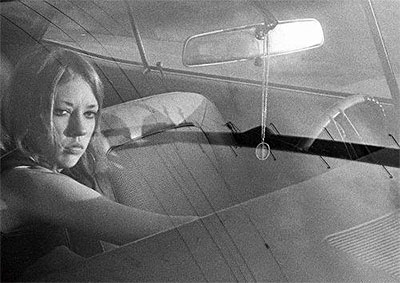
Mike Mandel grew up in the San Fernando Valley, and as an kid in the 1950s could walk just about everywhere he needed to go: to school, or later down the street to the open field to collect rocks or catch lizards.
All of his friends lived on his block, so he didn’t think too much about the time he spent in a car. But by the time he reached twenty in 1970, he realised how large a role the car would play in his life, and so began to photograph the inhabitants of 1970s California in their cars.
Sumptuous photograms and more investigating the formal properties of the natural world.
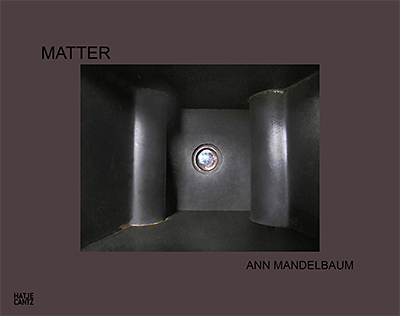
This fourth monograph on the New York– and Costa Rica–based photographer, sculptor and video artist Ann Mandelbaum (born 1945) presents both analog black-and-white work from 1990 to 2000 and also digital color images from 2007 to the present. None of the 100 works published here have been exhibited or published previously.
The 35-year span of the volume reveals Mandelbaum’s consistent obsession with the organic world, processed at first through the depths of the darkroom and subsequently on the digital screen. Her techniques draw on the history of photographic innovation, including the photogram and multiple printing. Throughout, Surrealist photographic vocabularies deploying sculpture, collage and the language of drawing can be detected.
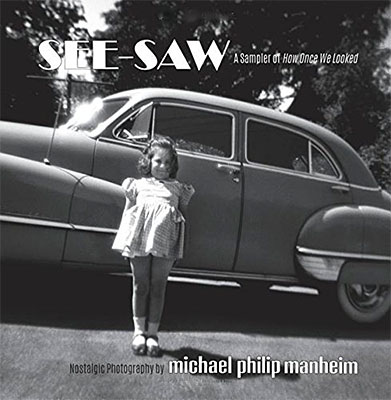
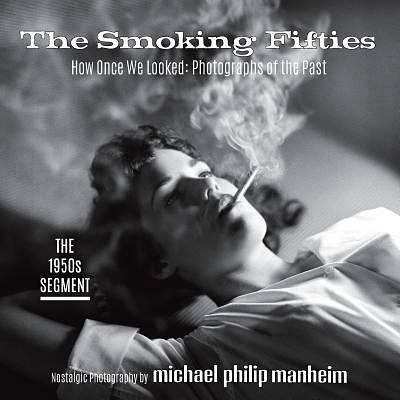
I've been told today that my files are a treasure trove, so I’m going back into the archives to see what I saw long ago. First up is this sampling of my documentary photography, a nostalgic collection of How Once We Looked. I’ve selected images that seem memorable, from the perspective of a life spent pursuing my passion.
The years following World War II represented a turning point, both historically and personally, for a talented young photographer growing up in small-town Ohio. This collection of black and white photos from the archives of Michael Philip Manheim presents small-town life in the 1950s, as well as the start of his documentary vision.
Manheim’s own lucid commentary on the era accompanies the images. With sympathetic but unsentimental attention, he documents the fascinating details of street scenes, dress and customs, faces and emotions of the era. These photographs allow the viewer to enter a different world, familiar to some and new to others. Some will react with a strong sense of nostalgia. For those who did not live through that period, the photos will enable a greater understanding of a time that was simpler, but had its own complications and prejudices.
In capturing the small, vital moments of an America that was struggling to find itself after the upheaval of a world war, Manheim has also depicted the beginnings of his own personal growth as an artist.
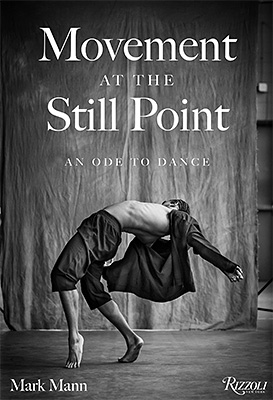
enowned portrait photographer Mark Mann documents an impressive host of dancers—their eloquent bodies in posed tranquility and vibrant motion—representing years of excellence and varied disciplines of the art form.
A celebration of the strength and emotive ability of dancers, this book is a collection of images that captures the dynamism and energy of the mediums of both dance and photography. In homage to Mann’s hero Irving Penn, he installed a backdrop of old monochromatic muslin. Dancers from many genres—ballet, jazz, African, tap, Broadway theater, hip-hop, ballroom—perform and discuss their passions about the art form in this stark environment.
Mann captures the humanity and spontaneity of principal and lead dancers from the Alvin Ailey American Dance Theater, American Ballet Theatre, Martha Graham Dance Company, New York City Ballet, and many other troupes. Subjects include dance personalities Misty Copeland, Carmen de Lavallade, Tiler Peck, Chita Rivera, James Whiteside, Omari Wiles, Xin Ying, and many others.
As a photographer, Mann is used to working hard at making something happen in his images; here, he has taken a slightly more passive role, witnessing and capturing the expressive and talented subjects that take control of each frame. This book is a testament to the emotional and physical power of each dancer, in stillness and in motion.
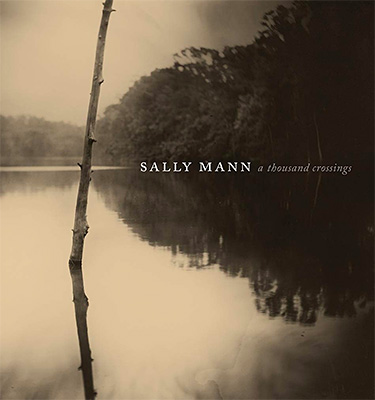
For more than 40 years, Sally Mann (b. 1951) has made experimental, elegiac, and hauntingly beautiful photographs that explore the overarching themes of existence: memory, desire, death, the bonds of family, and nature's magisterial indifference to human endeavor.
What unites this broad body of work-portraits, still lifes, landscapes, and other studies-is that it is all "bred of a place," the American South. Mann, who is a native of Lexington, Virginia, uses her deep love of her homeland and her knowledge of its historically fraught heritage to ask powerful, provocative questions-about history, identity, race, and religion-that reverberate across geographic and national boundaries.
Organized into five sections-Family, The Land, Last Measure, Abide with Me, and What Remains-and including many works not previously exhibited or published, Sally Mann: A Thousand Crossings is a sweeping overview of Mann's artistic achievements.
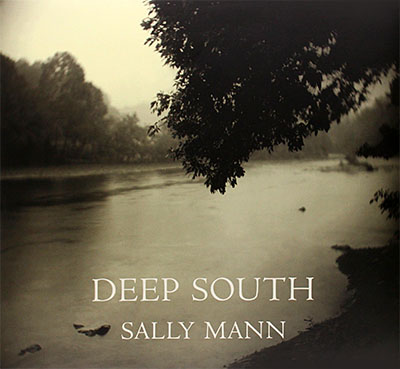
The photographs in DEEP SOUTH, many produced with the 19th-century collodion process and a variety of toning techniques, capture what Mann calls the "radical light of the American South." Borrowing methods favored by early masters of landscape photography, Mann bends classic craftsmanship to serve the expressive needs of a heightened contemporary sensibility.
Serendipitous technical imperfections, such as light leaks or scratches on negatives, echo the accidental, chaotic workings of time. From ghostly images of historic battlefields to painterly visions of Louisiana, Mississippi, Georgia, and her native Virginia, Mann's landscape photographs transport the viewer to another time and place.
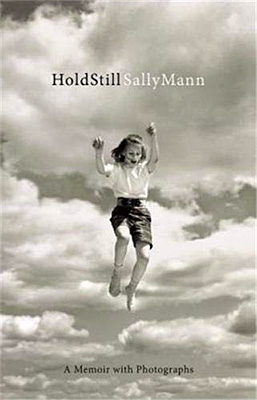
In this groundbreaking book, a unique interplay of narrative and image, Mann's preoccupation with family, race, mortality, and the storied landscape of the American South are revealed as almost genetically predetermined, written into her DNA by the family history that precedes her.
Sorting through boxes of family papers and yellowed photographs she finds more than she bargained for: "deceit and scandal, alcohol, domestic abuse, car crashes, bogeymen, clandestine affairs, dearly loved and disputed family land . . . racial complications, vast sums of money made and lost, the return of the prodigal son, and maybe even bloody murder."
In lyrical prose and startlingly revealing photographs, she crafts a totally original form of personal history that has the page-turning drama of a great novel but is firmly rooted in the fertile soil of her own life.
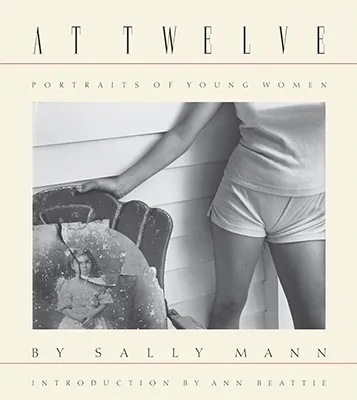
First published by Aperture in 1988, At Twelve: Portraits of Young Women is a groundbreaking classic by one of photography’s most renowned artists. Aperture is reoriginating it in a masterful facsimile edition that retains the spirit of the original.
At Twelve is Sally Mann’s revealing, collective portrait of twelve-year-old girls on the verge of adulthood. To be young and female in America is a time of tremendous excitement and social possibilities; it is a trying time as well, caught between childhood and adulthood, when the difference is not entirely understood. As Ann Beattie writes in her perceptive introduction, “These girls still exist in an innocent world in which a pose is only a pose—what adults make of that pose may be the issue.” The consequences of this misunderstanding can be real: destitution, abuse, unwanted pregnancy. The young women in Mann’s unflinching, large-format photographs, however, are not victims. They return the viewer’s gaze with a disturbing equanimity. Poet Jonathan Williams writes, “Sally Mann’s girls are the ones who do the hard looking in At Twelve—be up to it!”
This reissue of At Twelve has been printed using new scans and separations from Mann’s prints, which were taken with an 8-by-10-inch view camera, rendering them with a freshness and sumptuousness true to the original edition.
First published in 1992, Immediate Family has been lauded by critics as one of the great photography books of our time, and among the most influential. Taken against the Arcadian backdrop of her woodland summer home in Virginia, Sally Mann's extraordinary, intimate photographs of her children reveal truths that embody the individuality of her own family yet ultimately take on a universal quality.
With sublime dignity, acute wit and feral grace, Sally Mann's pictures explore the eternal struggle between the child's simultaneous dependence and quest for autonomy--the holding on and the breaking away. This is the stuff of which Greek dramas are made: impatience, terror, self-discovery, self-doubt, pain, vulnerability, role-playing and a sense of immortality, all of which converge in these astonishing photographs. This reissue of Immediate Family has been printed using new scans and separations from Mann's original prints, which were taken with an 8 x 10-inch view camera, rendering them with a freshness and sumptuousness true to the original edition.
Sorting through boxes of family papers and yellowed photographs she finds more than she bargained for: "deceit and scandal, alcohol, domestic abuse, car crashes, bogeymen, clandestine affairs, dearly loved and disputed family land... racial complications, vast sums of money made and lost, the return of the prodigal son, and maybe even bloody murder."
In lyrical prose and startlingly revealing photographs, she crafts a totally original form of personal history that has the page-turning drama of a great novel but is firmly rooted in the fertile soil of her own life.
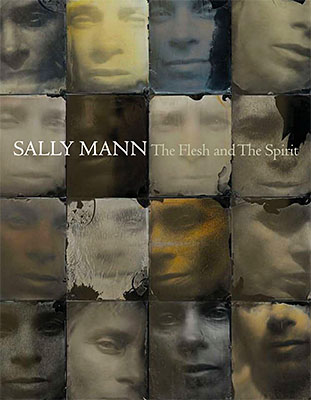
Sally Mann: The Flesh and The Spirit is the first in-depth exploration of this world-renowned artist's approach to the body. Throughout her career, Mann has fearlessly pushed her exploration of the human form, tackling often difficult subject matter and making unapologetically sensual images that are simultaneously bold and lyrical.
This beautifully produced publication includes Mann's earliest platinum prints from the late 1970s, Polaroid still lifes, early color work of her children, haunting landscape images, recent self-portraits and nude studies of her husband. These series document Mann's interest in the body as principal subject, with the associated issues of vulnerability and mortality lending an elegiac note to her images. In bringing them together, author and curator John Ravenal examines the varied ways in which Mann's experimental approach, including ambrotypes and gelatin-silver prints made from collodian wet-plate negatives, moves her subjects from the corporeal to the ethereal.
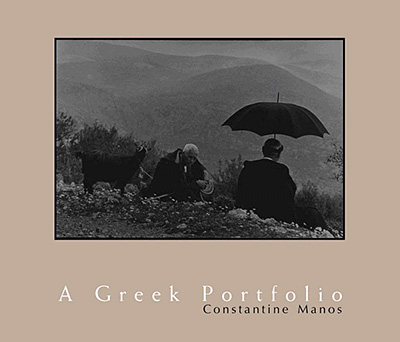
With its poignant and indelible images of Greece and its people, this is one of the all-time classic photo collections, and among the most memorable portraits of the country ever presented.
In the early 1960s, Constantine Manos spent three years living in Greece and working as a photographer under the auspices of the prestigious agency Magnum Photos. A Greek Portfolio represents an impromptu pictorial account of Manos's travels through rural Greece and the Greek islands. The strength of these black-and-white duotone images, taken in small country villages and on secluded farms, lies in their portrayal of a way of life that had remained virtually unchanged for centuries before finally being overtaken by the modern world-a way of life that may strike viewers as at once humble and exalted in its quiet dignity and beauty.
A Greek Portfolio was first published in 1972; the limited first edition has since become a much sought-after collector's item. Upon publication, the work received awards at Arles and at the Leipzig Book Fair. This new edition has been enhanced through the addition of eight previously unpublished images and a new foreword.
Images from this work are in the permanent collections of the Museum of Modern Art in New York, the Art Institute of Chicago, and the Bibliotheque Nationale in Paris.
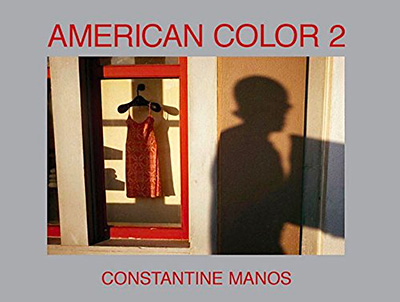
The long-awaited continuation of the celebrated collection American Color.
In this brilliant new work, Magnum photographer Constantine Manos continues his exploration of the dynamic intersection between subject and time, the real and the surreal in American towns. From Santa Monica to New York City, Manos has captured the varied spectrum of contemporary life in all its offbeat and charming strangeness. 131 four-color photographs
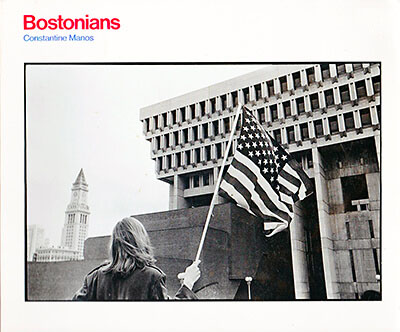
“To photograph the people of a great city is at once an awesome undertaking and a pleasant one,” writes Constantine Manos in the preface to his book, Bostonians.
This beautiful monograph, published in 1975, is one of the most varied and intimate portraits of the people of Boston. Manos depicts people of all walks of life, living in this famed American city on the crossroads of the Old World and the New. Senior citizens congregate around Jamaica Pond, parade goers observe the Columbus Day festivities, Irish families supporting the I.R.A, and high school marching bands at practice are a small number of the images collected. Manos captures old and young, black, white, Hispanic, rich and poor; in short, the real and diverse inhabitants of Boston.
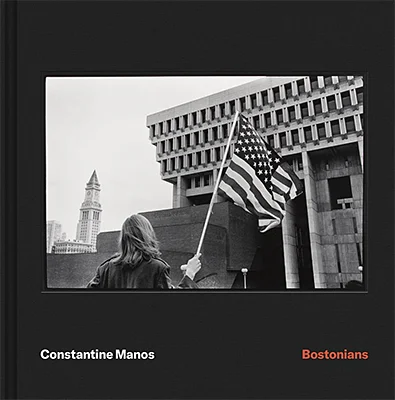
Constantine Manos: Bostonians returns to a pivotal body of work that captures a city in motion, poised between commemoration and upheaval. Created in the mid-1970s, at the time of the United States Bicentennial, Manos’ photographs trace the rhythms of Boston as it navigates a period marked by both civic pride and deep social tension. Commissioned for the exhibition Where’s Boston?, the project unfolds over several months, during which Manos moves through streets, homes, and public spaces with a restless and attentive eye. His images form a layered portrait of a city defined as much by its divisions as by its shared sense of place.
Working in color, Manos brings a vivid immediacy to everyday scenes. Crowded sidewalks, neighborhood gatherings, and fleeting street encounters reveal a complex urban fabric shaped by class, race, and generational change. The photographs do not isolate monumental events but instead embed them within the flow of daily life. Moments of protest, including demonstrations against school busing and broader struggles for civil rights and labor equity, appear alongside scenes of leisure and routine. This juxtaposition underscores the tensions that run beneath the surface, suggesting a city grappling with its identity.
The strength of Bostonians lies in its ability to hold multiple perspectives at once. Manos neither simplifies nor resolves the contradictions he encounters. Instead, he allows them to coexist within the frame, inviting viewers to consider the lived realities behind public narratives. His compositions often rely on careful observation and timing, capturing gestures and expressions that reveal both individuality and collective experience.
This new edition expands the original project through essays and oral histories that reconnect the photographs to those who lived them. Voices of residents, activists, and cultural figures offer insight into the period, enriching the images with memory and reflection. In doing so, Bostonians stands not only as a document of its time, but as an enduring meditation on the evolving life of a city.
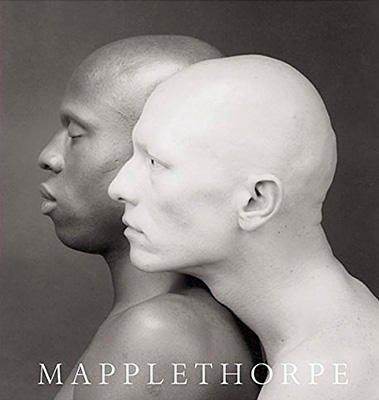
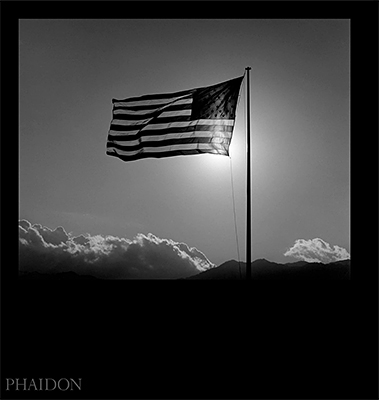
This major, long out-of-print survey, widely regarded as the definitive overview of Mapplethorpe's black-and-white photography, is once again available in a new, updated edition. It presents a comprehensive selection of Mapplethorpe's nudes, portraits, self-portraits, floral still lifes and other works, including his best known and most controversial images.
Mapplethorpe's choices were both innovative and bold, and his work has continued to resonate since his early death in 1989. His cutting-edge use of homoerotic and other challenging themes has become embedded in our culture, with pervasive echoes not only in the work of other artists but in mainstream advertising as well.
Today, Robert Mapplethorpe is recognized as firmly an artist of his time, whose work was richly steeped in the classical tradition. Even his most transgressive work borrowed heavily from the conventions of such masters as Michelangelo. Although separated by the centuries, each artist helped shape how we view the world.
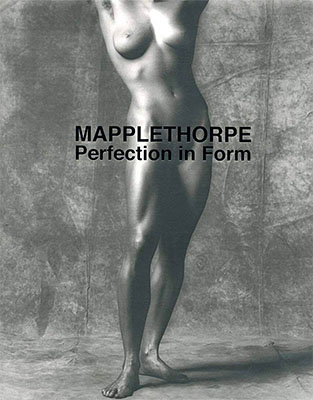
This book explores the connection from both academic and aesthetic perspectives. Serving as exhibition catalogue for a May 2009 show at Florence’s Accademia, this volume shows how these two artists used the body to illustrate the human experience and contains valuable commentary by curators, as well as analysis from art and photography historians
A revised and updated edition of the most comprehensive survey published of Mapplethorpe's photography.
Robert Mapplethorpe was one of the twentieth century's most important and influential artists, known for his groundbreaking and provocative work. He studied painting, drawing, and sculpture in Brooklyn in the 1960s and started taking photographs when he acquired a Polaroid camera in 1970. This comprehensive monograph is an overview of the artist's black-and-white photography of floral still lifes, nudes, selfportraits, and portraits, among other subjects―and also includes a selection of his color images.
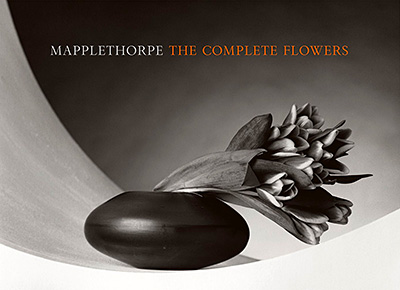
The theme of flowers is woven throughout Robert Mapplethorpe's oeuvre, coming to signify some of his deepest concerns as an artist. The photographs in "Flowers" range from images of the early 1980s to many taken in the months just before his death.
The latter, in particular, are astounding in their intensity; here one finds both erotic drama and absolute clarity of composition - Mapplethorpe's gift at its most bold and uncompromising. Only a fraction of Robert Mapplethorpe's color flowers have been published or exhibited. This book, exquisitely designed and produced, is destined to become a crucial part of his legacy.
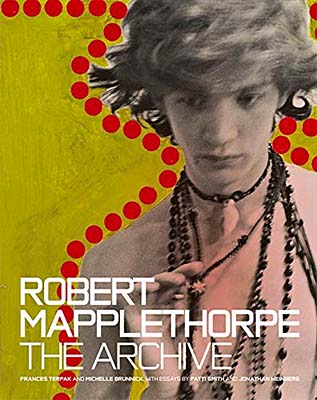
Throughout his career, Mapplethorpe preserved studio files and art from every period and vein of his production, including student work, jewelry, sculptures, and commercial assignments. The resulting archive is fascinating and astonishing.
With over 400 illustrations, this volume surveys a virtually unknown resource that sheds new light on the artist’s motivations, connections, business acumen, and talent as a curator and collector.
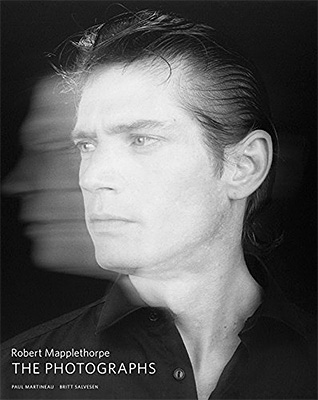
Robert Mapplethorpe: The Photographs offers a timely and rewarding examination of his oeuvre and influence. Drawing from the extraordinary collection jointly acquired in 2011 by the J. Paul Getty Museum and the Los Angeles County Museum of Art from The Robert Mapplethorpe Foundation, as well as the Mapplethorpe Archive housed at the Getty Research Institute, the authors were given the unique opportunity to explore new resources and present fresh perspectives.
The result is a fascinating introduction to Mapplethorpe’s career and legacy, accompanied by a rich selection of illustrations covering the remarkable range of his photographic work. All of these beautifully integrated elements contribute to what promises to become an essential point of access to Mapplethorpe’s work and practice.
Hashima is a small island located off the extreme southwest coast of Japan, about ten miles from Nagasaki. Its dark, warship-like silhouette earned it the nickname of Gunkanjima (battleship island).
During the wave of industrialization in the nineteenth century, a coal seam was discovered on the island and the Mitsubishi corporation opened a mine there. Workers settled on the island and the population increased, the small mining town quickly becoming a modern and autonomous settlement. During the 1950s, Gunkanjima became one of the most densely populated places in the world with over 5,000 inhabitants. But after an accident and the restructuring of the Mitsubishi mining project, the mine closed in January 1974. The last inhabitants deserted the island, the connection by boat was suspended, and since then Gunkanjima has become a ghost town.
Marchand and Meffre photographed the island between 2008 and 2012.
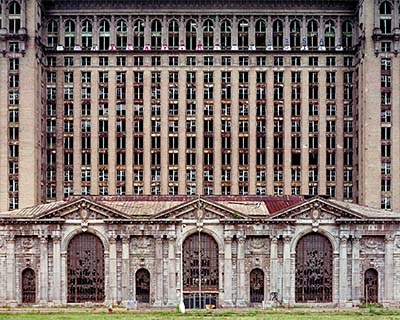
Over the past 25 years, Detroit has suffered economically worse than any other of the major American cities and its rampant urban decay is now glaringly apparent.
Yves Marchand and Romain Meffre have documented this disintegration, showcasing structures that were formerly a source of civic pride, and which now stand as monuments to the city's fall from grace. This is the sixth edition of this award-winning book.
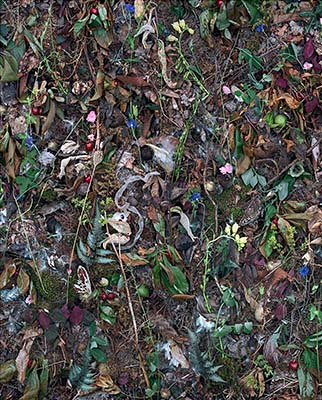
This publication traces the arc of Hudson Valley-based artist Tanya Marcuse's (born 1964) work over a 15-year period. Fueled by the Biblical narrative of the fall from Eden, these projects use fantastical imagery to explore cycles of growth and decay and the dynamic tension between the passage of time and the photographic medium.
The first volume, Fruitless (2005-10), features serial photographs of fruit trees near Marcuse's home in the Hudson Valley. Repeatedly photographing particular trees from the same vantage point, Marcuse catalogs seasonal transformations; the fallen apples become more prominent as the work progresses. In the second volume, Fallen (2010-15), Marcuse imagines the landscape of ruin in Eden after the exile of Adam and Eve. Using fruit collected from beneath the trees of Fruitless, Marcuse depicts an ordered paradise becoming wild and untended. Volume three, Woven (2015-19), takes Fallen's dense arrangements of flora and fauna to a newly immersive scale, with 5-by-10-foot tableaux that converse with medieval millefleur tapestries.
These exquisitely detailed photographs evoke a Boschian world of allegory and fable.
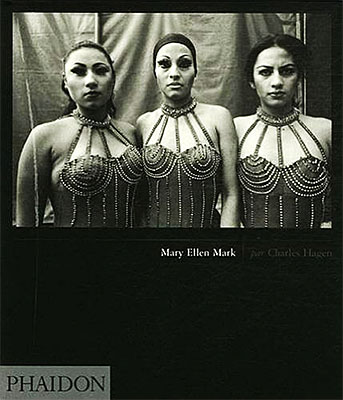
Acclaimed American documentary photographer Mary Ellen Mark (b. 1940) became well-known after her photographs of Bombay brothels were published in 1981 in Falkland Road, a book that became legendary and confirmed her status as one of the most prominent and provocative documentary photographers working today. Her pictures are a celebration of humanity in its most diverse and eccentric forms - circuses, gypsy camps, children yearning for adulthood, the poor and destitute are some of her recurring themes.
This monograph is a concise introduction to her work, with a 4,000 word essay and 55 photographs and accompanying captions.
A sweeping survey of Mary Ellen Mark’s most recognizable series, enhanced with original archival material.
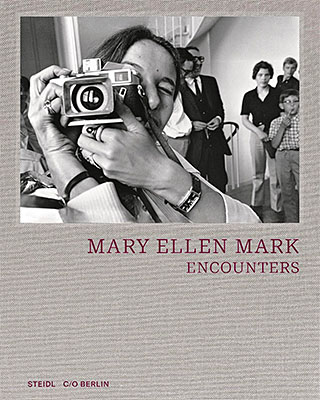
The images of American photographer Mary Ellen Mark are icons of documentary and humanistic photography. Focusing her camera on the socially disadvantaged and those on the fringes of society, she told the stories of her protagonists without prejudice. In the context of the emerging women’s movement in the USA during the 1960s and 70s, and as a freelance photographer at a time when print media was suffering its first major crisis, Mark fought her way to the forefront of female voices in photojournalism. Encounters provides an expansive cross-section of the photographer’s full body of work. The book focuses on five iconic series that contributed significantly to Mark’s reputation: Ward 81 in which she photographed residents at an Oregon psychiatric hospital for women; a reportage on prostitutes on Falkland Road in Mumbai; a tribute to Mother Teresa’s charitable work; Indian Circus, documenting traveling circus families; and the long-term project Streetwise, in which Mark followed the life of Erin Blackwell (Tiny) for more than 30 years. For the first time, this book contextualizes these works within Mark’s œuvre and presents them alongside original magazine spreads and archival material―including contact sheets, letters and notebooks―to reveal the breadth of her accomplishments and singularly compassionate eye.
A new edition of Mark’s most iconic project, including original text and a new image sequence printed from scans of the original 35mm Kodachromes.
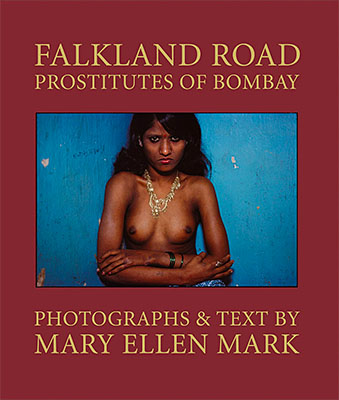
On her very first trip to India in 1968, American photographer Mary Ellen Mark (1940–2015) visited Falkland Road, the notorious red-light area in Bombay (now Mumbai). She tried to photograph its inhabitants, yet was consistently met with hostility and aggression, both from the prostitutes she sought to portray and the men who were their customers. Resilient, she returned in October 1978 after 10 years of trying to photograph the area, this time sponsored by a magazine. She slowly began to make friends and finally entered the daily lives of these “very special” women. “I had no idea if I could do this,” Mark recalls in her introduction, “but I knew I had to try.” Her portraits of Falkland Road’s denizens are beautiful and shocking: remarkable for their intimate compositions, visceral color and emotional power. Her accompanying captions introduce her subjects and their stories, their daily lives and the profound bonds they share with one another. Mark herself describes this series as “one of the most powerful and rewarding experiences of my photographic life.” Falkland Road has long been recognized as one of Mark’s major bodies of work. It was initially published in 1981 and again in a 2005 Steidl edition with additional photos. Including Mark’s original introduction and captions as well the new photos of the 2005 book, this latest edition―with a revised sequence, and printed from scans of the original 35mm Kodachromes―is the truest expression of her insight into this raw world, made accessible by the intensity of her involvement and compassion.
Playful yet haunting, Mary Ellen Mark’s photographs of Indian circus performers depict a world on the brink of disappearance. In 1969, Mark first traveled to India and photographed a circus, captivated by its "beauty and innocence." Two decades later, she returned for six months to document 18 circuses across the country, from bustling cities to remote villages.
Ranging from large troupes with hundreds of performers—both human and animal—to small, intimate acts, Mark's lens captures not the spectacle of the shows, but the quiet moments in between: scenes of practice, rest, and life beyond the spotlight. Her focus is on the human experience—marked by the contradictions of humor and sadness, beauty and hardship. By the time of Mark’s project, Indian circuses were already fading, holding onto an innocence long lost in the West, as they struggled against the pressures of the modern world.
This new edition of her 1993 book preserves the original text and images but reimagines the sequence and design, staying true to Mark’s poignant vision of a dying art form.
The high school prom is an American tradition, a rite of passage, and one of the most important rituals of youth in this country. The internationally recognized documentary photographer Mary Ellen Mark took on the extraordinary challenge of working with the Polaroid 20x24 Land camera to produce this fascinating look at dozens of young people from a diverse range of backgrounds on this memorable night in their lives.
Traveling across the United States to complete the project from 2006 to 2009, Mark photographed prom-goers at thirteen schools from New York City to Charlottesville, Virginia, to Houston to Los Angeles. Mark’s husband, the filmmaker Martin Bell, collaborated with her on the project to produce and direct a film, also called Prom, featuring interviews with the students about their lives, dreams, and hopes for the future. A DVD of the film is packaged with the book.
Conceived and edited by film director Martin Bell, Mary Ellen Mark’s husband and collaborator for over 30 years, The Book of Everything celebrates in over 600 images and diverse texts Mark’s extraordinary life, work and vision. From 1963 to her death in 2015, Mark told brilliant, intimate, provocative stories of remarkable characters whom she would meet and then engage with―often in perpetuity. There was nothing casual or unprepared about Mark’s approach; she unfailingly empathized with the people and places she photographed.
For this comprehensive book Bell has selected images from Mark’s thousands of contact sheets and chromes―from over two million frames in total. These include her own now-iconic choices, those published once and since lost in time, as well as some of her as-yet-unpublished preferences. Bell complements these with a few selections of his own. Along with Mark’s photos made in compelling, often tragic circumstances, The Book of Everything includes recollections from friends, colleagues and many of those she photographed. Mark’s own thoughts reveal doubts and insecurities, her ideas about the individuals and topics she photographed, as well as the challenges of the business of photography.
The images of Mary Ellen Mark (1940–2015) are icons of documentary photography. Her 20 books include Ward 81 (1979), Falkland Road (1981) and Indian Circus (1993). Her last book Tiny: Streetwise Revisited (2015) is a culmination of 32 years documenting Erin Blackwell (Tiny), who was featured in Martin Bell’s 1985 film Streetwise and Mark’s 1988 book of the same name. Mark’s humanistic work has been exhibited and published in magazines worldwide.
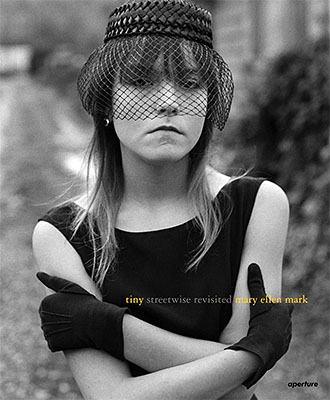
In 1988, Mary Ellen Mark published a poignant document of a fiercely independent group of homeless and troubled youth living in Seattle as pimps, prostitutes, panhandlers and small-time drug dealers. Critically acclaimed, Streetwise introduced us to individuals who were not easily forgotten, including "Tiny" (Erin Blackwell)--a 13-year-old prostitute with dreams of a horse farm, diamonds and furs, and a baby of her own.
Since meeting Tiny 30 years ago, Mark has continued to photograph her, creating what has become one of Mark's most significant and long-term projects. Now 43, Tiny has ten children and her life has unfolded in unexpected ways, which together speak to issues of poverty, class, race and addiction. This significantly expanded iteration of the classic monograph presents the iconic work of the first edition along with Mark's moving and intimate body of work on Tiny, most of which is previously unpublished.
Texts and captions are drawn from conversations between Tiny and Mary Ellen Mark as well as Mark's husband, the filmmaker Martin Bell, who made the landmark film, Streetwise. Tiny, Streetwise Revisited provides a powerful education about one of the more complex sides of American life, as well as insight into the unique relationship sustained between artist and subject for over 30 years.
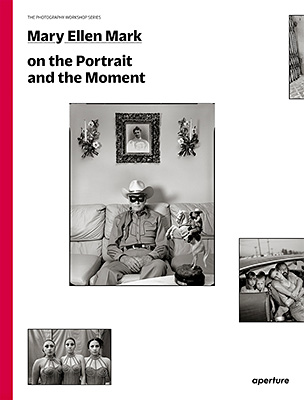
In The Photography Workshop Series, Aperture Foundation works with the world's top photographers to distill their creative approaches, teachings and insights on photography-offering the workshop experience in a book.
The goal is to inspire photographers of all levels who wish to improve their work, as well as readers interested in deepening their understanding of the art of photography. Each volume is introduced by a student of the featured photographer.
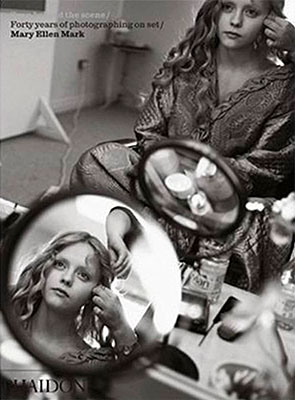
Since the 1960s Mary Ellen Mark has worked on over 100 film sets as a 'special stills photographer', making thousands of documentary photographs of life behind the scenes, rather than conventional still photographs made of actors on camera.
This exciting new book presents the best of her images ranging from the first films that Mark shot in the 1960s, such as Fellini's Satyricon, to legendary 1970s productions like Francis Ford Coppola's Apocalypse Now and Milos Forman's One Flew Over the Cuckoo's Nest, as well as films from the ensuing decades, ranging from Network to Tootsie, from Gandhi to Showgirls.
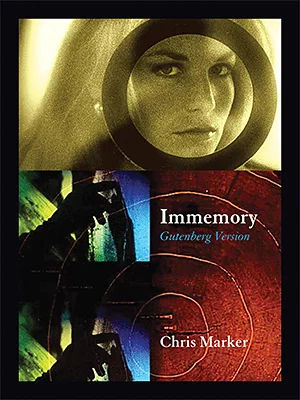
The enigmatic French filmmaker Chris Marker was never bound by a single medium. His works—ranging from La Jetée to Sans Soleil—blur the lines between cinema, literature, political essay, and art installation. In Immemory, originally published in 1998 in French and 2002 in English as an interactive CD-ROM, Marker crafted a labyrinthine, mixed-media memoir, inviting readers to explore “zones” of travel, war, poetry, and cinema. Navigating through images and text, users wandered through the corridors of Marker's memory as if embarking on an archaeological expedition of thought and recollection.
A groundbreaking experiment in digital storytelling, Immemory was both an invention and an epitaph for its own format—soon rendered obsolete by technological shifts. Now, after years of meticulous effort, the work has been reborn in book form as Immemory: Gutenberg Version. This long-awaited transformation, initiated by Marker himself before his passing in 2012, reinterprets his vision in a timeless format, ensuring its endurance beyond the ephemeral digital age.
Chris Marker (1921–2012) was a filmmaker, writer, and photographer, as well as a veteran of the French Resistance and the U.S. Air Force. His films earned him international acclaim, while his influence extended far beyond cinema, shaping the discourse on memory, time, and political consciousness. With Immemory: Gutenberg Version, one of his most ambitious projects is finally brought into the future—through the enduring medium of the past.
Diana Markosian’s Father is an intimate and engrossing diaristic portrayal of estrangement and reconnection, recounted through documentary photographs, family snapshots, text, and visual ephemera.
Diana Markosian: Father presents the photographer’s journey to another place and another time, where Markosian attempts to piece together an image of a familiar stranger—her long-lost father. The book explores her father’s absence, her reconciliation with him, and the shared emptiness of their prolonged estrangement. The images, made over the course of a decade, take place in her father’s home in Armenia. In Markosian’s first monograph, Santa Barbara (Aperture, 2020), the photographer recreates the story of her family’s journey from post–Soviet Russia to the US in the 1990s. Father uses both documentary photographs and archives of objects, letters, and vernacular images to probe the fifteen years of absence and separation from the photographer’s childhood. In this voyage of self-discovery, Markosian touchingly renders her longing for connection to a man she barely remembers and who asks her, when she finds him, “Why did it take you so long?”
Santa Barbara is the debut monograph by Diana Markosian, a talented artist who works at the intersection of photography and film. The series recreates the story of Markosian’s family’s journey from post-Soviet Russia to the U.S. in the 1990s.
The project pulls together staged scenes, film stills, and family pictures in an innovative and compelling hybrid of personal and documentary storytelling. In it, the artist grapples with the reality that her mother, seeking a better life for herself and her two young children, escaped Russia and came to America. Markosian’s family settled in Santa Barbara, a city made famous in Russia when the 1980s soap opera of that name became the first American television show broadcast there. Weaving together reenactments by actors, archival images, stills from the original Santa Barbara TV show, Markosian reconsiders her family’s story from her mother’s perspective, relating to her for the first time as a woman, and coming to terms with the profound sacrifices she made to become an American.
Picturing the hopes of Markosian’s mother to provide a different future for her children, the project emphasizes the hypercharged symbolism of the opportunities of America and the West, while serving as a personal reflection of the artist’s family history. Images are woven together with a script written by Markosian in collaboration with one of the original Santa Barbara writers, Lynda Myles, and is the basis for a new short film directed by the artist. Encapsulating different styles and storytelling techniques, Markosian proves to be at the forefront of a new generation of photographers pushing the boundaries of documentary.
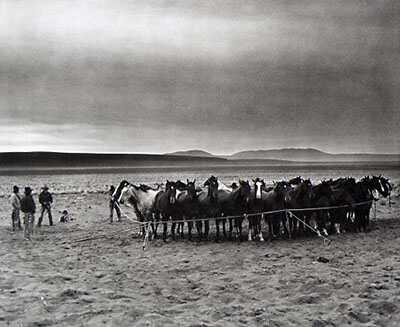
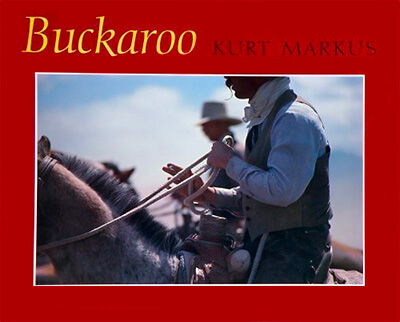
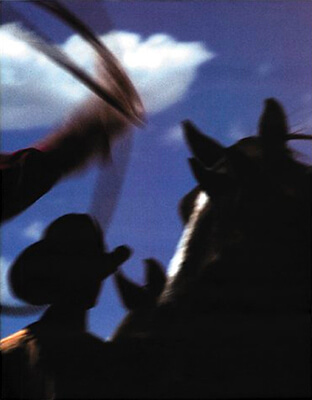
Kurt Markus’ photographs and writings have appeared frequently in publications which detail and observe the American Cowboy’s place in our world today.
Published here for the first time are many of his finest images culled from his decade long collaboration with the cowboy. His pictures evoke a sense of the western landscape and a man’s place on it which is splendid and melancholy.
The American Cowboy has never been seen so clearly poised on the western horizon as in these photographs. The large format of this volume helps preserve the scale and visual integrity of the original pictures.
Markus's vivid memories of raising his fists, mano a mano, led him into the working-class barrios of Havana, Mexico City, Brooklyn, and Dublin, where the odds against celebrity and high-stakes prize fighting belie the drive that motivates these young men.
In a series of intimate portraits infused with purpose, determination, and the physical and emotional struggles of intense training, Markus gives a more human face to a sport that rewards only those from its highest ranks. Far from the bright lights and stereotyped fame, these young fighters possess unrivaled dignity and grace.
Through words and pictures distilled from more than 15 years in the cowboy Southwest, photographer Kurt Markus takes us along on his personal journey of discovery of a working life that lives at once in myth and in reality.
This new, beautifully produced book distills the best of his work, an enduring and timeless view into ranch life in Arizona, Texas, New Mexico, and Colorado. Following his hugely successful books After Barbed Wire and Buckaroo, this is the cowboy book Markus always wanted to make.
Oversized, with 155 exquisite tritone and varnished photographs, and enriched by journal entries by the photographer that reveal an intimate, sometimes lonely, often humorous look into his experiences taking pictures of people and horses, cattle and landscapes, this spectacular book is for anyone who loves the idea of the cowboy.
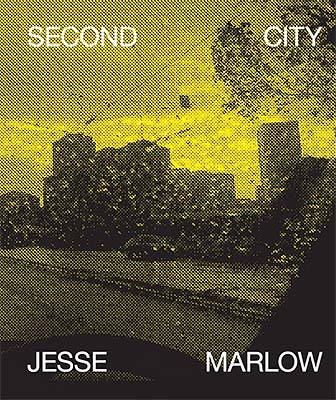
"When I was at photography school, every few weeks our photojournalism teacher would send the class off into the city on “Citywalks”. With an otherwise open brief, our only task was to keep an eye out for interesting scenes or moments. The aim was for students to open their minds visually by exploring our home town. I was instantly hooked by the freedom and unpredictability of shooting in this style. After studying, I spent the next five years exploring the Melbourne CBD thoroughfares and surrounding suburbs, slowly compiling the body of work Second City. I would often start and finish my day by sitting on the steps of Flinders Street Station, observing people as they moved in and around the iconic entrance and out onto the streets. The station steps were a wonderful backdrop for a street photographer. The scope and simplicity of being in and around the city with only a camera and a pocket full of film, is essentially something I continue to enjoy 20 years later."
Second City is a collection of 44 black and white candid street photographs from Jesse Marlow's hometown Melbourne. Photographed between the years 1998-2004 the book depicts the city as it was before the boom of the mid 2000s. The book features a foreword by Melbourne author Tony Birch and has been designed by Yanni Florence.
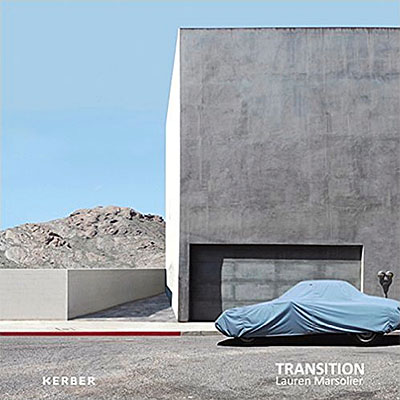
French-born photographer Lauren Marsolier creates seemingly real spaces using multiple photographs and diverse fragments of imagery, collected over time from a variety of sources. This book features her carefully crafted photographs.
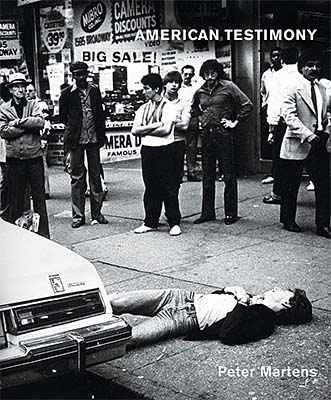
The late Dutch photographer Peter Martens found life in the United States to be as ruthless and difficult for many as it is in developing and war torn countries.
Known as a versatile street photographer, Martens was inspired by the American tradition of engaged documentary photography as a form of advocacy for the disadvantaged and outcast. From his first trip to the U.S. in the early 1970s, it became his favorite place to work: he found there the clearest illustration the confusion and lovelessness that he regarded as characteristic of modern Western society. This deeply personal journey through the streets of New York is one of two mock ups that Martens had left edited but unpublished before his death in 1992.
Now, for the first time this poignant body of work has been published in this raw but elegant tribute to Martenss vision.
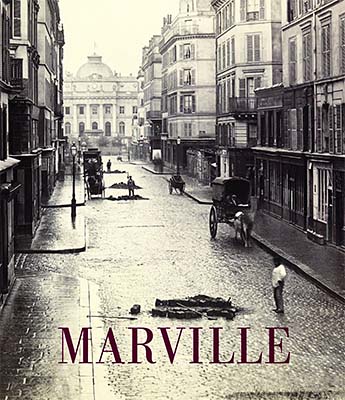
Charles Marville (1813–79) is widely acknowledged as one of the most talented photographers of the nineteenth century. Accompanying a major retrospective exhibition at the National Gallery of Art to honor Marville’s bicentennial, Charles Marville: Photographer of Nineteenth-Century Paris offers a survey of the artist’s entire career.
This beautiful book, which begins with the city scenes and architectural studies Marville made throughout France and Germany in the 1850s, and also explores his landscapes and portraits, as well as his photographs of Paris both before and after many of its medieval streets were razed to make way for the broad boulevards, parks, and monumental buildings we have come to associate with the City of Light.
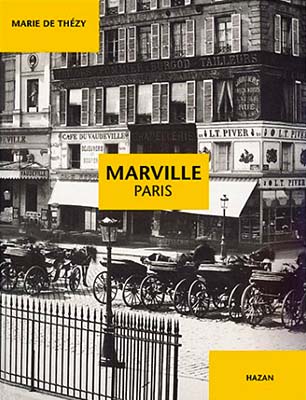
This is 19th century Paris, documented in perfect detail by one of its earliest and greatest photographers, Charles Marville. In 1865 Marville was retained by the Historical Works Commission to make a record of a Paris about to be destroyed by major new town planning projects - a Paris that would disappear forever.
Within these pages, his unique documentation is superbly reproduced and, as a fitting finale, Marville's Paris closes with an expose of these exciting new streets including Avenue de L'Opera and the Boulevard de SŽbastopol. Also presented are a series of picturesque views taken in the early 1850's; and works commissioned by Prefect Haussmann for the City of Paris, encompassing a broad array of lamp posts, urinals, benches, and gates, plus views of parks, garden squares, and sections of the Bois de Boulogne. Identical in format to the phenomenally successful Atget Paris, Marville's Paris presents another fantastic vision of a long lost, phantom city.
Ukrainian Railroad Ladies is a series of portraits of traffic controllers and safety officers at railroads of Ukraine. It is an exploration of why these professions still exist in the twenty-first century, given the almost complete automatization of railroad crossings. It is a study of the anthropological and social aspects of this phenomenon and the overall role of Ukraine’s railroad system.
The Ukrainian Railroad Ladies series has an aesthetic, educational, and humanistic bias, in that it serves to reflect the complex socio-political context which Ukrainian state structures work within. Of course, when it comes to the aesthetics behind the railway crossings, it’s not as if they’d been preemptively thought up and put together by somebody — that’s not what makes them so personal and distinctive.
They have come about because of how these people’s personal lives don’t stop when they come to work, and work doesn’t finish when they clock out either.
Sasha Maslov captured these signalwomen in the tradition of modern documentary photography, photographing each of his subjects in her everyday work environment, as if in the middle of her own small world. The clear and naive gaze of the lens on the subject of the portrait, alongside the subject’s own gaze on her future beholder, establishes a remote visual communication, trust, and mutual sympathy between the future observer and the photo series’ real-life subjects.
For every place and worker in the series there is only one standalone portrait, which has a comprehensive set of visual and ideological characteristics. However, the sheer number of photographs in the series shows just how varied and multifaceted this phenomenon can be, aesthetically and otherwise.
Didier Massard photographs - virtuoso exercises in illusion and artifice - invite the viewer into a world of enigmatic dreams and sham paradises, of fairytales and follies, where hyper-realism combines with sleight of hand to challenge and undermine out perceptions.
winning photographer Rania Matar captures the interior lives of teenage girls and young women in intimate portraits taken within the personal spaces of her subjects' bedrooms.
From Spartan cleanliness to chaotic disarray, stark and paint-chipped to clothing-cluttered and graffitied, each room offers an insider's peek into the mind of the girl who lives there, her values, her desires, and her fears.
Photographing girls from both the United States and Lebanon, Matar has succeeded in an unbiased documentary that questions what it means to grow from girl to woman and how our identities spill over into our material worlds.
In today's world of endless photographing, tagging and posting images online, what is a pre-teen girl's relationship to the camera? Upending assumptions of contemporary digital image-making practices, photographer Rania Matar (born 1964) reframes these young women through her poignant portraits of them, revealing in L'Enfant-Femme how girls between the ages of 8 and 13 interact with the camera and in so doing depicts them in deeply personal and poetic ways.
Addressing themes of representation, voyeurism and transgression, these images remind us of the fragility of youth while also gesturing toward its unbridled curiosity and joy. Photographing girls in the Middle East and the United States, Matar makes us examine our universality, a beauty that transcends place, background and religion. Candidly capturing her subjects at a critical juncture in the early stages of adolescence, Matar conveys the confluence of angst, sexuality and personhood that defines the progression from childhood into adulthood.
Lebanon is a country built on dichotomies. It is a blend of cultures, poised at the intersection between the Western and Arab worlds.
Born in Beirut and living in the West, photographer Rania Matar is especially attuned to those dichotomies. Here she honors the lives of the women and children of Lebanon in evocative black-and-white photographs. They convey the many facets of life, acknowledging the undeniable presence of war and tragedy, yet celebrating the strength, dignity, and humanity of lives lived amid the rubble, in refugee camps, or behind the veil.
These images are universal reminders of the tender bond between a mother and child, the cheerful camaraderie of friends, and the resilience of the human spirit. Accompanying these photographs are excerpts from the poetry of celebrated Palestinian-American author Lisa Majaj.
As a Lebanese-born American artist and mother, Rania Matar's cross-cultural experiences inform her art. She has dedicated her work to exploring issues of personal and collective identity through photographs of female adolescence and womanhood-both in the United States where she lives, and in the Middle East where she is from.
Rania Matar: She focuses on young women in their late teens and early twenties, who are leaving the cocoon of home, entering adulthood and facing a new reality. Depicting women in the United States and the Middle East, this project highlights how female subjectivity develops in parallel forms across cultural lines. Each young woman becomes an active participant in the image-making process, presiding over the environment and making it her own. Matar portrays the raw beauty of her subjects-their age, individuality, physicality and mystery-and photographs them the way she, a woman and a mother, sees them: beautiful, alive.
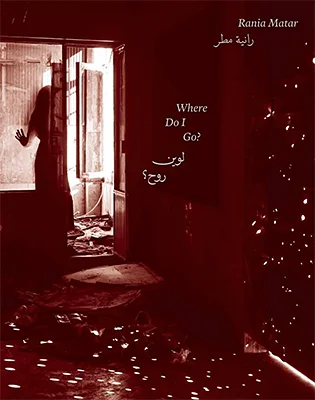
Rania Matar: Where Do I Go? unfolds as a deeply personal and collective reflection on identity, belonging, and the difficult choices faced by a new generation of Lebanese women. Created in collaboration with the Eskenazi Museum of Art, the project coincides with the fiftieth anniversary of the Lebanese Civil War, a moment that invites reflection on memory, resilience, and the enduring ties between people and place. Through a series of evocative portraits, Boston-based photographer Rania Matar approaches these questions with sensitivity and lived understanding, drawing from her own experience of leaving Lebanon at the age of twenty and building a life in the United States.
The photographs center on young women navigating the emotional terrain between attachment to their homeland and the uncertainty of possible departure. Matar works closely with her subjects, encouraging them to shape the images and actively participate in the creation of their portraits. This collaborative process transforms the photographs into expressions of agency rather than simple observation. The women occupy landscapes that feel both intimate and symbolic—rocky shores, wooded hillsides, abandoned structures, and overlooked corners of the city. In many images they appear climbing trees, balancing on cliffs, or leaping into waterfalls and murky waters, gestures that echo both freedom and risk while reflecting the fragile balance between hope and instability.
Lebanon itself remains a quiet yet powerful presence throughout the series. The country’s beauty—its mountains, Mediterranean coast, and dense urban textures—forms a backdrop layered with historical and political complexity. Rather than focusing on conflict directly, Matar reveals how the legacy of war and ongoing uncertainty shapes everyday life and the aspirations of a younger generation. The women portrayed inhabit this landscape with determination, curiosity, and moments of quiet contemplation.
Accompanied by reflective essays that explore contemporary life in Lebanon, Where Do I Go? brings together photography and personal narrative to illuminate questions shared by many across the world. Through these images, Matar offers a meditation on womanhood, displacement, and the enduring search for a place that feels like home.
Everyday life on the Haight: previously unseen portraits from the hippie epicenter by the acclaimed documentarian.
Elaine Mayes (born 1936) was a young photographer living in San Francisco’s lively Haight-Ashbury District during the 1960s. She had photographed the Monterey Pop Festival in 1967 and, later that year, during the waning days of the Summer of Love, embarked on a set of portraits of youth culture in her neighborhood. By that time, the hippie movement had turned from euphoria to harder drugs, and the Haight had become less of a blissed-out haven for young people seeking a better way of life than a halfway house for runaway teens.
Realizing the gravity of the cultural moment, Mayes shifted from the photojournalistic approach she had applied to musicians and concert-goers in Monterey to making formal portraits of people she met on the street. Choosing casual, familiar settings such as stoops, doorways, parks and interiors, Mayes instructed her subjects to look into her square-format camera, to concentrate and be still: she made her exposures as they exhaled. Mayes’ familiarity with her subjects helped her to evade mediatized stereotypes of hippies, presenting instead an understated and unsentimental group portrait of the individual inventors of a fleeting cultural moment.
Elaine Mayes: The Haight-Ashbury Portraits 1967–1968 is the first monograph on one of the decade’s most important bodies of work, presenting more than 40 images from Mayes’ series. An essay by art historian Kevin Moore elaborates an important chapter in the history of West Coast photography.
The Shankill, a roughly mile long road in Belfast Northern Ireland, is home to a working class, Protestant community. Their history is complex and troubled and yet they have survived with pride and resilience. During the thirty years of sectarian violence, many stories of this community have been told. A Peace Agreement was signed in 1998 and most journalists and photographers packed their bags and left before the ink had dried. But it is still a fragile peace that remains. The Shankill: A Portrait of Pride and Resilience depicts a proud community defined by their traditions, hoping to move beyond their past. It is a portrait of today.
''Millions of eyes were suddenly upon us, creating a picture I will never forget.'' -Paul McCartney
Taken with a 35mm camera by Paul McCartney, these largely unseen photographs capture the explosive period, from the end of 1963 through early 1964, in which The Beatles became an international sensation and changed the course of music history. Featuring 275 images from the six cities―Liverpool, London, Paris, New York, Washington, D.C., and Miami―of these legendary months, 1964: Eyes of the Storm also includes:
• A personal foreword in which McCartney recalls the pandemonium of British concert halls, followed by the hysteria that greeted the band on its first American visit
• Candid recollections preceding each city portfolio that form an autobiographical account of the period McCartney remembers as the “Eyes of the Storm,” plus a coda with subsequent events in 1964
• “Beatleland,” an essay by Harvard historian and New Yorker essayist Jill Lepore, describing how The Beatles became the first truly global mass culture phenomenon
Handsomely designed, 1964: Eyes of the Storm creates an intensely dramatic record of The Beatles’ first transatlantic trip, documenting the radical shift in youth culture that crystallized in 1964.
A Field Guide to Snow and Ice is McCartney's interpretation of the idea of winter. The series includes images of snowfalls and wildflowers, frozen waterfalls and stalagmites, snowdrifts and piles of gypsum sand, as well as other icy forms, in an effort to explore and reinterpret natural structures and the way they can reference multiple ideas on both micro and macro levels.
The ambiguity of scale and substance helps the subjects transcend their source. With less there becomes more. This work invites viewers to took at the winter that surrounds them in a new way, abstracted from the vast landscape - a winter of the artist's imagination. Combining images of true snow and ice with forms reminiscent of these substances initiates conversations regarding personal experiences, truth in photography, and recurrent forms throughout nature, as well as suggesting and encouraging a wider and more open way of looking.
Includes 48 black and white and full color plates printed with UV inks on uncoated paper. Leporello binding with multiple panel widths and stiff front and back covers. Spine closure printed on synthetic paper with an essay by Mark Alice Durant. With the spine detached from the front cover, the book becomes an installation piece approximately 34 feet in length.
Eight Seconds: Black Rodeo Culture offers a vivid and intimate portrait of Black cowboy culture in the 21st century, bridging the past and present through the lens of sports, community, and a deep connection to the land. This debut book marks McClellan's decade-long journey into the heart of a vibrant and often overlooked subculture.
The book’s title, "Eight Seconds," alludes to the challenge of bull riding, where competitors must stay atop a bucking bull for eight seconds to score. This metaphor captures the essence of the Black rodeo culture McClellan documents—dynamic, daring, and steeped in tradition.
McClellan’s journey began in 2015 at the Roy LeBlanc Invitational, the longest-running Black rodeo in the U.S., where he was introduced to this world by Charles Perry, director of The Black Cowboy. Over the years, McClellan traveled across the nation, photographing a range of subjects from teen rodeo star Kortnee Solomon at her Texas stables to bull riding champion Ouncie Mitchell and the Compton Cowboys in Los Angeles.
The book is a testament to the skill, bravery, and enduring spirit of Black rodeo athletes who uphold the legacy of the "Old West" with their high-octane performances and dedication. Eight Seconds is edited by Miss Rosen and features a foreword by Charles Sampson, the first African American cowboy to win a world championship in professional rodeo, adding further depth to McClellan's exploration.
McClellan’s work not only celebrates the thrill and camaraderie of rodeo but also serves as a poignant reminder of the rich heritage and ongoing vitality of Black cowboy culture.
In Some Worlds Have Two Suns, photographer David McConnell captures the unique intersection of space exploration and rural life through a series of evocative images documenting the Russian Soyuz spacecraft's arrivals and departures from the Baikonur Cosmodrome in Kazakhstan. This project emerged from McConnell’s profound reaction to a documentary he watched in 2014, which depicted a Soyuz landing in the harsh winter landscape of Kazakhstan. The scene of astronauts emerging from their capsule in an icy wilderness, amidst the valiant efforts of the ground team, deeply moved him. Despite having witnessed the darkest aspects of humanity in war zones, he found solace and inspiration in this extraordinary display of human achievement and cooperation.
McConnell's journey began in 2015, when he first ventured to Kazakhstan to document the Soyuz landing. What initially intrigued him was the spectacle of space travelers touching down in a remote, wintry landscape. However, it was the local community of Kenjebai-Samai, a village near the landing site, that captured his attention and led him to return multiple times.
Through his lens, McConnell portrays the life of this isolated community, whose existence is unintentionally entwined with the dramatic arrivals of the Soyuz spacecraft. The villagers, largely indifferent to the space missions, nonetheless find themselves participants in a cosmic ritual that contrasts sharply with their everyday lives. McConnell’s photographs reveal the stark beauty of the steppe and its inhabitants, who navigate their lives on the periphery of this high-tech spectacle.
The result is a compelling visual narrative that juxtaposes the grandeur of space exploration with the quiet resilience of a nomadic-descendant community living on the edge of modernity. Some Worlds Have Two Suns is both a meditation on the intersection of human endeavor and isolation and a poignant reflection on how extraordinary events shape the lives of those far removed from the limelight.
Rotan Switch is the first monograph by Lisa McCord, documenting life on her grandparents’ cotton farm in the Arkansas Delta community of Rotan. It takes its name from the community’s central landmark—the railroad switch where farmers loaded their cotton bales onto trains headed out of the Delta. Although it hasn’t been used in years, it remains a potent symbol of the complex intersections of industry and agriculture, of race and injustice. Collected over the last forty-four years, these images and stories are a reflection on the people and places that have taught McCord the meaning of the word home. It is also a self-exploration into her inherently complicated role in this community as both the photographer and the granddaughter of the farm owner.
This publication is a long-term project, constructed from McCord's analog photographs, family snapshots and ephemera. Including, monochrome photographs, color polaroids, and recipes.
The structural organization of the biosphere is the primary subject of Patterns: Art of the Natural World, a comprehensive visual catalog by Australian photographer and conservationist Jon McCormack. The work operates on the premise that life and geology are governed by a shared geometry, manifested in the recurring arrangements found within botanical specimens, animal migration routes, and topographical transformations. McCormack utilizes high-resolution digital sensors to isolate these rhythms, presenting a data-rich look at the physical world that spans from the macro-scale of elephant trails in the Kenyan savanna to the micro-textures of fossilized feathers. This survey functions as an empirical record of the planet’s innate design, emphasizing the mathematical consistency of natural forms across disparate ecosystems.
The geographical scope of the project encompasses a wide range of extreme environments, including the volcanic coastlines of Iceland and the sub-zero fjords of Antarctica. McCormack documents the silent, systemic logic of the earth, such as the intricate symmetry found within the ice caves of Svalbard and the rhythmic branching of tree rings. A significant portion of the archive focuses on the photographer’s local environment in California, where the interplay of desert erosion and coastal tides provides a laboratory for studying the evolution of landforms. By removing the distraction of color in certain instances or utilizing flat lighting, the imagery highlights the "technofossils" of the natural world—the enduring structures that define the history of a landscape and its inhabitants.
Supplementing the visual evidence are a series of short essays penned by a multidisciplinary group of scientists and explorers. These texts provide a theoretical framework for the photographs, explaining the biological and physical forces that generate specific patterns, such as the fractals in river deltas or the hexagonal tiling of basalt columns. This collaboration ensures that the book remains a rigorous journalistic inquiry into the interconnectedness of life rather than a purely aesthetic exercise. As ecosystems face unprecedented pressure from climate instability, Patterns stands as a definitive document of the planet’s foundational architecture, recording the complex symmetries that underpin global biodiversity before they are irrevocably altered by human intervention.
Roller Coaster: Exploring the Joys and Struggles of Long-Term Relationships.
"Roller Coaster: Scenes from a Marriage" offers a candid portrayal of the myriad moments encountered in most long-term relationships, capturing them with honesty, intimacy, and humor. In many Western cultures, the process of aging is often accompanied by feelings of shame and insecurity. Phrases like "losing one's wits," "feeling irrelevant," and "fearing abandonment" can haunt individuals as they grow older. Photographer Aimee McCrory aims to shed light on both the joys and challenges of growing old together through her work.
Leveraging her background in theater, McCrory presents the series as a "pseudo-documentary," drawing inspiration from her own forty-two-year marriage to her husband, Don. She subtly manipulates their personal domestic circumstances to enhance elements of mystery, inviting viewers to reflect on their own domestic relationships. Ultimately, the viewer's response to the images may reveal more about their own experiences than about the scenes depicted in the photographs themselves.
First published in 2001, this retrospective survey offers both an examination of Don McCullin's photographic career as well as a record of half a century of international conflict. Coinciding with the photographer's eightieth birthday, this expanded edition of Don McCullin serves as fitting homage to a photographer who dedicated his life to the front line in order to deliver compassionate visual testament to human suffering. With texts by Mark Holborn, Harold Evans and Susan Sontag, and photographs taken by McCullin in England, Cyprus, Vietnam, the Congo, Biafra, Northern Ireland, Cambodia, Bangladesh and Beirut, this is an essential volume on one of the legendary photographers of the 20th century.
"I have long admired Don McCullin's heroic journey through some of the most appalling zones of suffering in the last third of the 20th century," Sontag wrote in her essay. "We now have a vast repository of images that make it harder to preserve such moral defectiveness. Let the atrocious images haunt us Seeing reality in the form of an image cannot be more than an invitation to pay attention, to reflect, to learn, to examine the rationalizations for mass suffering offered by established powers."
British photographer Don McCullin (born 1935) began his professional photographic career in 1959, and dedicated himself to photographing war, conflict, disease and poverty around the world, turning in his later years to landscape and still-life photography in his native England.
Don McCullin (b. 1935) is an internationally acclaimed British photojournalist, best known for his war photography and images of urban strife. A Londoner, McCullin began documenting his local community.
In 1958, his photograph The Guvnors, a portrait of a notorious Finsbury Park gang involved in the murder of a police officer, was published in the Observer, launching his career as a photojournalist. McCullin went on to become a well-known war correspondent, recognized for his iconic images taken on assignment in Vietnam, Cyprus, Lebanon, and Biafra. He has continued to document poverty in Britain and more recently has turned to landscape photography.
This book celebrates McCullin's work over the decades, including color photographs taken on assignment for the Sunday Times magazine that have rarely been seen.
Don McCullin is one of the great photojournalists of our times. In recent years, his travels have taken him to some of the world’s remotest regions, and his skill and empathy have gained him access to tribes on the edge of civilization.
Over the last two years, he has traveled from Addis Ababa in Ethiopia to the valley of the Omo River leading to the border with Sudan. There he entered the tribal lands of the Suma, the Gheleb, the Bume, the Erbore, the Bene, the Bodi, the Karo, the Hamar, and the Mursi.
Beyond dignity, there is a heroic aspect to his subjects; we, the viewers, can be amazed by their strength and beauty, and all the more so because McCullin’s compassionate artistry enables us to understand their vulnerability.
Don McCullin’s view of England is rooted in two worlds—his wartime childhood, and his youth in 1950s Finsbury Park. His first published photograph was a picture of a gang from his neighborhood, which appeared in a newspaper after a local murder.
McCullin always balanced his anger at the unacceptable face of the nation with tenderness or compassion, and in this collection, he envisions his home country with its perpetual social gulf between the affluent and the desperate in mind. He continues in the same black and white tradition as he did between foreign assignments for the Sunday Times in the 1960s and 1970s, when his view of a deprived Britain seemed as dark as the conflict zones from which he had just escaped.
This book marks his return to the cities and landscape he knew as a young photographer, adding wry humor to his famed lyricism. At a time when we might believe the world has changed beyond our imagination, McCullin shows us a view of England where the line between the wealthy and the impoverished is as defined as ever, the nation as a whole as absurd as it is tragic.
Life, Death, and Everything in Between offers a curated collection of pivotal photographs by Don McCullin. Featuring 140 images, including some rarely seen before, the book reflects McCullin's meticulous editing process, where he revisited his archives and reevaluated photographs spanning from the late 1950s to the present year. Unlike a conventional retrospective or definitive publication, this book aims to showcase a selection of images handpicked by McCullin himself. With the added perspective of hindsight and wisdom, it encapsulates the essence of his extensive, diverse, and continually evolving career.
An exhibition catalog that features an impressive retrospective, covering the last fifty years in chronological order. Don McCullin (born 1935, London) is one of the most important photographers of our time. For more than fifty years, his uncompromising black-and-white photographs have shaped our awareness and understanding of modern conflict and its consequences.
His images tell the remarkable story of his life and work, including his most famous assignments in Berlin, Vietnam, Cambodia, Biafra, Bangladesh, and the Middle East. The Winner of the Warsaw Gold Medal and the World Press Photographer Award, he was awarded the ICP Cornell Capa Award in 2006. Key periods in McCullin’s life, including his early experiences of evacuation and the Blitz, his commissions from Berlin in 1961 and Cyprus in 1964, and his most famous work for the Sunday Times are here explored alongside more recent projects with Christian Aid, his photographs of last tribes in the Omo River Valley, South Kenya, and Irian Jaya, New Guinea, and, in the last few years, those of still-life and English landscapes at his home in Somerset. A photographic journey across the ruins and landscapes of the boundaries of the Roman Empire completes the volume.
The story of a legendary photographers' life and work is also a remarkable and devastating visual document of war and warfare.
No other photographer in modern times has recorded war and its aftermath as widely and unsparingly as Don McCullin. After a London childhood during the Blitz, McCullin feels his life has indeed been shaped by war. From the building of the Berlin Wall at the height of the Cold War to El Salvador and Kurdistan, McCullin has covered the major conflicts of the last 50 years, with the notable exception of the Falklands, for which he was denied access.
This remarkable narrative of McCullin's life contains a collection of pictures of him in the field with key photographs from his career. Whenever possible emphasis has been placed on the presentation of previously unpublished material. The inclusion of rarely-seen color work challenges the conventional appraisal of McCullin's world being exclusively black and white. Numerous documents, original publications, and personal mementoes are reproduced, including his cameras, boots, helmet, numerous passports, and illuminating personal correspondence.
McCullin recounts the course of his professional life in a series of devastating texts on war, the events, and the power of photography. The brutality of conflict returns over and over again, and here McCullin voices his despair.
After a career spanning 60 years, Sir Don McCullin, once a witness to conflict across the globe, has become one of the great landscape photographers of our time. McCullin's pastoral view is far from idyllic. He has not sought out the quiet corners of rural England, but is drawn, instead, to the drama of approaching storms. He has an acute sense of how the emptiness of his immediate landscape echoes a wider tone of disquiet. McCullin is based in the geographical center of southern England.
The presence of sacred mounds, hill forts, ancient roads and the nearby monuments of the prehistoric era have shaped his sense of nationhood. But down on the Somerset Levels, he has tramped through the flooded lowlands. The imagery of his home county, ravaged by storms, inevitably projects the associations of a battlefield, or, at least, the views of one intimate with scenes of war. He is not alone in his preference for darkened clouds over clear skies. McCullin's West Country is not far removed from the East Anglia of Constable's Dedham Vale two centuries earlier.
His knowledge of his historical predecessors places him deep in a Romantic tradition. His experience as a traveller reinforces the sense of a man on the edge of civilisation under siege. Nowhere is this more apparent than in his repeated views of the glories of Palmyra and of the destruction of this ancient Syrian city. The Landscape is the last in a long series of books published by Jonathan Cape, which encompasses the entirety of McCullin's working life.
The biggest and most comprehensive volume on Steve McCurry published to date and the final word on forty years of McCurry's incredible work. Written and compiled by Bonnie McCurry, Steve's sister and President of the McCurry Foundation, Steve McCurry: A Life in Pictures is the ultimate book of McCurry's images and his approach to photography.
The book brings together all of McCurry's key adventures and influences, from his very first journalistic images taken in the aftermath of the 1977 Johnstown floods, to his breakthrough journey into Afghanistan hidden among the mujahideen, his many travels across India and Pakistan, his coverage of the destruction of the 1991 Gulf War and the September 11th terrorist attacks in New York, up to his most–recent work. Totalling over 350 images, the selection of photographs includes his best–known shots as well as over 100 previously unpublished images.
Also included are personal notes, telegrams and visual ephemera from his travels and assignments, all accompanied by Bonnie McCurry's authoritative text – drawn from her unique relationship with Steve – as well as reflections from many of Steve's friends and colleagues.
In Animals, we discover a different side to the famed photographer who skillfully explores animals’ complex relationship with humans and the environment.
Tenderness abounds, particularly in scenes of unkempt street dogs sleeping contentedly next to a human. But there’s also a kind of essential solitude, with animals belonging to no one and simply wandering through life with only their survival instincts to guide them. We witness camels caught in the crossfire during the first Gulf War; a shepherd from Northern Pakistan tenderly feeding his goats; Beverly Hills designer dogs; race horses on a Hong Kong rooftop; elephants in Thailand, and more images selected by McCurry from his vast archives.
Through McCurry's lens, we discover an appreciation for each creature’s beauty and silent dignity. This kaleidoscopic collection is at once a beautiful travelogue and a touching tribute to the creatures who share our planet.Also available in two signed and limited Art Editions, each with a signed print.
Award-winning photographer Steve McCurry’s celebration of coffee-growing communities around the world, from the foothills of the Andes and the South American rain forest to the slopes of Kilimanjaro and the Jungles of Vietnam.
A Portrait of Coffee Growers conveys the vibrancy of community life on coffee plantations around the world from the Andes and South American rain forests to the slopes of Kilimanjaro and the jungles of Vietnam. Portraits of workers and their families are presented alongside stunning natural landscapes that bring each coffee plantation to life. A brand new portfolio, featuring previously unpublished images from the last ten years, Source: A Portrait of Coffee Growers, is an exciting new addition to one of the world’s most admired and popular photojournalists body of work.
A unique collection of previously unseen images spanning Steve McCurry's extraordinary career.
Steve McCurry is known for creating some of the most iconic images of recent times and in this new collection, he shares previously unseen photographs from his incredibly rich archive. In Search of Elsewhere takes us across the globe and offers new perspectives on many of the locations that the photographer has already made famous – from India, Myanmar and Cuba, to Kashmir and the white-washed temples of the Himalayas. Each image is reproduced at large format and in remarkable detail and this new compilation reveals the incredible depth of his work.
This new portfolio of emotive and beautiful photographs from India features 150 previously unpublished images taken across the Indian subcontinent, along with iconic photographs that are famous worldwide.
Reproduced in a large format with captions, and an introductory essay, this book features a range of color pictures illustrating this most colorful of countries, capturing the lives of everyday people in extraordinary settings: from the Ganesh festival on Chowpatty beach in Mumbai to the Kolkata railway station before dawn to the flower markets of Kashmir and the streets of Old Delhi.
Following Phaidon's 2013 bestseller Untold: The Stories Behind the Photographs, McCurry's India is a new selection of the photographer's beautiful and powerful images of India, a country he has photographed many times over the last thirty years.
This publication, a sequel to Phaidon's 2000 publication "South Southeast", is a selection of Steve McCurry's most astounding and powerful portraits from South and Southeast Asia. McCurry takes photographs all over the world, for "National Geographic" magazine and his own projects, but it is the people, places, colours and forms of Afghanistan, India, Sri Lanka, Cambodia and Myanmar (Burma) that have inspired his most sublime images - photographs which transcend their original editorial purpose to become classics of photography.
Like "South Southeast", this book features a remarkable range of photographs with brief captions and a short essay introduces the book.
Afghanistan has long been a country overwhelmed by tribal rivalries, colonial wars, and geo-political conflict. The Afghans have called their mountains "the land of rebellion," a land that has not been successfully occupied since the times of Alexander the Great. These invaders - Persians, Arabs, Moguls, Sikhs, British, Russians - may have been thwarted, but wandering through the bazaars of Kabul will attest to their legacy. In the people of Afghanistan, the genes of countless races meet and intermingle.Deep are the fissures in Afghan society; the schism between Sunni and Shia, the endemic violence across clans and tribes, and the blood feuds and rivalries within lineages. Yet born of such chaos and entrenched conflict are these most breathtaking of images.
In this definitive retrospective of his work in Afghanistan, Steve McCurry has curated over 140 gripping images to present a torn, proud people, from the desert of Kandahar to the streets of Kabul and remote rivers of Nuristan. For almost four decades, McCurry traveled to the country regularly, documenting its people with a rare and disarming humanity. His most striking portrait Afghan Girl (1984) has graced the covers of magazines around the world, in equal parts haunting and evoking remarkable grace and dignity. In common with so much of McCurry's work, it has a timeless, painterly quality-entirely at odds with the troubled region in which it was taken.
McCurry has always been subjected to dangers that are an inevitable part of life "on the road" for photographers. He often ventured behind the lines, usually at great risk. His first trip to Afghanistan in 1979 involved him dressing in Afghan garb in order to be smuggled across the border from Pakistan. That journey into the treacherous, unpredictable landscape - territory controlled at various times by the Mujahideen, the Russians, and the Taliban - was one that McCurry would make numerous times. Many other photographers would follow in his footsteps, but none would return with such a flawless body of work.
Exploring the multifaceted landscape of human spirituality through captivating imagery.
Steve McCurry, celebrated photographer with affiliations to American Magnum and National Geographic, is renowned for his ability to encapsulate the essence of the human condition and the essence of diverse locales. His iconic 1984 portrait of Sharbat Gula, famously known as the Afghan Girl, stands as a testament to his talent and global recognition.
This profound compilation of spiritually charged images spans McCurry’s illustrious forty-year career, during which he traversed the globe. From the serene interiors of an Afghan mosque to the revered Golden Rock of Burma; from solemn Easter rituals in Paraguay to the tender moments of an elderly couple at Lourdes; from the meditative presence of a Tibetan monk in India to the fervent expressions of evangelicals in America’s heartland—McCurry masterfully captures the depth of devotion, steadfastness, and dedication.
Rendered in vibrant color, these photographs serve as a tribute to humanity's innate quest for meaning amidst the ordinary. They invite viewers to embark on a personal journey of spiritual reflection, embracing the myriad forms of spirituality that enrich our lives.
Magnum photographer Steve McCurry never set out to take portraits. Critically acclaimed and recognized internationally for his classic reportage, over the last 20 years he has worked for the "National Geographic" and other publications on numerous assignments: along the Afghan border, in Baghdad, Beirut and the Sahel.
McCurry's coverage of the monsoon won first prize in the World Press Awards, and was part of his portfolio when he was named Magazine Photographer of the Year in 1984. In 1985, McCurry photographed an Afghan girl for the "National Geographic". The intensity of the subject's eyes and her compelling gaze made this one of contemporary photography's most celebrated and best-known portraits.
McCurry is now equally famous for his other portrayals of memorable faces that he has encountered while travelling throughout the world. Compelling, unforgettable and moving, McCurry's images are unique street portraits: unstylized and unposed snapshots of people that reveal the universality of human emotion.
American photographer Steve McCurry (b.1950) is universally recognized as one of today's finest image-makers and has won many of photography's top awards. This special limited-edition monograph brings together the most memorable and beautiful of his images, taken around the world over the last 30 years.
McCurry's ability to cross boundaries of language and culture to capture fleeting moments of human experience is unique. With his discerning eye for form and colour, shape and symmetry, he offers us windows into other worlds. Seen at the large scale of this new book, McCurry's images are particularly powerful: reproduced at slightly larger than life size, his portraits have an extraordinary immediacy and impact, while even the smallest details of his spectacular landscapes are clearly visible on the page.
Portraits of children, pilgrims and farmers are presented alongside views of ancient temples, busy city streets, dramatic mountain landscapes and quiet scenes of daily life - people are seen fishing, playing, working and praying. The images are presented in an uninterrupted sequence for maximum impact, and all the photographs are shown at either full-page size or as double-page spreads. The back of the book contains extended picture captions accompanied by colour thumbnail images for quick identification.
The title of this book is a phrase that Steve McCurry uses a lot when talking about his work - he is always trying to capture those 'unguarded moments' when people are at their most unselfconscious and natural. McCurry takes photographs all over the world, for National Geographic magazine and his own projects, so this book includes the places, colours and forms of Yemen, Mali, Niger, Chad, India, Afghanistan, Sri Lanka, Cambodia, Myanmar (Burma), France and the former Yugoslavia, among others.
The Unguarded Moment is the same size as South Southeast, but apart from the wider range of countries and continents covered, another key difference between the two titles is that all the images in this new book are landscape format. In "The Unguarded Moment", people go about their everyday business in extraordinary circumstances and settings, like the young tea vendor wading through the waist-deep monsoon waters in India, the fishermen casting their nets in the Niger river in Mali's Sahel Desert and the boy working in a candy factory in Kabul, Afghanistan.
This book includes striking portraits of a Tuareg woman in Mali, an intense you ng gypsy boy in Marseille, France and pro-democracy activist Aung San Suu Kyi in Burma. There are children paying close attention to their teachers in school rooms in Sri Lanka and Afghanistan, as well as five young monks happily playing with computer games at a monastery in India, just like any other boys their age would.
Steve McCurry's iconic images have made him one of the world's most popular photographers for more than 30 years. Now, for the first time, Untold: The Stories Behind the Photographs will tell the stories behind over 200 stunning images taken by McCurry from across the globe, including Afghanistan, India, Tibet, Kuwait, the USA, and beyond.
Despite what you might think this is not another book with the same images over and over again. You can discover fourteen of his stories but also exclusive documents and anecdotes. If you don't remember in which circumstances the portrait of the Afghan girl was taken, you will find the full story in this book.
In 2000, Ryan McGinley, then a student, staged his first exhibition of photographs in an abandoned SoHo gallery. To coincide with the show, the artist created several handmade books featuring a sampling of his work entitled The Kids Are Alright.
A copy eventually found its way into the hands of Sylvia Wolf, then a curator of photography at the Whitney Museum of American Art. In 2003, Wolf mounted an exhibition of his work at the venerable institution, the youngest artist to ever have a solo show at the museum.
In 1976, aged nineteen and a student at Exeter College of Art, Iain McKell got a summer job on Weymouth seafront photographing holidaymakers. It was a wonderful opportunity for him to both earn a living and carry out a project exploring the life of the seaside photographer. As well as holidaymakers he photographed his friends, his family and local people from the town, and in the evening the disco bars, fairgrounds and caravan parks of the town.
Private Reality is about youth culture and being a teenager in the 1970s. As McKell turned from teenager to young adult existential angst preoccupied his thoughts as it does for many teenagers, yet the project came together through his lens as he experimented through his photography. For McKell it was his rite of passage, his coming of age, as he began to look at the world and to understand it through the camera.
Iain McKell is a British art-documentary, fashion and portrait photographer whose long term documentary projects have included sub-cultures across the globe such as New York's Guardian Angels, the 1980's mod/skinhead revival and horse-drawn New Age Travellers. He has photographed icons including Madonna and Kate Moss, directed commercials and pop videos and undertaken commissions for The Sunday Times, Vogue Italia, L'uomo Vogue, and i-D amongst others. He has exhibited in numerous galleries including the Photographer's Galley, London and his work is included in the current show at the Turner Contemporary Gallery, Margate.
An unprecedented visual history of African women told in striking and subversive historical photographs―featuring an Introduction by Edwidge Danticat and a Foreword by Jacqueline Woodson.
Most of us grew up with images of African women that were purely anthropological―bright displays of exotica where the deeper personhood seemed tucked away. Or they were chronicles of war and poverty―“poverty porn.” But now, curator Catherine E. McKinley draws on her extensive collection of historical and contemporary photos to present a visual history spanning a hundred-year arc (1870–1970) of what is among the earliest photography on the continent. These images tell a different story of African women: how deeply cosmopolitan and modern they are in their style; how they were able to reclaim the tools of the colonial oppression that threatened their selfhood and livelihoods.
Featuring works by celebrated African masters, African studios of local legend, and anonymous artists, The African Lookbook captures the dignity, playfulness, austerity, grandeur, and fantasy-making of African women across centuries. McKinley also features photos by Europeans―most starkly, striking nudes―revealing the relationships between white men and the Black female sitters where, at best, a grave power imbalance lies. It’s a bittersweet truth that when there is exploitation there can also be profound resistance expressed in unexpected ways―even if it’s only in gazing back. These photos tell the story of how the sewing machine and the camera became powerful tools for women’s self-expression, revealing a truly glorious display of everyday beauty.
Family man, optician, avid reader and photographer Ralph Eugene Meatyard created and explored a fantasy world of dolls and masks, in which his family and friends played the central roles on an ever-changing stage.
His monograph, The Family Album of Lucybelle Crater, published posthumously in 1974, recorded his wife and family posed in various disquieting settings, wearing masks and holding dolls and evoking a penetrating emotional and psychological landscape. The book won his work critical acclaim and has been hugely influential in the intervening decades. Dolls and Masks opens the doors on the decade of rich experimentation that immediately preceded the production of his final opus, The Family Album of Lucybelle Crater.
Published to coincide with an exhibition at the Art Institute of Chicago, this handsome book presents more than 70 never-before-seen works from the Meatyard Archive, greatly expanding our understanding of Meatyard's elusive and captivating genius. Writer and historian Eugenia Parry and curator Elizabeth Siegel contribute essays that set the stage for this foray into the unknown work of one of the last century's most intriguing photographers.
A wonderful copy of this well-illustrated and well-documented catalogue. The book was published to accompany an exhibition at the Akron Art Museum, and provides a wealth of information about this photographers, whose work is entirely in black&white (at least in this publication).
Originally published in 1974 by the Jargon Society and long out of print, The Family Album of Lucybelle Crater is the best-known body of Ralph Eugene Meatyard's work. At once comic and tragic, grotesque and beautiful, the series of 64 images features his wife, Madelyn, in a hag's Halloween mask together in each with a different friend or relative in a transparent mask. Original copies of this small but seminal work now sell for upwards of $500.
Critic and scholar James Rhem has worked closely with the archives in the photographer's estate, as well as directly with his surviving family members to reconstruct Meatyard's original, and unrealized, intentions for the publication of this project. As a result, this revised edition features the correct sequencing of images and, most importantly, the missing captions, which, in accordance with Meatyard's instructions, are reproduced in his own handwriting as white type knocked out of a black background.
In addition, each surviving participant in the Lucybelle Crater project has been interviewed by Rhem, and the book includes a critical essay and extensive background information. Accompanying the Album are 40 more figurative works establishing a context for it and exploring important themes in Meatyard's work. This is an important rediscovery in the history of American photography.
From the publisher: "Evolving from a series of road trips along the Mississippi River, Alec Soth's Sleeping by the Mississippi captures America's iconic yet oft-neglected "third coast." Soth's richly descriptive, large-format color photographs present an eclectic mix of individuals, landscapes, and interiors.
Sensuous in detail and raw in subject, Sleeping by the Mississippi elicits a consistent mood of loneliness, longing, and reverie. "In the book's 46 ruthlessly edited pictures," writes Anne Wilkes Tucker, "Soth alludes to illness, procreation, race, crime, learning, art, music, death, religion, redemption, politics, and cheap sex." Like Robert Frank's classic The Americans, Sleeping by the Mississippi merges a documentary style with a poetic sensibility.
The Mississippi is less the subject of the book than its organizing structure. Not bound by a rigid concept or ideology, the series is created out of a quintessentially American spirit of wanderlust."
First edition, first printing. Special limited edition of 500 hand-numbered copies, with an original ["toned" black-and-white] C-Type print tipped in the final page (4 7/8 x 3 3/4 inches), signed and dated ("2009") in black marker on verso by Meeks. Hardcover. Paper-covered boards, no dust jacket as issued. Photographs by Raymond Meeks. 16 pp., with 8 duotone reproductions (5 as two-page spreads). 7 1/2 x 5 3/4 inches. The 54th publication in the Nazraeli Press One Picture Book series.
"Meeks' photographic images, steeped in warm, lush brown tones and bathed in a nineteenth century light, seem to fall into our laps from a distant era, beyond that of our parents and their fading Kodachromes, and back further yet to an era of Civil War tintypes and twice-a-lifetime portraits.
At it's core, Sound of Summer Running is a celebration of family relationships; father and daughter, siblings, husband and wife. It is a broad portrait of the joys of Summer and the ease which settles over family life during those times. Baby 'gators float in a gallon size pickle jar, children on bicycles fly by, rotten apples are chucked as far as they can be thrown into the back lot, the family German Shepherd standing on guard over all his charges.
The insightful poetry by Forrest Gander, printed and bound separately and laid into the back of the book, captures perfectly those fleeting days and our inevitable desire to somehow freeze them, impossible though that may be."- Darius Himes
Twenty-three enticing projects help inspire a process of discovery and new ways of telling stories and animating ideas. Eyes Open features photographs by young people from around the globe, as well as work by professional artists that demonstrates how a simple idea can be expanded. Playful and meaningful, this book is for young would-be photographers and those interested in expressing themselves creatively.
A member of Magnum Photos since 1976, Susan Meiselas became known for her work in the conflict zones of Central America in the 1970s and '80s and for the strength of her color photography.
Covering many subjects and countries, from war to human-rights issues and from cultural identity to the sex industry, Meiselas uses photography, film, video and sometimes archive material, as she relentlessly explores and develops narratives integrating the participation of her subjects in her works. Meiselas constantly questions the photographic process and her role as witness.
In On the Frontline, one of the most influential photographers of our time, Susan Meiselas, provides an insightful personal commentary on the trajectory of her career - on her ideas and processes, and her decisions as a photographer. Applying sociological training to the practice of witness journalism, she compares her process to that of an archaeologist, piecing together shards of evidence to build a three-dimensional cultural understanding of her subjects.
Meiselas achieved worldwide recognition for her photographic coverage of the Nicaraguan Revolution in 1979 - first published in 1981 and now regarded as a seminal work of journalism - which followed her exploration of the experience of women on the carnival entertainment circuit, Carnival Strippers (1976). She went on to spend five years exploring and creating a new visual history of the Kurdish people, published as Kurdistan: In the Shadow of History (1997). In On the Frontline, she guides us through the thinking behind each, and many other projects besides, as well as her influential involvement in Magnum Photos as one of its earliest women members. One of the greatest contributors to the evolution of documentary storytelling, Meiselas here offers a compelling insight into her journey as a photographer and thinker.
In Tar Beach, photographer and Little Italy resident Susan Meiselas (born 1948) brings together found pictures that were made, kept and gathered by various families who handed them down from 1940 to the early 1970s. Reflections from the community offer perspectives of multiple generations, as local author Angel Marinaccio says: "If you had an accomplishment - communion, confirmation, wedding, graduation or birthday, you‘d dress up in your best outfit and go to the rooftop to take pictures and celebrate with your family."
The introduction to Tar Beach is written by renowned filmmaker Martin Scorsese, who grew up on the streets portrayed in this collection. He writes: "The roof was our escape hatch and it was our sanctuary. The endless crowds, the filth and the grime, the constant noise, the chaos, the claustrophobia, the non-stop motion of everything … you would walk up that flight of stairs, open the door, and you were above it all. You could breathe. You could dream. You could be."
Meiselas, along with two of her neighbors, Angel Marinaccio and Virginia Bynum, collected and curated these vernacular photographs and memories to convey the feeling of this special place and time in the daily lives of Italian immigrants as they made their way to becoming part of American culture.
Between 2012 and 2019 Francis Meslet photographed several hundred places of worship across Europe. Over time, these places have became enveloped in silence, the only thing heard there now an occasional gust of wind whistling though broken stained glass, or the rhythmic drip of water leaking through the dilapidated roof above a nave. Nevertheless, these muted places still draw an occasional visitor. Once upon a time, prayers could be heard recited in Latin in a German church; and in a French Catholic college, the voices of children once resounded to the sound of the bells. But who can imagine what sounds might be concealed behind the walls of a crypt in the heart of the Italian mountains, or within a tomb in a former convent in Portugal?
In his spare time Francis travels the world in search of places that have fallen into disuse ― religious buildings where time has stood still since their doors were closed for the last time. He returns with incredible photographs, each a time capsule, a record of a parallel universe. They prompt us to let our imaginations wander and ask ourselves questions. With the greatest respect for the faithful who regularly visited them long ago, he offers us an opportunity to immerse ourselves in places that have been abandoned by faith, to seek a divine light.
101 Tragedies is Enrique Metinides' selection of the key 101 images from his half-century of photographing crime scenes and accidents in Mexico for local newspapers and the notas rojas (or red pages--for their bloody content) crime press. Alongside each image, extended captions give Metinides' account of the situation depicted--the life and characters of the streets, the criminals, the heroism of emergency workers and the sadness of bereaved families--revealing much of his personality in the process.
Thirty of the selected photographs are paired with their original newsprint tearsheets, preserved by Metinides, the typography of which has inspired the design of this book. The images are compiled by Trisha Ziff, a filmmaker and curator who knows Metinides well, and who here contributes an essay about his life, work and personality. The first overview of the photographer in many years, 101 Tragedies is also the only Metinides monograph comprised of images chosen by the photographer himself, and which offers his own account of his life's work.
A reflection on war told from the perspective of US and UK soldiers who have spoken out against the Iraq War. Through photographs and interviews, the lives of these soldiers are explored to understand more fully what it was that drove them to take an anti-war position—no matter what the consequence.
From his early education at The Art Institute of Chicago in the late 50s Ray K. Metzker inherited the rich vocabulary of avant-garde photography between the wars: photomontage, solarization, multiple printing of negatives, unique perspectives, diagonals, etc.
From his first exposure to photography, Metzker never lost the urge to experiment with the grammar and syntax of the medium, whether it was games played within the camera itself (the Doubleframes, for example) or complex manipulations in the darkroom (the celebrated Composites). He has drawn inspiration from the neighborhoods where he has lived (mainly Chicago and Philadelphia) and, increasingly, from nature--though the vegetation he depicts might be a weed-clogged vacant city lot as easily as the vast open plains of the American West.
Decomposing, recomposing, deconstructing, reconstructing, Metzker reminds us of the great and inexhaustible potential of black-and-white photography when practiced by a master. With 180 tritone-printed images, this publication offers a rare opportunity to examine the full range of Metzker's brilliant and ever-evolving formal language.
Publisher : Lawrence Miller Contemporary Photographs
1990 | 32 pages
Metzker is best known for his Composites, images stemming from his insight that a single work could be created from an entire roll of film. From a distance, they read as abstract, graphic tapestries.
Close viewing reveals them to be composed of a series of individual "documentary" vignettes, which can be read both simultaneously and sequentially.
One of the most inventive American photographers of the postwar era, Ray K. Metzker has startled and delighted viewers with his images for the past forty years. Ray K. Metzker: Landscapes collects the landscape images that Metzker has made throughout his career.
The majority of the work in this volume dates from the last fifteen years, during which period Metzker has made many innovations and stretched the meaning and importance of the term "landscape" with images ranging in style from the traditional to the surreal.
Ray K. Metzker (b. 1931) is one of the greatest living photographers of the modern era, although his name may not be as broadly familiar as that of some of his peers. Richly illustrated, The Photographs of Ray K. Metzker brings his extraordinary work to the attention of a larger audience, summarizing his life and achievements over the past six decades.
With a fresh perspective, curator and author Keith F. Davis explores the roots of Metzker’s innovative vision, from his early interest in photojournalism through his studies with Harry Callahan and Aaron Siskind at Chicago’s Institute of Design in the late 1950s, and his bold innovations of the 1960s and 1970s. Metzker’s work is richly diverse, embracing landscape, city scenes, and the expressive potential of the multiple image.
These many themes are united by Metzker’s technical precision and daring, and his graphic use of sunlight and shadow. He has repeatedly reinvented his approach to the medium, and this book testifies to the remarkable range and originality of his work.
Fashion and portrait photographer Sheila Metzner presents her life’s work, including her intimate family portraits in 1960s Woodstock, fashion editorials, nudes, and sacred landscapes.
This exquisite volume presents more than 300 photographs accompanied by the groundbreaking artist’s enchanting stories of the inspirations behind her critically acclaimed work. The first female art director at Doyle Dane Bernbach advertising agency in the 1960s, Sheila Metzner became a photographer while raising five children. In 1978, one of Metzner’s portraits became the hit of a controversial exhibition at the Museum of Modern Art; gallery shows and assignments from Alexander Liberman at Vogue soon followed. At a time when Avedon, Penn, and Piel commandeered its pages, Metzner became the first female photographer to receive steady work from Vogue. Always pushing artistic boundaries, Metzner’s distinctive photographic aesthetic soon positioned her as a contemporary master not only in fashion photography but also in fine art, portraiture, still life, and landscape.
With memoir-like vignettes that accompany her photos, this book is a deeply personal look at the artist’s career as a peer to fashion and film luminaries such as Diane Arbus and Richard Avedon. Featuring her renowned fashion editorials and acclaimed fine-art photography, this volume will appeal to both fashion and photography lovers.
This first monograph of the contemporary photographer Sheila Metzner contains fifty of her portraits, still lifes, and interiors. Commercially, Metzner's work can be seen in Vogue and other fashion magazines.
However she has had numerous exhibits of her own personal work, which is known for its sensuous beauty, elegant style, and subtle emotional content. Exquisitely printed by the Acme Printing Company of Boston to faithfully reproduce the painterly, muted colors and texture of her original Fresson prints.
After the destruction of the World Trade Center in New York on September 11th 2001, the world-renowned photographer Joel Meyerowitz felt compelled to visit the site.
Discover the incredible images of the destruction site. A book to help us never forget what happened on 9/11.
The 'Masters of Photography' series is a new approach to photography how-to. Each volume is dedicated to the work of one key photographer who, through a series of bite-sized lessons and ideas, tells you everything you always wanted to know about their approach to taking photographs. From their influences, ideas and experiences, to tech tips and best shots.
The series begins with Joel Meyerowitz, who will teach you, among other essentials: how to use a camera to reclaim the streets as your own, why you need to watch the world always with a sense of possibility, how to set your subjects at ease, and the importance of being playful and of finding a lens that suits your personality.
Joel Meyerowitz: Morandi's Objects offers a contemplative journey into the quiet intimacy of Joel Meyerowitz’s encounter with the studio of Giorgio Morandi. In the spring of 2015, Meyerowitz entered the small rooms of via Fondazza in Bologna, where Morandi arranged simple everyday objects—vases, tins, shells, bottles, and jugs—into delicate compositions that became the subject of his luminous paintings. With meticulous attention to light and shadow, Meyerowitz photographed each object, capturing the subtle geometry and poetic stillness that had inspired generations of artists.
The photographs convey more than mere documentation. Meyerowitz approaches the objects with sensitivity, giving each one its own presence while respecting the arrangements Morandi so carefully curated. The studio, filled with shelves and tables overflowing with ordinary items, becomes a stage on which time, materiality, and memory converge. Through Meyerowitz’s lens, the objects are simultaneously familiar and transformed, bridging the gap between painterly observation and photographic interpretation. Light plays a central role, echoing the painter’s subtle handling of illumination and shadow, and revealing the extraordinary in the seemingly ordinary.
This expanded edition of Morandi's Objects includes over 130 new photographs, along with a new essay by Amanda Renshaw and an updated bibliography, deepening our understanding of both Meyerowitz’s practice and Morandi’s enduring influence. Meyerowitz’s work, whether in the streets, portraits, or landscapes, has long been celebrated for its careful attention to color, form, and atmosphere, and here it finds a rare and intimate focus on the stillness of a single artist’s studio.
Morandi's Objects is a meditation on observation, patience, and the quiet power of everyday objects. Meyerowitz invites viewers to linger over subtle details, to see the poetry inherent in the simplest forms, and to witness how light, space, and material can be rendered with both devotion and artistry. The book celebrates the intersection of photography and painting, memory and presence, and the enduring resonance of artistic practice.
An expanded edition of Meyerowitz’s acclaimed study of the many shades and styles of red hair.
Photographer Joel Meyerowitz (born 1938) began photographing redheads in 1978 against the contrasting blue backdrop of Cape Cod. The portraits from this period are collected in this new edition of Meyerowitz's 1991 photobook Redheads, featuring 16 additional images. After running an ad in the Provincetown Advocate, Meyerowitz began collecting the experiences of people who grew up with red hair, in addition to photographing them. Making up only two or three percent of the world’s population, their stories of schoolyard bullying and self-acceptance illustrate a broader narrative of growth and beauty.
Despite cultural and racial distinctions between redheads, the phenotypic association between the subjects brings a sense of familiality to the collection of portraits.
Meyerowitz describes how red hair and its reaction to light evokes a sense of the color film process. He is known for his transition to color film during a period of resistance to color photography. “My way of making portraits is not by getting down on my hands and knees, nor climbing high on a ladder, nor getting into bed with a celebrity,” Meyerowitz writes, “but simply standing eye to eye with anyone who has found their way to me, young or old. I need only one or two sheets of film and the patience to see it through.” This hardcover edition includes previously unseen portraits.
An expanded large-format edition of Meyorowitz’s 1983 photo-bouquet of urban flora.
This new and expanded edition of Joel Meyerowitz’s widely acclaimed 1983 photobook Wild Flowers features new and unpublished images, and a larger format. For nearly 50 years Meyerowitz has tended his visual garden in the streets, parks and cities that he has visited or lived in. He goes into the streets wide-eyed and passionate, carrying a machine ideally suited to the task of taking it all in.
One day, while editing, Meyerowitz stumbled upon a small group of photographs featuring flowers, which he had accumulated without realizing. He began to see that this innocent premise might serve to bring together a variety of his other photographic interests. Thus Wild Flowers was born. With a unique sense of visual humor and an unmatched attention to detail, Meyorowitz invites readers to see the natural beauty in the busy city landscape.
Born in the Bronx in 1938, Joel Meyerowitz is best known for his extensive street photography practice. He began capturing everyday scenes on the streets of New York in 1962 and was an early adopter of color film for the genre, advocating for its use when many self-serious career photographers resisted its popularization. He has published 35 books.
Provence, the jewel of southeastern France, has a rich and varied history, and vistas that have inspired artists for generations. Yet there is more to the “Land of Impressionism” than lavender fields, green rolling hills, Riviera beaches, and quaint villages.
Renowned photographer Joel Meyerowitz and novelist/playwright Maggie Barrett take us on their journey through four seasons in Provence, capturing the spirit of this quintessential French landscape and the people who live there as never before.
The beach town of Provincetown, Massachusetts, has long been defined by outsiders. A safe haven for the queer community and a getaway for artists, it is a place defined by openness and tolerance.
Throughout the late 1970s and early '80s, Joel Meyerowitz spent his summers there, roaming the seaside with an 8-by-10 camera, making exquisite, sharply observed portraits of families, couples, children, artists, and other denizens of the progressive community.
A cast of characters appear and reappear from season to season against a picturesque backdrop of sea, sand, and sun. Provincetown collects one hundred portraits, most never before published, bringing viewers into an idyllic world of self-styled individualism.
Photographer Joel Meyerowitz is renowned for his vast spectrum of work. He is a preeminent street photographer, having broken new ground in the genre in the 1960s. He is also a pioneer of color photography, as testified by his classic pictures of Cape Cod. And he is the photographer who has given us unforgettable images of Ground Zero. Spanning a career rich with creative milestones and iconic works, Joel Meyerowitz: Taking My Time explores the enduring influence of the master photographer over the past half-century.
The two volumes of this superb limited edition feature close to 600 photographs edited and sequenced by Meyerowitz to create a chronological record of his evolution as an artist and the crucial role he played in the emergence of color photography. A fitting tribute to an illustrious career, Joel Meyerowitz: Taking My Time showcases the photographer's entire oeuvre, including both landmark and previously unpublished photographs.
Volume 1 of this two-volume set covers 1962 to 1974. The images in this volume include Meyerowitz' seminal color photography and black-and-white street photographs of New York City; images taken during a year in Europe which he refers to as his coming-of-age bot as an artist and a man; and documentation of America during the Vietnam War years. Volume 2 takes us through to present-day, spotlighting his trademark images of Cape Cod; portraits; photographs taken while traveling through Tuscany and other places; his chronicle of the road trip he took with his son and his father, who had Alzheimer's; indelible images of Ground Zero; and transporting pictures of the parks of New York.
Featuring a signed print, a DVD of Meyerowitz's award-winning film "Pop" - in which he chronicles the road trip he took with his son and father (who at the time was suffering from Alzheimer's) and a graphic novel adapted from the film, Joel Meyerowitz: Taking My Time is a compelling record of the creative and professional development of a master photographer, and a tremendously personal, inspiring work.
Where I Find Myself is the first major single book retrospective of one of America's leading photographers. It is organized in inverse chronological order and spans the photographer's whole career to date: from Joel Meyerowitz's most recent picture all the way back to the first photograph he ever took.
The book covers all of Joel Meyerowitz's great projects: his work inspired by the artist Morandi, his work on trees, his exclusive coverage of Ground Zero, his trips in the footsteps of Robert Frank across the US, his experiments comparing color and black and white pictures, and of course his iconic street photography work. Joel Meyerovitz is incredibly eloquent and candid about how photography works or doesn't, and this should be an inspiration to anyone interested in photography.
Duane Michals: Portraits presents for the first time a comprehensive overview of more than a half-century of portrait photographs-many of iconic cultural figures-by one of our era's most influential and entertaining artists.
Duane Michals, the subject of a major retrospective exhibition organized by the Carnegie Museums in 2014 and scheduled to travel in 2018, has long been recognized for his inventive photo sequences, which shaped the work of several generations of artists. But even as he enjoys wide acclaim, a central body of work by the eighty-five-year-old artist remains little known.
For decades, Michals was a sought-after editorial photographer for leading magazines, portraying outstanding creative personalities of our era. This comprehensive selection of his inventive portraits-many not previously published in book form-accompanied by Michals' inimitable, sometimes hilarious observations and reminiscences, will delight his fans and engage new admirers. The book features intimate and illuminating images of musical performers such as Barbra Streisand and Johnny Cash; actors from Dustin Hoffman and Robin Williams to Tilda Swinton; contemporary artists including Andy Warhol, David Hockney, and Jasper Johns; authors such as Norman Mailer and John Cheever; and “old masters” of modern art including René Magritte and Balthus.
Accompanying a retrospective of the pioneering photographer, this volume of more than 75 original works will thrill Duane Michals aficionados, while introducing younger viewers to an innovative artist who redefined the role of the photograph in artistic expression.
A self-taught photographer, Duane Michals broke away from established traditions of the medium during the 1960s. His messages and poems inscribed on the photographs, and his visual stories created through multiple images, defied the principles of the reigning practitioners of the form. Indeed, Michals considers himself as much a storyteller as a photographer.
A comprehensive overview of Michener’s practice over nearly four decades, including previously unseen images from the artist’s archive.
This three-volume boxed set offers a sweeping retrospective of Diana Michener’s (born 1940) photography. With more than 600 images newly scanned from Michener’s archive, Mirror covers her work from 1975 to 2021, including many previously unpublished images.
In Through Darkness to Light: Photographs Along the Underground Railroad, Jeanine Michna-Bales presents a remarkable series of images following a route from the cotton plantations of central Louisiana, through the cypress swamps of Mississippi and the plains of Indiana, north to the Canadian border - a path of nearly fourteen hundred miles.
The culmination of a ten-year research quest, Through Darkness to Light imagines a journey along the Underground Railroad as it might have appeared to any freedom seeker.
Milach’s search is the kind which is almost impossible to visualize. And yet, what he has here, is a fascinating and subtle journey into the loss of direction, into the sad and beautiful connection with your country.' Liza Faktor Over a period of several years, Polish photographer Rafal Milach accompanied with his camera seven young people living in the Russian cities of Moscow, Yekaterinburg and Krasnoyarsk.
In intimate pictures, he portrays a generation caught up between the mentality of the old Soviet regime and the up-and-coming Russia of the Putin era. In this album, bound in highgrade synthetic leather, these snapshots of contemporary Russian life are accompanied by sensitive interviews with those portrayed.
In The First March of Gentlemen, Rafał Milach creates a fictitious narrative composed of authentic stories. He retells the historical children’s strike in Wrzeęnia in Poland from the early 20th Century, through collaged archive photographs from the 1950s and 1960.
By blending these elements, he has created a new narrative, to be read as a playful metaphor for the political situation of the present. This project was created by the Deutsche Borse shortlisted photographer on the Kolekcja Wrzeęnia residency programme in 2016.
From the artist: This book is dedicated to winners of various state and local competitions supported by the Belarusian authorities. The list of the winners also includes the best of the best in contests promoting beauty or public space maintenance.
Winners are present in kolkhozes, schools, public institutions, nightclubs, village discos and on Boards of Honour in almost each Belarusian town.
Mexico City Noir: Photography and Beat Poetry by Max Milano. Toltecs, Aztecs, Mexicas, Mexico. Beat poets and Cuban revolutionaries: Mexica temples, 18th-century baroque cathedrals, earthquakes, and volcanoes. The mundane and the divine coexist in the Valley of Mexico: life beneath the volcanoes. Embark on a noir photographic journey that explores the light behind the light of one of the world's largest metropolises.
By Lee Miller, Anna Hanreich, Astrid Mahler, Elissa Mailänder, Ute Wrocklage
Publisher : Hatje Cantz
2015 | 160 pages
Lee Miller (1907-77) began her artistic career in 1929 as a Surrealist photographer in Paris. She produced images, often in collaboration with Man Ray, in which she isolated motifs by means of tight framing and experimental techniques, and in doing so rendered visible a paradoxical reality.
This publication surveys Miller's best works, including early Surrealist compositions as well as travel photos. At the end of World War II, Miller traveled through Europe as a war reporter, producing harrowing photographs of considerable historical significance. One of her most spectacular pictures originated in late April 1945 in Adolf Hitler's city apartment at Prinzregentenplatz in Munich: Lee had a photo taken of herself sitting naked in the dictator's bathtub--not long after having captured on film the crimes committed in the concentration camps in Dachau and Buchenwald immediately after their liberation by the occupying forces (Miller was one of the first photographers to do so).
This volume pays homage to Lee Miller (1907–77)―pioneer of Surrealist photography, war correspondent, muse and icon―and places her emphatically on a par with Man Ray (1890–1976), whose work tended to overshadow her both during her lifetime and subsequently. Through approximately 140 photographs by Miller and Man Ray, plus art works and archival imagery loaned by the Lee Miller Archives and Fondazione Marconi, Lee Miller & Man Ray: Fashion, Love, War reveals a deep but complicated relationship.
Man Ray met Miller in the spring of 1929 at a Paris bar called the Bateau Ivre. Miller was seeking photography lessons; Ray said he didn't take students and was about to depart for a vacation in Biarritz. "So am I," she replied, becoming his apprentice and then lover. They soon established creative parity, and together discovered the solarization technique; solarized works by Miller were at the time frequently attributed to Man Ray. Alongside Miller’s iconic war photography, Fashion, Love, War also presents portraits by Man Ray of friends and important protagonists of the time, such as Max Ernst, Pablo Picasso, Giorgio de Chirico, Jean Cocteau and Salvador Dalí, and Surrealist portraits of Miller.
Arriving at Omaha Beach on August 12, 1944, Lee Miller reached Saint-Malo the following day. Assigned to report on Civil Affairs, she found the city under siege. Armed with her Rolleiflex and a 1939 tourist map, she was the only photojournalist to cover the violent battles leading to the liberation of Saint-Malo. She photographed refugees, assisted civilians, entered the devastated old town, and witnessed the final assault on the citadel of Alet, its napalm bombing, and the German surrender.
Her report, comprising both text and photos, was partially censored from publication at the time in Vogue magazine, yet it remains an exceptional testament to these events.
Over one hundred of the most outstanding photographs taken by photographer, model, and surrealist muse Lee Miller, published in anticipation of the film Lee starring Kate Winslet as Miller.
Photojournalist, war correspondent, model, and surrealist muse, Lee Miller was one of the most important women photographers of the twentieth century, working in the fields of photojournalism, fashion, portraiture, and advertising. This book presents over one hundred of Miller’s finest works in a single volume.
Introduced to photography at an early age, Miller honed her craft in Paris, where she associated with the surrealists and other avant-garde artists, including Jean Cocteau and Pablo Picasso. Together with Man Ray, she discovered the distinctive technique of solarization to create mesmerizing halo effects. After establishing her own photographic studio in New York, where she became a prominent commercial photographer, she then moved to the Middle East and Europe before becoming the official war photographer for Vogue, a period during which she took many of her most iconic photographs.
This evocative book collects Miller’s most famous documentary, fashion, and war works, as well as photographs of Miller. They are all carefully compiled by her son, photographer Antony Penrose, with a foreword by actress Kate Winslet, who will star as Miller in the film Lee.
Over the course of seventeen years, award-winning photographer Sandro Miller and inimitable actor John Malkovich combined their larger-than-life personas and talents to produce a series of portraits and films, most notably those that reconstruct the most iconic images in photographic history, in their Homage series. Others in the collection here capture the genius and range of Malkovich's acting ability in distinctive portraits as well as in film works. For lovers of the arts, photography, and John Malkovich, this book is indispensable.
The first section of the book, Portraits, includes Malkovich in a variety of costumes and characters, ranging from playful to serious; while the second section, Homage, is devoted to recreating some of the most iconic portraits of all time: the artworks that originally inspired Miller to become a photographer. Here are representations of the likes of Annie Leibowitz's image of Yoko Ono and John Lennon; Bert Stern's photographs of Marilyn Monroe, and Dorothea Lange's "Migrant Mother." At first glance, it is difficult to tell that the subject in the photograph is in fact Malkovich, emphasizing the unique nature of Malkovich's formidable acting ability and Miller's talent for perfectly creating the lighting, environment and demeanor of the original photographs.
Finally, the third section of the book contains photographs from experimental films created by the artists in tandem. As one of pop culture's most cultish personalities, Malkovich's fluid ability as an actor perfectly complements Miller's talents as a photographer and director. Rarely is an art book published that exhibits so gorgeously and extravagantly the talents of two extraordinary individuals working in collaboration over such a long period of time, that also provides so much delight to those who are not cognoscenti, but merely aficionados of great and distinctive work.
John Malkovich appears as some of photography’s most famous subjects in 41 recreations of iconic portraits.
Hollywood legend John Malkovich may seem like an unlikely choice for an artist’s muse, but American photographer Sandro Miller declares him “a photographer’s dream.” Miller (born 1958) has been finding inspiration in the Academy Award-nominated actor since the two first met in 1999. In their latest collaboration, Miller pays homage to the great photographers of past and present, with Malkovich as his sole model, in their recreations of 41 iconic portraits. The project is a testament to both Miller’s skill as a photographer and Malkovich’s chameleon-esque acting ability.
With months of research in addition to accurate costumes and makeup application, Miller’s recreations are delightfully exact in their lighting and editing, while Malkovich seems to easily inhabit the original subjects no matter who he is meant to portray. He appears as the titular migrant mother in Dorothea Lange’s Depression-era portrait, as a bewigged Andy Warhol cast in crimson, and as both sisters in Diane Arbus’ infamous Identical Twins, Roselle, New Jersey, matching with himself in a wide-collared dress and lace stockings. With tongue planted firmly in cheek, Miller manages to breathe new life into some of the world’s most recognizable images in this playful take on the history of photography's intersection with pop culture.
Sandro Miller: On Earth as It Is Not in Heaven stands as a profound meditation on what it means to be human in an imperfect world. Released in hardcover in April 2026, this publication gathers a lifetime of portraiture shaped by empathy, discipline, and an unwavering respect for the subject. Miller’s work resists spectacle, choosing instead to confront the viewer with faces that speak quietly yet insistently of lived experience.
Based in Chicago, Sandro Miller has long navigated the space between notoriety and anonymity. His lens has captured internationally recognized figures as well as individuals far removed from the public eye, placing them on equal footing within the frame. In this book, actors, athletes, survivors, and everyday people appear not as symbols or roles, but as individuals momentarily unguarded. Cultural background, gender, and status dissolve, leaving only presence and emotion.
The technical restraint of Miller’s approach is central to the work. Shot at 1/25th of a second, each image preserves fleeting expressions that might otherwise pass unnoticed: a tremor of doubt, a trace of resolve, a glance weighted with memory. These portraits do not dramatize suffering or celebrate triumph; instead, they acknowledge the quiet accumulation of experience that shapes every life. Time seems suspended, inviting reflection rather than judgment.
On Earth as It Is Not in Heaven is not a declaration, but an offering. Miller does not photograph to elevate himself or to define his subjects; his intent is directed outward, toward the viewer. The book asks us to recognize ourselves in others, to feel more deeply and look more closely. In doing so, it affirms portrait photography as a traditional yet enduring means of connection—one that honors the past while remaining essential to the present.
Wayne Miller's photographs chronicle a black Chicago of fifty years ago: the South Side community that burgeoned as thousands of African Americans, almost exclusively from the South, settled in the city during the Great Migration of the World War II years. The black-and-white images provide a visual history of Chicago at the height of its industrial order—when the stockyards, steel mills, and factories were booming—but, more important, they capture the intimate moments in the daily lives of ordinary people. Miller was adept at becoming invisible, and his photographs are full of naked, disarming emotion.
One of the first Western photographers to document the destruction of Hiroshima and the survivors of the bombing, Wayne Miller had just returned from his stint as a World War II Navy combat photographer under the direction of Edward Steichen when he received two concurrent Guggenheim fellowships to fund his Chicago project. Taken over a course of three years beginning in 1946, his photographs span city scenes from storefront church services to slaughterhouse workers in the taverns at night to a couple making love. In addition to affording a glimpse into the hopes and hardships shared by a community of migrants who had just made the long journey from the rural South to the urban North, the images collected in Chicago's South Side reflect the enormous variety of human experiences and emotions that occurred at a unique time and place in the American landscape.
A few celebrities appear in these images—Paul Robeson, Ella Fitzgerald, Lena Horne, Duke Ellington. But mostly we see ordinary people—in clubs and at church, sporting events, parades. Much is on view that is of interest to the student of mid-twentieth-century black Chicago: the neighborhoods Richard Wright's Bigger Thomas traversed in Native Son, the Bronzeville limned in Gwendolyn Brooks's earliest poems, and the street life that inspired the urbanscapes of painter Archibald Motley. The kitchenette apartments that Miller so deftly memorializes are bursting with people of all ages sleeping, dressing, courting, and dreaming. One senses the intimacy between his subjects and the emotions that animate their lives.
Gordon Parks's memoir of poverty and hope in the freezing tenements of the South Side supplements the photographs, while Robert Stepto's essay contextualizes the South Side in the history of postwar Chicago. Chicago's South Sideis a superb testament to the talent of the photographer, to the spirit of the people the images portray, and to the moment in American history these photographs capture.
Wayne F. Miller: Photographs 1942-1958 is the visual chronicle of the evolution of Wayne Forest Miller, a largely self-taught photographer who gladly left art school in 1942 to embrace the full spectrum of experience offered by the Second World War. Operating as a combat photographer under his own orders, and answerable only to Captain Edward Steichen, United States Navy, as to the results of his efforts, Lieutenant Miller photographed everything of interest that he encountered, from boredom to horror. Those images document an integral part of the American wartime experience and are secured in the National Archives in Washington D.C. What set Miller’s work apart from many other war photographers was in part a peculiar empathy, whether creating images of our own soldiers or Japanese survivors of the atomic bomb; in his work he strove to “climb inside those people, and look through their eyes.”
That ethos is present in all of Miller’s subsequent work, from his unique and comprehensive study (supported by the award of two Guggenheim grants) of the citizens of the Bronzeville neighborhood of postwar Chicago to his equally groundbreaking documentation a decade later of the daily life of an American family. This present volume offers some of Miller’s finest imagery from several classic areas of his oeuvre, as well as little-known and heretofore unpublished works. Throughout the book Miller’s own words illuminate the viewing experience with remarks that are by turns amusing, informative, and thought-provoking. Missives and quotations are reproduced from luminaries such as Eleanor Roosevelt, W. Eugene Smith, and the fabled Edward Steichen.
Wayne F. Miller: Photographs 1942-1958 takes us to the midpoint of the career of one of the country’s most important visual artists and ends with his tremendously successful series that came to be published as The World is Young. This long overdue volume is an irreplaceable addition to American heritage.
Born in Chicago in 1918, Wayne F. Miller studied photography at the Art Center School of Los Angeles before joining the United States Navy in 1942, where he reached the rank of lieutenant. In the two decades following the war, Miller worked as a freelancer for Life, Fortune, Ladies’ Home Journal, Collier’s, and Ebony, received two Guggenheim fellowships, taught photography at the Institute of Design in Chicago, assisted Edward Steichen on the historic MoMA exhibit The Family of Man, and served as the president of Magnum Photos, among other achievements. He is the author of The World Is Young (Simon & Schuster, 1958) and Chicago's South Side, 1946-1948 (University of California Press, 2000). He lives with his wife Joan in California.
The velvety fold of the water, the slow flight of a bird, the horizon line punctuated by sea birds with wings edged in gray: the photographer captures a reality teeming with details. The metamorphoses of nature fascinate him. Working exclusively in black and white, Byung-hun Min makes an ephemeral moment abstract. Mists on which a seagull stands out, variations in light on a shore where migrating birds bathe, skies laden with clouds and crossed by dancing clouds, his perception of space takes the viewer into the depths of the image, the fleeting moment slips away in front of our eyes.
Min's birds inhabit an intangible space. They seem to be enveloped in a white veil, in a silvery light. The almost monochrome of the image, the uniformity of tones oscillating between white and gray, the absence of perspectives and contrasts, the simplicity of the construction and the minimalism of the forms restore a reality that has become fantastic. The long work during the printing of the negative allows the photographer to render not only what he saw but also perceived. Min's birds invite contemplation.
The IIKKI publishing project focuses on a dialogue between a visual artist and a sound artist and works as a series with 3 publications per year. Each publication consists of a beautiful art book and a record (vinyl and/or CD) and can work independently or together. This Ninth publication focuses on the plastic and photographic works of the Spanish photographer Nieves Mingueza. Between collages, photographs, a timeless work beyond borders. This is his first published book.
This book is the result of a dialogue between the Spanish photographer, Nieves Mingueza, and the musician/composer The Humble Bee (English) and Offthesky (American), using audio techniques with grain, texture including "reel to reel" (tape recorders).
The fine art book is published in 5300 numbered and stamped copies by hand, embossing and selective varnish, the vinyl is edited in 300 hand-numbered copies with selective varnish, and the CD is published in 200 hand-numbered copies with selective varnish.
In this collection of self-portraits Arno Rafael Minkkinen incorporates his own nude body into a range of isolated settings, emphasizing its bond to the natural world. Whether rooted to the ground like an aspen or emerging from a smooth bank of snow, he contorts himself to merge with the contours of the landscape.
An essay that explores his relationship to the camera as both photographer and subject discusses how photography can merge past and future, as well as individual bodies with the earth, sea, and even air.
Now spanning five decades of non-stop continuity, Finnish-American photographer Arno Rafael Minkkinen's (b.1945) unmanipulated self-portraits aim to create a balance between the naked human form and the natural and urban worlds wherein we exist.
Whether he is working along lakeshores or beaches, in cities or forests, from majestic mountaintops or buried in the snow, Minkkinen reminds us that we are foremost beings without clothes. Photographed in more than 30 countries, the results can be surreal, spiritual, and transformative, often tinged with a profound sense of humor.
Published and exhibited worldwide, his work is in the collections of New York’s MoMA, the Museum of Fine Arts, Boston, the Centre Pompidou, Paris, the Musée de l'Élysée, Lausanne, the Kiasma Museum of Contemporary Art, Helsinki, and the Tokyo Metropolitan Museum of Photography, among many others.
Saga is the first major monograph of the work of Arno Minkkinen, published to accompany a series of exhibitions in the U.S. and Europe.
Offering a comprehensive retrospective of this vital photographer's work, Saga gives new meaning to the self-portrait. Eschewing digital manipulation, Minkkinen juxtaposes his own body (and occasionally those of his family) with details in the landscape so that, in whole or in part, the human form collaborates with nature to create a work of lyrical beauty. Essays by a stellar roster of writers and scholars novelist Alan Lightman and critics A.D. Coleman and Arthur Danto explore the inner world of Minkkinen's pictures.
Surreal and humorous, documentary and artful, the photographs of Arno Minkkinen leave the viewer moved and captivated.
Now available in a compact and easy-to-reference paperback edition, "Petrochemical America" features Richard Misrach's haunting photographic record of Louisiana's Chemical Corridor, accompanied by landscape architect Kate Orff's Ecological Atlas--a series of "speculative drawings" developed through research and mapping of data from the region. Their joint effort depicts and unpacks the complex cultural, physical, and economic ecologies along 150 miles of the Mississippi River, from Baton Rouge to New Orleans, an area of intense chemical production that first garnered public attention as "Cancer Alley" when unusual occurrences of cancer were discovered in the region.
This collaboration has resulted in an unprecedented, multilayered document presenting a unique narrative of visual information. "Petrochemical America" offers an in-depth analysis of the causes of decades of environmental abuse along with the largest river system in North America. Even more critically, the project offers an extensively researched guidebook to the way in which the petrochemical industry has permeated every facet of contemporary life. What is revealed over the course of the book, however, is that Cancer Alley--although complicated by its own regional histories and particularities--may well be an apt metaphor for the global impact of petrochemicals on the human landscape as a whole.
Chronologies is a compelling study of the photographer's process over the past 30 years. Stripped of their original context, the photographs--presented in chronological order--illuminate how the photographer thinks and works.
Through fits and starts, reiterations and detours, the work evolves and matures, weaving in and out of the series for which Misrach has become known. Side-by-side, classic images and never-before-seen pictures flesh out the photographer's logic and complicate it at the same time. Ultimately, Chronologies is about time: The span of 30 years, the importance of time in each photograph, the chronology of a life within its time, and the book itself as a timepiece.
This deluxe album, a selection of the finest photographs from Richard Misrach’s acclaimed Golden Gate series (previously published in a smaller trim size, now out of print), has been assembled for publication on the historic occasion of the seventy-fifth anniversary of the iconic Golden Gate bridge.
In 1997 Misrach began a three-year project photographing the bridge at all times of day and night, in every season, from a single vantage point on his front porch. Within this simple framework, in which the subject and its framing remain fixed in every photograph, an alchemy occurs. An astonishing range of atmosphere, light, and color unfolds, bringing fresh revelation and interpretation to a familiar view--a unique and beautiful photographic meditation on place and time.
This special album commemorates one of the most iconic and lasting symbols of American progress and ingenuity.
A sumptuous, large-format photographic homage to the end of the analog era.
Since 2006, coinciding with his shift away from analog film to working exclusively with a digital camera, Richard Misrach has been exploring the aesthetic possibilities of the negative image. His latest body of work, debuted in this deluxe, oversize (16.75 by 13 inches), landscape-format volume, comprises dazzling, sublime photographs of landscapes and natural scenes―in negative, but using color with great dexterity and nuance.
Inspired by Ansel Adams’ comparison of the photographic negative to a musical score, and John Cage’s 1969 book, Notations, which compiles music scores as art, Misrach here envisages the photographic image as a score-like negative, teetering on abstraction, that invites a diversity of interpretations. The result is a series of immense beauty unlike any previous Misrach publication.
Richard Misrach, one of today's most prolific contemporary masters, is internationally renowned for his carefully considered, beautifully rendered epic works.
In On the Beach, a lavishly produced, oversized monograph that features the long-awaited publication of this spectacular series, Misrach hones in on our delicate relationship to the sea.
Light, color, and form are crucial components in Misrach's explorations of difficult subjects. In this body of work he uses a gorgeous, slowly shifting color palette gleaned from changes in depth and tide; abstract patterns of waves and rippling water, and beaches both empty and cluttered. Throughout the series, Misrach carefully balances the minutiae of human gesture against the massive scale of the sea. In some images, a lone figure floats in a liquid field of brilliant turquoise--or in others, lies beached and partially buried. The details in the images are frequently ambiguous. Are the figures relaxed or drained of life? Cavorting in the surf or panicking in the riptide? The balance is a fragile one between control and surrender to the elements. As Misrach says, the work is "suffused with a sense of the sublime, but it also begins to expose our vulnerability and fragility as human beings."
At 20 x 16 inches, On the Beach is the largest book ever published by Aperture, and also the first major publication of new work by Misrach in many years. It accompanies a major touring exhibition, with stops in Chicago, Honolulu, Seattle and at the National Gallery of Art in Washington, D.C.--a venue that very rarely shows the work of living artists.
Since the publication of Richard Misrach's bestselling and critically acclaimed publication On the Beach, he has continued to photograph at the same location, building a body of work that has been exhibited as On the Beach 2.0—a reference to the technological and optical developments that have made the intensely detailed, exquisitely rendered depictions possible.
The Mysterious Opacity of Other Beings focuses less on the abstraction of water, sand and mote-sized figures, instead honing in on the gestures and expressions of bathers adrift in the ocean. Misrach has rarely ventured into portraiture; this work is his first to focus exclusively on the human figure. Each photograph features one or more individuals crisply rendered from a distance, as they seem to levitate among turquoise waves, isolated from everything save the shifting patterns of the ocean. There is ambiguity and a sense of the uncanny in the figures suspended in the water: are they approaching the shore or moving away from it?
Each image is presented both as full frame and as a series of enlarged details that enable the viewer to linger on each individual's surrender of their body to the sea.
This book of 260 color pages (brilliantly composed of photos from an aerial drone as well as countless photos from the ground on both sides of the fence) may well leave you speechless as you realize the extent to which this outrageously expensive technological, physical and psychological wall separates the United States from Mexico.
The definitive early-career survey of one of the most compelling photographers of his generation.
Tyler Mitchell’s photography is animated by dreams of paradise and joy against the backdrop of history. Since his rise to prominence in the worlds of art and fashion, Mitchell has created images of beauty, utopia, and the American landscape that expand the imaginary of Blackness in the twenty-first century. Wish This Was Real is the definitive early-career survey of Mitchell’s work, offering a comprehensive look into the subjects driving his artistic practice, from his genre-bending portraits made in the United States, Europe, and West Africa to his photographs printed on diaphanous fabrics and sculptures that reference Black intellectual heritage. Presenting new perspectives by leading writers on his long-standing themes of self-determination and the extraordinary radiance of the everyday, Wish This Was Real shows how photography can be rooted in a collective past while evoking imagined futures.
Tyler Mitchell: Wish This Was Real was made possible, in part, through lead support from Coach. Aperture gratefully acknowledges additional support from The Andy Warhol Foundation for the Visual Arts. For their generous contributions, Aperture also wishes to thank Dr. Kathryn Beal, David Dechman and Michael Mercure, Béryl and Rex Hamilton, Pamela Thomas-Graham, Michael Hoeh, Cathy M. Kaplan, and Yesim and Dusty Philip.
Pierpaolo Mittica’s Chernobyl offers a poignant and deeply human document of the communities living within and passing through the Chernobyl exclusion zone, a 2,600 km² area surrounding the site of the 1986 nuclear disaster. Rather than fixating on the infamous ruins and relics left by the catastrophe, Mittica turns his lens toward the people whose lives have been shaped by this haunting landscape.
First visiting Chernobyl in 2002, Mittica returned numerous times over the years, developing a nuanced understanding of the region and its inhabitants. His approach is more than just an exploration of a post-apocalyptic wasteland—it’s an intimate portrayal of resilience and survival in the aftermath of one of modern history’s worst technological disasters.
Through stark, emotive imagery, Mittica captures a unique spectrum of human experience: the isolation, hardship, and perseverance of the zone’s residents. The photographs reveal stories often overlooked, reminding us that despite the shadow of radiation, life persists—fragile, but present.
Chernobyl stands as an essential addition to the body of work documenting this tragedy, distinguished by its focus on the personal and the everyday, rather than solely the catastrophic. Mittica’s photographs are not just a record of devastation, but a testament to the indomitable human spirit that continues to endure amid the fallout.
Japanese photographer Miyako Ishiuchi, one of the most respected and compelling photographers of her generation, is the thirty-fourth recipient of the prestigious Hasselblad Foundation International Award in Photography. This publication celebrates her artistic achievements with a thorough presentation of the main themes in her work: remembrance, fabric, and the body.
The book includes works from Ishiuchi's major series 1947, Scars, Mother's, Hiroshima, Silken Dreams, and Frida by Ishiuchi. Two new essays by Christopher Phillips and Lena Fritsch offer in-depth analysis of her art.
The first English-language survey of a pathbreaking figure in Japanese art. Through subjects as diverse as old apartment blocks, human scars, kimono fabrics, personal belongings of the deceased, and even her own water-damaged prints, Ishiuchi Miyako manifests the invisible, capturing time, atmosphere, and memory in photographic form. Her work is at once deeply personal and evocative of the wider world hinted at by the traces recorded within the frame. Since beginning her career in the 1970s, Ishiuchi has become one of Japan’s foremost photographers, leading the way for female practitioners in a scene that has traditionally been male dominated. Ishiuchi Miyako: Traces charts the course of her practice over fifty years and identifies themes that resurface throughout her work, including her relationship with place, the passage of time, and the bodies and possessions of people, always with an emphasis on materiality and ephemerality. Three thematic sections—Town, Skin & Scars and Things Left Behind—include series such as Yokosuka Story, which documents her hometown; 1 · 9 · 4 · 7, in which she photographed the hands and feet of fifty women born in the same year as her; and Frida, which catalogues the possessions of the artist Frida Kahlo. The major photographic series appear alongside lesser-known works and previously unpublished material. With extracts from Ishiuchi’s previous writings, an in-depth interview by Lena Fritsch, and a newly commissioned essay by Ishiuchi herself, the artist’s voice is present throughout.
Lisette Model (1906-83) began her photographic career in Europe. She moved to New York in 1938, where she embarked on a lifelong project 'to photograph America's self-portrait a million times'. From the 1950s she was an influential teacher, her most famous students being Diane Arbus and Robert Mapplethorpe.
Other artists in this series include: Eugene Atget, Mathew Brady, Wynn Bullock, Julia Margaret Cameron, Joan Fontcuberta, David Goldblatt, Nan Goldin, Graciela Iturbide, Andre Kertesz, Dorothea Lange, Mary Ellen Mark, Joel Meyerowitz, Boris Mikhailov, Laszlo Moholy-Nagy, Eadweard Muybridge, Eugene Richards, W. Eugene Smith, Shomei Tomatsu, Joel-Peter Witkin.
Lisette Model is an unsurpassed introduction to one of the twentieth century's most significant photographers--a woman whose searing images and eloquent teachings deeply influenced her students Diane Arbus, Larry Fink and many others. To mark the twenty-fifth anniversary of Model's death in 1983, Aperture is reissuing this classic, highly collectible 1979 monograph--the first book ever published on Model--in the original oversized trim and with the original distinctive design by Marvin Israel, along with an updated chronology and bibliography.
This timeless volume contains more than 50 of Model's greatest images, from the rich idlers on the Promenade des Anglais in the South of France to the sad, funny and often eccentric inhabitants of New York's most subterranean haunts.
Lisette Model presents a definitive exploration of one of the most influential photographers of the twentieth century, whose bold vision reshaped the way urban life and society were captured on film. This stunning hardcover features over 200 reproductions, ranging from her early Parisian portraits to the striking images of New York streets that defined her career.
Model’s photographic journey began in Vienna and matured in France, where her keen eye for social observation developed. Early works, including portraits of idle elites in Nice, reveal her sharp sense of critique tempered by empathy. These images, at once confrontational and intimate, established her as a formidable observer of human behavior. After emigrating to the United States, Model brought this incisive approach to New York, producing iconic images such as the Coney Island Bather and the Cafe Metropole series, which juxtapose vitality, vulnerability, and the stark contrasts of city life.
Her lens captured both the glamour and grit of her surroundings: the bustling streets of the Lower East Side, the grandeur of high-society gatherings, and the nuanced everyday gestures that reveal the inner lives of her subjects. Model’s distinctive framing, bold compositions, and unflinching attention to human detail created a visual language that remains influential to this day.
This collection also includes lesser-known works from her travels along the U.S. West Coast and Venezuela, highlighting her continued exploration of character, form, and place. Insights from scholar Walter Moser contextualize her work within the broader trajectory of twentieth-century photography, illuminating her enduring impact as both an artist and a teacher.
Lisette Model is more than a retrospective; it is an immersive journey into a world seen through a lens of unvarnished reality and poetic observation. It celebrates a photographer whose fearless engagement with her subjects, combined with her artistic rigor, forged a path for generations of street and documentary photographers, offering an essential resource for enthusiasts and scholars alike.
One of Lisette Models enduring legacies was to illustrate that photography can be a simple yet precise instrument when the user knows how to place it at the service of reality. One of the few woman photographers of her generation, Model took to the streets armed with her camera to provide us with pure and vibrant fragments of life.
Well-dressed ladies and gentleman at glamorous gala openings and fundraisers, the down and destitute, musicians, bathers, café and street scenes from New York and Paris all captured with a consistent honesty fill the pages of this captivating book. Published in a solid, bound edition, the high quality, black and white images reproduced here are printed one to a page on thick paper and are accompanied by an introductory essay, an extensive chronology, and select bibliographic and biographic information.
Lisette Model captures a grotesque vision of postwar American society with her bold and ironic street photography
Published alongside a double solo show with Horst P. Horst at CAMERA – Centro Italiano per la Fotografia, this book presents a selection of over 100 images by Austrian photographer Lisette Model (1901–83). Model is known primarily as an influential teacher to notable 20th-century photographers such as Diane Arbus and Larry Fink, but her own work as a pioneering and irreverent street photographer reveals a unique and grotesque vision of humanity—the close-up shots, the use of flash, the exasperated contrasts all accentuate the imperfections of the bodies, the flashy clothes, the coarse gestures. There is no interaction between Model and her subjects, who tend to be caught suddenly, while they eat, sing or gesticulate awkwardly, transformed by her shots into the characters of an irreverent human comedy. This is the first Italian-language volume to be published on the artist.
Renegade: Photography in the Life of Lisette Model revisits the fierce independence and uncompromising vision that defined one of the most influential photographers of the twentieth century. Lisette Model arrived in New York in 1938 with a sharp eye and an intuitive grasp of human presence, quickly immersing herself in the city’s frenetic rhythms. Her early photographs — direct, unidealized, and filled with the raw pulse of everyday life — stood apart from the polished norms of the era. Within only a few years, her images appeared in major magazines and entered the collection of the Museum of Modern Art, marking her as a striking new voice in American photography.
Model’s subjects were rarely glamorous. She sought authenticity in diners, boardwalks, nightclubs, and sidewalks, portraying Americans as they were: unguarded, expressive, sometimes absurd, always human. Her celebrated series from the beaches of Coney Island became emblematic of her approach, blending empathy with a certain stark boldness. She saw her camera not as a tool of flattery but as a way to confront life head-on, revealing truths that polite society preferred to overlook.
Yet, despite her early acclaim, Model’s public output slowed dramatically by mid-century. By the 1950s she had turned her attention almost entirely to teaching, becoming a formative influence on a generation of photographers. Among her students were Diane Arbus and Rosalind Fox Solomon, both of whom carried forward her insistence on emotional honesty and fearless observation. Through teaching, Model shaped photographic history as profoundly as she had through her own images.
This new illustrated essay reconsiders that shift, exploring whether Model’s so-called “difficult” reputation was not a flaw but a sign of her refusal to compromise — an essential part of what made her art so powerful. Her life emerges as a testament to artistic integrity, revealing a photographer who chose truth over approval and authenticity over ease.
Curated by Larry Fink, this collection showcases previously unreleased images captured by Andrea Modica. Utilizing an 8x10 inch camera and employing the platinum process for printing, Modica's work delves into the realm of sensual intimacy juxtaposed with an overarching darkness that can permeate one's dreams.
In Catholic Girls Andrea Modica presents her first monograph, produced in large format platinum palladium prints. This series of portraits was shot in the early 1980s in Catholic schools in Brooklyn and Connecticut.
Andrea Modica believes that a fundamental drive to create is crucial for young photographers to succeed academically. This conviction is vividly captured in the pages of "Catholic Girl." She reflects on the intuitive sense that there was something significant to unravel while taking these photographs—a recognition of the uniqueness inherent in each moment she captured. Beyond immortalizing the fleeting radiance of girlhood, Modica's work also encapsulates the spirit of the era, acknowledging the transience of teenage years and the eventual nostalgia for the ethos of the 80s. Through her lens, she mediates the passage of time, infusing each frame with a profound sense of nostalgia and a profound appreciation for the significance of adolescence.
In Catholic Girls Andrea Modica presents her first monograph, produced in large format platinum palladium prints. This series of portraits was shot in the early 1980s in Catholic schools in Brooklyn and Connecticut.
This is the first serious art-historical study of the photographic achievement of Tina Modotti (1896-1942). Modotti's photographic career spanned a brief but intense seven years (1923-30) when she lived in Mexico and became committed to revolutionary Communism. The beautifully reproduced duotone images in this book include portraits, still lifes (among them, Modotti's memorable "revolutionary icons" incorporating an ear of dried corn, a bandolier, a sickle, and a guitar), Mexican workers, folk art, street photographs, architectural studies, and flowers and plants. They have been selected to represent the full range of Modotti's esthetic imagination, and nearly half have rarely or never been reproduced before.
In an informative biographical and critical essay based on exhaustive research, Sarah M. Lowe, curator, art historian, author of a book about Frida Kahlo, and contributor to Abrams' The Diary of Frida Kahlo, explores the forces that shaped Modotti's early family influences in Italy; her formative experiences in the bohemian communities of San Francisco and Los Angeles in the 1910s; the relationship with legendary American photographer Edward Weston that provided her with her first photographic training; and the artistic and political circles she entered in Mexico. Lowe casts new light on Modotti's Mexican years, describing her relationships with a constellation of powerful artists, critics, activists, and journalists.
Tina Modotti: Photographs is the catalogue of the first comprehensive exhibition of Modotti's work, organized on the occasion of the centennial of her birth by the Philadelphia Museum of Art and traveling to the Museum of Fine Arts, Houston, and the San Francisco Museum of Modern Art.
Now widely recognized as one of the early twentieth century's most extraordinary photographers, Tina Modotti was remembered until recently more for her relationship to Edward Weston than for her own strong, sensuous work.
This comprehensively produced biography, now published for the first time in paperback, captures in over 100 striking photographs and a sympathetic, meticulously researched text the fullness of a life wholly committed to political, personal, and artistic freedom. From her early days in Hollywood as a silent film actress, through the creative, fruitful years in Mexico with Weston and her political exile in 1930s Europe, to her sudden death in 1942, Tina Modotti's courage, clear vision, and dramatic flair made her one of the most internationally controversial and widely admired artistic figures of her day.
Perceptive and authoritative, Tina Modotti lifts the veil on a fragile life of iron.
Tina Modotti has emerged in recent years as one of the important photographers of this century. During her lifetime she struggled to find a balance between her political and social life and her art. A central figure in the Modernist photography movement, she documented the people and tumultuous politics of Mexico.
Many of her most powerful images are modern in aesthetic but political in content. Her portraits range from hired studio shots of socialites to documentation of Diego Rivera and Frida Kahlo at a political rally. She traveled throughout Mexico recording murals, cultural and religious icons, women in Tehuantepec, and workers at their daily tasks. Modotti was a revolutionary in her political activism, her modern and high-profile personal life, and her elegant and forthright photography. The finest of Modotti's images are presented in this volume accompanied by an essay by Margaret Hooks, author of the award-winning biography Tina Modotti: Photographer and Revolutionary (Pandora, 1983).
Tina Modotti, 1896-1942, was a remarkable woman and an outstanding photographer whose legendary beauty and relationships with famous men have until now eclipsed a life integrally linked to the most important artistic, political and historical developments of our century. A woman of enormous courage, both in life-threatening situations and her challenging of women's traditional roles, Tina Modotti's life became the stuff of myth and legend. Based on years of painstaking research in Mexico, Europe and the United States, Tina Modotti - Photographer and Revolutionary includes a wealth of new material and is a major step toward demythologizing the life of one of the most fascinating women of an extraordinary era. In 1913 Tina Modotti left her native Italy for San Francisco, becoming a star of the local Italian theatre before marrying the romantic poet-painter Roubaix de l'Abrie Richey. By 1920, she had embarked on a Hollywood film career and immersed herself in bohemian Los Angeles, beginning an intense relationship with the respected American photographer, Edward Weston.
On a trip to Mexico in 1922 to bury her husband, she met the Mexican muralists and became enthralled with the burgeoning cultural renaissance there. Increasingly dissatisfied with the film world, she persuaded Weston to teach her photography and move with her to Mexico. Her Mexico City homes became renowned gathering places for artists, writers and radicals, where Diego Rivera courted Frida Kahlo and Latin American exiles plotted revolution. Turning her camera to record Mexico in its most vibrant years, her photographs achieve a striking synthesis of artistic form and social content. Her contact with Mexico's muralists, including a brief affair with Rivera, led to her involvement in radical politics. In 1929, she was framed for the murder of her Cuban lover, gunned down at her side on a Mexico City street. A scapegoat of government repression, she was publicly slandered in a sensational trial before being acquitted.
Expelled from Mexico in 1930, she went to Berlin and then to the Soviet Union, where she abandoned photography for a political activism that brought her into contact with Sergei Eisenstein, Alexandra Kollontai, La Pasionaria, Ernest Hemingway and Robert Capa. She carried out dangerous Comintern missions in fascist Europe, became an apparatchik in the early years of Stalinism, and played a key role in the Spanish Civil War. Returning to Mexico incognito in 1939, she died three years later, a lonely - and controversial - death.
Hungarian born Moholy-Nagy (1895-1946) was influential not only as a photographer but also as a filmmaker, teacher, and painter. He taught at the Bauhaus in Germany and, after fleeing the Nazi regime, settled in Chicago, where he founded the Institute of Design.
He pioneered the photomontage and created the camera-less medium of the "photogram." This book, the second in the Getty's In Focus series, features sixty reproductions from the Getty's outstanding collection of this important photographer's work--each described by Katherine Ware of the Museum's department of photographs. The book also includes the edited transcript of a recent colloquium that provides the historical and critical perspective necessary for understanding Moholy-Nagy's vital contribution to twentieth-century art.
The colloquium participants were Charles Hagan, Thomas Barrow, Jeannine Fiedler, Leland Rice, Hattula Moholy-Nagy, and Weston Naef and Katherine Ware.
This exceptional book offers a fresh and extensive examination of the work of pioneering artist László Moholy-Nagy (1895–1946). The first major American survey of his oeuvre in nearly a half-century and the most extensive English-language book on the artist in thirty years, the catalog offers an integrated presentation of Moholy’s production across a range of art forms including painting, sculpture, photography, graphic design, film, advertising, and theater.
Distinguished scholars offer new insights into Moholy's materials and working methods; the relation among writing, administration, and art-making in his practice; and his influence on contemporary art. Particular emphasis is given to Moholy's American years and his leadership of the Chicago Bauhaus as well as his reception as a painter.
Over 300 works are illustrated in color, including the artist's early paintings and photograms, his whimsical photomontages---all of which are reproduced together here for the first time---and late works in Plexiglas. Beautifully designed and produced, with a PVC plastic jacket printed on the inside and a foil stamped casewrap, the book is a marvelous tribute to this phenomenally innovative artist.
Offered a position at the Weimar Bauhaus in 1923, László Moholy-Nagy (1895–1946) soon belonged to the inner circle of Bauhaus masters. When the school moved to Dessau, Moholy-Nagy and Walter Gropius began a fruitful collaboration as joint publishers of the Bauhausbücher series.
In addition to designing and editing the Bauhausbücher, Moholy-Nagy produced a title of his own: the legendary Painting, Photography, Film. In this book, Moholy-Nagy’s efforts to have photography and filmmaking recognized as art forms on the same level as painting are propounded and explained at length. The artist makes the case for a radical rethinking of the visual arts and the further development of photographic design to keep pace with a radically changing technological modernity.
Alongside theoretical and technical approaches and forays into the nature of the medium, Moholy-Nagy uses an extensive appendix of illustrations to provide a thorough survey of the numerous possibilities that photography and film could offer―from press photography and scientific imagery to Moholy-Nagy’s own abstract photograms and New Vision photographs.
This English translation of Painting, Photography, Film is based in content and design on the 1925 German first edition, making the latter available to an international readership for the first time. The publication includes a brief scholarly text providing crucial contextual information and reflecting on the history and legacy of Moholy-Nagy’s book.
Inspects the photographs and examines the innovations of the visionary Hungarian artist and photographer, paying attention to his impact on the Weimar Bauhaus, the Chicago School of Design, and artistic development during the 1920s and 1930s.
The Road Not Taken by Arnaud Montagard investigates classic visual themes of Americana and touches upon some of the ideas laid down by the Beat poets. Leaving the fast paced city life behind and setting off on a journey into the American psyche. As an outsider who moved to New York some years ago, Arnaud’s images are informed and inspired by the greats that precede him, but also announce his own unique style.
This is a limited edition (750 copies) hardback book in new condition. This is Arnaud Montagard’s first monograph.
Red Thistle is a powerful and fascinating exploration of the important but relatively unknown region of the Northern Caucasus and its people. It lies between the Black and Caspian Seas and is within European Russia (Chechnya, South Ossetia, Georgia, Abkhazia, Dagestan, etc.). Wars have been fought here for centuries-the most recent in Chechnya. Monteleone examines the stubborn, rebellious culture of this region, which although part of Russia, differs in the ethnicity, religion, and social customs of its inhabitants.
Nine beautiful and moving short stories by writer Lucia Sgueglia introduce each section of the book and reflect on elements of daily life and the experience of conflict within the region.
This books sets out to describe Russia's heart and soul (Dusha). Between 2002and 2007, Davide Monteleone travelled across many ex-Soviet republics, capturing the melancholy, joy, and solitude of Russian people.
That famous spirit, imperceptible and indefinable, is revealed iconographically and poetically in this series of photographs that are distant yet intimate at the same time.
Davide Monteleone is well acquainted with the complex, tormented life of ordinary Chechens. He has crisscrossed the country, stopping in cities and villages, mountains and forests. This book contains neither majestic city - or country-scapes nor blood-spattered depictions of violence. Monteleone rather shows us the otherwise invisible: the stifling atmosphere, the regnant helplessness and fear, the young women resigned to their fate, and the elderly, whose traditional authority has diminished in the face of Kadyrov's brutes.
But Monteleone s photographs also depict hope. Chechens are a mountain people who have endured wars and other atrocities for centuries, including the collective deportation to the arid Kazakh steppes and to Siberia under Stalin in 1944. They know how to resist, and they know when to wait. Strong by nature, they are able to laugh even amidst adversity, and they sustain a birthrate that repopulates the land and replaces the dead. They know perfectly well that this dictatorial regime will fall sooner or later, as it has in other Muslim countries.
In March 1917, Vladimir Ilych Ulyanov (Lenin), leader of the revolutionary Bolshevik Party left his exile in Zurich. Eight months later, he assumed the leadership of 160 million people occupying one-sixth of the world's inhabited surface. On April 9th 1917, with the support of German authorities, at war with Russia at the time, he travelled back to his own country on a train across Germany, Sweden and Finland to reach Finland Station in St. Petersburg on April 16th where, after a decade in exile, he took the reins of the Russian Revolution.
One month before, Czar Nicholas II had been forced from power when Russian army troops joined a workers' revolt in Petrograd, the Russian capital. In a bullet point document, known as "The April Theses", Lenin called for the overthrow of the Provisional Government and outlines the strategy which, within seven months, will lead to the October Revolution and bring the Bolsheviks to power.
100 year later, I created a chronology of two weeks of Lenin's life just before the events that changed Russia and the entire world. In search of the original draft of "The April Theses", I recreated and sometimes reenacted, on a real non-invented trip, Lenin's epic journey inspired by the archival documents I found at the R.G.A.S.P.I. (Russian State Archive of Soviet Political History) and historical books including "To Finland Station" by Edmund Wilson and "The Sealed Train" by Michael Pearson. The final work is a collection of contemporary landscapes, forensic archival photographs and staged self-portraits which retrace a journey in space and time.
The first monograph by Swedish Greek American photographer and artist Florence Montmare showcases images made in 2021–22 while she traveled across the United States from east to west (and back). Using an electric vehicle as a mobile studio, her 7,000-mile roundtrip odyssey took her through nearly 30 states, on iconic roads such as Route 66 in the Midwest and I-10 across Texas and the South. Montmare encountered individuals from all walks of life, often at her frequent charging stops, and she took the opportunity to ask people about their relationship to nature and hopes and dreams for the future. As a woman and immigrant, Montmare focuses on female, minority, Native American and LGBTQ perspectives and voices. The result is an unflinching, deeply personal yet universal portrayal of a transforming nation while the climate crisis alters the physical and social landscape.
Captivating black-and-white photographs of the world’s most majestic ancient trees.
Beth Moon’s fourteen-year quest to photograph ancient trees has taken her across the United States, Europe, Asia, the Middle East, and Africa. Some of her subjects grow in isolation, on remote mountainsides, private estates, or nature preserves; others maintain a proud, though often precarious, existence in the midst of civilization. All, however, share a mysterious beauty perfected by age and the power to connect us to a sense of time and nature much greater than ourselves. It is this beauty, and this power, that Moon captures in her remarkable photographs.
This handsome volume presents nearly seventy of Moon’s finest tree portraits as full-page duotone plates. The pictured trees include the tangled, hollow-trunked yews―some more than a thousand years old―that grow in English churchyards; the baobabs of Madagascar, called “upside-down trees” because of the curious disproportion of their giant trunks and modest branches; and the fantastical dragon’s-blood trees, red-sapped and umbrella-shaped, that grow only on the island of Socotra, off the Horn of Africa.
Moon’s narrative captions describe the natural and cultural history of each individual tree, while Todd Forrest, vice president for horticulture and living collections at The New York Botanical Garden, provides a concise introduction to the biology and preservation of ancient trees. An essay by the critic Steven Brown defines Moon’s unique place in a tradition of tree photography extending from William Henry Fox Talbot to Sally Mann, and explores the challenges and potential of the tree as a subject for art.
Photographer Beth Moon revisits the world’s oldest trees in the darkest places on earth, using color photography to capture vibrant nighttime skies.
Throughout much of the world, night skies are growing increasingly brighter, but the force that protects the remaining naturally dark sky, unpolluted by artificial light, is the same that saves its ancient trees―isolation. Staking out some of the world’s last dark places, photographer Beth Moon uses a digital camera to reveal constellations, nebulae, and the Milky Way, in rich hues that are often too faint to be seen by the naked eye. As in her acclaimed first volume, Ancient Trees: Portraits of Time, these magnificent images encounter great arboreal specimens, including baobabs, olive trees, and redwoods, in such places as South Africa, England, and California.
In her artist’s statement, Beth Moon describes the experience of shooting at night in these remote places. An essay by Jana Grcevich, postdoctoral fellow of astrophysics at the American Museum of Natural History, provides the perspective of a scientist racing to study the stars in a world growing increasingly brighter. Clark Strand, the author of Waking Up to the Dark: Ancient Wisdom for a Sleepless Age, takes a different tack, illuminating the inherent spirituality of trees.
A spectacular oversize photo book celebrating Africa’s most majestic trees―which are now facing an unprecedented ecological threat.
Baobabs are one of Africa’s natural wonders: they can live more than 2,000 years, and their massive, water-storing trunks can grow to more than one hundred feet in circumference. They serve as a renewable source of food, fiber, and fuel, as well as a focus on the spiritual life. But now, suddenly, the largest baobabs are dying off, literally collapsing under their own weight. Scientists believe these ancient giants are being dehydrated by drought and higher temperatures, likely the result of climate change.
Photographer Beth Moon, already responsible for some of the most indelible images of Africa’s oldest and largest baobabs, has undertaken a new photographic pilgrimage to bear witness to this environmental catastrophe and document the baobabs that still survive. In this oversize volume, Moon presents breathtaking new duotone tree portraits of the baobabs of Madagascar, Botswana, South Africa, and Senegal. She recounts her eventful journey to visit these monumental trees in a moving diaristic text studded with color travel photos.
This book also includes an essay by Adrian Patrut, leader of a research team that has studied Africa's largest baobabs and alerted the world to the threat these majestic trees are facing.
Baobab is not only a compelling photo book and travel narrative but also a timely ecological warning.
Numinous and magical, the black-and-white photographs of Beth Moon celebrate nature and our relationship to it as a primary elemental experience. Moon is one of a handful of American photographers using nineteenth-century printing processes, which greatly amplify the spirit of enchantment that permeates her work.
Between Earth and Sky presents five major series of works produced since 1999: Portraits of Time, which portrays ancient and legendary trees from around the world; Thy Kingdom Come, which explores animistic and totemic beliefs connecting humankind and the animal kingdom; Odin's Cove, the story of a pair of mated ravens living in the wild; The Savage Garden, which looks at the compelling, sinister beauty of carnivorous plants; and Augurs and Soothsayers, a series of portrait-style photographs of exotic chickens. This volume is Moon's first monograph. Raised in Wisconsin, she lives in the San Francisco Bay Area.
From the best-selling photographer of Ancient Trees, an arresting collection of black-and-white chicken portraits paired with quotations from classic literature.
Fierce, funny, and flamboyant, fifty-two heritage-breed chickens assess the camera with a keen gaze. By focusing on the faces of her avian subjects, Beth Moon reveals them to us not just as beautiful and exotic creatures, but as individuals in their own right.
Moon’s intimate portraits capture a startling range of emotions and personalities, underscored by excerpts from literature. A martial Spanish White Face is flanked by a passage from Beowulf; a fantastical Buff-Laced Polish, by a line from Alice’s Adventures in Wonderland; and a refined Blue Polish, by a character sketch from Swann’s Way.
An essay by chicken keeper and best-selling author Melissa Caughey and cultural critic Collier Brown sheds additional light on this fresh and remarkable body of work, which will appeal to animal lovers and literature buffs alike.
An epic visual history of Dior by one of France’s most iconic fashion photographers.
This three-volume publication explores three distinct phases in the history of the legendary French fashion house founded in 1946. The first volume presents 33 black-and-white images of Dior’s original designs, staged by French photographer Sarah Moon at the Fondation Le Corbusier in Paris during the summer of 2021. It interweaves almost abstract photographs of the Fondation with vivid portrayals of the models. The second volume contains 43 images documenting a selection of garments designed by the various artistic directors of Dior between 1958 and 2015: Yves Saint Laurent, Marc Bohan, Gianfranco Ferré, John Galliano and Raf Simons. The third and final volume presents 38 photographs taken since the arrival of Dior’s current artistic director, Maria Grazia Chiuri.
Sarah Moon (born 1941) grew up between France and England. As a young woman, she started working as a model which plunged her into the world of fashion, a world that would later propel her toward photography, which became her ultimate passion. By 1970, she had devoted herself exclusively to photography and her work was published in numerous magazines. Robert Delpire hired her to make photographs for his advertising agency and they subsequently became lifelong romantic partners. Moon is famous for her blurred aesthetic, use of Polaroids, halftone photos and erasure of faces.
A fashion and commercial photographer since 1968, and also a filmmaker, Sarah Moon is known for her dreamlike images and her representation of femininity as free from time and context, as living in a fairy world.
Although Moon has been a major participant in the world of fashion for more than three decades, she has carefully carved out her own niche -- a signature style that dispenses with the erotically suggestive poses favored by many of her male counterparts in favor of the emblems of luxury and nostalgia.
Mystery and sensuality are at the core of Moon's work, whether she's photographing haute couture, still life, or portraiture. In this book, Moon's first major retrospective, viewers will be treated to a visual tour-de-force, showing all the genres she has explored in her rich and diverse career.
The photographer known by her artist's name Sarah Moon (b. 1941) grew up in England and France. Having worked as a model in Paris for some years, she began taking photographs in 1968. Her first campaign shots for Cacharel were followed by countless commercial works for Dior, Chanel, Comme des Garcons, and Christian Lacroix. Additionally, Moon photographed fashion editorials for magazines, and shot short movies and documentaries as well as the feature film Mississippi One. She was the first woman to ever shoot for the renowned Pirelli calendar. Recent works include photographs and a short film for Dior homme.
Looking at Moon's frequently blurred black-and-whites or her pale color photographs—often taken on Polaroid film—one is beckoned into a realm of dreams, myths, and fears. Simultaneously, her works allude to heavenly ideals, unknown landscapes, and enchanted cities. Her portraits of girls and women, especially in her fashion images, appear to grant a glimpse into timelessness.
Andrew Moore photographs places in transition: Cuba, Detroit, the High Plains. In his latest project, he focuses on Alabama-a region with a complex relationship to the past. Spending four years in lower Alabama, Moore searched for what he called "that 'deep history' which resides in the humblest of settings." And Alabama's Black Belt-named for its fertile soil and deeply associated with the region's African American culture-has that history. Before the Civil War, the region was the nation's highest producer of cotton. Afterward, it was the site of some of the Jim Crow era's most vicious violence and some of the Civil Rights Movement's key battles.
Photographic history also runs thick through Alabama. The tenant farmers immortalized in James Agee and Walker Evans' Let Us Now Praise Famous Men (1941) were residents, and some of the most famous images of the Civil Rights Movement-Bull Connor's police dogs in Birmingham, the standoff at the Edmund Pettus Bridge in Selma-were produced here.
Moore's photographs of the Black Belt honor its complicated histories but depart from them, avoiding stereotypes and finding the hope, resilience and creativity that animate this place. With the photographer acting "as a listener at history's doorstep," Blue Alabama offers a tender, surprising portrait of the South-a region marked by economic, social and cultural divisions, but also a love of history, tradition and land. The book includes a previously unpublished story by award-winning American novelist Madison Smartt Bell.
American photographer Andrew Moore began photographing in Cuba in 1998, and over the next fourteen years he made ten further visits, working to reveal the many facets of the island’s unique character and life. In 2002, he published some of this work in Inside Havana, which is now out of print. This new edition includes many of Moore’s older classic images but reconceives its predecessor with a new layout and finer, larger reproductions. Cuba also features many older photographs never previously published, as well as new photographs made specifically for this edition. The afterword was especially commissioned for this edition from Orlando Luis Pardo Lazo, one of Cuba’s leading independent bloggers.
Working with a large format camera, Moore insightfully records the shifting fortunes of Cuba, in superb photographs full of painterly light and dynamic color. His images span a tremendous variety of subjects, ranging from humble interiors to magnificent modernism, as well as portraits and landscapes. One theme introduced in this revised version is the contrast between the frayed patinas of Cuban homes and the great, unspoiled beauty of the island’s nature. Cuba is a stirring portrait of a country isolated from the globalized world, overflowing with its own remarkable riches.
No longer the Motor City of boom-time industry, the city of Detroit has fallen into an incredible state of dilapidation since the decline of the American auto industry after the Second World War. Today, whole sections of the city resemble a war zone, its once-spectacular architectural grandeur reduced to vacant ruins.
In Detroit Disassembled, photographer Andrew Moore records a territory in which the ordinary flow of time-or the forward march of the assembly line-appears to have been thrown spectacularly into reverse. For Moore, who throughout his career has been drawn to all that contradicts or seems to threaten America's postwar self-image (his previous projects include portraits of Cuba and Soviet Russia), Detroit's decline affirms the carnivorousness of our earth, as it seeps into and overruns the buildings of a city that once epitomized humankind's supposed supremacy.
In Detroit Disassembled, Moore locates both dignity and tragedy in the city's decline, among postapocalyptic landscapes of windowless grand hotels, vast barren factory floors, collapsing churches, offices carpeted in velvety moss and entire blocks reclaimed by prairie grass. Beyond their jawdropping content, Moore's photographs inevitably raise the uneasy question of the long-term future of a country in which such extreme degradation can exist unchecked.
In Dirt Meridian, Andrew Moore takes to the air to document the High Plains of North Dakota, South Dakota and Nebraska in a series of stunning, large-format photographs. The "meridian" of the title refers to the 100th meridian, the longitude that neatly bisects the US and has long been considered the dividing line between the East and West.
Much of the meridian traverses America's so-called flyover country, those sparsely populated landscapes between the urban centers on either coast. Other parts of the meridian cross contentious zones such as the heavily fracked Bakken formation in North Dakota.
This book provides a survey of the work of Austrian-born American photographer Inge Morath (1923–2002). Surviving the Allied bombing of the Berlin factory where she worked, Morath, originally a journalist, became one of the woman photographers to join the Magnum agency.
A formidable intellectual and diversely talented, Morath eventually established herself as a photographer with an unsentimental and direct approach, and also become an early pioneer and champion of color photography.
This volume gathers more than 150 photographs and documents that delineate the main phases of Morath’s career, emphasizing the humanitarian empathy that characterized all of her production. Included here are some of Morath’s most influential reportages, from her portrayal of Venice to her gorgeous images of the Danube river; and images taken in countries ranging from Spain to Russia, from Iran to China, to Romania, the US and her native Austria.
An illustrated biography of one of the 20th century's greatest photographers, this book looks at the life and work of Inge Morath.
The late playwright Arthur Miller, speaking of his wife Inge Morath, said "She made poetry out of people and their places over half a century." Morath's curiosity, compassion, and bravery show vividly in this biography featuring stunning images from every stage of her career. Biographer Linda Gordon presents Morath traveling across the globe, often as a woman alone, quietly but firmly defying the conventions for what was appropriate for women at the time. Her photographs show her cosmopolitanism, which arose from her love of literature, her fluency in many languages, and her revulsion against Hitler's Germany, where she spent her teenage years.
Her respect for all the world's cultures, from Spain to Iran to China, made her a kind of visual ethnographer. One of the first women to join the Magnum collective, Morath was a superb portraitist, particularly drawn to artists, such as painter Saul Steinberg, sculptor Louise Bourgeois, and writer Boris Pasternak. She worked mainly in black-and-white but also used color film exquisitely, even early in her career. Through Magnum assignments to document film sets she met Arthur Miller and their subsequent marriage lasted for forty years. Despite a variety of subject matter, Morath's work is unified by an intimacy and comfort with the world's many cultures. Truly a citizen of the world, her images are simultaneously universal and personal.
Witty, playful, and effortlessly chic, Inge Morath: On Style reveals the vital forms of fashion and self-expression that blossomed into existence in England, France, and the United States in the postwar decades.
The book follows the photojournalist Inge Morath (1923–2002) through intimate sessions with Ingrid Bergman and Audrey Hepburn; scenes of window-shopping on Fifth Avenue; American girls discovering Paris; the frenetic splendor of society balls; and working women—from actresses to seamstresses to writers—everywhere taking their place in the world. The photographs in On Style focus on an extraordinary period of Morath’s creativity, from the early 1950s to mid- 1960s, with a coda of work from later years.
Here are the fundamental humanism, joy, and unerring eye for life’s brilliant theatricality that characterized her work and made her one of the most celebrated photographers of her time.
Inge Morath's first trip across the United States followed a red grease-pencil line drawn by her traveling companion, Henri Cartier-Bresson. In 1960 the two drove from New York through Gettysburg, Memphis, and Albuquerque to Reno.
They were among 18 photojournalists commissioned by Magnum to document the Nevada set of Arthur Miller's The Misfits. The destination was momentous for Morath--she took remarkable photographs, and later married Miller after his divorce from Marilyn Monroe--but it is the trip, the 18 days she spent traveling, as documented in both photographs and journal entries, ("written each night at the table in a motel room that was always in a different place but always looked the same"), that in its casualness can unfold for readers her carefully observed, insightful, and compassionate approach to reportage.
Traveling westward, Morath combines a foreigner's awe of alien terrain with the curiosity of small-town life, offering glimpses into rather than encapsulations of her experience at each stop. This is the first publication of her work to include her writing alongside her photographs, and it includes an afterword by Arthur Miller.
Highlighting the photographer's unique collection of "paper bag" images from the 1950s and 1960s, this series of individual and group portraits recaptures the whimsy and humor of this period in photography.
A visual tribute to the printed word, this delicious ode to the book will be irresistible to anyone who treasures the feel of fine paper and the special allure of a clothbound volume.Abelardo Morell's elegant photographs of books are presented induotone reproductions, highlighting the grace and sensuality of theprinted page.
Morell has selected unusual books, like a leather-bound volume that is smaller than a paper clip, an impossibly large dictionary and illustrated books whose characters appear to leap off the page.He has photographed the endless ocean of books in a library and thestrikingly beautiful way in which weathered and water-damaged bookstake on sculptural form.
Cuban-born Abelardo Morell (b.1948) began photographing his domestic environment after the birth of his son in 1986. Considering the world from a child's point of view, he photographed household objects from surprising perspectives to produce unfamiliar and disconcerting results that challenge the viewer's perception of reality.
Morell continues to take photographs that explore reality and illusion and has created images with books, money, maps and paintings as their subject, alongside his best known series of camera obscura photographs.
Over the past twenty-five years, Abelardo Morell (b. 1948) has earned international praise for his images that use the language of photography to explore visual surprise and wonder. Born in Havana, Cuba, Morell came to the United States as a teenager in 1962 and later studied photography, earning an MFA from Yale University.
He gained attention for intimate, black-and-white pictures of domestic objects from a child’s point of view, inspired by the birth of his son in 1986, as well as images in which he turns a room into a giant camera obscura, projecting exterior views onto interior spaces; and photographs of books that revel in their sensory materiality.
Abelardo Morell, author of last year's award-winning A Book of Books, makes magical camera obscura images in darkened interiors. The deceptively simple process--he blacks out all of the windows leaving just a pinhole opening in one of them--produces photographs of astonishing, complex beauty.
Due to the nature of refracted light, the world outside his darkened room is projected, upside-down, onto the interior space within which he works, converting the room, in effect, into the interior of a camera. Morell then photographs the results with a large-format view camera, often requiring exposures of eight hours or more.
Locations around the world were chosen for the interesting details and juxtapositions they would elicit--the Empire State Building lies across a bedspread in a midtown Manhattan interior; the Tower of London is imprinted on the walls of a room in the Tower Hotel; the countryside in rural Cuba, Morell's birthplace, plays across the walls of a crumbling interior that is rich with the patina of its own history. Every image is full of surprises and revelations.
Best known for his surreal camera obscura pictures and luminous black-and-white photographs of books, photographer Abelardo Morell now turns his transformative lens to one of the most common of artistic subjects, the flower.
The concept for Flowers for Lisa emerged when Morell gave his wife, Lisa, a photograph of flowers on her birthday. “Flowers are part of a long tradition of still life in art,” writes Morell. “Precisely because flowers are such a conventional subject, I felt a strong desire to describe them in new, inventive ways.” With nods to the work of Jan Brueghel, Édouard Manet, Georgia O’Keeffe, René Magritte, and others, Morell does just that; the images are as innovative as they are arresting.
Daido Moriyama emerged from the Provoke movement of the 1960s, which challenged, primarily through its publications, the rigid artistic formalities of the Japanese photographic scene at that time, he created highly innovative and intensely personal work, often depicting what he saw as the breakdown of traditional values in post-war Japan.
Born in 1938 in Osaka, Moriyama moved to Tokyo in 1961. He became a fully-fledged freelance photographer in 1964: among his early influences were his contemporary Shomei Tomatsu, as well as the work of William Klein in New York, Andy Warhol's silkscreened newspaper images, and the writings of Jack Kerouac. His pictures, are characterized by a gritty, high contrast black-and-white aesthetic, or 'are, bure, boke' (grainy, blurry, out-of-focus), concentrate on the little-seen parts of the city and the fragmentary nature of modern realities.
This book, the only survey of Moriyama's work currently available in English, includes an introduction by Simon Baker, Curator of Photography at Tate, and two newly translated texts on the artist: 'The Myth of the City' by Koji Taki; and 'Reconsidering "Grainy, Blurry, Out-of-focus"' by Minoru Shimizu which was first published in Moriyama's seminal photobook Farewell Photography, and translated into English here for the first time. Produced to coincide with the William Klein + Daido Moriyama show at Tate Modern, this book provides not just an exhibition publication, but an essential monograph on a true benchmark figure of modern photography.
Throughout his career, Daido Moriyama has sought new ways of recasting his images through the use of different printing techniques, installation, or by re-editing and re-formatting them.
For this volume, Moriyama has returned to his contact sheets from the past five decades, selecting both classic and previously unpublished images. Included here are reproductions of original contact sheets; sequences of new contact sheets made from recombined negative strips that juxtapose images from the 1950s with those from the past ten years; and selections of individual images, both familiar and newly discovered. Together, they offer a comprehensive assembly of Moriyama's oeuvre, tracing recurring motifs and proposing startling new interpretations of some of his most iconic photographs.
In opening up this private process of reexamination to a wider public, Moriyama continues to challenge the viewer, his own practice and the larger mechanisms by which photography makes meaning.
Born in 1938 and brought up for a short while in Osaka, Japan, Daido Moriyama spent much of his childhood on the move, due to his father's profession as a travelling insurance salesman. Moriyama studied graphic design and, in the 1960s, moved to Tokyo to work with the VIVO group of photographers, which included Eikoh Hosoe and Shomei Tomatsu.
Accompanied by a surge in Japanese economic growth and mass culture, Moriyama was published in several magazines and journals, earning him the accolade of Most Promising Photographer by the Japan Photography Critics Association. Moriyama was a member of PROVOKE Magazine at the time of international youth movements and unrest in 1968. The magazine, and Moriyama's photography, sought to assert an independence over the classically held notion of photography as purely a visual sign. He was aware that the camera can not offer a complete record and it is in this very partialness that the real excitement and enigma in his work arises.
Exploring themes of self-expression, the disfiguration of urban landscapes, eroticism and fading Japanese traditions, Moriyama remarked that one of photography's essential qualities is its amateurism, and another its anonymity. These have numbered among his preoccupations from the beginning and most of Moriyama's images follow a snapshot aesthetic, often taken while running or from a moving car, without the use of a viewfinder.
This monograph on Moriyama follows a chronological order, identifying major themes and examining key works; a beautifully produced, affordable introduction to one of the most influential figures in photography today.
"The first thing I always tell anyone who asks me for advice is: Get outside." – Daido Moriyama
Take an inspiring walk with legendary Japanese street photographer Daido Moriyama as he explains his groundbreaking approach to street photography.
For over half a century, Moriyama has provided a distinct vision of Japan and its people. In Daido Moriyama: How I Take Photographs, he offers a unique opportunity for fans to learn about his methods, the cameras he uses, and the journeys he takes with a camera.
Explore the groundbreaking early work of Daido Moriyama, one of Japan’s most radical photographers, with this collectible, slipcased photobook.
Daido Moriyama (b. 1938) is one of Japan’s most renowned and prolific photographers. His diverse projects often focus on urban landscapes, exploring light and shadow, and form and abstraction. Using a handheld camera and high-contrast black-and-white film, Moriyama captures Tokyo’s chaotic streets and clandestine underbelly, revealing the darkness and strangeness beneath the surface.
Daido Moriyama: Quartet is a vital anthology of the four seminal photobooks that form the foundation of Moriyama’s career as a photographer: Japan: A Photo Theater, A Hunter, Farewell Photography, and Light and Shadow. Spanning the fifteen years during which he honed his techniques and unveiled his distinctive vision, these photobooks were originally released as limited editions in Japan and represent some of the most daring ventures in photographic publishing history. Edited by Mark Holborn, this compilation includes excerpts from Moriyama’s diaries, journals, and memoranda, offering intimate glimpses into the core of his creative process. Presented in a slipcase, this volume is essential for all Moriyama fans and anyone passionate about photography and visual culture.
Marrakech is just one of a number of cities in which Moriyama has made work as an outsider, in stark contrast to his lifelong commitment to revisiting and re-photographing the streets of Tokyo where he has lived for half a century.
Moriyama came to Marrakech in 1989 having been asked to take pictures in the city as a commission for a Japanese magazine. At the time he was living mostly in Paris (despite speaking little French or English), exploring a city that had occupied his thoughts and imagination since seeing French cinema while growing up. Inspired equally by an idealized, romantic sense of Paris, and the dead-pan photographic documents of the historic city made by the Eugène Atget at the end of the nineteenth century, Moriyama began to make his own reflections on a place which previously knew only from a distance.
Despite having traveled to Europe prior to 1988, Moriyama had made little work there, and had published only one book on a city outside Japan: a self-published photo-copy book entitled Another Country in New York (1974). However, from the late 1980s onwards Moriyama would travel extensively making work in, and about, some of the world’s great cities from Europe to Asia and in both North and Latin America.
"Elias Canetti's brilliant Die Stimmen von Marrakech is a book I like and one that I find myself casually re-reading once every few years. Each time I do, I will the memories from a faraway past of the short, week trip I took to Marrakesch, already a quarter of a century ago to come back. The nostalgic scenes of the many sounds, aromas, and crowded streets vividly return to my closed eyes." - Daido Moriyama
Inspired by Japanese photographers, as well as by William Klein’s seminal photography book on New York, Daido Moriyama moved from Osaka to Tokyo in the early sixties to become a photographer. He became the leading exponent of a fierce new photographic style that corresponded perfectly to the abrasive and intense climate of Tokyo during a period of great social upheaval.
Between June 1972 and July 1973 Moriyama produced his own magazine publication, Kiroku, which was then referred to as Record. It became a diaristic journal of his work as it developed. Ten years ago, after a decades-long interval, he was able to resume publication of Record. Now this book collects work from all thirty published issues, edited into a single sequence, punctuated by Moriyama’s own text as it appeared in the magazine. Produced at the magazine’s original size, with an introduction by Mark Holborn, this volume features more than 200 works from throughout the magazine’s history.
It used to be assumed that Moriyama’s peculiarly Japanese style was tied to his Tokyo roots. The evidence of the last ten years demonstrates that Moriyama, a restless world traveler, has been able to apply his unique vision to northern Europe; southern France; the cities of Florence, London, Barcelona, Taipei, Hong Kong, New York, and Los Angeles as well as the alleys of Osaka; the landscape of Hokkaido; and Afghanistan.
Throughout his career, Daido Moriyama has produced a huge body of extremely influential photobooks, each demonstrating the variety and complexity of his work, from the blurred and grainy style of his early Provoke-era publications, to his more classic city- and object-based projects.
Tales of Tono, appearing here for the first time in English, is one such book. First published in 1976, and taking its name from a collection of Japanese rural folk legends, Tales of Tono is a compact little volume composed of black-and-white photo diptychs and spreads that were shot in the countryside of northern Honshu, Japan. Faithfully reproducing the original edition, this book contains a text by the artist that offers the reader a typically honest and self-effacing account of Moriyama's thoughts about his practice.
More than 30 years since its original Japanese publication, Tales of Tono gives a fantastic insight into one of the world's most original and provocative photographers. It is published to coincide with a survey of the artist's work at Tate Modern, London.
A broad monograph devoted to one of the preeminent names in contemporary Japanese photography. Moriyama's photography is provocative, both for the form it takes (Moriyama's photographs may be dirty, blurry, overexposed or scratched) and for its content. The viewer's experience of the photo--whether it captures a place, a person, a situation or an atmosphere--is the central thrust in his work, which vividly and directly conveys the artist's emotions.
The approximately 200 black-and-white images sketch out an original perspective on Japanese society, especially during the period from the 1950s to the '70s. During this time, he produced a collection of photographs -- Nippon gekijo shashincho -- which showed darker sides of urban life and relatively unknown parts of cities. In them, he attempted to show what was being left behind during the technological advances and increased industrialization in much of Japanese society. His work was often stark and contrasting within itself--one image could convey an array of senses; all without using color.
His work was jarring, yet symbiotic to his own fervent lifestyle. In addition, the artist has included a number of photos shot in the past decade to complete this volume.
Jeanne Moutoussamy-Ashe: South Africa, 1977/78 invites us on a journey into a turbulent chapter of history — through the lens of an American photographer whose own experiences of race and segregation in Chicago informed her view. In a period marked by oppression and resistance, she returned to South Africa at the height of apartheid, carrying her camera as a tool of witness, empathy, and solidarity.
Her photographs, taken between 1977 and 1978, traverse cities and townships — Cape Town, Durban, Johannesburg, KwaZulu-Natal, and communities such as Soweto, Alexandra or Kliptown. She gained rare access to everyday life, public events, and powerful moments of activism; in doing so, she documented both sorrow and defiance, hardship and human dignity. The result is a visual archive that does more than record: it humanizes a people under duress and restores to them identity, agency, and presence.
Rendered in stark black-and-white alongside vivid color, the images resist romanticism or simplification. They reflect a land divided — by politics, by history, by violence — but also a land inhabited by individuals whose lives continued: working, loving, gathering, resisting. Through her gaze, Moutoussamy-Ashe reveals the texture of existence under apartheid: its contradictions, its tragedies, its fragile hopes.
More than a historical document, this book stands as a meditation on memory, race, and solidarity across continents. Coming from a photographer shaped by both American segregation and global Black experience, the collection resonates with a universal urgency: that suffering, injustice, and resistance must be seen. It situates personal history beside collective struggle, reminding us that photography has the power not just to show — but to connect, to question, to remember.
In opening these pages, one does not simply view photographs. One witnesses lives, hears silences, feels passing moments of fear, pride, sorrow — and emerges with a deeper understanding of the resilience of the human spirit.
During the heyday of Florida theme parks, Bruce Mozert created some of the most memorable kitsch photography of the era. His underwater shots of beautiful models in crystal-clear waters were sent out on wire services and helped establish Silver Springs as Florida's premier tourist attraction. In the 1950s, his work helped lure the postwar generation to a land of fantastic, tropical, and mass-produced amusement.
Silver Springs's popularity never depended upon parrots, monkeys, alligators, airboats, water-ski shows, or models dressed as mermaids. Instead, its appeal was primarily beneath the surface of the water, with cruises on glass bottom boats the major attraction.
Mozert was Silver Springs's official photographer for nearly forty-five years, and his images were designed to sell the park. No one came up with ideas as zany or as memorable as he. A model cooks at a stove, wooden spoon at her mouth to taste, while condensed milk rises from a hidden can (to look like smoke); another bathes in a tub, scrubbing her toes; yet another relaxes on a chaise lounge while a nearby air conditioner hums away.
Explore the stunning, moving, and exciting work of visual artist-activist Zanele Muholi.
Born in South Africa in 1972, Zanele Muholi came to prominence in the early 2000s with photographs that sought to envision black lesbian, gay, bisexual, trans, queer, and intersex lives beyond deviance or victimhood. Muholi’s work challenges hetero-patriarchal ideologies and representations, presenting the participants in their photographs as confident and beautiful individuals bravely existing in the face of prejudice, intolerance, and, frequently, violence.
While Muholi’s intimate photographs of others launched their international career, their intense self-portraits solidified it. The illustrations include images from the key series Muholi has produced over the past 20 years, as well as never-before-published and recent works. This book, and the exhibition it accompanies, present the full breadth of Muholi’s photographic and activist practice.
In Faces and Phases, Zanele Muholi embarks on a journey of "visual activism" to ensure black queer and transgender visibility. Despite South Africa's progressive Constitution and 20 years of democracy, black lesbians and transgender men remain the targets of brutal hate crimes and so-called corrective rapes.
Taken over the past eight years, the more than 250 portraits in this book, accompanied by moving testimonies, present a compelling statement about the lives and struggles of these individuals. They also comprise an unprecedented and invaluable archive: marking, mapping and preserving an often invisible community for posterity.
Zanele Muholi: Somnyama Ngonyama, Hail the Dark Lioness is the long-awaited monograph from one of the most powerful visual activists of our time. The book features over ninety of Muholi’s evocative self-portraits, each image drafted from material props in Muholi’s immediate environment. A powerfully arresting collection of work, Muholi’s radical statements of identity, race, and resistance are a direct response to contemporary and historical racisms. As Muholi states, “I am producing this photographic document to encourage individuals in my community to be brave enough to occupy spaces―brave enough to create without fear of being vilified. . . . To teach people about our history, to rethink what history is all about, to reclaim it for ourselves―to encourage people to use artistic tools such as cameras as weapons to fight back.”
With more than twenty written contributions from curators, poets, and authors, alongside luxurious tritone reproductions of Muholi’s images, Zanele Muholi: Somnyama Ngonyama, Hail the Dark Lioness is as much a manifesto of resistance as it is an autobiographical, artistic statement.
Somnyama Ngonyama, Hail the Dark Lioness, Volume II is the much-anticipated follow-up to Zanele Muholi’s acclaimed self-portrait series, continuing their bold exploration of Blackness and the possibilities of self-representation. Since the release of the first volume in 2018, Muholi has expanded their project by photographing themself in new locations around the world, using found objects and materials from their surroundings to create evocative portraits that reference personal and collective histories, environments, and experiences.
In this volume, Muholi’s images confront contemporary and historical racisms, asserting the power of Black identity in global society. Their work reimagines the self, using their body as a canvas to explore the profound layers of Black existence and resistance. Renée Mussai, curator and historian, curates a range of thoughtful contributions from over ten curators, poets, and writers, creating an experimental and poetic framework around the images. These texts delve into themes of speculative futures and multivalent identities, expanding the boundaries of visual activism and self-expression.
Somnyama Ngonyama, Hail the Dark Lioness, Volume II is a visually arresting and radical manifesto, amplifying Muholi’s powerful statement on Black resilience and the insistence on existence: “My practice as a visual activist looks at Black resistance—existence as well as insistence.” This book is a profound continuation of Muholi’s transformative work, offering a potent reflection on identity and resistance.
The famous piano on which John Lennon composed "Imagine" in 1971 has been shipped to the United States by superstar musician George Michael as the centrepiece of a specially curated photography exhibition celebrating peace. This is the first time the piano has left the United Kingdom. Michael bought the piano, considered the most expensive piece of pop memorabilia, at an auction in October 2000 reportedly for 1.45m pounds sterling(US$2.1 million).
The work of three photographers, Don McCullin, Gabriele Basilico, Tomas Munita, that have confronted themselves with war zones accompanied the piano display at Goss Gallery in Dallas, along with the "Gimme Some Truth" video of John Lennon playing the song for the first time to wife Yoko Ono and the Plastic Ono Band.
The premiere of the exhibition took place in Dallas on December 5, 2007.
"Art objects are inanimate sad bits of matter hanging in the dark when no one is looking. The artist only does half of the work; the viewer has to come up with the rest, and it is by empowering the viewer that the miracle of art gains its force." - Vik Muniz
An American artist of Brazilian origin, Vik Muniz stands out as one of the most articulate and innovative artists of his generation, equally at home working with images of chocolate sauce, spaghetti marinara, or the detritus of hole punchers. In doing so, he has carved out a unique niche within contemporary photography: one of trickster and philosopher as well as the creator of compelling, delightful images.
Reflex: A Vik Muniz Primer is a privileged, guided tour of the contents of Muniz's pyrotechnic imagination, walking us through each of his major series. From Equivalents, his fluffy, sculpted cotton “clouds,” to his latest color work, Magazines, Muniz accompanies each series with in-depth writing that tickles our minds with amusing anecdotes detailing his inspiration for each; fascinates by revealing his methodology and working process; and enlightens by unveiling the thinking and historical influences behind each image.
This exhilarating overview of the acclaimed artist Vik Muniz traces the development of his work from the very beginning of his career to his most recent astonishing large-scale works. Vik Muniz is celebrated for his joyful, quirky, dark, and occasionally mind-boggling work that riffs on popular photographic imagery, referencing social icons and cultural realities and juxtaposing these themes in fascinating ways.
This book features an extraordinary selection of works that span Muniz’s entire career―more than 150 color illustrations display the enormous range of Muniz’s work and the disorienting and expansive logic of his world. International icon Jacqueline Kennedy Onassis is portrayed with diamonds with as much reverence as Brazilian landfill workers whose portraits are created from the trash they collect. The Mona Lisa is recreated in peanut butter and jelly. Artist Jackson Pollock is depicted in his studio in a work made entirely out of chocolate syrup. Throughout, Muniz’s irreverent and thought-provoking approach to his subjects reveals the shaky underpinnings of universally accepted “truths.”
Vik Muniz on Photography, Mind, and Matter offers a rare glimpse into the inventive mind of one of contemporary photography’s most daring figures. In this latest volume of The Photography Workshop Series, Muniz opens his studio and thought process to readers, inviting them to consider not just how an image is made, but how the familiar can be transformed into something surprising and new. The book blends visual examples with narrative insight, providing a workshop experience that is both instructive and inspiring.
Muniz is celebrated for turning everyday materials into complex artworks that challenge assumptions about photography, sculpture, and painting. From chocolate syrup to dust, sugar, and thread, he constructs images that hover between illusion and reality, prompting viewers to reconsider what they see. In this volume, he explains how he conceives these projects, from initial inspiration to final execution, emphasizing the importance of curiosity, experimentation, and risk-taking in the creative process.
Beyond technique, the book explores Muniz’s philosophy of art-making. He reflects on collaboration and imperfection, highlighting how chance and error can become integral to the creative outcome. By examining the relationship between subject, scale, and material, Muniz shows how each decision shapes perception and meaning, offering readers not just instructions but a lens for thinking more expansively about visual storytelling.
With its combination of insight, practical advice, and illustrative examples, Vik Muniz on Photography, Mind, and Matter encourages both photographers and art enthusiasts to engage with the world more playfully and perceptively. It is a guide to seeing the ordinary in extraordinary ways, and to embracing creativity as a process that is as much about exploration as it is about mastery. This book reaffirms Muniz’s reputation as a thinker and maker who constantly challenges boundaries, inspiring readers to reconsider their own approach to making and perceiving images.
For his series Verso, Brazilian artist Vik Muniz (born 1961), based in New York and Rio de Janeiro, produced three-dimensional copies of the backs of the most famous paintings in the history of art, revealing the cryptic histories concealed behind these works.
In collaboration with the Munkacsi estate, several leading institutions, and significant private collectors, Aperture continues its tradition of publishing monographs as issues of the periodical.
This collection of vintage black-and-white prints, many of which have never been seen before, encompasses Munkacsi’s reportage and commercial images, acknowledged by Henri Cartier-Bresson and Richard Avedon to have been central to their own artistic development. Martin Munkacsi’s exuberantly spontaneous and elegant “snapshot aesthetic” continues to reverberate today. His death in 1963 ended a landmark career in both commercial and art photography that is only now being fully appreciated.
One of the most renowned female contemporary photographers in Spain, Isabel Muñoz (born 1951) makes color and black-and-white photographs that offer an exploration of the body.
Born in Barcelona, 1951, Isabel Muñoz is a self-thaught photographer with an incredible capacity to take risks in oder to enrich her personal artistic language. Muñoz studied collage, lighting and specialized in platinotype at the same time as finding in the body and human gestures her principal themes such as in Tango, Flamenco and Oriental Dance.
The third volume of La Fábrica´s Obras Maestras (Masterpieces) Collection tells the story of Isabel Muñoz by reproducing more than 220 photographs that in many cases have never been published or are little known.
The artist´s art and life are revealed upon reading these 400 pages thanks to critical essays by Gérard Macé, Alain Mingam, Christian Caujolle, an excellent interview conducted by Eduardo Momeñe and a detailed illustrated chronology by Lola Huete Machado.
One of the most renowned female contemporary photographers in Spain, Isabel Muñoz (born 1951) makes color and black-and-white photographs that offer an exploration of the body in motion--particularly bodies of dancers, as in her series on the traditional forms of tango and flamenco. Her work is surveyed in this PHotoBolsillo pocket monograph.
This title discusses about the grandfather of the moving image. English photographer Eadweard Muybridge (1830-1904) was a pioneer in visual studies of human and animal locomotion.
In 1872, he famously helped settle a bet for former California governor Leland Stanford by providing photographic proof that when galloping, a horse momentarily lifts all of its legs off of the ground. Muybridge accomplished this feat by inventing a complex system of shutter releases that allowed him to capture freeze frames of the horse's gallop - proving conclusively, for the first time, that the horse does indeed lift all of its hooves in the air for a fraction of a second. For the next three decades, Muybridge continued his quest to fully catalog many an aspect of human and animal movement, shooting hundreds of nude or draped subjects engaged in various activities such as running, walking, boxing, fencing, and descending a staircase (the latter study inspired Marcel Duchamp's famous 1912 painting).
This resplendent book traces the life and work of Muybridge, from his early thinking about anatomy and movement to his latest photographic experiments, and is copiously illustrated with his complete locomotion plates as well as biographical pictures and texts. The work of this icon of 19th century photography, still very relevant today, is most deserving of this long overdue XL tome that will delight art and photography fans as well as horse lovers.
Now artists, illustrators, photographers, and scientists can have Eadweard Muybridge's rare, unparalleled true action photographs in an inexpensive paperbound edition. Sixty classic photographic sequences of the male and female figure in motion, selected from the monumental original collection of 781, have been painstakingly reproduced on fine coated stock.
Taken at speeds ranging up to 1/6000th of a second, these incredibly precise images show undraped subjects against ruled backgrounds in countless actions, most from three angles: front, rear, and three-quarter view. You'll find men boxing, hammering, heaving a rock, walking, running, leaping, climbing steps, carrying weights, and playing baseball, cricket, and football. Dozens of stopped-action photographs show women walking, turning, kneeling, jumping, bending, dancing, and dressing. And several sequences illustrate children in various activities.
No more complete study of the human body in action has ever been done. Countless split-second motions involved in even the simplest movements — the curling of toes, the shift of gravity centers, the tightening and relaxing of muscles, the myriad of subtle details that make drawings, paintings, and animations come to life — are captured in these historic photographs.
Eadweard Muybridge's nineteenth-century masterpiece remains one of the greatest achievements of art and photography. This edition brings a superb selection of classic action photographs within everyone's reach.
Providing a unique view of American life during the Great Depression and Second World War, each Fields of Vision volume includes an introduction to the life of the photographer and 50 evocative images selected from their work. Carl Mydans was born in Boston in 1907 and earned a degree in journalism from Boston University in 1930.
In 1935 he joined the Resettlement Administration (which became the FSA) as a photographer. Mydans traveled in the South, documenting agricultural workers and rural poverty, and toured New England towns hard-hit by the Depression. His work was distinguished by his ability to tell an entire story in a single image. After sixteen months with the government, Mydans left to work at Life magazine, where he stayed until the magazine closed in the early 1970s. He died in 2004.
Ukraine, Fragments brings together the work of six photographers from the MYOP agency since the invasion of Ukraine by Russia on February 24, 2022. This book covers a year of war, revealing day by day the images of a country plunged into darkness. Throughout the pages, a silent testimony is built of the daily violence endured by Ukrainians since the beginning of the war and bombings. Ukraine, Fragments is the result of the commitment of its authors and photographers in the field, Guillaume Binet, Zen Lefort, Laurence Geai, Chloé Sharrok, Michel Slomka, and Adrienne Surprenant.
Mo Yi offers an expansive look at the nearly forty-year career of one of China’s most significant, yet under-recognized photographic artists. Published in conjunction with a major exhibition at Les Rencontres d’Arles, this retrospective charts Mo Yi’s evolving artistic journey, placing his work within the broader context of contemporary Chinese art in the years following the Cultural Revolution and the country’s reform and opening.
Structured into five chronological chapters, each introduced by curator Holly Roussell, the book delves into the milestones of Mo Yi’s career, from his early documentary photography of daily life in Beijing to the experimental and performative works that have become his hallmark. Mo Yi’s dynamic black-and-white images from his earlier period give way to the bold use of red in his later color work, a motif that recurs as a symbol of the political and social changes in China.
Featuring more than 150 original photographs, Mo Yi captures the scope of his artistic innovation and restless experimentation. With contributions from Christoph Wiesner, Director of Les Rencontres d’Arles, and Philip Tinari, Director of UCCA, this volume serves as an essential introduction to an artist whose work has long deserved global attention.
For some travelers, a hotel is simply a place to stay. For LEONE, it is an experience shaped by atmosphere, people, and a sense of belonging. His third book, *A Place We Like*, grew out of a years-long search for that elusive feeling. Published as the inaugural title under the Leisure imprint of C41 Magazine, the project serves as both a visual guide to some of Europe’s most remarkable hotels and a personal reflection on the meaning of hospitality.
Discover Crossing, Kaplan’s powerful documentary photography project capturing Roxham Road, the irregular Canada-US border crossing used by refugees from 2018 to 2023.
Spurred by Trump-era immigration policies, this tiny site between New York and Quebec became a safe, highly unusual microcosm of global migration. Over four years, Kaplan photographed the entire ecosystem—from local cab drivers and border police to the asylum-seekers themselves. Moving past traditional media tropes of victimhood, these photographs challenge stereotypes to highlight the immense courage and resilience required to step into an unknown future before the site's closure in 2023.
I have spent years looking at Lee Friedlander’s America. It has always been a country of sharp angles, cluttered street corners, and shadows that seem to swallow the photographer whole. So when I picked up his latest monograph, Life Still, I expected the familiar noise of his world. Instead, I found something stranger: a 91-year-old master holding his breath.
Part of a bigger journey of liberation through self-exploration, this new photobook by Jo Ann Chaus is above all a collection of self-portraits, complemented by landscapes, still lifes and domestic interiors observed and inhabited by the photographer-cum-model
Blending photography and poetry, Burnt Eyes explores nostalgia, memory, and identity, offering a profound reflection on the complexities of belonging and the stories that shape us.
Seasons of Time by Nathalie Rubens is an intimate and fearless photobook exploring the emotional distance and deep connection between mother and daughter, while confronting the beauty, vulnerability, and physical reality of a woman’s aging body with rare honesty.
1804 continues Rich-Joseph Facun’s exploration of life in the Appalachian foothills of Southeast Ohio, this time turning his lens toward the local university and its complex, symbiotic relationship with the surrounding community.
GOST Books presents Robin Bernstein’s debut photobook MAPALAKATA, a compelling visual investigation into landscape, memory, and the layered histories of Southern Africa. The project offers a nuanced reflection on how geography is not only inhabited, but continually rewritten through movement, extraction, and shifting narratives of belonging.