
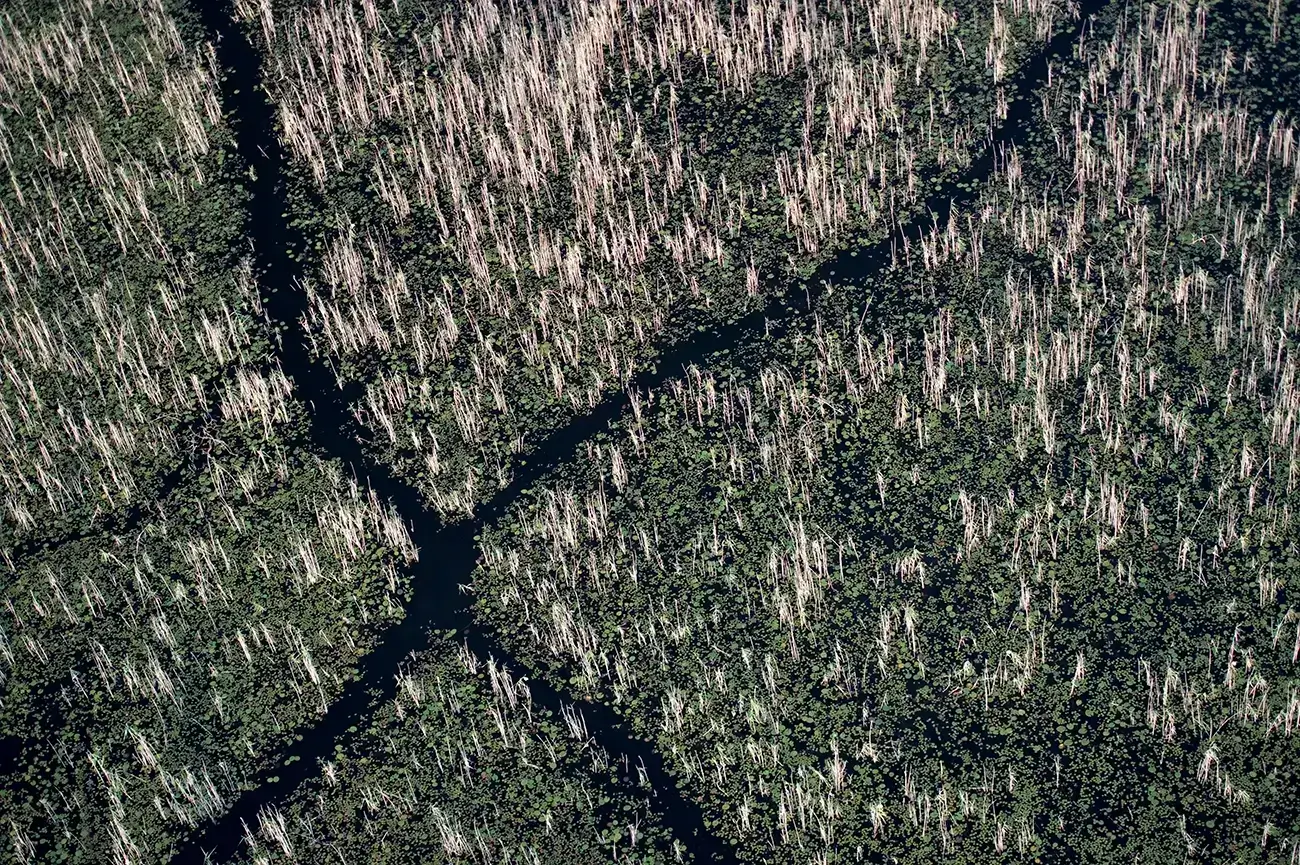
Aerial Photograph, Botswana, 2014 © Jon McCormack
Hippos move through the Okavango Delta guided less by sight than by smell. With relatively poor eyesight, they rely on scent to orient themselves in the dark, following familiar olfactory cues as they leave the water each night to graze. Night after night, generation after generation, they take the same routes between river and floodplain, their massive bodies compressing vegetation and soil into deep, persistent paths. Over time these repeated movements carve clear corridors through the landscape, subtle on the ground but unmistakable from above. Seen from the air, the delta is etched with these pale, branching lines—maps drawn by memory, habit, and scent, revealing how animal behavior can quietly reshape an entire ecosystem.
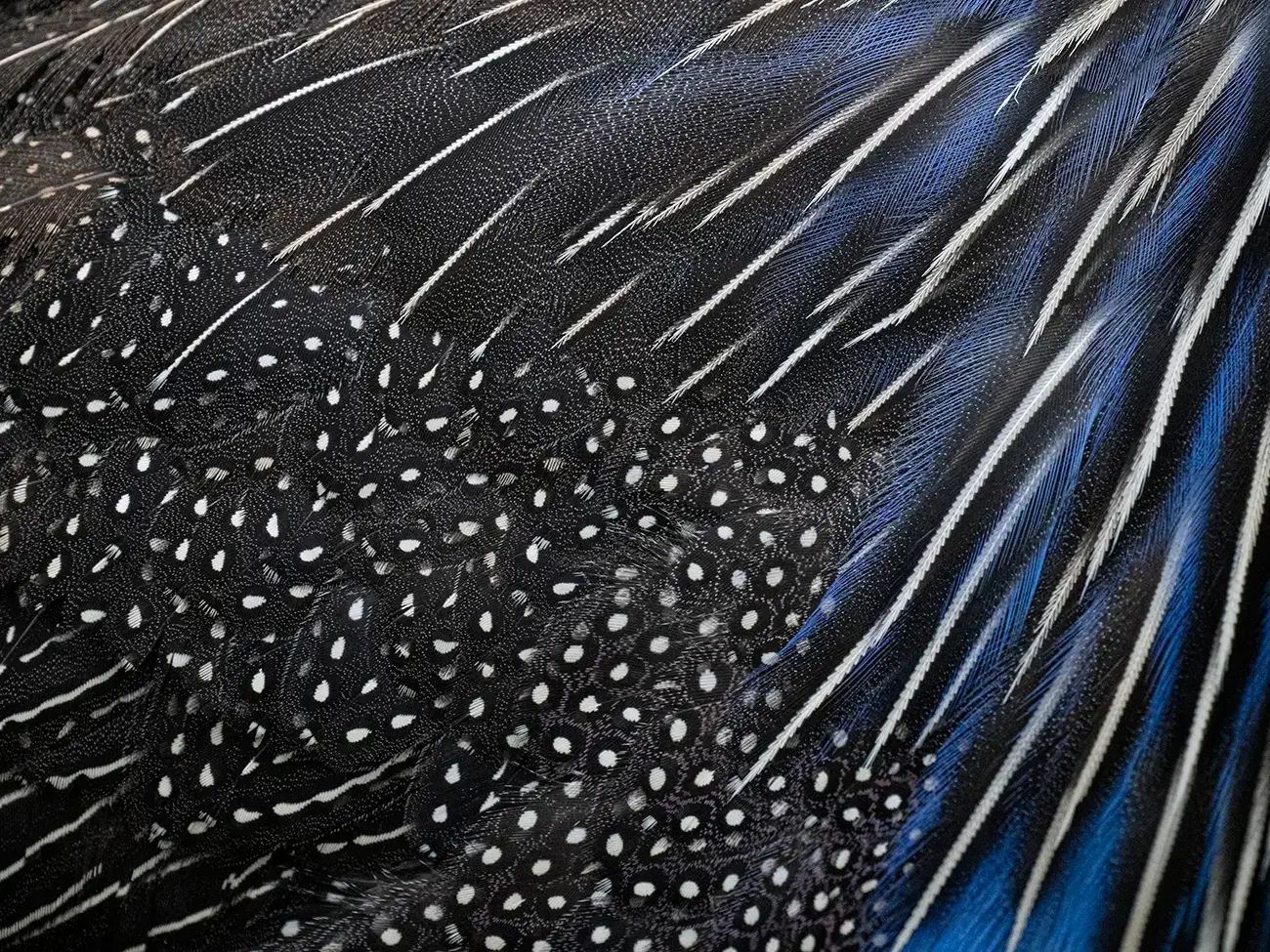
Wildlife Photograph, Kenya, 2024 © Jon McCormack
The vulture guinea fowl is adorned with a remarkable tapestry of feather patterns that feel both ornamental and purposeful. Its plumage is densely speckled with fine white dots, arranged in rhythmic rows across a deep charcoal or indigo ground, creating a surface that reads almost like woven fabric. Up close, the repetition reveals subtle variations—no two markings quite the same—giving the bird a living, breathing texture rather than a static design. The contrast between the delicate geometry of the feathers and the bird’s bare, vividly colored head heightens the sense of visual drama. Seen in motion, as flocks move through grass or across open ground, these patterns flicker and align, transforming individual birds into a shifting, unified design shaped by evolution and light.
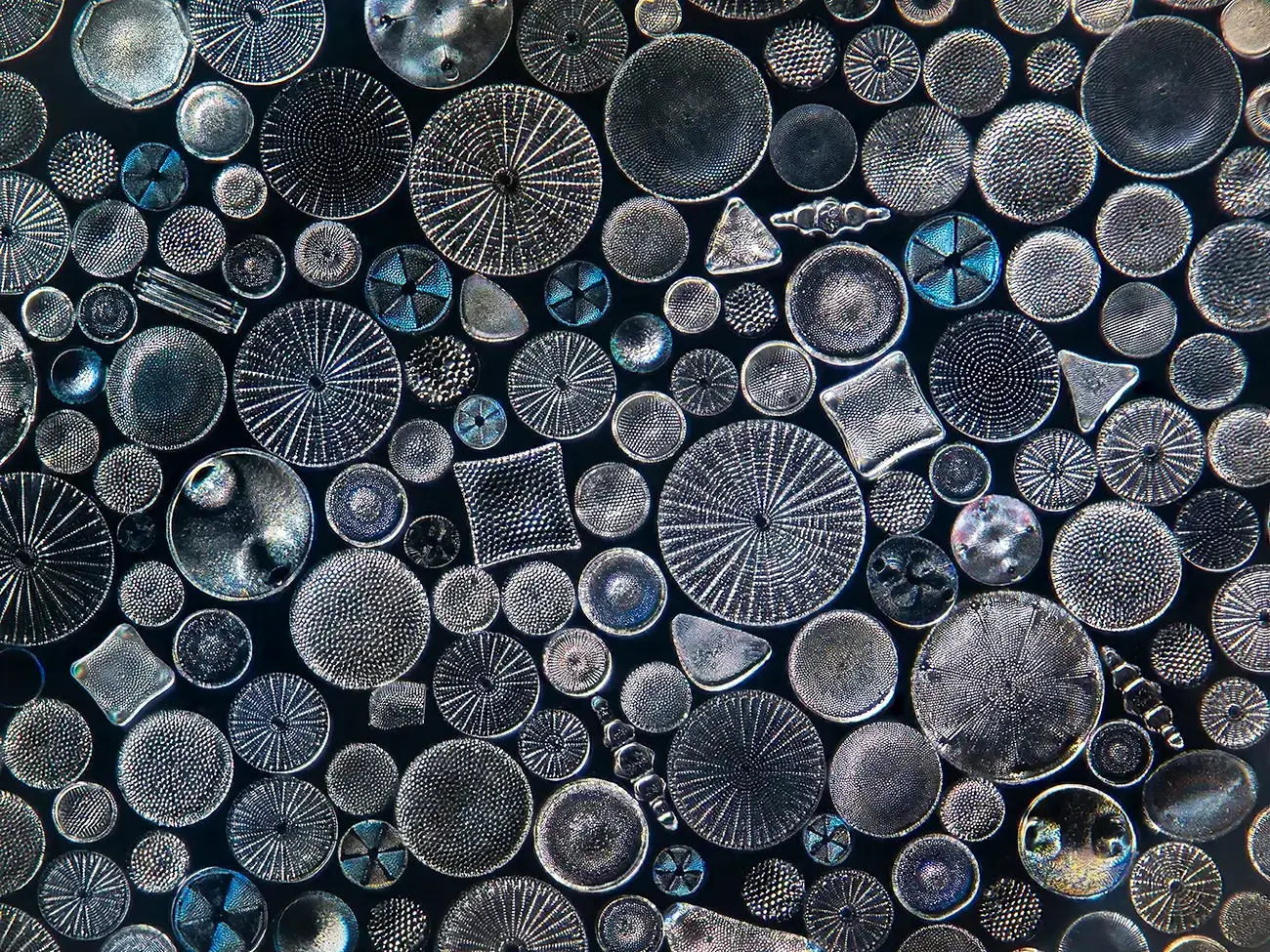
Microscope Photograph, 2024 © Jon McCormack
Using a microscope to photograph diatoms from the North Atlantic reveals a hidden world of astonishing precision and beauty. Each diatom is no larger than the width of a human hair, yet under magnification they appear like tiny, luminous buttons scattered across the field of view. Their intricate forms come from silica skeletons—glasslike shells called frustules—that refract and reflect light, giving them a polished, almost metallic sheen. What seems simple at the scale of the ocean becomes exquisitely complex up close: geometric patterns, radial symmetry, and fine perforations shaped by biology rather than design. These microscopic organisms, drifting invisibly through cold Atlantic waters, quietly build their glass bodies molecule by molecule, turning chemistry into architecture.
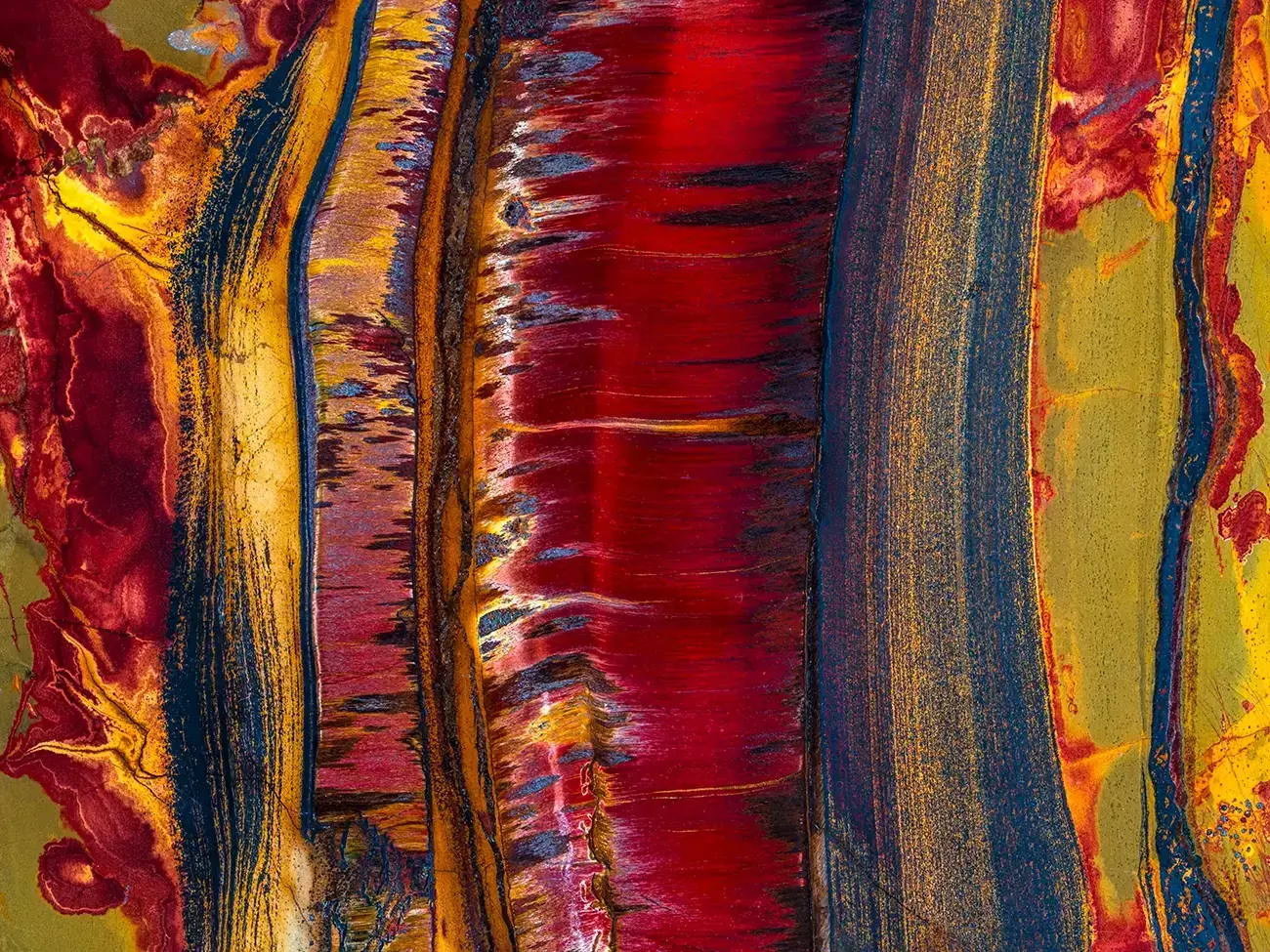
Macro Photograph, Australia, 2025 © Jon McCormack
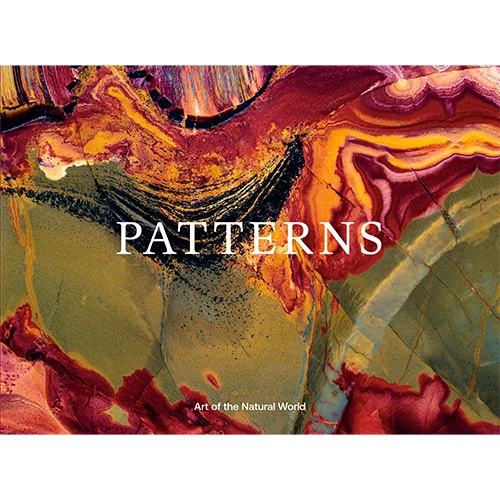
Tigerite from Australia’s Northern Territory is a stone shaped as much by time as by chemistry, and its extraordinary range of color comes from that slow, layered history. Formed when silica-rich fluids replaced ironstone within ancient sediments, tigerite preserves bands of fibrous quartz intertwined with iron oxides such as hematite and goethite. Golds and yellows emerge where iron oxidized slowly; deep reds and browns mark areas of higher iron concentration; blues and greys appear where silica dominates and light scatters through the stone’s fibrous structure. Over millions of years, pressure, heat, and groundwater reorganized these minerals into flowing, chatoyant patterns that seem to move as the stone is turned. The result is a natural record of Australia’s deep geological past—color not applied, but revealed.
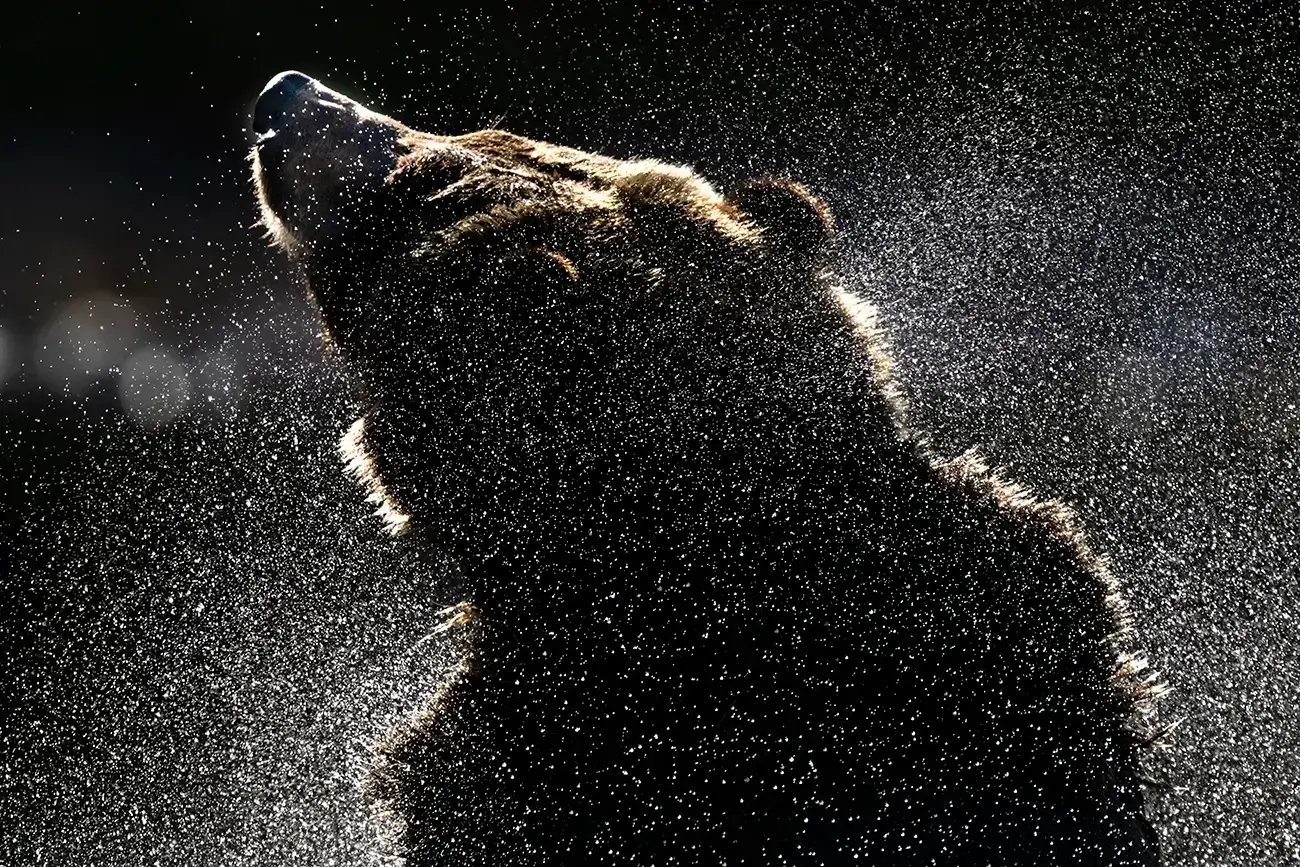
Wildlife Photograph, Canada, 2022 © Jon McCormack
Each fall, grizzly bears gather along the Chilcotin River as the salmon return, drawn by a seasonal abundance that has sustained life here for millennia. As the water fills with flashing silver and red, the bears take up their positions along gravel bars and riffles, moving with a patience born of instinct and experience. They wade into the current, scanning and listening, then strike with sudden precision, lifting powerful bodies against the flow. The river becomes a corridor of energy—salmon feeding bears, bears feeding forests, nutrients carried far beyond the banks by paw and tooth. In this brief window, the Chilcotin is transformed into a living artery, and the bears its most visible expression of the ancient rhythm between river, ocean, and land.
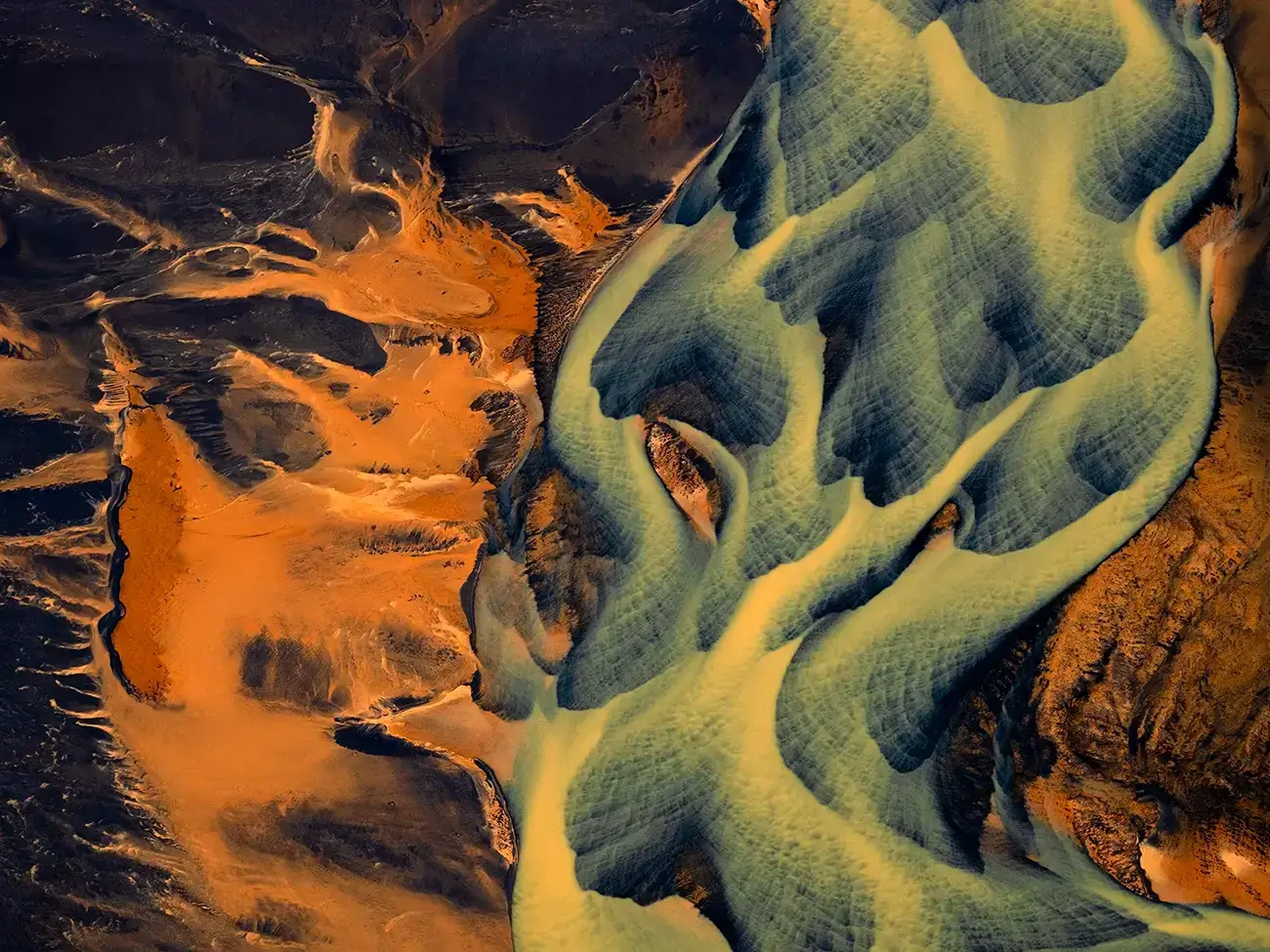
Aerial Photograph, Iceland, 2025 © Jon McCormack
In southern Iceland, braided rivers spread across broad outwash plains, dividing and rejoining in endlessly shifting patterns shaped by meltwater from nearby glaciers. As ice melts, torrents of sediment-rich water surge downstream, depositing sand, silt, and volcanic ash in overlapping channels that are constantly rearranged by flow, floods, and seasonal change. The striking reds and yellows come from the geology beneath the water: iron-rich volcanic sediments oxidize into rust tones, while sulfur compounds and weathered rhyolite contribute warm yellows and ochres. Minerals stain the riverbeds as currents thin and thicken, revealing layers of color that mirror the island’s volcanic origins. What looks like abstract painting from above is, in fact, a precise record of water, ice, and rock negotiating space in real time.
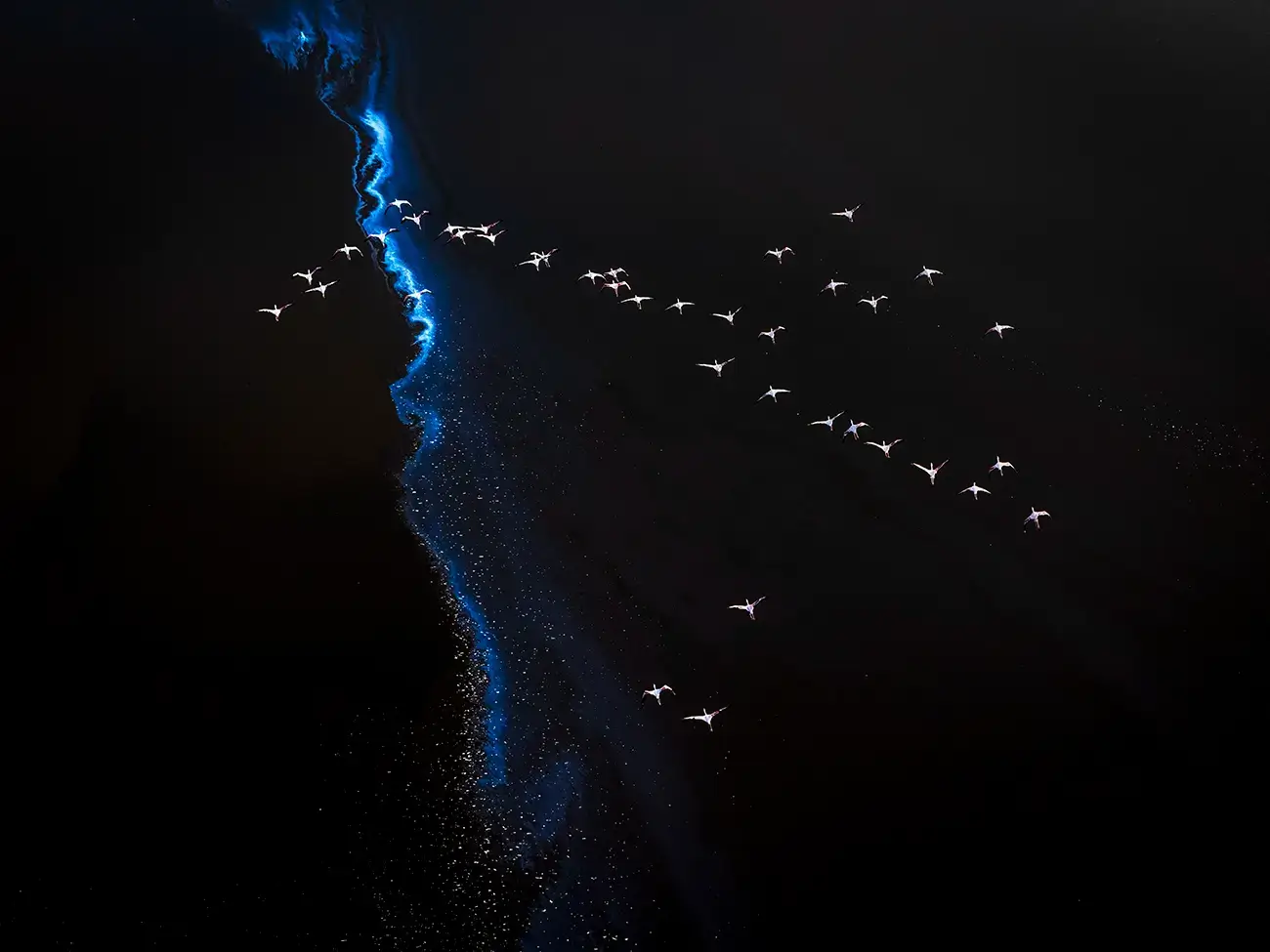
Aerial Photograph, Kenya, 2024 © Jon McCormack
Over Lake Magadi, flamingos and algae choreograph living patterns that feel both ancient and alive. The lake’s extreme alkalinity—rich in soda ash and dissolved minerals—creates the perfect conditions for dense blooms of cyanobacteria, whose pigments stain the water in deep crimsons and rusts. As flamingos gather to feed on the algae, their movements trace pale arcs and whorls across the surface, stirring the mineral-laden shallows and reshaping the colors beneath their feet. Wind, evaporation, and shifting concentrations of soda leave behind crystalline edges and branching forms, while the birds’ constant motion redraws the canvas again and again. What emerges is a fleeting collaboration between chemistry and life: mineral patterns written by soda and algae, animated by thousands of flamingos moving as one.