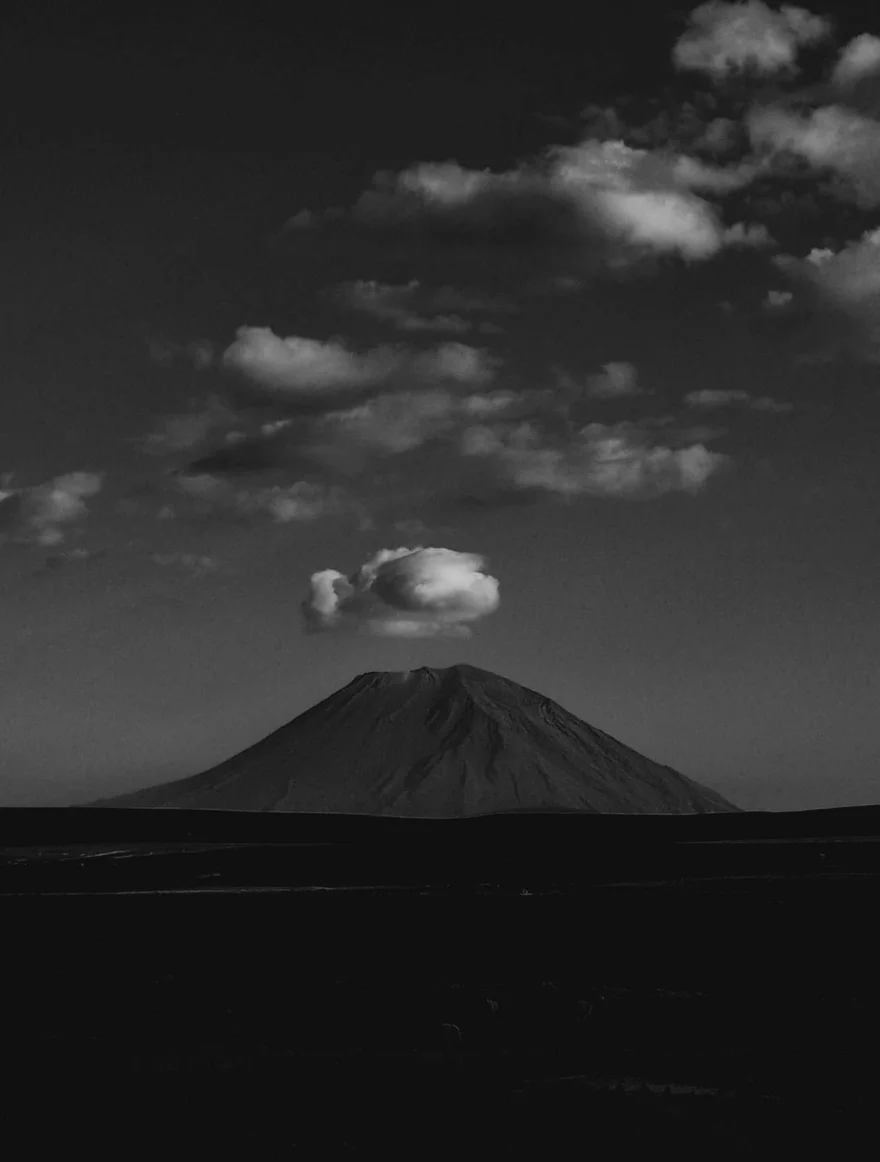
Physician by profession, Diego Cesar Monroy Chaparro has in recent year discovered through photography a love for the culture and traditions of his own country and the places he has visited. Monroy Chaparro believes that photography should not merely be viewed but studied, as an image captures social, cultural, and economic realities.
The Hasselblad Masters 2026 competition has announced its seven winners, selected from 70 finalists and over 108,000 submissions across 160 countries. Evaluated by a Grand Jury, winners were chosen for their technical excellence, originality, and conceptual strength.
Each winner receives the title of "Hasselblad Master," a Hasselblad 100-megapixel medium format camera, two XCD lenses, a EUR 5,000 creative fund, and inclusion in the commemorative Hasselblad Masters book.
Every month, photographers from around the world share their latest projects with us, offering a remarkable glimpse into the diversity of contemporary photography. From fine art photography and street photography to intimate documentary photography, these submissions reveal compelling visual stories, fresh perspectives, and distinctive artistic voices that continue to shape today's photographic landscape.
In this June 2026 edition, we are delighted to present a curated selection of emerging photographers and established talents whose work stood out for its originality, creativity, and powerful storytelling. Their photography portfolios explore a wide range of subjects and approaches, demonstrating the richness and versatility of the medium while reflecting the complexities of the modern world.
Whether you're looking to discover photographers to watch, explore inspiring new projects, or simply enjoy exceptional photography, we invite you to immerse yourself in these carefully curated portfolios. We hope their unique visions inspire your own creative journey and deepen your appreciation for the art of photography.
American photographer Susan Anthony brings a painter’s eye to documentary photography, creating nuanced portraits of people and places shaped by time, community, and tradition. Her work is rooted in observation, empathy, and a deep curiosity about the lives of others. Through long-term projects, she explores the relationship between individuals and the environments they inhabit, revealing the stories that connect people to a place and to one another.
Discover Crossing, Kaplan’s powerful documentary photography project capturing Roxham Road, the irregular Canada-US border crossing used by refugees from 2018 to 2023.
Spurred by Trump-era immigration policies, this tiny site between New York and Quebec became a safe, highly unusual microcosm of global migration. Over four years, Kaplan photographed the entire ecosystem—from local cab drivers and border police to the asylum-seekers themselves. Moving past traditional media tropes of victimhood, these photographs challenge stereotypes to highlight the immense courage and resilience required to step into an unknown future before the site's closure in 2023.
I have spent years looking at Lee Friedlander’s America. It has always been a country of sharp angles, cluttered street corners, and shadows that seem to swallow the photographer whole. So when I picked up his latest monograph, Life Still, I expected the familiar noise of his world. Instead, I found something stranger: a 91-year-old master holding his breath.
Carole Mills Noronha is an Australian photographer whose deeply personal work explores memory, family, loss, and the fragile nature of identity. Living with epilepsy and a lifelong sensitivity to light, she has developed a distinctive photographic language rooted in observation, empathy, and emotional connection. Her images are shaped by lived experience, revealing intimate stories with remarkable honesty and tenderness.
Part of a bigger journey of liberation through self-exploration, this new photobook by Jo Ann Chaus is above all a collection of self-portraits, complemented by landscapes, still lifes and domestic interiors observed and inhabited by the photographer-cum-model
Between Rubble, Dust, and Balloons is a long-term documentary project about women in Antakya three years after the devastating earthquake of February 6, 2023. While global attention has faded, the consequences of the disaster continue to shape everyday life. The project follows three women of different ages and social backgrounds as they rebuild their homes, livelihoods, and sense of stability.
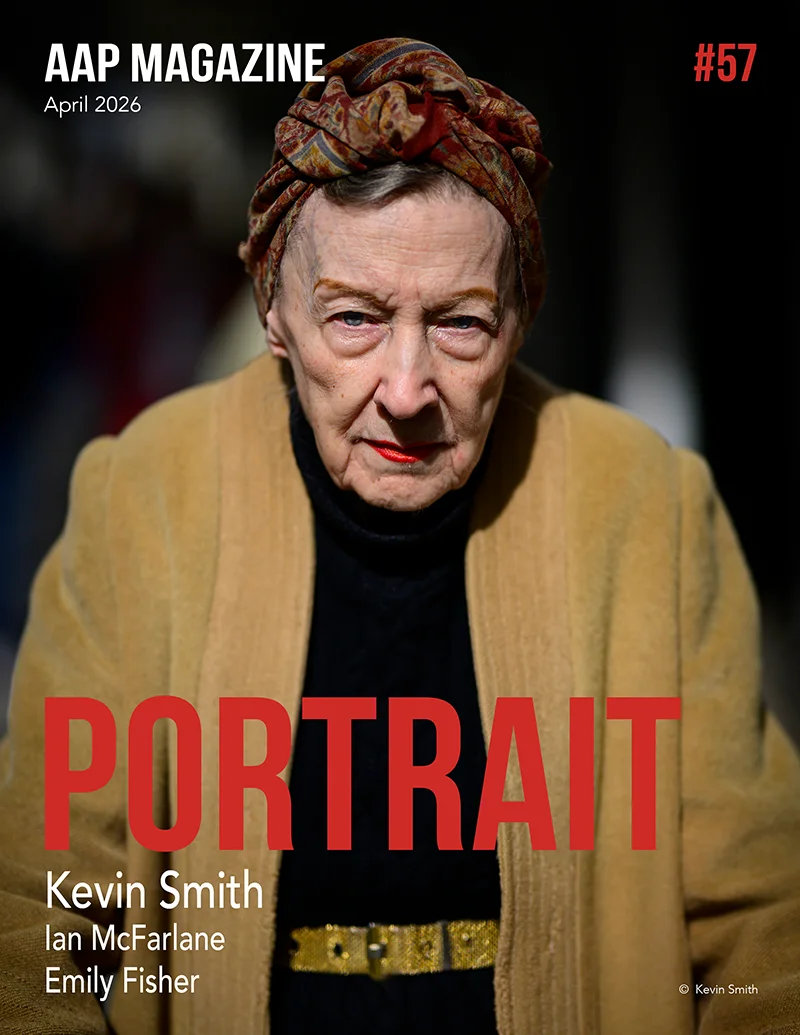
Portrait photography is far more than a mere physical record of a face. It is a profound artistic genre operating at the crossroads of technical mastery and raw human sensibility. While early portraiture in 1839 mimicked the stiff aesthetics of classical paintings for the upper class, modern portrait photography has evolved into a dynamic celebration of the subject. A truly great portrait captures a privileged, fleeting moment where alchemy happens, allowing the photographer to peer beneath the surface and capture the very personality of the subject.
Silent Witnesses: Fukushima 2011–2026 is a long-term photographic project documenting the aftermath of the Great East Japan Earthquake,
tsunami, and Fukushima Daiichi nuclear disaster over fifteen years.
In this series, I explore the deep rainforests of the Mentawai Islands in
Indonesia, a place where survival and daily life are closely tied to old traditions.
I have always been drawn to indigenous cultures and how they keep their true
identity in a fast changing world. The Mentawai people live in close harmony
with nature. Their tradition of titi ( sacred tattoos ) is not just ink on skin, it is a
spiritual language to link to their ancestors
Enter the AAP Magazine Photography Contest: Showcase Your Best Projects on the Theme of Shapes. Show us the elements that abstract into light, texture, shape and shadow. $1,000 Cash Prizes and printed magazine.
This summer, CPW (Center for Photography at Woodstock) will debut the inaugural Upstate Photography Biennial, a major new exhibition celebrating the thriving photographic arts scene across upstate New York. Bringing together the work of 39 artists, the landmark exhibition offers a compelling snapshot of the region’s creative vitality and its growing influence on contemporary photography.
Blending photography and poetry, Burnt Eyes explores nostalgia, memory, and identity, offering a profound reflection on the complexities of belonging and the stories that shape us.
We invite dedicated and passionate photographers from all around the world to share their work in our printed edition. Each issue is central to a specific theme and provides a gallery of inspiring imagery, focusing on each artist with their own experience to share.
With an eye towards beauty, quality and novelty, we strive to promote portfolios which stand out for their unique visual signature style and character. Our goal is to help photographers get the exposure we think they deserve and to inspire the others with ideas, projects and goals to help develop their own photography.
Lee Friedlander: Life Still is a landmark monograph that brings together mostly unpublished photographs from one of America’s most influential photographers.
Spanning nearly seventy years, Friedlander’s career has been defined by a unique vision that finds poetry in the everyday. Life Still offers readers a rare glimpse into his expansive archive while introducing new work that underscores his continued relevance and insight. The book creates a compelling dialogue between past and present, showing how Friedlander’s eye consistently discovers humor, irony, and subtle complexity in the ordinary landscapes, urban spaces, and domestic environments he photographs.
Known for his compositional inventiveness and his ability to transform mundane scenes into layered visual narratives, Friedlander captures America in all its contradictions. Streets, signage, storefronts, fences, trees, and reflections become more than background—they become actors in his ongoing exploration of how we inhabit space and interact with culture. Often witty, occasionally surreal, and always meticulously observed, his photographs invite viewers to reconsider what they notice in the world around them.
Life Still features an insightful essay by Pulitzer Prize–winning critic and New Yorker staff writer Hua Hsu, which contextualizes Friedlander’s work within both historical and contemporary photographic practice. This combination of visual and written perspective illuminates the ways Friedlander’s images continue to challenge conventions and inspire new generations of photographers.
More than a retrospective, Life Still is both a summation of Friedlander’s decades-long career and a testament to his ongoing creative vitality. It is a celebration of observation, a meditation on American life, and a masterclass in seeing with clarity, humor, and empathy. For anyone interested in the art of photography, this monograph offers an intimate and expansive view into the work of a photographer whose vision remains as compelling and relevant today as ever.
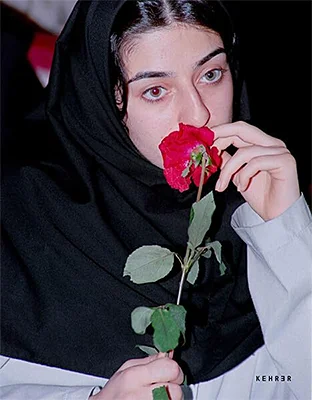
Newsha Tavakolian: And They Laughed at Me is a bold and disarming return to the fragile beginnings of a photographer who would later gain international recognition. Instead of assembling a volume of celebrated images, Newsha Tavakolian turns to what she once dismissed as her “eyesores”—photographs made in her teenage years when she began working as a photojournalist in Tehran. Taken at sixteen, in the charged atmosphere of a country shaped by political tension and social constraint, these early frames carry the urgency and uncertainty of youth.
Revisiting these photographs decades later, Tavakolian confronts not only her technical inexperience but also the emotional terrain of growing up under scrutiny. The images reveal crowded streets, intimate domestic moments, and fleeting expressions that hover between defiance and vulnerability. What once felt flawed now reads as raw testimony. Through this act of excavation, she reframes imperfection as evidence of persistence, tracing the arc from youthful aspiration to the sobering awareness of reality’s weight.
The book unfolds as a rite of passage. Tavakolian reflects on the tension between hope and disillusionment, between the instinct to withdraw into darkness and the determination to move toward light. Her career, later marked by international exhibitions and major honors, including the Carmignac Photojournalism Award and the Prince Claus Award, began in these formative encounters with the camera. The photographs capture the seeds of a voice that would grow increasingly nuanced, attentive to identity, censorship, and the quiet resilience of everyday life in Iran.
And They Laughed at Me becomes more than an archival project; it is a meditation on self-doubt and endurance. By embracing images she once rejected, Tavakolian asserts the value of vulnerability in artistic growth. The result is an honest and reflective volume that invites readers to reconsider failure, to see in missteps the contours of becoming, and to recognize that the path toward clarity often begins in uncertainty.
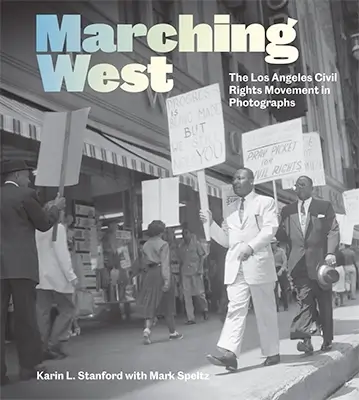
This volume offers a compelling visual record of the people, organizations, and coalitions that shaped the civil rights movement in Los Angeles, presenting a first-of-its-kind photographic history of activism on the American West Coast.
In 1963, during a landmark speech at Wrigley Field before nearly forty thousand people, Dr. Martin Luther King Jr. challenged Angelenos to confront inequality at home, stating that meaningful change required action within their own city: “The most important thing that you can do is to set Los Angeles free, because you have segregation and discrimination here, and police brutality.”
Marching West traces this urgent call through the lens of photography, revealing how images not only documented the struggle for Black equality but also actively participated in shaping its visibility and momentum. The book brings together more than one hundred photographs, including previously unpublished works, that connect local activism in Los Angeles to broader national movements.
Spanning churches, street demonstrations, cultural gatherings, and political organizing, these images highlight the role of a diverse network of participants—community leaders, religious figures, Hollywood personalities, and everyday citizens—who collectively advanced the fight for civil rights in the American West.
Drawn from significant archives such as the Tom & Ethel Bradley Center at California State University, Northridge, the Getty Research Institute, and other Southern California collections, the volume features work by photographers including Harry Adams, Howard Bingham, Charles Brittin, Joe Flowers, Vera Jackson, and Charles Williams.
Together, these photographs offer more than documentation. They form a layered narrative of resistance and solidarity, expanding the historical understanding of the civil rights era by foregrounding voices and events often overlooked in mainstream accounts of American social progress.
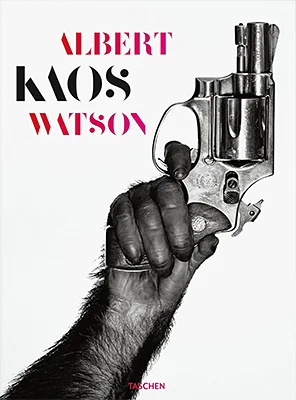
Albert Watson: Kaos is a masterful survey of one of photography’s most influential voices, spanning five decades of work that oscillates between intimacy and spectacle. Watson’s photographs are at once meticulously composed and viscerally immediate, capturing both the iconic and the unexpected with equal authority.
KAOS charts Watson’s journey from his breakthrough Alfred Hitchcock portrait in 1973 to the present, revealing the astonishing range of his vision. Across its pages, readers encounter a kaleidoscope of subjects: celebrities in revealing vulnerability, strangers in fleeting urban moments, wildlife in arresting stillness, and landscapes that shimmer with elemental power. Each frame is a study in light, shadow, and narrative tension, embodying Watson’s extraordinary ability to render the familiar as extraordinary.
The book moves fluidly between worlds. Supermodels and pop icons—David Bowie, Kate Moss, Jay Z, Jennifer Lopez, Mick Jagger—sit alongside anonymous figures in neon-lit cities and remote Scottish landscapes, their presence amplified by Watson’s uncanny sense of timing and composition. From sensuous nudes to stark urban street photography, his work explores surface beauty while hinting at the emotional and psychological depth beneath. Watson’s camera captures not only what is seen, but the subtle textures of human experience: desire, humor, solitude, and magnetism.
Accompanied by an essay from Philippe Garner and enriched with Watson’s own reflections, as well as previously unpublished Polaroids from his personal archive, KAOS is both an authoritative career retrospective and a deeply personal document. The photographs pulse with cinematic allure, formal precision, and the irrepressible vitality of a life spent observing the world in its most dynamic and intimate moments.
Presented in a sumptuous hardcover, with optional signed Art Editions including exclusive prints, Albert Watson: Kaos is a definitive celebration of an artist whose work continues to inspire photographers, collectors, and enthusiasts around the globe, capturing a universe simultaneously chaotic, poetic, and utterly compelling.
The Sony a7 V emerges as a versatile powerhouse for photographers and videographers who need a single camera to handle everything from high-speed action to long-form multimedia projects. Combining a hybrid full-frame design with Sony’s latest AI-driven autofocus and subject recognition, it is a camera that can work as hard as its user demands. Its compact body belies the technological depth within, delivering performance traditionally expected from flagship models while remaining approachable for daily use.
At its core, the a7 V features a 33MP Exmor RS CMOS sensor, partially stacked for faster readout speeds and reduced rolling shutter. Coupled with the new BIONZ XR2 processor, the cam
The Fujifilm X-E5 mirrorless camera feels like a deliberate return to photographic essentials, paired with thoroughly modern performance. Its compact, rangefinder-inspired body recalls a time when cameras were designed to be carried daily, not merely stored in padded cases. Yet beneath this understated exterior lies Fujifilm’s most advanced APS-C technology, offering a balance that will appeal to photographers who value both craftsmanship and cutting-edge capability. The X-E5 is clearly aimed at those who enjoy direct engagement with their camera, particularly in fast-moving street and travel environments.
At the core of the X-E5 is the 40.2MP X-Trans 5 HR sensor and X-Processor 5, a co
The Godox AD300Pro Outdoor Flash strikes a thoughtful balance between power, portability, and practicality, making it a compelling companion for photographers who prefer to work untethered. Weighing in at under three pounds and built around a clean monolight design, it feels purpose-made for location work, yet remains equally comfortable in a controlled studio setting. Godox has clearly focused on mobility here, offering a tool that fits easily into a compact kit while still delivering the authority expected from a professional flash.
Performance is where the AD300Pro quietly asserts itself. Its output range spans nine stops, allowing precise control from subtle fill to decisive illuminat
The Sony RX1R III occupies a rare position in the digital camera world, offering uncompromising image quality within a body small enough to disappear into daily life. It is a camera built on the enduring idea that limitation can inspire clarity, pairing a fixed 35mm lens with one of Sony’s most advanced full-frame sensors. Rather than chasing modularity, the RX1R III refines a focused concept, delivering professional-level performance in a form that encourages constant use rather than careful planning.
At the heart of the camera lies a 61-megapixel back-illuminated sensor capable of extraordinary detail and tonal depth. Images display a striking sense of clarity, supported by wide dynam