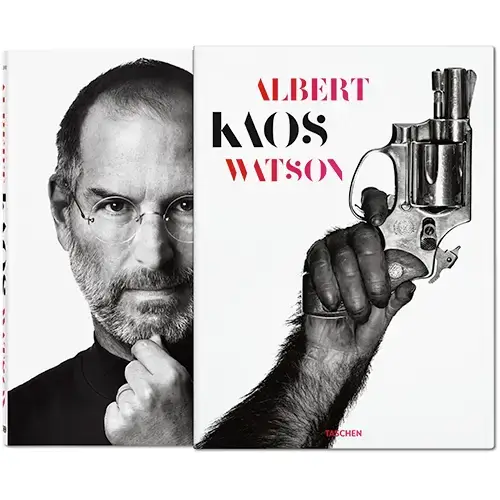
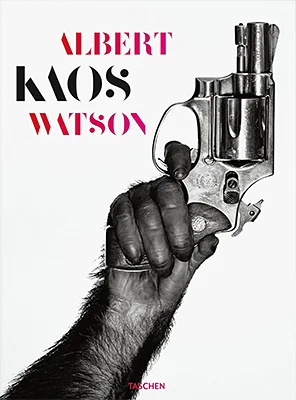
KAOS by
Albert Watson is far more than a retrospective monograph spanning more than fifty years of photography. To me, it immediately felt like an object of art—something that insists on being present. With its imposing XL format and nearly eleven pounds, It’s not a book you casually leave on the side of a sofa or slip into a bag. You place it somewhere with intention. On a table, in full view. Not just as decoration, but as something that invites attention, something you return to.
And that’s exactly what happens. You don’t open KAOS once—you keep coming back to it. Each time, I thought I already knew the images. And yet, they never felt exhausted. A photograph I was sure I had fully seen would suddenly reveal something else: a detail, a tension, a subtle emotion I hadn’t noticed before. The images stay with you. They come back later, almost like memories, and make you want to open the book again, just to look one more time, differently.
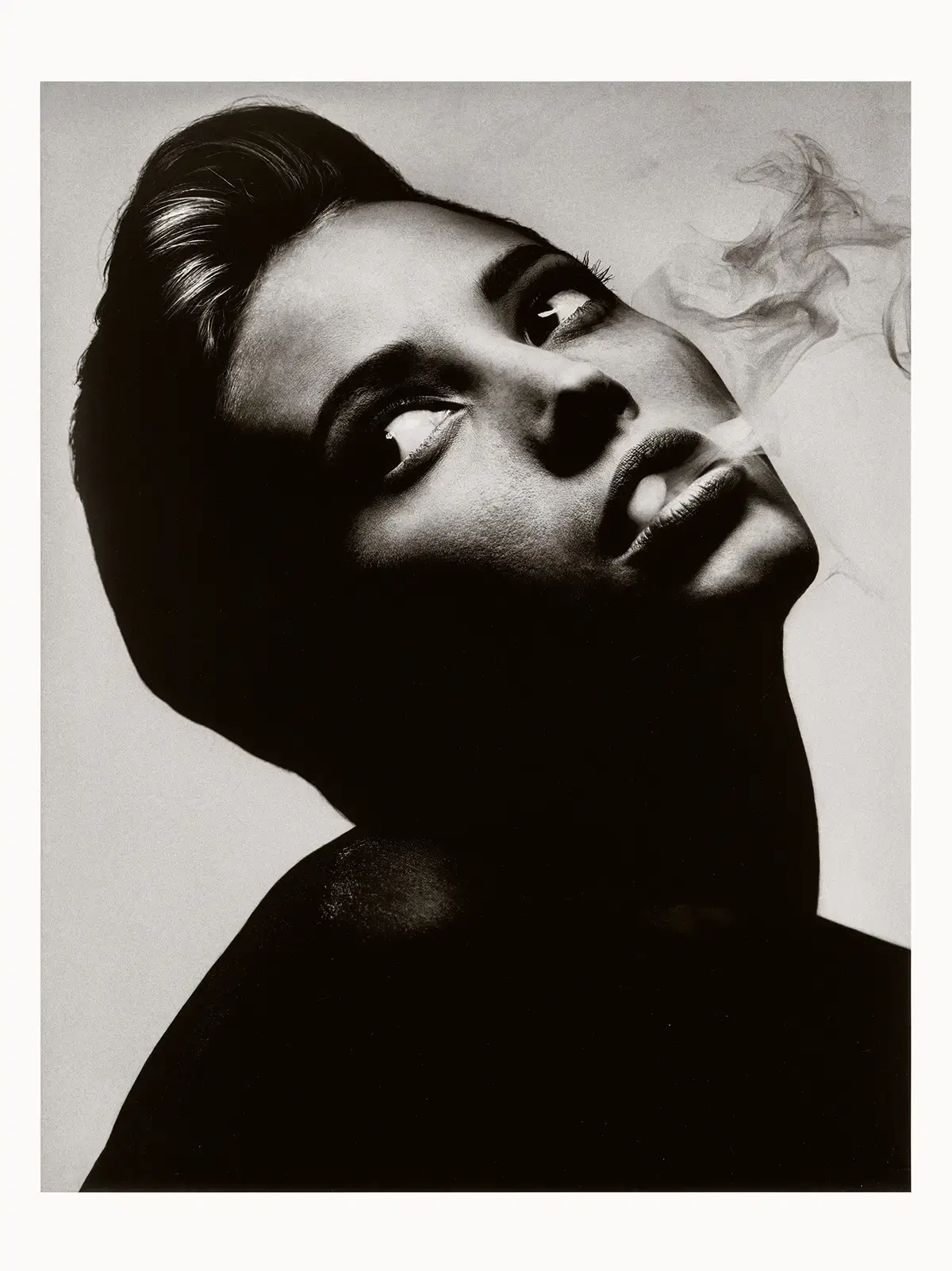
Christy Turlington, New York City, 1990 © Albert Watson, 2025
Albert Watson’s work has always struck me with its precision and quiet intensity. There is something extremely controlled in his images—every line, every shadow, every element feels deliberate. And yet, nothing feels rigid. There is always a kind of underlying tension that gives the photograph its life. In
KAOS, this balance becomes even clearer. The title might suggest disorder, but I see it more as the richness of a lifetime of looking. A kind of controlled chaos, where very different subjects, moods, and worlds coexist, but always with a strong, consistent vision.
I think most photography lovers feel like they already know Watson’s work. Even people less familiar with photography will recognize some of his images without necessarily knowing they are his. His visual language has become part of a collective memory. But KAOS shifts that perception. By placing personal work next to iconic commercial and advertising images—along with a selection of previously unseen Polaroids from his archive—the book creates a dialogue that we rarely get to see so clearly. It made me take a step back and look again at a photographer I thought I knew.
That’s what surprised me the most: this feeling of distance. Seeing all this work together, it no longer felt like a series of isolated, iconic images, but more like a continuous exploration—something restless, evolving, deeply intentional. The XL format of the book plays an important role in that experience. The images are given space to exist fully; you don’t just look at them, you almost step into them. There is a strong sense of proximity, as if the photographs unfold right in front of you, inviting a more intimate and immersive way of seeing. The book doesn’t just present photographs—it changes the way we see them, and the way we understand the photographer behind them.
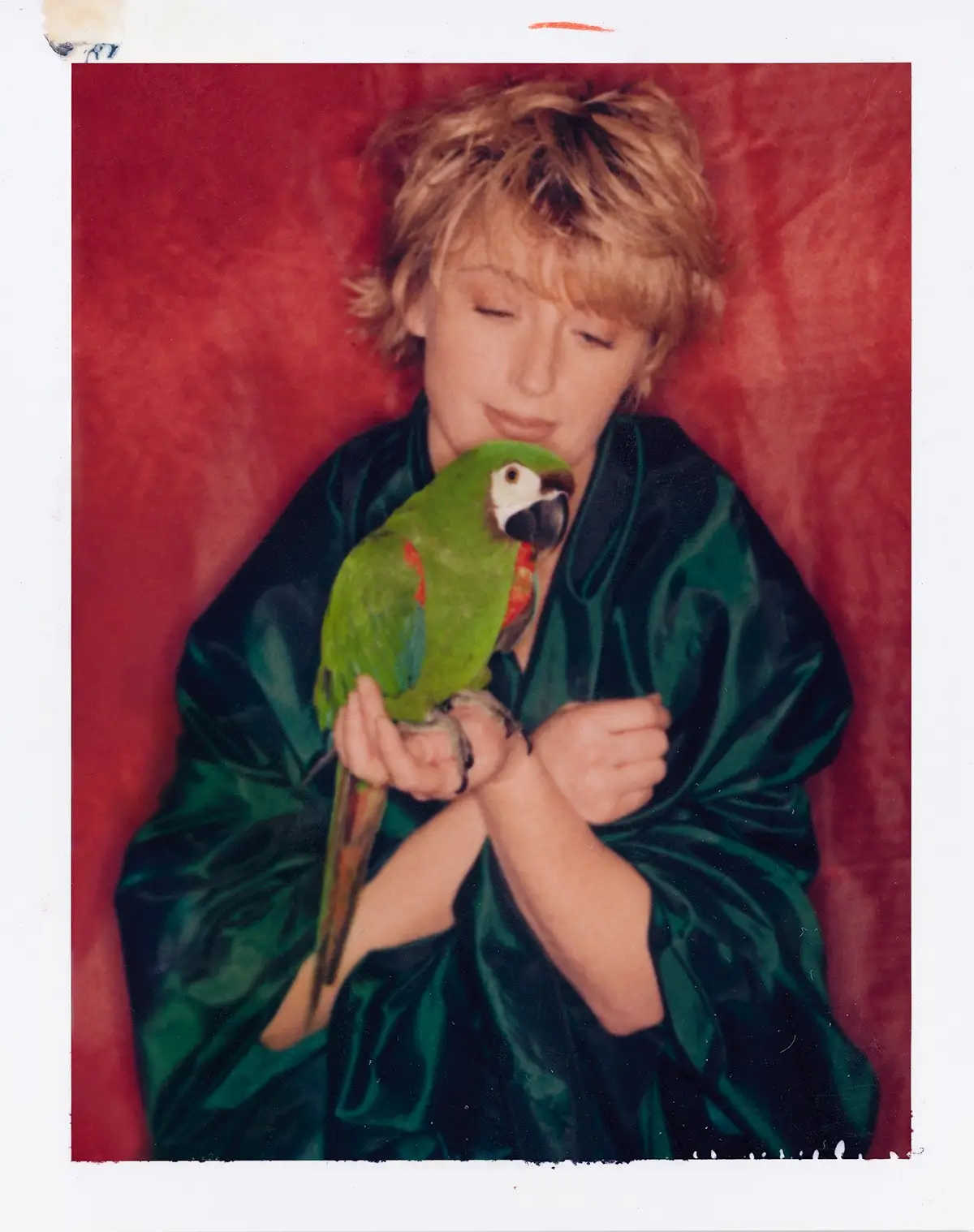
Cindy Sherman, Polaroid, New York City, 1994 © Albert Watson, 2025
What I also felt strongly is that
KAOS is a book about a “photographer’s photographer.” It refuses to fit into a single category, and in a way, it reflects Watson’s own words: he is not a portrait photographer, or a fashion photographer, or a landscape photographer—he is simply a photographer. Reading the introduction by
Philippe Garner (former head of photography at Christie's), I was interested by how he describes Albert Watson as someone who is always working, who “thinks photographs,” and never really steps away from seeing. He explains that this comes from a disciplined, almost austere background that runs through Watson’s entire career—something Watson himself connects to his “Presbyterian Scottish origins.”
The book moves freely between art, personal and commercial work, and that duality feels essential. It’s part of what makes his work so strong. Over the years, Watson has shot more than 100 covers for Vogue, yet his approach never feels repetitive. There is always a sense of poetry in his images, a tension that runs beneath the surface, and an impressive diversity of subjects—from fashion and music to unexpected series like his photographs of chimpanzees. Alongside these, his independent projects reveal another depth: documentary work in China, or his meticulous exploration of the personal effects of Tutankhamun, (a project that required two years of negotiations before it could even begin) or NASA artefacts. All of this reflects a restless curiosity and a powerful imagination that continuously push his work into new territories.
And this sense of movement, of unpredictability, is very present throughout the book. Watson himself compares it to scrolling through a feed—you never know what comes next. I loved that feeling, turning each page with curiosity, always wondering what image would appear, what world I would enter next.
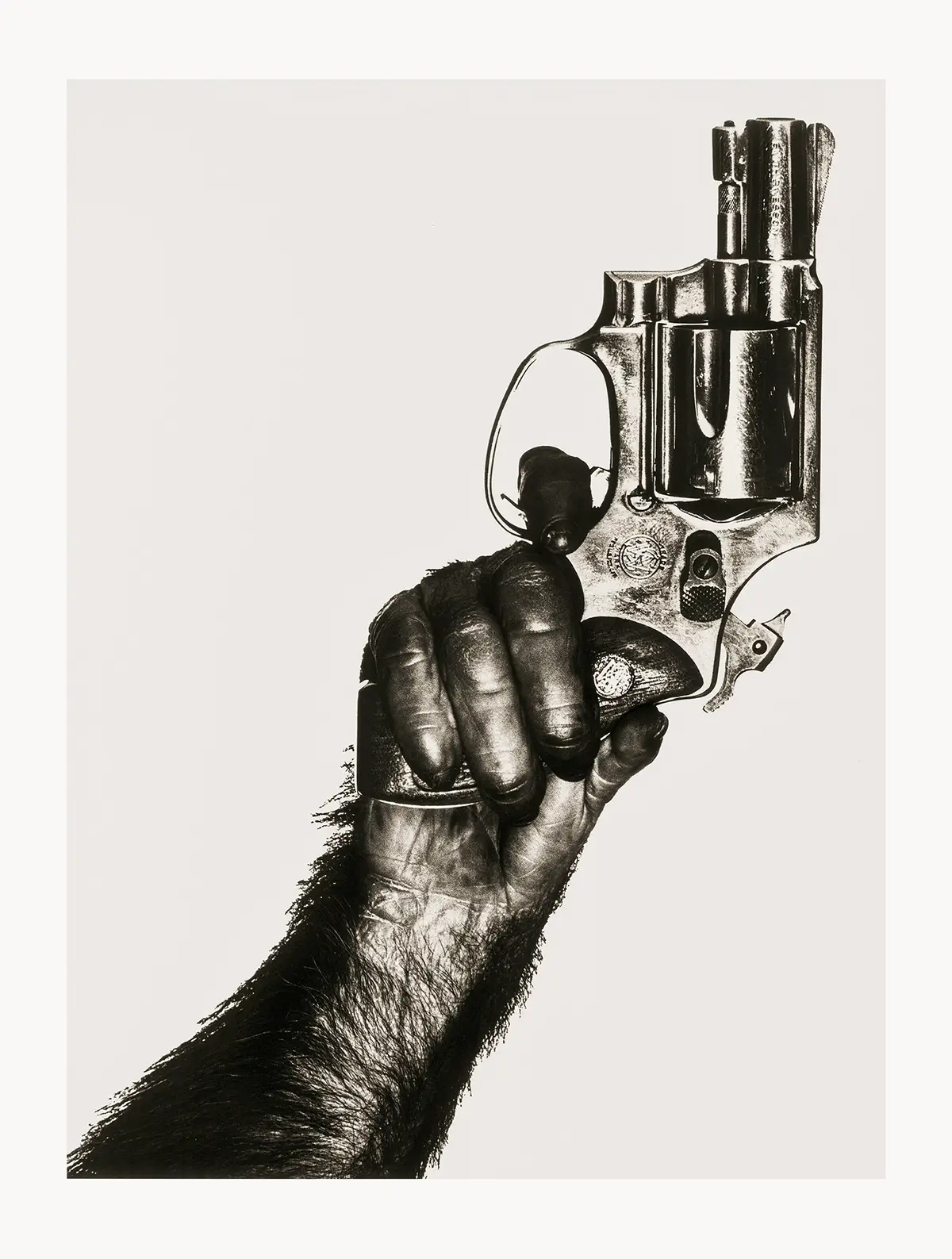
Monkey with Gun, New York City, 1992 © Albert Watson, 2025
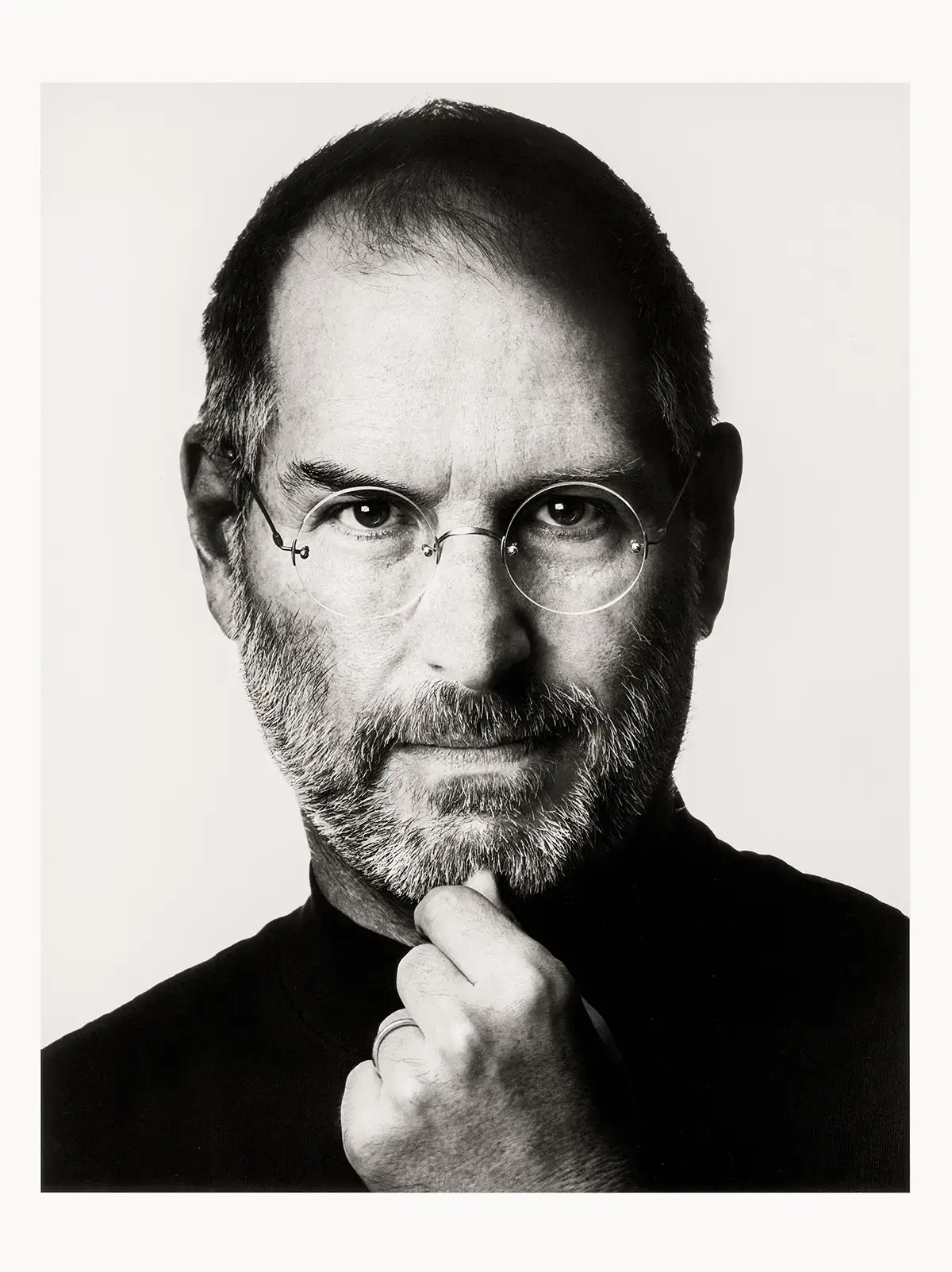
Steve Jobs, Cupertino, California 2006 © Albert Watson, 2025
There is also, across the book, a long reflection on identity and representation. Through figures like Steve Jobs, Alfred Hitchcock, The Rolling Stones, or Kate Moss (and so many other personalities, but the list would be too long), you see not just icons, but individuals. Watson has this ability to adapt to the person in front of him, to capture something beyond the surface. There is empathy in his portraits, a real attention to the subject, combined with an extraordinary sense of staging and detail.
Technically, the mastery is undeniable. Watson studied graphic design, as well as film and television, and you can feel those influences everywhere. Some images are purely graphic, almost minimal. Others have a strong cinematic quality. What is striking is the clarity of his photographs—everything feels precise, reduced to its essence, yet incredibly powerful. His images are carefully thought out, with masterful control of light. He doesn’t rely on digital manipulation; everything happens in front of the lens. And even the prints themselves, made in-house, reflect that same level of care and craftsmanship.
Understanding more about his background added another layer for me. Born in Scotland, on the Isle of Skye, raised between a sports-teacher father and a hairdresser mother, and born blind in one eye—there is something in that story that makes his trajectory even more striking. He met his wife very young, married at eighteen, and she has been by his side ever since, even becoming his agent when his career began to take off in the early 1970s. There is a photograph of them as children at the end of the book that stayed with me. It says a lot, quietly.

Tree, Fairy Glen, Isle of Skye, Scotland, 2013 © Albert Watson, 2025
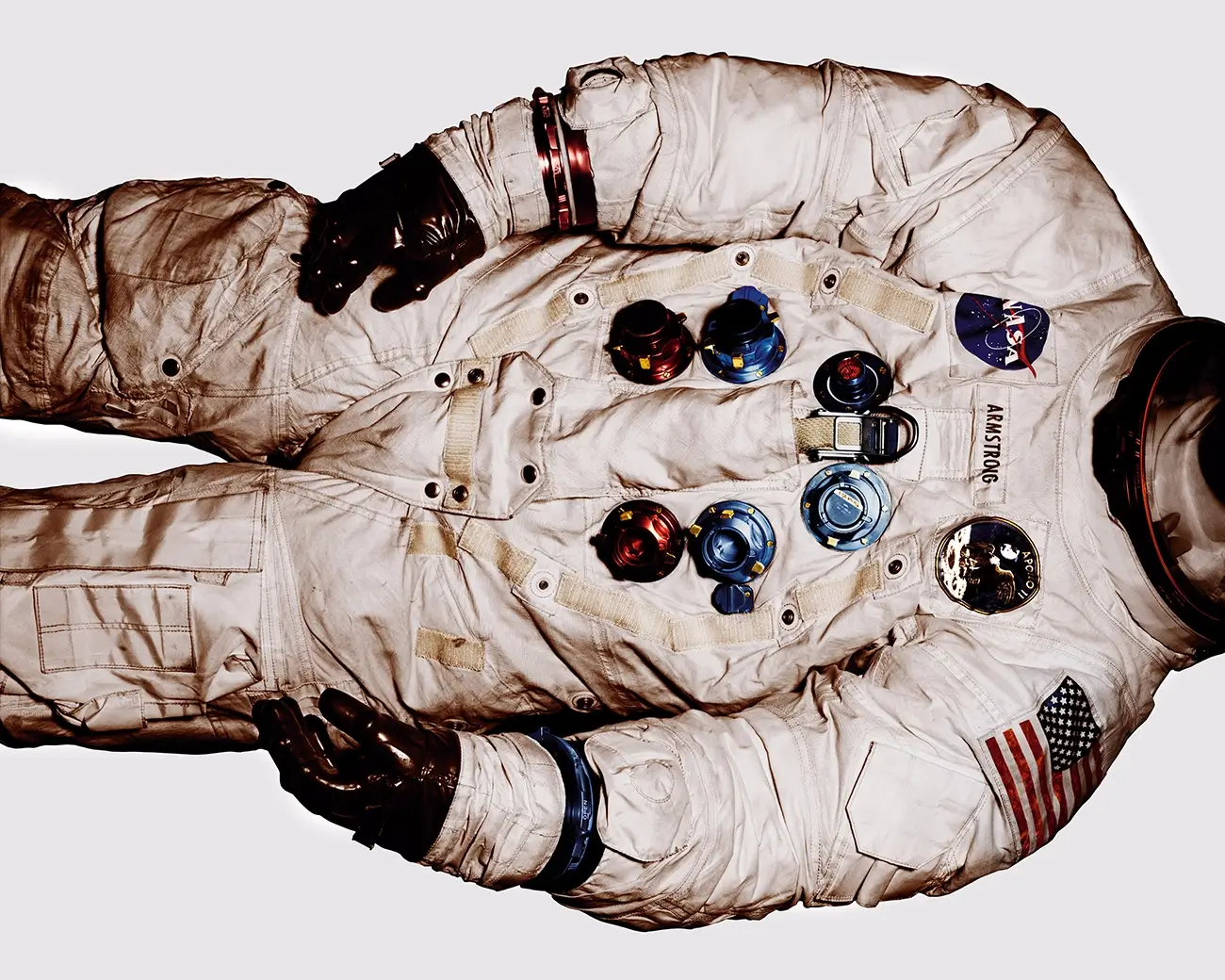
Neil Armstrong’s Spacesuit from First Moonwalk, The Smithsonian, Air & Space Museum, 1990 © Albert Watson, 2025
The book itself creates a kind of arc. It opens with his well-known portrait of Steve Jobs and, in a much more intimate way, closes on that childhood class photograph where Watson appears. I found that transition very moving—from a global icon back to something personal, almost fragile. It brings everything back to where it started: a life shaped by looking, by memory, by time passing.
I also loved rediscovering the range of his work. The color images, sometimes less discussed, feel incredibly rich. His cinematic visions of Las Vegas, his documentary photographs of Morocco, and his deeply personal images of the Isle of Skye all reveal different sides of his eye. It’s a book that moves constantly, but never loses its coherence.
In the end, KAOS felt like a deeply emotional book to me. Beyond the mastery, beyond the scale of the career, there is something very simple at its core: love. A love for photography, of course—but not only that. What I felt, page after page, is how inseparable that love is from another one, just as constant, just as essential.
It’s impossible not to think about the fact that Albert Watson received his first camera from his wife for his 22nd birthday. It’s a small detail at first glance, but it changes everything. Because from that moment on, the two stories seem to unfold together. His life in photography and his life with her don’t run parallel—they are intertwined, feeding each other, growing together over time.
The more I went through the book, the more I felt that connection. The discipline, the consistency, the commitment you see in his work echo something deeply personal. There is a sense of loyalty in the way he photographs the world, a kind of devotion that goes beyond the image itself. It feels like the same energy that sustains a lifelong relationship—attention, patience, presence.
And maybe that’s why the book resonates in such a lasting way. Because behind the iconic images, the technical mastery, and the extraordinary career, there is a continuous thread: a life built on two enduring passions that cannot be separated. A love for seeing, and a love for someone who was there from the very beginning.
In that sense,
KAOS becomes more than a collection of photographs. It feels like a lifelong love story—one that is still unfolding, still evolving, and that, in many ways, never really ends.
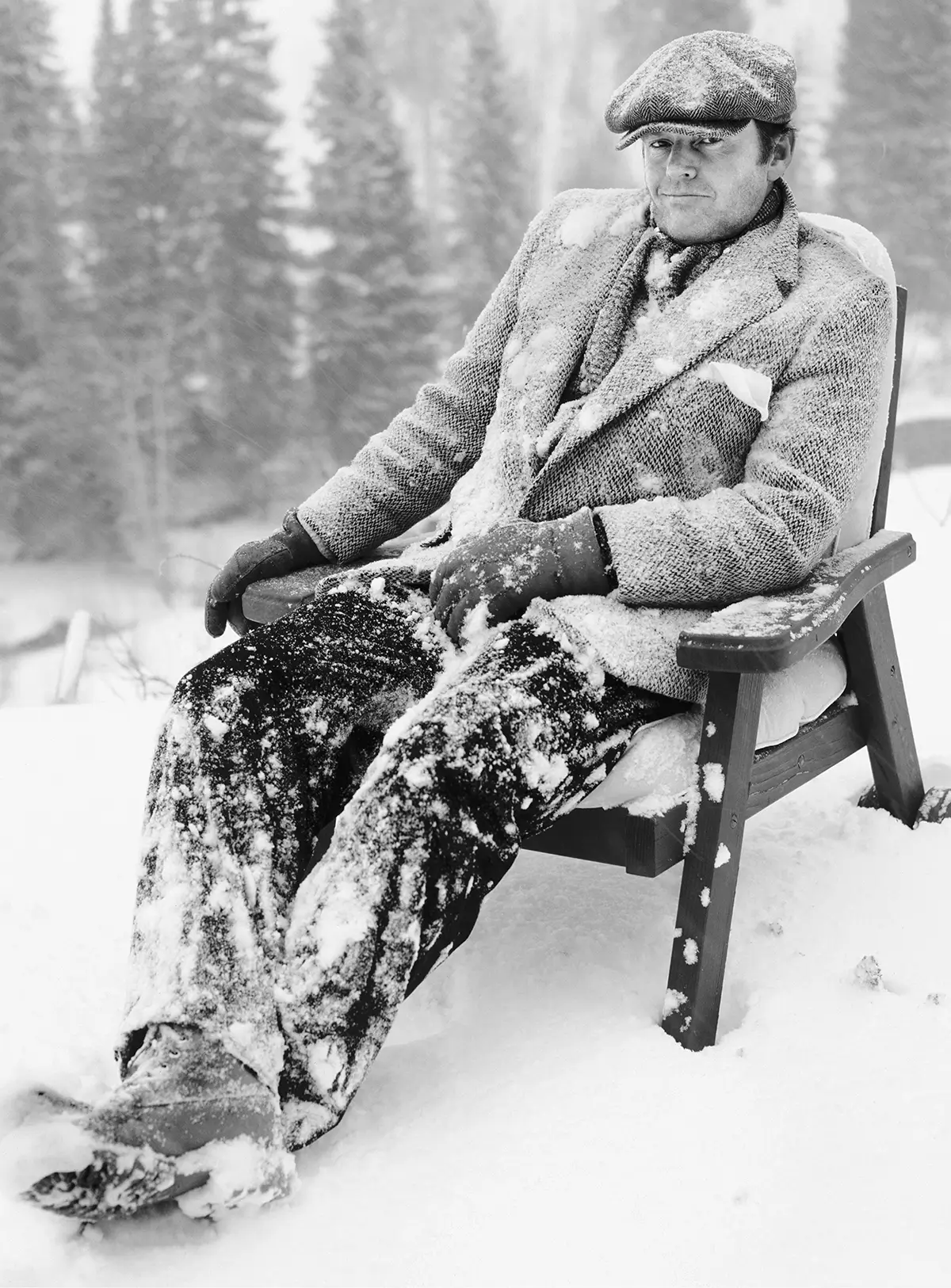
Jack Nicholson, Aspen, Colorado, 1981 © Albert Watson, 2025
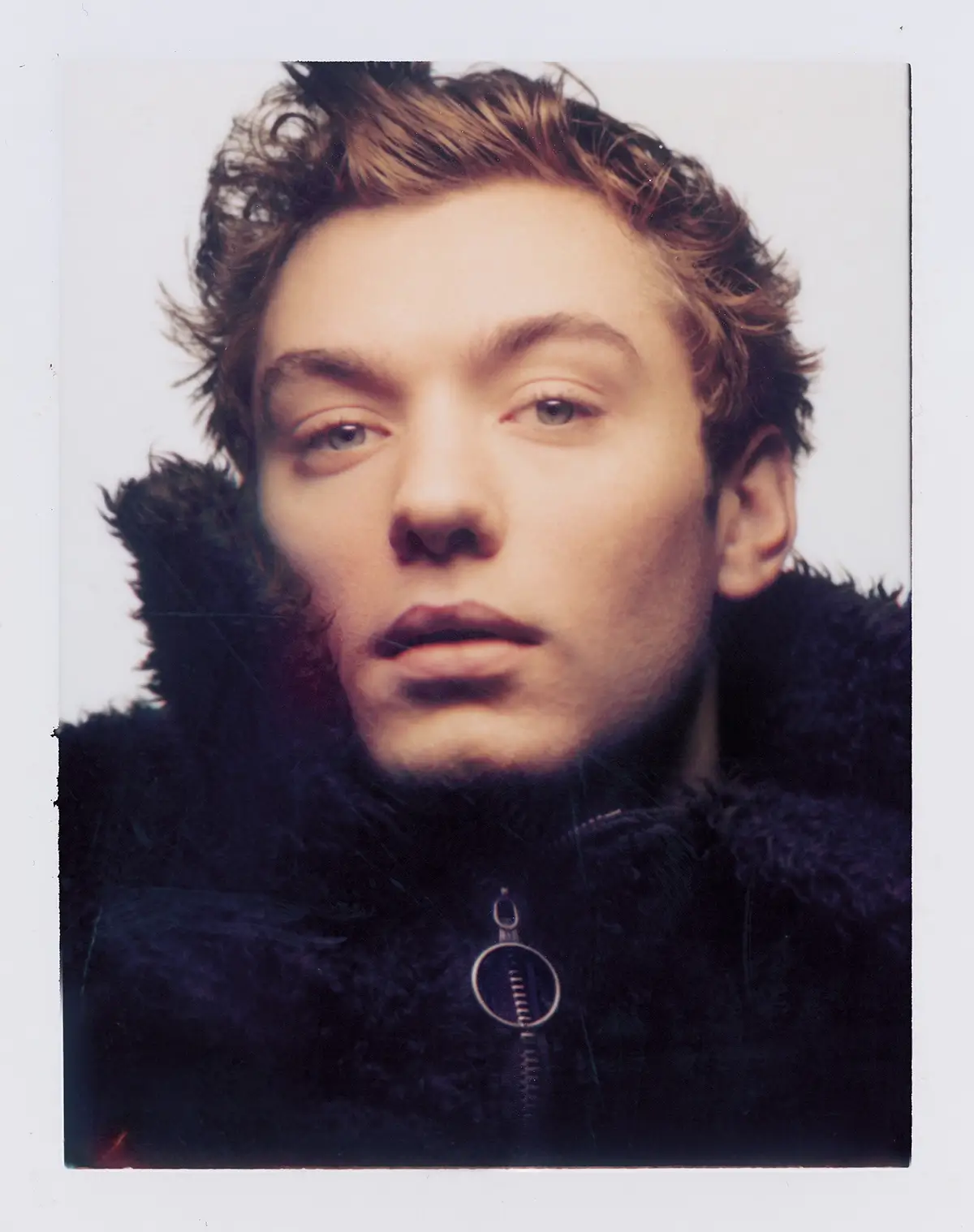
Jude Law, Polaroid, London, 1996 © Albert Watson, 2025
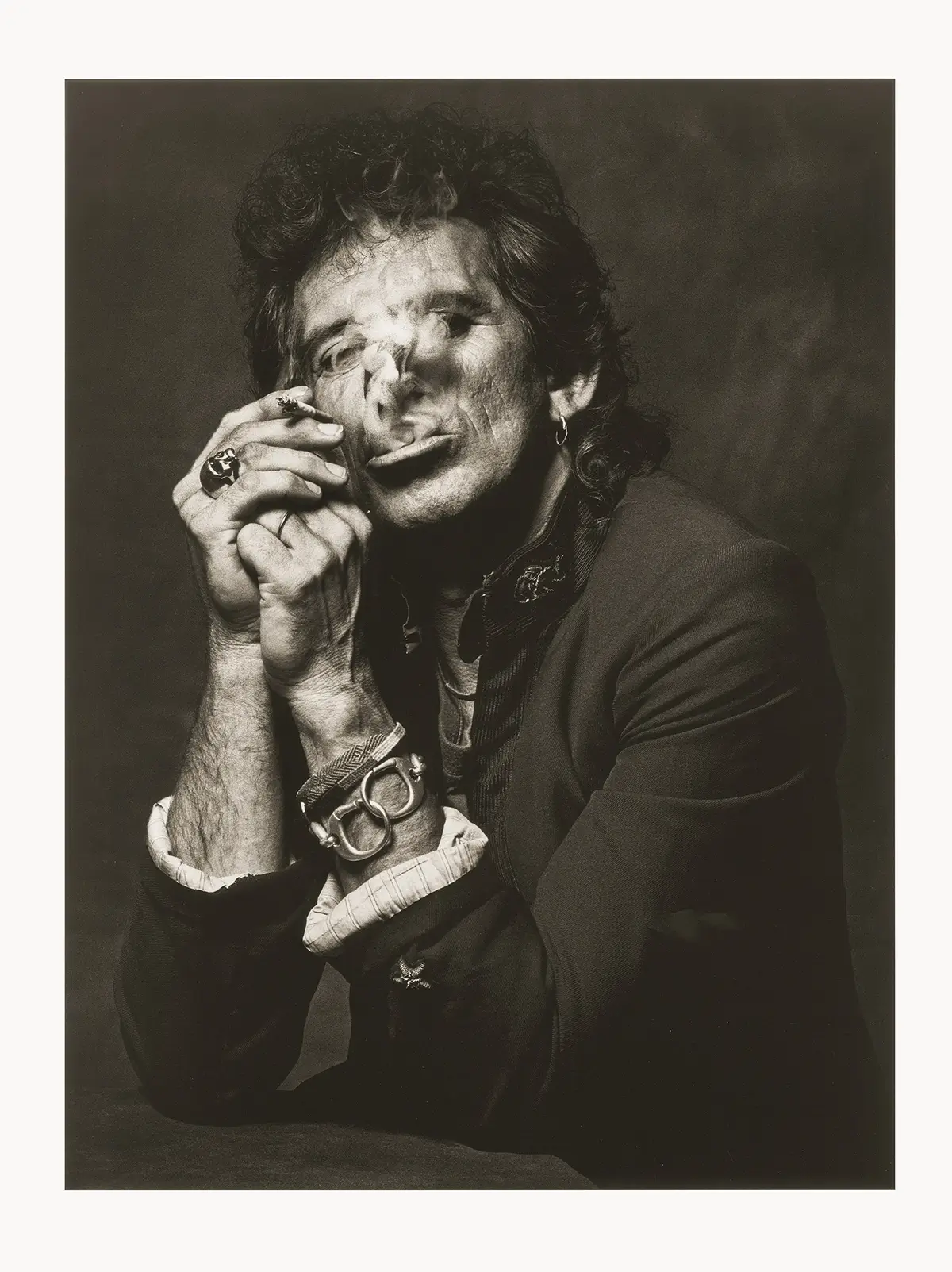
Keith Richards, New York City, 1988 © Albert Watson, 2025
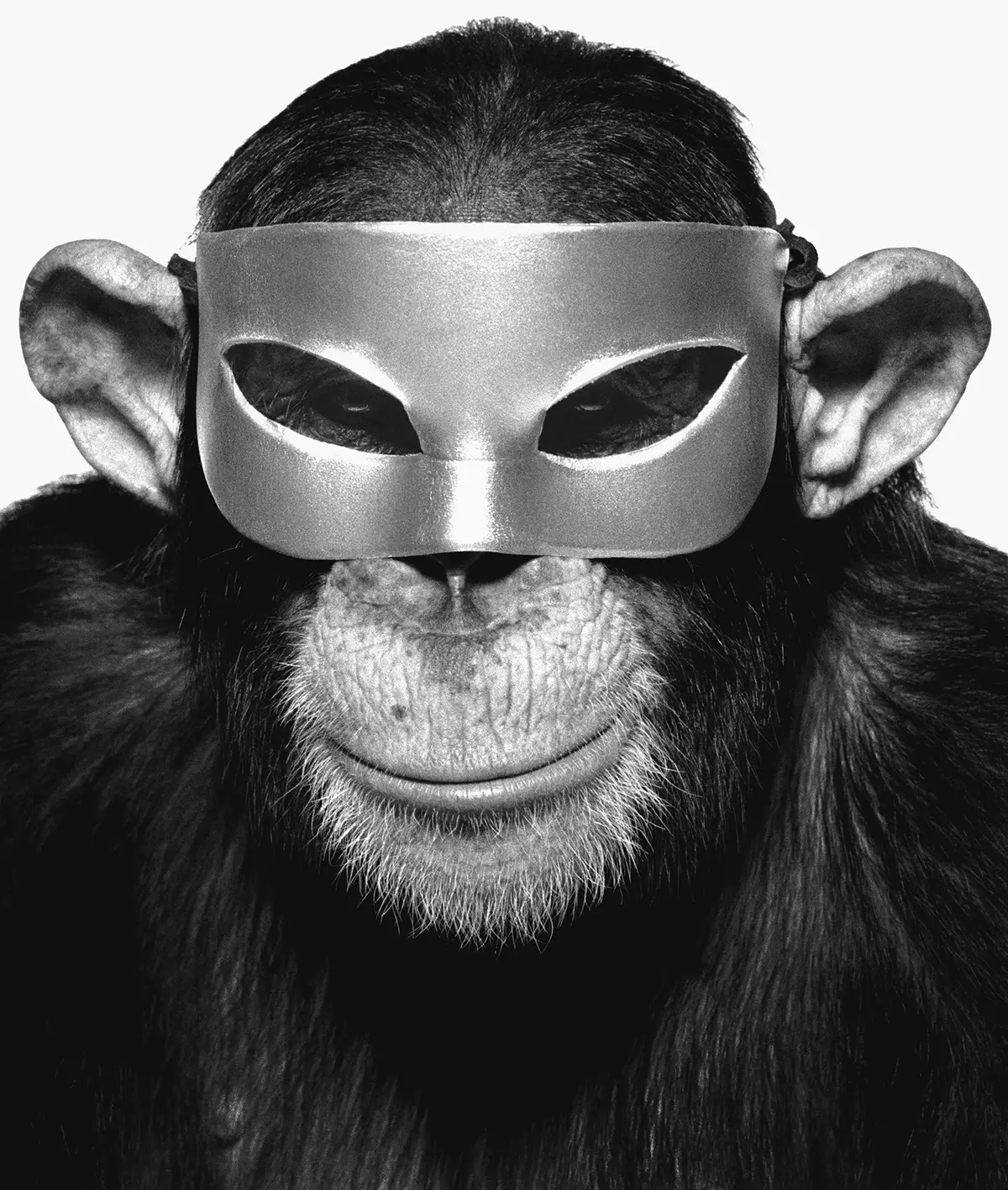
Monkey with Mask, New York Ciry, 1992 © Albert Watson, 2025