There is something quietly radical about a photographer revisiting the images she once rejected.
With
'And They Laughed at Me',
Newsha Tavakolian does not approach her beginnings as something to celebrate from a distance, but as something to return to with care, doubt, and even discomfort. Now a member of Magnum Photos, she goes back to what she herself calls her “eyesore” photographs—early, imperfect images made when she started working as a photojournalist in Tehran at sixteen. Instead of trying to fix them or redeem them, she lets them remain as they are, unfinished and fragile, as if that is where their truth still lives.
From the beginning, it is rooted in time, bringing together work made between 1995–2001 and 2017–2019. But what you feel more than a timeline is a shift in state of mind. The younger work carries hope that has not yet been tested. The later work carries experience, loss, and a more complicated kind of clarity. Between them is a long emotional distance.
In her own text, Tavakolian speaks openly about what led her back to these images. After her father’s death, she stopped photographing for almost two years. When she returned to her archive, she did not look for her “best” images, but for the ones she had once rejected—the blurry, awkward, imperfect frames. There is something very honest in that gesture: a return not to success, but to failure, as if failure might hold something more truthful than she understood at the time.
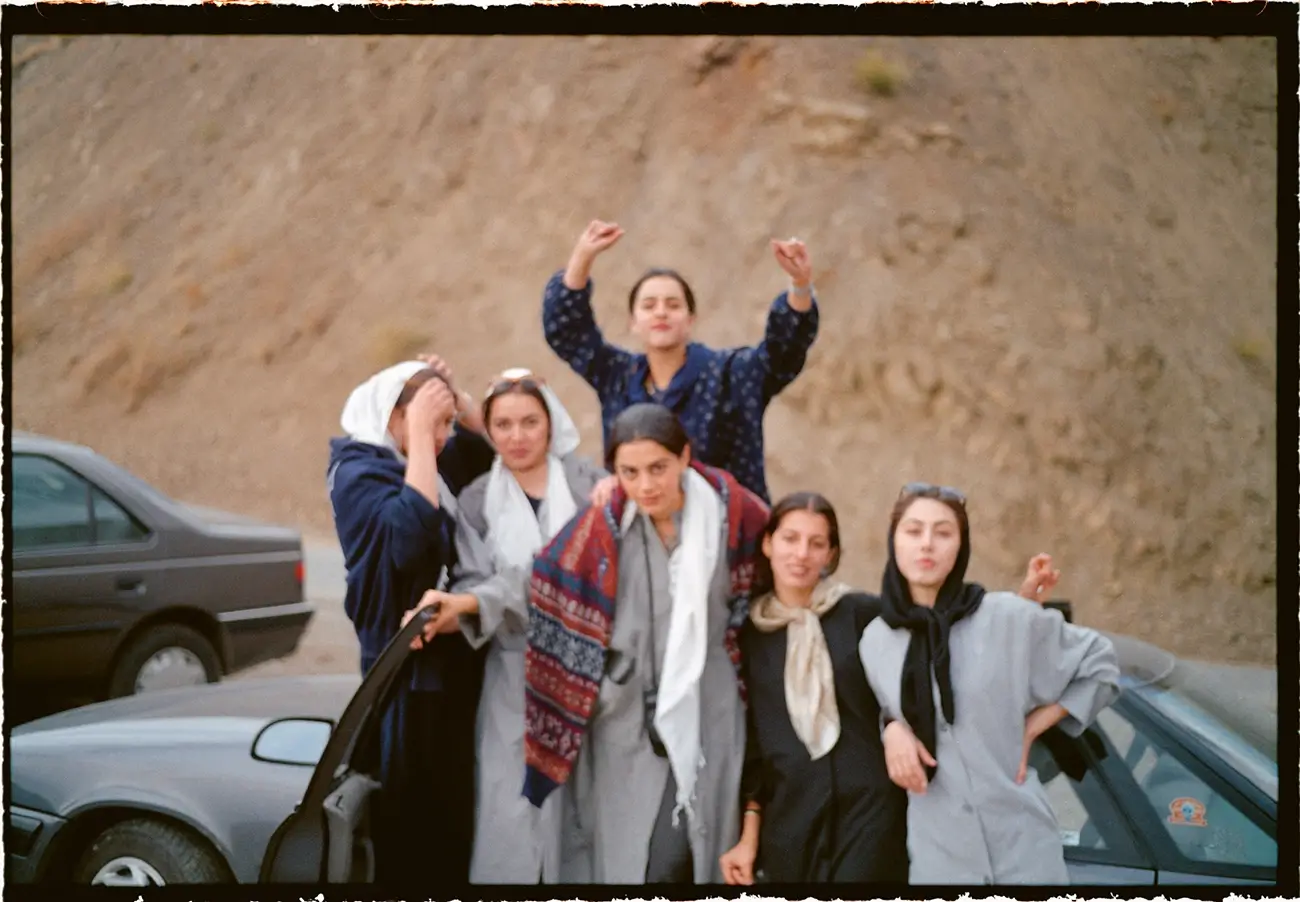
Dancing with friends and their parents in the mountains outside Tehran. (Shemshak, 1998) © Newsha Tavakolian
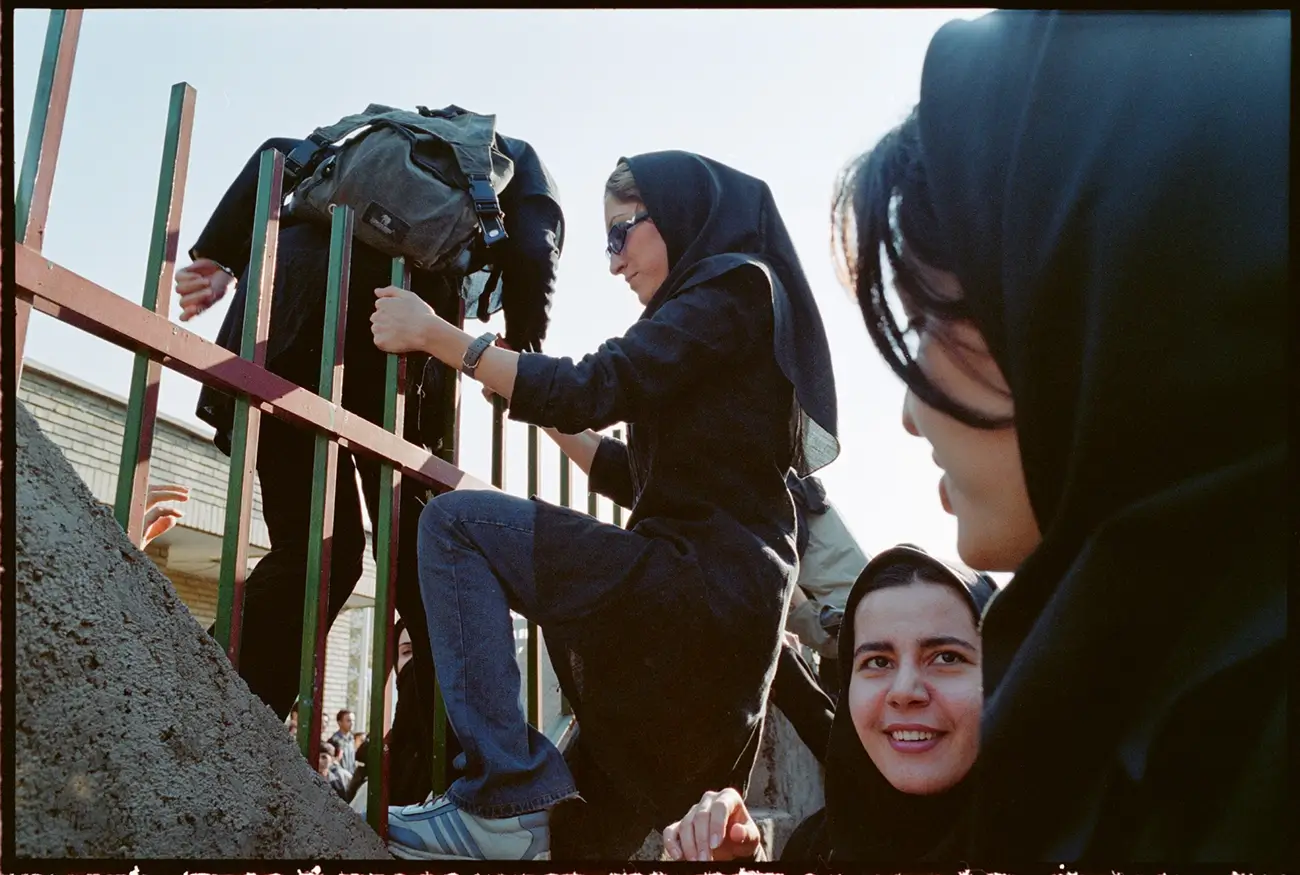
This is the first time I saw other girls climbing a fence to join a student protest. (Tehran, 1999) © Newsha Tavakolian
What makes it so powerful is the way it lets you inside that process. The contact sheets, filled with handwritten notes, feel deeply personal. You don’t just see chosen images—you see how she looked, how she hesitated, how she returned to the same scene again and again. It feels less like looking at finished photographs and more like standing next to someone thinking out loud with a camera.
Printed on matte pages, with white handwritten notes unfolding across black backgrounds and layered with these contact sheets, it takes on the intimacy of a diary—something you return to, not just to look, but to feel. It creates a space that is both visual and emotional, where the act of remembering becomes almost tangible.
Some images are later pulled out and shown on their own, full page, but they never feel separate from everything around them. They still carry the memory of what was left out. Nothing feels isolated. Everything feels connected.
A moment that emerges later stays with you. After the newspaper she worked for was shut down, Tavakolian worked at Tehran’s City Theatre. In one photograph, an actress is shown moving freely backstage. Before 1998, women in Iran were not allowed this kind of physical expression in performance—emotion had to stay in the face, while the body remained restricted. In this image, what is visible is not simply performance, but the quiet reappearance of a body reclaiming space—an image that resonates with the gradual loosening of constraints on women in Iran at the time.
As a woman living in a country where freedom of expression and movement is often taken for granted, this moment carries a particular weight. Even knowing that many women around the world continue to face such restrictions, encountering it here—through a single image—feels immediate, almost unsettling. It sharpens my awareness, gently but firmly, and reminds me how fragile and uneven these freedoms remain.
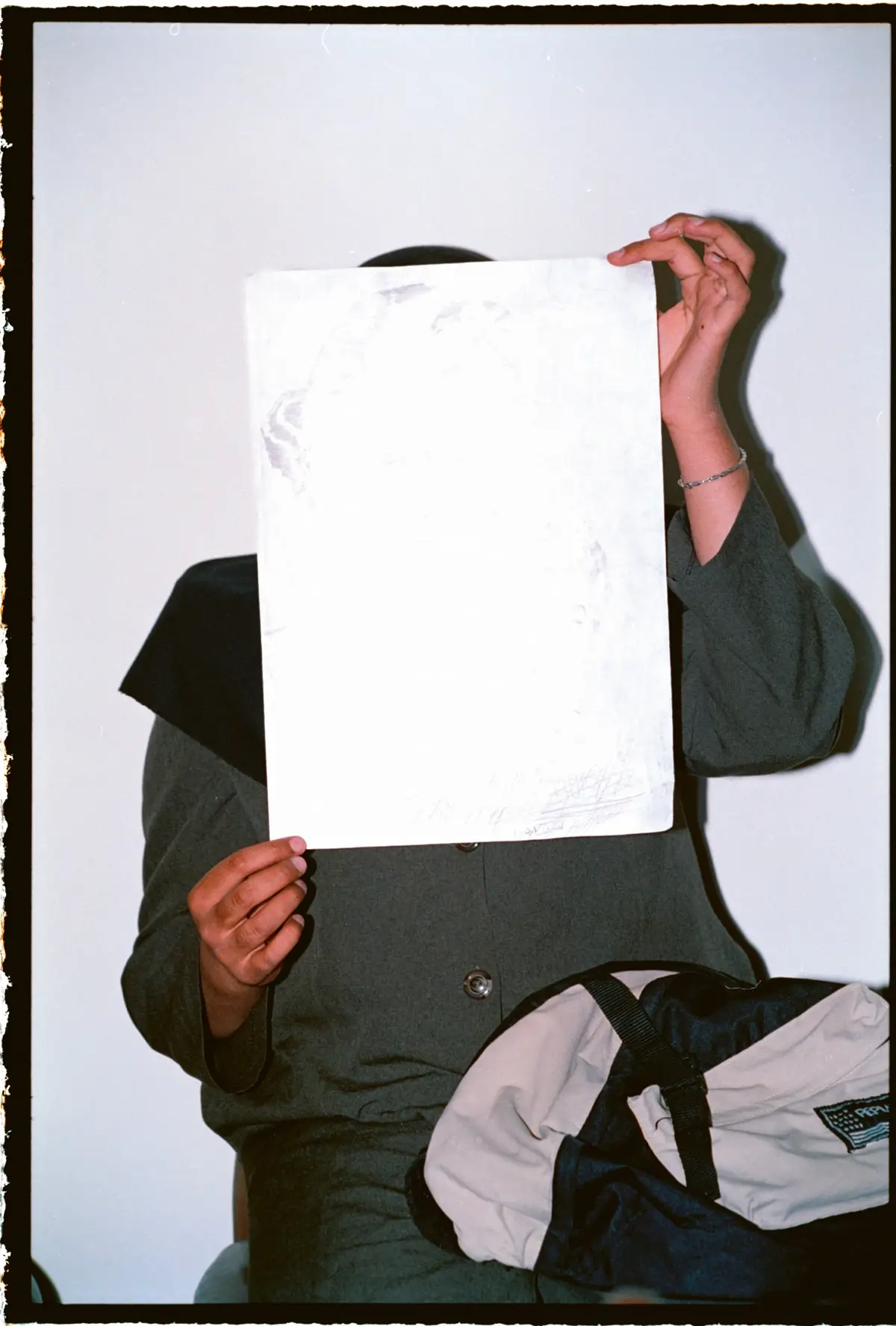
A girl hiding her face, in a special shelter for vulnerable women. (Tehran, 1998) © Newsha Tavakolian
Looking at these early photographs, what stands out is not control, but openness. They are uncertain, sometimes uneven, but full of attention. You feel a photographer still searching, still reacting, still willing to be surprised by what is in front of her.
As the editor of All About Photo, I often see work that arrives already finished, already closed—highly resolved, sometimes overly so. There is a tendency today to arrive too quickly at a “finished” image. What I find moving here is the opposite of that. Tavakolian’s early images remind us that photography is not only about getting something right; it is also about not knowing yet—about staying close to that moment before meaning settles. It is about process, and more importantly, about permission: permission to fail, to misjudge, to not fully understand what you are looking at.
Throughout, the personal and the political are always close to each other. Everyday life in Iran sits next to protest images, street scenes, gestures, fragments of ordinary time. Nothing is separated cleanly. Everything overlaps, as it does in life.
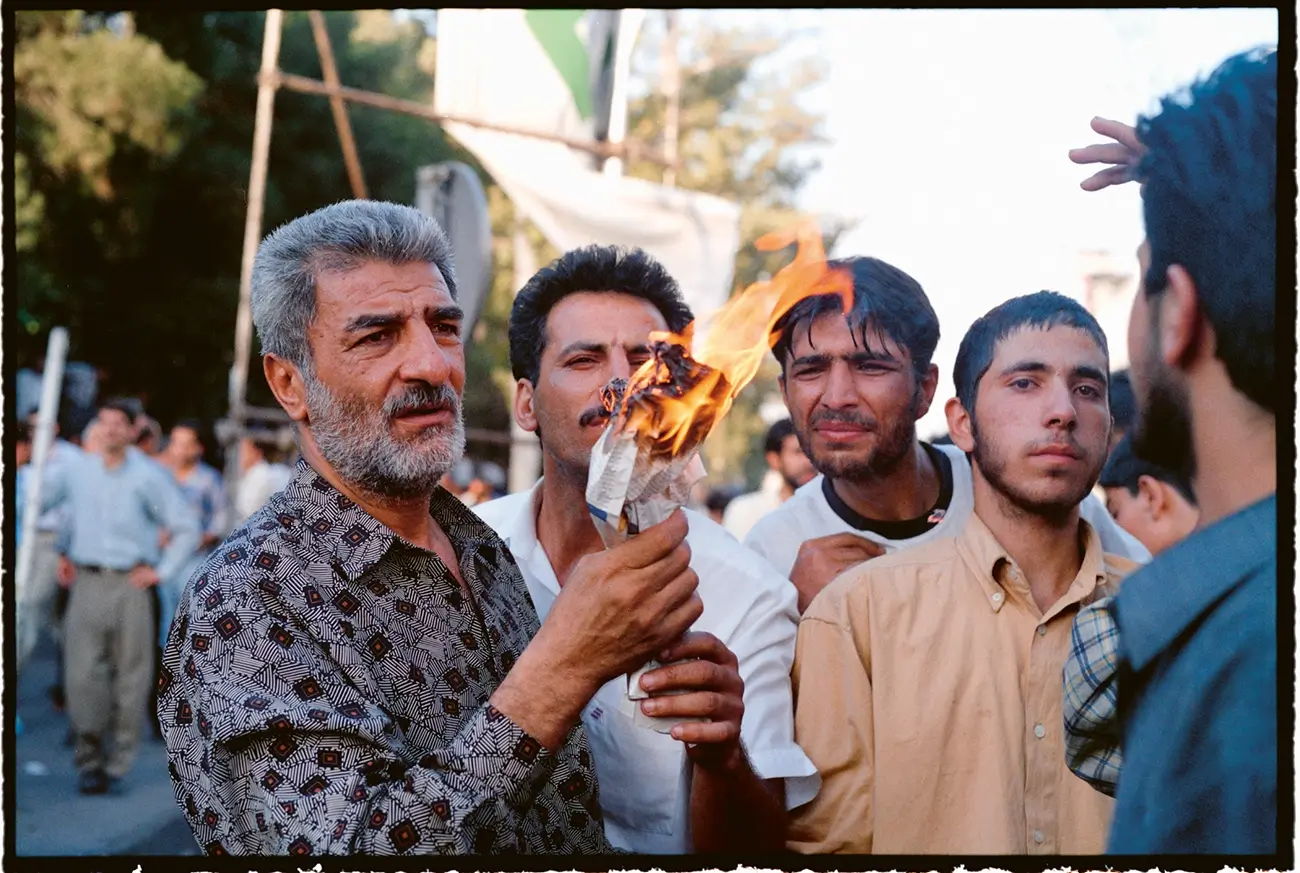
Students asking for reforms during a protest in Tehran. (Tehran, 1999) © Newsha Tavakolian
In the second part, something shifts. After 2017, the contact sheets disappear. The process is no longer visible. The images become more direct, more controlled, more still. But they do not feel detached from the earlier work. If anything, they feel shaped by it, as if that earlier uncertainty is still underneath everything.
Then it changes again. In the final section, some photographs are covered with paint. It is a simple gesture, but a strong one. It interrupts the image, breaks its surface, and refuses easy looking. It feels less like destruction than frustration—like the image is being pushed back against, rather than simply shown.
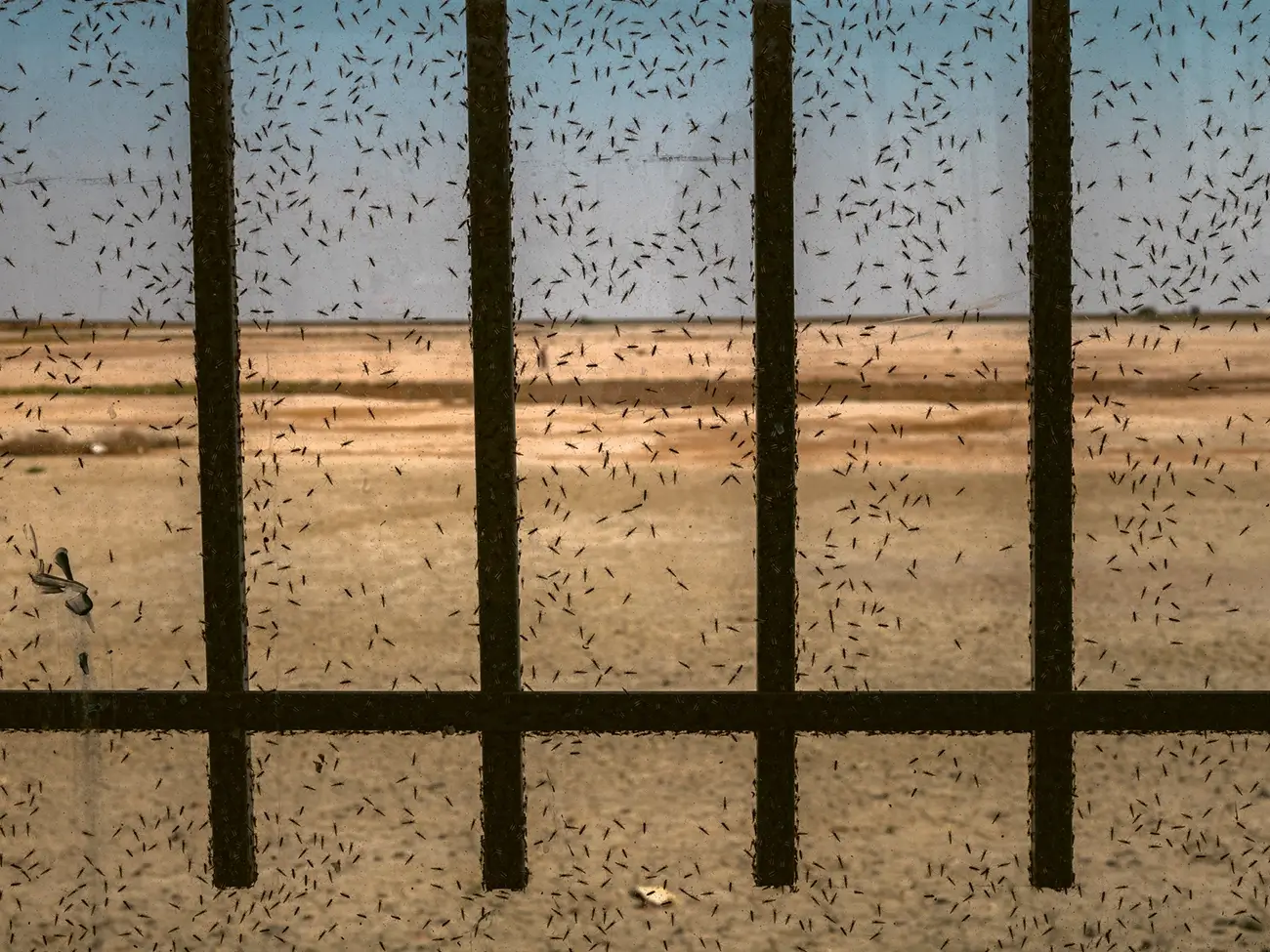
Uremia, 2017 © Newsha Tavakolian
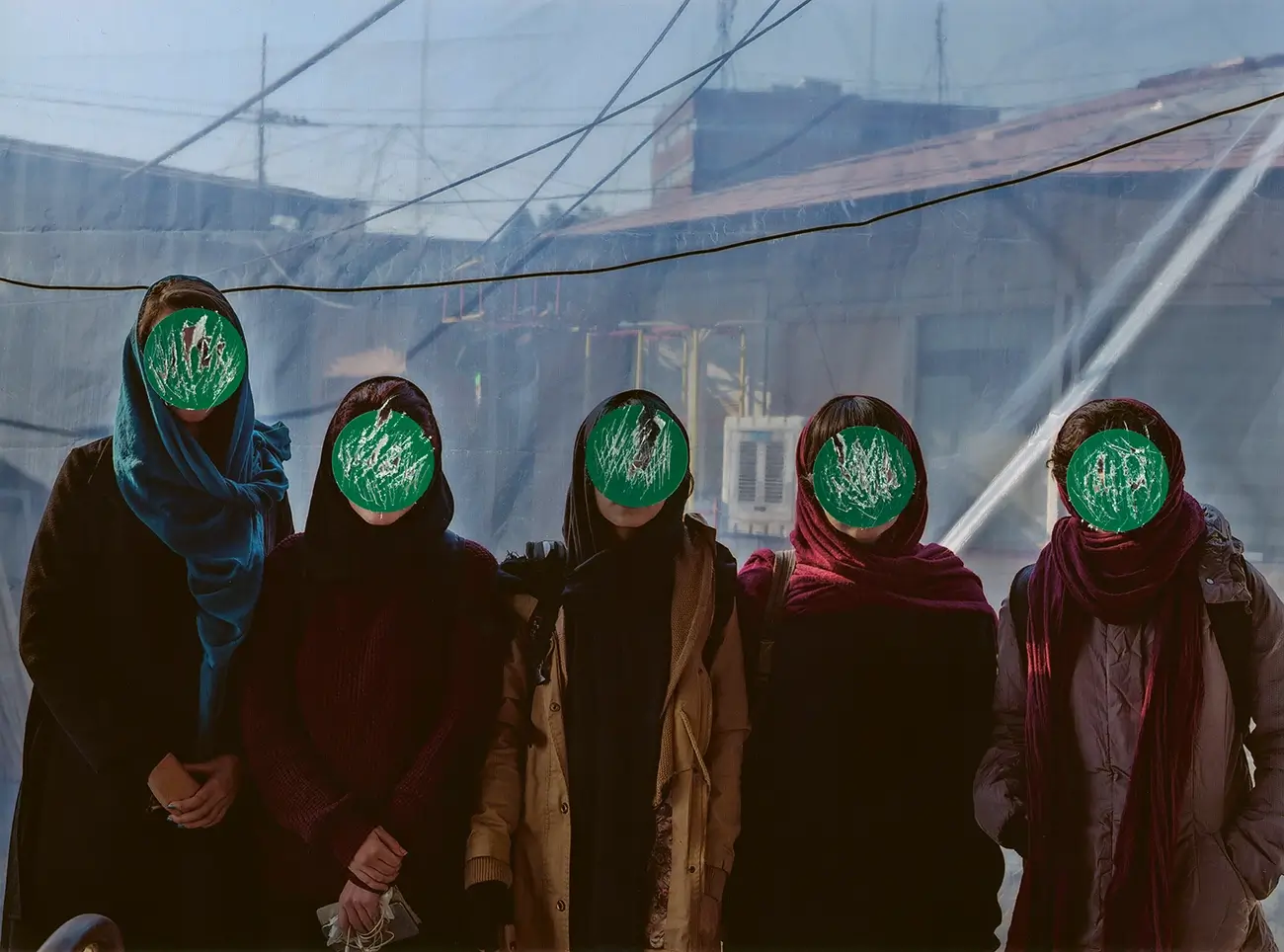
Tehran, 2017 © Newsha Tavakolian
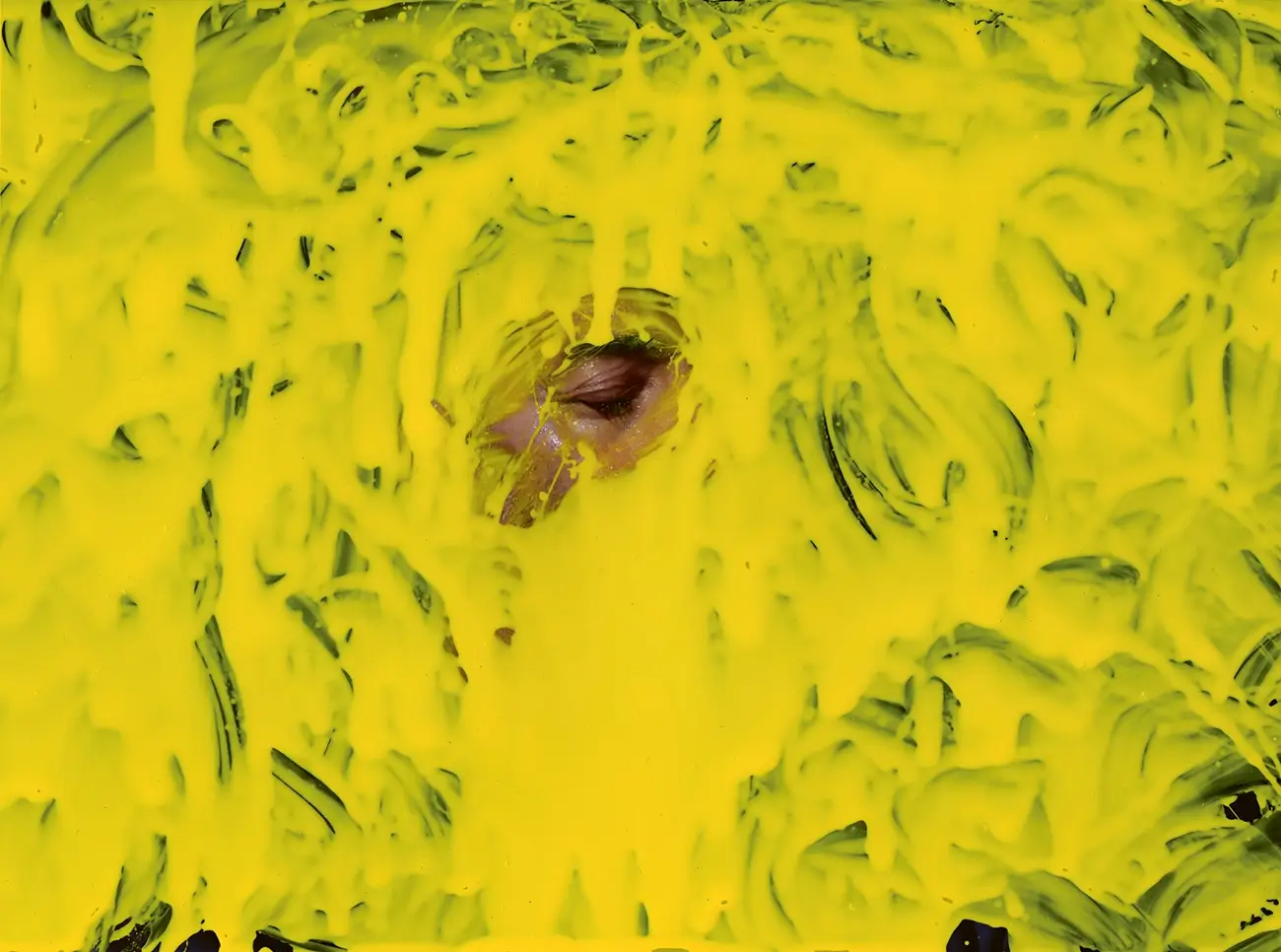
Tehran 2019 © Newsha Tavakolian
This sense of rupture is also personal. After her father’s death, Tavakolian stopped photographing for two years. When she returned, she did not return to new work, but to old images she had once rejected. The archive becomes something alive again—not fixed, but open, unstable, emotional.
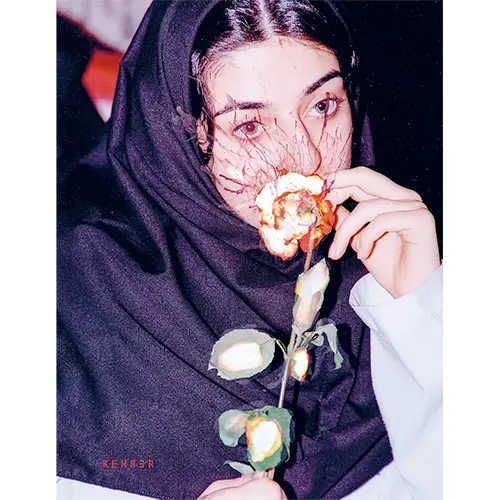
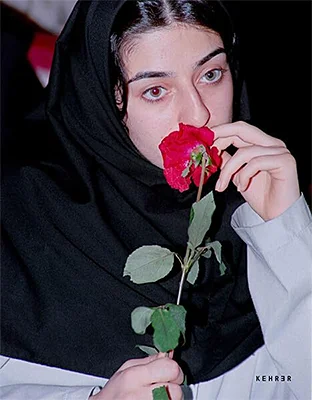
One image becomes central: a photograph from 2001 of a girl smelling a rose. It had become a symbol of innocence and hope, but Tavakolian describes feeling angry with it—so angry she tore it apart. Years later, after her father’s passing and during a renewed period of unrest in Iran, she returns to it. She glues it back together, alters it with chemicals, changes its surface. The image does not go back to what it was. It becomes something else—damaged, changed, but still alive.
This gesture says a lot about the whole project. It is not about preserving the past as it was. It is about working through it, even when it is painful, even when it resists understanding. Nothing is fixed. Everything is in motion again.
What gives it its depth is the time that separates then and now. These images were made years ago, but we are looking at them today, in a world that has changed around them. That distance changes how they feel. They are no longer just personal memories—they carry the weight of what has happened since.
And yet it never tries to explain too much. It stays close to the act of looking. It allows things to remain open, even unresolved.
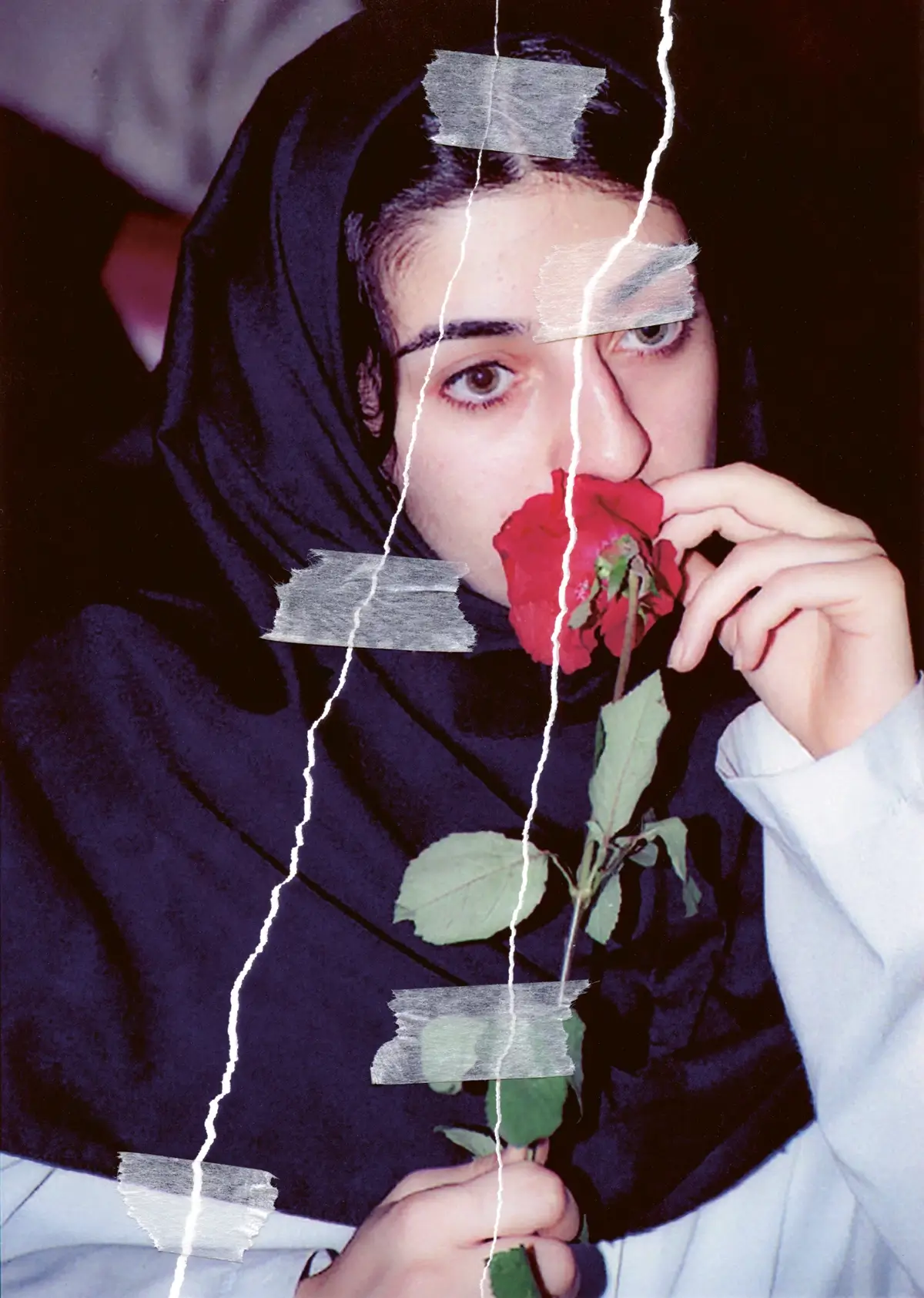
Girl smelling a rose, during an election rally for politicians promising more freedom for young people. Torn print, taped back together. (Tehran, 2020) © Newsha Tavakolian
ends with a sentence that stays with you: after recalling that, in January 2026, thousands of people were killed during protests, Newsha Tavakolian writes,
“like the girl smelling a rose, we want to live.” Read in today’s context—where women in Iran continue to fight for basic freedoms, and where violence, repression, and conflict shape everyday life—this line takes on a deeper resonance. What once appeared as a quiet symbol of innocence becomes something far more urgent: an insistence on life itself. It speaks of resilience, not as an abstract idea, but as a necessity—fragile, contested, and yet persistently present.
This is not a book about early work. It is a book about reconsideration.
And perhaps more importantly, it is a reminder—to all photographers—that the images we discard too quickly might be the ones that matter most.
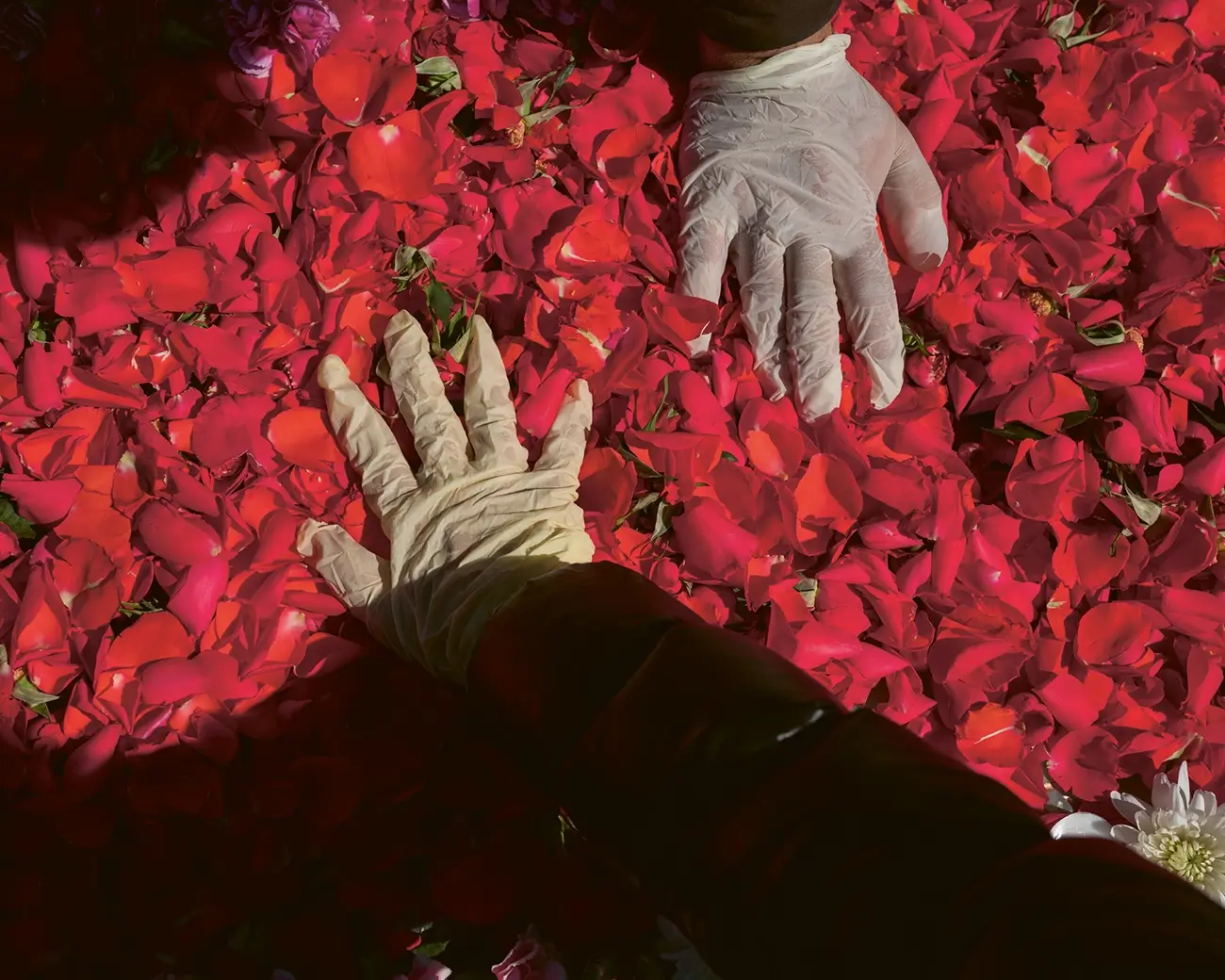
Behesht Zahra cemetery, 2019 © Newsha Tavakolian