All about photo.com: photo contests, photography exhibitions, galleries, photographers, books, schools and venues.
PUBLICATION AND $1,000 CASH PRIZES: Last Call B&W
Andreas Franke
Andreas Franke
Andreas Franke

Andreas Franke

Country: Austria

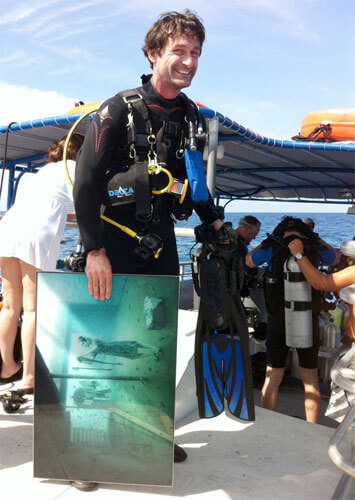
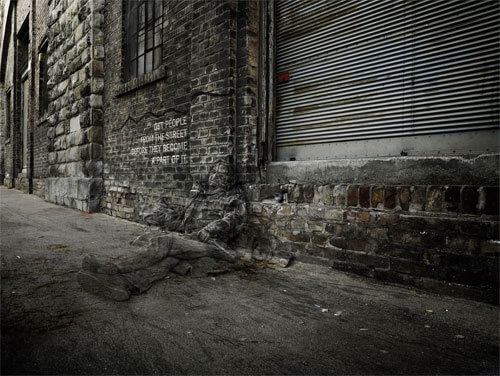
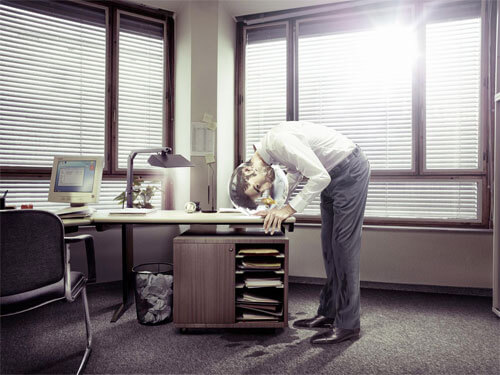
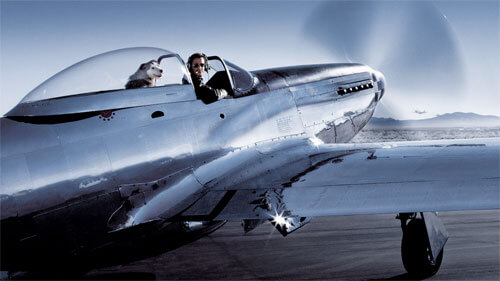
Andreas Franke is in the business for more than twenty years. For Luerzer‘s Archive he is among the 200 Best Photographers. He worked for great brands like Ben&Jerry's, Coca-Cola, Ford, General Electric, Gillette, Heineken, Nike, Visa or Wrigley‘s. His still lifes and his surreal effects are famous. In his pictures every little detail is planned precisely. There is no space left for fortuity. Andreas Franke is a traveler. He travels through the world and between the worlds. His job frequently leads him to several countries on several continents. So does his passion the scuba diving. In his pictures Franke crosses the borderlines between fantasy and real life.

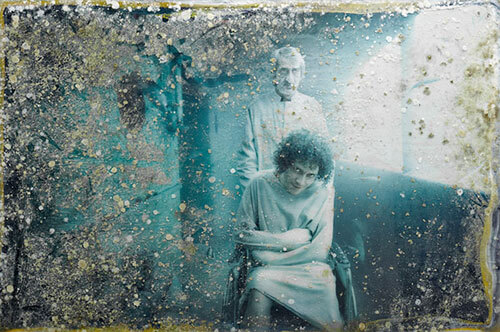
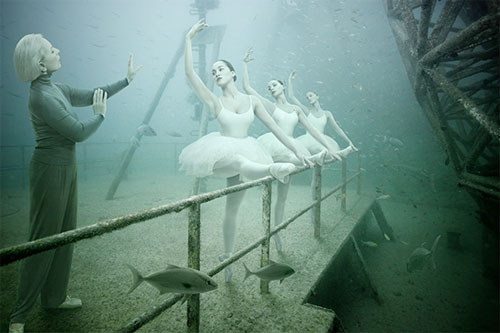
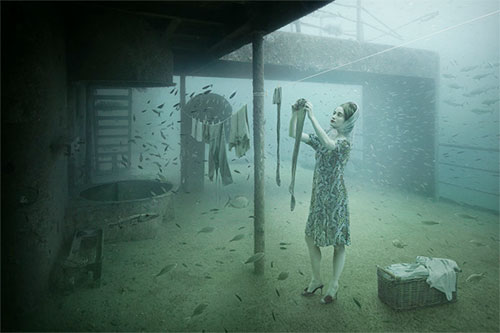
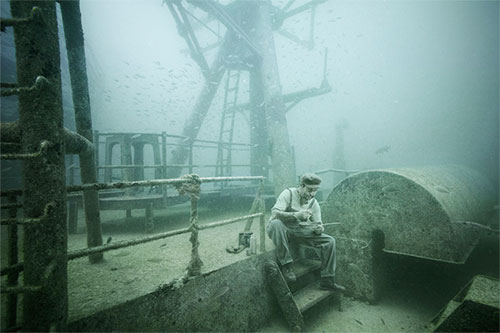
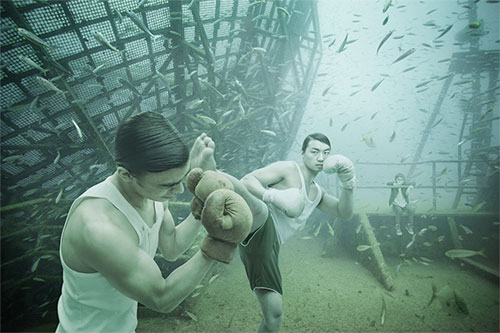
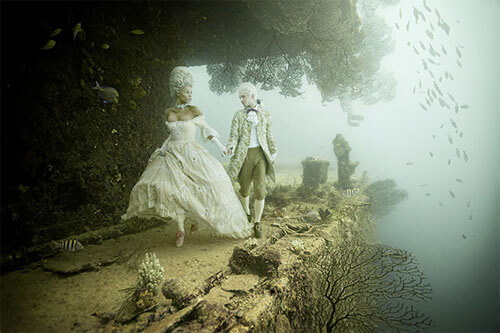
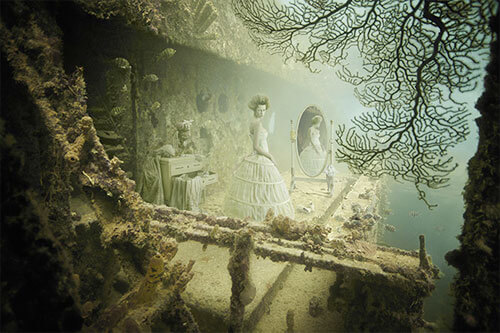
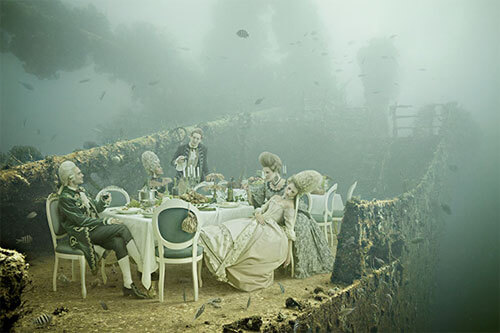
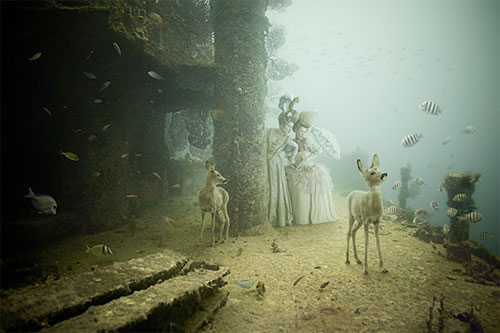
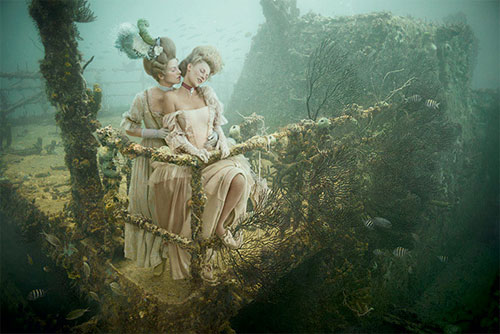
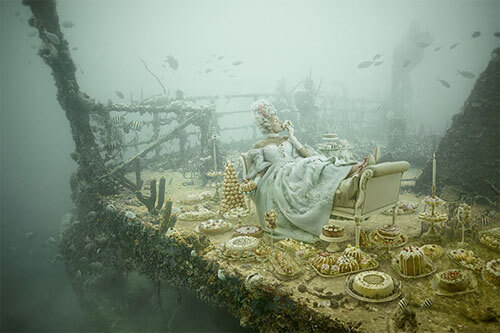
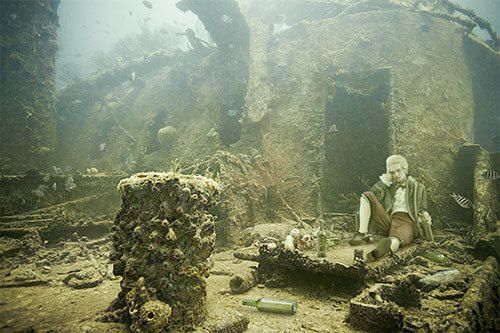
With his project “The Sinking World“ Andreas Franke brings a strange, forgotten underwater world back to life and stages realms of an unprecedented kind.
The pictures engender extreme polarities: the soft, secretive underwater emptiness of sleeping shipwrecks is paired with real, authentic sceneries full of liveliness and vigor, thus creating a new world, equally bizarre and irresistibly entangling. The resting giants at the bottom of the sea do not only form fascinating and unique backgrounds for Andreas Franke’s sceneries. They also constitute the best exhibition sites imaginable. These spectacular underwater galleries make divers fall under their spell and display the work of the ocean itself. During the weeks and months under water the ocean bequeaths impressive, peerless traces to the pictures. It adorns them with a certain, peculiar patina, endowing them with the countenance of bizarre evanescence and transfiguring them into rare beauties.

 

Inspiring Portfolios

Call for Entries
AAP Magazine #58 B&W
Publish your work in our printed magazine and win $1,000 cash prizes
 
Stay up-to-date  with call for entries, deadlines and other news about exhibitions, galleries, publications, & special events.

More Great Photographers To Discover

Christian Chaize
Christian Chaize, a self-taught artist, lives and works in Lyon, France. In 1992, he was awarded the Prix European Panorama de Kodak for Young European Photographer in Arles, France. In addition to his artistic achievements, he enjoys a successful career as a commercial photographer. In 2004, Chaize became intrigued by a small stretch of coastline in southern Portugal. Itching an artistic scratch, he began shooting what was then an entirely new subject matter for him. Using medium and large format cameras, his commitment to photographing a single beach front several times a year since then is now evident in the series, Praia Piquinia. This work has been the focus of two one-man museum shows in Portugal, as well as gallery exhibitions in New York, Berlin, and Lyon. Among other publications, it has been featured in The Collector’s Guide to New Art Photography Vol. 2, BLINK MAGAZINE, Issue No. 13, and Elle Decor. In addition to its popularity on 20×200.com, Praia Piquinia is also the subject of Chaize’s first monograph, published by Chronicle Books in the Spring of 2013. Paradis, images made in the Seychelles, and To Praia Grande, a separate beach series shot in Portugal, have also been exhibited in New York and Berlin, respectively. Future projects will continue to reveal his interest in enlightening the way we look at something that has otherwise become banal, or merely familiar. In the words of Marcel Proust, and in the tradition of all the great modern photographers who came before him, Chaize is always seeking to « have new eyes ».
Wolfgang Bohusch
Austria
1985
Bohusch decided to become photographer at the early age of 13. He began experimenting with old darkroom equipment of his grandmother and shooting with a 35mm camera. After studying photography for 5 years at die Graphische, Vienna he started working as freelance Production Manager, Location Scout and later Photographer or D.o.P and Director for advertising film production companies. On extensive travels he is working on his personal projects. Street- photography in India, Miami or Tokyo, landscape and aerial photography in various places as well as fashion films, music videos in London or Paris. In January 2017 Wolfgang Bohusch stayed in a tent for two weeks in Maroccos Sahara desert. Under very special conditions during his work for the series 'silicon based creatures' Bohusch experienced a period of intense meditation. Details and blurred outlines make it difficult to recognize the shape of the image at once. Pattern recognition takes place only through the perception of the seemingly random forms and structures. The viewer is encouraged to look more closely in order to get lost in the work and to let the subconscious mind wander - in order to finally be able to find his own associations. silicon based creatures With his series 'silicon based creatures' Wolfgang Bohusch invites the viewer to stand in front of his photographs, mediate, and let the mind wander into subconsciousness. Each and every work tells a different story, your own story. There are no titles, no hints for interpretation, no directions to look. Like in a Rorschach test, Bohusch wants you to find your own associations and recognize patterns that are not pregiven and therefore renders every photograph an individual experience. A millisecond is the time span for Wolfgang Bohusch's sculptures to be created but the artist allows us to ponder these millisecond sculptures calmly. The “silicone based creatures” series of 21 photographs presented at OSME Gallery is the outcome of his stay in the Sahara desert for weeks and experimenting with its elements like sand, wind, light, and chance. What you see on the photographs is thus the fusion of elements which serendipitously form into sculptures and are randomly captured on paper. The process behind these snapshots therefore resembles the behaviour patterns of bird or fish swarms. What is more, when we see them crowding together in the sky or in the water, our minds automatically associate certain forms or figures with the sudden patterns they create. As soon as we have caught one image within the crowd, it is already gone again. We get the opportunity to slowly make our own interpretations, though, and to try and find a piece of ourselves in them. So, when you have invented your creatures, where do they come from? And what do they want to tell us? If you think of them as signs, maybe even add a little bit of superstition, can they be hints to the future? Like popular customs or shamanic rituals to predict the future, Bohusch's creatures could also be prophetic figures. Or do they come from the past as mythical beings? Wolfgang Bohusch confronts us with a range of topics and questions in this series which he does not want or cannot answer himself. Lastly, he gives us another little hint with which he introduces one more existential quest. Silicone, which is a constituent of sand, is also the material used for microelectronics, like computer chips, and the basis for what creates the tools for producing the photographs in the first place. Finally, this aspect could trigger another question, or rather “the mother of all questions”: what came first? www.juliahartmann.at
Peter Hujar
United States
1934 | † 1987
Peter Hujar was an American photographer best known for his black and white portraits. He has been recognized posthumously as "one of the major American photographers of the late twentieth century" and "among the greatest American photographers." Hujar was born October 11, 1934, in Trenton, New Jersey, to Rose Murphy, a waitress abandoned by her husband during her pregnancy. He was raised by his Ukrainian grandparents on their farm, where he spoke only Ukrainian until he started school. He remained on the farm with his grandparents until his grandmother's death in 1946. He moved to New York City to live with his mother and her second husband. The household was abusive, and in 1950, when Hujar was 16, he left home and began to live independently. Hujar received his first camera in 1947 and in 1953 entered the School of Industrial Art where he expressed interest in being a photographer. He was fortunate to encounter an encouraging teacher, the poet Daisy Aldan (1923–2001), and following her advice, he became a commercial photography apprentice. Apart from classes in photography during high school, Hujar's photographic education and technical mastery were acquired in commercial photo studios. By 1957, when he was 23 years old, he was making photographs now considered to be of museum quality. Early in 1967, he was one of a select group of young photographers in a master class taught by Richard Avedon and Marvin Israel, where he met Alexey Brodovitch and Diane Arbus. In 1958, Hujar accompanied the artist Joseph Raffael on a Fulbright to Italy. In 1963, he secured his own Fulbright and returned to Italy with Paul Thek, where they explored and photographed the Capuchin Catacombs of Palermo, classic images featured in his 1975 book Portraits in Life and Death. In 1964, Hujar returned to America and became a chief assistant in the studio of the commercial photographer Harold Krieger. Around this time, he also met Andy Warhol, posed for four of Warhol's three-minute "screen tests," and was included in the compilation film The Thirteen Most Beautiful Boys. In 1967, Hujar quit his job in commercial photography, and at a great financial sacrifice, began to pursue primarily his own work. What followed was a dramatic expansion of his output. In 1969, with his lover the political activist Jim Fouratt, he witnessed the Stonewall riots in the West Village. In 1973, he moved into a loft above The Eden Theater at 189 2nd Avenue, where he lived for the rest of his life. In the 1970s and early 1980s, he inhabited the small bohemian art world in downtown New York City and made portraits of people such as drag queen and actor Divine, writers Susan Sontag, William Burroughs, Fran Lebowitz, and Vince Aletti. He visited "extremely serious, very heavy S&M bars" and the abandoned West Side Hudson River piers where men cruised for sex. In 1975, Hujar published Portraits in Life and Death, with an introduction by Sontag. After a tepid reception, the book became a classic in American photography. The rest of the 1970s was a period of prolific work. In early 1981, Hujar met the writer, filmmaker, and artist David Wojnarowicz, and after a brief period as Hujar's lover, Wojnarowicz became a protégé linked to Hujar for the remainder of the photographer's life. Hujar remained instrumental in all phases of Wojnarowicz's emergence as an important young artist. Hujar's work received only marginal public recognition during his lifetime. In January 1987, Hujar was diagnosed with AIDS. He died 10 months later at the age of 53 on November 25 at Cabrini Medical Center in New York. His funeral was held at Church of St. Joseph in Greenwich Village and he was buried at Gate of Heaven Cemetery in Valhalla, New York. Hujar willed his estate to his friend Stephen Koch. Source: Wikipedia Peter Hujar (born 1934) died of AIDS in 1987, leaving behind a complex and profound body of photographs. Hujar was a leading figure in the group of artists, musicians, writers, and performers at the forefront of the cultural scene in downtown New York in the 1970s and early 80s, and he was enormously admired for his completely uncompromising attitude towards work and life. He was a consummate technician, and his portraits of people, animals, and landscapes, with their exquisite black-and-white tonalities, were extremely influential. Highly emotional yet stripped of excess, Hujar’s photographs are always beautiful, although rarely in a conventional way. His extraordinary first book, Portraits in Life and Death, with an introduction by Susan Sontag, was published in 1976, but his “difficult” personality and refusal to pander to the marketplace ensured that it was one of the last publications during his lifetime.Source: The Peter Hujar Archive Peter Hujar, who died of aids-related pneumonia in 1987, at the age of fifty-three, was among the greatest of all American photographers and has had, by far, the most confusing reputation. A dazzling retrospective, curated by Joel Smith at the Morgan Library & Museum, of a hundred and sixty-four pictures affirms Hujar’s excellence while, if anything, complicating his history. The works range across the genres of portraiture, nudes, cityscape, and still-life—the stillest of all from the catacombs of Palermo, Italy, shot in 1963, when he was there with his lover at the time, the artist Paul Thek. The finest are portraits, not only of people. Some memorialize the existence of cows, sheep, and—one of my favorites—an individual goose, with an eagerly confiding mien. The quality of Hujar’s hand-done prints, tending to sumptuous blacks and simmering grays, transfixes. He was a darkroom master, maintaining technical standards for which he got scant credit except among certain cognoscenti. He never hatched a signature look to rival those of more celebrated elders who influenced him, such as Richard Avedon and Diane Arbus, or those of Robert Mapplethorpe and Nan Goldin, younger peers who learned from him. His pictures share, in place of a style, an unfailing rigor that can only be experienced, not described. Hujar needed no introduction to the low. He never met his father, who abandoned his mother, a diner waitress, before his birth, in 1934, in Trenton. She left his raising to her Ukrainian-speaking Polish parents in semirural surroundings in Ewing Township, New Jersey, until, when he was eleven, she took him to live with her and a new husband in a one-room apartment in Manhattan. The home wasn’t happy. Hujar moved out at sixteen, at first sleeping on the couch of a mentoring English teacher at the School of Industrial Arts (now the High School of Art and Design): the fine poet, editor, and translator Daisy Aldan, a free-spirited lesbian who is portrayed in the earliest of his works in the Morgan show, from 1955.Source: The New Yorker
John R. Pepper
John Randolph Pepper, (1958) is an Italian photographer, screenwriter, theatre and film director, the son of sculptress Beverly Pepper and journalist/writer Curtis Bill Pepper, editor of Newsweek and manager of its Rome office. He was born and raised in Rome; lives in Palermo and works worldwide. Pepper started his career in Black & White analogical photography with an apprenticeship to Ugo Mulas at 14. He published his first photograph at 15 and had his first show at 17. He studied History of Art at Princeton University, where he was also the youngest member of the exclusive painting program, '185 Nassau Street'. He then became a 'Directing Fellow' at The American Film Institute, (Los Angeles) and subsequently worked as a director in theatre and film for 20 years. For thirty years, he dedicated himself to photography while directing both theatre and film. During that time he continued to take photographs with his Leica camera always using the same Ilford HP5 film stock. John R. Pepper, represented by the Art of Foto Gallery (St. Petersburg, Russia) and The Empty Quarter Gallery (Dubai, UAE), is a 'Cultural Ambassador' of numerous Italian Institutes of Culture in may parts of the world. Since 2008 he has exhibited his different projects 'Rome: 1969 - An Homage to Italian Neo-Realist Cinema', 'Sans Papier', 'Evaporations' in the United States, France, Italy, the Middle East and Russia. He has published three books and is represented in several major museums around the world. Since 2015 Pepper has been working on his project 'Inhabited Deserts', where he explores deserts and their effect on time, history and people. 'Inhabited Deserts' debuted in Paris in November 2017; in September 2018, with the support of the Italian Embassy in Iran and the Italian Foreign Ministry, Pepper exhibited at the Aaran Projects Gallery in Tehran where he was one of the first Italian photographers since the Iranian Revolution of 1979. In November 2018, after participating at Paris Photo with the Galerie Sophie Scheidecker, 'Inhabited Deserts' went to Tel Aviv, Israel, representing Italy at the 6th International Photo Festival 'Photo Is:Rael'. From December 12th 2018 to February 15th Inhabited Deserts was presented at The Empty Quarter Gallery in Dubai, U.A.E. with curatorial text by Kirill Petrin. Subsequently the show opened on March 19, 2019 in Saint Petersburg, Russia, at the Art of Foto Gallery and shortly thereafter, on April 18th, it returned to Tel Aviv at the NOX Contemporary Gallery. In 2020 Inhabited Deserts will be seen in the United States and Italy. Per John Pepper "When talking about photography, we're talking about time. The image is fixed in time. We also talk about black and white and color, digital and film, reality and punctum - the critical concept of the French philosopher Roland Barthes, denoting the wounding, personally touching detail, which establishes a direct relationship with the object or person within it. Is a photographer an artist or not? The ones who feel they are, modestly define themselves as artisans. Still others, who do not think of themselves as photographers will snap photos relying on destiny's outcome. Finally, there are the ones who fantasize conceptual sequences snapped in extravagant situations - most of which without interest. About photography, much has been said. There are established masters, schools of thought, and many hopes. Yet whoever is sufficiently open to a vision within himself, who has cherished and assimilated the masters, will emerge with something new. Passion triumphs when backed by culture. When looking at one of John Pepper's photographs - the one with the group of people, friends and family, in front of their home, for example - I think of Paul Strand's image in his book, published with Zavattini 'Un paese' del 1955. There is a similar gathering of characters at the doorstep of their home. Time here is not just in the shutter time and lens aperture - a sixtieth of a second at eight - but in the transformation of the people, in the process of revealing themselves. With John, however, the appearances differ from those of Strand - moved up in time as evident in the shoes and pants, the motorcycle helmet, the technology of the wheelchair and the modern necklace of the young girl. They appear happy and to be speaking to the photographer. Despite some apparently expensive upper-class possessions, we perceive they are of a modest condition. In Strand's photograph, there is no doubt they are of peasant culture. Motionless, they stare at the photographer with a serious gaze, though ignorant of the world of images. Today, image is consumerism. It goes beyond diffidence. Everyone can have a camera, a motorcycle helmet and Nike shoes. People are well nurtured; they have even grown in height. With John the scene is of movement. The characters interact with ease, and the photographer is part of the game. He uses black and white film enhanced by the fine art of printing - images stemming from classical photography. John was just a boy when he came to my house in Milan, in piazza Castello, above the studio that once belonged to Ugo. I like to think that the darkroom at that time influenced him. Who knows? However, I do believe that Ugo's work helped him to become a photographer. His reportage in Italy is filtered through the memory of many great photographers - Diane Arbus, Cartier Bresson, Robert Frank, the first Richard Avedon, and William Klein to name a few. He has also traveled through Italy, in the streets and byways of youth, finding dramatic, enlightened faces in the theater of life. His portrait of the religious procession is most beautiful, with a perfect, compact, composition, among astonished angels and those bearing a religious float against a sharp background of light. John lives and works in Palermo, an outward antithesis of New York. An American born and raised in Italy, it is as an Italian that he grasps the vital spirit, the soul, and the humanity of people. His choice to live in a region like Sicily, so full of contradictions and archaic values, will surely help him in chronicling the history of change in our era. Then, apart from making art, he will have absorbed it as his own - a part of his life that will recur in defining time, space, and the evolution of the human condition." Antonia Mulas, Todi, May 5, 2012
Norman Parkinson
United Kingdom
1913 | † 1990
Sir Norman Parkinson, CBE (21 April 1913 – 15 February 1990) was a celebrated English portrait and fashion photographer.Parkinson (birth name Ronald William Parkinson Smith) was born in London, and educated at Westminster School. He began his career in 1931 as an apprentice to the court photographers Speaight and Sons Ltd. In 1934 he opened his own studio together with Norman Kibblewhite. From 1935 to 1940 he worked for Harper's Bazaar and The Bystander magazines. During the Second World War he served as a reconnaissance photographer over France for the Royal Air Force. In 1947 he married the actress and model Wenda Rogerson. From 1945 to 1960 he was employed as a portrait and fashion photographer for Vogue. From 1960 to 1964 he was an Associate Contributing Editor of Queen magazine. In 1963 he moved to Tobago, although frequently returned to London, and from 1964 until his death he worked as a freelance photographer.Parkinson always maintained he was a craftsman and not an artist. From his early days as a photographer up to his death he remained one of the foremost British portrait and fashion photographers. His work, following the lead of Martin Munkacsi at Harper's Bazaar, revolutionised the world of British fashion photography in the '40s by bringing his models from the rigid studio environment into a far more dynamic outdoor setting. Humour played a central role in many of his photographs which often included himself. As well as magazine work he also created celebrated calendars featuring glamorous young women.(Source: en.wikipedia.org)
Nina Nelson
United States
1971
Born in London, England and raised on a 1,000-acre farm in Missouri, I’ve had a camera in my hands since I was ten. My path eventually led me to New York City, where I spent time on the other side of the lens as a model and actress. While pregnant, I didn’t look pregnant enough to book any modeling jobs, and I was just pregnant enough that I couldn’t book non-pregnant jobs, so I turned to another love—writing. My manuscript won the Ursula Nordstrom Fiction Contest and was published by HarperCollins under the name N.A. Nelson. While struggling with my second book, I enrolled in VCFA and earned an MFA in Creative Writing for Children and Young Adults. Writing is still hard. I now use my fancy Master’s degree to write imagined backstories for each item in my neglected Etsy store, The Vintage Bundt Cake. While taking a break from writing, I learned to shoot manually with my camera and after three years and four workshops on honing my visual voice, I realized I was still telling stories...only this time with my camera. Ha! Funny that. Acting, modeling, writing, vintage thrifting, photography—it all comes back to storytelling. Statement I’m steered by intuition. Intuition in what workshops to sign up for, on what locations to shoot, what vintage outfits to wear, what books to read, what music to listen to, what people to steer clear of and which ones to welcome. When I was growing up, we didn’t have a lot of money; I couldn’t compete on the same level as my peers in aspects of clothes, cars, and the things we build our identity on as a young person. I remember one day—realizing that wasn’t going to change, simply accepting that and thinking, “Well if I can’t be them, I can only be me.” The stillness that followed was filled with both the ineffable question of “Okay, but who am I?” and a true openness to the answer. Something clicked. Something aligned within me and as woo-woo as that sounds, every time I tune into that, there is a “rightness” in my work and my decisions that I can’t explain and I almost feel guilty taking credit for. I believe that teaming up with that internal GPS is what makes our art unique, our voices distinct. I continue to learn about photography, I continue to try new things, I continue to both succeed and make mistakes. So, the overall Statement About my Work is that the images are me as a photographer walking through this world still asking the same question my 14 year-old self asked: “Okay, but who am I?” followed by “And why am I here?” AAP Magazine AAP Magazine 55 Women
Advertisement
AAP Magazine #58 B&W
Win a Solo Exhibition in July
AAP Magazine #58 B&W

Latest Interviews

Exclusive Interview with Trevor Cole: Pastoral Peoples and Practices
For this interview, we wanted to focus specifically on The Face of the Mundari and the wider Pastoral Peoples and Practices series. We spoke with Trevor about his long-term work among the Mundari, what continues to draw him back to their cattle camps, and the experience of documenting a culture whose identity remains deeply connected to livestock, tradition, and the natural environment.
Exclusive Interview with Frank Meo
In our latest exclusive feature for All About Photo, I speak with veteran photography representative Frank Meo about what it truly takes to build a sustainable creative career today. Frank brings decades of experience working with Fortune 500 companies, major agencies, and documentary photographers to the table. We dive into the critical business skills often left out of art school curriculums, the power of mentorship, and the inspiring evolution of PROJECTIONS—his international salon platform for visual storytellers. It’s an essential read for anyone navigating the commercial or editorial photography landscape today.
Exclusive Interview with Carolyn Moore
American photographer Carolyn Moore explores the inner landscape of emotion, memory, and personal transformation through a deeply intuitive photographic practice. Her work unfolds as a quiet dialogue between artist and viewer, where images become a space for reflection, vulnerability, and connection.
Exclusive Interview with Luca Desienna and Laura Estelle Barmwoldt
For over seven years, Of Lilies and Remains has explored the depths of the goth and darkwave underground, unfolding in Leipzig—a city long associated with a vibrant and enduring subcultural scene. Moving between iconic gatherings such as Wave-Gotik-Treffen and more intimate moments on the fringes, the project offers a rare and immersive glimpse into a world often misunderstood, yet rich in expression and community. Created by Luca in collaboration with Laura Estelle Barmwoldt, the work embraces a cinematic and deeply personal approach. Rather than documenting from a distance, it moves within the scene itself, capturing its atmosphere, its codes, and its quiet contradictions. The title Of Lilies and Remains hints at this duality—where beauty and darkness, fragility and strength coexist. As the book prepares for its release, we spoke with both artists about the origins of the project, their process, and what it means to document a subculture that continues to evolve while remaining true to its spirit.
Exclusive Interview with Matthew Finley
American photographer Matthew Finley turns inward, using photography as a way to explore identity, memory, and emotional truth. Based in Los Angeles, his practice moves between performance, gesture, and found imagery, creating a visual language that is both intimate and deeply personal
Exclusive Interview with Jan Janssen
Dutch photographer Jan Janssen explores universal human experiences through his long-term project It Matters, winner of the May 2025 Solo Exhibition. Begun in 2016, the series captures intimate moments of everyday life—love, loss, connection, and belonging—across Central and Eastern Europe. Working in countries such as Turkey, Azerbaijan, and Armenia, Janssen spends extended time within communities, building relationships based on trust and respect. His approach allows him to move beyond observation, revealing deeply human and authentic moments. Rooted in travel and personal discovery, It Matters reflects Janssen’s search for what connects us all in an increasingly divided world. The project is ongoing and will culminate in a photobook scheduled for publication in 2026.
Exclusive Interview with Henk Kosche
German photographer Henk Kosche turns his lens toward the streets of Halle an der Saale, capturing everyday life in the late years of the former German Democratic Republic. At the time, Kosche was studying design and exploring the city with his camera, drawn to the atmosphere of its industrial landscape and the quiet rhythms of daily life. His series Street Photography at the End of the 80s, selected as the Solo Exhibition for July 2025, revisits a body of work created just before a period of profound change. Rediscovered decades later in a small box of 35mm negatives, these photographs offer glimpses of a city and its people at a moment suspended between the familiar and the unknown.
Exclusive Interview with Anastasia Samoylova
Anastasia Samoylova is an American artist whose photographic practice is shaped by close observation and a deep attentiveness to place. Working between documentary and formal exploration, she photographs landscapes, architecture, and everyday scenes with a sensitivity to light, structure, and atmosphere. Since relocating to Miami in 2016, her work has increasingly focused on how environments—both natural and built—carry social, cultural, and emotional traces. We asked her a few questions about her practice and her way of seeing, to better understand the thoughts and experiences that shape her work—while allowing the images themselves to remain open and speak in their own time.
Exclusive Interview with Marijn Fidder
Marijn Fidder is a Dutch documentary photographer whose work powerfully engages with current affairs and contemporary social issues. Driven by a deep sense of social justice, she uses photography to speak on behalf of the voiceless and to advocate for the rights of those who are most vulnerable. Her images have been widely published in major international outlets including National Geographic, CNN Style, NRC Handelsblad, Volkskrant, GUP New Talent, and ZEIT Magazin. Her long-term commitment to disability rights—particularly through years of work in Uganda—culminated in her acclaimed project Inclusive Nation, which earned her the title of Photographer of the Year 2025 at the All About Photo Awards. She is also the recipient of multiple prestigious honors, including awards from World Press Photo and the Global Peace Photo Award. We asked her a few questions about her life and work.
Call for Entries
AAP Magazine #58 B&W
Publish your work in our printed magazine and win $1,000 cash prizes