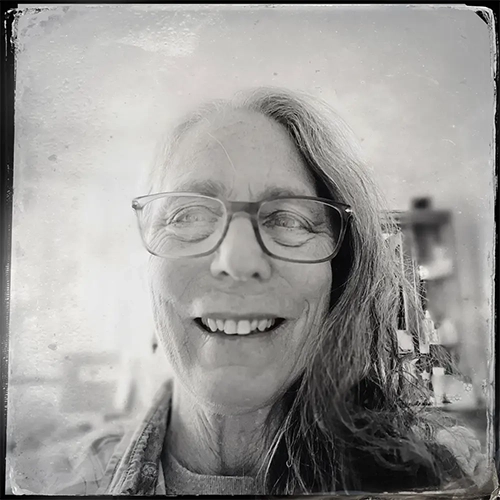
American photographer
Carolyn Moore explores the inner landscape of emotion, memory, and personal transformation through a deeply intuitive photographic practice. Her work unfolds as a quiet dialogue between artist and viewer, where images become a space for reflection, vulnerability, and connection.
Her series
My Heart Exposed, selected for the
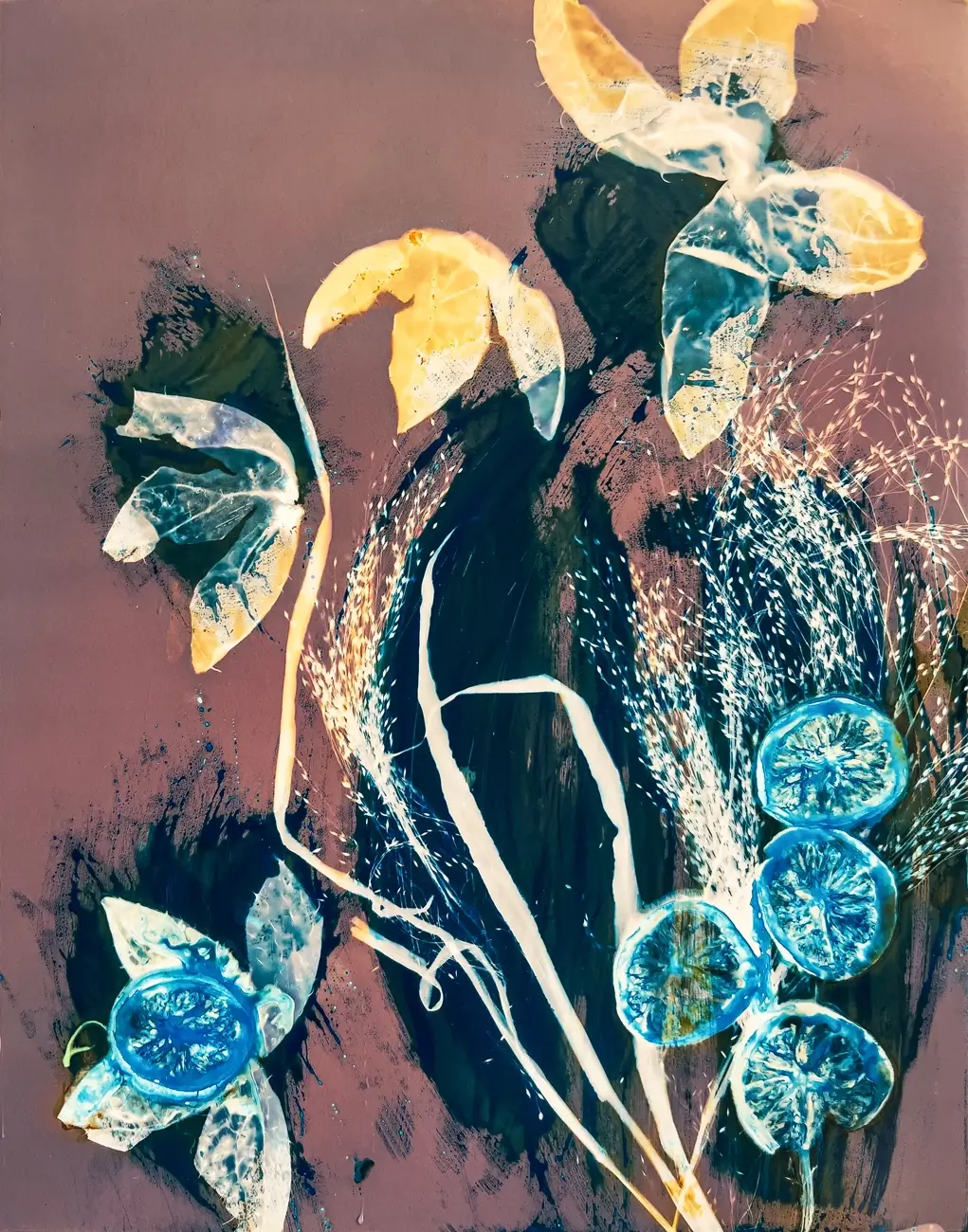
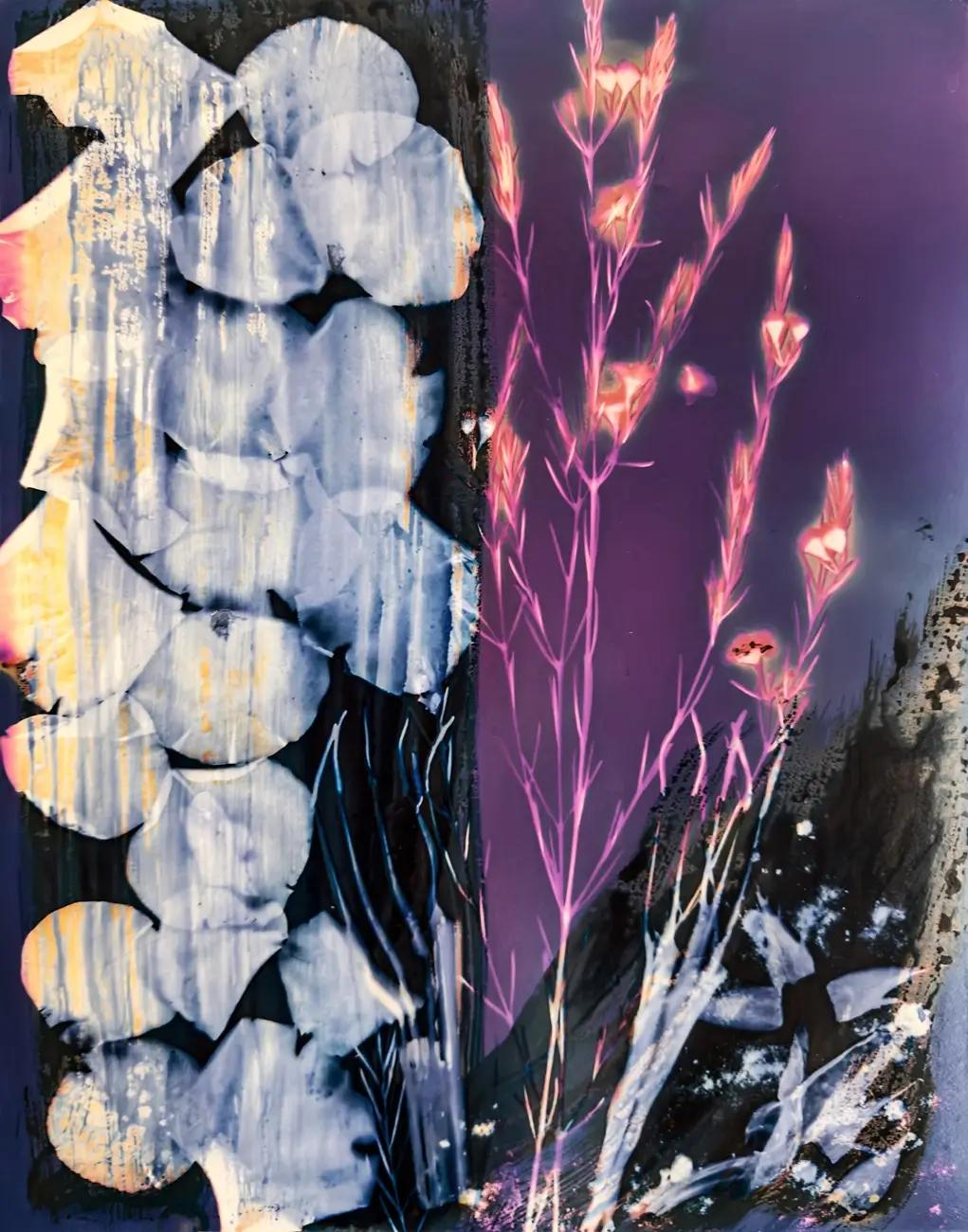
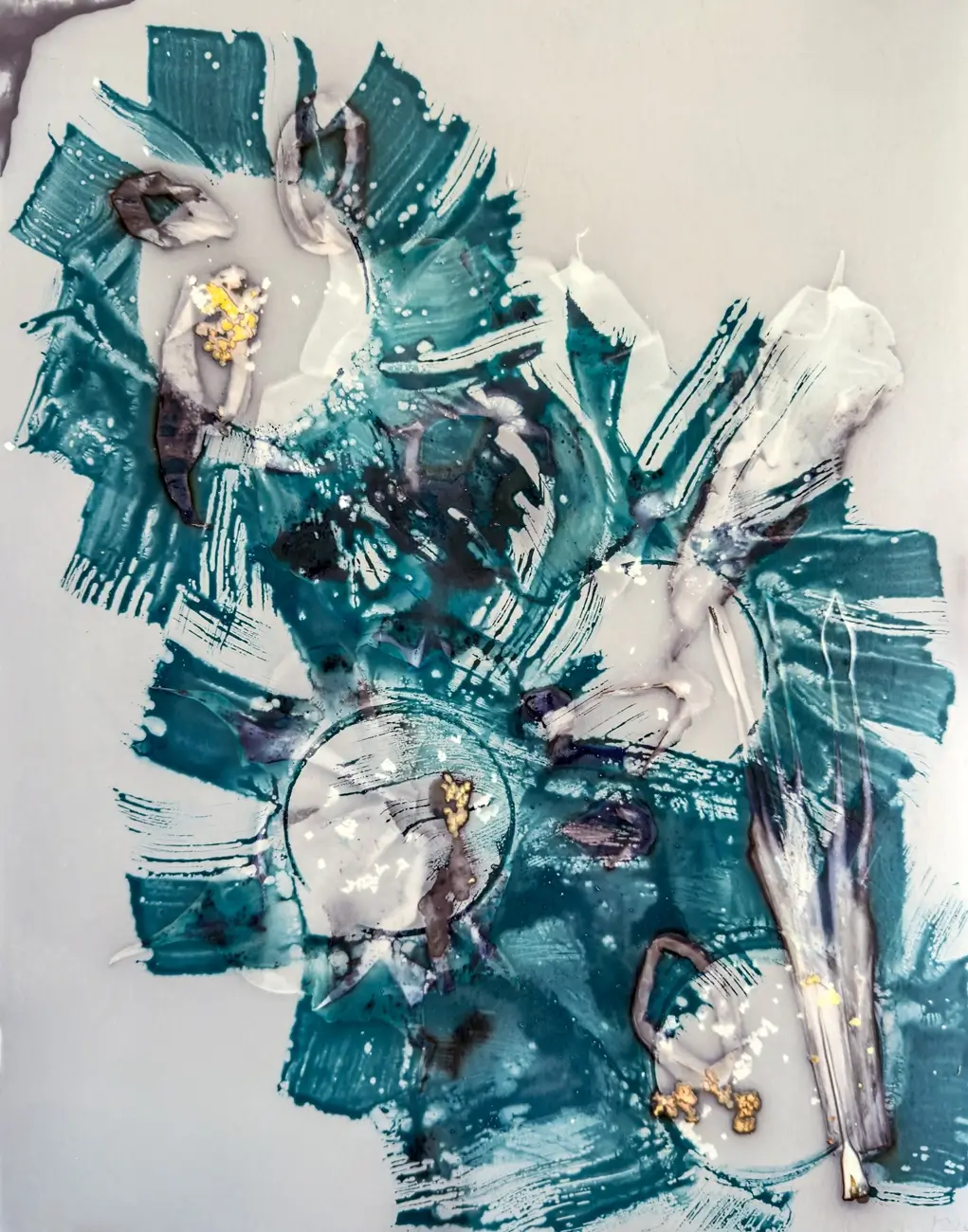
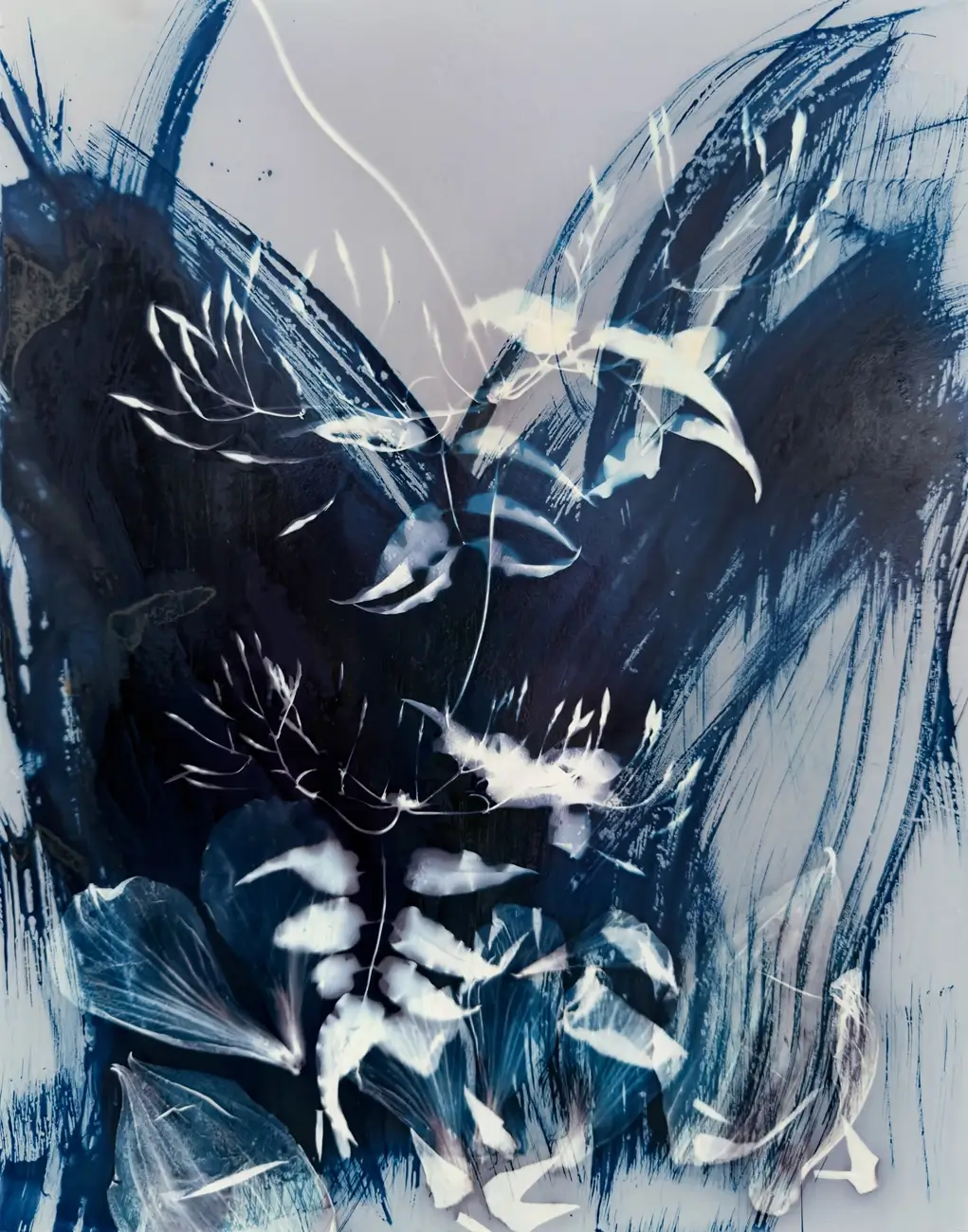
Solo Exhibition in November 2024, is both intimate and evocative. Created through an experimental process combining lumen prints and hand-painted cyanotypes on expired photographic paper, the work embraces unpredictability and transformation. Guided by intuition and a meditative approach, Moore allows each image to evolve organically, resulting in poetic compositions that reflect her inner world. Rooted in a year marked by love, loss, and emotional upheaval, the series resonates with a sense of fragility and resilience. By incorporating natural elements such as plants, she creates a visual language that speaks to memory, connection, and the passage of time. Both delicate and powerful, the project stands out for its emotional depth and singular voice.
We asked her a few questions about her life and work.
All About Photo: You grew up in a family of artists and outdoor enthusiasts in California. How did that environment shape your early connection to creativity and nature?
Carolyn Moore: Spending time outdoors wasn’t just an activity in my family, it was a way of life. From a very young age, I was immersed in nature through camping, skiing, sailing, surfing, backpacking, farming, and gardening. That constant exposure shaped my core values. I learned not only how to appreciate nature, but also how deeply we depend on it and how easily it can be damaged.
That awareness naturally found its way into my artwork. I’m drawn to beauty as a means of connection, hoping that by highlighting the wonder of the natural world, I can encourage a deeper sense of respect and responsibility toward it.
Your artistic journey began with both music and visual art—what drew you to photography after your career in music?
I’ve always lived with both music and visual art concurrently. Photography didn’t fully take hold until about 2004. One day, I noticed an image I had taken on my screensaver, and it completely captivated me. I didn’t fully understand how I had created it and that curiosity pulled me in.
That moment sparked an intense period of exploration, especially in macro botanical photography. For years, I immersed myself in the details of plants by experimenting with light, color, and composition. I often found myself in unconventional positions like climbing trees or on my back in the dirt, both during the day and at night, just to capture the right perspective. I became fascinated by the rhythm and subtle beauty of forms that are most often overlooked, and I wanted to share that hidden world.
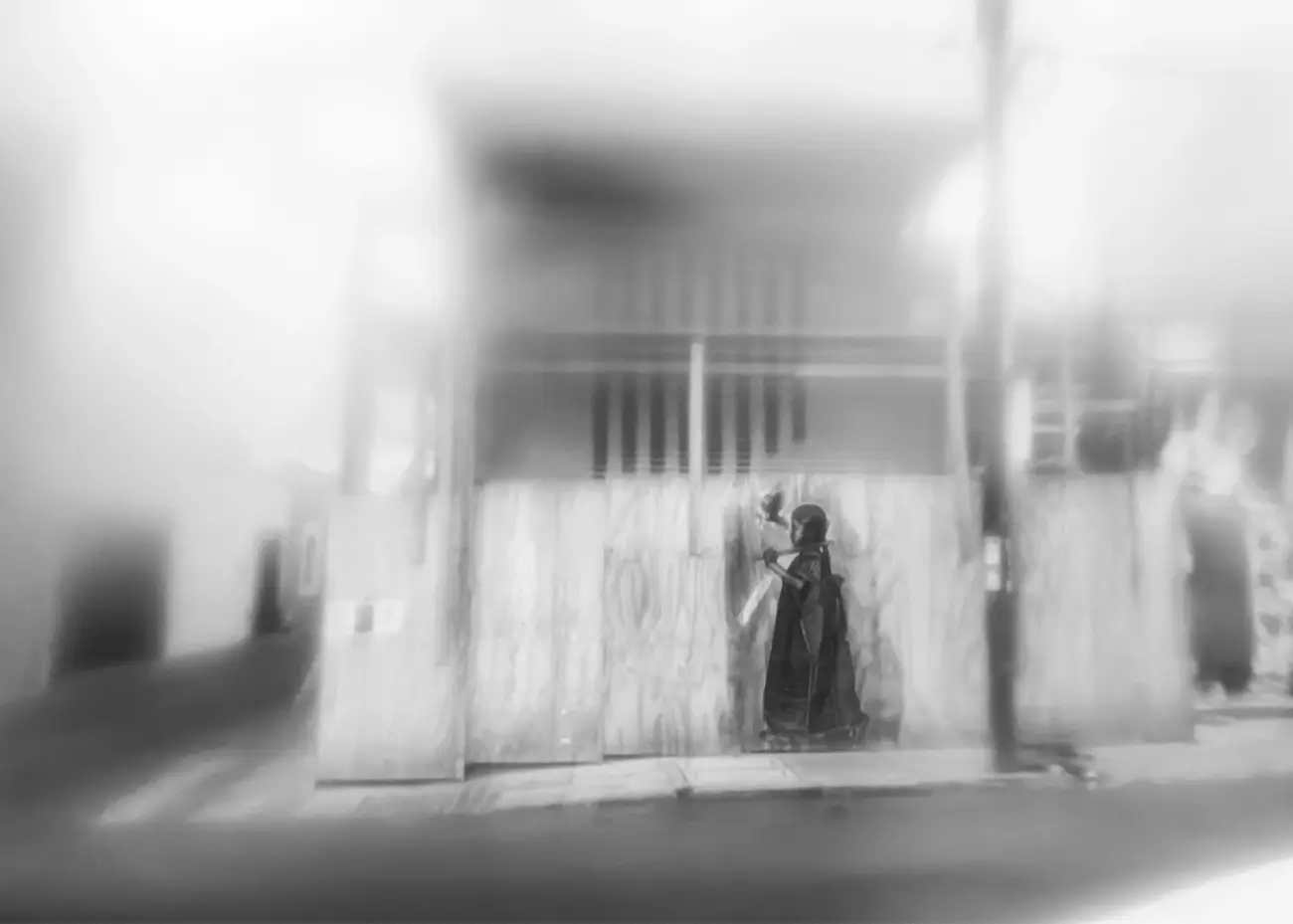
Dream Child © Carolyn Moore
I remember the box camera as fun but frustrating when my images came out blurry and nothing like the beautifully sharp images my father made. My interest then turned to other types of creative expression. The next project I clearly remember is painting my “little red wagon” with wild multicolor patterns. Not long after, my dad gave me a large piece of plywood, as tall as myself, one wide paintbrush and one color of paint. Once I covered the entire surface, I was allowed to choose one more color. This limitation forced me to think and experiment. I imitated my dad’s technique of making abstract splatter patterns on top of my landscape image. This was my first oil painting. That painting holds very fond memories and continues to inform my understanding of color and visual balance.
My father was professor of art at the Sacramento City College and quite an established artist. He unfortunately passed at an early age when I was 9 years old. Despite that loss, his influence is deeply embedded in me. Sometimes I create a piece and later realize it echoes elements of his work. It’s not intentional, but it feels like an ongoing connection - one I’m proud of.
You’ve worked with many photographic techniques—from digital and film to pinhole and handmade processes. What attracts you to alternative processes in particular?
Alternative processes bring me closer to the physical act of creation. Unlike digital work, they require hands-on engagement and carry a level of unpredictability that I find exciting.
There’s a balance between skill and chance. You make informed decisions based on experience, but you also have to respond to variables as they arise. Time itself becomes part of the process as the image evolves, shifts, and sometimes surprises you. I also love that many of these works are one of a kind. They feel more personal, more direct.
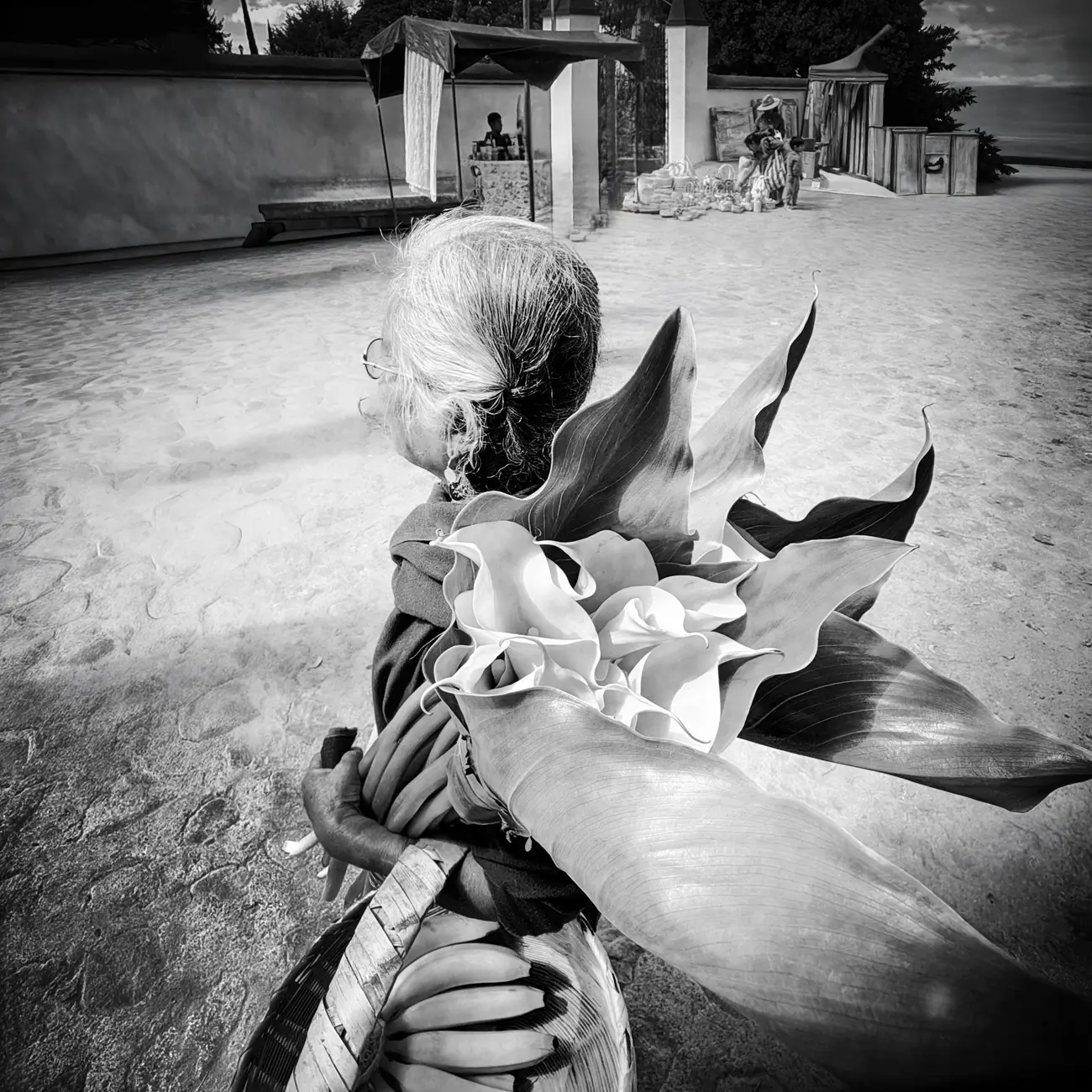
Lily Leaves © Carolyn Moore
Photography has become a type of universal language. Everyone has access to it, and everyone can relate to it. That makes it an incredibly powerful form of expression, now more than ever before.
For me, photography complements music. Where music expresses something outwardly, photography allows me to express it visually. Now that I am able to master my own schedule, I’m able to move fluidly between the two. Each informs the other, and both are essential parts of my daily life.
Do you find connections between your musical background and the way you now approach photography?
Absolutely, they are inseparable. When I am doing the cyanotypes I feel a rhythm or pulse in my design work. I often find myself unconsciously counting, thinking in terms of pacing, contrast, and flow.
In my music I love to play rhythmic music and improvise within a structure, such as in Jazz and Brazilian Choro. The cyanolumen process can be compared to improvising in that things don’t always go as planned. For example a drip or unexpected reaction might change the composition and I then need to adapt in the moment while staying connected to my original intent. It’s a constant balance between control and improvisation.
Could you share what inspired the title “My Heart Exposed”?
In this body of work, I’m creating images without a camera, so in a sense, I
am the camera. I am projecting myself, my thoughts and feelings - my heart - into the captured exposure.
The title also plays on the idea of exposure: both as emotional vulnerability and the physical exposure to sunlight that creates the image.
You describe the process as entering a meditative state where intuition guides your choices. Can you walk us through what a typical session looks like for you?
First it starts with the environment and weather. I need strong sunlight and warmth for long exposures, which can be challenging where I live as it is often foggy.
Then I gather material, like plants or items from my yard or places I know well. I spend time observing them and reflecting: what am I feeling or what do I want to express today? What shapes or forms resonate with that feeling?
Once I begin working, I enter a kind of meditative state. I move into a dimly lit workspace and rely on touch, smell, and memory. I prepare mentally by visualizing my composition, practicing movements or brush strokes. I then relax and begin. That moment of immersion is the most important part of the process for me.
The element of unpredictability seems central to your process. How do you balance control with chance when creating these images?
Preparation is key. I do everything I can beforehand to create structure and control. But I also accept that unpredictability is inevitable and it’s part of the medium.
Balance comes from allowing those unexpected elements to exist, rather than resisting them.
Plants play an important role in your work—what inspired you to use them as both subject and collaborator in this series?
Plants are fundamental to life, and I see them as active participants rather than passive subjects. They create the conditions that allow us to exist, and we affect them just as much in return. There is a fragile interdependence which often goes overlooked. When I work, I genuinely interact with them by adjusting, arranging, sometimes even talking to them. Their odors and shapes can affect my decisions. There’s a level of cooperation involved, even if it sounds a bit unconventional. That relationship feels like collaboration.
You mention that some images remain stable while others will eventually dissipate altogether. How does impermanence play into your artistic philosophy?
Some of these works are stable, while others will eventually fade or disappear. That impermanence mirrors life itself.
It also reflects my concerns about the environment. I am concerned with how our planet is being driven into unhealthy cycles by human development and denial of such. We’re living in a time of rapid change, often driven by human impact. I believe it is critical to raise environmental awareness. Acknowledging impermanence can be a way of raising awareness and encouraging responsibility.
In what ways did your personal experiences of love, loss, and grief over the past year influence the emotional tone of this body of work?
I went through a period of deep sadness and loneliness. I needed color and calm in my life, and I found it through this process.
The images became layered and complex, reflecting my emotional state. Creating them helped me rediscover a sense of joy.
You describe each image as a poetic reflection of your own story, but you also invite viewers to embark on their own journey. How do you hope audiences will connect with these works?
I hope that by expressing something deeply personal, I can create space for others to connect with their own emotions.
The abstract nature of the work invites interpretation. Ideally, each piece sparks curiosity and the possibility for viewers to reflect, wonder, and feel something of their own.
Could you explain how you combine lumen prints with hand-painted cyanotypes on expired photographic paper?
It is a very straightforward process which you can make as complicated as you like by adjusting the many variables. At its core, it’s a contact printing process. I coat photographic paper with a cyanotype solution, place plants on top, and expose it to sunlight under plexiglass. After exposure, the image is washed and fixed.
What have you discovered through experimenting with different papers, exposure times, and plant materials?
Everything matters - the type of paper, the intensity of light, temperature, the moisture and Ph factor in the plants. Each factor influences the outcome.
That’s part of the appeal. It’s a constant process of trial, error, and discovery.
Why did you choose to work with expired photographic paper, and what does its unpredictability bring to your process?
Expired paper introduces another layer of unpredictability, which I enjoy. It also allows me to repurpose materials that might otherwise go to waste.
I’ve been told that the silver content of older papers may have a positive affect on results.
There’s something exciting about not fully knowing what will happen, even after years of experience.
Toni Morrison once wrote about the importance of “remembering and doing better.” Your work seems to balance memory, grief, and hope—do you see it as a form of healing?
Yes. Creating this work gave me a way to process difficult emotions and find balance.
To me, beauty exists in that fragile space where opposing forces meet and resolve. A flexible balance is what I strive for both in art and in life.
Having exhibited internationally and received multiple honors, how do you see My Heart Exposed fitting into your broader artistic journey?
It feels like an important chapter. I’m grateful for the recognition it’s received and hope to expand the series both in scale and in the number of works. It would be really exciting to see these images displayed in large format on big walls!
Finally, what’s next for you—will there be a Volume 2 of My Heart Exposed, or are you moving toward a new direction in your practice?
I see this as a long term project and I’m continuing to expand and develop this series. While I’m still working with Volume 1, Volume 2 is beginning to take shape.
Recently, I’ve started exploring works that function in multiples, such as images that can be split, combined, and reinterpreted. It’s an evolving process, and I’m allowing my curiosity to take the lead.
Anything else you would like to add?
I have a few other projects developing in parallel to this. Honored to say that images from my expanding
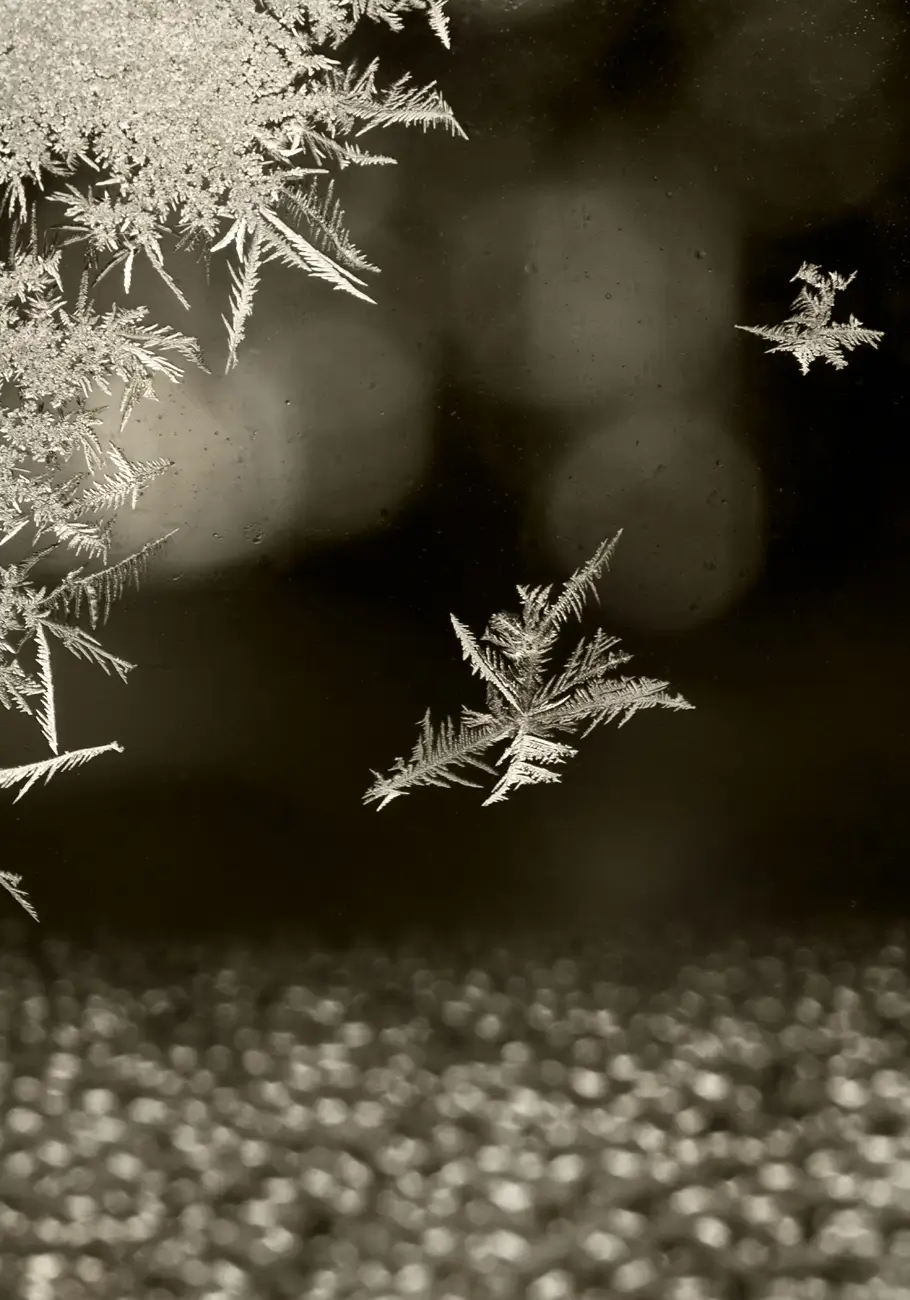
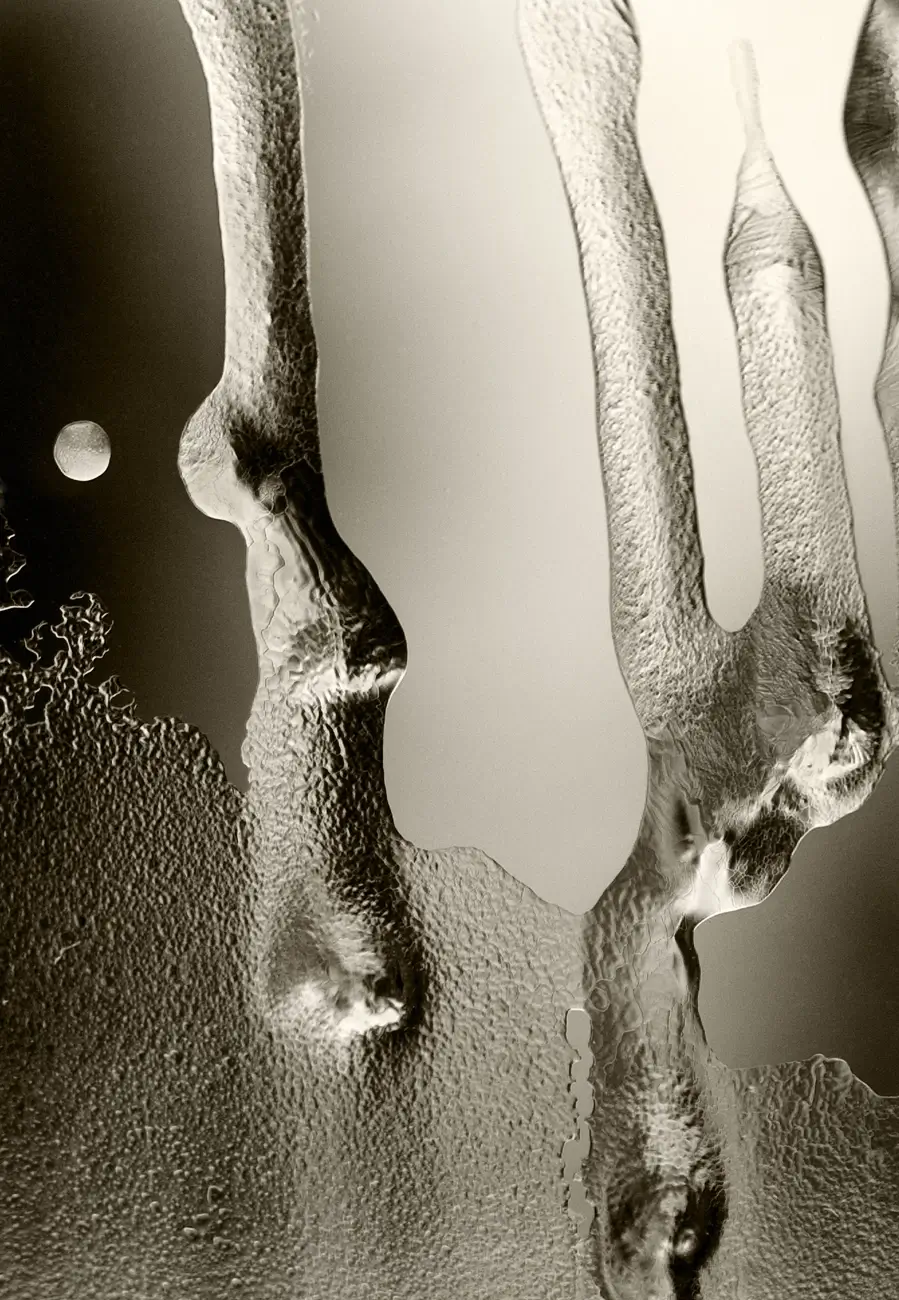
'Ice' series are being presented in multiple juried exhibitions and an upcoming magazine article.
Through time, I have been inspired by many artists, both painters and photographers and I am revisiting their influence on my artistic choices and voice. Recently I have delved into the work of
Graciela Iturbide and her mentor
Manuel Álvarez Bravo and find a deep connection. Here are a couple of images from an emerging series following a visit to Oaxaca, Mexico.
As I now step back into the darkroom to develop some silver gelatin images, perhaps a new body of work will become evident.
Thank you for your thoughtful questions. It has been a pleasure to discuss my work with you!
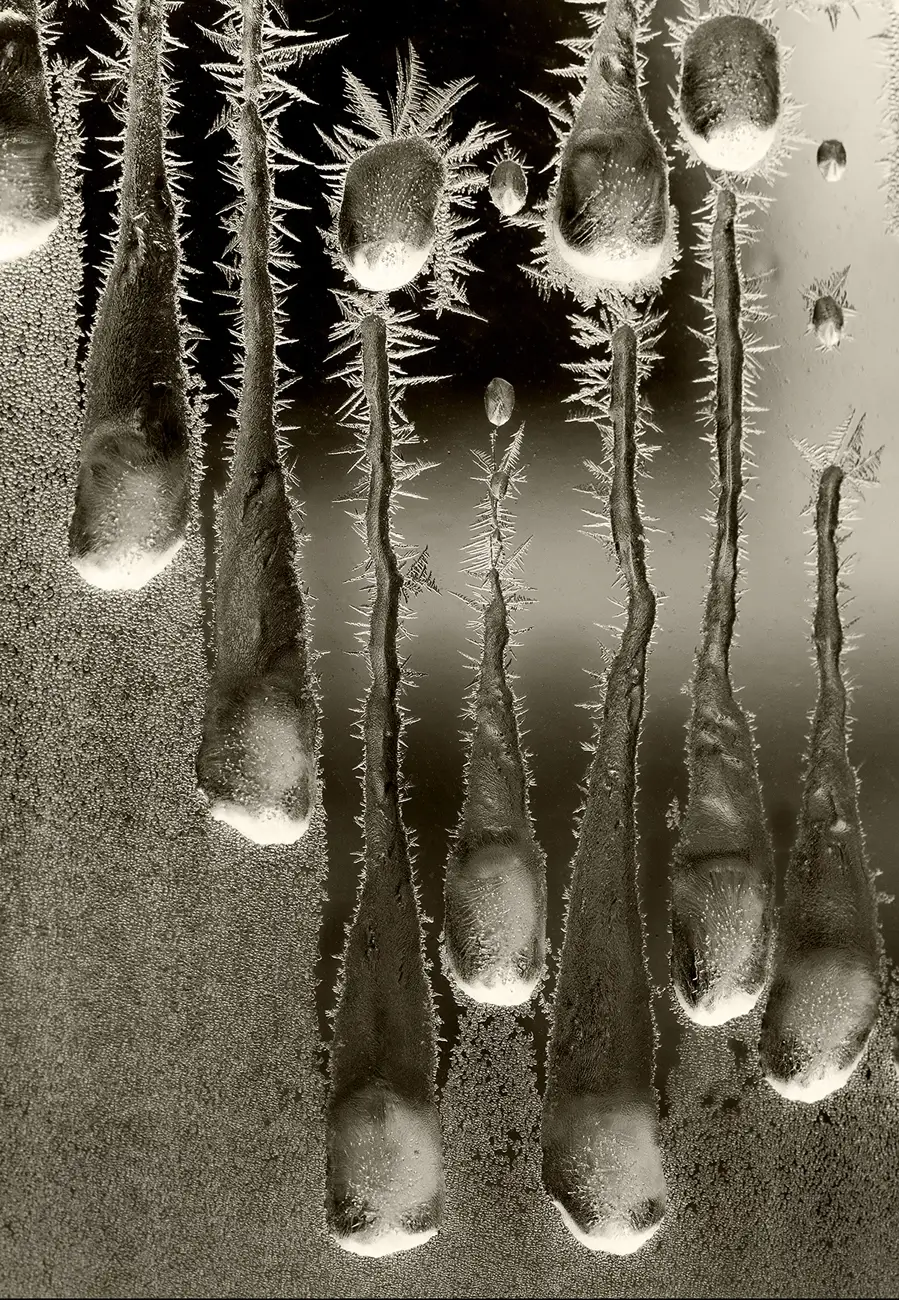
Many Drops © Carolyn Moore