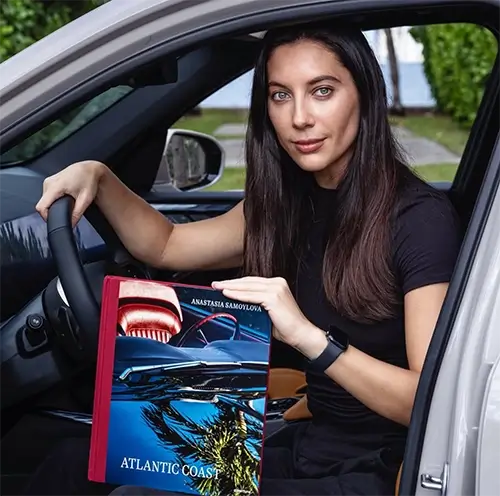
Anastasia Samoylova is an American artist whose photographic practice is shaped by close observation and a deep attentiveness to place. Working between documentary and formal exploration, she photographs landscapes, architecture, and everyday scenes with a sensitivity to light, structure, and atmosphere. Since relocating to Miami in 2016, her work has increasingly focused on how environments—both natural and built—carry social, cultural, and emotional traces.
These concerns are at the heart of
Atlantic Coast, her recent project published by
Aperture and currently on view at the
Norton Museum of Art until March 1, 2026. Retracing U.S. Route 1 from Key West, Florida, to Fort Kent, Maine, seventy years after Berenice Abbott’s historic journey, Samoylova approaches the road as both a physical route and a space of reflection. The project unfolds quietly, attentive to repetition, subtle shifts, and the fragile balance between nature, infrastructure, and daily life.
Presented as both a book and an exhibition, Atlantic Coast invites a slow and open way of looking. Rather than offering conclusions, the work allows meaning to emerge through sequence, atmosphere, and visual rhythm. We asked her a few questions about her practice and her way of seeing, to better understand the thoughts and experiences that shape her work—while allowing the images themselves to remain open and speak in their own time.
All About Photo: Tell us about your first introduction to photography?
Anastasia Samoylova: My first introduction to photography came through studying environmental design and architecture in Moscow. I had to photograph physical models of buildings as part of the coursework, and I quickly became more interested in the images than in the structures themselves. Photography began to feel like a tool for reshaping space rather than simply recording it. I was fascinated by how the camera altered scale, flattened or expanded volume, and transformed a constructed object into an image of a place. That early experience shifted my attention from architecture as form to perception itself, and it quietly set the foundation for how I work today.
Why did you choose to pursue a career as a photographer?
Photography became a viable path for me quite early. When I got my first digital camera in the early 2000s, in my late teens, I realized that the medium offered both creative freedom and practical opportunity. I was able to take on a range of commercial projects, which made photography feel not only expressive but feasible as a profession. That early access to real-world applications allowed me to build skills, confidence, and independence, and it ultimately gave me the space to develop a more personal, long-term artistic practice alongside commissioned work.
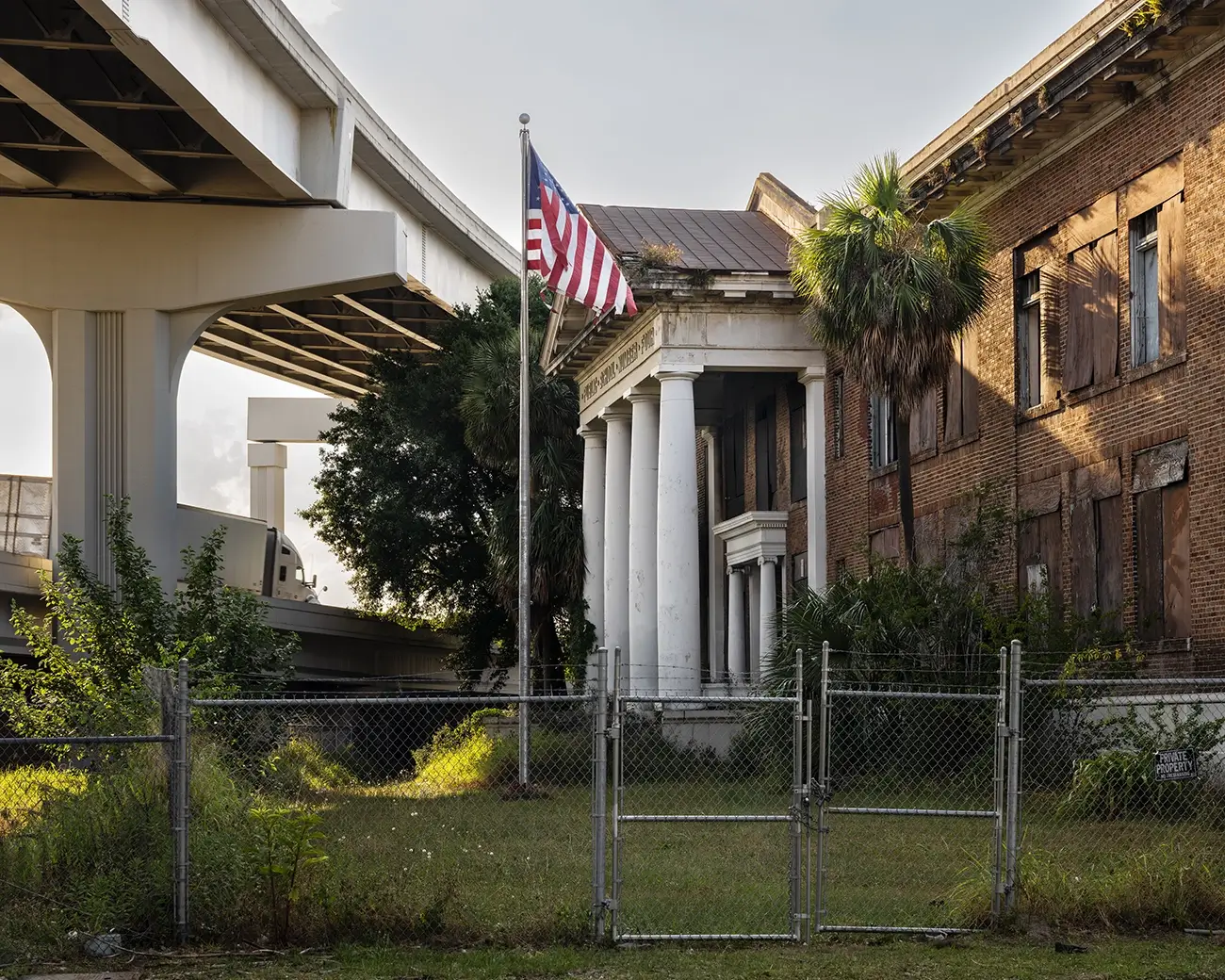
Abandoned School under Highway, Jacksonville, FL, 2024 © Anastasia Samoylova
Arriving in the United States from Russia gave me an insider–outsider perspective that continues to shape how I see. I didn’t grow up with these landscapes as symbols of belonging or nostalgia, so I encountered them with a certain detachment. That distance has been helpful. It allows curiosity to lead rather than expectation, and it keeps me attentive to details that might otherwise be absorbed into familiarity. I’m not burdened by inherited myths or fixed political readings of place, which gives me the freedom to look at American environments as constructed, performative, and often contradictory scenes rather than as given truths.
Many writers describe your work as carrying a dual gaze—both affectionate and detached. Do you consciously think about this position of being both inside and outside the culture you photograph?
I think that dual gaze describes how I think more than how I photograph. I’m constantly questioning whether my judgments are neutral or shaped by external circumstances or internal conflicts. That habit of self-interrogation naturally carries into the work. Photography is well suited to this way of thinking because it often arrives at its own propositions. Rather than illustrating a position I already hold, the camera allows space for contradiction, hesitation, and ambiguity. Being both inside and outside the culture isn’t something I consciously perform; it’s simply the condition from which I observe.
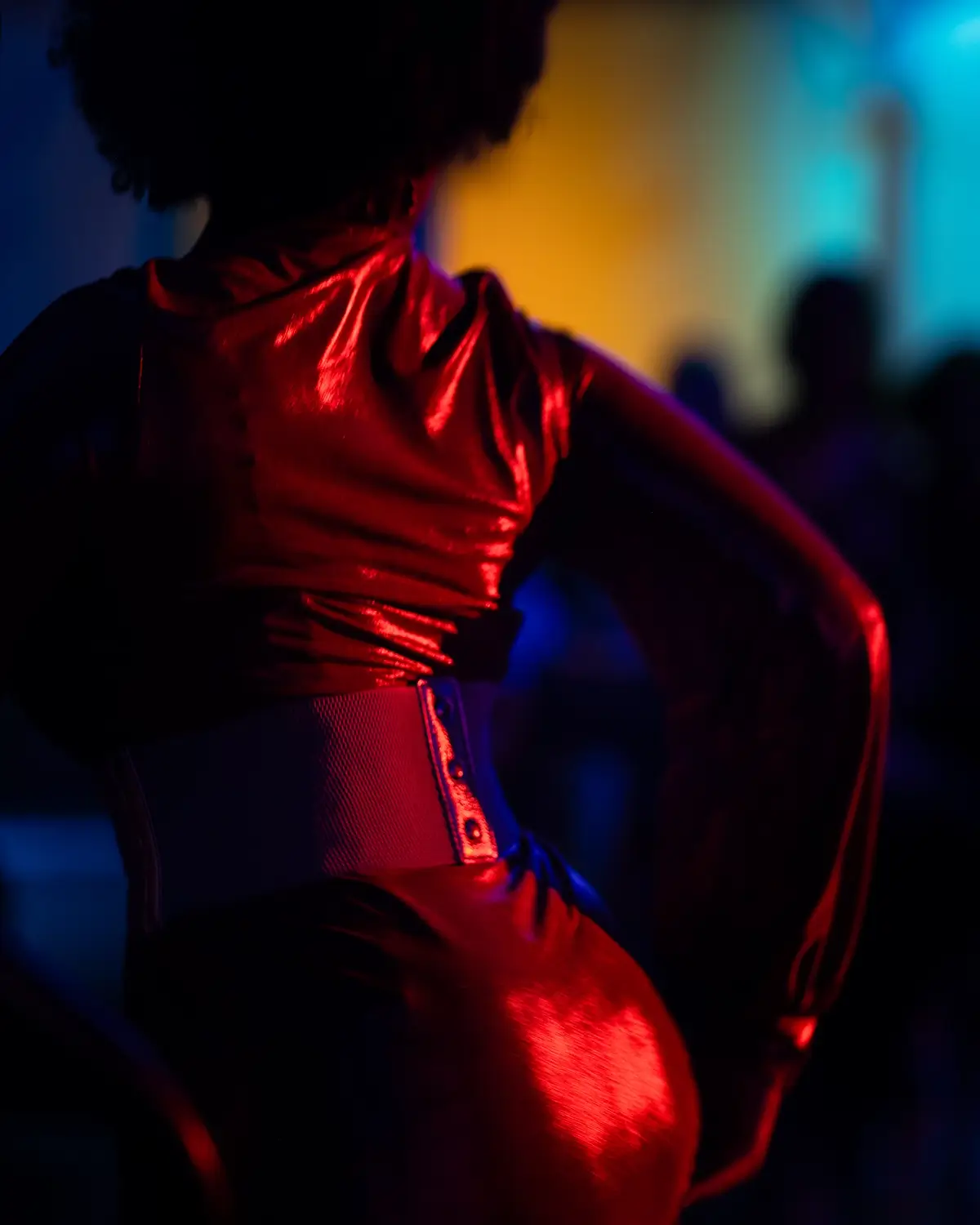
Bar, Miami, FL, 2025 © Anastasia Samoylova
The road became central when I realized how much symbolic weight it carries alongside its practical function. It represents escape and trajectory at the same time—freedom paired with direction. The road allows for movement, exploration, and a certain courage to continue forward without knowing exactly what comes next. As a framework, it offered openness without randomness. It allowed me to think about progress, repetition, and choice while staying grounded in lived experience. That combination of mobility and meaning made the road feel like a natural extension of the concerns I was already exploring.
Atlantic Coast retraces U.S. Route 1 seventy years after Berenice Abbott’s 1954 project. What initially drew you to Abbott’s work, and how did it guide—or resist—your own approach?
What initially drew me to Berenice Abbott was the fact that she was another woman on the road, working with ambition, independence, and clarity at a time when that position was far from given. I was also deeply interested in her attention to infrastructure and in how the built environment shapes urban life over time. Her work acknowledges how cities accumulate layers, how they slide between utility, ruin, and heritage.
Abbott’s project guided me conceptually but also resisted direct continuation. Rather than following her image by image, I approached Route 1 as a contemporary condition, shaped by different pressures and speeds. Around the same time, reading The Death and Life of Great American Cities by Jane Jacobs sharpened my thinking about how cities function socially as well as spatially. Together, those references encouraged me to look at the road not as a linear narrative, but as a living system, constantly rewritten by use, neglect, and reinvention.
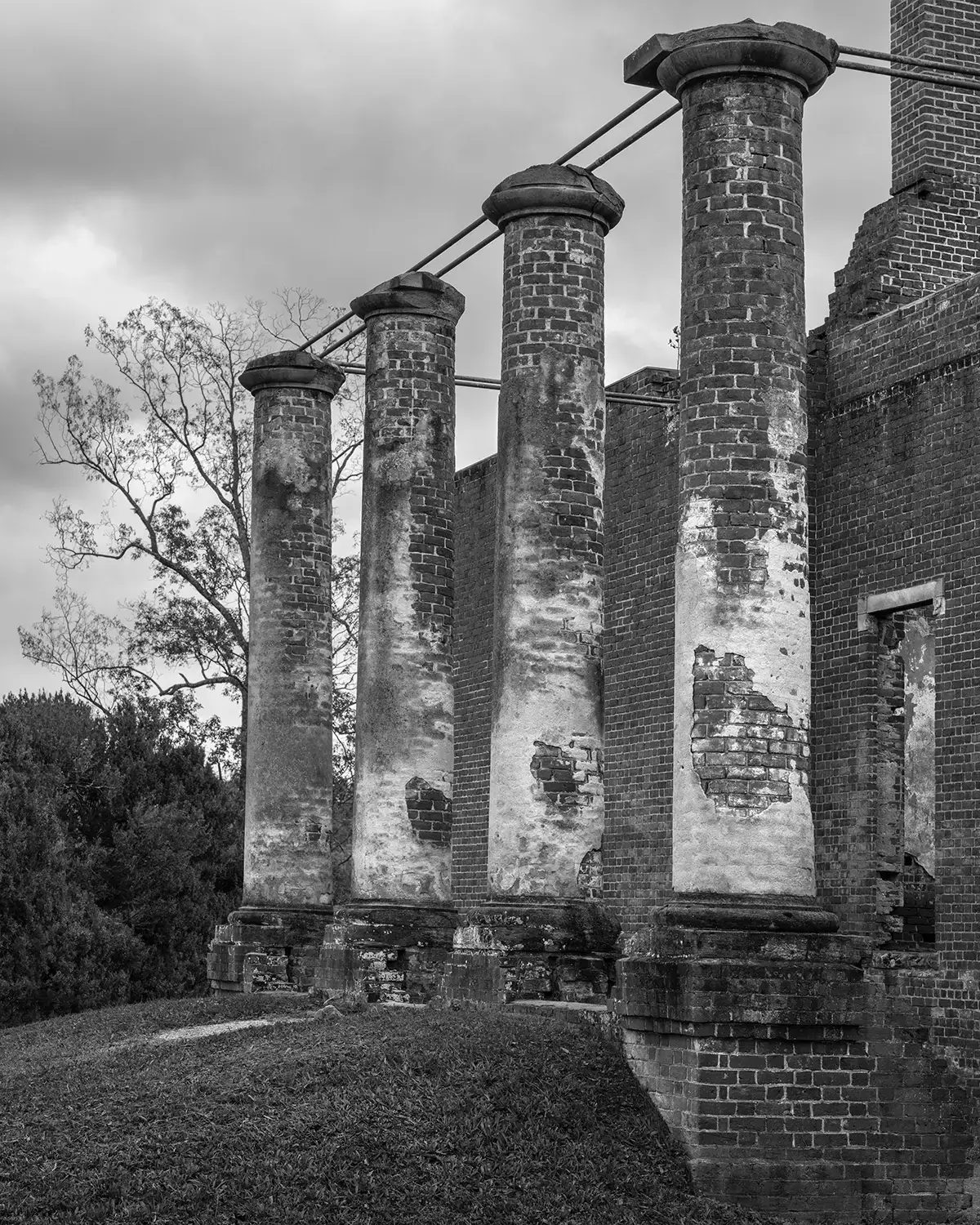
Ruin, Barboursville, VA, 2024 © Anastasia Samoylova
Abbott was an important geographic and conceptual point of departure, but not a visual template. What I wanted to preserve from that lineage was the ambition to look at a nation through its everyday infrastructures and transitional spaces, and the idea that a road can function as a serious subject rather than a backdrop.
Where I diverged was in visual language and sensibility. Formally, I feel closer kinship with Walker Evans, Robert Frank, and William Eggleston. Their work embraces fragmentation, atmosphere, and the psychological charge of ordinary scenes. Rather than aiming for a comprehensive or systematic portrait, I allowed Atlantic Coast to remain subjective and open-ended, shaped by contemporary visual saturation and my own way of seeing.
U.S. Route 1 functions as both a literal road and a symbolic one. What does this route reveal about American identity that might be harder to see elsewhere?
U.S. Route 1 reveals American identity in a slower, more layered way than the interstates. As one of the earliest federally designated highways, it follows the logic of older colonial roads, threading together cities, towns, and working landscapes along the Atlantic coast. Before highways like I-95 streamlined movement, Route 1 functioned as a backbone for commerce, migration, and daily life.
What this reveals is a version of America built incrementally rather than efficiently. Along Route 1, ambition, wear, reinvention, and neglect exist side by side. You see how history accumulates rather than disappears, how infrastructure carries memory, and how progress leaves visible traces. The road exposes contradictions between promise and persistence, making American identity feel less mythic and more lived, uneven, and human.
As you traveled from Key West to Maine, did your perception of the country shift along the way, or was there a recurring feeling that followed you throughout the journey?
The landscape shifts dramatically along the way, but a recurring feeling persists. No matter how much the terrain, light, or architecture changes, the same gas stations, fast-food chains, and commercial signage repeat themselves, creating a kind of homogenized horizon. That repetition flattens difference even as regional character tries to assert itself.
This tension between change and sameness stayed with me throughout the journey. The road reveals both the vastness of the country and the mechanisms that standardize experience, producing a landscape that is at once diverse and eerily familiar.
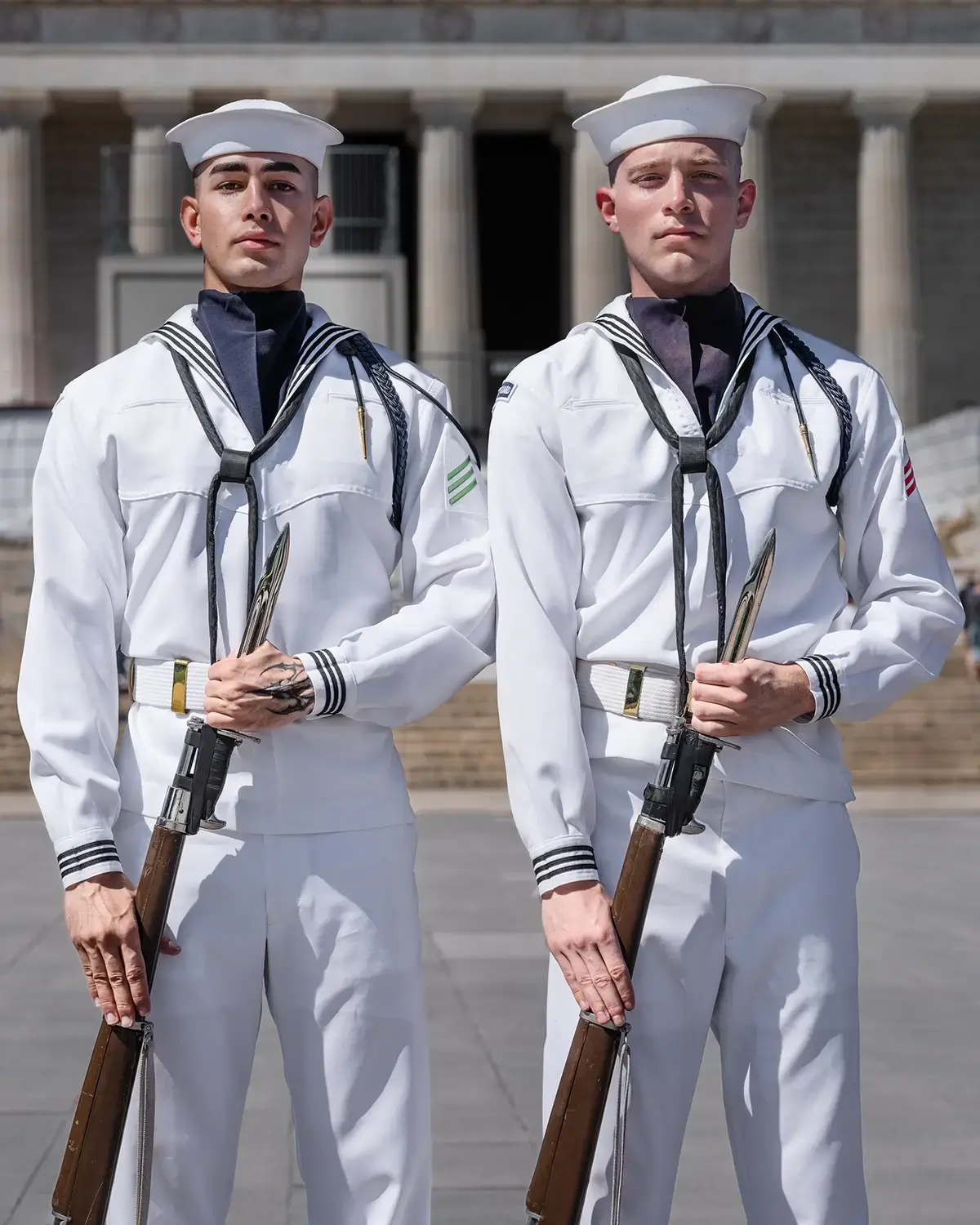
Guards, Washington, DC, 2024 © Anastasia Samoylova
I don’t approach the work as a critique in a traditional sense. My role is to observe rather than to judge. I’m interested in allowing places to register as they are, without resolving their emotional charge. Nostalgia often enters through the viewer rather than through my intention.
Because of that, the readings of the photographs can vary widely depending on who is looking and what they bring with them. For some, an image may feel comforting or familiar; for others, uneasy or disquieting. I try to leave that tension open, trusting the photograph to hold multiple meanings at once rather than directing it toward a single interpretation.
The work moves fluidly between vivid color and black-and-white images. How do you decide which moments demand color and which call for restraint?
I’m a formalist, and the decision is intuitive. I begin in color largely because my digital camera records the world that way by default. From there, I evaluate whether color is serving the image or overpowering it.
When color becomes distracting or too literal, black and white offers a way to abstract the scene further. It strips the image down to structure, light, and rhythm, allowing the composition and atmosphere to come forward more clearly.
Your compositions often feel meticulously constructed, yet never staged. Can you describe your working process on the road—how much is intuition, and how much is anticipation?
It’s a mix of anticipation and intuition. I do research in advance, marking maps and identifying possible points of interest, which gives the journey a loose structure. But once I’m on the road, walking and driving are just as important. I spend a lot of time wandering, and I often pull over instinctively when something peculiar catches my attention.
The final image usually emerges from that balance. Preparation sharpens awareness, but intuition determines the moment. I don’t stage scenes; I respond to what’s already there, staying alert to how elements briefly align before dissolving again.
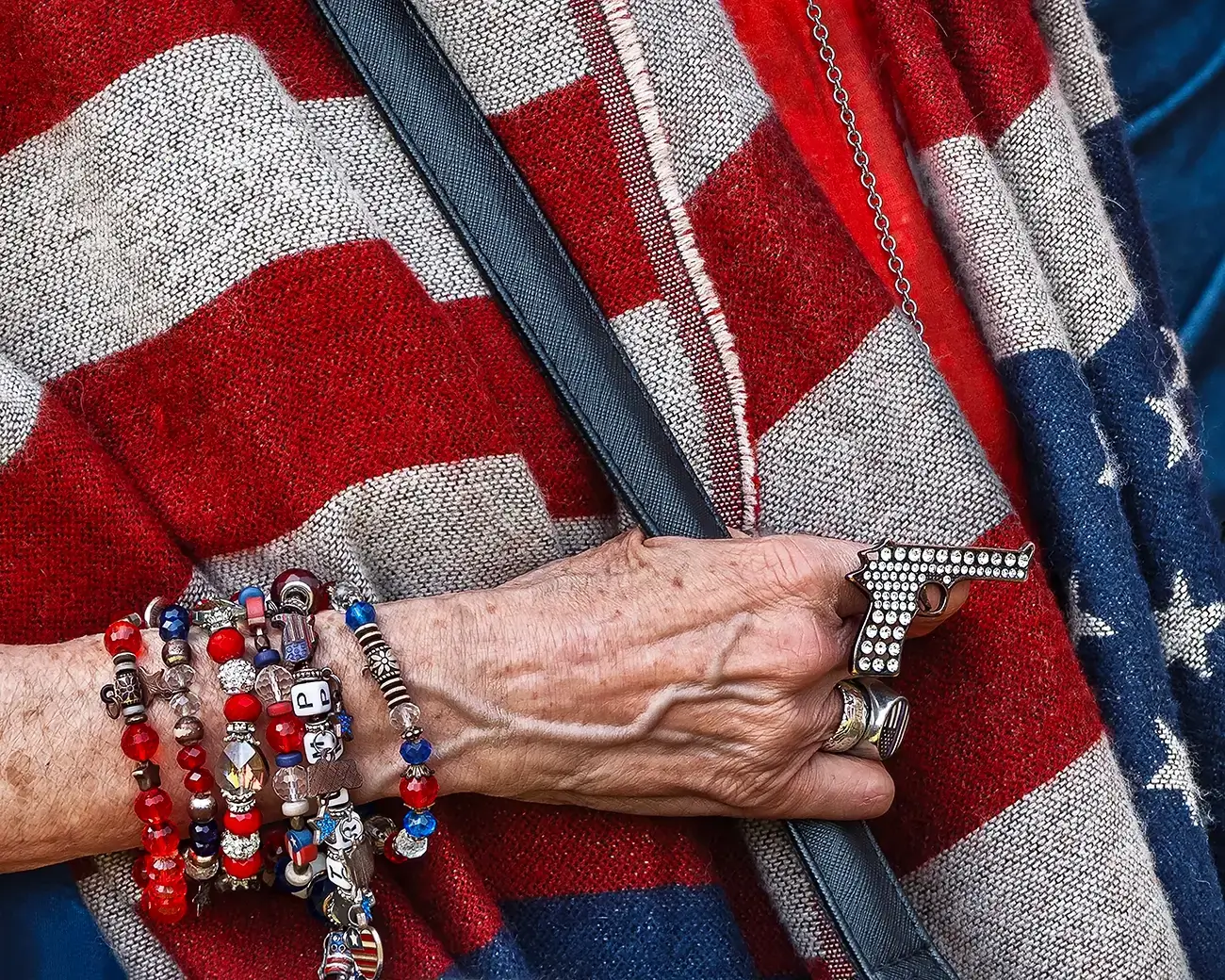
Gun Ring, Brookly, NY, 2024 © Anastasia Samoylova
I think of these images as environmental portraits. The people I photograph are not protagonists in a narrative, but collaborators who momentarily agree to inhabit the frame. The encounter is often spontaneous, based on a brief exchange of trust and curiosity.
What interests me is that fleeting rapport. The human presence activates the landscape rather than dominating it, revealing scale, tension, or vulnerability within the environment. Those brief connections are part of the magic of the work, small human negotiations that leave a subtle but lasting trace in the image.
Your work touches on themes of commerce, ideology, and power, yet avoids overt political statements. Is neutrality a deliberate choice, or an outcome of observation?
I don’t think of it as neutrality so much as poetry. I’m not interested in producing a simplified takeaway. Observation allows complexity to remain intact, without collapsing experience into a single message.
The work touches on commerce, ideology, and power because those forces are embedded in the landscape, not because I set out to illustrate them. By staying attentive rather than declarative, the images leave space for ambiguity, resonance, and contradiction.
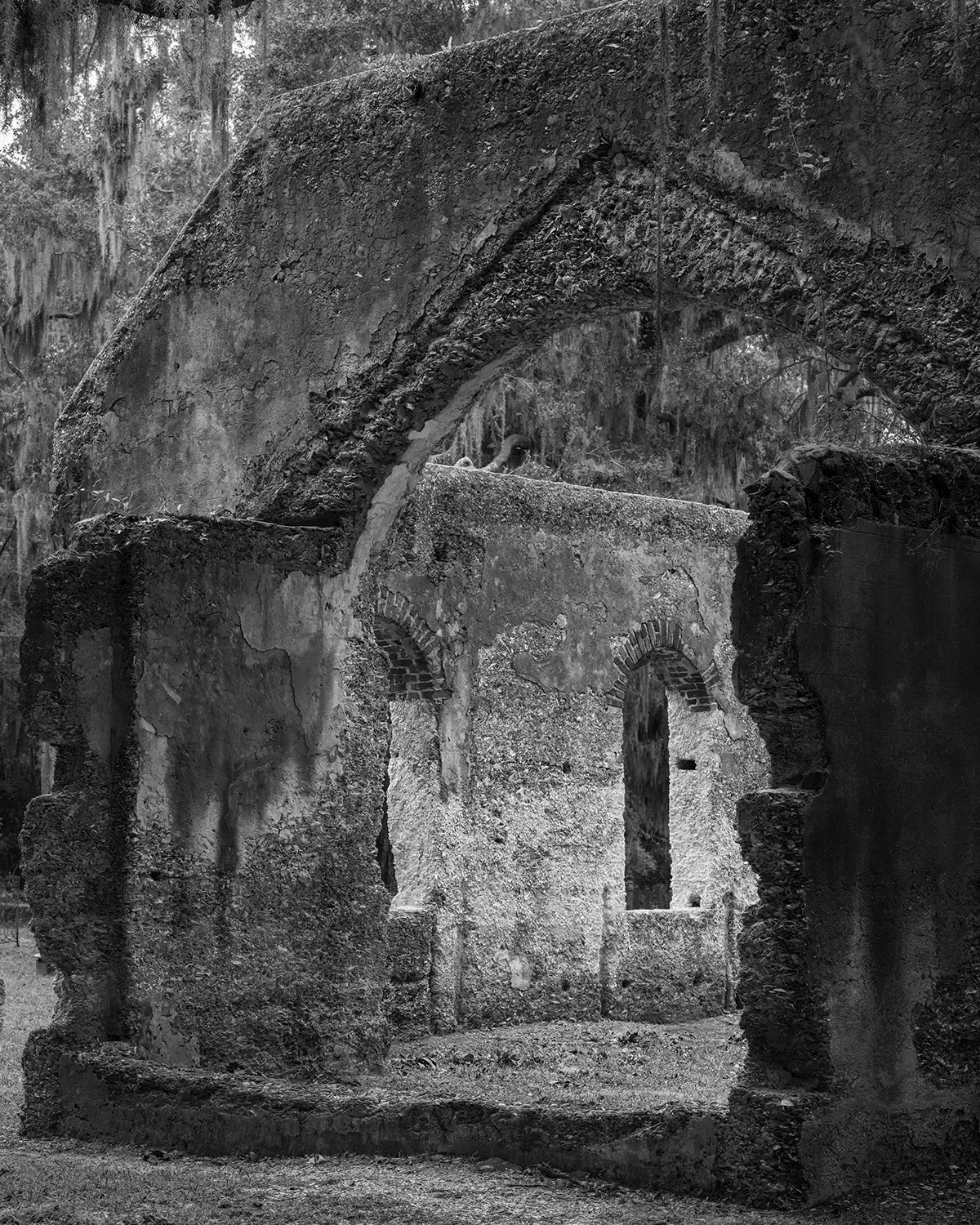
Church Ruins, St Helena Island, SC, 2024 © Anastasia Samoylova
I don’t believe photography can ever be fully neutral. Every image reflects a choice of framing, timing, and attention. At the same time, I’m interested in dialogue rather than declaration. While I have my own views, my work operates in the realm of culture, not politics.
For me, the goal is to build bridges and to encourage viewers to ask questions of one another and of themselves, rather than to shout proclamations. In a moment of extreme political division, the space for reflection and exchange feels not only relevant but urgent.
Atlantic Coast exists both as a book and as exhibitions, notably along the very road that inspired it. How does showing the work in Florida—particularly at the Norton Museum of Art—change its meaning for you?
Showing Atlantic Coast in Florida brings the work into direct proximity with one of its subjects. The distance that often exists between image and place collapses. Viewers encounter landscapes that are familiar, lived in, and emotionally charged rather than abstract or remote.
Presenting the work at the Norton Museum of Art is especially meaningful because Florida functions as both a point of departure and return within the project. The exhibition becomes less about observation from afar and more about dialogue with a local audience, one that is itself layered and transient, shaped by migration and seasonal movement rather than a single, fixed identity.
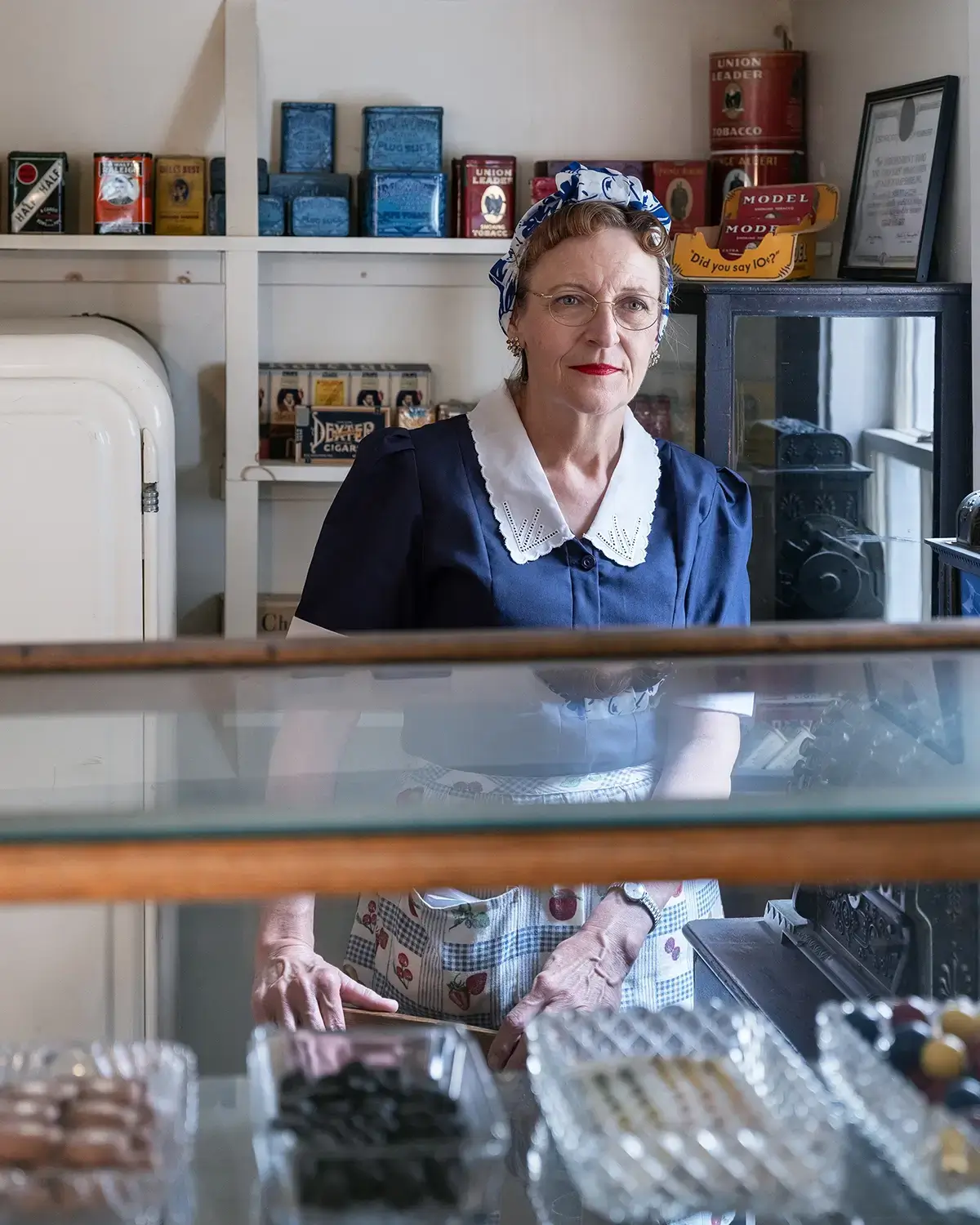
Historic Reenactor, Portsmouth, New Hampshire, 2024; from Anastasia Samoylova: Atlantic Coast (Aperture, 2025). © 2025 Anastasia Samoylova
The physical experience of the book was essential to my vision of the project. Books are central to my practice because they allow a body of work to exist in its most complete form.
The Atlantic Coast book contains twice the number of photographs shown in the exhibition. Just as important as the number of images is the sequence. The order of the photographs builds a poetic, nonlinear narrative that isn’t simply tied to the geography of the trip. Through pacing, repetition, and visual echo, the book allows the work to unfold as an experience rather than a map.
As a 2025–26 Artist-in-Residence at the Norton Museum of Art, how do you see this residency influencing your next body of work?
The residency offers something I value deeply: time, continuity, and context. I plan to work both photographically and painterly, continuing to explore the hybrid form that emerged in my new project, Now Voyager.
Having the space to move between photographing and painting without urgency allows those two languages to inform each other more fluidly. Rather than separating mediums by project or phase, I’m interested in letting them coexist in real time. The residency supports that kind of sustained experimentation, where observation and intervention, image and gesture, can develop side by side.
After such an expansive journey across the Atlantic coast, are you drawn now to another long-form project—or to something more intimate and contained?
I’m already in the middle of another project, Harbor, which focuses on port cities and will be published this year, alongside two other long-term bodies of work. I tend to work on multiple projects simultaneously, partly out of necessity and partly out of preference.
For me, long-form doesn’t mean singular or linear. Moving between projects keeps each one porous and responsive. Even when the scope is expansive, I’m always attentive to moments of intimacy within it—smaller observations that anchor the larger journey.
Looking ahead, what questions about place, identity, or perception are you most eager to explore next?
Looking ahead, I’m increasingly interested in how water shapes place and perception, not only as a threat but as a site of adaptation and possibility. I want to explore climate solutions as visible, lived infrastructures rather than abstract policies.
I’m also drawn to questions of gender and urban space, and to the idea of nature as a socially constructed concept—something framed, mediated, and politicized rather than given. Expanding my geographic focus is equally important to me. I’m interested in engaging with Africa and Asia in a meaningful way, not as backdrops, but as complex contexts where questions of climate, urbanization, and visual culture intersect differently. These directions all converge around perception, and around how power, history, and environment shape the way we see and inhabit the world.
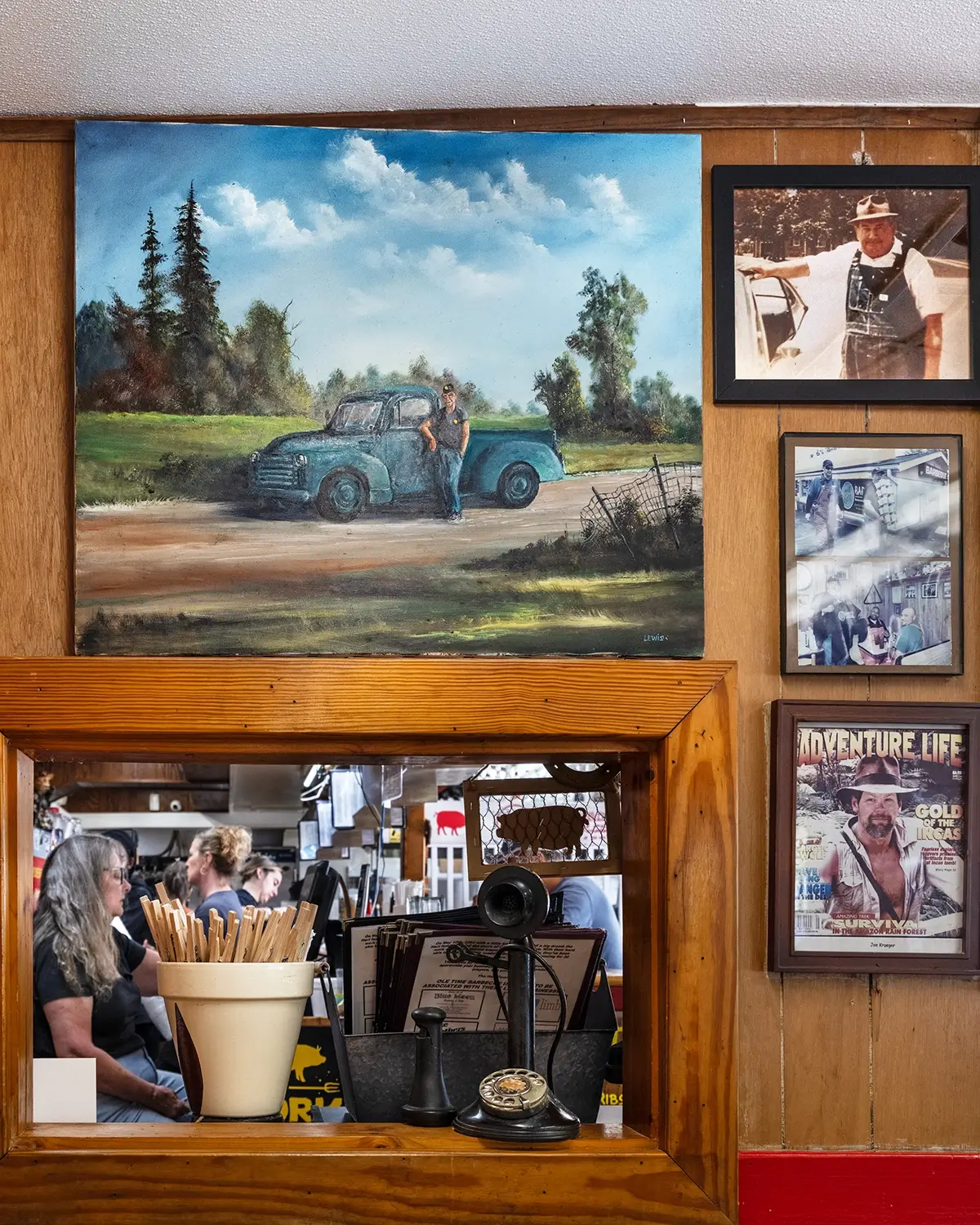
Diner, Raleigh, NC © Anastasia Samoylova
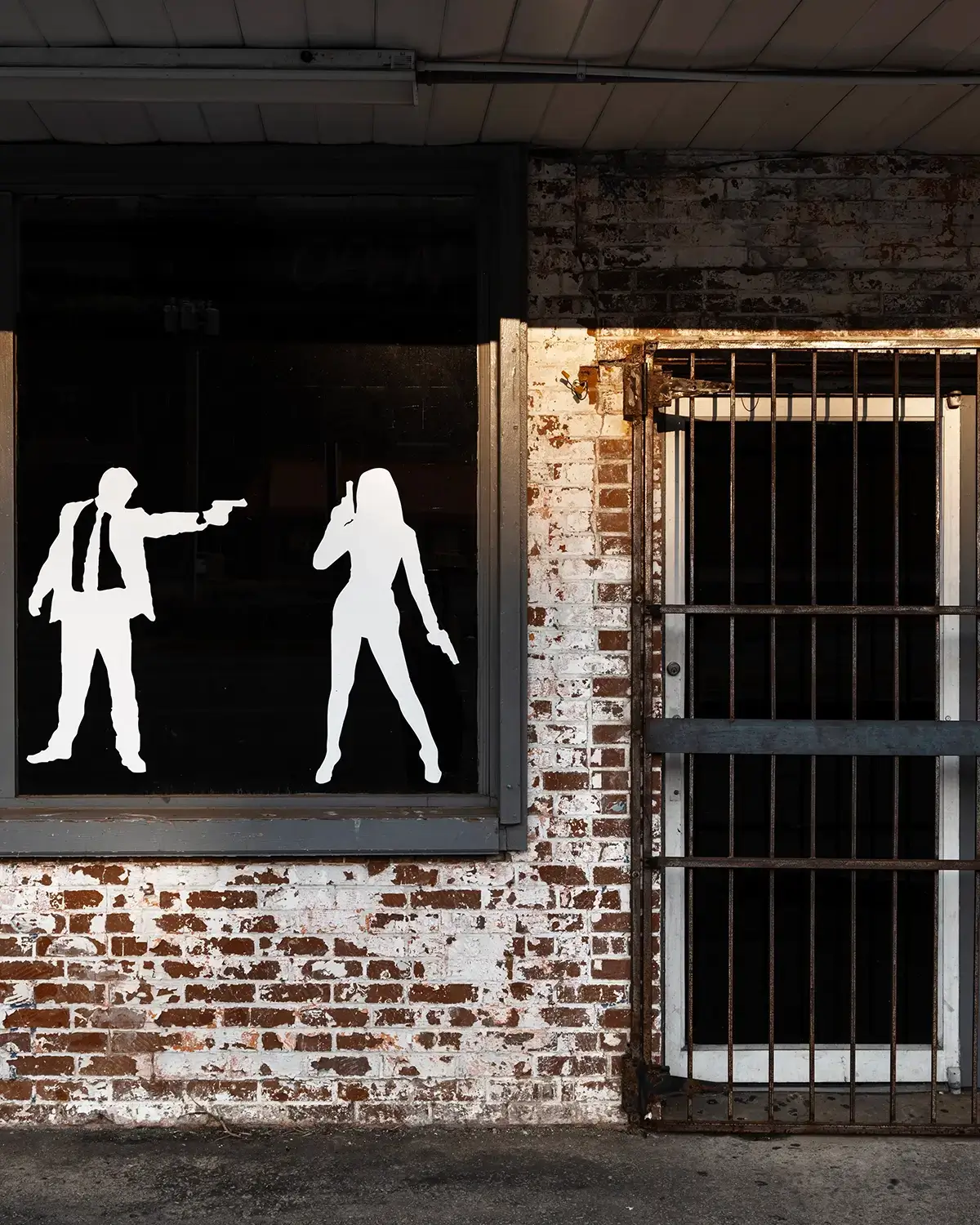
Window Decals, Durham, NC, 2024 © Anastasia Samoylova