German photographer
Henk Kosche turns his lens toward the streets of Halle an der Saale, capturing everyday life in the late years of the former German Democratic Republic. At the time, Kosche was studying design and exploring the city with his camera, drawn to the atmosphere of its industrial landscape and the quiet rhythms of daily life.
His series
Street Photography at the End of the 80s, selected as the
Solo Exhibition for July 2025, revisits a body of work created just before a period of profound change. Rediscovered decades later in a small box of 35mm negatives, these photographs offer glimpses of a city and its people at a moment suspended between the familiar and the unknown.
We asked him a few questions about his life and work.
All About Photo: Can you tell us about your background and how you first became interested in photography?
Henk Kosche: I am an industrial designer and develop lighting fixtures and lighting systems. Light has been my central topic for over 30 years. Since I first became interested in photography as a young man, that may be the reason for my fascination with light and shadow. Deep down, I suppose I’m still amazed that you can tell a story just by creating an image.
How did your time in Halle an der Saale influence your photographic vision and choice of subjects?
I studied design at the art academy in Halle an der Saale. There, I became slowly familiar with the world of art and the fundamentals of designing things. Photography was part of my education and my secret passion. Back then, I wanted to get out into the city and explore both the people and the cityscape with my camera, just as
Henri Cartier-Bresson or
Marc Riboud once did in Paris.
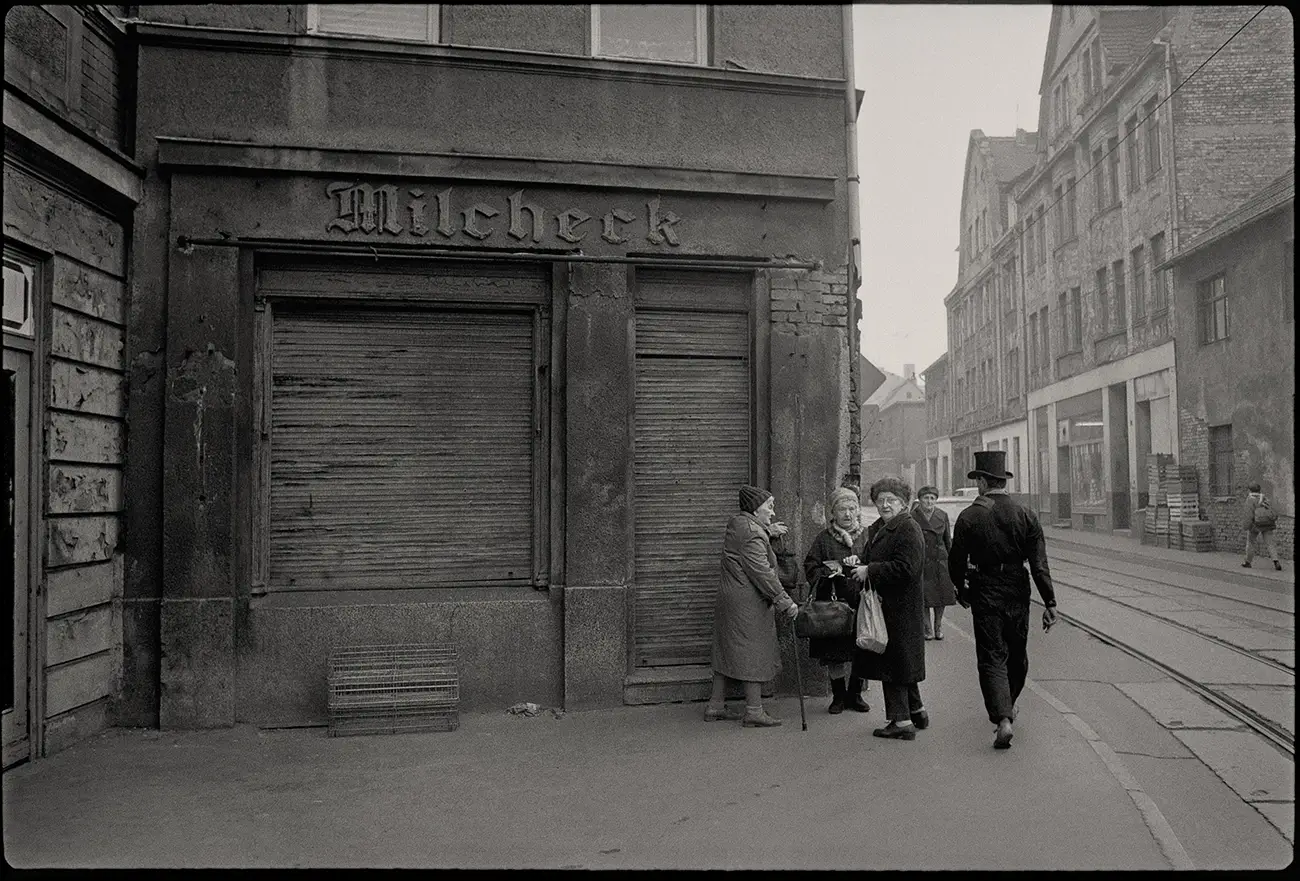
At The Milcheck, February 1988 © Henk Kosche
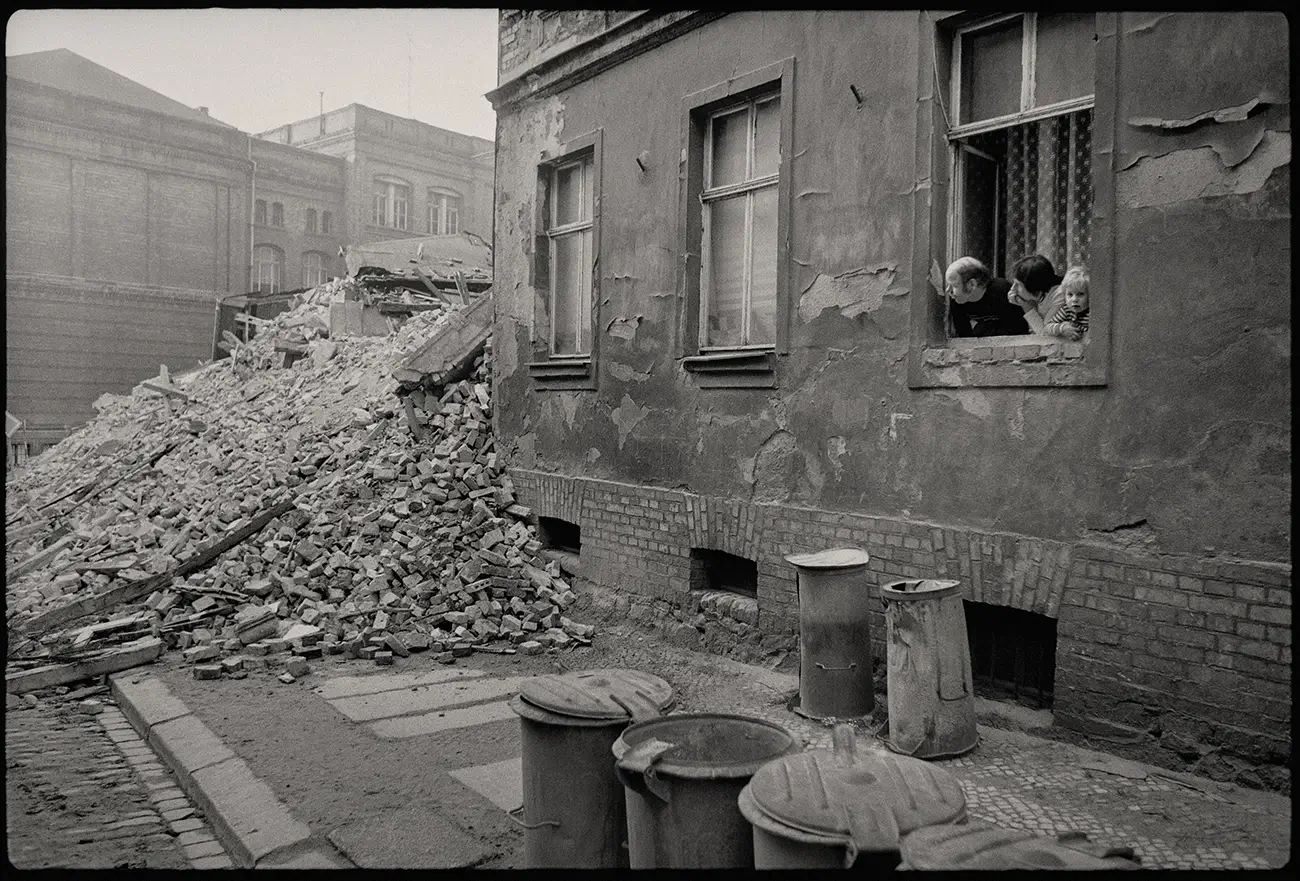
Family At The Window, March 1989 © Henk Kosche
In retrospect, it is a remarkable coincidence that the people’s living conditions, the gray-toned street scenes, and the only affordable photographic technique, black-and-white photography, blended together so naturally here. But what seemed increasingly important to me was the composition and the meaning of the images. Why is this particular 1/125th of a second worth capturing for the future? How is an image composed if it is intended to have meaning in the future?
How did working with 35mm negatives influence the way you approached composition and timing?
Since the series from the 1980s could only have been created on analog film, it’s interesting to consider whether it could have been made in the same way using digital technology. In a few words, I think I would have ended up with more images in the series, because the analog process is much slower. It takes more time to react on location regarding settings and focus, and the process in the darkroom is also time-consuming. Perhaps the single images wouldn’t have had the same intensity, the same uniqueness. Who knows—we’ll never know.
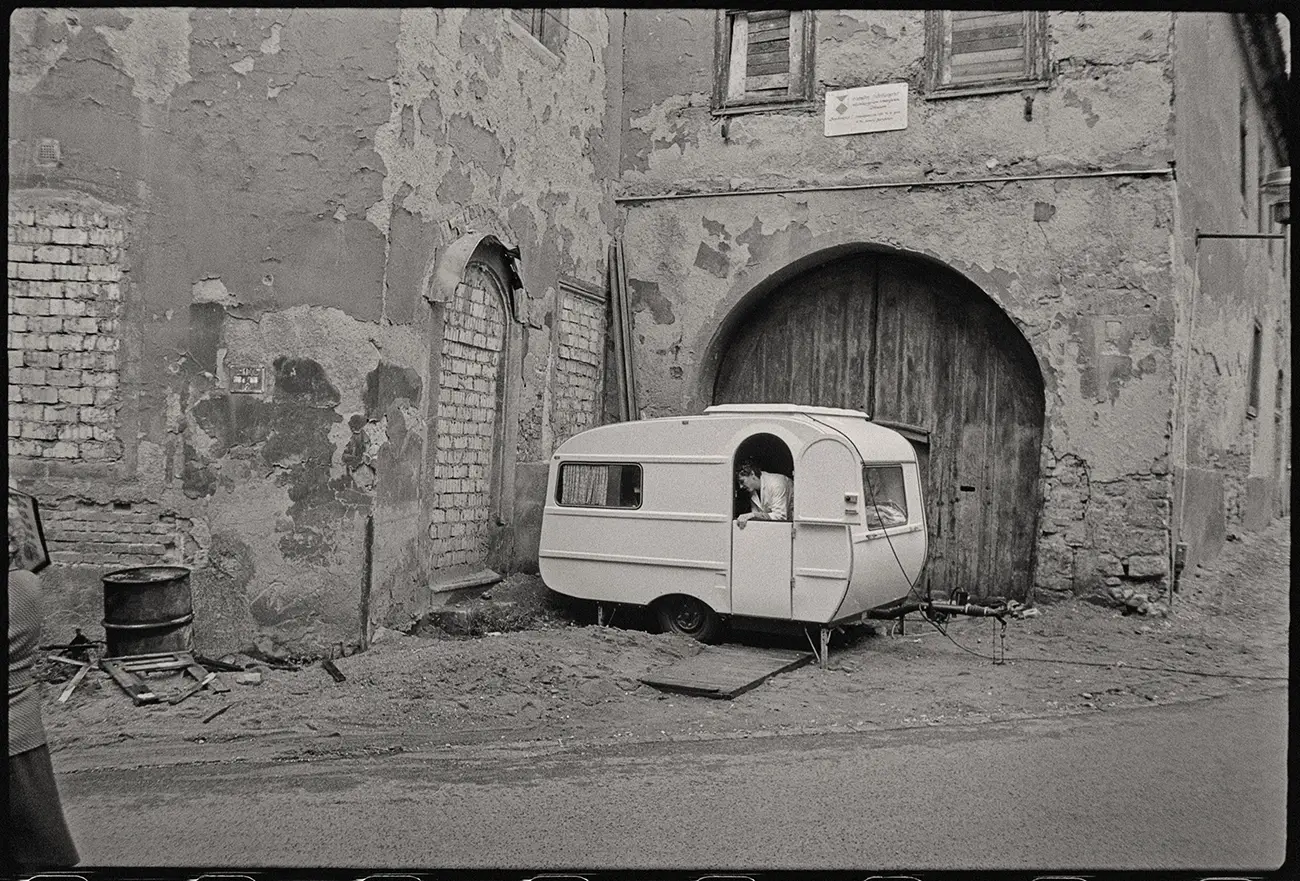
Mobile Kiosk, September 1988 © Henk Kosche
It sounds weird, but back then, the biggest hurdle was the equipment. A good camera wasn’t cheap, and a Canon or Nikon was totally out of reach. But walking around in public with a camera wasn’t always easy either. Sometimes you’d get stopped by folks in uniforms or black leather jackets who wanted to know why you were taking pictures and what exactly you would be researching.
How do you balance documentary intent with artistic expression in your street photography?
Both then and now, I believe in the power of the image, and this is what we create. Since it is impossible to be (to see) objective or even to reproduce reality in an image, I seek the most relevant equivalent. My focus is on my own perception and the question of whether I can convey it to an audience. Something can be true even if it isn’t entirely objective. We are human beings who can also see with our hearts. It is precisely the focus within an image—through framing, composition, and lighting—that brings a message or a feeling to our attention.
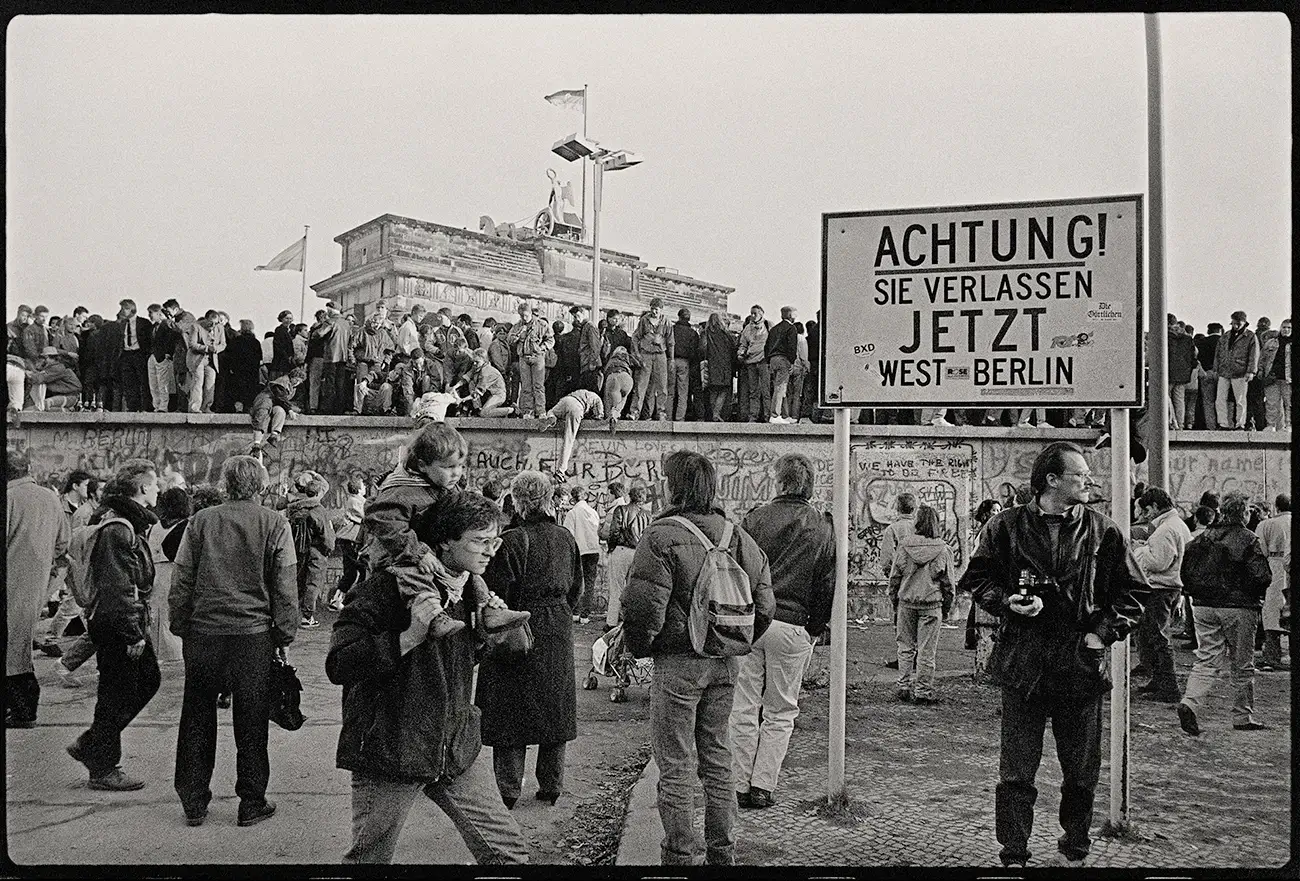
Brandenburg Gate, Berlin, November 10, 1989 © Henk Kosche
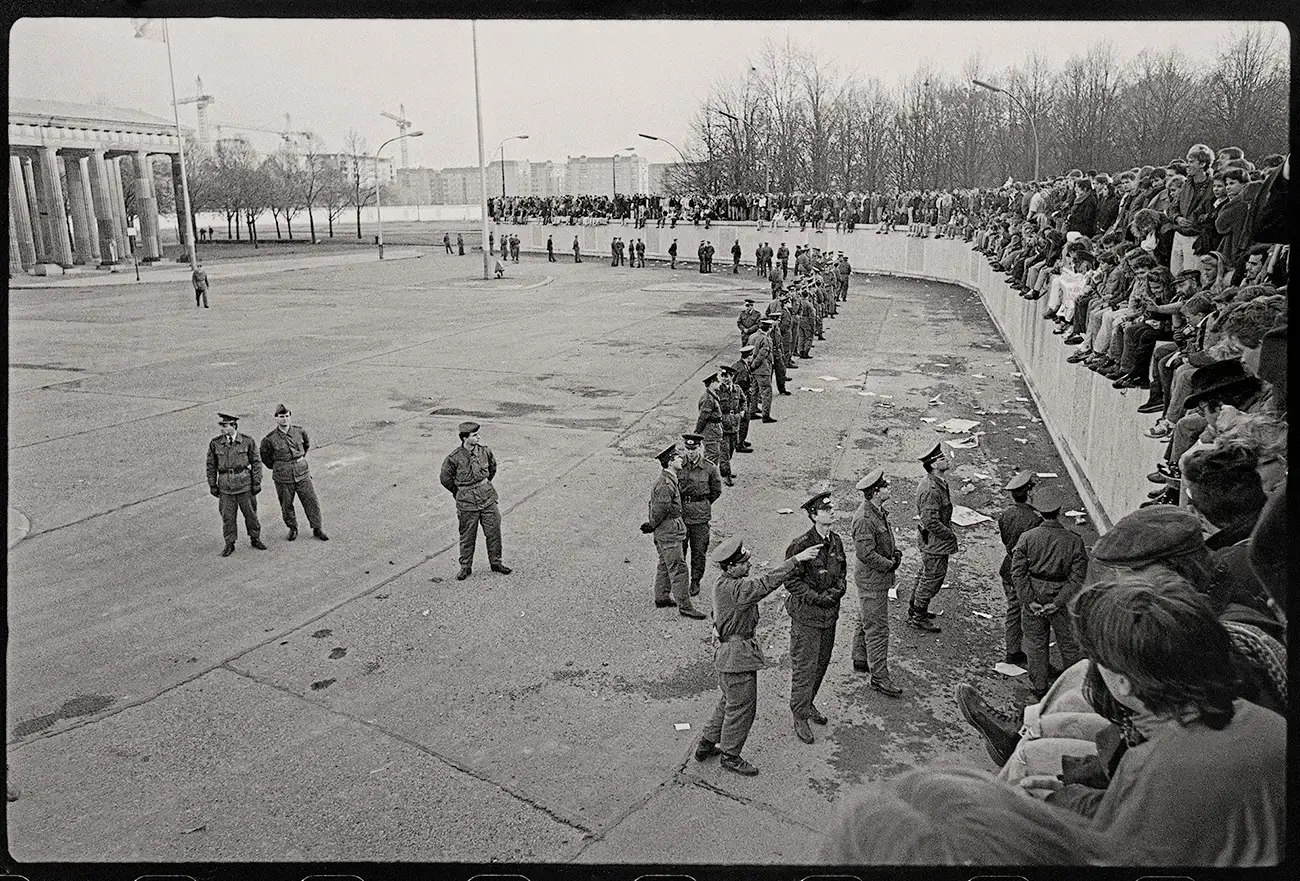
Brandenburg Gate, Berlin, November 10, 1989 © Henk Kosche
In the period when the Iron Curtain came down, many things became possible, but many others were no longer an option. It was a deeply ambivalent time. For me, the greatest lesson—and at the same time the greatest challenge—was gaining freedom while losing the familiar sense of security. It was a time of complete reorientation and of reinventing ourselves.
What stories or emotions do you hope viewers feel when looking at these photographs today?
I would like to share with the viewer my empathetic perspective on that era, its people, and the contradictions of the time. Every era has its fundamental contradictions, and it would be arrogant to pass simple judgments here. Perhaps the melancholy that runs through the series of images is a stylistic means of empathizing with the people and their circumstances.
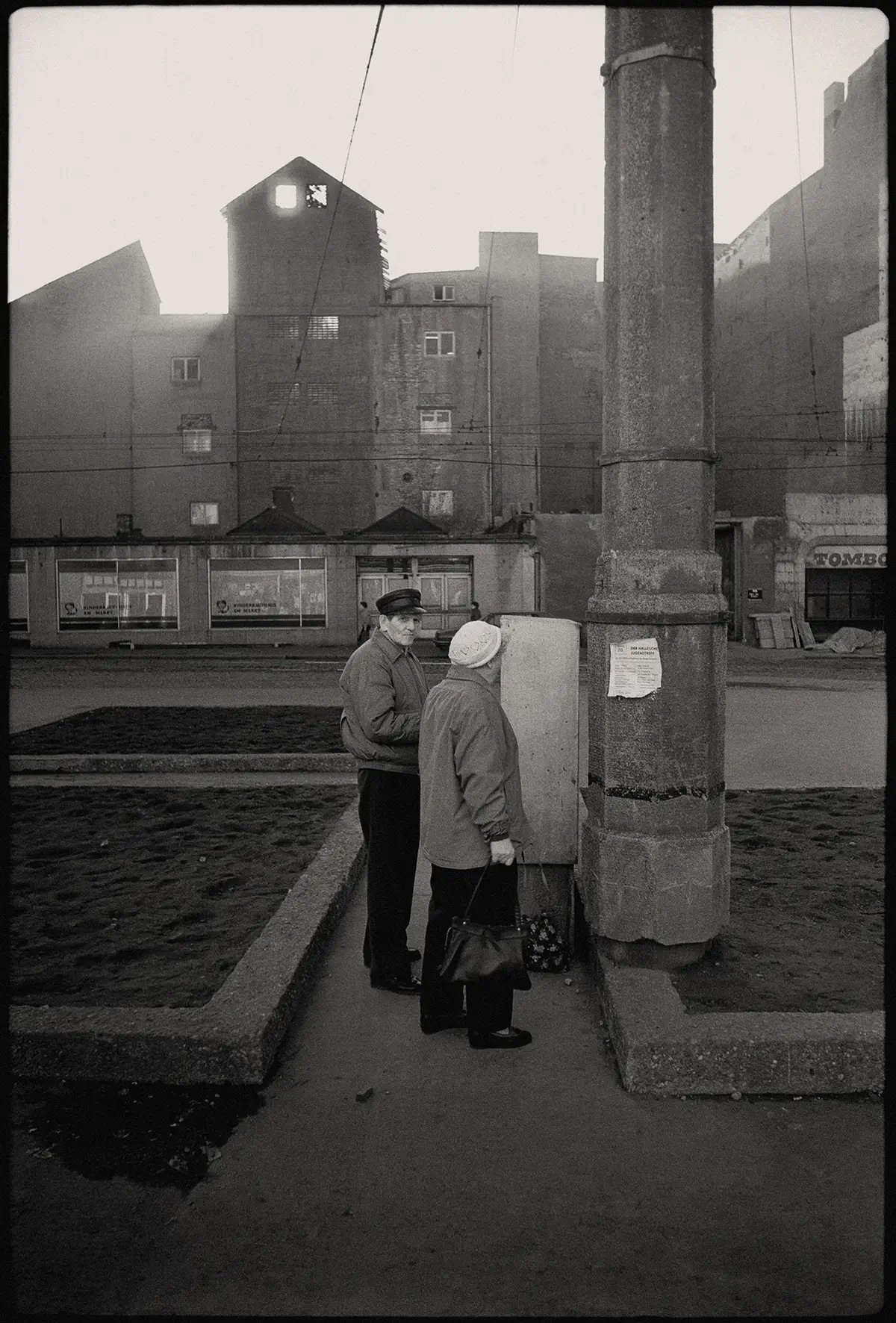
Couple In Front Of The Department Store, March 1989 © Henk Kosche

Pensioner, February 1988 © Henk Kosche