All about photo.com: photo contests, photography exhibitions, galleries, photographers, books, schools and venues.
Win a Solo Exhibition in July 2026 + An Exclusive Interview!
George Brassaï
Photo by Ansel Adams 1973
George Brassaï
George Brassaï

George Brassaï

Country: Hungary/France
Birth: 1899 | Death: 1984

George Brassaï, the pseudonym of Gyula Halász, emerged as a Hungarian photographer, sculptor, and filmmaker who gained international recognition in 20th-century France. He was part of the vibrant community of Hungarian artists flourishing in Paris during the interwar period. In the early 21st century, the unearthing of over 200 letters and numerous drawings and artifacts from the years 1940–1984 has offered scholars valuable insights into his later life and career.

Gyula (Jules) Halasz, in the Western order of his name, was born in Brassó, Transylvania, Kingdom of Hungary (known as Brasov, Romania, since 1920), to an Armenian mother and a Hungarian father. He grew up with Hungarian as his primary language. At the age of three, his family resided in Paris for a year, during which his father, a professor of French literature, taught at the Sorbonne. During his youth, Gyula Halász pursued studies in painting and sculpture at the Hungarian Academy of Fine Arts (Magyar Képzomuvészeti Egyetem) in Budapest. Subsequently, he enlisted in a cavalry regiment of the Austro-Hungarian army and served until the conclusion of the First World War.

In 1920, Halász relocated to Berlin, where he took on the role of a journalist for the Hungarian newspapers Keleti and Napkelet. Simultaneously, he commenced his studies at the Berlin-Charlottenburg Academy of Fine Arts (Hochschule für Bildende Künste), now known as Universität der Künste Berlin. During this time, he formed connections with several older Hungarian artists and writers, such as painters Lajos Tihanyi and Bertalan Pór, and writer Gyorgy Boloni. These individuals, who later moved to Paris, became part of the Hungarian artistic circle. In 1924, Halász made the decisive move to Paris, where he would reside for the remainder of his life.

In an effort to learn the French language, he embarked on a self-taught journey by immersing himself in the works of Marcel Proust. Living among the burgeoning community of young artists in the Montparnasse quarter, he took on a job as a journalist. It wasn't long before he forged friendships with notable figures such as the American writer Henry Miller, and the French writers Leon-Paul Fargue and Jacques Prévert. During the late 1920s, he shared the same hotel with Tihanyi. Halász's profession and his love for the city, where he often wandered the streets late at night, eventually led him to photography.

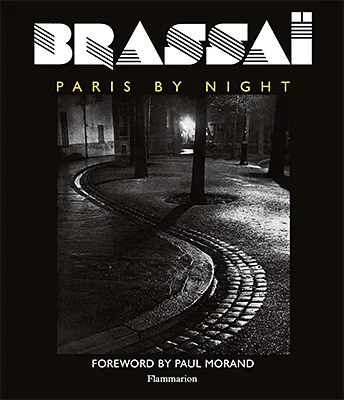
Initially using photography as a means to supplement his articles for additional income, he quickly delved into exploring the city through this medium. His fellow Hungarian, André Kertész, served as his mentor in photography. Using the name of his birthplace, Gyula Halász adopted the pseudonym "Brassaï," meaning "from Brasso." Under this name, he captured the essence of the city in his photographs, culminating in the publication of his first collection in 1933 titled "Paris de nuit" (Paris by Night). The book achieved significant success, earning him the moniker "the eye of Paris" in an essay by his friend Henry Miller.

In addition to capturing the more gritty aspects of Paris, Brassaï documented scenes from the city's high society, intellectuals, ballet performances, and grand operas. He formed a connection with a French family who granted him access to the upper echelons of society. Within these circles, Brassaï photographed many of his artist acquaintances, including Salvador Dalí, Pablo Picasso, Henri Matisse, Alberto Giacometti, as well as prominent writers of his era such as Jean Genet and Henri Michaux. Throughout the 1930s, a continuous stream of young Hungarian artists arrived in Paris, and the Hungarian circle welcomed most of them. André Kertèsz, a fellow Hungarian, emigrated to New York in 1936. Brassaï extended his friendships to the newcomers, including Ervin Marton, a nephew of Tihanyi, with whom he had been acquainted since 1920. Marton later gained recognition in street photography during the 1940s and 1950s.

While Brassaï sustained himself through commercial work, he also contributed photographs to the U.S. magazine Harper's Bazaar. As a founding member of the Rapho agency, established in Paris by Charles Rado in 1933, Brassaï played a pivotal role. His photographs brought him international acclaim. In 1948, he held a solo exhibition in the United States at the Museum of Modern Art (MOMA) in New York City, subsequently traveling to the George Eastman House in Rochester, New York, and the Art Institute of Chicago, Illinois. MOMA featured more of Brassaï's works in 1953, 1956, and 1968. He was showcased at the Rencontres d'Arles festival in France in 1970, 1972, and 1974 as the guest of honor. In 1948, Brassaï married Gilberte Boyer, a French woman who collaborated with him in supporting his photographic endeavors.

 

George Brassaï's Video

Selected Books

Inspiring Portfolios

Call for Entries
AAP Magazine #59 Shapes
Publish your work in our printed magazine and win $1,000 cash prizes
 
Stay up-to-date  with call for entries, deadlines and other news about exhibitions, galleries, publications, & special events.

More Great Photographers To Discover

Pavlos Evangelidis
William Eggleston
United States
1939
William Eggleston was born in Memphis, Tennessee and raised in Sumner, Mississippi. His father was an engineer and his mother was the daughter of a prominent local judge. As a boy, Eggleston was introverted; he enjoyed playing the piano, drawing, and working with electronics. From an early age, he was also drawn to visual media, and reportedly enjoyed buying postcards and cutting out pictures from magazines. At the age of 15, Eggleston was sent to the Webb School, a boarding establishment. Eggleston later recalled few fond memories of the school, telling a reporter, "It had a kind of Spartan routine to 'build character'. I never knew what that was supposed to mean. It was so callous and dumb. It was the kind of place where it was considered effeminate to like music and painting." Eggleston was unusual among his peers in eschewing the traditional Southern male pursuits of hunting and sports, in favor of artistic pursuits and observation of the world. Nevertheless, Eggleston noted that he never felt like an outsider. "I never had the feeling that I didn't fit in," he told a reporter, "But probably I didn't." Eggleston attended Vanderbilt University for a year, Delta State College for a semester, and the University of Mississippi for about five years, but did not complete any degree. Nonetheless, his interest in photography took root when a friend at Vanderbilt gave Eggleston a Leica camera. He was introduced to abstract expressionism at Ole Miss by visiting painter Tom Young. Eggleston's early photographic efforts were inspired by the work of Swiss-born photographer Robert Frank, and by French photographer Henri Cartier-Bresson's book, The Decisive Moment. Eggleston later recalled that the book was "the first serious book I found, from many awful books...I didn't understand it a bit, and then it sank in, and I realized, my God, this is a great one." First photographing in black-and-white, Eggleston began experimenting with color in 1965 and 1966 after being introduced to the medium by William Christenberry. Color transparency film became his dominant medium in the later 1960s. Eggleston's development as a photographer seems to have taken place in relative isolation from other artists. In an interview, John Szarkowski describes his first encounter with the young Eggleston in 1969 as being "absolutely out of the blue". After reviewing Eggleston's work (which he recalled as a suitcase full of "drugstore" color prints) Szarkowski prevailed upon the Photography Committee of MoMA to buy one of Eggleston's photographs. In 1970, Eggleston's friend William Christenberry introduced him to Walter Hopps, director of Washington, D.C.'s Corcoran Gallery. Hopps later reported being "stunned" by Eggleston's work: "I had never seen anything like it." Eggleston taught at Harvard in 1973 and 1974, and it was during these years that he discovered dye-transfer printing; he was examining the price list of a photographic lab in Chicago when he read about the process. As Eggleston later recalled: "It advertised 'from the cheapest to the ultimate print.' The ultimate print was a dye-transfer. I went straight up there to look and everything I saw was commercial work like pictures of cigarette packs or perfume bottles but the colour saturation and the quality of the ink was overwhelming. I couldn't wait to see what a plain Eggleston picture would look like with the same process. Every photograph I subsequently printed with the process seemed fantastic and each one seemed better than the previous one." The dye-transfer process resulted in some of Eggleston's most striking and famous work, such as his 1973 photograph entitled The Red Ceiling, of which Eggleston said, "The Red Ceiling is so powerful, that in fact I've never seen it reproduced on the page to my satisfaction. When you look at the dye it is like red blood that's wet on the wall.... A little red is usually enough, but to work with an entire red surface was a challenge." At Harvard, Eggleston prepared his first portfolio, entitled 14 Pictures (1974). Eggleston's work was exhibited at MoMA in 1976. Although this was over three decades after MoMa had mounted a solo exhibition of color photographs by Eliot Porter, and a decade after MoMA had exhibited color photographs by Ernst Haas, the tale that the Eggleston exhibition was MoMA's first exhibition of color photography is frequently repeated, and the 1976 show is regarded as a watershed moment in the history of photography, by marking "the acceptance of colour photography by the highest validating institution" (in the words of Mark Holborn). Around the time of his 1976 MoMA exhibition, Eggleston was introduced to Viva, the Andy Warhol "superstar", with whom he began a long relationship. During this period Eggleston became familiar with Andy Warhol's circle, a connection that may have helped foster Eggleston's idea of the "democratic camera", Mark Holborn suggests. Also in the 1970s Eggleston experimented with video, producing several hours of roughly edited footage Eggleston calls Stranded in Canton. Writer Richard Woodward, who has viewed the footage, likens it to a "demented home movie", mixing tender shots of his children at home with shots of drunken parties, public urination and a man biting off a chicken's head before a cheering crowd in New Orleans. Woodward suggests that the film is reflective of Eggleston's "fearless naturalism—a belief that by looking patiently at what others ignore or look away from, interesting things can be seen." Eggleston's published books and portfolios include Los Alamos (completed in 1974, but published much later), William Eggleston's Guide (the catalog of the 1976 MoMa exhibit), the massive Election Eve (1977; a portfolio of photographs taken around Plains, Georgia, the rural seat of Jimmy Carter before the 1976 presidential election), The Morals of Vision (1978), Flowers (1978), Wedgwood Blue (1979), Seven (1979), Troubled Waters (1980), The Louisiana Project (1980), William Eggleston's Graceland (1984; a series of commissioned photographs of Elvis Presley's Graceland, depicting the singer's home as an airless, windowless tomb in custom-made bad taste), The Democratic Forest (1989), Faulkner's Mississippi (1990), and Ancient and Modern(1992). Some of his early series have not been shown until the late 2000s. The Nightclub Portraits (1973), a series of large black-and-white portraits in bars and clubs around Memphis was, for the most part, not shown until 2005. Lost and Found, part of Eggleston's Los Alamos series, is a body of photographs that have remained unseen for decades because until 2008 no one knew that they belonged to Walter Hopps; the works from this series chronicle road trips the artist took with Hopps, leaving from Memphis and traveling as far as the West Coast. Eggleston's Election Eve photographs were not editioned until 2011. Eggleston also worked with filmmakers, photographing the set of John Huston's film Annie (1982) and documenting the making of David Byrne's film True Stories (1986). In 2017 an album of Eggleston's music was released, Musik. It comprises 13 "experimental electronic soundscapes", "often dramatic improvisations on compositions by Bach (his hero) and Haendel as well as his singular takes on a Gilbert and Sullivan tune and the jazz standard On the Street Where You Live." Musik was made entirely on a 1980s Korg synthesiser, and recorded to floppy disks. The 2017 compilation Musik was produced by Tom Lunt, and released on Secretly Canadian. In 2018, Áine O'Dwyer performed the music on a pipe organ at the Big Ears music festival in Knoxville. Source: Wikipedia William Eggleston assumes a neutral gaze and creates his art from commonplace subjects: a farmer's muddy Ford truck, a red ceiling in a friend's house, the contents of his own refrigerator. In his work, Eggleston photographs "democratically"--literally photographing the world around him. His large-format prints monumentalize everyday subjects, everything is equally important; every detail deserves attention. A native Southerner raised on a cotton plantation in the Mississippi Delta, Eggleston has created a singular portrait of his native South since the late 1960s. After discovering photography in the early 1960s, he abandoned a traditional education and instead learned from photographically illustrated books by Walker Evans, Henri Cartier-Bresson, and Robert Frank. Although he began his career making black-and-white images, he soon abandoned them to experiment with color technology to record experiences in more sensual and accurate terms at a time when color photography was largely confined to commercial advertising. In 1976 with the support of John Szarkowski, the influential photography historian, critic, and curator, Eggleston mounted "Color Photographs" a now famous exhibition of his work at the Museum of Modern Art, New York. William Eggleston's Guide , in which Szarkowski called Eggleston's photographs "perfect," accompanied this groundbreaking one-person show that established his reputation as a pioneer of color photography. His subjects were mundane, everyday, often trivial, so that the real subject was seen to be color itself. These images helped establish Eggleston as one of the first non-commercial photographers working in color and inspired a new generation of photographers, as well as filmmakers. Eggleston has published his work extensively. He continues to live and work in Memphis, and travels considerably for photographic projects. Source: The Getty Museum
Yuyang Liu
China
1991
Yuyang Liu, b.1991, graduated from Department of History, East China Normal University. He is a freelancer photographer based in Guangzhou, China. When he was a high school student, he started to love taking photos and decided to be a photographer. His images focus on the change and connection of people in the changing society. He had won Magnum Foundation Human Rights & Photography Fellowship, Abigail Cohen Fellowship in Documentary Photography and Ian Parry Scholarship. His work was published on TIME, New York Times, the Guardian, NPR and BBC World Service. Awards Ian Parry Scholarship, 2015 Abigail Cohen Fellowship in Documentary Photography (Magnum Foundation/ChinaFile, 2015 National Geographic Photo Contest China, Honorable Mention, 2014 Magnum Foundation: The Human Rights & Photography Fellowship, 2014 ND Scholarship, 3rd Prize, 2014 2013 Shanghai Youth Art Exhibition, Shortlisted, 2013 5th Foundation of OFPiX Photo Agency, Shortlisted, 2012 Exhibitions & Events Magnum Foundation Human Rights & Photography Fellowship Program Forum: Inter Art Center and Gallery, Beijing, China, 2014 Home of Youth: High School No.7 Chengdu (multimedia):PhotoChina Original International Photographic Exhibition, Confucius’ Hall, Guiyang, China, 2014 Neither Here Nor There (multimedia): LOOKbetween 2014, Virginia, USA, 2014 Auspicious Things: Lishui International Photography Festival Hand-made Books Workshop, Pump Factory, Lishui, China, 2013 Auspicious Things: 2013 Shanghai Youth Art Exhibition, China Art Museum, Shanghai, China, 2013 About the project: At home with mental illness: In 2014 there were reportedly 16 million people in China living with severe mental illness. 80% of patients diagnosed did not receive sufficient or necessary treatment due to China’s flawed health care system. Most people who suffer from these illnesses are forced to live at home with their families or on their own. They are overlooked or often not recognized at all within society, they are invisible. So I decide to film these patients and families who have mental illness such as psychosis or dysgnosia. I’ve been to several towns and villages in Guangdong Province which is the richest region in southern China and filmed some mental illness at home. This project aims to explore the unique relationship between the mentally ill, their families, and society at large.
Richard Murai
United States
1952
"The real voyage of discovery consists not in seeking new lands but seeing with new eyes." --Marcel Proust, 1923, La Prisonierre The world's sacred sites are visually rich and historically significant and provide sanctuary for spiritual reflection and creative exploration and discovery. They're striking archeological sites but first and foremost, they serve as vital and revered centers of pilgrimage, prayer and meditation. These images are excerpts of my visits to these sacred spaces and are evidence of an ongoing journey that examines intense spiritual devotion and religious fervor, past and present, within unique and distinctive cultures. They are multi-dimensional and compelling for both the photographer and the viewer and document golden ages of past millennia and cultures seeking to reconcile ancient traditions with conflicting modern values. Devotees seek serenity and escape from centuries of conquest and political upheaval, or the effects of poverty, global climate change and modernization. As we confront a perplexing, irrational and precarious world situation ongoing geo-political unrest and violence has caused fractious dissension and a difficult emotional time for all. Reluctance to accept diverse cultural, political, religious attitudes both here and abroad adds to the fear, cynicism and confusion. Becoming sensitive to unfamiliar cultures can quell much of this anxiety and may encourage tolerance and compassion. After transitioning from thirty-five rewarding years in photographic education, Richard lives in Monterey, CA, and continues to passionately pursue his creative artmaking. His ongoing fascination with world religion and culture has generated repeated visits to locations within India, Asia, South America, the Middle East, Russia and Europe. His work has been exhibited widely, has garnered awards from All About Photo, Center for Photographic Art, Spider Awards, and Travel Photographer of the Year, and have been featured in respected publications including B&W Magazine, Silver Shots International, Shots, Photographer's Forum and multiple issues of Lenswork print and special editions. His photographs are included in various private and corporate collections and is represented by the Weston Gallery, Carmel, CA
Advertisement
AAP Magazine #59 Shapes
Win a Solo Exhibition in July
AAP Magazine #59 Shapes

Latest Interviews

Exclusive Interview with Trevor Cole: Pastoral Peoples and Practices
For this interview, we wanted to focus specifically on The Face of the Mundari and the wider Pastoral Peoples and Practices series. We spoke with Trevor about his long-term work among the Mundari, what continues to draw him back to their cattle camps, and the experience of documenting a culture whose identity remains deeply connected to livestock, tradition, and the natural environment.
Exclusive Interview with Frank Meo
In our latest exclusive feature for All About Photo, I speak with veteran photography representative Frank Meo about what it truly takes to build a sustainable creative career today. Frank brings decades of experience working with Fortune 500 companies, major agencies, and documentary photographers to the table. We dive into the critical business skills often left out of art school curriculums, the power of mentorship, and the inspiring evolution of PROJECTIONS—his international salon platform for visual storytellers. It’s an essential read for anyone navigating the commercial or editorial photography landscape today.
Exclusive Interview with Carolyn Moore
American photographer Carolyn Moore explores the inner landscape of emotion, memory, and personal transformation through a deeply intuitive photographic practice. Her work unfolds as a quiet dialogue between artist and viewer, where images become a space for reflection, vulnerability, and connection.
Exclusive Interview with Luca Desienna and Laura Estelle Barmwoldt
For over seven years, Of Lilies and Remains has explored the depths of the goth and darkwave underground, unfolding in Leipzig—a city long associated with a vibrant and enduring subcultural scene. Moving between iconic gatherings such as Wave-Gotik-Treffen and more intimate moments on the fringes, the project offers a rare and immersive glimpse into a world often misunderstood, yet rich in expression and community. Created by Luca in collaboration with Laura Estelle Barmwoldt, the work embraces a cinematic and deeply personal approach. Rather than documenting from a distance, it moves within the scene itself, capturing its atmosphere, its codes, and its quiet contradictions. The title Of Lilies and Remains hints at this duality—where beauty and darkness, fragility and strength coexist. As the book prepares for its release, we spoke with both artists about the origins of the project, their process, and what it means to document a subculture that continues to evolve while remaining true to its spirit.
Exclusive Interview with Matthew Finley
American photographer Matthew Finley turns inward, using photography as a way to explore identity, memory, and emotional truth. Based in Los Angeles, his practice moves between performance, gesture, and found imagery, creating a visual language that is both intimate and deeply personal
Exclusive Interview with Jan Janssen
Dutch photographer Jan Janssen explores universal human experiences through his long-term project It Matters, winner of the May 2025 Solo Exhibition. Begun in 2016, the series captures intimate moments of everyday life—love, loss, connection, and belonging—across Central and Eastern Europe. Working in countries such as Turkey, Azerbaijan, and Armenia, Janssen spends extended time within communities, building relationships based on trust and respect. His approach allows him to move beyond observation, revealing deeply human and authentic moments. Rooted in travel and personal discovery, It Matters reflects Janssen’s search for what connects us all in an increasingly divided world. The project is ongoing and will culminate in a photobook scheduled for publication in 2026.
Exclusive Interview with Henk Kosche
German photographer Henk Kosche turns his lens toward the streets of Halle an der Saale, capturing everyday life in the late years of the former German Democratic Republic. At the time, Kosche was studying design and exploring the city with his camera, drawn to the atmosphere of its industrial landscape and the quiet rhythms of daily life. His series Street Photography at the End of the 80s, selected as the Solo Exhibition for July 2025, revisits a body of work created just before a period of profound change. Rediscovered decades later in a small box of 35mm negatives, these photographs offer glimpses of a city and its people at a moment suspended between the familiar and the unknown.
Exclusive Interview with Anastasia Samoylova
Anastasia Samoylova is an American artist whose photographic practice is shaped by close observation and a deep attentiveness to place. Working between documentary and formal exploration, she photographs landscapes, architecture, and everyday scenes with a sensitivity to light, structure, and atmosphere. Since relocating to Miami in 2016, her work has increasingly focused on how environments—both natural and built—carry social, cultural, and emotional traces. We asked her a few questions about her practice and her way of seeing, to better understand the thoughts and experiences that shape her work—while allowing the images themselves to remain open and speak in their own time.
Exclusive Interview with Marijn Fidder
Marijn Fidder is a Dutch documentary photographer whose work powerfully engages with current affairs and contemporary social issues. Driven by a deep sense of social justice, she uses photography to speak on behalf of the voiceless and to advocate for the rights of those who are most vulnerable. Her images have been widely published in major international outlets including National Geographic, CNN Style, NRC Handelsblad, Volkskrant, GUP New Talent, and ZEIT Magazin. Her long-term commitment to disability rights—particularly through years of work in Uganda—culminated in her acclaimed project Inclusive Nation, which earned her the title of Photographer of the Year 2025 at the All About Photo Awards. She is also the recipient of multiple prestigious honors, including awards from World Press Photo and the Global Peace Photo Award. We asked her a few questions about her life and work.
Call for Entries
Win A Solo Exhibition in July
Get International Exposure and Connect with Industry Insiders