All about photo.com: photo contests, photography exhibitions, galleries, photographers, books, schools and venues.
LAST WEEK TO ENTER AAP MAGAZINE B&W: PUBLICATION AND $1,000 CASH PRIZES
Nadide Goksun
Nadide Goksun
Nadide Goksun

Nadide Goksun

Country: Turkey/United States
Birth: 1967

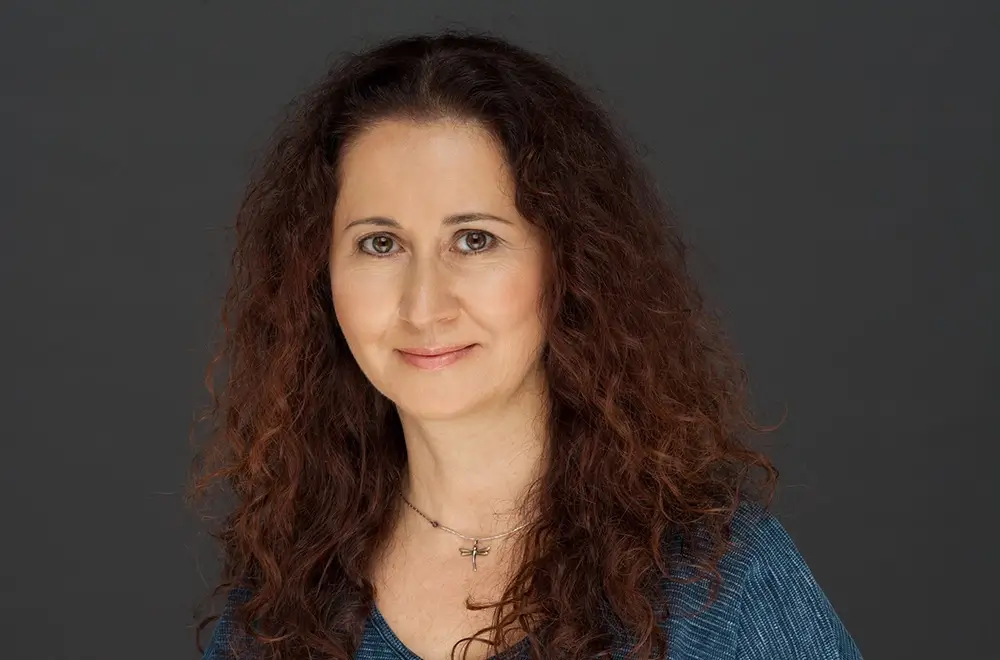
Nadide Goksun (b. 1967) is a Turkish/American artist working primarily with photography and ceramics.

She is a graduate of the Bogazici University in Istanbul, the Sungshin Women's University in Seoul and participates on the ICP Continuing Education Program in New York.

Goksun's work has been exhibited in several group exhibitions including Foley Gallery’s Exhibition Lab in NYC, Griffin Museum of Photography, Soho Photo Gallery’s National competition, Photo Review’s 36th Annual International Photography Competition, Head On Photo Festival, Sydney-Australia, Julia Margaret Cameron Awards, Barcelona-Spain, Lens Culture’s 250 New Examples of the 21st Century Street Photography among others. Her first solo show “Swimmers” was exhibited in Bondi Beach, Sydney at the Head On Photo Festival in 2021. Her artwork has been reproduced in The New York Times, PDN (Photo District News), ArtAscent International Art and Literature Journal, Pastiche, All About Photo, Dodho, and SHOTS Magazine. She currently lives and works in New York State.

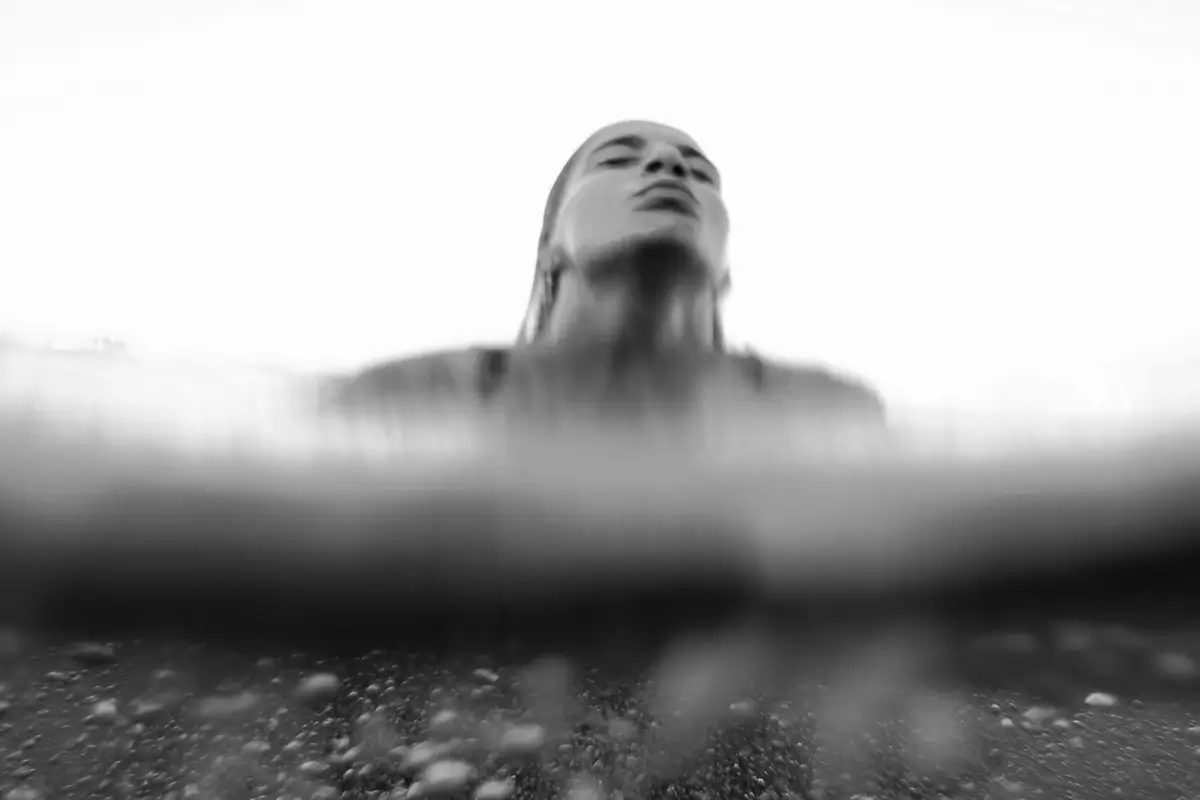
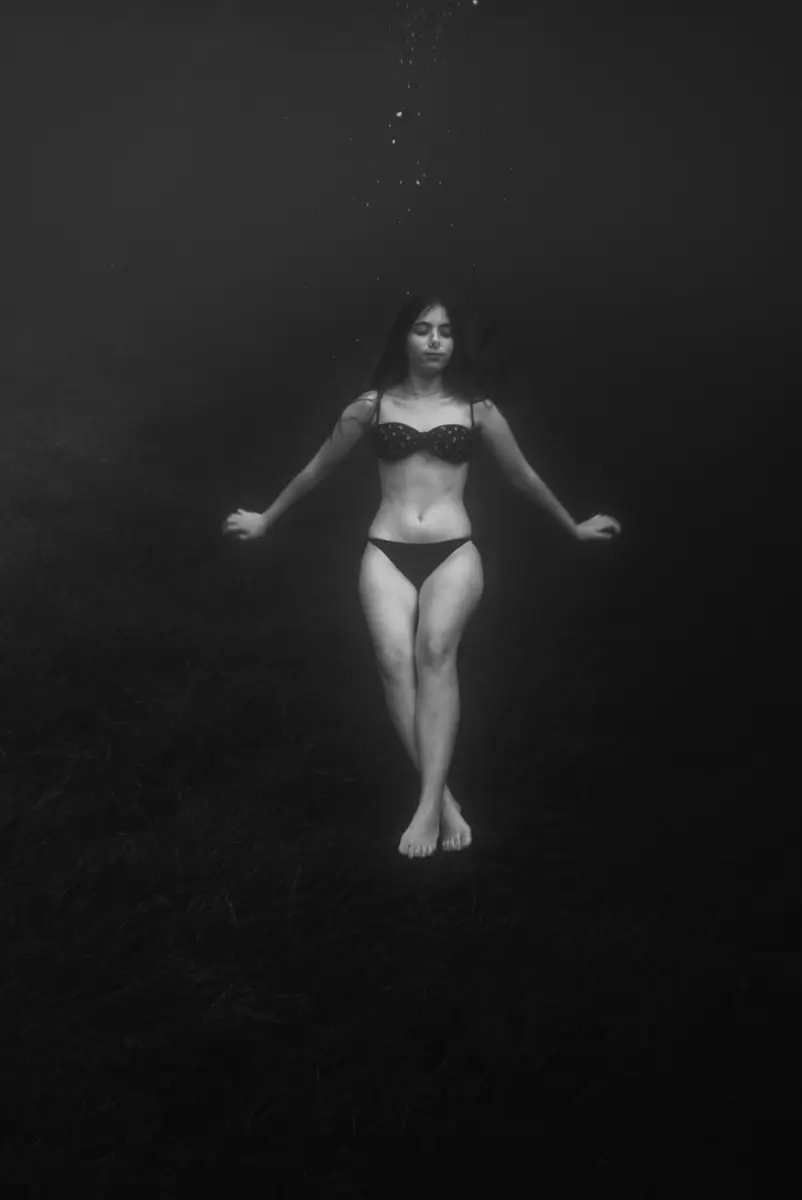
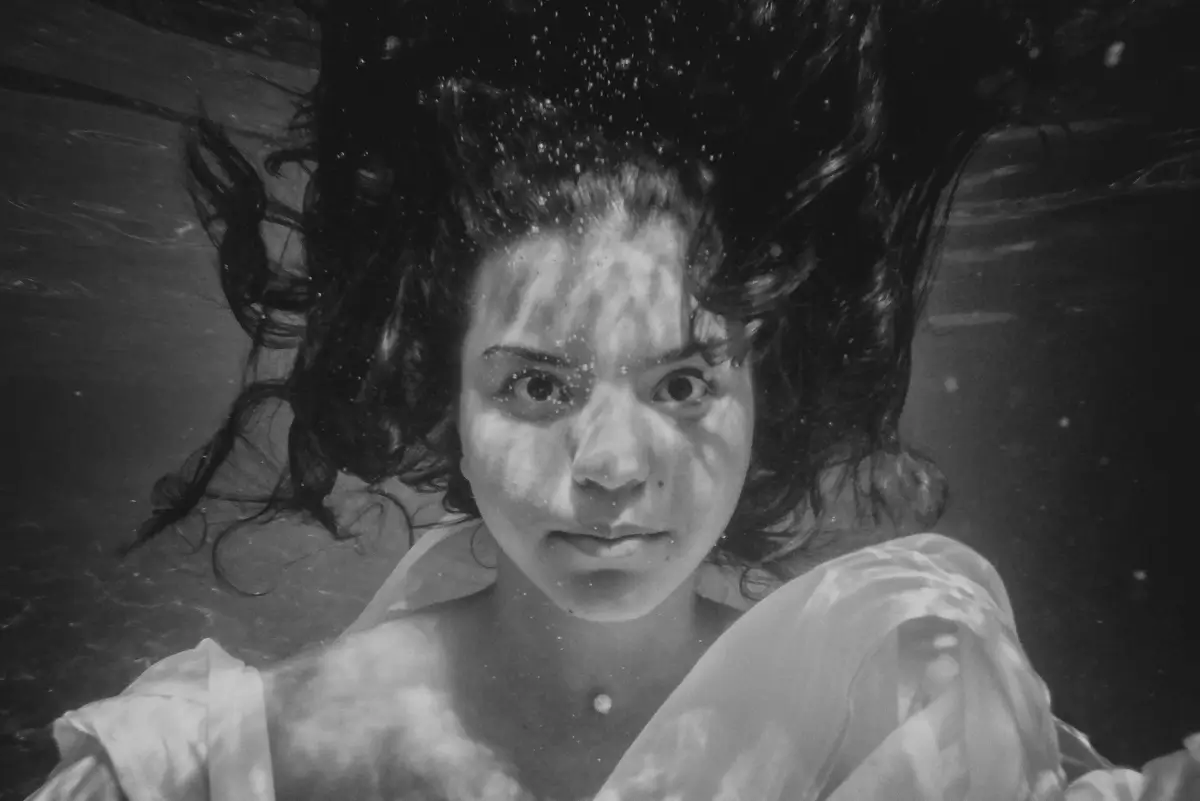
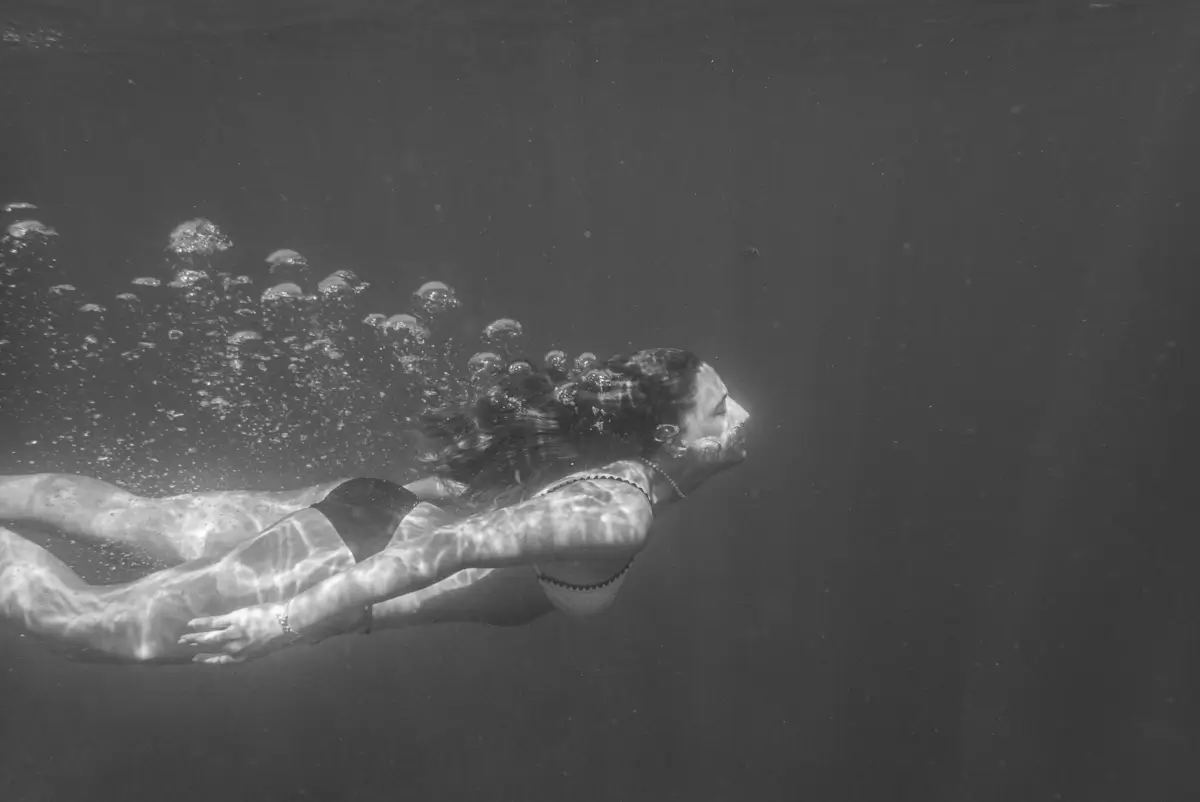
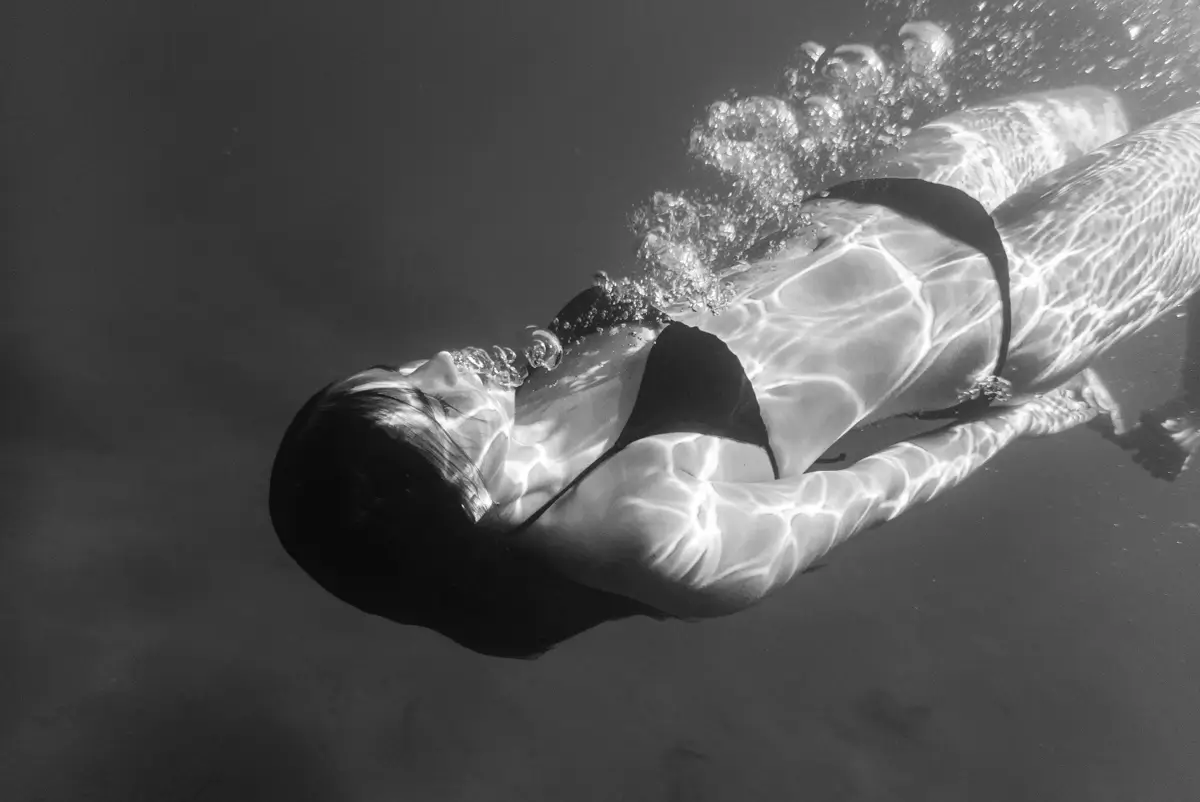
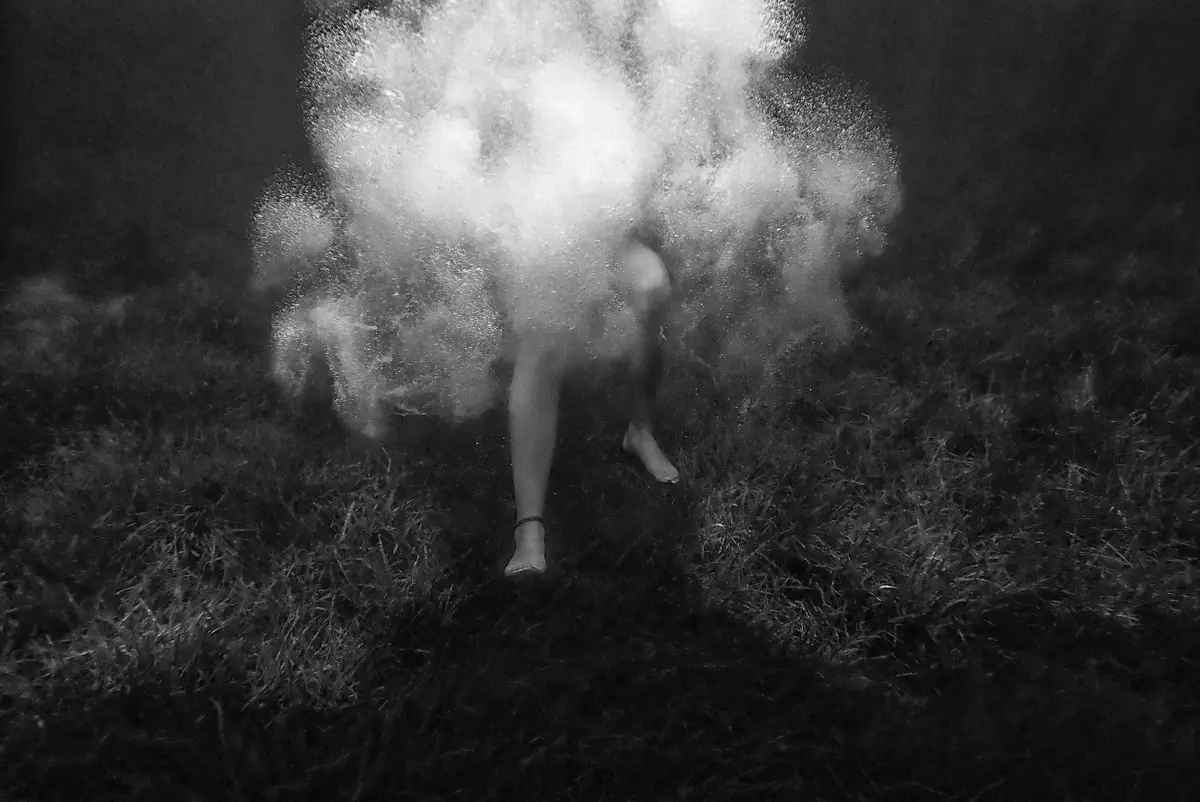
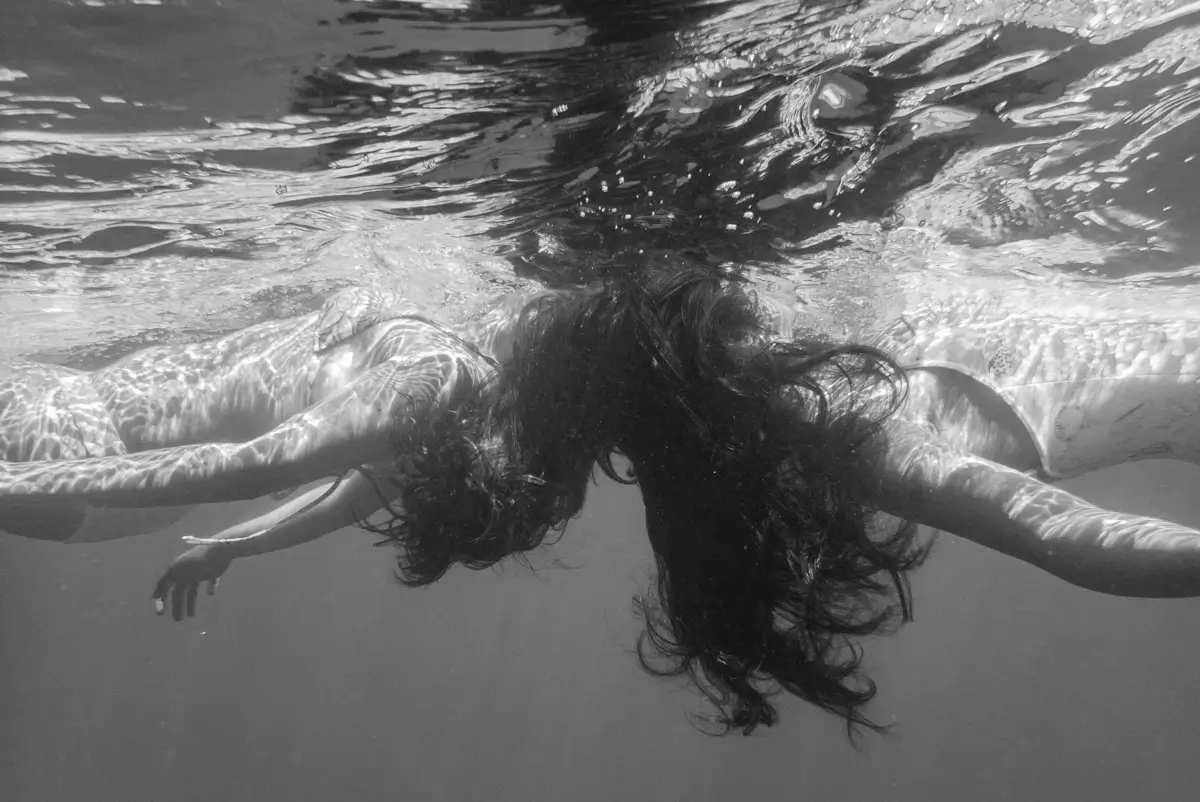
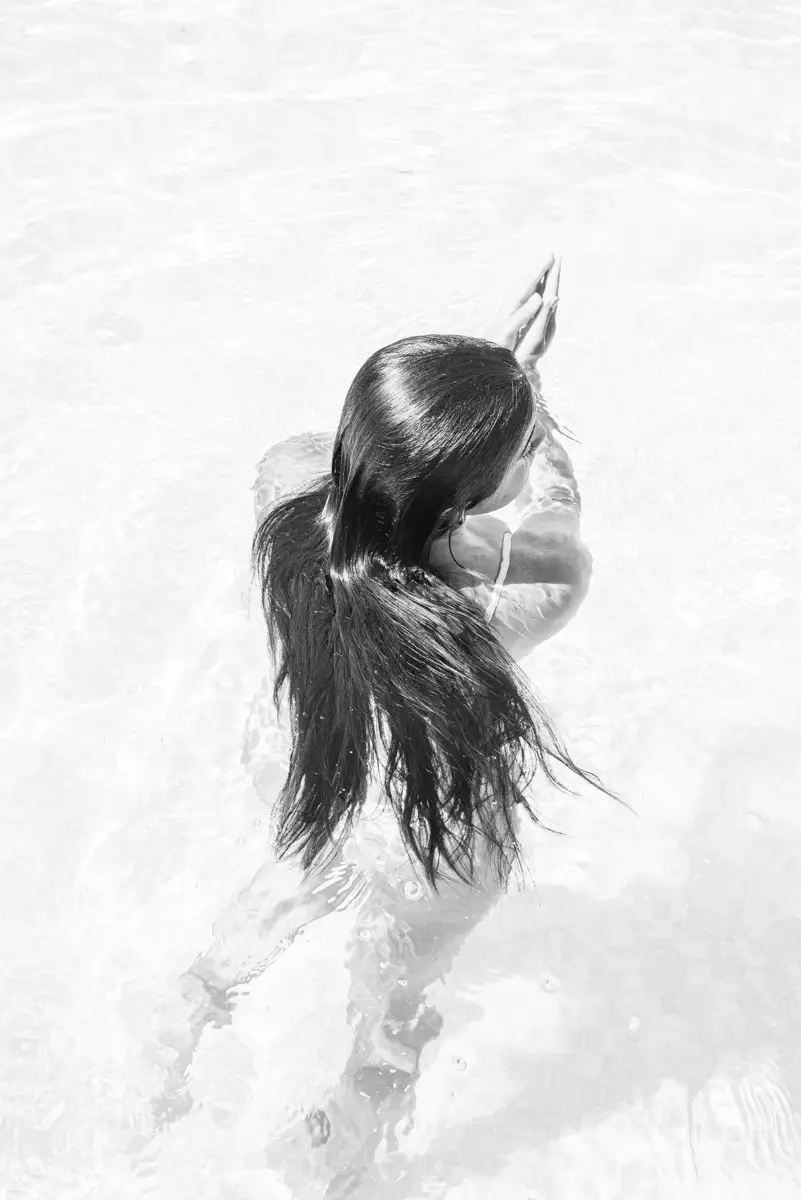
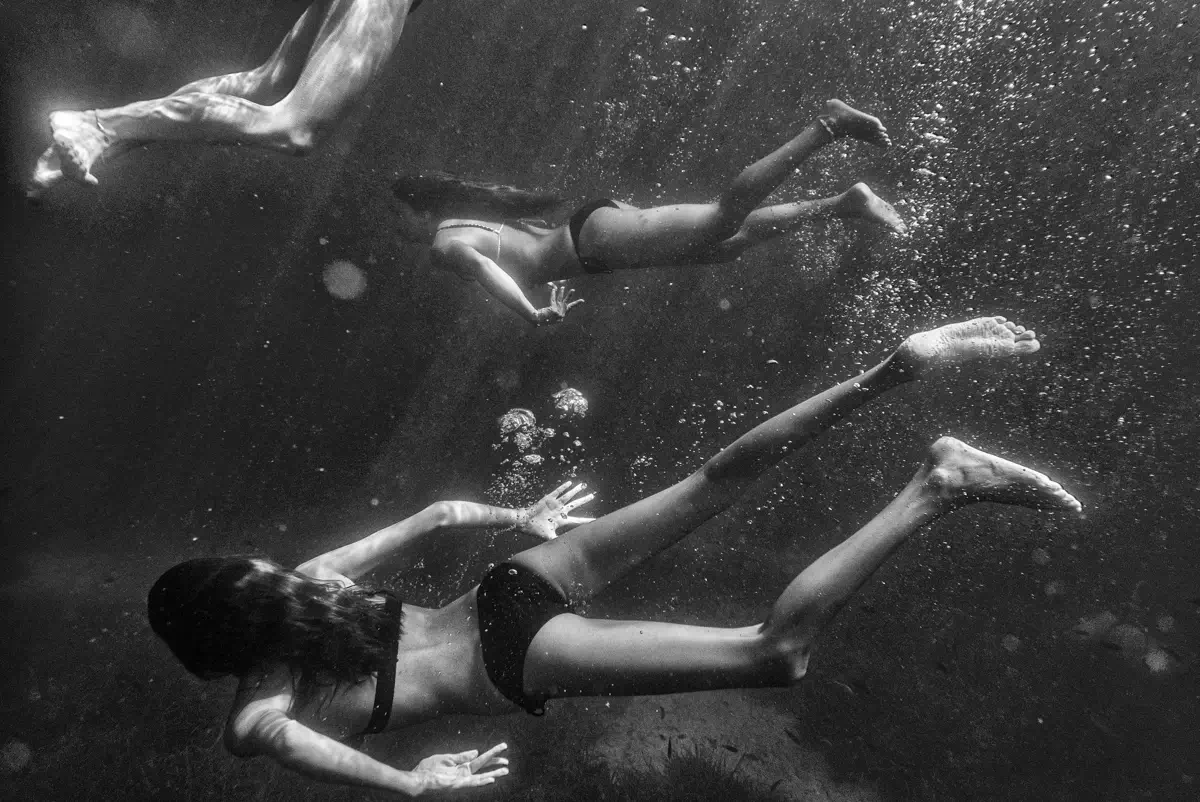
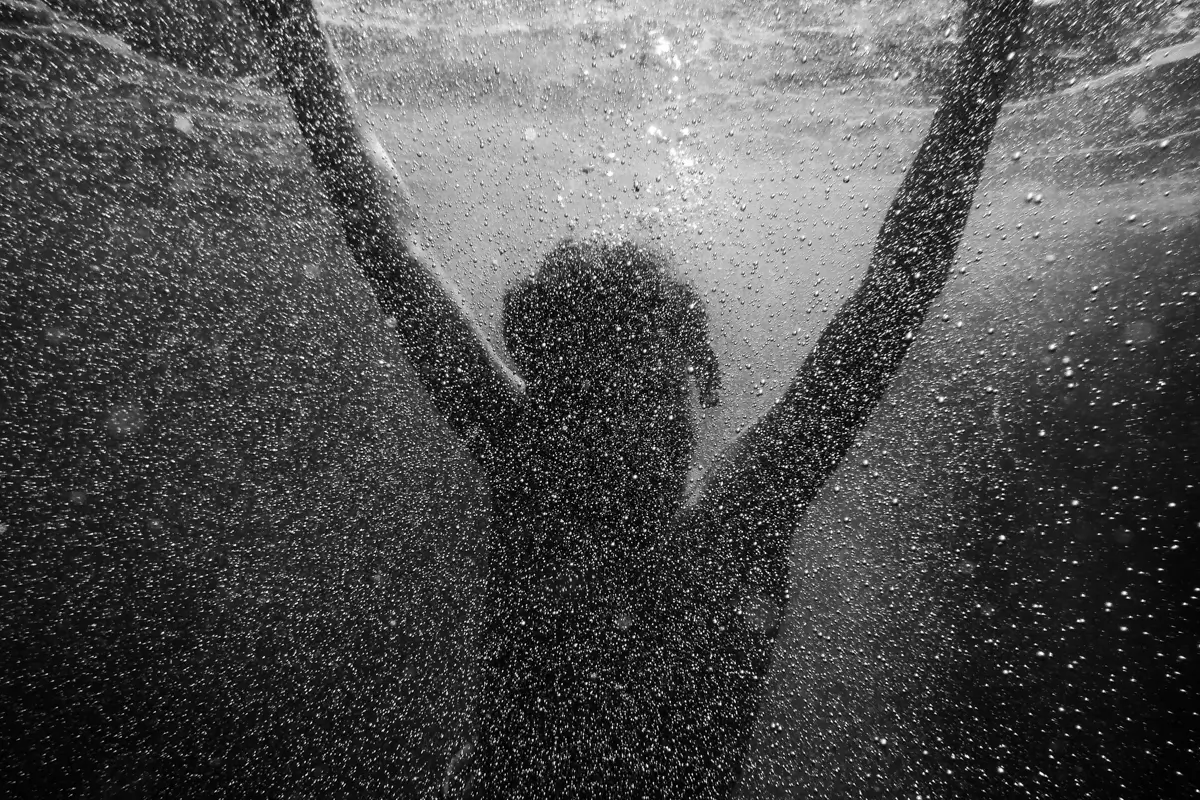
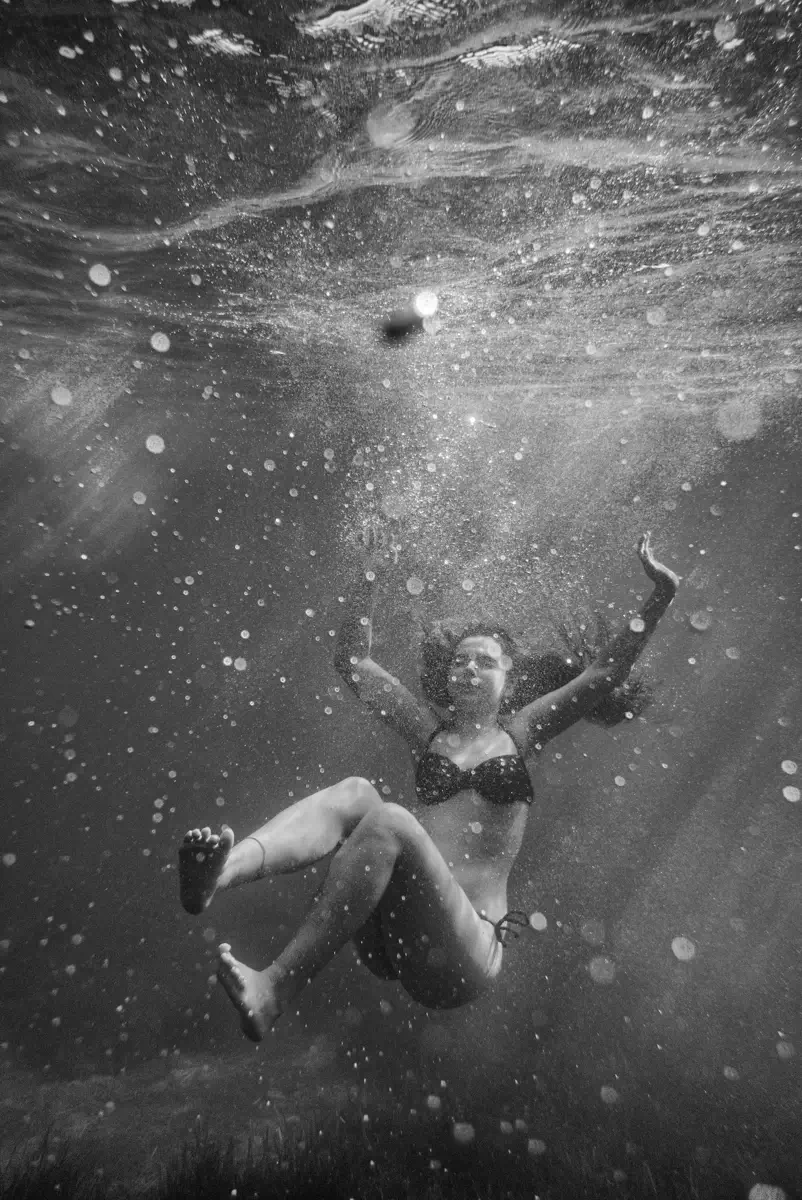
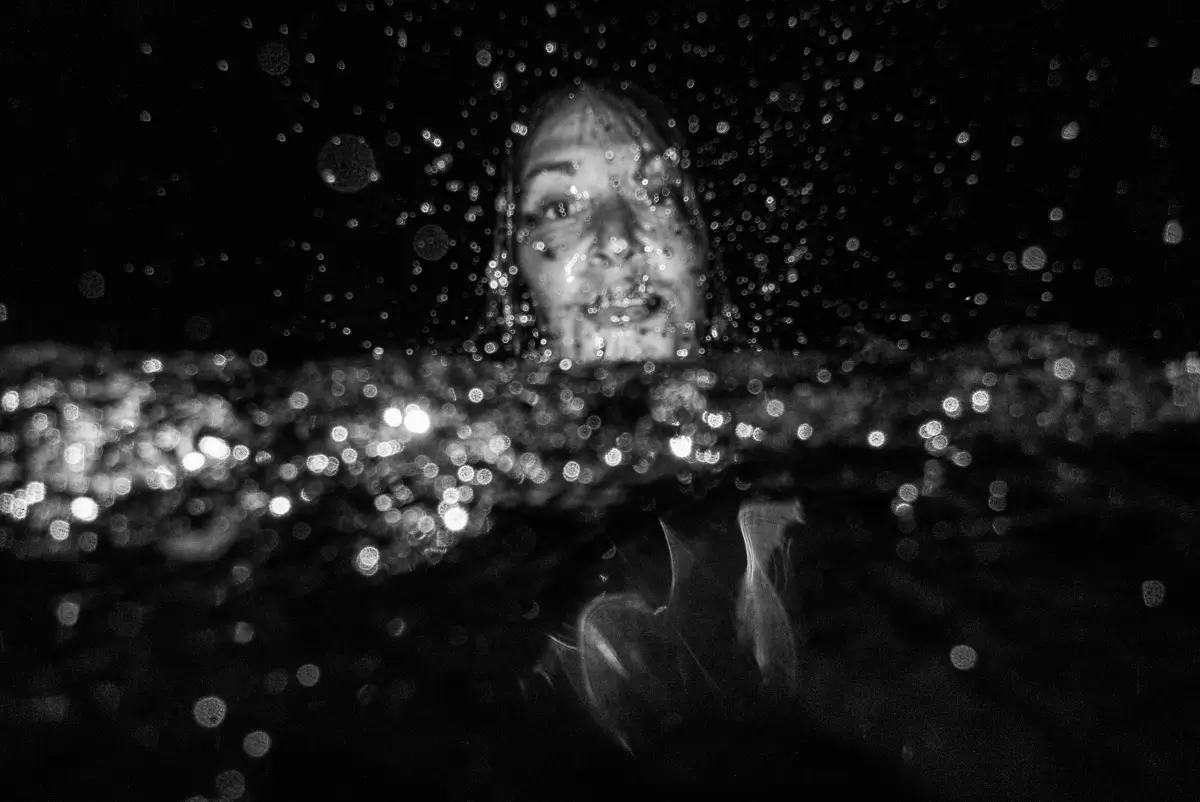
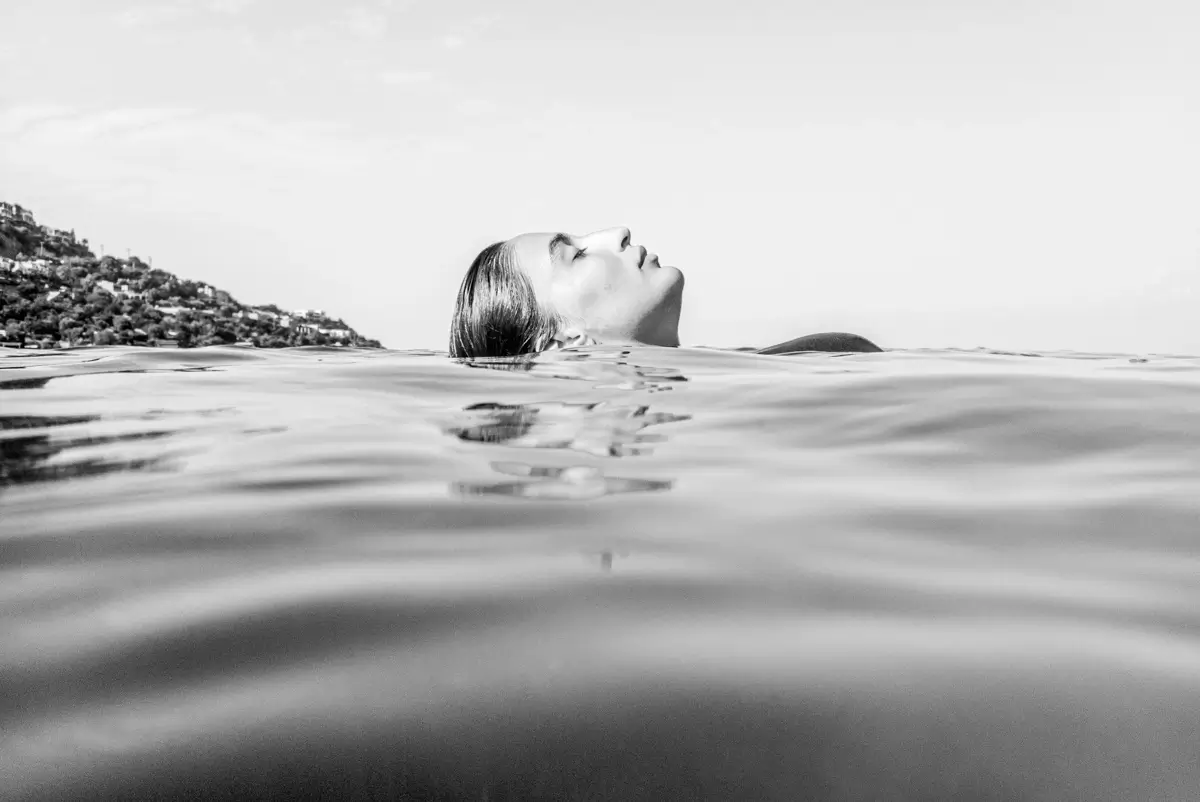
SWIMMERS
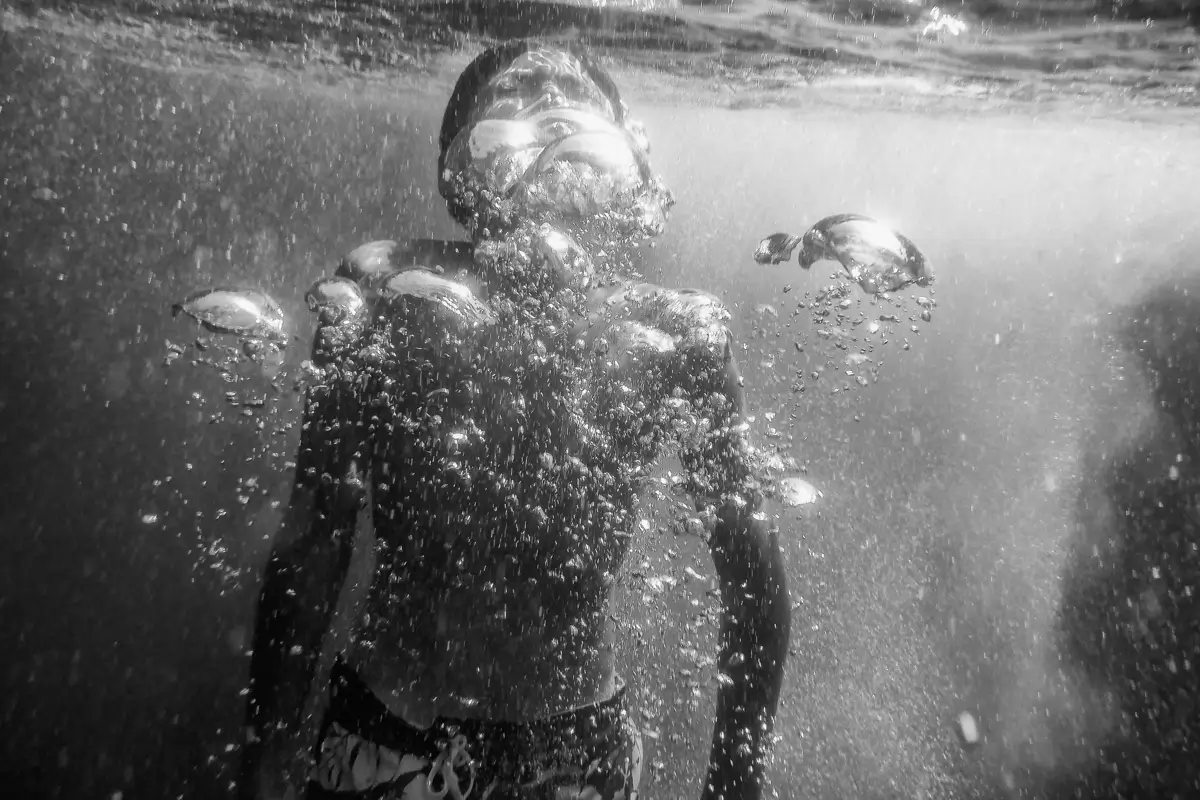
My childhood memories of summer holidays on the Aegean seaside have shaped a deep and lasting relationship with water in my psyche. As a child, playing in the sea brought me both relaxation and joy. Swimming felt like entering a foreign terrain—an access to a muted, quieter world away from the noise of the land. In that sense of suspension and otherness, I found a rare kind of peace. The shifting blue of the water, never constant, changing with light and time, deepened this feeling of being in a living, breathing environment.

As I grew older, I began to associate the experience of being submerged with what I imagine to be a prenatal state—an enveloping space of safety, serenity, and inner balance. Swimming became a way of returning to that feeling, a way of experiencing freedom beyond the physical body. In water, I encounter something both naïve and profound—a magical and sensual state that recalls youthful innocence while remaining deeply present.

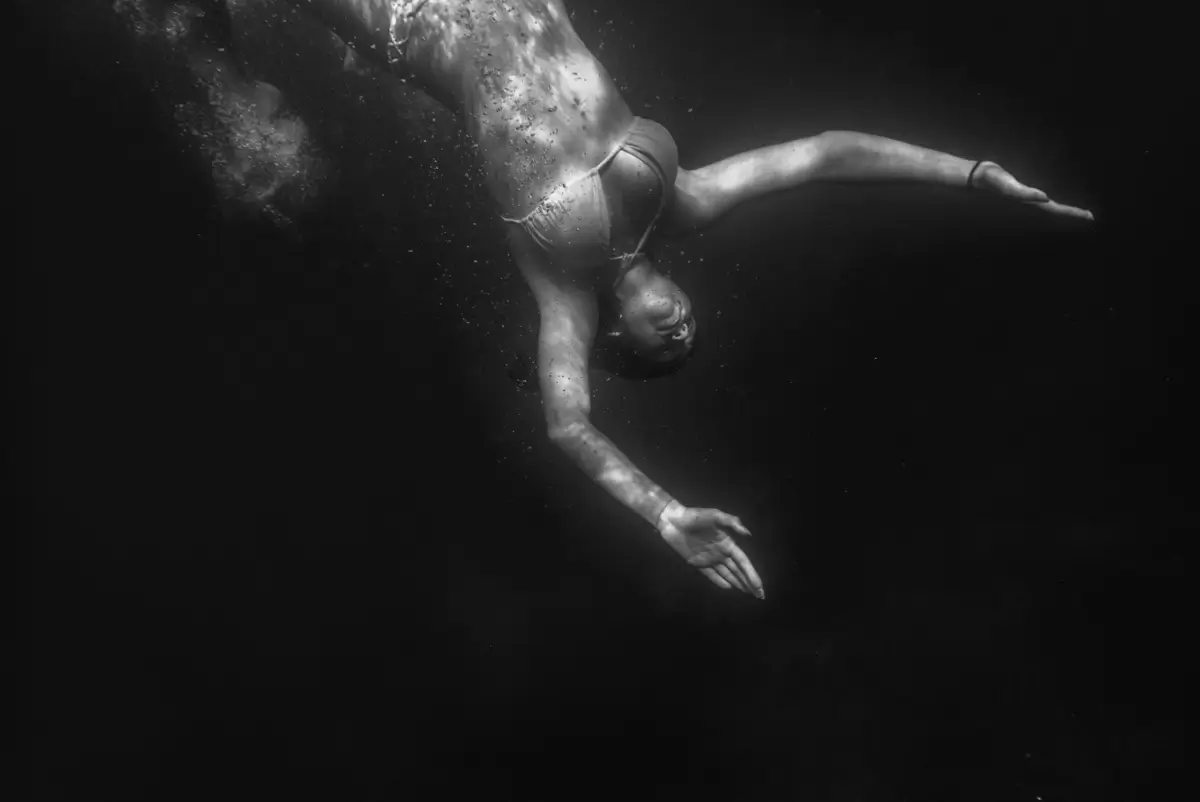
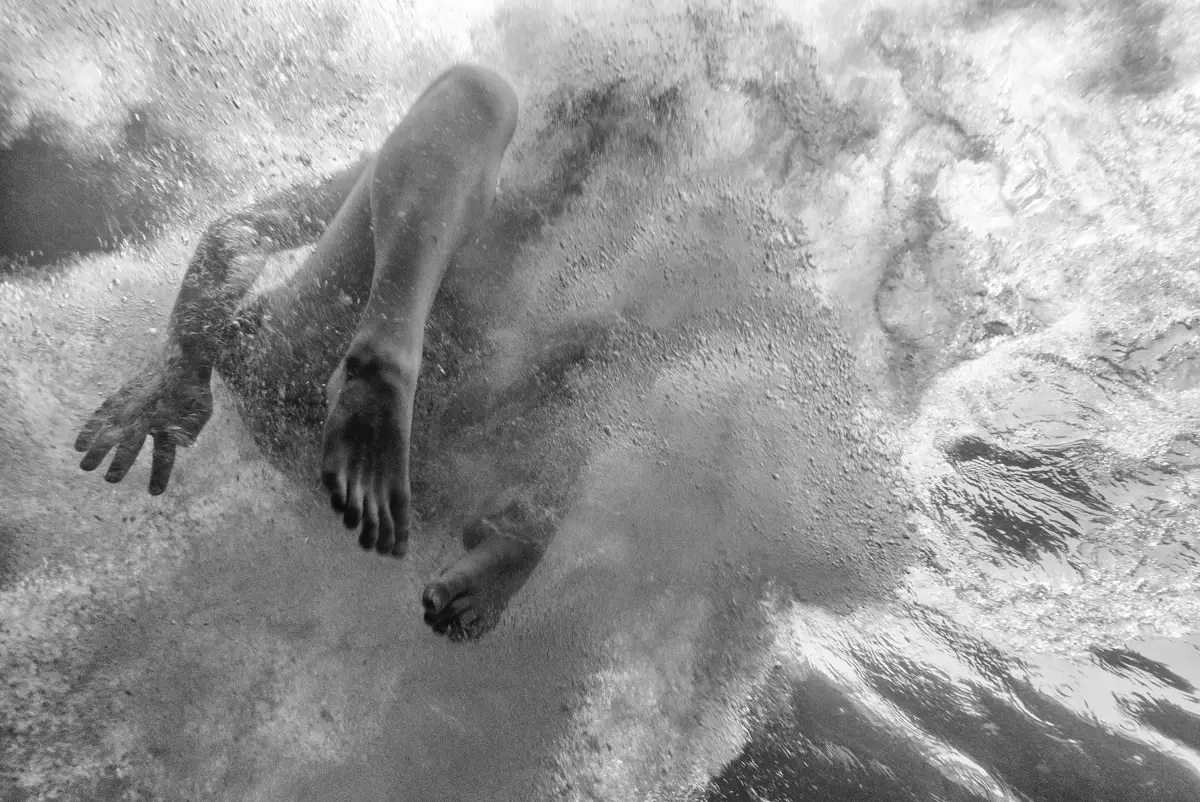
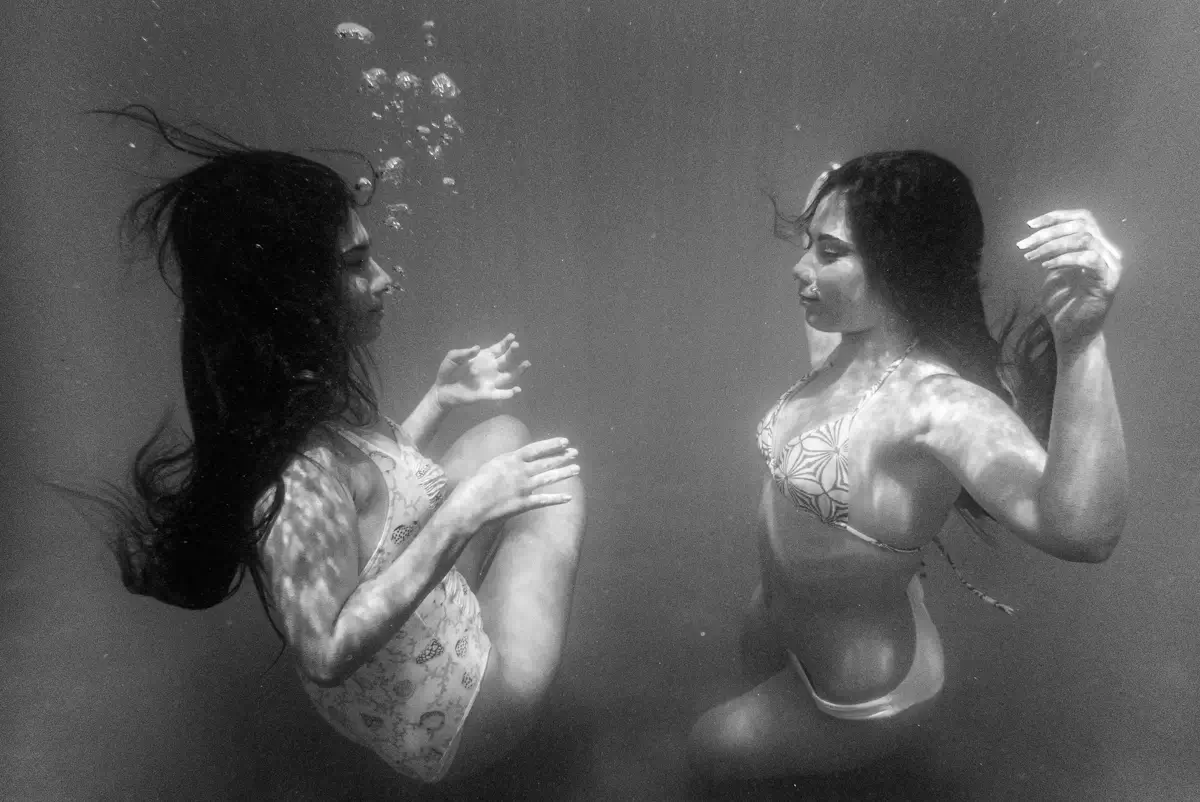
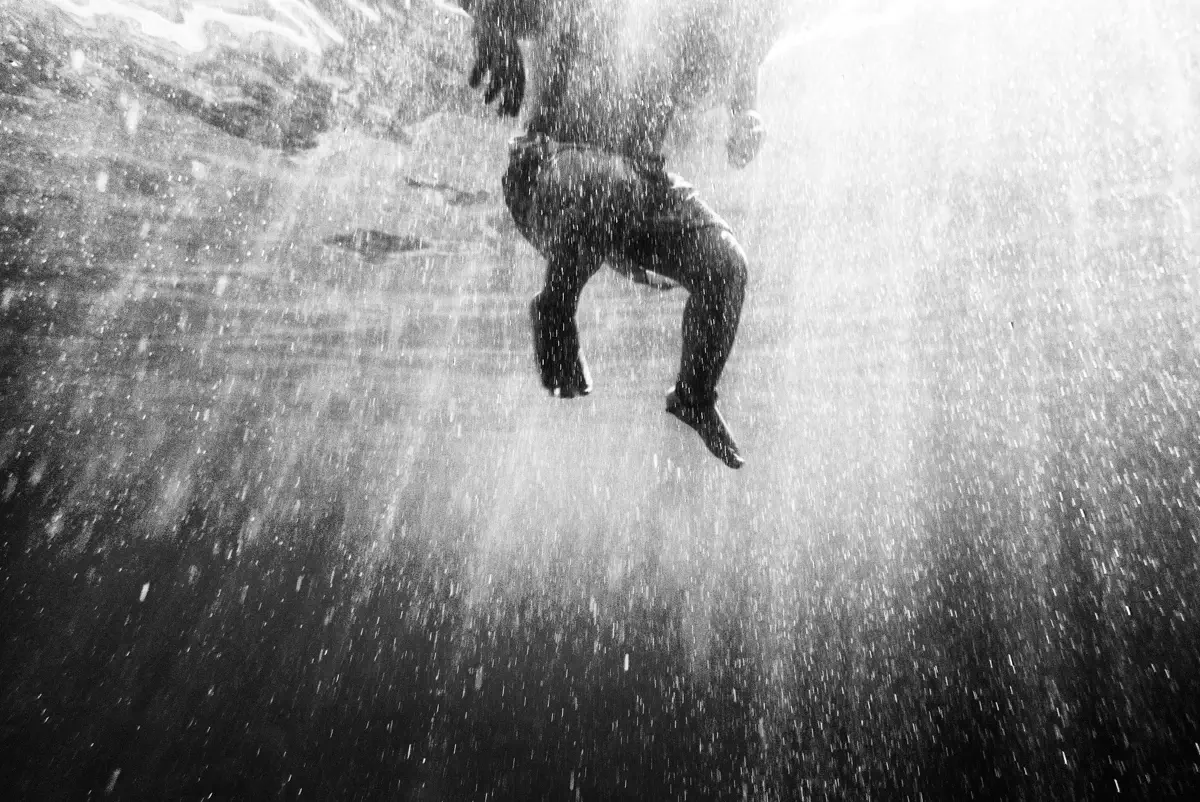
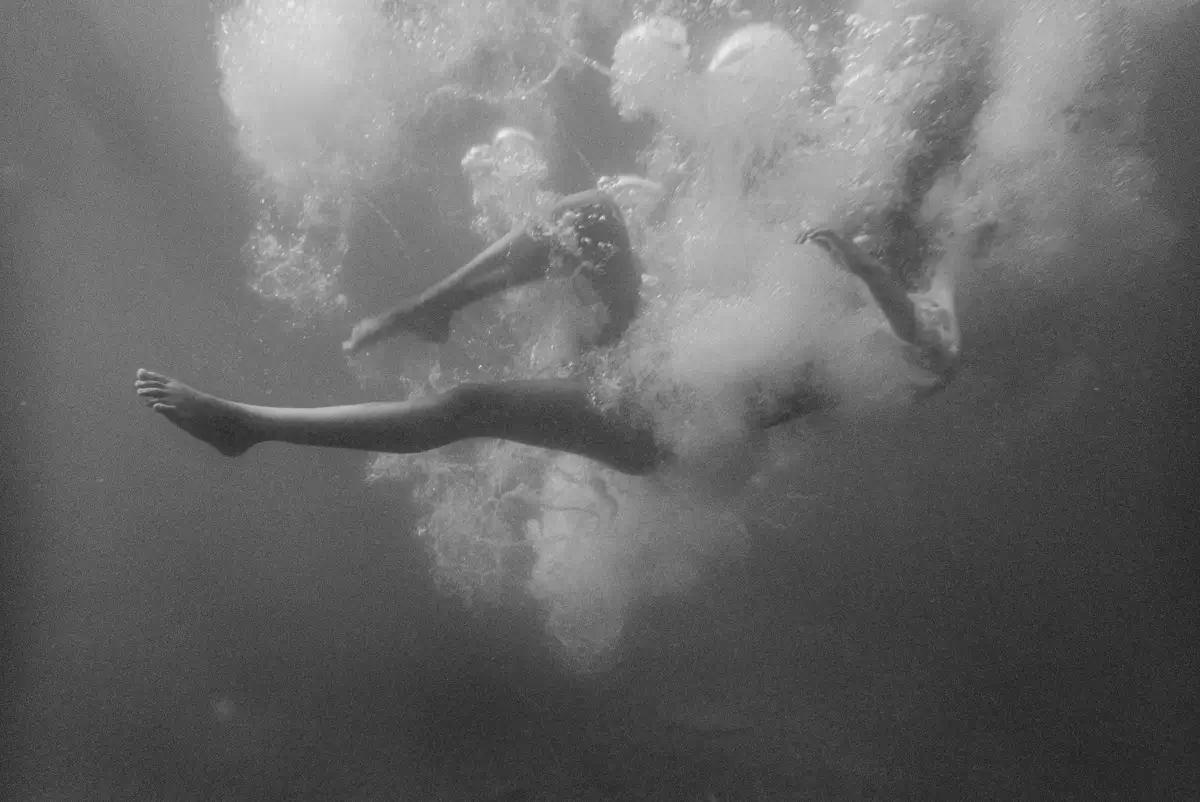
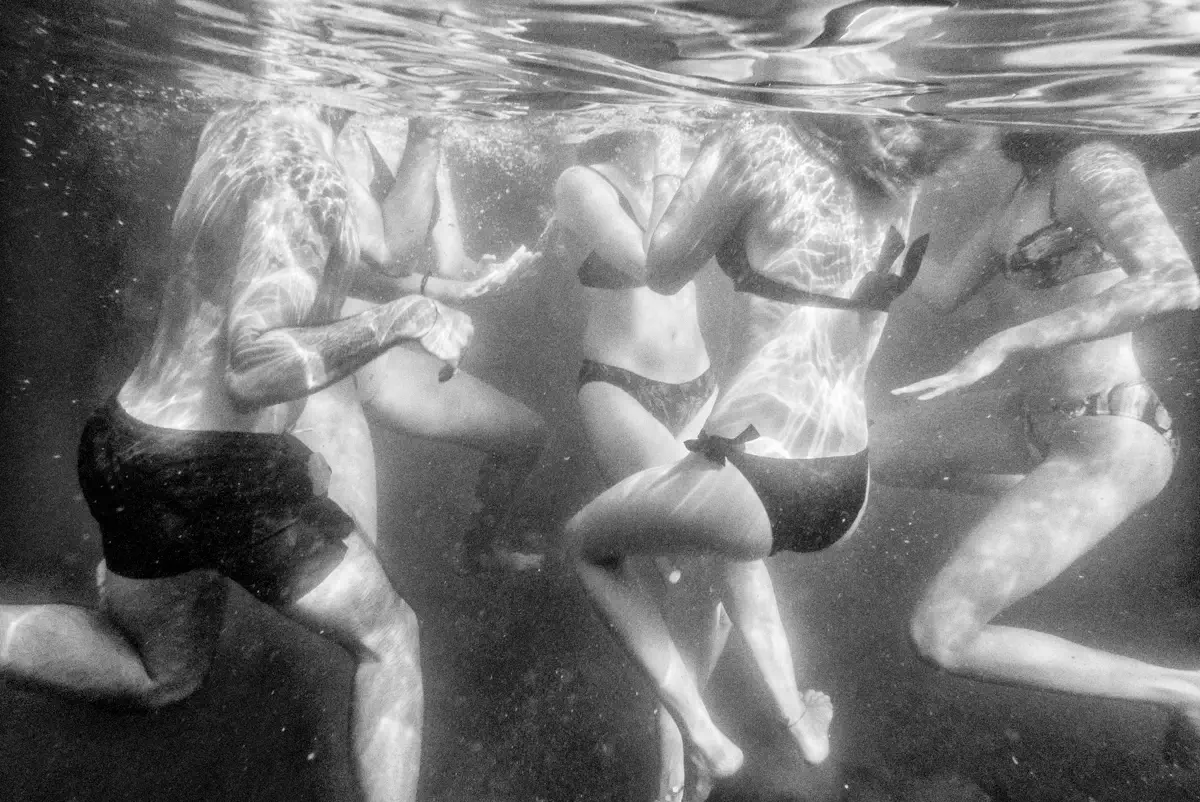
In my series Swimmers, I aim to capture these sensations through the bodies of others, intertwined with my own emotional experience. I work in black and white to remove the seduction of color and instead emphasize form, texture, and the subtle play of light. This choice allows the images to become more introspective and timeless. Despite the constant movement of both the subjects and myself, photography offers the possibility of suspending a fleeting moment within this fluid world.

These images exist in a space between stillness and motion, where bodies drift, float, and hover in a liquid abyss.

AAP Magazine

AAP Magazine 17 Portrait
AAP Magazine 34 Shapes

Article

My Father's Toys
Swimmers

 

Inspiring Portfolios

Call for Entries
AAP Magazine #58 B&W
Publish your work in our printed magazine and win $1,000 cash prizes
 
Stay up-to-date  with call for entries, deadlines and other news about exhibitions, galleries, publications, & special events.

More Great Photographers To Discover

Patricia Lagarde
Patricia Lagarde was born in Mexico City, where she currently lives and works. Studies in Communication and Graphic Design. She develops in the middle of photography from an early age. Her work revolves around three fundamental axes; the object as a symbol, the construction of memory and the poetics of space. Her images and artist books have been shown in Museums, Galleries and Fairs in various countries around the world. In Mexico it is represented by Patricia Conde Galería, in San Francisco by The Jack Fischer Gallery. Statement Patricia Lagarde's work is akin to that imaginary construction of an excessive, circular notion of time found in the most conspicuous narratives of magical realism. She grabs such epic dimension of time and submits it to an intimate experience. The signs she works with have no great scenarios of history as spatial references but rather much more discrete enclosures, such as the alchemist's laboratory, a cabinet of curiosities or an antiques collection. Objects that have been touched, used or abandoned are the most recurring personal motives throughout her career. Or perhaps we should say the “aura” of such objects, resulting from the way time has noticed them. Insects, toys, maps and spheres, ancient instruments, clothes, reproductions of works of art, other photographs and other texts are then taken to a ranking ground where the colossal and the tiny are confused, where the distinction between the own and the alien is no longer important, the imaginary and the real hierarchies are reversed and the meaning of usefulness loses relevance. (Author_Juan Antonio Molina)
William Gedney
United States
1932 | † 1989
William Gale Gedney (October 29, 1932 – June 23, 1989) was an American documentary and street photographer. It wasn't until after his death that his work gained momentum and is now widely recognized. He is best known for his series on rural Kentucky, and series on India, San Francisco, and New York shot in the 1960s and 1970s. William Gedney was born in Greenville, New York. He studied at Pratt Institute in Brooklyn, New York. In 1955 he graduated with a BFA in Graphic Design and began work with Condé Nast. During his lifetime, Gedney received several fellowships and grants, including a John Simon Guggenheim Memorial Foundation fellowship from 1966 to 1967, a Fulbright Fellowship for photography in India from 1969 to 1971, a New York State Creative Artists Public Service Program (C.A.P.S.) grant from 1972 to 1973; and a National Endowment for the Arts grant from 1975 to 1976. In a career spanning the late 1950s to the mid-1980s, he created a large body of work, including a series documenting local communities during his travels to India, San Francisco, Brooklyn, and New York shot in the 1960s and 1970s. He is also noted for night photography, principally of large structures, like the Brooklyn bridge and architecture, and architectural studies of neighborhoods quiet and empty, at the night. In 1969, he started teaching at Pratt Institute, though later in 1987, two years before his death, he was denied tenure. Gedney's work has been exhibited in numerous group shows, including Museum of Modern Art shows, Photography Current Report in 1968, Ben Schultz Memorial Collection in 1969, and Recent Acquisitions in 1971; as well as Vision and Expression,George Eastman House, and Rochester Institute of Technology, in 1972. However, he remained a recluse, had only one solo exhibition during his lifetime. Despite receiving appreciation from noted photographers of the time, Walker Evans, Diane Arbus, Lee Friedlander, and John Szarkowski, he remained an under-appreciated artist of the generation. He didn't manage to get any of his eight-book projects published. William Gedney died of complications from AIDS in 1989, aged 56, in New York City and is buried in Greenville, New York, a few short miles from his childhood home. He left his photographs and writings to his lifelong friend Lee Friedlander. In time, Friedlander's efforts, which had earlier led to the revival of E. J. Bellocq's works, chartered posthumous revival of Gedney's work. An extensive collection of his work, including large photographic prints, work prints, contact sheets, negatives, sketchbooks, notebooks and diaries, correspondence, and other files are housed at the Rubenstein Library, Duke University, Durham, North Carolina.Source: Wikipedia
Annick Donkers
Annick Donkers is a documentary photographer from Antwerp, Belgium. After obtaining a Master’s degree in Psychology, she decided to specialize in photography. She has received a grant from the Mexican Ministry of Foreign Affairs and was selected to participate in the Seminar on Contemporary Photography at the Centro de la Imagen in Mexico City (2008). Her work has been exhibited and published internationally. She was one of the winners at the Survival International Competition (2015), won an award at the San José Photo Festival in Uruguay (2016), the Sony Awards in UK (2016), the MIFA awards in Russia (2016), the IPA awards in USA (2016), the TIFA awards in Tokyo (2016), received an honorable mention at the Px3 Prix de la Photo in Paris(2016), was selected at Latin American Photography vol.5 (2016), on the cover of Dodho magazine (2016), shortlisted for the Kolga Tbilisi Awards and Athens Photo Festival (2017). She currently lives and works as a freelance photographer in Mexico City.About Lucha Libre Extrema The Lucha Libre Extrema series emerged from a growing interest I had in Mexican professional wrestling. I was soon drawn towards sub-genres of the sport such as Lucha Libre Exótica and Lucha Extrema. This semi-clandestine hardcore genre is currently prohibited in Mexico City because of how dangerous it is, but events still take place outside the capital, notably at a car wash-turned-arena in Tulancingo, the village where El Santo, Mexico’s most famous pro wrestler, was born. The participants receive professional training and are paid a little bit more because of the risks they take. They perform with a variety of weapons: chairs, thumbtacks, wire, and fluorescent lights, turning the ring into a war zone. Yet the community of luchadores “extremos” is closely knit and few outsiders have gained access. Mexico has been a very violent place in recent years. As such, I found it fascinating that people were drawn to the dangerous world of Lucha Libre Extrema and turned my camera to the audience in an attempt to understand their reasons. About Afromexican HealersAt the end of last year my attention was drawn to the coastal region of Guerrero known as Costa Chica, located to the south of Acapulco. This region is home to Mexicans descended from African slaves that identify themselves as being “black”. But outside this region they are little-known and they are currently fighting to be officially recognized by the Mexican State. The Costa Chica is also a place rooted in traditional beliefs that include appearances of trolls, the devil and spirit animals. The legend tells that when a baby is born, a member of the family brings the child to a crossroads up in the mountains where lots of wild animals pass by. The first creature to approach the child will be the child's spirit animal, or tono in Spanish, since there is now a dependency created between child and animal. This means that when the animal is hurt, wounded or dies, the person is too. In the Afromexican communities there are healers that will cure these "animal"-related illnesses, since conventional medicine will not work in these cases. The person is cured with herbs selected by the healers and also according to the needs of the animal. They call these healers curanderos del tono and there are only a small number of them left. I went to the Costa Chica region in an attempt to capture what remains of this Afromexican tradition.
David Katzenstein
United States
New York fine arts photographer David Katzenstein has traveled throughout the world on his lifelong artistic journey as a visual chronicler of humanity. Using subject, light, and composition to create visual dynamism, he sets the stage for the viewer to be in the moment with him. His goal is to allow viewers to experience a scene through his eyes-as if they were standing there beside him. Steeped in the tradition of documentary photography, Katzenstein imbues his work with immediacy, emotional engagement, and a deep respect for his subjects. Out of his fascination with ritual, over the years Katzenstein has photographed pilgrimage as practiced in different cultures. While visiting Memphis in the spring of 2017, he was inspired to expand on this theme by embarking on the project OUTSIDE THE LORRAINE MOTEL: Journey to a Sacred Place. The artist was introduced to the Mid-South region in the late 1980s while on assignment for Rolling Stone, documenting the roots of the blues in rural communities of Mississippi and Arkansas. An archive of online exhibitions and projects can be viewed at www.davidkatzenstein.com. In 2018 Katzenstein formed a nonprofit organization whose mission is to create and mount exhibitions of photographs depicting the human experience (www.thehumanexperienceproject.net). Outside the Lorraine: A Photographic Journey to a Sacred Place The National Civil Rights Museum presents the fine art photography exhibition, Outside the Lorraine: A Photographic Journey to a Sacred Place featuring the work of David Katzenstein. The yearlong exhibition highlights the museum as mecca for peacemakers, a place of memory and connection during the museum’s 30th anniversary. The collection of over 90 photos in Outside the Lorraine helps visitors identify with social issues by using fine art photography to connect to the historic place, Dr. King, movement makers, and one another. Viewers are invited to see the sparkle that lies within each print that shimmers, vibrates, and introduces people to a richer experience with fine art photography by making each piece relatable. The National Civil Rights Museum welcomes thousands of visitors a year each carrying an identity influenced by self and society. They bring their assumptions about the Civil Rights Movement. The courtyard is the first place where they confront those assumptions and begin to reconcile them with an alternate perspective of history. A picture tells a thousand words. As a sacred place, the plaza holds the weight of our shared mourning. As a portal, the plaza offers each visitor a pathway to greater self-knowledge and agency. Articles Ritual Distant Journeys Book: Distant Journeys Book: Brownie
Keiichi Tahara
Japan
1951 | † 2017
Tahara was born in Kyoto. He learned photographic techniques at an early age from his grandfather, a professional photographer. In 1972, he travelled Europe with Red Buddha Theatre as a lighting and visual technician. While in France, he encountered a sharp, harsh and piercing light that he had never experienced in Japan. Since then, he remained in Paris for next 30 years and started his career as a photographer. His first series of work "Ville (City)" (1973-1976) captured the unique light in Paris in black-and-white photography. His next series of work "Fenêtre (Windows)" (1973-1980) awarded the best new photographer by Arles International Photography Festival in 1977 and he moved into the limelight.The following year, he started the new series "Portrait" (1978), then "Eclat" (1979-1983) and "Polaroid" (1984) and received number of awards such as Ihei Kimura award (1985). His morphological approach to light has extended to sculpture, installations, and other various method crossing over the genre of photography. In 1993, in moat of the Castle of Angers (1993), the first light sculpture in France, "Fighting the Dragon" (1993) was installed. "Garden of Light" (Eniwa, Hokkaido, 1989) is a representative piece in which light sculptures are installed in a public space covered in snow for six months of the year. The light changes in response to music and presents a space of poetic dimensions. Based on the same concept, "Échos du Lumières" (2000) was installed in the Canal Saint-Martin, commissioned as a public space project by the City of Paris. The spectacle colors from the prisms illuminate the stone wall synchronizing with the sounds. The rest of his work include a permanent outdoor installation "Niwa (Garden)" (2001) at the Photography Museum in Paris (Maison Européenne de la Photographie), "Portail de Lumière", an installation created as a part of the cultural project Lille 2004, and " Light Sculpture" exhibition at Tokyo Metropolitan Teien Art Museum in 2004. In 2008, Tahara lead the project of building Ginza 888, with the artistic direction of the Museum of Islamic Art. A photography book was published. He continued to produce a number of light installation projects in urban spaces. He died on 6 June 2017. Source: Wikipedia When did you realize you wanted to be a photographer? It was 1972 when I am 21 years old Where did you study photography? With whom? From my grand father Do you have a mentor or role model? Trace of light. Moholy-Nagy / Man-Ray How long have you been a photographer? 40 years Do you remember your first shot? What was it? Yes, when I was 6 years old took the picture of garden of our family house What or who inspires you? So many artists which I met in my life How could you describe your style? Trace of light. Do you have a favorite photograph or series? Serie de Eclat 1979-1983 Do you spend a lot of time editing your images? For what purpose? Light/Observation/Notation what mistake should a young photographer avoid? Do not afraid mistake, mistake make a art An idea, a sentence, a project you would like to share? 1970 What are your projects? 1970
Dora Maar
France
1907 | † 1997
Henriette Theodora Markovitch, also known as Dora Maar, was a French photographer, painter, and poet who lived from November 22, 1907 until July 16, 1997. Dora Maar had an important role in the life of the famed artist Pablo Picasso, serving as his love partner. Picasso featured her in various paintings, including Portrait of Dora Maar and Dora Maar au Chat. She was the only daughter of Croatian architect Josip Marković, also known as Joseph Markovitch, who studied at Zagreb and Vienna before arriving in Paris in 1896. Her mother was Louise-Julie Voisin (1877–1942), a Cognac native raised in the Catholic religion. The family moved to Buenos Aires in 1910, where the father earned many commissions, including one for Austria-Hungary's embassy. Despite his success, he was "the only architect who did not make a fortune in Buenos Aires." Nonetheless, his accomplishments were recognized, and Emperor Francis Joseph I awarded him a decoration. In 1926, the family went back to Paris. Under the alias Dora Maar, she studied at the Central Union of Decorative Arts and the School of Photography. She also registered at the École des Beaux-Arts and the Académie Julian, both of which provide equal instruction to men and women. Dora Maar actively engaged in André Lhote's workshop, where she met Henri Cartier-Bresson. During her time at the École des Beaux-Arts, Maar encountered the fellow female surrealist Jacqueline Lamba. Reflecting on their connection, Maar expressed, "I was closely linked with Jacqueline. She asked me, 'where are those famous surrealists?' and I told her about cafe de la Place Blanche." Subsequently, Jacqueline started frequenting the café, eventually leading to her meeting André Breton, whom she would later marry. Dora Maar left the workshop and traveled alone from Paris to Barcelona and then to London. In London, she took images portraying the effects of the economic crisis that followed the Wall Street Crash of 1929 in the United States. She returned to Paris and, with the help of her father, opened another factory at 29 rue d'Astorg in the 8th arrondissement. In 1935, she met Pablo Picasso and became his companion and muse. She photographed the last phases of Picasso's colossal masterpiece, Guernica, in his workshop at the Grands Augustins. She also acted as a model for his artwork Monument à Apollinaire, which pays respect to the late poet Guillaume Apollinaire. Maar's earliest known images were from the early 1920s, when she used a Rolleiflex camera on a cargo ship destined for the Cape Verde Islands. In the early 1930s, she opened a photographic studio on rue Campagne-Première in conjunction with Pierre Kefer, a photographer and designer best known for his work on Jean Epstein's 1928 film The Fall of the House of Usher. Maar and Kefer worked together at the studio, largely on commercial photography for ads and fashion magazines. During this time, her father gave financial assistance as she faced the obstacles of establishing herself and earning a living. The studio rose to prominence, displaying fashion, advertising, and nude photography, and achieved tremendous success. Within the studio, Maar crossed paths with the photographer Brassaï, with whom she shared the darkroom. Brassaï once remarked on her "bright eyes and an attentive gaze, a disturbing stare at times." Dora Maar's work in commercial and fashion photography was heavily influenced by Surrealism, as evidenced by her extensive use of mirrors and harsh play with shadows. She felt that art should transmit the essence of reality by connecting with intuitions or ideas, rather than simply copying the visual qualities of nature. Notably, Dora Maar met Louis-Victor Emmanuel Sougez, a photographer who worked in advertising, archeology, and as the artistic director of the daily L'Illustration. She saw Sougez as a mentor during this time. In 1932, she had an affair with filmmaker Louis Chavance. Dora Maar joined the "October group," which formed around Jacques Prévert and Max Morise following their expulsion from surrealism. Her first publication was in the magazine Art et Métiers Graphiques in 1932, and she had her first solo show at the Galerie Vanderberg in Paris. The gelatin silver pieces from Dora Maar's surrealist era remain highly coveted by enthusiasts, especially works like Portrait of Ubu (1936), located at 29 rue d'Astorg. These black and white compositions include collages, photomontages, and superimpositions. The photograph features the central character from Alfred Jarry's renowned series of plays, Ubu Roi. Initially showcased at the Exposition Surréaliste d'objets at the Galerie Charles Ratton in Paris and later at the International Surrealist Exhibition in London in 1936, the piece gained notable acclaim. Additionally, Dora Maar participated in Participates in Fantastic Art, Dada, Surrealism at the Museum of Modern Art in New York during the same year. During her surrealist phase, Dora Maar found resonance with the political ideologies of the left, leading her to actively engage in political activities. Following the fascist demonstrations on February 6, 1934, in Paris, she, along with René Lefeuvre and Jacques Soustelle, supported by Simone Weil and Georges Bataille, signed the tract "Appeal to the Struggle," initiated by André Breton. Much of her artistic output during this period was strongly influenced by the leftist politics of the time, often portraying individuals thrust into poverty by the Great Depression. Dora Maar was involved in various leftist groups, including the "Masses," an ultra-leftist association where she first encountered Georges Bataille, as well as the Union of Intellectuals Against Fascism, an anti-fascist organization. She also participated in a radical collective of left-wing actors and writers known as October. She actively engaged in various Surrealist circles, frequently joining demonstrations, convocations, and café discussions. Dora Maar was a signatory of numerous manifestos, among them "When Surrealists were Right," penned in August 1935, addressing the Congress of Paris that had convened in March of the same year. In 1935, she captured a photograph of the fashion illustrator and designer Christian Bérard. Described by writer and critic Michael Kimmelman as "wry and mischievous, with only his head perceived above the fountain, as if he were John the Baptist on a silver platter." During the 1980s, Dora Maar created several photograms. Her final years were spent in her apartment on Rue de Savoie, located on the Left Bank of Paris. She passed away on July 16, 1997, at the age of 89. She was laid to rest in the Bois-Tardieu cemetery in Clamart. Posthumously, her experiments with photograms and darkroom photography were discovered.
Milton Rogovin
United States
1909 | † 2011
Milton Rogovin was born in New York City in 1909. He graduated from Columbia University in 1931 with a degree in optometry and a deep concern for the rights of the worker. He moved to Buffalo, New York, in 1938, where he established his own optometric practice in 1939. In 1942, he married Anne Snetsky. That same year, he purchased his first camera, and was inducted into the U.S. Army, where he served in England as an optometrist until 1945. Upon his discharge, he returned to his optometric practice and his growing family. By 1947, the Rogovin's had two daughters, Ellen and Paula, and a son, Mark.Source: www.miltonrogovin.com Milton Rogovin (1909–2011) was a documentary photographer who has been compared to great social documentary photographers of the 19th and 20th centuries, such as Lewis Hine and Jacob Riis. His photographs are in the Library of Congress, the J. Paul Getty Museum, the Center for Creative Photography and other distinguished institutions. Milton Rogovin was born December 30, 1909 in Brooklyn, New York City of ethnic Jewish parents who emigrated to America from Lithuania, then part of the Russian empire. He attended Stuyvesant High School in New York City and enrolled in Columbia University, from which he graduated in 1931 with a degree in optometry. Following graduation Rogovin worked as an optometrist in New York City. Distressed by the rampant and worsening poverty resulting from the Great Depression, Rogovin began attending night classes at the New York Workers School, a radical educational institution sponsored by the Communist Party USA. In 1938 Rogovin moved to Buffalo and established an optometry practice there. In 1942, he married Anne Snetsky (later changed to Setters). In the same year, he was inducted into the U.S.Army, where he worked as an optometrist. After his discharge from the Army, Milton and Anne had three children: two daughters (Ellen and Paula) and a son (Mark). Rogovin was called before the House Un-American Activities Committee in 1957. Like many other Americans who embraced Communism as a model for improving the quality of life for the working class, he became a subject of the Committee's attentions in the postwar period: He was discredited — without having been convicted of any offense — as someone whose views henceforth had to be discounted as dangerous and irresponsible. The incident inspired Rogovin to turn to photography as a means of expression; it was a way to continue to speak to the worth and dignity of people who make their livings under modest or difficult circumstances, often in physically taxing occupations that usually receive little attention. In 1958, a collaboration with William Tallmadge, a professor of music, to document music at storefront churches set Rogovin on his photographic path. Some of the photographs that Rogovin made in the churches were published in 1962 in Aperture magazine, edited by Minor White, with an introduction by W.E.B. Du Bois, a founder of the National Association for the Advancement of Colored People (NAACP). That same year Rogovin began to photograph coal miners, a project that took him to France, Scotland, Spain, China, and Mexico. Many of these images were published in his first book, The Forgotten Ones. Rogovin traveled throughout the world, taking numerous portraits of workers and their families in many countries. His most acclaimed project, though, has been The Forgotten Ones, sequential portraits taken over three decades of over a hundred families who resided on Buffalo’s impoverished Lower West Side. The project was begun in 1972 and completed in 2002. In 1999, the Library of Congress collected more than a thousand of Rogovin’s prints.Source: Wikipedia
Advertisement
AAP Magazine #58 B&W
Win a Solo Exhibition in July
AAP Magazine #58 B&W

Latest Interviews

Exclusive Interview with Carolyn Moore
American photographer Carolyn Moore explores the inner landscape of emotion, memory, and personal transformation through a deeply intuitive photographic practice. Her work unfolds as a quiet dialogue between artist and viewer, where images become a space for reflection, vulnerability, and connection.
Exclusive Interview with Luca Desienna and Laura Estelle Barmwoldt
For over seven years, Of Lilies and Remains has explored the depths of the goth and darkwave underground, unfolding in Leipzig—a city long associated with a vibrant and enduring subcultural scene. Moving between iconic gatherings such as Wave-Gotik-Treffen and more intimate moments on the fringes, the project offers a rare and immersive glimpse into a world often misunderstood, yet rich in expression and community. Created by Luca in collaboration with Laura Estelle Barmwoldt, the work embraces a cinematic and deeply personal approach. Rather than documenting from a distance, it moves within the scene itself, capturing its atmosphere, its codes, and its quiet contradictions. The title Of Lilies and Remains hints at this duality—where beauty and darkness, fragility and strength coexist. As the book prepares for its release, we spoke with both artists about the origins of the project, their process, and what it means to document a subculture that continues to evolve while remaining true to its spirit.
Exclusive Interview with Matthew Finley
American photographer Matthew Finley turns inward, using photography as a way to explore identity, memory, and emotional truth. Based in Los Angeles, his practice moves between performance, gesture, and found imagery, creating a visual language that is both intimate and deeply personal
Exclusive Interview with Jan Janssen
Dutch photographer Jan Janssen explores universal human experiences through his long-term project It Matters, winner of the May 2025 Solo Exhibition. Begun in 2016, the series captures intimate moments of everyday life—love, loss, connection, and belonging—across Central and Eastern Europe. Working in countries such as Turkey, Azerbaijan, and Armenia, Janssen spends extended time within communities, building relationships based on trust and respect. His approach allows him to move beyond observation, revealing deeply human and authentic moments. Rooted in travel and personal discovery, It Matters reflects Janssen’s search for what connects us all in an increasingly divided world. The project is ongoing and will culminate in a photobook scheduled for publication in 2026.
Exclusive Interview with Henk Kosche
German photographer Henk Kosche turns his lens toward the streets of Halle an der Saale, capturing everyday life in the late years of the former German Democratic Republic. At the time, Kosche was studying design and exploring the city with his camera, drawn to the atmosphere of its industrial landscape and the quiet rhythms of daily life. His series Street Photography at the End of the 80s, selected as the Solo Exhibition for July 2025, revisits a body of work created just before a period of profound change. Rediscovered decades later in a small box of 35mm negatives, these photographs offer glimpses of a city and its people at a moment suspended between the familiar and the unknown.
Exclusive Interview with Anastasia Samoylova
Anastasia Samoylova is an American artist whose photographic practice is shaped by close observation and a deep attentiveness to place. Working between documentary and formal exploration, she photographs landscapes, architecture, and everyday scenes with a sensitivity to light, structure, and atmosphere. Since relocating to Miami in 2016, her work has increasingly focused on how environments—both natural and built—carry social, cultural, and emotional traces. We asked her a few questions about her practice and her way of seeing, to better understand the thoughts and experiences that shape her work—while allowing the images themselves to remain open and speak in their own time.
Exclusive Interview with Marijn Fidder
Marijn Fidder is a Dutch documentary photographer whose work powerfully engages with current affairs and contemporary social issues. Driven by a deep sense of social justice, she uses photography to speak on behalf of the voiceless and to advocate for the rights of those who are most vulnerable. Her images have been widely published in major international outlets including National Geographic, CNN Style, NRC Handelsblad, Volkskrant, GUP New Talent, and ZEIT Magazin. Her long-term commitment to disability rights—particularly through years of work in Uganda—culminated in her acclaimed project Inclusive Nation, which earned her the title of Photographer of the Year 2025 at the All About Photo Awards. She is also the recipient of multiple prestigious honors, including awards from World Press Photo and the Global Peace Photo Award. We asked her a few questions about her life and work.
Exclusive Interview with Josh S. Rose
Josh S. Rose is a multidisciplinary artist working across photography, film, and writing. His practice bridges visual and performing arts, with a strong focus on movement, emotion, and the expressive potential of the image. Known for his long-standing collaborations with leading dance companies and performers, Rose brings together authenticity and precise composition—a balance he describes as “technical romanticism.” His work has been commissioned and exhibited internationally, appearing in outlets such as Vogue, at the Super Bowl, in film festivals, and most recently as a large-scale installation for Lincoln Center for the Performing Arts. A sought-after collaborator, he has worked with major artists, cultural institutions, and brands, following a previous career as Chief Creative Officer at Interpublic Group and the founder of Humans Are Social. We asked him a few questions about his life and work.
Interview with Maureen Ruddy Burkhart
Photographer Maureen Ruddy Burkhart brings a quietly attentive and deeply human sensibility to her exploration of the world through images. Shaped by a life immersed in photography, film, and visual storytelling, her work is guided by intuition, observation, and an enduring interest in the emotional undercurrents of everyday life. With a practice rooted in both fine art traditions and documentary awareness, she approaches her subjects with sensitivity, allowing subtle moments to emerge naturally rather than be imposed. Her series Til Death, selected as the Solo Exhibition for February 2025, reflects this long-standing commitment to photography as a space for reflection rather than spectacle. Drawn to moments that exist just outside the expected frame, Burkhart’s images suggest narratives without resolving them, leaving room for ambiguity, humor, and quiet connection. We asked her a few questions about her life and work.
Call for Entries
Win A Solo Exhibition in June
Get International Exposure and Connect with Industry Insiders