All about photo.com: photo contests, photography exhibitions, galleries, photographers, books, schools and venues.
FINAL DAYS TO WIN A SOLO EXHIBITION IN MAY 2026
Sabine Weiss
Self portrait 1954
Sabine Weiss
Sabine Weiss

Sabine Weiss

Country: Switzerland
Birth: 1924 | Death: 2021

Sabine Weiss was born in Switzerland in 1924. In 1942, she wonders what she will do with her life, and decides that she should become a photographer because it is what she loves to do. She is the daughter of a mother who showed her art galleries and Roman churches at a very young age, and of a researcher chemist father who loved to see her print her little photos with the resources available at the time.

From 1942 until 1945 she was an apprentice at Boissonnas in Geneva, house of a dynasty of photographers that celebrated its 80th birthday.

In 1945 Sabine Weiss moved to a studio in Geneva, but in 1946 she decided to leave the city of her childhood to live in Paris. She knew there was no turning back. She asked Willy Maywald to become her assistant. In 1949, she met the painter Hugh Weiss and realized right away that she would spend her life with him. Sabine Weiss left Maywald, where she mastered her craft and started a long career, experimenting fashion, photojournalism, advertising and everything else she was asked to do.

During her free time, she liked to immortalize the depths of man in all simplicity. Her photographs moved Edward Steichen when preparing his major exhibition "The Family of Man" therefore he decided to present three of her images.

In recent years, Sabine Weiss has dedicated her time to exhibitions that showcase the humanist side of her work because it meant a lot to her.

Key dates
1924 July 23rd Birth at Gingolph in Switzerland, Naturalized French in 1995.
1942-45 Apprentice at Boissonas in Geneva
1945 Swiss diploma of photography
1946 Settles permanently in Paris
1946-50 Assistant of Willy Maywald
1950 Weds the American artist Hugh Weiss
1951 Works for several advertising agencies
1952-61 Contract with Vogue Magazine (Fashion and Assignments)
1952 Enters the Agency Rapho
1952 Free-lance for major magazines in the USA and in Europe like Paris Match, Life, Time, Newsweek, Town And Country, Fortune, Holiday, European Travel And Life, Esquire... covering countries in Europe, Africa, North America and Asia.

Most recent exhibitions:
2014 Vannes, Festival de la Photo de Mer "Portugal, 1954"
2014 Zürich, Photobastei, Rétrospective
2014 Genève, Galerie Patrick Cramer, Portraits d’artistes (Giacometti et Miro)
2014 Salon de la Photo, Paris, Porte de Versailles, rétrospective « Chère Sabine » (Tribute to the photographer's 90th birthday)

Decorations
1987 Chevalier des Arts et des Lettres (Knight of Arts and Letters)
1999 Officier des Arts et des Lettres (Officer of the Ordre des Arts et des Lettres)
2010 Ordre national du Mérite (French National Order of Merit)

Discover Sabine Weiss' Interview

 

Sabine Weiss's Video

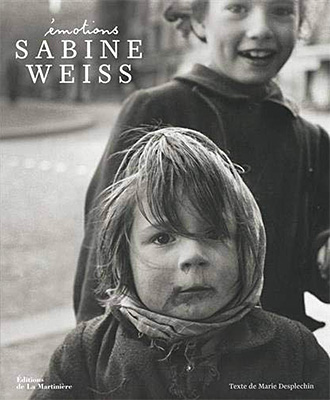
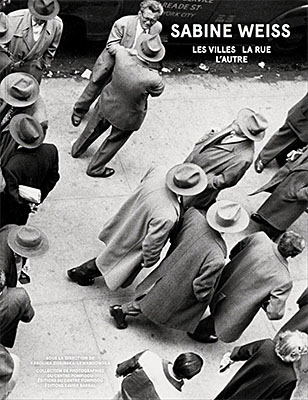
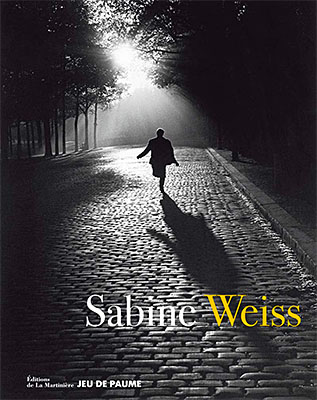
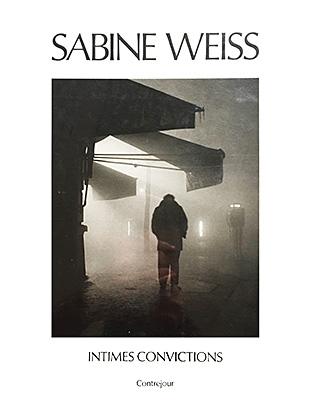
Selected Books

Inspiring Portfolios

Call for Entries
AAP Magazine #57 Portrait
Publish your work in our printed magazine and win $1,000 cash prizes
 
Stay up-to-date  with call for entries, deadlines and other news about exhibitions, galleries, publications, & special events.

More Great Photographers To Discover

Lewis Hine
United States
1874 | † 1940
Lewis Hine was an American sociologist and photographer known for using his camera as a tool for social reform. His photographs were instrumental in changing child labor laws in the United States. There were two things I wanted to do. I wanted to show the things that had to be corrected. I wanted to show the things that had to be appreciated. -- Lewis Hine Lewis Hine was born on September 26, 1874, in Oshkosh, Wisconsin. After his father was killed in an accident, Hine began working and saving for college. He attended the University of Chicago, Columbia University, and New York University to study sociology. He became a teacher at the Ethical Culture School in New York City, where he encouraged his students to embrace photography as an instructional tool. Hine took his sociology pupils to New York Harbor's Ellis Island, where he photographed the thousands of immigrants that landed each day. Between 1904 and 1909, he shot over 200 plates (photographs) and realized that documentary photography could be used to effect social change and reform. Hine joined the Russell Sage Foundation's staff photographer in 1907, photographing life in the steel-making regions and inhabitants of Pittsburgh, Pennsylvania, for the landmark sociological study The Pittsburgh Survey. The next year, he left his teaching post to work as a photographer for the National Child Labor Committee (NCLC). Lewis Hine recorded child labor during the next decade, with a concentration on the use of child labor in the Carolina Piedmont, to aid the NCLC's lobbying attempts to abolish the practice. In 1913, he chronicled juvenile laborers among cotton mill workers with a series of composite pictures by Francis Galton. Charlie Foster has a steady job in the Merrimack Mills. Huntsville, Alabama.© Lewis Hine / Library of Congress Prints and Photographs Division Washington, D.C. Lewis Hine's work for the NCLC was frequently hazardous. Factory police and foremen routinely threatened him with violence or even death as a photographer. The immorality of child labor was intended to be hidden from the public at the time. Photography was not only forbidden, but it also posed a significant danger to the enterprise. Hine was compelled to disguise himself in order to gain access to the mills, mines, and factories. He worked as a fire inspector, postcard vendor, bible salesman, and even an industrial photographer documenting manufacturing technology. During and after World War I, he shot relief efforts for the American Red Cross in Europe. Hine created a series of work portraits in the 1920s and early 1930s that stressed the human contribution to modern industry. Lewis Hine was commissioned to photograph the Empire State Building's construction in 1930. He photographed the workers in perilous positions as they secured the structure's steel framework, taking many of the same hazards as the employees. He was hoisted out in a specially built basket 1,000 feet above Fifth Avenue to get the best views. He recalls hanging above the city at times, with nothing below but "a sheer drop of nearly a quarter-mile." Cherryville Mfg. Co., Cherryville, N.C. One of the smallest boys. Doffer. 1908© Lewis Hine / Library of Congress Prints and Photographs Division Washington, D.C. During the Great Depression, Hine worked for the Red Cross, photographing drought relief in the American South, and for the Tennessee Valley Authority (TVA), documenting life in the mountains of eastern Tennessee. He was also the chief photographer for the Works Progress Administration's National Research Project, which investigated changes in the industry and their impact on employment. Hine was also on the faculty of the Ethical Culture Fieldston School. Lewis Hine was chosen as the photographer for the Works Projects Administration's National Research Project in 1936, but his work there was never completed. His final years were filled with professional struggles caused by the loss of government and corporate patronage. Hine hoped to participate in the Farm Security Administration photography project, but despite numerous letters to Roy Stryker, Stryker always declined. Hine lost his house and applied for welfare because few people were interested in his work, past or present. After an operation, he died on November 3, 1940, at Dobbs Ferry Hospital in Dobbs Ferry, New York. He was 66 years old at the time. Group of workers, including boys and girls, standing outdoors© Lewis Hine / Library of Congress Prints and Photographs Division Washington, D.C. Hine's photographs aided the NCLC's campaign to end child labor, and the Children's Bureau was established in 1912. The Fair Labor Standards Act of 1938 eventually put an end to child labor in the United States. Corydon Hine, Hine's son, donated his father's prints and negatives to the Photo League, which was disbanded in 1951. The Museum of Modern Art declined to accept his photographs, but the George Eastman House did. Wendy Lamb Books published Elizabeth Winthrop Alsop's historical fiction middle-grade novel Counting on Grace in 2006. The final chapters focus on Grace, a 12-year-old girl, and her life-changing encounter with Lewis Hine during his 1910 visit to a Vermont cotton mill known to employ a large number of child laborers. The iconic photograph of Grace's real-life counterpart, Addie Card (1897-1993), taken during Hine's undercover visit to the Pownal Cotton Mill, graces the cover. In 2016, TIME Magazine published colorized versions of several of Hine's photographs of child labor in the US. In the early days of my child labor activities I was an investigator with a camera attachment... but the emphasis became reversed until the camera stole the whole show. -- Lewis Hine Lewis Hine was trained to be an educator in Chicago and New York. A project photographing on Ellis Island with students from the Ethical Culture School in New York galvanized his recognition of the value of documentary photography in education. Soon after, he became a sociological photographer, establishing a studio in upstate New York in 1912. For nearly ten years Hine was the photographer for the National Child Labor Committee, contributing to exhibitions and the organization's publication, The Survey. Declaring that he "wanted to show things that had to be corrected," he was one of the earliest photographers to use the photograph as a documentary tool. Around 1920, however, Hine changed his studio publicity from "Social Photography by Lewis W. Hine" to "Lewis Wickes Hine, Interpretive Photography," to emphasize a more artistic approach to his imagemaking. Having joined the American Red Cross briefly in 1918, he continued to freelance for them through the 1930s. In 1936 Hine was appointed head photographer for the National Research Project of the Works Projects Administration, but his work for them was never completed. His last years were marked by professional struggles due to diminishing government and corporate patronage, and he died in 1940 at age sixty-six.Source: The J. Paul Getty Museum Born in Oshkosh, Wisconsin, Lewis W. Hine studied sociology before moving to New York in 1901 to work at the Ethical Culture School, where he took up photography to enhance his teaching practices. By 1904 he had begun a series of photographs documenting the arrival of immigrants at Ellis Island; this project, along with his pictures of harsh labor conditions published in the Pittsburgh Survey, brought his work to the attention of the National Child Labor Committee. He served as its official photographer from 1911 to 1916, and later traveled with the Red Cross to Europe, where he documented the effects of World War I in France and the Balkans for Red Cross Magazine. After returning to the United States in 1922, he accepted commercial assignments, produced another series on Ellis Island immigrants, and photographed the construction of the Empire State Building. Several of these construction pictures were published in Men at Work (1932), a book celebrating the individual worker's interaction with machines in the modern world. Despite the success of this book, Hine's financial situation became desperate and his photography was virtually forgotten. Berenice Abbott and Elizabeth McCausland learned of his work through the New York City Photo League and mounted a traveling retrospective exhibition of his work to revive interest in it in 1939. Lewis Hine is best known for the documentary images of child labor practices that he produced under the aegis of the National Child Labor Committee from 1911 to 1916. These photographs not only have been credited as important in the passing of child labor laws, but also have been praised for their sympathetic depiction of individuals in abject working conditions. Hine labeled his pictures "photo-interpretations," emphasizing his subjective involvement with his subjects; this approach became the model for many later documentary photographers, such as Sid Grossman and Ben Shahn.Source: International Center of Photography
Barbara Cole
Canada
1953
For the last forty-five years, artist Barbara Cole has been recapturing the otherworldly mysteries of early photography in a body of work that flows in and out of time. Born in 1953 in Toronto, Canada, Cole, eager to shape a place for herself at an early age, quickly turned to art. Immediately out of high school, she began modeling for a newspaper and soon became fashion editor for the following ten years. Her early start in fashion and self-taught practice have informed her intuitive photography that undulates between tradition and invention. Her inventor's spirit is evident in her preference for raw, hands-on photographic methods. From turn-of-the-century cameras, shadow boxes, darkrooms, and tintypes-she engages directly in shaping her images in order to impart deeply personal truths. The underwater photography for which Cole is most known started in the late 1990s. Once, submerged in her pool, she opened her eyes and what she saw reminded her of the Polaroid film she was so fond of until it eventually went out of production. She has been searching for timelessness ever since. The wavy, enigmatic waters are often juxtaposed against weightless figures, forming her signature, velvety dreamscapes. In these figures we see human beings who are just-just-on the verge of forming complete selves, suggesting we are always in the process of recreating ourselves, always striving to reach new heights. As an innovator in her field, Cole ventures into territories full of light and shadow, memory and dreams, with imagery that is nothing short of exaltation. Whether reincorporating twenty-year-old images in current underwater photography, or reimagining a modern format for the turn-of-the-century tintype, Cole's work shortens the distance between past and present. For Cole history is written in water. Cole has held numerous exhibitions across North America, Europe, and the Middle East. Her work has also been extensively commissioned internationally for corporate collections. She has exhibited in the Canadian Embassy in both Tokyo and Washington D.C. The acclaimed documentary series, Snapshot: The Art of Photography II, features an episode devoted exclusively to Cole's photographic practice. Cole currently lives and works in Toronto. Articles Exclusive Interview with Barbara Cole Barbara Cole and Wet Collodion Photographs Galleries Bau-Xi Gallery Galerie de Bellefeuille Art Angels Holden Luntz Gallery NOX Contemporary Art Space
John Divola
United States
1949
John Divola is an American contemporary visual artist born in 1949 in Los Angeles, CA. He received a B.A. from California State University, Northridge in 1971 and later received an M.F.A. from the University of California, Los Angeles in 1974. He has held residencies at many institutions including the California Institute of the Arts. He has held the position of Professor in the art department at the University of California Riverside since 1988. His work has been featured in many solo exhibitions across the United States, Europe, Japan, and Australia. He participated in 1978, 1989, and 2000 Museum of Modern Art group exhibitions and in the 1981 Whitney Biennial. Divola received awards as Individual Artist Fellowship from the National Endowment for the Arts in 1973, 1976, 1979, 1990 and a Guggenheim Fellowship in 1986. He published four books: Continuity, Isolated Houses, Dogs Chasing My Car In The Desert, and Three Acts. In Zuma project, he has described being interested in the relationship between real artworks and representations of them, and the issues of the natural and the artificial. Divola said "I attempted ... to develop a practice in which there could be no distinction between the document and the original." In his series of photographs from 1977, he used deserted houses on Zuma Beach and covered their walls in graffiti. He photographed the ocean from the house's interior through windows and cracks. Divola states: "On initially arriving I would move through the house looking for areas or situations to photograph. If nothing seemed to interest me I would move things around or do some spray painting. The painting was done in much the same way that one might doodle on a piece of paper. At that point, I would return to the camera and explore whatever new potentials existed." These cyclical images skillfully juxtapose romantic skies and sunsets with a seaside structure that, frame by frame, deteriorates into ruin as it is vandalized by the artist and others who eventually set it on fire. Divola's works trace a schematic desire for escape, movement, and transcendence. "My acts, my painting, my photographing, my considering, are part of, not separate from, this process of evolution and change. These photographs are not so much about this process as they are remnants from it. My participation was not so much one of intellectual consideration as one of visceral involvement." Dogs Chasing My Car In The Desert are images of dogs in the desert captured in the midst of running wildly after the car. Emphasizing the grain of the image, these black and white photographs capture a haunting moment in which there is a duality between a sense of absence and presence. The behavior of the dogs suggests a lack of previous stimuli, and loneliness at the same time as an all-consuming reaction to the now, a presence. "It could be viewed as a visceral and kinetic dance. Here we have two vectors and velocities, that of a dog and that of a car and, seeing that a camera will never capture reality and that a dog will never catch a car, evidence of devotion to a hopeless enterprise". In the Dark Star series, dark circles have been painted on the walls of an abandoned house. Creation and destruction are held in a delicate equilibrium, the white rooms of the house, are tattered and derelict. The domestic ruins suggest social collapse, secret renditions of something darkly sinister illuminating our conflicted recent history, updating Zuma and Vandalism for our age of foreclosure. In the As Far As I Can Get project, he made photographs by pushing the self-timer button on his camera. An exposure is made in 10 seconds. John Divola currently lives and works in Riverside, CA. Divola works in photography, describing himself as exploring the landscape by looking for the edge between the abstract and the specific.Source: Wikipedia
Robert Capa
United States
1913 | † 1954
Robert Capa (born Endre Friedmann; October 22, 1913 – May 25, 1954) was a Hungarian war photographer and photojournalist as well as the companion and professional partner of photographer Gerda Taro. He is considered by some to be the greatest combat and adventure photographer in history. Capa fled political repression in Hungary when he was a teenager, moving to Berlin, where he enrolled in college. He witnessed the rise of Hitler, which led him to move to Paris, where he met and began to work with Gerta Pohorylle. Together they worked under the alias Robert Capa and became photojournalists. Though she contributed to much of the early work, she quickly created her own alias 'Gerda Taro' and they began to publish their work separately. He subsequently covered five wars: the Spanish Civil War, the Second Sino-Japanese War, World War II across Europe, the 1948 Arab–Israeli War, and the First Indochina War, with his photos published in major magazines and newspapers. During his career he risked his life numerous times, most dramatically as the only civilian photographer landing on Omaha Beach on D-Day. He documented the course of World War II in London, North Africa, Italy, and the liberation of Paris. His friends and colleagues included Ernest Hemingway, Irwin Shaw, John Steinbeck and director John Huston. In 1947, for his work recording World War II in pictures, U.S. general Dwight D. Eisenhower awarded Capa the Medal of Freedom. That same year, Capa co-founded Magnum Photos in Paris. The organization was the first cooperative agency for worldwide freelance photographers. Hungary has issued a stamp and a gold coin in his honor. Source: Wikipedia On 3 December 1938 Picture Post introduced 'The Greatest War Photographer in the World: Robert Capa' with a spread of 26 photographs taken during the Spanish Civil War. But the 'greatest war photographer' hated war. Born Andre Friedmann to Jewish parents in Budapest in 1913, he studied political science at the Deutsche Hochschule für Politik in Berlin. Driven out of the country by the threat of a Nazi regime, he settled in Paris in 1933. He was represented by Alliance Photo and met the journalist and photographer Gerda Taro. Together, they invented the 'famous' American photographer Robert Capa and began to sell his prints under that name. He met Pablo Picasso and Ernest Hemingway, and formed friendships with fellow photographers David 'Chim' Seymour and Henri Cartier-Bresson. From 1936 onwards, Capa's coverage of the Spanish Civil War appeared regularly. His picture of a Loyalist soldier who had just been fatally wounded earned him his international reputation and became a powerful symbol of war. After his companion, Gerda Taro, was killed in Spain, Capa travelled to China in 1938 and emigrated to New York a year later. As a correspondent in Europe, he photographed the Second World War, covering the landing of American troops on Omaha beach on D-Day, the liberation of Paris and the Battle of the Bulge. In 1947 Capa founded Magnum Photos with Henri Cartier-Bresson, David Seymour, George Rodger and William Vandivert. On 25 May 1954 he was photographing for Life in Thai-Binh, Indochina, when he stepped on a landmine and was killed. The French army awarded him the Croix de Guerre with Palm post-humously. The Robert Capa Gold Medal Award was established in 1955 to reward exceptional professional merit. Source: Magnum Photos
Advertisement
AAP Magazine #57 Portrait
Win a Solo Exhibition in May
AAP Magazine #57 Portrait

Latest Interviews

Exclusive Interview with Matthew Finley
American photographer Matthew Finley turns inward, using photography as a way to explore identity, memory, and emotional truth. Based in Los Angeles, his practice moves between performance, gesture, and found imagery, creating a visual language that is both intimate and deeply personal
Exclusive Interview with Jan Janssen
Dutch photographer Jan Janssen explores universal human experiences through his long-term project It Matters, winner of the May 2025 Solo Exhibition. Begun in 2016, the series captures intimate moments of everyday life—love, loss, connection, and belonging—across Central and Eastern Europe. Working in countries such as Turkey, Azerbaijan, and Armenia, Janssen spends extended time within communities, building relationships based on trust and respect. His approach allows him to move beyond observation, revealing deeply human and authentic moments. Rooted in travel and personal discovery, It Matters reflects Janssen’s search for what connects us all in an increasingly divided world. The project is ongoing and will culminate in a photobook scheduled for publication in 2026.
Exclusive Interview with Henk Kosche
German photographer Henk Kosche turns his lens toward the streets of Halle an der Saale, capturing everyday life in the late years of the former German Democratic Republic. At the time, Kosche was studying design and exploring the city with his camera, drawn to the atmosphere of its industrial landscape and the quiet rhythms of daily life. His series Street Photography at the End of the 80s, selected as the Solo Exhibition for July 2025, revisits a body of work created just before a period of profound change. Rediscovered decades later in a small box of 35mm negatives, these photographs offer glimpses of a city and its people at a moment suspended between the familiar and the unknown.
Exclusive Interview with Anastasia Samoylova
Anastasia Samoylova is an American artist whose photographic practice is shaped by close observation and a deep attentiveness to place. Working between documentary and formal exploration, she photographs landscapes, architecture, and everyday scenes with a sensitivity to light, structure, and atmosphere. Since relocating to Miami in 2016, her work has increasingly focused on how environments—both natural and built—carry social, cultural, and emotional traces. We asked her a few questions about her practice and her way of seeing, to better understand the thoughts and experiences that shape her work—while allowing the images themselves to remain open and speak in their own time.
Exclusive Interview with Marijn Fidder
Marijn Fidder is a Dutch documentary photographer whose work powerfully engages with current affairs and contemporary social issues. Driven by a deep sense of social justice, she uses photography to speak on behalf of the voiceless and to advocate for the rights of those who are most vulnerable. Her images have been widely published in major international outlets including National Geographic, CNN Style, NRC Handelsblad, Volkskrant, GUP New Talent, and ZEIT Magazin. Her long-term commitment to disability rights—particularly through years of work in Uganda—culminated in her acclaimed project Inclusive Nation, which earned her the title of Photographer of the Year 2025 at the All About Photo Awards. She is also the recipient of multiple prestigious honors, including awards from World Press Photo and the Global Peace Photo Award. We asked her a few questions about her life and work.
Exclusive Interview with Josh S. Rose
Josh S. Rose is a multidisciplinary artist working across photography, film, and writing. His practice bridges visual and performing arts, with a strong focus on movement, emotion, and the expressive potential of the image. Known for his long-standing collaborations with leading dance companies and performers, Rose brings together authenticity and precise composition—a balance he describes as “technical romanticism.” His work has been commissioned and exhibited internationally, appearing in outlets such as Vogue, at the Super Bowl, in film festivals, and most recently as a large-scale installation for Lincoln Center for the Performing Arts. A sought-after collaborator, he has worked with major artists, cultural institutions, and brands, following a previous career as Chief Creative Officer at Interpublic Group and the founder of Humans Are Social. We asked him a few questions about his life and work.
Interview with Maureen Ruddy Burkhart
Photographer Maureen Ruddy Burkhart brings a quietly attentive and deeply human sensibility to her exploration of the world through images. Shaped by a life immersed in photography, film, and visual storytelling, her work is guided by intuition, observation, and an enduring interest in the emotional undercurrents of everyday life. With a practice rooted in both fine art traditions and documentary awareness, she approaches her subjects with sensitivity, allowing subtle moments to emerge naturally rather than be imposed. Her series Til Death, selected as the Solo Exhibition for February 2025, reflects this long-standing commitment to photography as a space for reflection rather than spectacle. Drawn to moments that exist just outside the expected frame, Burkhart’s images suggest narratives without resolving them, leaving room for ambiguity, humor, and quiet connection. We asked her a few questions about her life and work.
Exclusive Interview with Peter Ydeen
Winner of AAP Magazine #45 Travels, his series reflects this unique vision—capturing the spirit of place through subtle layers of light, color, and emotion. Whether traveling abroad or observing the rhythms of his own surroundings, Ydeen creates images that feel both grounded and enchanted, inviting viewers into a world where reality and reverie meet.
Exclusive Interview with Julie Wang
Chinese-born photographer Julie Wang brings a poetic, contemplative sensitivity to her visual exploration of the world. Having lived for nearly equal parts of her life in China, Europe, and the United States, she approaches her subjects with the nuanced perspective of someone shaped by many cultures. This blend of distance, curiosity, and emotional resonance infuses her work with a quiet depth, allowing her to reveal the fragile beauty and subtle tensions that often pass unnoticed.
Call for Entries
Win A Solo Exhibition in May
Get International Exposure and Connect with Industry Insiders