All about photo.com: photo contests, photography exhibitions, galleries, photographers, books, schools and venues.
PUBLICATION AND $1,000 CASH PRIZES: Last Call B&W
Lúa Ribeira
Lúa Ribeira

Lúa Ribeira

Country: Spain
Birth: 1986

Lúa Ribeira (born 1986) is a Galician photographer, based in Bristol in the UK. She is a Nominee member of Magnum Photos and was a joint winner of the Jerwood/Photoworks Award in 2017. Her series Noises is about femininity and British dancehall culture. She studied documentary photography at the University of Wales, Newport, graduating in 2016.

Ribeira's series Noises, about femininity and Jamaican dancehall culture in the UK, was published as Noises in the Blood in 2017.

Source: Wikipedia


Lúa Ribeira’s practice is characterized by its collaborative nature, extensive research and an immersive approach to her subject matter. She is interested in using the photographic medium as a means to create encounters that establish relationships and question structural separations between people.

Ribeira was born in 1986, in Galicia, northern Spain. She graduated in Graphic Design at BAU School of Design, Barcelona in 2011, and earned a first-class honours in a BA in Documentary Photography from the University of South Wales in 2016. Since graduating, she has continued her academic engagement as a guest lecturer at various universities, including the University of Westminster, University of the West of England, and Complutense University of Madrid.

Ribeira’s work has received several awards and honors, including the Firecracker Grant for Women in Photography, and the Jerwood/Photoworks award. Her work has been published in book form by Fishbar, London in 2017, features in the publication Firecrackers: Female Photographer Now published by Thames and Hudson in 2017, in and Raw View Magazine‘s, “Women looking at Women” in 2016. Her work has been exhibited internationally in both solo and group shows in venues including Impressions Gallery, Bradford, Ffotogallery Cardiff, Belfast Exposed gallery, Beijing International Photography Biennale, and many more.

Other publications Ribeira’s work has been featured in include The British Journal of Photography, Paper Journal, Refinery 21, AnOther, and Tate magazine. Selected commercial clients include Chanel, Carla Lopez handbags, Birmingham Botanical Gardens, and Wire Magazine.

She joined Magnum photos as a nominee in 2018.

Source: Magnum Photos


Since graduating from the documentary photography course at the University of South Wales last year, Lúa Ribeira has gone from strength to strength. In addition to the Firecracker Grant, which she was awarded in 2015 while still a student, her work was recently selected by Susan Meiselas to appear in Raw View magazine’s Women Looking at Women issue, which the Magnum photographer guest edited.

She is also making a name for herself commercially, with commissions for the likes of handbag designer Carla Lopez and with editorial clients such as Wired. Her images have been shown at international festivals, including Photo España in 2014 and Gazebook Festival in 2015, and she has also been awarded a Jerwood Photoworks Grant for future projects in 2018.

Thus far, Ribeira is perhaps best known for Noises in the Blood, an ongoing investigation into Jamaican dancehall culture, shown at London’s Fishbar Gallery earlier this year and published by its photobook wing. The series stems from the photographer’s love of the musical genre but also acknowledges her discomfort with its explicit, sexual lyrics. “That feeling bothered me,” says Ribeira. “I did not fully understand it.”

Source: British Journal of Photography


Lúa Ribeira's Video

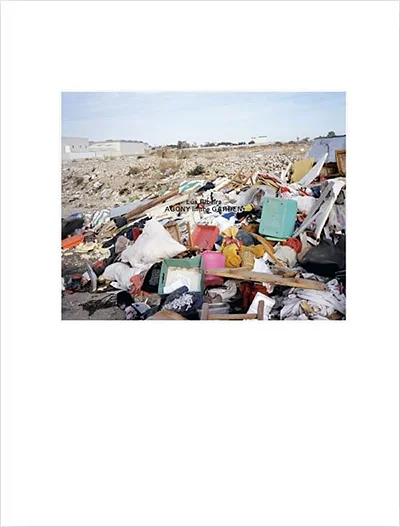
Selected Book

Inspiring Portfolios

Call for Entries
AAP Magazine #58 B&W
Publish your work in our printed magazine and win $1,000 cash prizes
 
Stay up-to-date  with call for entries, deadlines and other news about exhibitions, galleries, publications, & special events.

More Great Photographers To Discover

Andreas Gursky
Germany
1955
German photographer. Shortly after Gursky was born, his family relocated to Essen, and then to Düsseldorf, West Germany in 1957. Gursky’s parents ran a commercial photography studio, but Gursky had no plans to join the business. He attended the Folkwangschule in Essen (1978-80) with a concentration in visual communication and the goal of becoming a photojournalist, but was unsuccessful with finding work. Encouraged by fellow photographer Thomas Struth, Gursky entered the prestigious Kunstakademie, Düsseldorf in 1980 and in his second year began studying photography under Bernd and Hilla Becher. Although the Becher’s preferred black and white photography, Gursky only worked in color, and with the help of his friends set up a color darkroom in 1981. By integrating the “systematically objective and rigorously conceptual”* documentary style of the Bechers’ photography with his taste for color, Gursky began to explore the contemporary culture of the world. Gursky had his first exhibition in 1981 featuring his series Pförtnerbilder (1981-5), a collection of works depicting pairs of German security guards. After graduating from the Kunstakademie in 1987, Gursky focused on photographing urban landscapes, both interior and exterior, and began to increase the size of his large format prints. Gursky had his first solo gallery show in 1988, at the Galerie Johnen & Schöttle. A rise of interest in the international art market for photography paired with the growing popularity of the Becher’s circle brought Gursky much commercial success. Gursky began the infamous May Day series (early 1990’s) in reaction to the biggest economic slump of recent history. A combination of the collapsing stock market with the growth of a dynamic drug-addicted rave scene inspired this photographic compilation. During this time, Gursky traveled to a number of international cities such as Tokyo, Los Angeles, Stockholm, Cairo and Hong Kong in order to photograph the masses – busy stock exchanges, manufacturing plants, industrial-looking apartment buildings, crowded arenas and swarming clubs. Gursky was one of the first contemporary photographers to use new digital photo editing techniques on his large format photographs. In 1999, Gursky created 99 Cent, the first in a series of photographs of discount stores, which “was quickly recognized as one of his most important works and placed in major museums around the world.”* Gursky’s retrospective at the Museum of Modern Art, New York in 2001, which included the work May Day IV, confirmed him as one of the greatest artistic visionaries of his generation. Source Sotheby’s, London
Klaus Lenzen
Germany
1953
Ian Berry
United Kingdom
1934
Ian Berry made his reputation as a photojournalist reporting from South Africa, where he worked for the Sunday Times and Drum magazine. He was the only photographer to document the massacre at Sharpeville. While based in Paris he was invited to join Magnum by Henri Cartier-Bresson. He moved to London to become the first contract photographer for the Observer Magazine. He has covered, conflict in Israel, Ireland, Vietnam, Czechoslovakia and Congo, famine in Ethiopia and apartheid in South Africa. He has also reported on the political and social transformations in China and the former USSR. Awards include Nikon Photographer of the Year (twice), Picture of the Year award from the National Press Photographers of America, and British Press Magazine Photographer of the Year (twice). Arts Council Award, Art Directors' Club of New York Award. His books include The English, two books on South Africa, Sold into slavery and Sea. Exhibitions in London, Paris, Hamburg, Brussels, Bradford, Perpignan, Aix en Provence Shanghai, Lowry Gallery, Walker Art Gallery Liverpool, Edinburgh, SCOP Shanghai, Hastings, Bruges. Ian Berry: Street Photography Photojournalism, documentary, reportage, call it what you will, shooting on the street is not easy. It needs a level of dedication and commitment as well as preparation, both mentally and with your shooting equipment. I'm aware of the differences of opinion over whether a photographer should ask a potential subject's permission before taking a picture. My take on the matter is that if you want a self-conscious stare into the camera, by all means ask, but if you want a potential subject in their natural environment and make a picture that reflects the situation, then shoot first and, if needs be, talk later. If observed, a smile nearly always puts your subject at ease. Often I find that if I walk out of a hotel in a strange city and go unnoticed when shooting the first picture, I'm high all day and can photograph non-stop without being seen or rebuffed, but a bad reaction from the first subject and I might as well go back to bed. A good way to hone your skills is to attend local events, street fairs and even pet shows, places where people are more amenable and accustomed to being photographed. It goes without saying that whether planning to shoot abroad or in Britain one should respect local customs and dress codes. It's no good wandering around a city in shorts and colourful T-shirts if you wish to move unobserved. This selective process also applies to equipment; whether you compromise between the Christmas tree approach and the sneaky ‘one camera in the hand behind the back' system, and between carrying enough gear to cope with whatever might arise, but not so much that you're exhausted after a few hours. I'm always amazed at colleagues who walk up to people with a 28mm lens and a flashgun banging away in their faces. It certainly creates a style but adds artificiality that I find unpleasant, both visually and in terms of aggression towards the subject. I think a style on the street should be created by a vision rather than a technique. Also the benefit of today's digital cameras to boost the ISO has enabled me at least to ditch a flashgun altogether during the day. Once in a while a new photographer joins Magnum with a totally different vision, like Russian Gueorgui Pinkhassov, who really excites me and makes me want to go out and shoot, not to recreate his style but rather to reinvent myself. I love to shoot with two fixed focal length lenses on two quiet Olympus cameras hanging around my neck, partially concealed under a vest or jacket. Only partially concealed because I don't want it to appear as if I were trying to hide the fact I am a photographer. The lenses I use are a 28mm and a 50mm, which are small, light and fast. I prefer fixed focal length lenses because I like to know exactly what is going to be in the frame, and it's far easier to take half a step forward or backward than fiddling with a zoom. In Magnum the jury is out among the street shooters over whether a DSLR or a range finder is the better choice, but nearly all use single focal length lenses. The other plus of a small camera is that you are often perceived as an amateur photographer and therefore less of a threat to the people you're photographing. Shooting with a long zoom on the street is a definite no-no, as you will be viewed as a voyeur. Curiously, I find I can be 3ft or 4ft from someone, shoot with a 28mm lens and pass by unnoticed and yet be obvious at 15ft. A recent fashion trend I don't think works is trying to carry equipment in a rucksack. It's great for the countryside or getting to or from a location but on the street every second counts and by the time you get a camera or lens out of this sort of bag, night has fallen and everyone has gone home. I find that a soft bag of the Domke variety will hold a body with longer lens inconspicuously but within quick reach. Whatever your kit set-up, however, the same creative needs apply. The ability to recognise a potential situation and produce an elegant composition in a fraction of a second on the street is what separates the great photojournalists such as Eugene Smith, Sebastião Salgado and Alex Webb from the rest of us. I've noticed that with that ability comes the physical stamina and professionalism to pound the streets for 12 hours on the trot. The basic elements are either to grab the decisive moment on the hoof, to see a potential situation and hover unseen until it develops, or spot a potentially great background and be prepared to hang around for an hour or more until the right juxtaposition of people slot into place in front of you. This is something I frequently do, especially in a foreign environment; simply wait until you become part of the fixtures and fittings so that when you raise the camera slowly and smoothly to the eye, no one's attention is drawn by an unusual movement. One of the great things about growing up photographically in Magnum was the words of wisdom dropped casually on occasion by Henri Cartier-Bresson. For example, "A great photograph is not an intellectual result, the only intellectual involvement is being there in the first place. The actual moment is purely intuitive, like squeezing the trigger of a gun when your subject is in exactly the right place in the frame." On another occasion as we were wandering around in Paris, "Walk softly and slowly. If you are moving quickly and stop suddenly, the people you are about to photograph will react to the change of pace in their peripheral vision and become aware of you." Street photography in Britain has become another issue. Years ago when travelling from Istanbul to Beijing by train, I'd passed from Iran into Turkmenistan and was shooting in the capital, Ashgabat. Most of the main buildings had 15ft-high portraits of the President in true personality cult style and after wandering around I chose what I thought was the most interesting building architecturally. I then stood for quite a while waiting for interesting people to pass by to make up the shape. After a short time a couple of guys came out of the building and watched me, then came over and ‘invited' me into the building. It transpired I was photographing the equivalent of the FSBheadquarters. One of the men spoke excellent English and after quizzing me in a not unpleasant way, asked that if he were to come to London would he be allowed to photograph Scotland Yard? In response I invited him to call me when he was next in London so we could photograph it together. Sadly I could not do that any more, we are no longer that relaxed a society. So what to do when you're in front of the Bank of England trying to shoot an essay on the City and an officious PCSO or a jobsworth from the nearest sock shop arrives to tell you to desist, or worse, delete your images? The advice of lawyer Rupert Grey, who knows a thing or two about photographers' rights, is to keep your cool, be polite and explain that you are perfectly entitled to take photographs in a public place without being hassled. The public are more sensible on the whole, although it's still best to avoid photographing children. Years ago when shooting for my book, The English, I was able to go into school playgrounds with the teachers' approval and thought nothing of it; and it was the same in shopping centres, even hospitals, but no longer. Having said that, not too long ago I was passing an African-Caribbean church and stopped outside to take a few pictures of people milling around, only to be invited in to photograph the service – a pleasurable experience in this age, which tells me that one should not give up on recording life in Britain. Ian's words of wisdom "Know your camera inside out. Walk with your finger on the release. Have your lens pre-focused (Josef Koudelka had bits of matchsticks glued to Olympus lenses at different points to focus by feel). A single focal lens is best. I shoot on aperture, only adjusting as light conditions change. Don't be intimidated, most people are happy to be photographed. If nervous walk with a friend, although they are always distracting and get in the way. Buy a waistcoat or jacket a size too big to keep your camera concealed inside. Look around you constantly. Be discreet; looking beyond the subject after shooting often helps. If confronted, good-humoured banter and a smile always work."
Rip Hopkins
United Kingdom
1972
Born in England in 1972, Rip Hopkins studied industrial design at ENSCI (Ecole Nationale Supérieure de Création Industrielle) in Paris. Working with Médecins Sans Frontières (Doctors Without Borders) he has made photoreportages and documentaries in numerous countries including South Sudan, Bosnia, Liberia, Uganda, Ingushetia, and East Timor. He joined Agence VU in 1996 and the following year received the Mosaïque Scholarship, the Kodak Young Photo-Reporter Award, the Observer Hodge Award and the Monographies Prize. In 2000, he was awarded the Fondation Hachette Scholarship to pursue his photographic work in Tajikistan. This led to his receiving the 2002 Fondation HSBC Award and the publication of Tajikistan Weaving (Actes Sud Editions). His book Displaced (Textuel Editions 2004) was produced with the support of the FIACRE Scholarship. Hopkins started photography when he was ten years old. It is his way of recording and documenting moments of his life and those of others. He sees photography as a tool presenting vast possibilities for intellectual and aesthetic expression. He combines his personal art work with the necessity of making a living, thus drawing on various means of support such as exhibitions, books, press work and films. This produces an on-going cycle: if a person sees a photograph then they know that it exists, so they can buy it, so the photographer can produce work and survive. So what is a photographer exactly? Ethnographer, artist, advertiser, teacher, crook, journalist, artistic director? Few professions are so diverse and so vague. A photographer is constantly confronted with questions such as: what is an image today? How long will it survive? How should it be made? Who wants it? What technique should be used? Should there be a point of view or a stand point? With each new project Rip asks himself these questions again and re-evaluates his role in today’s world. Rip Hopkins is a member of Agence Vu and is represented by Galerie Le Réverbère and by LT2. Source: www.riphopkins.com
Shoji Ueda
Japan
1913 | † 2000
Shoji Ueda was a photographer of Tottori, Japan, who combined surrealist compositional elements with realistic depiction. Most of the work for which Ueda is widely known was photographed within a strip of about 350 km running from Igumi (on the border of Tottori and Hyogo) to Hagi (Yamaguchi). Ueda was born on 27 March 1913 in Sakai (now Sakaiminato), Tottori. His father was a manufacturer and seller of geta; Shoji was the only child who survived infancy. The boy received a camera from his father in 1930 and quickly became very involved in photography, submitting his photographs to magazines; his photograph Child on the Beach, Hama no kodomo) appeared in the December issue of Camera. In 1930 Ueda formed the photographic group Chugoku Shashinka Shudan with Ryosuke Ishizu, Kunio Masaoka, and Akira Nomura; from 1932 till 1937 the group exhibited its works four times at Konishiroku Hall in Nihonbashi, Tokyo. Ueda studied at the Oriental School of Photography in Tokyo in 1932 and returned to Sakai, opening a studio, Ueda Shashinjo, when only nineteen. Ueda married in 1935, and his wife helped him to run his photographic studio. His marriage was a happy one; his wife and their three children are recurring models in his works. Ueda was active as an amateur as well as a professional photographer, participating in various groups. In 1941 Ueda gave up photography, not wanting to become a military photographer. (Toward the end of the war, he was forced to photograph the result of a fire.) He resumed shortly after the war, and in 1947 he joined the Tokyo-based group Ginryusha. Ueda found the sand dunes of Tottori excellent backdrops for single and group portraits, typically in square format and until relatively late all in black and white. In 1949, inspired by Kineo Kuwabara, then the editor of Camera, Ueda photographed the dunes with Ken Domon and Yoichi Midorikawa. Some of these have Domon as a model, far from his gruff image. The photographs were first published in the September and October 1949 issues of Camera and have been frequently anthologized. Ueda started photographing nudes on the dunes in 1951, and from 1970 he used them as the backdrop for fashion photography. The postwar concentration on realism led by Domon, followed by the rejection of realism led by Shomei Tomatsu, sidelined Ueda's cool vision. Ueda participated in "Japanese Photography" at the New York Museum of Modern Art in 1960 and had solo exhibitions in Japan, but had to wait till a 1974 retrospective held in the Nikon Salon in Tokyo and Osaka before his return to popularity. Ueda remained based in Tottori, opening a studio and camera shop in Yonago in 1965, and in 1972 moving to a new three-storey building in Yonago. The building served as a base for local photographic life. From 1975 until 1994, Ueda was a professor at Kyushu Sangyo University. Critical and popular recognition came from the mid seventies. A succession of book-length collections of new and old appeared. Ueda weathered the death in 1983 of his wife, and continued working well into the 1990s. He died of a heart attack on 4 July 2000. The Shoji Ueda Museum of Photography (Ueda Shoji Shashin Bijutsukan), devoted to his works, opened in Kishimoto (now Hoki, near Yonago) Tottori Prefecture in 1995. Source: Wikipedia
Dasha Pears
Russia
1982
Dasha Pears is an award-winning Russian conceptual photographer, currently based in Helsinki, Finland. Dasha uses the instruments of surrealism, color, and photography to speak about deepest psychological matters, including emotions, states of mind and mind shifts. She started her photographic path in 2011, after reaching burnout in a marketing communications career. Having tried many types of photography, Dasha found herself in the conceptual and fine art sphere. Since then her images have been exhibited in Russia, France, Poland, Austria, Italy and Finland. Dasha's photographs can be found on covers of books published in Europe, the United States and South America. In 2016 Dasha started sharing her experience of organizing conceptual photography shoots and producing surrealist artworks in the form of creative photography workshops. Since then she has held over 15 events in Finland and abroad. Statement Photography turned out to be a way of discovering my true self and expressing it. My works are a reflection of this discovery process and I hope that they can help others who are on the same journey as me. In metaphorical ways I try to show and share processes that are going on in many people's minds: dealing with negative self-talk, being overwhelmed by all kinds of emotions, finding that activity that puts you in the state of flow, when time ceases to exist. My photography is influenced by classical fine art, surrealism, as well as fantasy and science fiction books. The instruments of surrealism help me show that the scene is only partially real and that most of it is going on in the character's mind. My works are carefully composed and many of them are leaning towards minimalism. This is my way of expressing that controlling your mind and creating space is crucial for discovering who you are and who you are not.
Nat Coalson
United Kingdom
1970
Nathaniel (Nat) Coalson was born and raised in the Rocky Mountains of Wyoming and Colorado USA. His early years were filled with travel, art and music, charting the course for his life in the arts. Although Nat's initial career interests were focused on music, by his late teenage years he began working as a graphic designer and his vocation then turned toward the visual. He studied drawing, painting and illustration, eventually receiving a camera as a gift from his father. With his growing passion for image-making, around 2003 Nat elected to develop his career in fine art photography and this has been his sole professional concentration ever since. Nat was initially inspired by the great masters of landscape photography and honed his craft photographing the mountains and deserts of the American West. But he soon discovered his love for abstraction and began creating non-representational images and photo-based mixed media works, drawing upon his expertise in the graphic arts. Around the same time, he fell in love with Europe, and in his travels began photographing more subjects within the built environment. Following Nat's marriage to his British wife Ruth in 2012 he moved to the UK, from where he continues to explore and photograph the Old World. In 2019 Nat founded a gallery of fine art photography, Gallery Photiq, in Leamington Spa, UK where he exhibits his own work along with fine prints by other notable photographic artists from around the world. Artist Statement: I'm captivated by visual phenomena and take great enjoyment in the beauty of how things appear. More deeply, I'm fascinated by the optical effects of materials and physical matter, and the infinite ways the effects of light interact with objects to produce what we see. I love making photographs that are engaging and beautiful even while the true subject matter isn't readily apparent, and much of my work involves photographing mundane, everyday subjects and scenes that may, at first glance, appear unattractive or uninteresting. I enjoy the challenge of extracting beauty from the most unexpected sources. This mindful practice of noticing the details and finding beauty everywhere has profoundly impacted my life experience in the most positive ways. Sharing my discoveries with others through prints and mixed media artworks brings joy both to myself and the viewers of the work, and this gives great meaning and purpose to my life. AAP Magazine AAP Magazine 54 Nature
Advertisement
AAP Magazine #58 B&W
Win a Solo Exhibition in July
AAP Magazine #58 B&W

Latest Interviews

Exclusive Interview with Trevor Cole: Pastoral Peoples and Practices
For this interview, we wanted to focus specifically on The Face of the Mundari and the wider Pastoral Peoples and Practices series. We spoke with Trevor about his long-term work among the Mundari, what continues to draw him back to their cattle camps, and the experience of documenting a culture whose identity remains deeply connected to livestock, tradition, and the natural environment.
Exclusive Interview with Frank Meo
In our latest exclusive feature for All About Photo, I speak with veteran photography representative Frank Meo about what it truly takes to build a sustainable creative career today. Frank brings decades of experience working with Fortune 500 companies, major agencies, and documentary photographers to the table. We dive into the critical business skills often left out of art school curriculums, the power of mentorship, and the inspiring evolution of PROJECTIONS—his international salon platform for visual storytellers. It’s an essential read for anyone navigating the commercial or editorial photography landscape today.
Exclusive Interview with Carolyn Moore
American photographer Carolyn Moore explores the inner landscape of emotion, memory, and personal transformation through a deeply intuitive photographic practice. Her work unfolds as a quiet dialogue between artist and viewer, where images become a space for reflection, vulnerability, and connection.
Exclusive Interview with Luca Desienna and Laura Estelle Barmwoldt
For over seven years, Of Lilies and Remains has explored the depths of the goth and darkwave underground, unfolding in Leipzig—a city long associated with a vibrant and enduring subcultural scene. Moving between iconic gatherings such as Wave-Gotik-Treffen and more intimate moments on the fringes, the project offers a rare and immersive glimpse into a world often misunderstood, yet rich in expression and community. Created by Luca in collaboration with Laura Estelle Barmwoldt, the work embraces a cinematic and deeply personal approach. Rather than documenting from a distance, it moves within the scene itself, capturing its atmosphere, its codes, and its quiet contradictions. The title Of Lilies and Remains hints at this duality—where beauty and darkness, fragility and strength coexist. As the book prepares for its release, we spoke with both artists about the origins of the project, their process, and what it means to document a subculture that continues to evolve while remaining true to its spirit.
Exclusive Interview with Matthew Finley
American photographer Matthew Finley turns inward, using photography as a way to explore identity, memory, and emotional truth. Based in Los Angeles, his practice moves between performance, gesture, and found imagery, creating a visual language that is both intimate and deeply personal
Exclusive Interview with Jan Janssen
Dutch photographer Jan Janssen explores universal human experiences through his long-term project It Matters, winner of the May 2025 Solo Exhibition. Begun in 2016, the series captures intimate moments of everyday life—love, loss, connection, and belonging—across Central and Eastern Europe. Working in countries such as Turkey, Azerbaijan, and Armenia, Janssen spends extended time within communities, building relationships based on trust and respect. His approach allows him to move beyond observation, revealing deeply human and authentic moments. Rooted in travel and personal discovery, It Matters reflects Janssen’s search for what connects us all in an increasingly divided world. The project is ongoing and will culminate in a photobook scheduled for publication in 2026.
Exclusive Interview with Henk Kosche
German photographer Henk Kosche turns his lens toward the streets of Halle an der Saale, capturing everyday life in the late years of the former German Democratic Republic. At the time, Kosche was studying design and exploring the city with his camera, drawn to the atmosphere of its industrial landscape and the quiet rhythms of daily life. His series Street Photography at the End of the 80s, selected as the Solo Exhibition for July 2025, revisits a body of work created just before a period of profound change. Rediscovered decades later in a small box of 35mm negatives, these photographs offer glimpses of a city and its people at a moment suspended between the familiar and the unknown.
Exclusive Interview with Anastasia Samoylova
Anastasia Samoylova is an American artist whose photographic practice is shaped by close observation and a deep attentiveness to place. Working between documentary and formal exploration, she photographs landscapes, architecture, and everyday scenes with a sensitivity to light, structure, and atmosphere. Since relocating to Miami in 2016, her work has increasingly focused on how environments—both natural and built—carry social, cultural, and emotional traces. We asked her a few questions about her practice and her way of seeing, to better understand the thoughts and experiences that shape her work—while allowing the images themselves to remain open and speak in their own time.
Exclusive Interview with Marijn Fidder
Marijn Fidder is a Dutch documentary photographer whose work powerfully engages with current affairs and contemporary social issues. Driven by a deep sense of social justice, she uses photography to speak on behalf of the voiceless and to advocate for the rights of those who are most vulnerable. Her images have been widely published in major international outlets including National Geographic, CNN Style, NRC Handelsblad, Volkskrant, GUP New Talent, and ZEIT Magazin. Her long-term commitment to disability rights—particularly through years of work in Uganda—culminated in her acclaimed project Inclusive Nation, which earned her the title of Photographer of the Year 2025 at the All About Photo Awards. She is also the recipient of multiple prestigious honors, including awards from World Press Photo and the Global Peace Photo Award. We asked her a few questions about her life and work.
Call for Entries
AAP Magazine #58 B&W
Publish your work in our printed magazine and win $1,000 cash prizes