All about photo.com: photo contests, photography exhibitions, galleries, photographers, books, schools and venues.
Win a Solo Exhibition in June 2026 + An Exclusive Interview!
Trent Parke
Trent Parke

Trent Parke

Country: Australia
Birth: 1971

Trent Parke (born 1971) is an Australian photographer. He is the husband of Narelle Autio, with whom he often collaborates. He has created a number of photography books; won numerous national and international awards including four World Press Photo awards; and his photographs are held in numerous public and private collections. He is a member of Magnum Photos.

Parke was born and brought up in Newcastle, New South Wales; he now lives in Adelaide, South Australia. He started photography when he was twelve. At age 13 he watched his mother die from an asthma attack. He has worked as a photojournalist for The Australian newspaper.

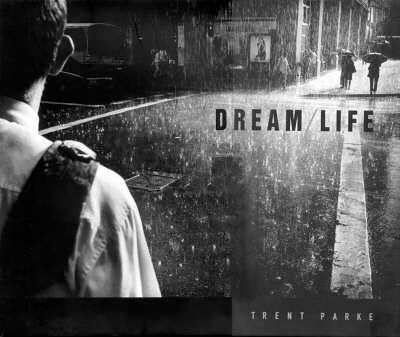
Martin Parr and Gerry Badger say that Parke's first book Dream/Life is "as dynamic a set of street pictures as has been seen outside the United States or Japan".

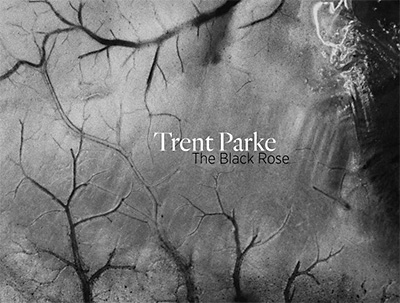
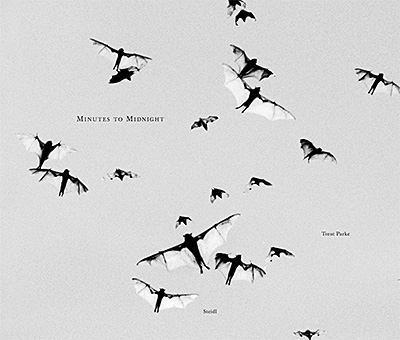
In 2003 he and his wife, the photographer Narelle Autio, made a 90,000 km trip around Australia, resulting in Parke's books Minutes to Midnight and The Black Rose.

Parke became a member of the In-Public street photography collective in 2001. He became a Magnum Photos nominee in 2002 and a member in 2007; the first Australian invited to join.

Source: Wikipedia


Trent Parke, the first Australian to become a Full Member of the renowned Magnum Photo Agency, is considered one of the most innovative and challenging photographers of his generation. Moving beyond traditional documentary photography, Parke’s work sits between fiction and reality, offering an emotional and psychological portrait of family life and Australia that is poetic and often darkly humorous.

In 2015, solo exhibition The Black Rose, premiered at the Art Gallery of South Australia. Featuring photographs, lightboxes, video, written texts, and books, the exhibition lead viewers through a vast, visual narrative that explored the meaning and transience of life from both personal and universal perspectives. Parke has received numerous awards and accolades. He was a Finalist, with collaborator Narelle Autio, in the 2016 Basil Sellars Art Prize and was Winner of the 2014 Photography Prudential Eye Award. Whilst working as a press photojournalist he won five Gold Lenses from the International Olympic Committee, and multiple World Press Photo Awards in 1999, 2000, and 2005. In 2003 he was awarded the prestigious W. Eugene Smith Grant in Humanistic Photography. Parke’s work has featured in exhibitions and art fairs across the globe and is held in major institutional collections, including the National Gallery of Australia, Museum of Contemporary Art, National Gallery of Victoria, Art Gallery of New South Wales, Art Gallery of South Australia, Artbank, Magnum London and Magnum Paris. In 2014, Steidl released two hardback monographs of Parke’s work, Minutes to Midnight and The Christmas Tree Bucket. The self-published book, Dream/Life, a collaboration with Narelle Autio, was awarded second place in the American Picture of the Year Award for Photography Books in 2000.

Source: Stills Gallery



Trent Parke's Video

Selected Books

Inspiring Portfolios

Call for Entries
AAP Magazine #58 B&W
Publish your work in our printed magazine and win $1,000 cash prizes
 
Stay up-to-date  with call for entries, deadlines and other news about exhibitions, galleries, publications, & special events.

More Great Photographers To Discover

Urszula Tarasiewicz
Urszula Tarasiewicz, Photographer, organizer of events and photo exhibitions. Studied at the National Film School in Łódź, Poland. I produce pictures with a medium format Hasselblad, which for me retains a particular sort of magic. The quality, the way light works on film, always elevates my interest when I decide to shoot a particular subject. The 'truth in photography' is a continuous debate. But that idea has always fascinated me. I observe the space around me, searching for a contrast between people and their environments. At times I allow the subject to play different roles or use simple props to alter the mood in the picture. There are many stories you can choose from when you observe the picture. I like the viewer to question its authenticity. For me, it's the interpretation that creates the magic. - Urszula Tarasiewicz Her photographs are the effect of acute observation of her surroundings and the ability to notice intriguing details and phenomena which are sometimes absurd and marginal, sometimes sentimental reminiscences of the People's Republic of Poland and the birth of the capitalism in Poland. Marcin Krasny The artist's eye focuses on the margins of reality, the kitsch and grotesque public space. Simple, plain and ascetic compositions, or quite the opposite - full of details, colorful - frames of Urszula Tarasiewicz's works depict the world as a place which is not as much absurd as it is pleasant and charming- Anna Czaban - Art Historian Urszula Tarasiewicz /b. 1975/ studied Photography at the Leon Schiller National Higher School of Film, Television and Theatre in Łódź, Poland. The works from the series New Urban Legends which are on display at the andel's Hotel in Łódź /curator Lucyna Sosnowska/ have won the portrait category at the 2010 Curator's Contest of the Photo District News Magazine, the 2012 New Talent Award of the German edition of the FotoMagazine, as well as the contest of the Norwegian photography magazine Fotografii for a place at the 17#Debutantutstilling 2012 exhibition in Oslo. The New Urban Legends series has been exhibited in, among others, the Milk Gallery NYC (2010). Other photo series by Urszula Tarasiewicz have been shown internationally: in the US at the Critical Mass exhibition (2012), the series The Future Is So Bright created in Norway during the Artist in Residence program at the Halsnøy monastery was presented at a group exhibition in Norway in 2013 and in Warsaw in 2015 at the Ja to Ktoś Inny show /curator Klima Boheńska/, at the Krinzinger Galerie in Vienna during the group exhibition Call Me on Sunday (2014, curator Ursula Maria Probst), at the Jam Factory gallery in Oxford (2014), in Stuttgart at the Face to Face show (2014), at the Bunkier Sztuki gallery in Kraków during the show Kasa z Widokiem /curator Lidia Krawczyk. Ogrodowa/Garden Street Garden Street, A project documenting flats after evictions on Garden Street. 150 families left the building. It was the first residential complex for workers in 1880 in the new industrial city of Lodz. Izrael Poznański wealthy entrepreneur (1833-1900) is regarded as being one of the icons of Łódź. His monumental factory just across Ogrodowa street along with the labourers' tenement houses, is a true city within a city. In its best years, nearly 7000 people in total worked and lived here. The moment Poznański's empire fell after World War II was the beginning of the estate's and all of its inhabitants' long agony. Its fate was concluded with the decommissioning of the Poltex company in 1991. Famuły became a no man's land, its residents left to their own devices. The project 100 Tenement houses in Łódź, thanks to which a major renovation of the Poznański's factory housing estate started in 2014 was preceded by a long process of relocating all the residents. It was during this time I began to document the empty flats. The famuły rooms stun with their ruthlessness, their coldness, with the visibly absent inhabitants. The artist guides us around the world which is already gone, lost. Looking at Tarasiewicz's photos, we're confronted with desolate rooms, dilapidated walls out of which someone ripped off electrical wiring and where time imprinted the ghosts of furniture and lost artworks.
Gregory Halpern
United States
1977
Gregory Halpern (born 1977) is an American photographer and teacher. He currently teaches at the Rochester Institute of Technology and is a nominee member of Magnum Photos. Halpern has published a number of books of his own work; Zzyzx won PhotoBook of the Year at the 2016 Paris Photo–Aperture Foundation PhotoBook Awards. He received a Guggenheim Fellowship in 2014. Halpern grew up in Buffalo, New York. He holds a BA in history and literature from Harvard University and an MFA from California College of the Arts. He has taught at California College of the Arts, Cornell University, School of the Museum of Fine Arts, Boston, Harvard University and the Harvard Graduate School of Design. He currently teaches at the Rochester Institute of Technology. Halpern is married to the American photographer, Ahndraya Parlato. Omaha Sketchbook (2009) is an artist's book portrait of the titular city. Harvard Works Because We Do (2003) is a book of photographs and text, presenting a portrait of Harvard University through the eyes of the school's service employees. A (2011) is a photographic ramble through the streets of the American Rust Belt. East of the Sun, West of the Moon is a collaboration with Halpern's wife, the photographer Ahndraya Parlato. Zzyzx (2016) contains photographs from Los Angeles. Let the Sun Beheaded Be (2020) was made over several months in the French archipelago of Guadeloupe.Source: Wikipedia Gregory Halpern is known for his intuitively rich colour photography that draws attention to harsh social realities as well as the unerring strangeness of everyday life. His work is rooted in both the real and the sublime and this approach has lead him to photograph life in post-industrial towns of the American Rust Belt, the people and places of Los Angeles and the uniquely unifying experience of a total solar eclipse. “What’s interesting to me about the world is its chaos and contradictions, the way opposites can be so beautiful in relation to each other,” says Halpern of his practice. Though Halpern says he is primarily motivated by the desire to “create” rather than “document”, his work is powerfully affecting. A study of working conditions for janitorial staff at Harvard, created while he was a student there, resulted in a successful bid for the minimum wage and was published as a book, Harvard Works Because We Do (2003). While his images of life in post-industrial towns of the American Rust Belt were published to critical acclaim in A (2011), and show resilience in the face of harsh social and economic realities. Selected clients include The New York Times Magazine, Vogue, Le Monde, Bloomberg Businessweek, Sports Illustrated and VICE.Source: Magnum Photos
Brett Foraker
United States
Brett Foraker began his career as a painter before turning to photography and filmmaking. All of his projects are imbued with a lyrical and at times surreal point of view. His early years were spent developing the lauded brand identities of channels such as TCM, Film4, and E4. He was appointed the youngest-ever Creative Director of Channel 4 (UK) where he directed the multi-award-winning C4 Idents and Faces of 4 campaigns. Since then, he has been making adverts through Ridley Scott Associates where he has directed award-winning campaigns for Toyota, Sony, British Heart Foundation, and Syfy, to name a few. Among his many accolades are awards from Cannes Lion, Creative Circle, BTAA, and the coveted Black Pencil from D&AD. He was the guiding force behind the 4Creative, and has been on Campaign's A-List as one of the world's leading creative thinkers. His work has appeared frequently in Creative Review, Boards, Shots, and was featured in Saatchi's Young Directors' Showcase in Cannes. Later he collaborated with brands such as Lexus, Puma, and Samsung+Rihanna. He lives and works in Los Angeles. As well as being an in-demand director and screenwriter, Foraker has been working on several portfolios of abstract and experimental photography. These are presented here for the first time. We asked him a few questions about his life and work. Statement I am a gestural photographer. I want to push beyond traditional image-making to incorporate abstraction and the energy of movement into my pictures. On some level I am trying to break photography or at least our previous ideas about what makes a beautiful picture. This started with experimentations in abstracting the everyday: people merging with the architecture of the city, spectral palm trees in the morning fog. It evolved into arresting the motion of common occurrences: exploding waves, rippling flags, the sculptural moment where a bridge and an onramp converge. I still felt the need to push further. I have long been intrigued by the errors that are generated by intentionally misusing our cameras and phones. By forcing these devices to act against their programming, we can replicate and even extend some of the experiments that were conducted in the early days of photography. Back then it was the use of long-exposure or even multi-exposure within individual frames that led to such accidents. Now, we can use these techniques as the building blocks for creating a kind of digital expressionism. The camera itself can record our gestures, acting as both brush and canvas, warping reality in a way that is at once controlled and randomized. I now apply these techniques to some of our oldest forms: landscapes, portraits, floral still lifes-everything is up for grabs. The fact that these images often express what it feels like to inhabit an increasingly fragmented digital world is more than a happy coincidence. It is what I was striving for all along. Exclusive Interview with Brett Foraker
Marco Guerra
Chile
1965
Marco was born in Santiago, Chile, in July 1st 1965. In September 11th of 1973, as the president of Chile was being overthrown by a military coup in the city center, he was struck by the bravery of the photojournalist in the center of it all, risking their life to tell the news story. That day he started to dream in becoming a photographer. Marco got his first photo assistant job at the age of 12, holding a portable flash to photograph Saturday Night Fever children's party, and was amazed how people became egocentric as soon as he pointed the flash in their direction. In 1979 he emigrated with his family to New York city. There he was offered a job working for a photographer who was capturing nights in Studio 54 for Andy Warhol's Interview Magazine. That allowed Marco, to start his aesthetic exploration, and to learn how media and politics shaped the world he was living in. In 1990 he became determined to be a full time artist. He did not allowed himself to do anything that was not related to photography, the history of aesthetic and how we humans interpreted visual information. He started assisting the top International photographers, artist and creative directors of the time and learned to see, analyzed and ask questions. By the mid 1990s he started getting professional assignments as an art, fashion, travel, portrait and advertising photographer for top brands and top magazines like French Vogue, Condé Nast Travel UK, Elle, Harper's Bazaar, New Yorker Magazine, New York Times, and luxury brands such as Levis, Rolex, Ralph Lauren and Bergdorf Goodman, to mention few. By 2001 he started producing, directing and shooting Art films for Ralph Lauren, Rolex and LVMH. In 2002 after meeting and being enchanted by a vision of the American/French/ Moroccan artist Yasmina Alaoui in NYC, they decided to collaborate and explored new areas in Photography, which was changing rapidly because of digital media. By mixing old and new techniques they create "1001 Dreams" series. A project of Love: large formats prints, combining photography and drawing. This work has been exhibited around the world and is part of important collections. Eventually Marco decided to stop doing commercial work and completely focus and explore contemporary art photography. In 2007 after years of soul searching for a non orientalist way to portrait Morocco, he started photographing his Tangiers series over the course of 2 years: Documenting the same street intersection taken from the top of a building, always around 4:30 am in the morning, capturing the intersection of the world of the sexes: the men running home from a long night, and the women starting the work day. This Series was part 2016 Marrakech Biennale, The Pierre Berge Cinematheque Benefit Auction in 2011 in Arle's and Scope Miami 2011 as well print reside in Important collection Internationally. In 2008 to 2012, inspired by a Weston and a paragraph of Neruda ( It is good, at certain hours of the day and night, to look closely at the world of objects at rest.) he set himself with his Rolleiflex , to photograph his “ Volume and lines” series, capturing the stillness and poetry of water cisterns in the palmeraie of Marrakech. This will take several years to shoot. A meditative project, for which he started to spend a lot of time in North Africa. In 2012, Cacerolazo project came alive. Commissioned for the 2012 Marrakech Biennale and inspired by the mood of the time, “Jasmine Revolution” and his childhood memories, marching along the women of Santiago who gathered at dusk , to bang their empty pots and pans in loud and peaceful protest in his native Chile streets. Cacerolazo is a personal examination of the strength and integrity of women and of their power to effect transformation. 10 pieces emerges, each from a mosaic of 119 moments capture with Polaroids, arrayed as tiles. In 2014 he started capturing Moroccan Landscape series, which look natural but have been transformed by humans, and photographed in contemporary neutral tones opposite of a folkloric approach to capturing Morocco. This is an on going project. Next his photography took a big dive to abstraction. Inspired by Sir, Francis Galton and his techniques of composite images, for the next 7 years he would work on composite nudes, cities, monuments and museums. He felt it was the proper choice to speak about time and space repetition. He currently working on composite photography, sculpture project and living between New York and Marrakech.
Imani McCray
United States
1992
"Born in Baltimore Maryland 1992, the probability of me being dead or negative statistic was inherited from birth. With the help of those who have come into my life, I have triumphed over those odds and wish it help others overcome their adversity. Progressive art aids social justice by using its polyrhythmic mediums to give form to the thoughts, needs, and pains of a broken society. As an advocate for social justice and artist, my goal is to use impactful images, easily accessible copy, and strategic design to engage and inspire my audience. Passion, deception, faith, and spontaneity, are constant themes throughout our world. Navigating these experiences through different mediums is my attempt to shape this reality with imagination and passion. Photography and graphic design are the mediums I nurture as a way of bringing tangibility to my imagination." Statement "2020 has presented the world with a myriad of challenges being met in succession. The events that continue to transpire are radically reshaping our societies and mindsets. People have been tasked with navigating the well-being of themselves, their livelihood, and conscious contribution to change. Our individual and collective ability to adapt is continually being pushed. With the future uncertain, we must be proactive in creating our reality. We must be the change we want to see. Be The Change is a multifaceted photo-journalistic design series highlighting some amazing people working to shape a better future through vast forms of social justice. I progress the second issue is focused on documenting the changes our society is going through from the frontline. As a minority I have marched in solidarity with others striving to defend our most basic human rights to life, to freedom, to vote, and to love in public without the threat of an oppressive society continuing to cause us harm. Protesters have occupied streets and been used in social justice movements to remind others of our humanity. January 6th was a sight that should have been relegated only to horror movies and pre-reconstruction ignorance-not 2021. What we witnessed wasn't protest-peaceful or otherwise. It was an insurrection and the manifestation and mass personification of white privilege and fragility. The mob implored the tactics of a victimhood mentality, while simultaneously showing a broad sense of entitlement. They should be held accountable for their actions and not allowed to shrink back into the shadows of ignorance and hate. For the last four years, we have watched as America's darker truths were aired for the entire world to see. We have watched white privilege documented and the murder of black bodies go without justice. America has never been the land of the free, but we have always believed we can be more. The entire world has had to adapt to the adversity of a global pandemic and overcome the fear of the unknown. The American dream is based on success through adversity. The American reality is adversity reveals character and many Americans should be ashamed of what happened on January 6 and all that led up to it. From the ones that stormed the Capitol with malicious intent to the ones that allow ignorance to go unchecked, and all the in-between-we all hold responsibility. There is always room to be better and be the change you want to see. As Amanda Gorman, National Youth Poet Laureate said at the inauguration of a new President, 'There is always light if we're brave enough to see it. There's always light if we're brave enough to be it.' I aim for my photography and Be the Change to be a path forward with both truth and light." -- Imani McCray
Peter Allert
Peter Allert co-founded Munich-based Allert&Hoess Photography in 1989, specializing in still life , technical and scientific photography. This brought him while his study of biology before, to start as self-taught photographer. After setting up its own studio in 1991 and establishing its own light, lab and print facilities, the company made its breakthrough in 1992 with a photo series for the portfolio „Joop! – women’s shoes“. Its subsequent client list is long and prestigious: Mercedes Benz, Audi, VW, BMW, Ford, Philip Morris, McDonalds, Ballantines, Wrigleys, Veltins, Wella, Miele, Bosch, Dresdner Bank, Deutsche Bahn AG, Siemens, LogiTech, MAN, Microsoft, GREENPEACE... to name a few. Today his photography actually is artistic. His works now are altogether advanced elaborations. He is working with multiple-exposures and different focus adjustments within a photograph. Additionally he highlights his subjects with spotlights (DEDO Lights) for every individual exposure in different adjustments and configurations.Source: www.peterallert.de Interview with Peter Allert All About Photo: Where did you study photography? Peter Allert: At the age of 7, I've been fascinated by photography. I got my first camera for his birthday and it went right now with this new adventure. During the whole period of schooling and youth I was obsessed with the possibilities of this medium... it was back then to my great passion. My love of nature and my subsequent study of biology, were another fertile ground for the expansion of my photographic works in new and fascinating areas. Later, I got access to advertising photography. I worked very successfully for 17 years in advertising, primarily for the automotive industry and in fashion. Ten years ago, then started my burnout, I was too other-directed and under constant pressure. Finally I lost my soul - I fell emotionally in a Coma, which never ended and I lost all my passion for photography! Only after many painful and difficult years, then a miracle, my miracle! In September 2013, I suddenly felt a new and ever expectant strength in me. She became stronger and stronger and I got my second chance! I quickly realized that I may never work externally determined with photography again - so I had a strong desire to completely new and original ways to go in photography. And so the desire as an artist within the photograph was made to work. AAP: Do you have a mentor? PA: I am self-educator and have teach me everything completely yourself. I have been doing all learned to make all analog laboratory processes such as color negative films and slide films to develop or color enlargements and edit. But also all black & white I have processes teach me ... Method as bromoil print have inspired to my digital workflow in today's time to orient myself to it. I grew up with analog photography and this has shaped me first of all. Thus, I am now very well be able to touch this analog in my image processing to achieve! AAP: How long have you been a photographer? PA: I have worked for over 20 years as a professional photographer. Before that, I financed my studies in Biology with smaller photo jobs. My first photos were nature photography, macro photography of animals and plants. After this the portrait photograph was added. AAP: What or who inspires you? PA: Edward Steichen & Robert Mapplethorpe! Both have always touched my soul in a special way!But in general I consider myself away from These kinds of inspiration! It would be too manipulative and determined by others, to allow more of it than I do this currently... AAP: How could you describe your style? PA: My style has only an analog touch, which often is derived from the early days of analog photography. I am fascinated by this authenticity that has shaped this wonderful photography. The soul of this unique works is always a great motivator for my own photography! AAP: What kind of gear do you use? Camera, lens, digital, film? PA: I'm using a Canon EOS mark II and a zoom ED 21-70 mm and a 100 mm lens for portraits. Lately I have been photographing with the camera of my Gallaxy S4 smartphones .. just for trying new. AAP: Do you spend a lot of time editing your images? For what purpose? PA: My image processing is very complex and requires a lot of time, which I'm taking. Often I need this more than a week! It is a process, similar to an adventure through your own soul. I have to feel all this, sometimes in a painful way - they are pure emotions of myself, which I will in this work with integrate into my images. There is no motivation necessary because it is the pure passion, if the appropriate moment has arrived! It's all about that moment, that when my emotions are ready and my soul opens up entirely! AAP: Favorite(s) photographer(s)? PA: Edward Steichen & Robert Mapplethorpe! AAP: What advice would you give a young photographer? PA: My main advice is: Stay always hear and feel your self-determined and soul in your work! Everything should come from your heart and your soul and feed into your work. AAP: An idea, a sentence, a project you would like to share? PA: Photography is the dierekte wire to my soul - my pictures are the direct reflection of my soul .. this my pictures tell of my feelings and my emotions. Each photo tells its own to profound story. Each image is thus a profound adventure of a portion of my own soul! This means to me that photography today! AAP: Anything else you would like to share? PA: As a little boy I dreamed of good spirits and fairies - I was intrigued by this mystical world! And so this dream accompanied my life ... When I felt my soul again in September 2013, I knew very quickly with this message deal. I was aware that puts a special soul in some, few people! And this I felt ever again. So this new photography had to include this topic. "Ghosts & Fays" and "Souls"!
Piotr Zbierski
Piotr Zbierski studied photography at National Film School. Author of three individual exhibitions (White Elephants, Here, Love has to be reinvented), a participant in collective exhibitions and publications including Photokina and Lab East. He presented his works in many countries like Poland, Germany, Portugal, Russia, Slovakia. As well as magazines (Shots Magazine, Ninja Mag, Archivo Zine, Die Nacht, Gup Magazine). In 2012 he won the prestigious prize for young photographer Leica Oscar Barnack Newcomer Award. His work was nominated to Deutsche Börse Photography Prize and has been shortlisted in many other prizes (Les Nuits Photographiques 2012, Terry O’Neill Award) for his series Pass by me. His works has been shown at Rencontres Internationales de la Photographie in Arles 2012 and are in collection of Kiyosato Museum of Photographic Arts. He lives and works in Lodz. About Love has to be reinvented "The series 'Love has to be reinvented' began in 2012 and its starting point was not an image but my personal experience, which changed my view and redefined my opinion on many issues. At the same time, it is neither my diary nor any personal document; recently such a name is given to whatever cannot be named. Titles of my series are just mottos for my creative works at their particular stages. Words are created by letters in the alphabet, which is a matter of convention depending on the culture. I build my series out of emotions, which are a biological fact, they are unquestionable. The key objective I identify for myself is the availability of a feeling. I really want the person looking at my photographs to experience something more and not just say whether photographs are good or bad. Photography does not begin with an image, it does not end with an image, either; I put on authenticity, and not on originality. An image is a form of communication of a higher art form, which is life itself. I took the title from the French poet, Artur Rimbaud, who wrote these words and expressed criticism of France and times he lived in about a hundred years ago. I returned to these words because I think the world has not changed so much, and I criticize a contemporary world, which has gone in the wrong direction, in my opinion. And I do not mean people but structures built around the castle, which the book hero has never reached. A major objective of my work is to get through to the essence of human emotions, to their purest form with no additions, no gadgets. To show a man in the way he has been created, a man from a primeval village. In a contemporary world, such an image may be created using a certain type of imagination because we are very far away from such a status quo; therefore, my work is reality-based but it is not the reality itself. It is an attempt to invoke and depict certain human impulses with full acceptance of their inherent contradictions. Like love: it is as full of adoration as hatred; a day could not exist without a night. I will finish this three-year series in spring 2015 during the total solar eclipse, which can be observed in Iceland. It is a characteristic clamp for my creative work in which I start from a personal, private and single experience at the very beginning, and come through an image to a part, which is common for us all, and independent of me. A macro-scale has its reflection in a micro scale while a normal scale, in which we live in, is its pulsating reflection. To follow theories of contemporary scientists, only a ballet dancer may be smaller, and on a macro-scale - a multiple universe. Life is a film directed by the universe while the world is the largest accumulation of sensually available metaphors, a secret in secret or a metaphor in a metaphor. Rimbaud has also written that eternity is skies mixed with water; quite right: black and white, grey on grey; in a child's drawing huge blue and objectively sacred transparency. In my opinion, there is one reality and infinitely many visions. To sum it up as simple as I can: if the world is a tree growing more and more branches (metaphors), then life is the fruit. While love is the juice of various tastes in the same way as the resin is what a tree uses for weeping. All this happens in the surroundings of eternal gases where toxic ones come away leaving space to healthy ones. Rootstocks and roots grow expanding in the same way. Who are people then?Undoubtedly, they are savages from a primeval village who have learned what a real taste of love is: they adored each other at the expense of "god's" hatred, they are Adam and Eve. It is only owing to such a full image of love that new generations could come into existence. I also invite to see the video work titled "Lodz", in which I develop motifs I have earlier discussed. Another continuing video is in progress. The bottomless source is RGB without DNA." - Piotr Zbierski
Advertisement
AAP Magazine #58 B&W
Win a Solo Exhibition in June
AAP Magazine #58 B&W

Latest Interviews

Exclusive Interview with Carolyn Moore
American photographer Carolyn Moore explores the inner landscape of emotion, memory, and personal transformation through a deeply intuitive photographic practice. Her work unfolds as a quiet dialogue between artist and viewer, where images become a space for reflection, vulnerability, and connection.
Exclusive Interview with Luca Desienna and Laura Estelle Barmwoldt
For over seven years, Of Lilies and Remains has explored the depths of the goth and darkwave underground, unfolding in Leipzig—a city long associated with a vibrant and enduring subcultural scene. Moving between iconic gatherings such as Wave-Gotik-Treffen and more intimate moments on the fringes, the project offers a rare and immersive glimpse into a world often misunderstood, yet rich in expression and community. Created by Luca in collaboration with Laura Estelle Barmwoldt, the work embraces a cinematic and deeply personal approach. Rather than documenting from a distance, it moves within the scene itself, capturing its atmosphere, its codes, and its quiet contradictions. The title Of Lilies and Remains hints at this duality—where beauty and darkness, fragility and strength coexist. As the book prepares for its release, we spoke with both artists about the origins of the project, their process, and what it means to document a subculture that continues to evolve while remaining true to its spirit.
Exclusive Interview with Matthew Finley
American photographer Matthew Finley turns inward, using photography as a way to explore identity, memory, and emotional truth. Based in Los Angeles, his practice moves between performance, gesture, and found imagery, creating a visual language that is both intimate and deeply personal
Exclusive Interview with Jan Janssen
Dutch photographer Jan Janssen explores universal human experiences through his long-term project It Matters, winner of the May 2025 Solo Exhibition. Begun in 2016, the series captures intimate moments of everyday life—love, loss, connection, and belonging—across Central and Eastern Europe. Working in countries such as Turkey, Azerbaijan, and Armenia, Janssen spends extended time within communities, building relationships based on trust and respect. His approach allows him to move beyond observation, revealing deeply human and authentic moments. Rooted in travel and personal discovery, It Matters reflects Janssen’s search for what connects us all in an increasingly divided world. The project is ongoing and will culminate in a photobook scheduled for publication in 2026.
Exclusive Interview with Henk Kosche
German photographer Henk Kosche turns his lens toward the streets of Halle an der Saale, capturing everyday life in the late years of the former German Democratic Republic. At the time, Kosche was studying design and exploring the city with his camera, drawn to the atmosphere of its industrial landscape and the quiet rhythms of daily life. His series Street Photography at the End of the 80s, selected as the Solo Exhibition for July 2025, revisits a body of work created just before a period of profound change. Rediscovered decades later in a small box of 35mm negatives, these photographs offer glimpses of a city and its people at a moment suspended between the familiar and the unknown.
Exclusive Interview with Anastasia Samoylova
Anastasia Samoylova is an American artist whose photographic practice is shaped by close observation and a deep attentiveness to place. Working between documentary and formal exploration, she photographs landscapes, architecture, and everyday scenes with a sensitivity to light, structure, and atmosphere. Since relocating to Miami in 2016, her work has increasingly focused on how environments—both natural and built—carry social, cultural, and emotional traces. We asked her a few questions about her practice and her way of seeing, to better understand the thoughts and experiences that shape her work—while allowing the images themselves to remain open and speak in their own time.
Exclusive Interview with Marijn Fidder
Marijn Fidder is a Dutch documentary photographer whose work powerfully engages with current affairs and contemporary social issues. Driven by a deep sense of social justice, she uses photography to speak on behalf of the voiceless and to advocate for the rights of those who are most vulnerable. Her images have been widely published in major international outlets including National Geographic, CNN Style, NRC Handelsblad, Volkskrant, GUP New Talent, and ZEIT Magazin. Her long-term commitment to disability rights—particularly through years of work in Uganda—culminated in her acclaimed project Inclusive Nation, which earned her the title of Photographer of the Year 2025 at the All About Photo Awards. She is also the recipient of multiple prestigious honors, including awards from World Press Photo and the Global Peace Photo Award. We asked her a few questions about her life and work.
Exclusive Interview with Josh S. Rose
Josh S. Rose is a multidisciplinary artist working across photography, film, and writing. His practice bridges visual and performing arts, with a strong focus on movement, emotion, and the expressive potential of the image. Known for his long-standing collaborations with leading dance companies and performers, Rose brings together authenticity and precise composition—a balance he describes as “technical romanticism.” His work has been commissioned and exhibited internationally, appearing in outlets such as Vogue, at the Super Bowl, in film festivals, and most recently as a large-scale installation for Lincoln Center for the Performing Arts. A sought-after collaborator, he has worked with major artists, cultural institutions, and brands, following a previous career as Chief Creative Officer at Interpublic Group and the founder of Humans Are Social. We asked him a few questions about his life and work.
Interview with Maureen Ruddy Burkhart
Photographer Maureen Ruddy Burkhart brings a quietly attentive and deeply human sensibility to her exploration of the world through images. Shaped by a life immersed in photography, film, and visual storytelling, her work is guided by intuition, observation, and an enduring interest in the emotional undercurrents of everyday life. With a practice rooted in both fine art traditions and documentary awareness, she approaches her subjects with sensitivity, allowing subtle moments to emerge naturally rather than be imposed. Her series Til Death, selected as the Solo Exhibition for February 2025, reflects this long-standing commitment to photography as a space for reflection rather than spectacle. Drawn to moments that exist just outside the expected frame, Burkhart’s images suggest narratives without resolving them, leaving room for ambiguity, humor, and quiet connection. We asked her a few questions about her life and work.
Call for Entries
Win A Solo Exhibition in June
Get International Exposure and Connect with Industry Insiders