All about photo.com: photo contests, photography exhibitions, galleries, photographers, books, schools and venues.
Win a Solo Exhibition in June 2026 + An Exclusive Interview!
Aziza Chinibekova
Aziza Chinibekova
Aziza Chinibekova

Aziza Chinibekova

Country: Russia
Birth: 2002

Interest in street photography emerged during the years of study at the National Institute of Arts and Design, Named After Kamoliddin Behzod. Photography became an instrument of research into the everyday life phenomenon. Later on, this interest developed into a conscious art practice, which main focus was on studying the liminal conditions of the urban environment that appear in the intersections of space, time, and human presence.

In her practice, Chinibekova often refers to the Impressionist and Fauvism heritage. Their methods became her source of inspiration in how to work with color and the aesthetics of catching the “proper” moment. That led her to choose photography as the main medium in her art practice, because it gave her the possibility to work in the spheres that are interesting for her: urban landscape and street photography.

Chinibekova researches the relationship between people and the city environment in her images. She is interested in the possibility to catch “the perfect” moment that would be similar to Barthes’ punctum, which often appears in the gap between movement and pause.

The city environment appears to be the perfect space for her method. The variety of locations and characters in any metropolis allow her to unpack the local context as well as research the location from the point of view of a silent spectator. This method makes it possible for her to work with photography as an open form of art – each image is a space of free interpretation for the viewers.

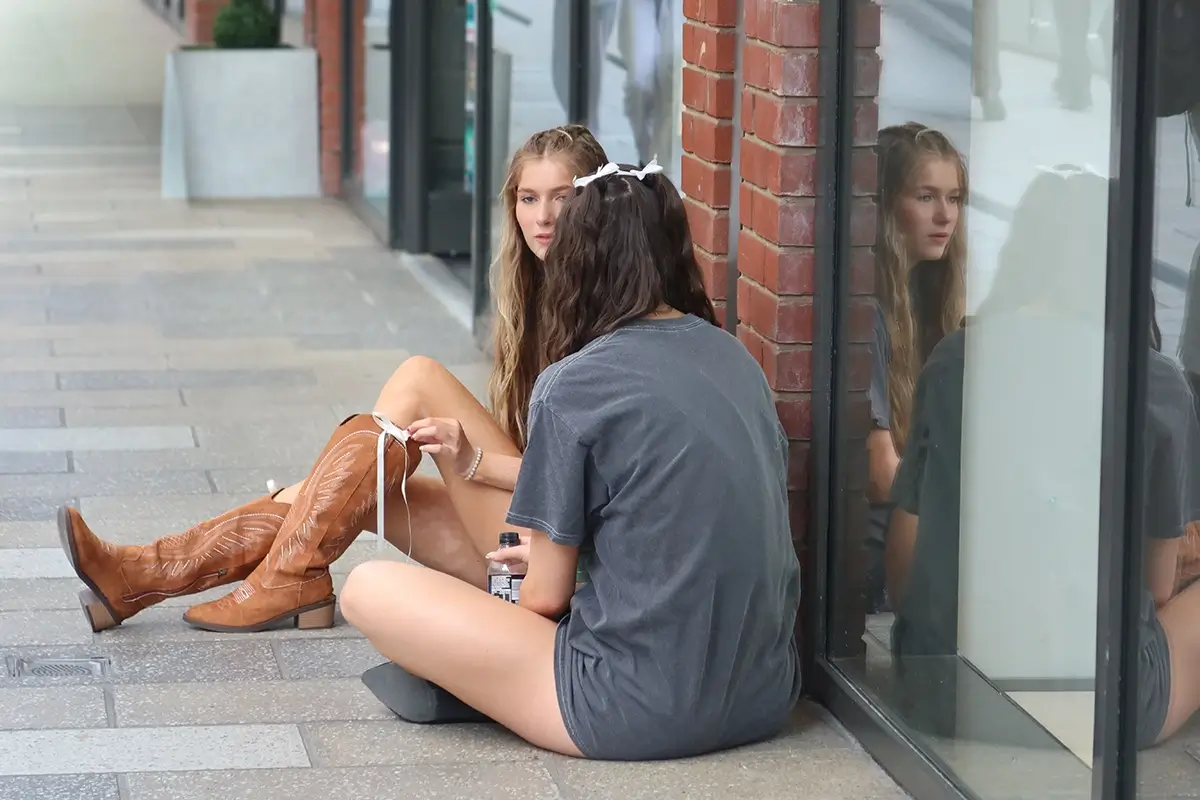
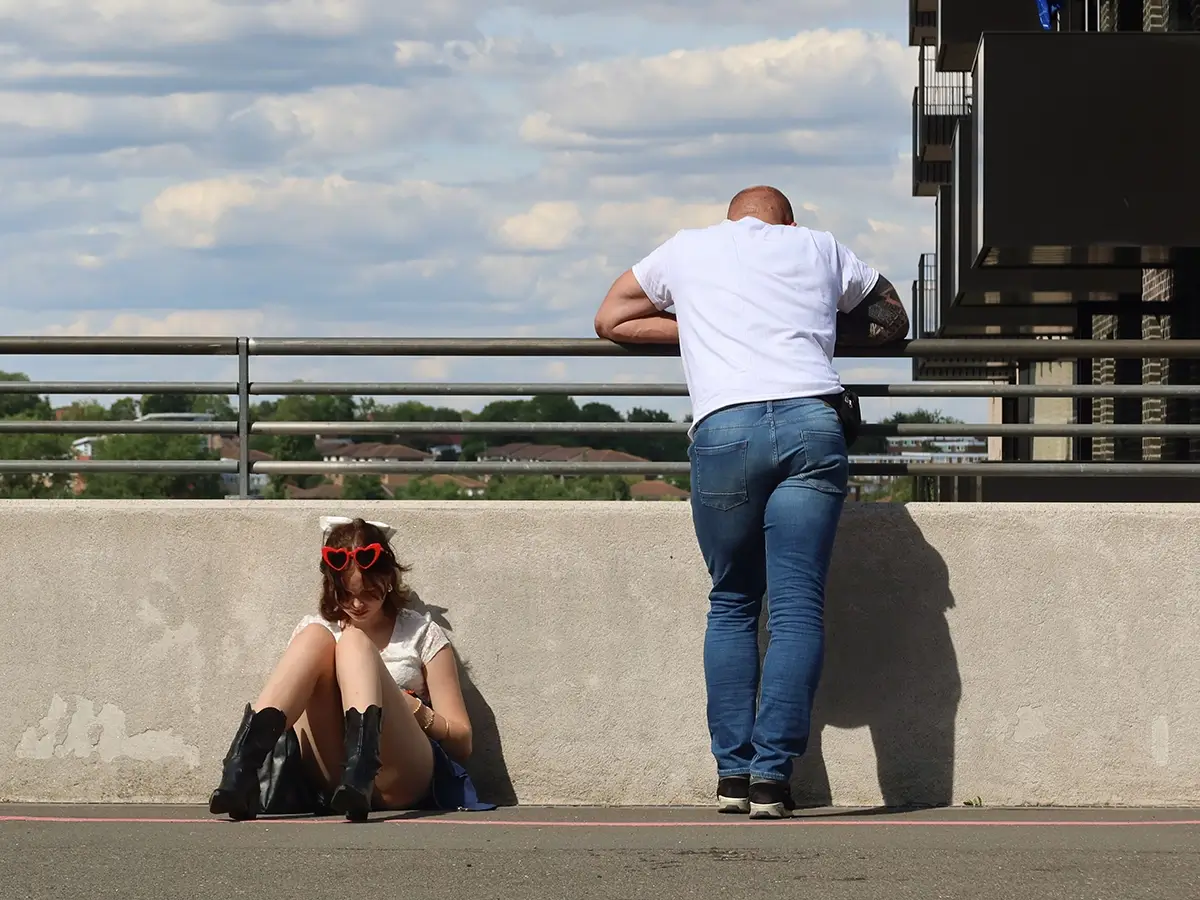
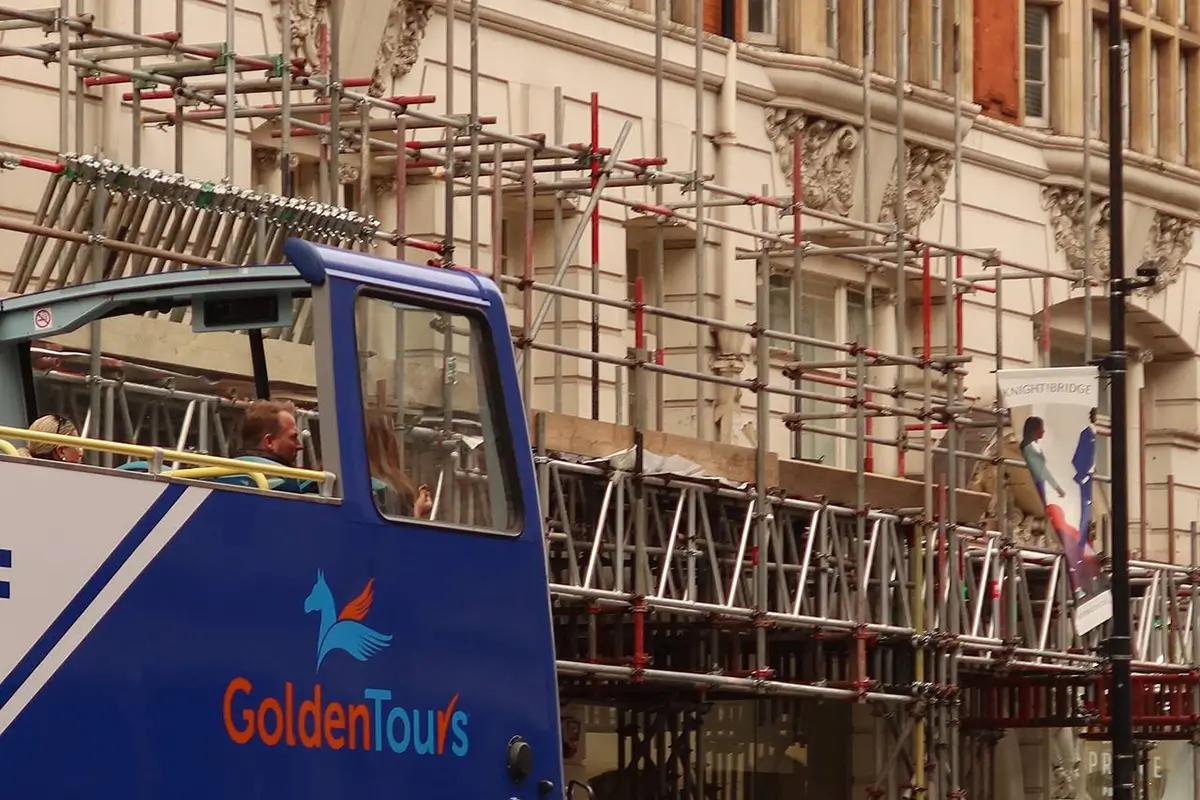
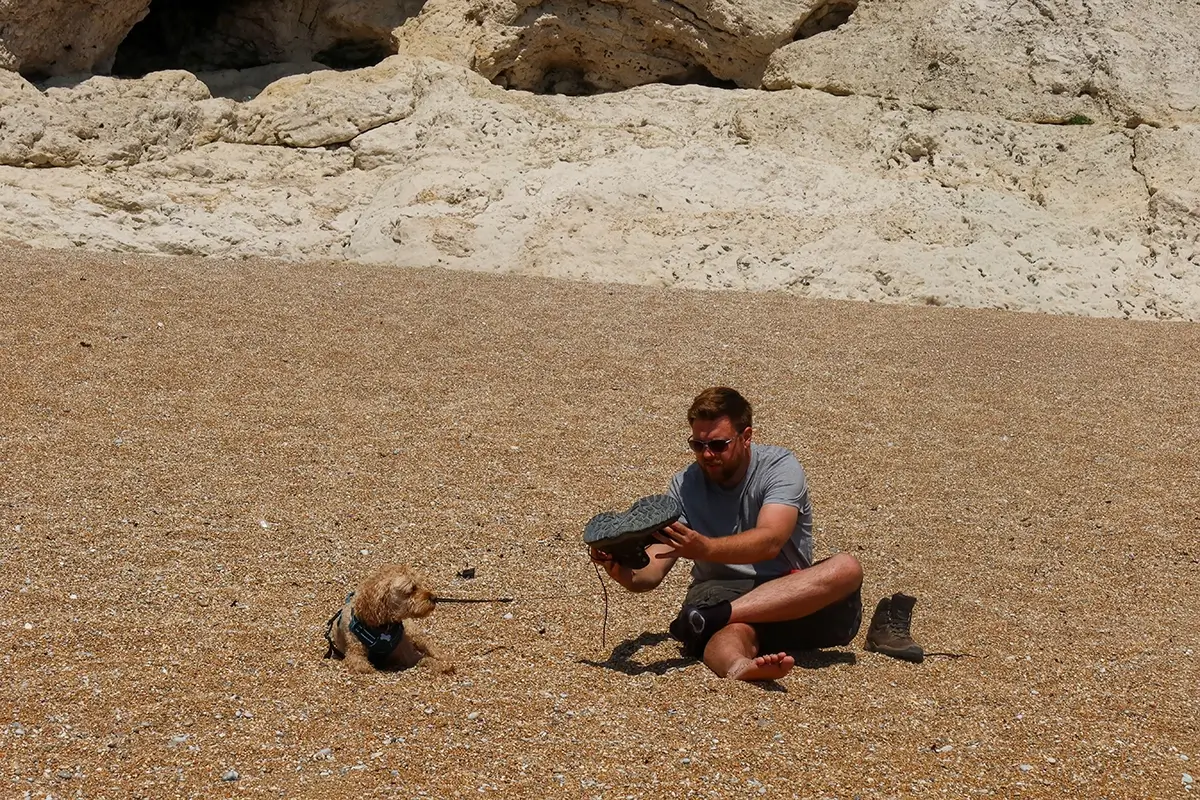
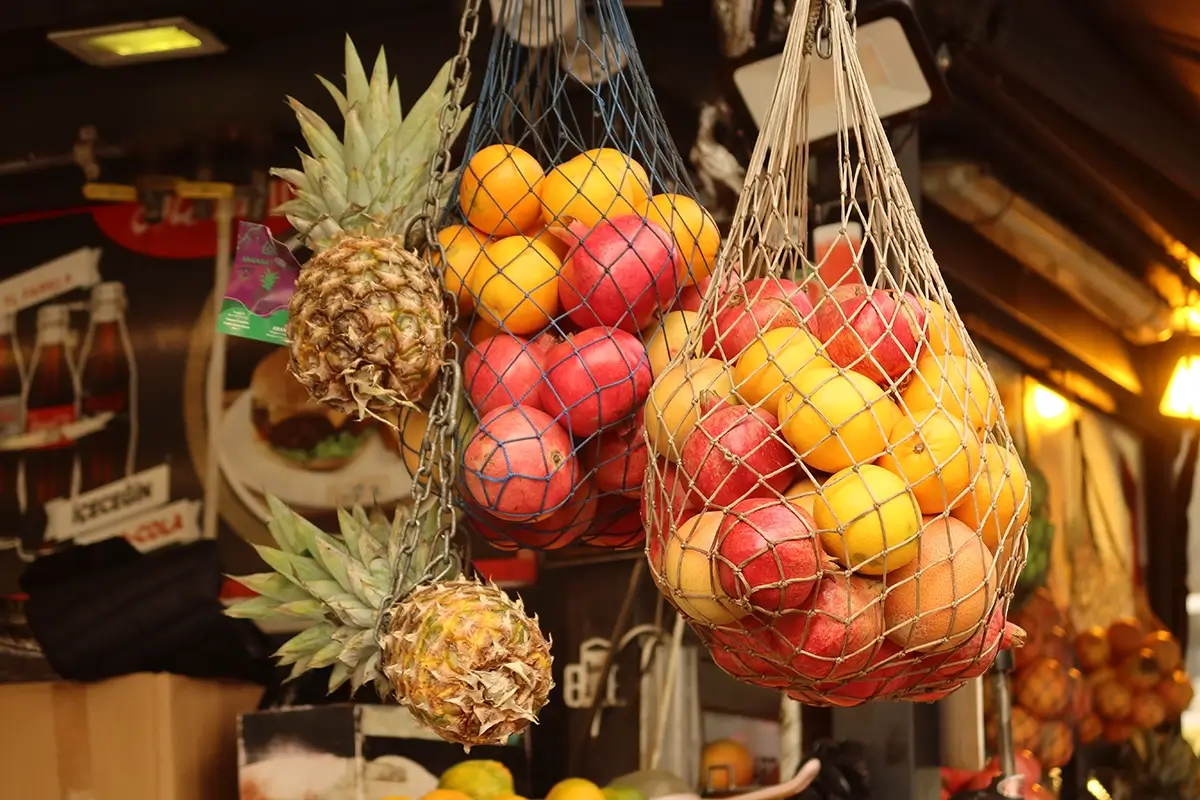
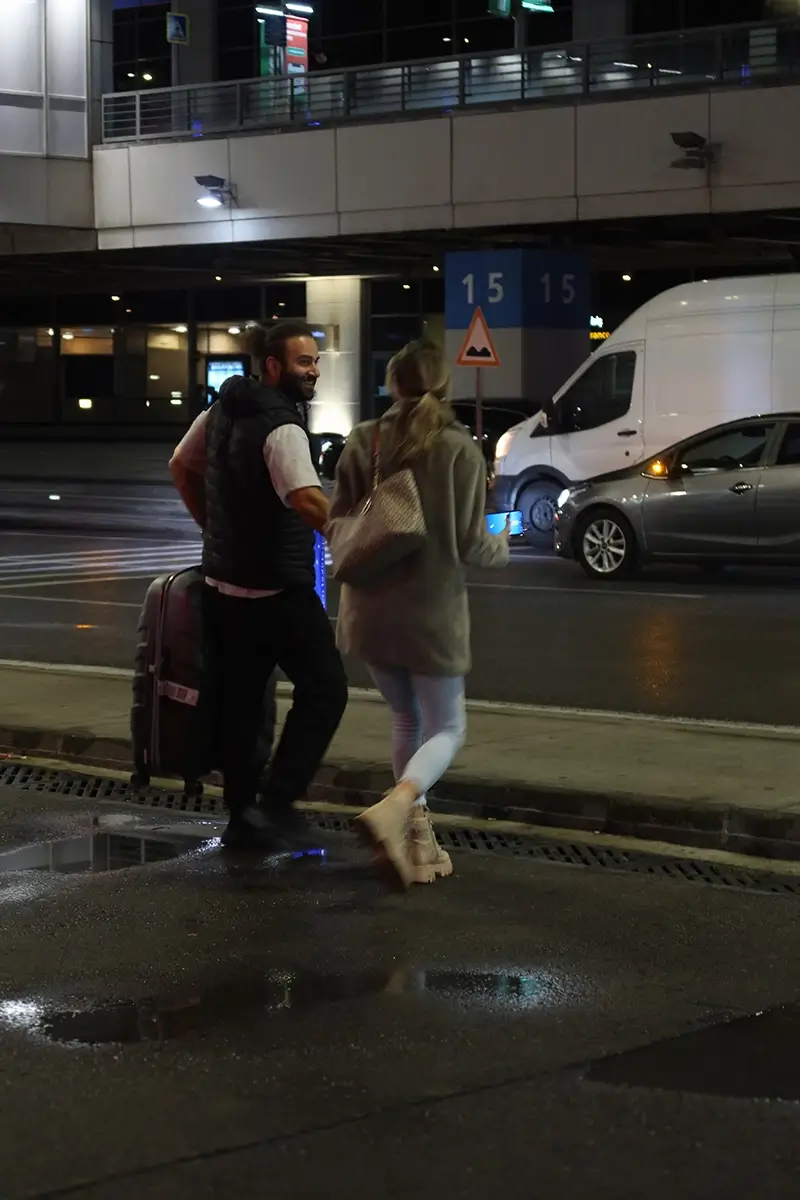
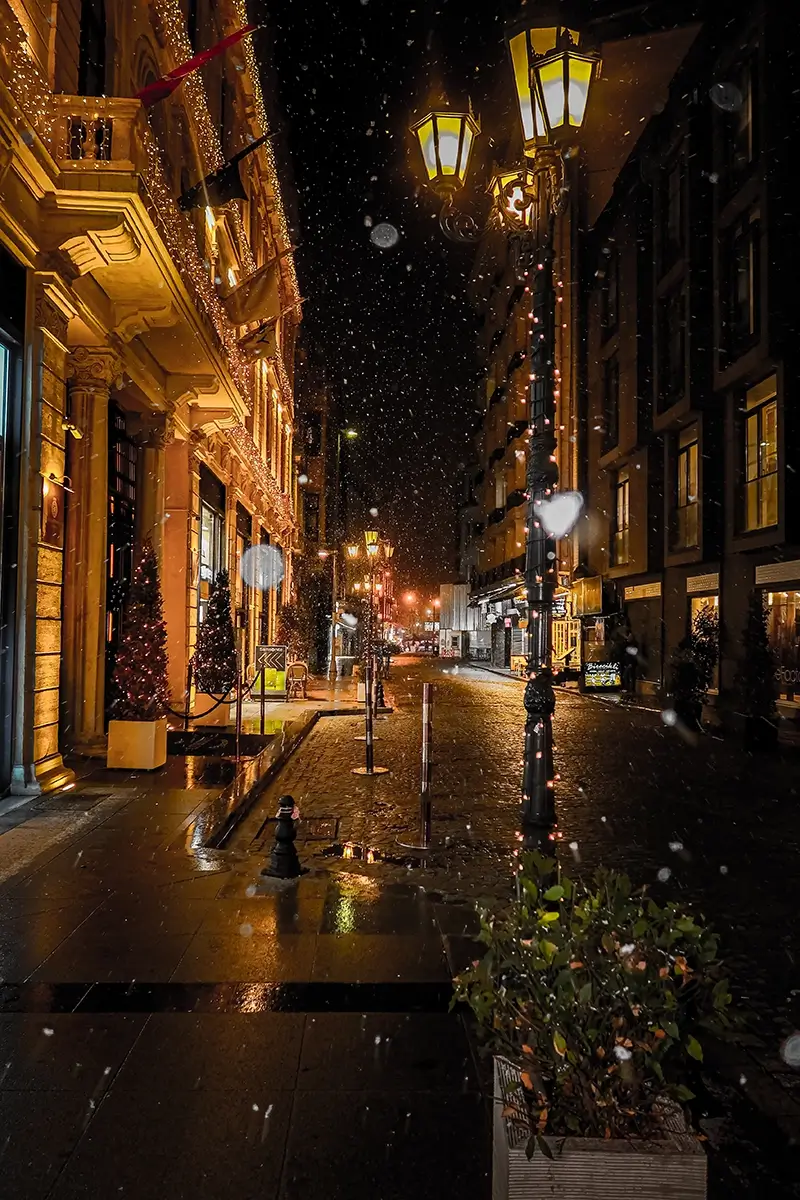
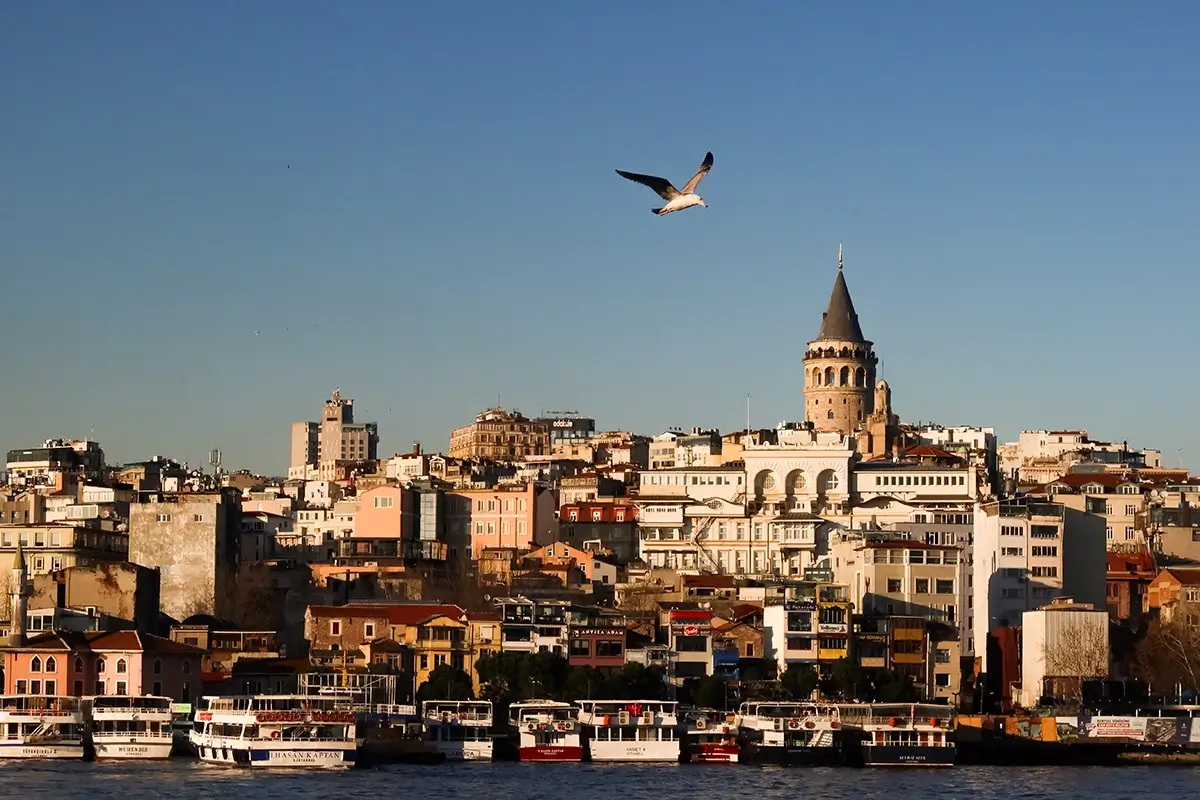
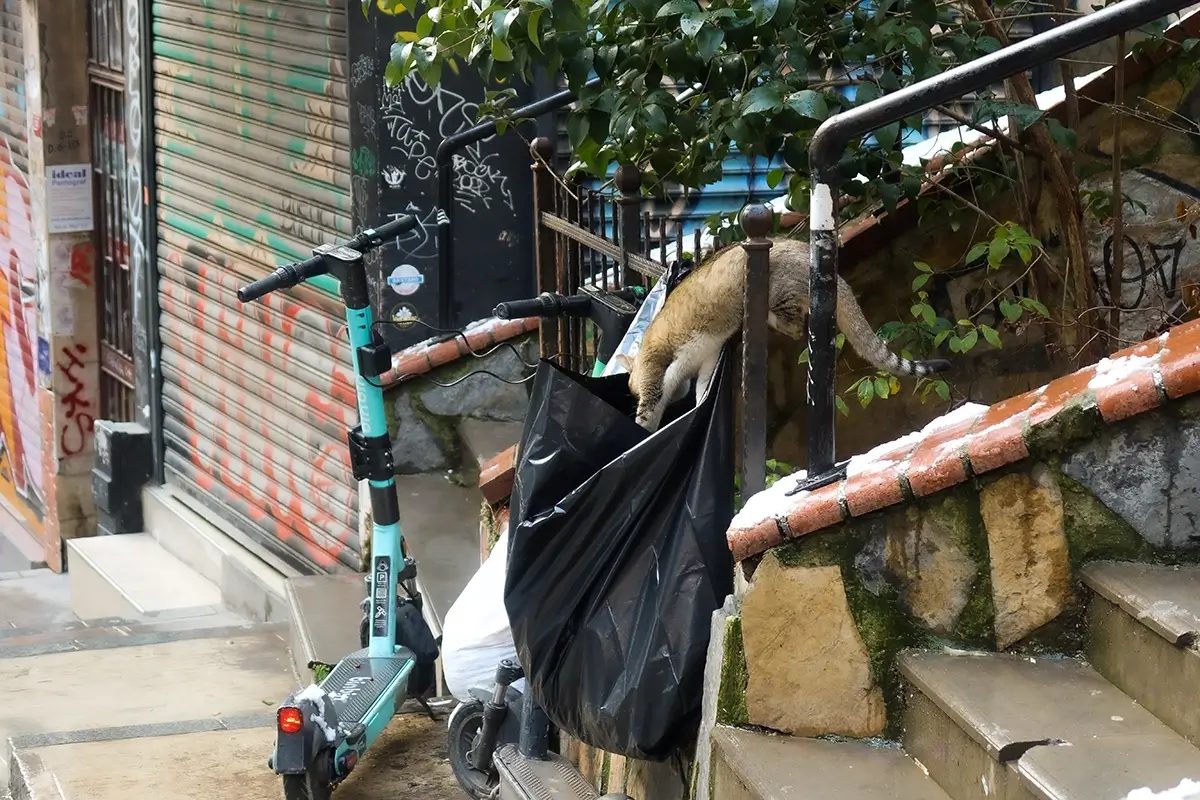
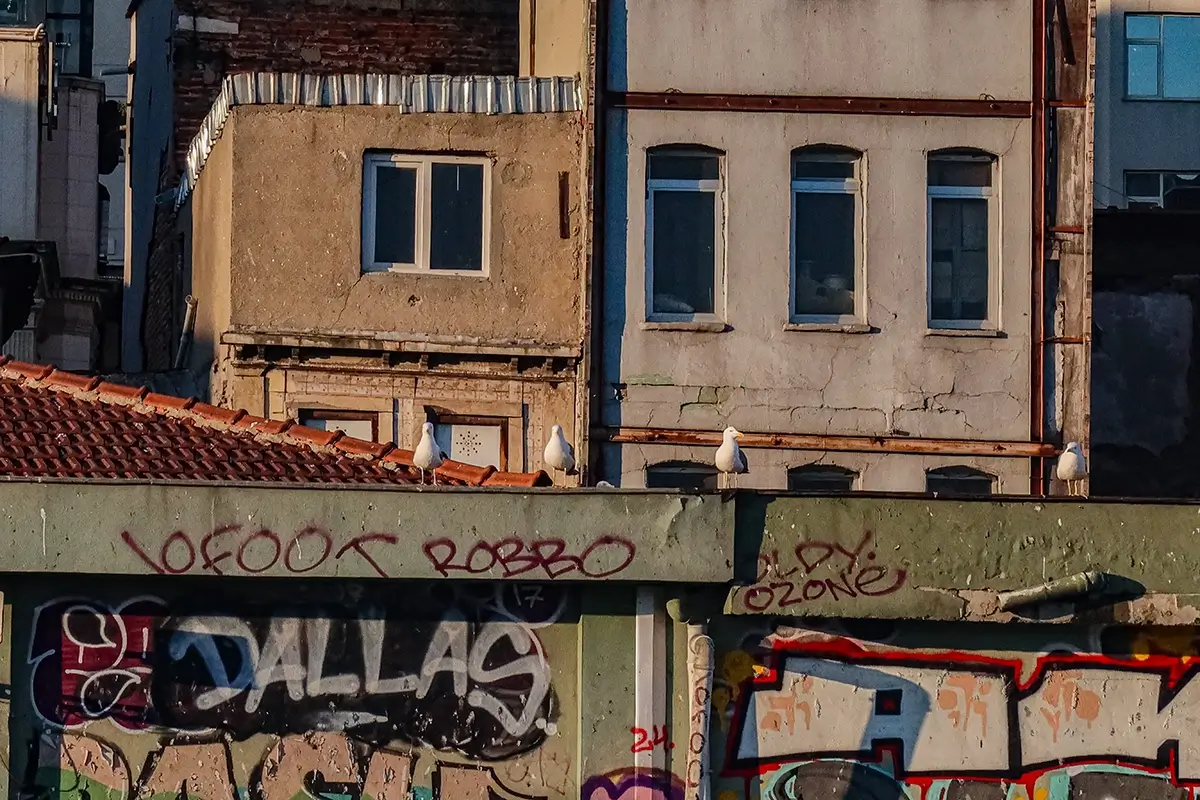
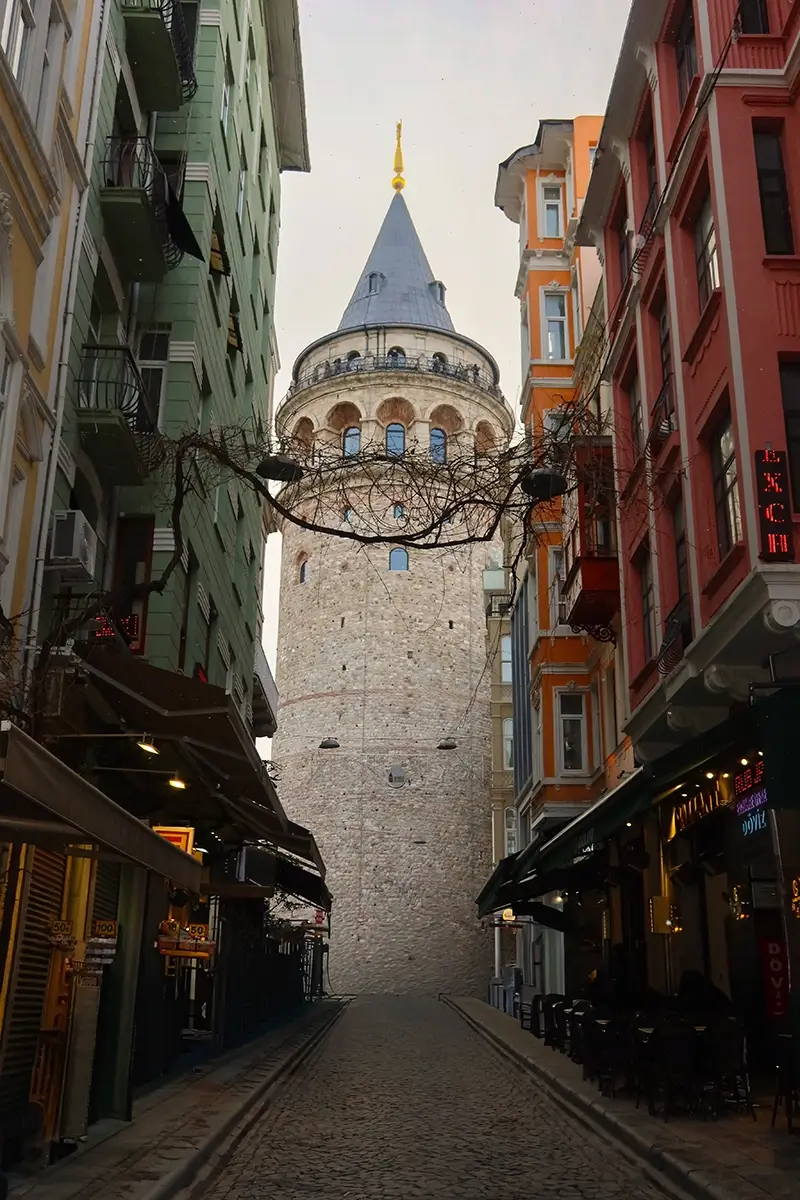
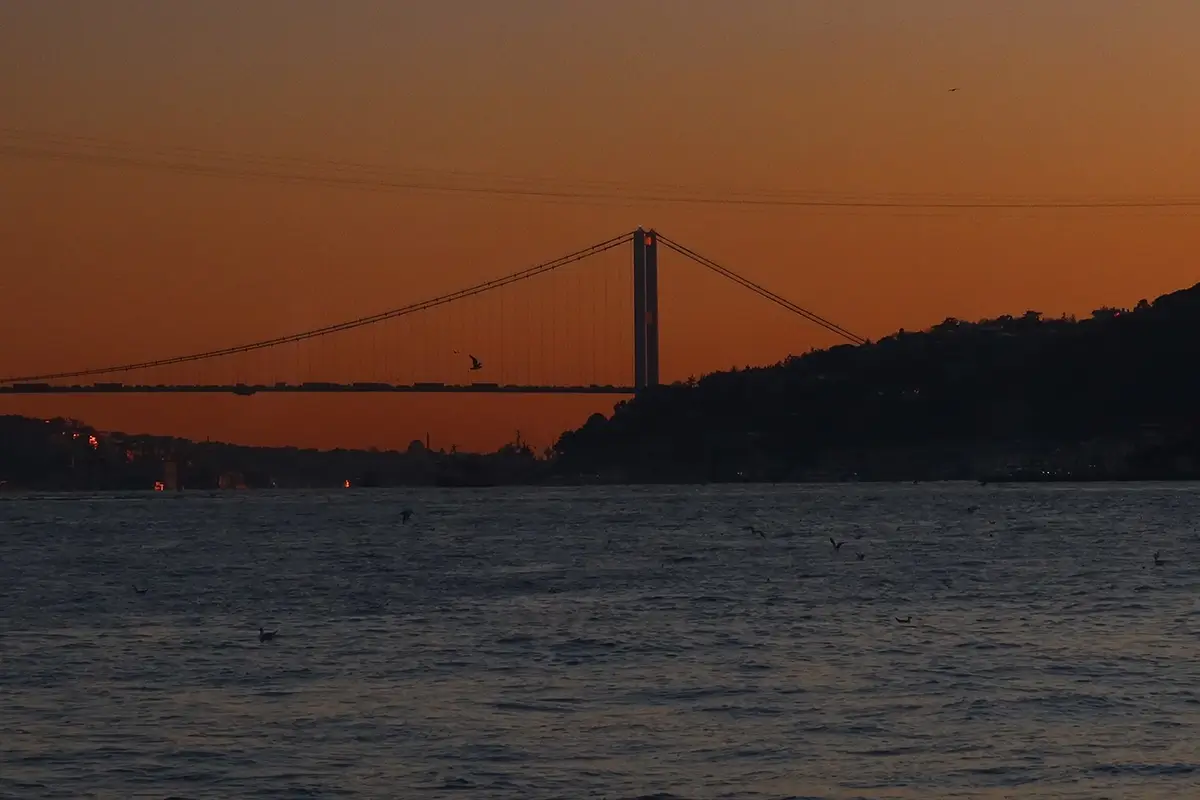
Pause series
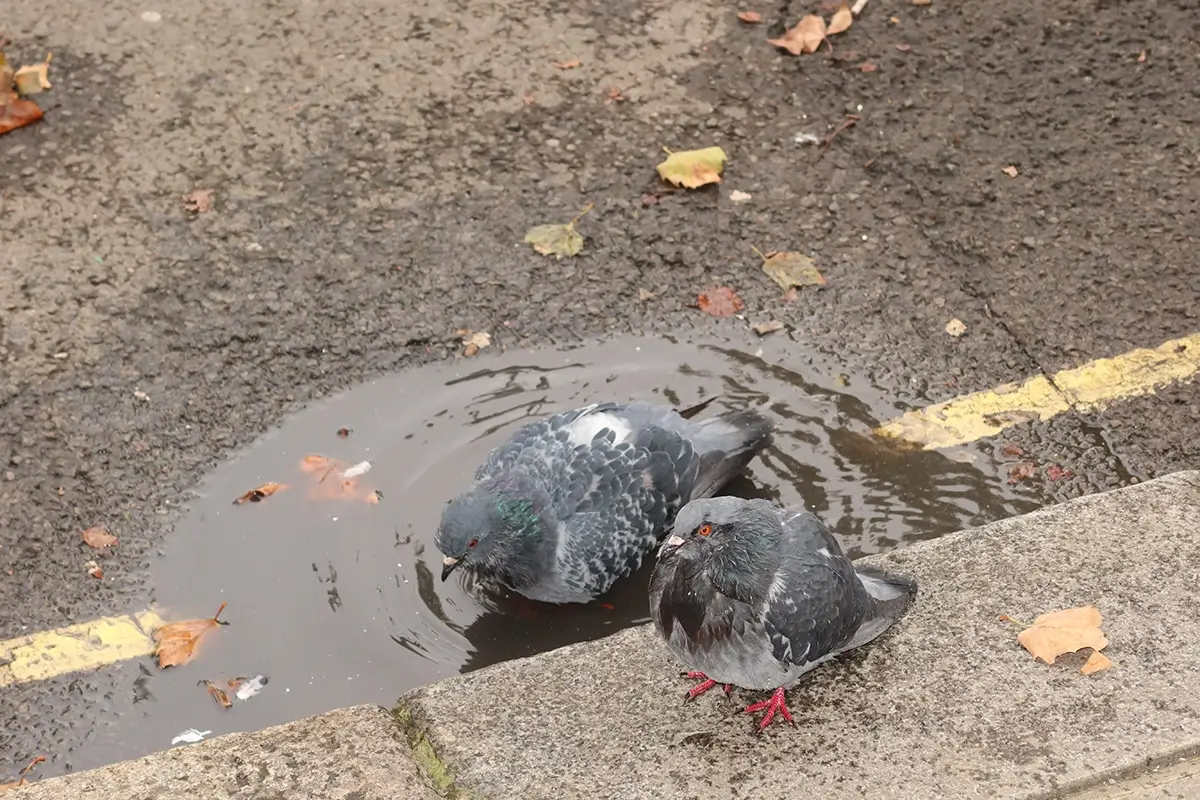
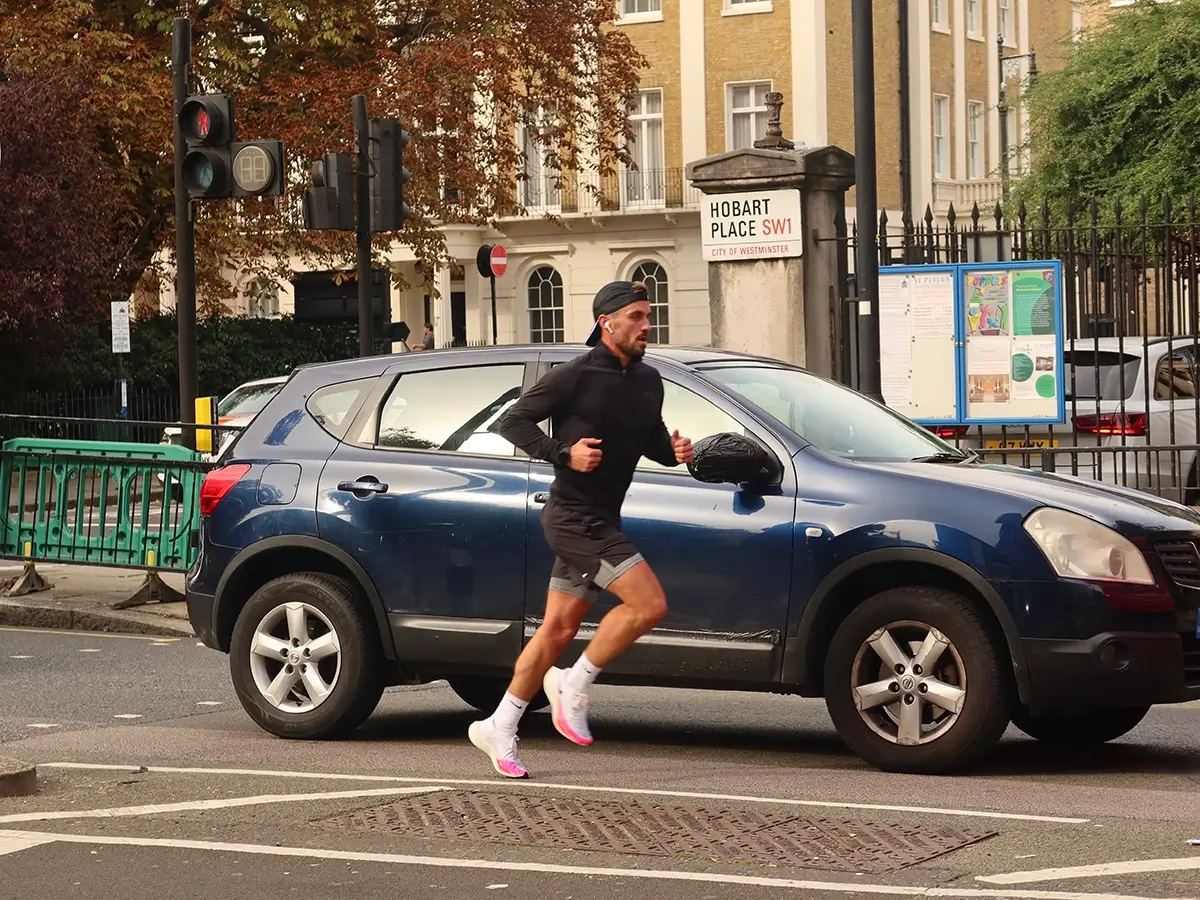
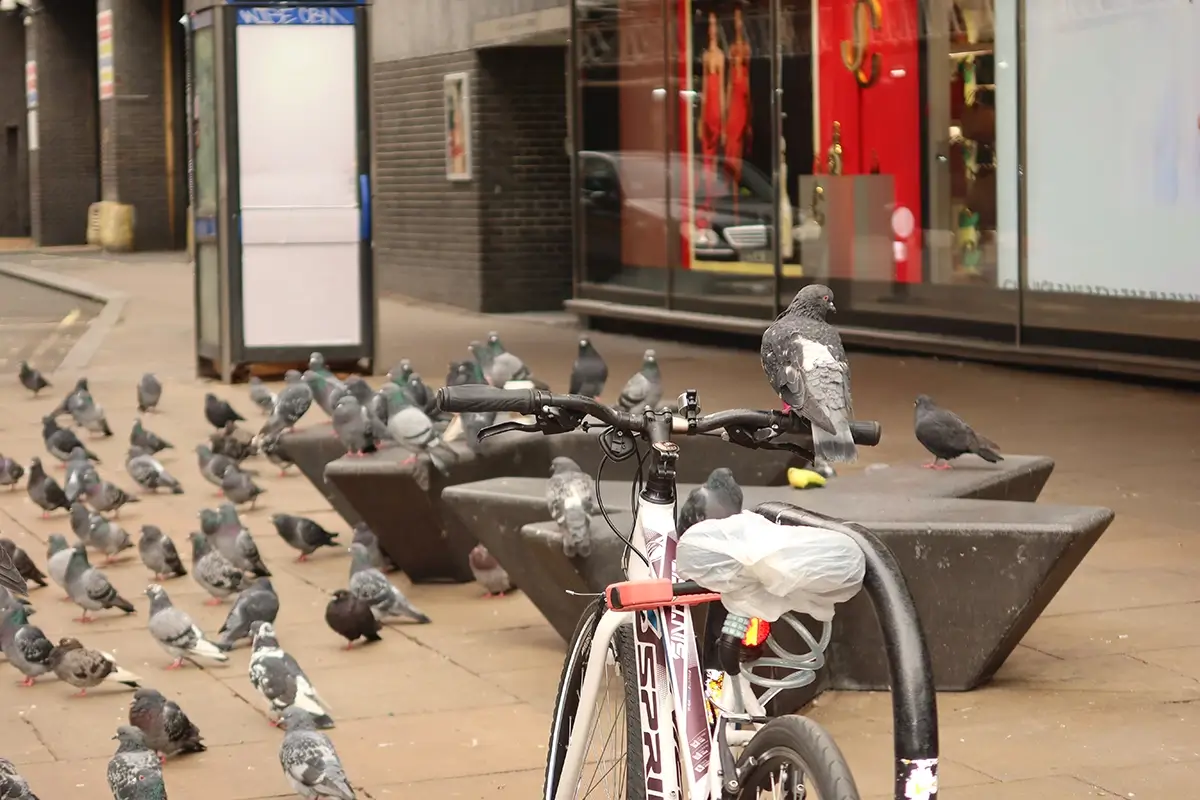
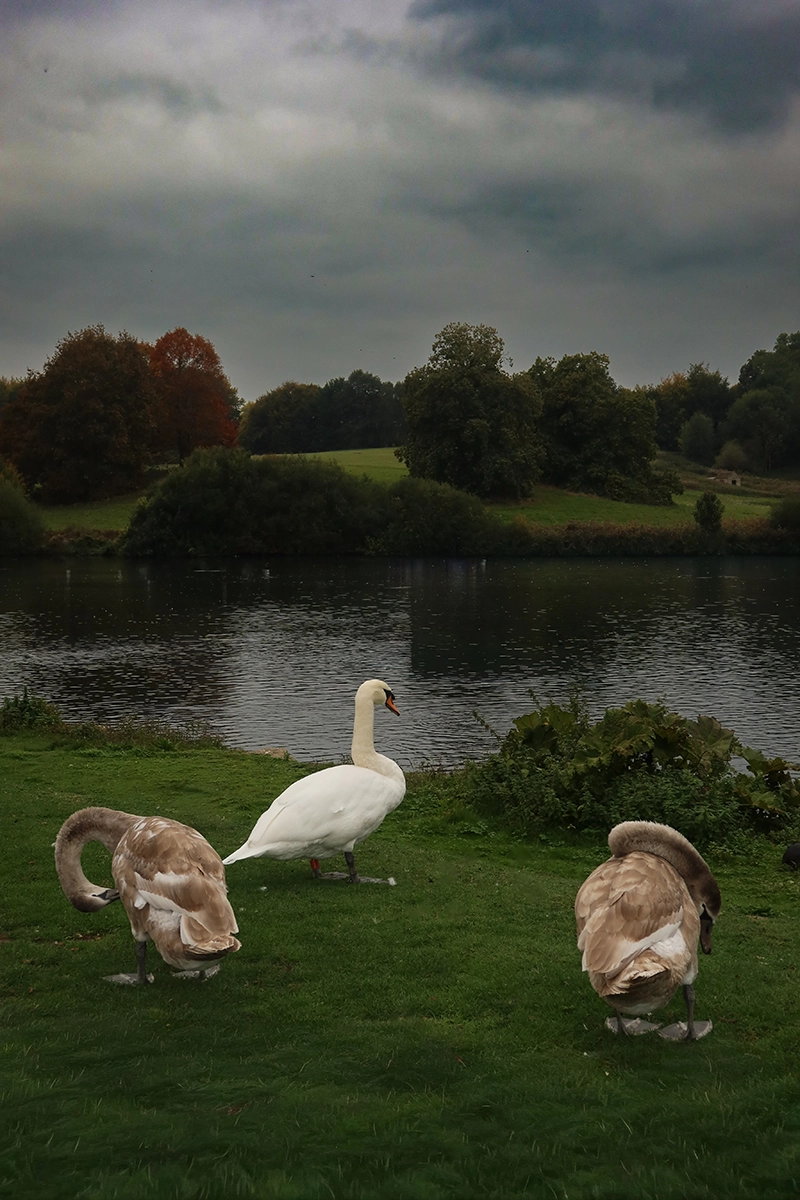
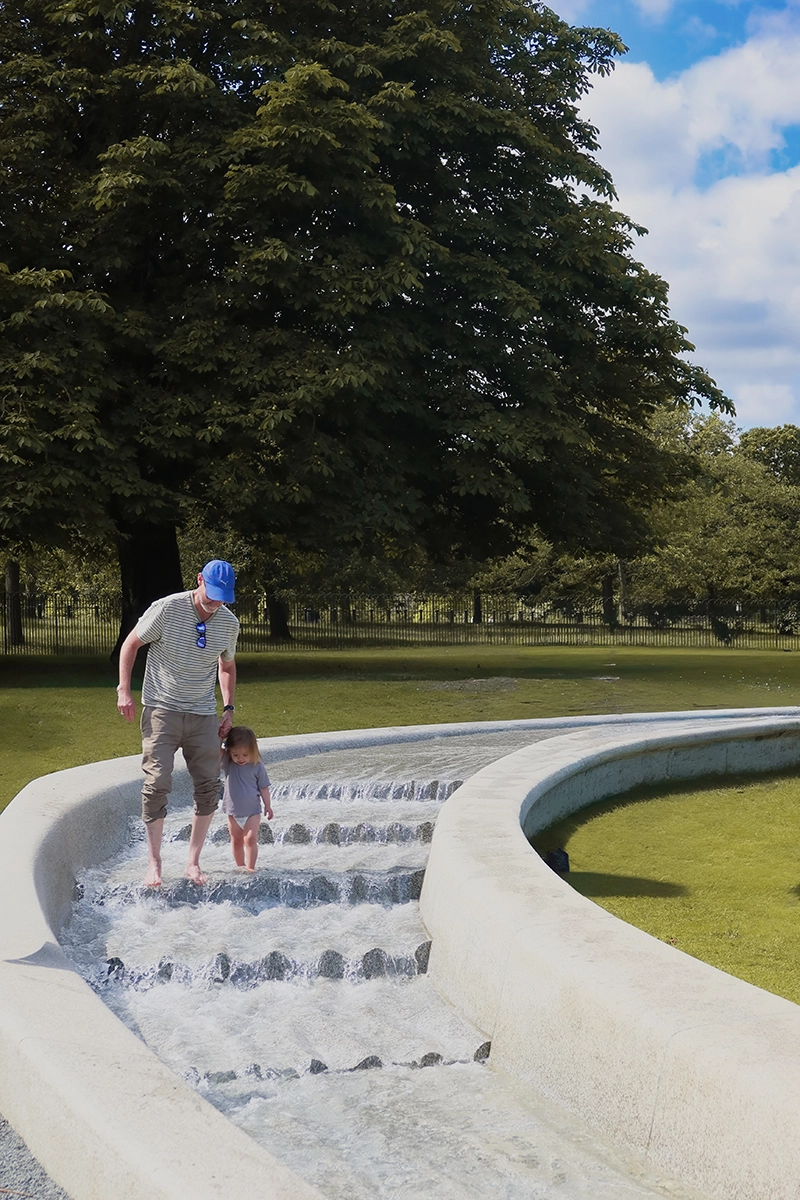
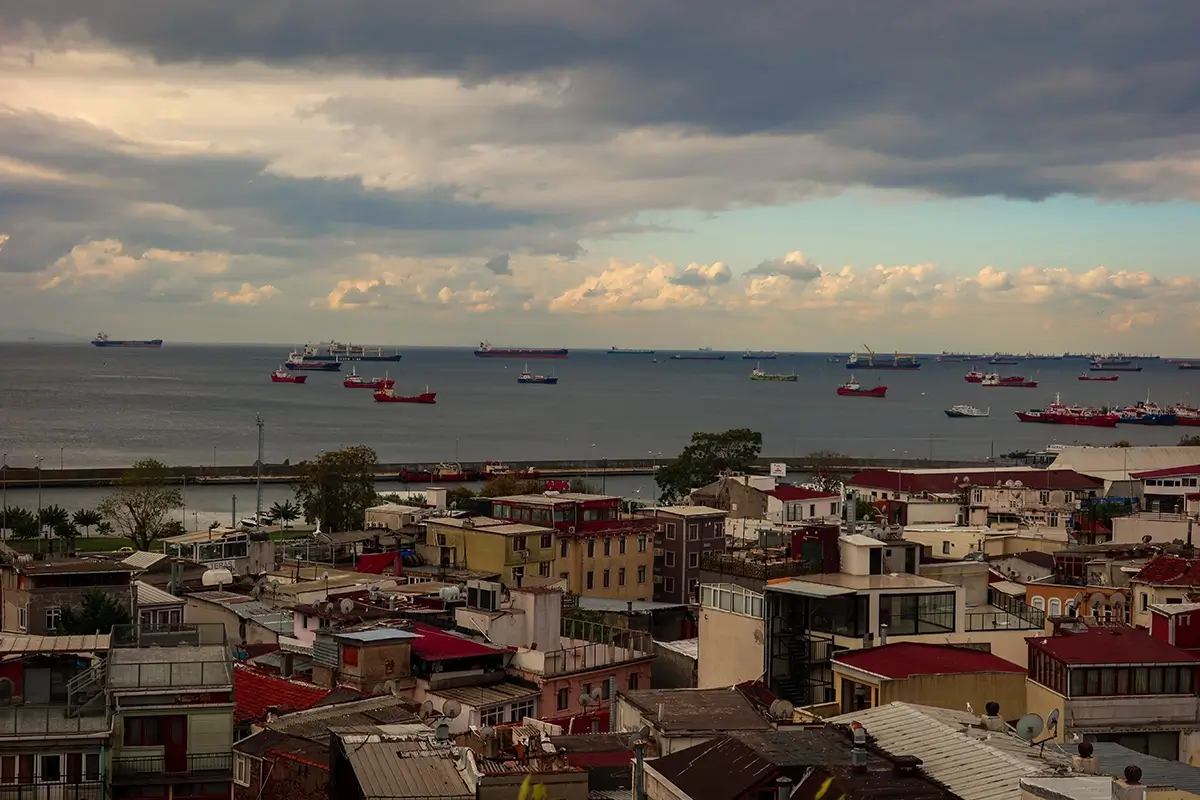
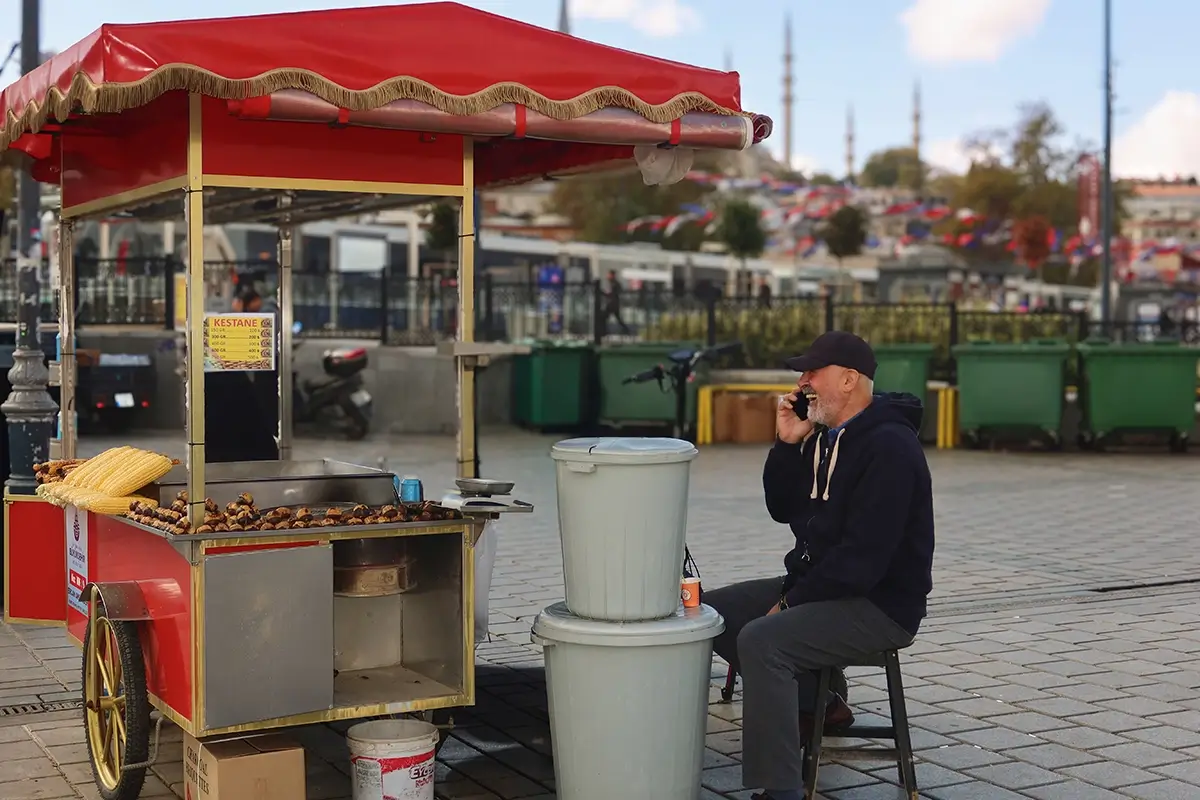
In her images, the photo artist often uses the aesthetics of a movie still that is torn out of the context. In advance, she also highlights the inexistence of clear borders in contemporary visual art, where a lot of things appear to be produced in the atmosphere of complete synthesis. This method allows her to work with the phenomenon of the open form, where everything is aimed at giving the viewer the freedom of interpretation. All of that can be clearly seen in her “Pause” (2025) series. There, Chinibekova is actively working with the liminality category. Her characters are put into the fictitious stillness – the border condition of the forced pause. Photography here is an instrument that helps to fixate the corridor of possibilities, which is left out of the image. This way, the viewer has no knowledge of what was before and will become after with the characters of the series. Such an approach creates a lyrical narrative of the city environment, where separate characters being weaved into one subject plot.

 

Inspiring Portfolios

Call for Entries
AAP Magazine #58 B&W
Publish your work in our printed magazine and win $1,000 cash prizes
 
Stay up-to-date  with call for entries, deadlines and other news about exhibitions, galleries, publications, & special events.

More Great Photographers To Discover

Mathilde Pettersen
Mathilde Helene Pettersen, born 1976 in Norway. Photographer and visual artist, lives and work in Kristiansand, south of Norway. Holds a BA in Photography and film from Napier Edinburgh University, Scotland and a MA in Art from the University of Agder, Kristiansand, Norway. Pettersen is a member of Association of Norwegian Visual Artist and society of Fine Art Photographers in Norway. Between 2013 and 2015 she was selected for the Norwegian Journal of Photography #2, a program supporting eight independent photographers in Norway, working on long-term projects and published by Journal, Stockholm (2015). In this publication, she chose to show a selection from her project Searching for Cloudberries, which was featured in Time Magazine/Lightbox and SHOTS magazine and exhibited at the Festival Voies Off in Arles, France (2016) and at the Encuentros Abiertos Festival de La Luz , in Buenos Aires, Argentina (2016) and at the Henie Onstad Art center in Oslo, Norway (2019). Her work I need a kiss before they leave was exhibited at the Musée de l'Elysée in Lausanne, Switzerland (2016), Kristiansand Kunsthall, Norway (2017), the International Photofestival PhotoVisa in Krasnodar, Russia (2017) and is currently on show at the Sørlandets Museum of Art (Jun-Nov 2020) alongside photographers as Swedish Christer Strömholm and Anders Petersen and the Norwegian Tom Sandberg, Dag Alveng and Kåre Kivijärvi. Her first photobook I NEED A KISS BEFORE THEY LEAVE was launched at Paris Photo 2019 at the Grand Palais by the German Kehrer Verlag in Heidelberg. Mathilde Pettersen presents two projects: Searching for Cloudberries (2008-), analogue black and white photographs. My projects revolve around portraiture and self-portraiture, and in their themes touch upon motherhood and family as constellations. So does this project, presently spanning ten years now. It takes shape by depicting a sense of dysfunctionality of the infertile female body - a theme that is often taboo in our society - before it turns and grows in a new direction when discovered not, moving on to contemplate the development of the child and the changes of the body of its mother over time in connection with life cycles in nature. I need a kiss before they leave (2011-), digital colour photographs. I NEED A KISS BEFORE THEY LEAVE is an emotional family portrait, filled with immense joy, but also with a disturbing realization of a wonderfulness that cannot be stored. It reflects upon a human desire to freeze time, to forever savoring those moments which are destined to live on only as distant memories. Photography is of course the artistic technique to actually freeze time and to store a split second forever. In this book, Norwegian photographer Mathilde Helene Pettersen captures an entire parenthood, with all its bright and dark moments. I need a kiss before they leave reflects on becoming and being a mother, on building a family, on the immediate and unpredictable, on strengths and fragilities in life, and sometimes on the overshadowing fear of death and the irreversible. From the text in I NEED A KISS BEFORE THEY LEAVE by Anna-Kaisa Rastenberger: First things first: loving is not for the faint of heart. Loving, day af- ter day, requires the courage to handle the disappointment of quotidian love falling short of the ideal of love. It requires even more courage to extend love to societal structures in need of repair. (...) "This is my story." These are the words used by Mathilde Helene Pettersen at the beginning of her book I need a kiss before they leave. The series, consisting of photographs taken with a camera phone over a period of eight years, is a chronicle of childbirth, motherhood, and family life. Pettersen writes that this was a story she hesitated to tell. Pettersen has spoken about the challenge and dichotomy of com- bining motherhood with the work of a photographer. On the one hand, she leads an ordinary enough, down-to-earth life with her family; on the other, she has a life outside the home, working as a photographer. Even in the Nordic countries, this is no simple equa- tion to balance. Although the principle of gender equality in the workplace is firmly established, or at least acknowledged, it re- mains elusive in practice.
Hiroji Kubota
Japan
1939
Hiroji Kubota (born 2 August 1939) is a Japanese photographer, a member of Magnum Photos who has specialized in photographing the far east. Born in Kanda (Tokyo), Kubota studied politics at Waseda University, graduating in 1962. In 1961 he met the Magnum photographers René Burri, Elliott Erwitt, and Burt Glinn. He then studied journalism and international politics at the University of Chicago, and became an assistant to Erwitt and Cornell Capa, in 1965, a freelance photographer. Kubota photographed the 1968 US presidential election and then Ryūkyū islands before their return to Japan in 1972. He then photographed Saigon in 1975, North Korea in 1978, and China in 1979–85, and the USA in 1988–92, resulting in books and exhibitions. Kubota won the Mainichi Art Prize in 1980,[2] and the Annual Award of the Photographic Society of Japan in 1981. Three of his publications won him the first Kodansha Publishing Culture Award in 1970: "Black People", and essays on Calcutta and the Ryūkyū islands.Source: Wikipedia Hiroji Kubota sounds a little over-the-top when he insists his "life is meaningless" without photography. But a glance at his latest and 19th book will convince you he is absolutely right, given how his life has been intertwined with some of Magnum's legendary photographers, like René Burri, Burt Glinn and my father, Elliott Erwitt. He started out working with some of them as a fixer and translator, even though he refused payment at first. "I was brought up comfortably and didn't need it," he said. He did, however, accept a beat-up Leica M3 from Burri. His life changed when he got the first edition of Henri Cartier-Bresson's The Decisive Moment a month later. "When I opened it, I said, 'My gosh, what is this?" he recalled. "That motivated me. That's when I became serious." His fate was sealed when Burri showed him a Swiss magazine that featured his Gaucho pictures. "It shocked me like crazy," he said. "I knew then I wanted to be a photographer." The results of those personally decisive moments are evident in Aperture's Hiroji Kubota Photographer a retrospective covering 50 years of his work. I met Hiroji almost that long ago, because my father, Elliott Erwitt, sponsored him when he first came to America, even picking him up at the TWA terminal at Kennedy Airport. They had met when Hiroji worked as a fixer on one of my father's early trips to Japan, in 1962, to illustrate Robert Donovan's book PT 109, about John F. Kennedy's World War II exploits. Hiroji was my father's translator when he photographed the captain and crew of the destroyer that famously cut Kennedy's boat in two. That kind of work led to his meeting other influential photographers who would encourage him, eventually bringing him to New York, where he became a familiar figure at the Magnum offices. Back then, the agency was a small, international and slightly dysfunctional family that was accessible if you met the right people, which he did. Cornell Capa, a Magnum photographer, "adopted me literally, not legally," he said. "He had no children, so he needed a son, a fairly well-behaved son who could cook for him." Capa, who entertained "big shots" at his Fifth Avenue apartment, helped Hiroji make a few extra dollars by having him cook. Burt Glinn also hired Hiroji as an assistant to help him get by. Hiroji showed similar ingenuity when he spent the better part of a year photographing in Chicago, where he ran an ad hoc Japanese catering business every other weekend to help pay the bills. By 1967, he was a successful photographer firmly ensconced at Magnum, and it was time to return to Japan. He has proved to be a remarkably tenacious photographer who immerses himself in a story and returns to it until he is satisfied. He has managed to get to places others can't - like his unlimited access on many trips to China, when travel within the country was still limited. He would talk government officials into allowing him the time and access he needed to achieve his purpose. Same with North Korea; he has made countless visits - at its invitation - at a time when it was essentially a closed country. -- By Misha ErwittSource: The New York Times During a visit by Magnum members to Japan in 1961, Hiroji Kubota came to know René Burri, Burt Glinn and Elliott Erwitt. After graduating in political science from Tokyo’s University of Waseda in 1962, Kubota moved to the US, settling in Chicago, where he continued photographing while supporting himself by working in a Japanese catering business. He became a freelance photographer in 1965, and his first assignment for the UK newspaper The Times was to Jackson Pollock’s grave in East Hampton. In 1968, Kubota returned to live in Japan, where his work was recognized with a Publishing Culture Award from Kodansha in 1970. The next year he became a Magnum associate. Kubota witnessed the fall of Saigon in 1975, refocusing his attention on Asia. It took him several years to get permission to photograph in China. Finally, between 1979 and 1984, Kubota embarked on a 1,000-day tour, during which he made more than 200,000 photographs. The book and exhibit, China, appeared in 1985. Kubota’s awards in Japan include the Nendo Sho (Annual Award) of the Japanese Photographic Society (1982), and the Mainichi Art Prize (1983). He has photographed most of the Asian continent for his book Out of the East, published in 1997, which led to a two-year project, in turn resulting in the book Can We Feed Ourselves? Kubota has had solo shows in Tokyo, Osaka, Beijing, New York, Washington, Rome, London, Vienna, Paris and many other cities. He has just completed Japan, a book on his homeland and the country where he continues to be based.Source: Magnum Photos
Astrid Reischwitz
Astrid Reischwitz is a lens-based artist whose work explores storytelling from a personal perspective. Using keepsakes from family life, old photographs, and storytelling strategies, she builds a visual world of memory, identity, place, and home. Her current focus is the exploration of personal and collective memory influenced by her upbringing in Germany. Reischwitz has exhibited at national and international museums and galleries including Newport Art Museum, Griffin Museum of Photography, Danforth Art Museum, Photographic Resource Center, The Center for Fine Art Photography (CO), Rhode Island Center for Photographic Arts, Center for Photographic Art (CA), FotoNostrum, and Gallery Kayafas. She was a Top 50 photographer at Photolucida's Critical Mass in 2020, 2019 and 2016, and a Finalist for the 2017 Lens Culture Exposure Awards. She is the recipient of the Griffin Award 2020 and was awarded solo exhibitions at Soho Photo Gallery and The Center for Fine Art Photography. Reischwitz is a Category Winner at the 14th and 15th Julia Margaret Cameron Award for Women Photographers and at the 14th and 15th Pollux Awards. Honors also include Gold and Silver Medal Awards, a Portfolio Award and the Daylight Multimedia Award at the San Francisco International Photo Show. Her work was featured in Fraction Magazine, Lenscratch, LensCulture, What Will You Rembember?, Wired Japan, Il Post Italy, P3 Portugal, Aint-Bad Magazine, The Boston Globe, NRC Handelsblad Amsterdam, as well as other media outlets. Reischwitz is a graduate of the Technical University Braunschweig, Germany, with a PhD in Chemistry. Spin Club Tapestry An exploration of memory I grew up in a small farming village in Northern Germany. A village that is bound to its history and that stands out through its traditions even today. Long ago, village women met regularly in "Spinneklumps" (Spin Clubs) to spin wool, embroider, and stitch fabrics for their homes. I imagine their conversations as they worked, the beautiful stories that lifted their spirits, as well as the stories of sadness, sorrow and loss. In modern times, village women continued to meet in this tradition, but shared stories over coffee and cake instead of needlework. These close-knit groups of women often stayed together until their death. In this series, my composite images take the form of tapestries, combining images of embroidered Spin Club fabrics with new and old photographs from the village. I connect the present and the past by recreating and re-imagining pieces of the embroidery. Spin Club tablecloths, napkins and wall hangings (some dating back to 1799) have been passed down from generation to generation. By following the stitches in these fabrics, I follow a path through the lives of my ancestors - their layout of a perfect pattern and the mistakes they made. Along the way, I add my own mistakes. The fabrics also reveal the passage of time, stained and distorted after sometimes decades of use. The patterns I have stitched myself into the paper are only abstractions of the original Spin Club designs, fragments of memory. After all, memory is fleeting, and changed forever in the act of recollection. Sometimes the stitching is incomplete, creating an invitation for future generations. Every decision we make is influenced by our history, our environment, and the society we live in. The tapestry of my life belongs to me but is stitched through with the beauty and heartache of past generations. Discover the Spin Club Tapestry Solo Exhibition
Flor Garduño
Mexico
1957
Flor Garduño was born in Mexico and studied visual arts at the Academy of San Carlos (UNAM), where she focused on the search for the structural aspects of form and space. She became especially interested in the work of Kati Horna, a Hungarian photographer whose communicative dimension of her photographs had a great impact on the development of Garduño's aesthetic. She gave up her studies to work as a darkroom assistant for Manuel Álvarez Bravo, one of Mexico's most prestigious photographers, with whom she strengthened her photographic skills. Since then, Garduño has received numerable prizes, and her work has been exposed and published around the world. Garduño's photos depict the landscapes of Central and South America -- and the people whose ancestors were indigenous to the region. Her photos depict subjects that could have existed in a time long before the present moment, and through photographing them, brings the Indian land of America to the present moment. She addresses time -- past, present, and future -- simultaneously through her photographs. Through her photos we witness the slow procession from life to death, interrupted by comic accidents, childish play, liturgical ceremonies, and erotic repose. Though many themes traverse Garduño's body of work, all ultimately reach the point of incense where, uncertainly, nature, and art blend so that mankind may have a margin of whimsy, freedom, or significance on the face of the gods.Source: Peter Fetterman Gallery Flor Garduño (Born Mexico City, Mexico, 1957) studied at the Escuela Nacional de Artes Plásticas in Mexico City.  In 1979 she became an assistant to Manuel Alvarez Bravo. Between 1981 and 1982 she traveled with a team of photographers organized by Mariana Yampolsky. The team photographed rural villages throughout Mexico for reading primers published by the Secretariat of Education for Indigenous Communities.  This experience as well as her association with Kati Horn influenced Garduño's photographs, which are usually of country locales and towns depicted in strange and mysterious ways typical of Surrealism in Mexican photography.  Garduño had her first one-person exhibition in 1982 at the Galeria Jose Clemente Orozco in Mexico City.  In 1985, a compendium of six years of her work was published entitled "Magia del Juego Eterno" and in 1987 another book entitled "Bestiarium" was published.  In 1986 she participated in the first photographic exhibition of the Salón de la Plástica Mexicana and in the inauguration of the Kahlo-Coronel Gallery in Mexico City. In 1986 and 1988 she was included in several traveling exhibitions "Reserved for Export" and "Realidades Mágicas" that were seen in the United States and Europe.  1996 Image and Memory, Latin american Photography, 1880-1992  Itinerary: El Museo del Barrio, New York.  Art Gallery of the University of Scranton, PA.  Lowe Art Museum, Florida.  Museo de Arte de Ponce, Puerto Rico.  Crocker Art Museum, CA.  Meadows Museum, Tx.  Akron Art Museum, OH. Her one-person shows were in Paris in 1986, the Museum Volkenkunde de Rotterdam in 1989, the Field Museum of Chicago in 1990 and Montreal in 1991.  Since 1989 she has dedicated herself to photographing the images that appear in her one-person exhibition and monograph, "Witnesses of Time".  The exhibition started at the Americas Society in 1993 and will be traveling across the country to the Museum of Photographic Arts in California as well as various other venues.  Her work is in the collections of the Museum of Modern Art, New York; Bibliotheque Nationale, Paris; and Centro Cultural de Arte Contemporáneo, Mexico.Source: Throckmorton Fine Art Galleries in the USA:   Peter Fetterman Gallery   Throckmorton Fine Art   Fahey/Klein Gallery   Holden Luntz Gallery   Etherton Gallery   Andrew Smith Gallery
Karl Taylor
United Kingdom
Karl Taylor is a professional photographer with over 25 years experience and he is commissioned by leading global companies for his precise attention to detail and his exquisite control of light. Recognised as an expert in the industry Karl is a global ambassador for Hasselblad Camera Company and Broncolor Lighting. Karl’s work covers advertising, beauty and fashion photography for commercial clients. Having started his career in photojournalism he is also comfortable and actively enjoys shooting across a range of other genres. Karl’s ethos is that ‘variety is the spice of life’ and that 'the visual philosophies for creating effective images are universal'. Twelve years ago Karl co-founded what is now VisualEducation.com where he became known for his ability to explain complex subjects extremely clearly. His unique way of teaching and clear instruction has led him to work as a consultant and presenter for, Hasselblad Camera Company, Broncolor Lighting and Adobe as well as appearances on the BBC. His training is also used by top universities and education providers around the world and VisualEducation.com has become one of world’s leading media and visual arts education platforms. Karl regularly travels around the globe, as a photographer, ambassador and educator for leading players in the industry. When not taking pictures, Karl spends much of his time underwater, enjoying his other passion – wreck diving and documenting them in video. This passion has also led Karl to work in underwater video from short films to documentaries & commercials. In 2019 Karl’s anti marine pollution campaign images were nominated for the Prix Pictet award and he has also recently completed filming, directing and producing a documentary film that details a four year search for a lost German submarine and a secret Royal Navy Q-ship. The film was first aired on the BBC in October 2024 and is available on iplayer, Amazon Prime and Apple TV. For more information visit www.TheHuntForTheGermanSubmarine.com Using specialist low light video cameras, Karl is able to reveal the hidden world of shipwrecks in great clarity at depths of up to 75m (250ft), the limit of useful natural light levels. Having been a diver since 1990 and progressing to PADI Divemaster he then qualified with TDI as a Technical Trimix Diver and Advanced Gas Blender. Karl also has extensive experience with DPVs and general boat handling, including successfully completing his RYA Yachtmaster Offshore theory.
Advertisement
AAP Magazine #58 B&W
Win a Solo Exhibition in June
AAP Magazine #58 B&W

Latest Interviews

Exclusive Interview with Carolyn Moore
American photographer Carolyn Moore explores the inner landscape of emotion, memory, and personal transformation through a deeply intuitive photographic practice. Her work unfolds as a quiet dialogue between artist and viewer, where images become a space for reflection, vulnerability, and connection.
Exclusive Interview with Luca Desienna and Laura Estelle Barmwoldt
For over seven years, Of Lilies and Remains has explored the depths of the goth and darkwave underground, unfolding in Leipzig—a city long associated with a vibrant and enduring subcultural scene. Moving between iconic gatherings such as Wave-Gotik-Treffen and more intimate moments on the fringes, the project offers a rare and immersive glimpse into a world often misunderstood, yet rich in expression and community. Created by Luca in collaboration with Laura Estelle Barmwoldt, the work embraces a cinematic and deeply personal approach. Rather than documenting from a distance, it moves within the scene itself, capturing its atmosphere, its codes, and its quiet contradictions. The title Of Lilies and Remains hints at this duality—where beauty and darkness, fragility and strength coexist. As the book prepares for its release, we spoke with both artists about the origins of the project, their process, and what it means to document a subculture that continues to evolve while remaining true to its spirit.
Exclusive Interview with Matthew Finley
American photographer Matthew Finley turns inward, using photography as a way to explore identity, memory, and emotional truth. Based in Los Angeles, his practice moves between performance, gesture, and found imagery, creating a visual language that is both intimate and deeply personal
Exclusive Interview with Jan Janssen
Dutch photographer Jan Janssen explores universal human experiences through his long-term project It Matters, winner of the May 2025 Solo Exhibition. Begun in 2016, the series captures intimate moments of everyday life—love, loss, connection, and belonging—across Central and Eastern Europe. Working in countries such as Turkey, Azerbaijan, and Armenia, Janssen spends extended time within communities, building relationships based on trust and respect. His approach allows him to move beyond observation, revealing deeply human and authentic moments. Rooted in travel and personal discovery, It Matters reflects Janssen’s search for what connects us all in an increasingly divided world. The project is ongoing and will culminate in a photobook scheduled for publication in 2026.
Exclusive Interview with Henk Kosche
German photographer Henk Kosche turns his lens toward the streets of Halle an der Saale, capturing everyday life in the late years of the former German Democratic Republic. At the time, Kosche was studying design and exploring the city with his camera, drawn to the atmosphere of its industrial landscape and the quiet rhythms of daily life. His series Street Photography at the End of the 80s, selected as the Solo Exhibition for July 2025, revisits a body of work created just before a period of profound change. Rediscovered decades later in a small box of 35mm negatives, these photographs offer glimpses of a city and its people at a moment suspended between the familiar and the unknown.
Exclusive Interview with Anastasia Samoylova
Anastasia Samoylova is an American artist whose photographic practice is shaped by close observation and a deep attentiveness to place. Working between documentary and formal exploration, she photographs landscapes, architecture, and everyday scenes with a sensitivity to light, structure, and atmosphere. Since relocating to Miami in 2016, her work has increasingly focused on how environments—both natural and built—carry social, cultural, and emotional traces. We asked her a few questions about her practice and her way of seeing, to better understand the thoughts and experiences that shape her work—while allowing the images themselves to remain open and speak in their own time.
Exclusive Interview with Marijn Fidder
Marijn Fidder is a Dutch documentary photographer whose work powerfully engages with current affairs and contemporary social issues. Driven by a deep sense of social justice, she uses photography to speak on behalf of the voiceless and to advocate for the rights of those who are most vulnerable. Her images have been widely published in major international outlets including National Geographic, CNN Style, NRC Handelsblad, Volkskrant, GUP New Talent, and ZEIT Magazin. Her long-term commitment to disability rights—particularly through years of work in Uganda—culminated in her acclaimed project Inclusive Nation, which earned her the title of Photographer of the Year 2025 at the All About Photo Awards. She is also the recipient of multiple prestigious honors, including awards from World Press Photo and the Global Peace Photo Award. We asked her a few questions about her life and work.
Exclusive Interview with Josh S. Rose
Josh S. Rose is a multidisciplinary artist working across photography, film, and writing. His practice bridges visual and performing arts, with a strong focus on movement, emotion, and the expressive potential of the image. Known for his long-standing collaborations with leading dance companies and performers, Rose brings together authenticity and precise composition—a balance he describes as “technical romanticism.” His work has been commissioned and exhibited internationally, appearing in outlets such as Vogue, at the Super Bowl, in film festivals, and most recently as a large-scale installation for Lincoln Center for the Performing Arts. A sought-after collaborator, he has worked with major artists, cultural institutions, and brands, following a previous career as Chief Creative Officer at Interpublic Group and the founder of Humans Are Social. We asked him a few questions about his life and work.
Interview with Maureen Ruddy Burkhart
Photographer Maureen Ruddy Burkhart brings a quietly attentive and deeply human sensibility to her exploration of the world through images. Shaped by a life immersed in photography, film, and visual storytelling, her work is guided by intuition, observation, and an enduring interest in the emotional undercurrents of everyday life. With a practice rooted in both fine art traditions and documentary awareness, she approaches her subjects with sensitivity, allowing subtle moments to emerge naturally rather than be imposed. Her series Til Death, selected as the Solo Exhibition for February 2025, reflects this long-standing commitment to photography as a space for reflection rather than spectacle. Drawn to moments that exist just outside the expected frame, Burkhart’s images suggest narratives without resolving them, leaving room for ambiguity, humor, and quiet connection. We asked her a few questions about her life and work.
Call for Entries
Win A Solo Exhibition in June
Get International Exposure and Connect with Industry Insiders