All about photo.com: photo contests, photography exhibitions, galleries, photographers, books, schools and venues.
FINAL CHANCE to enter All About Photo Awards: $5,000 Cash Prizes - Juror Steve McCurry
Roberta Pagano
Roberta Pagano
Roberta Pagano

Roberta Pagano

Country: Italy

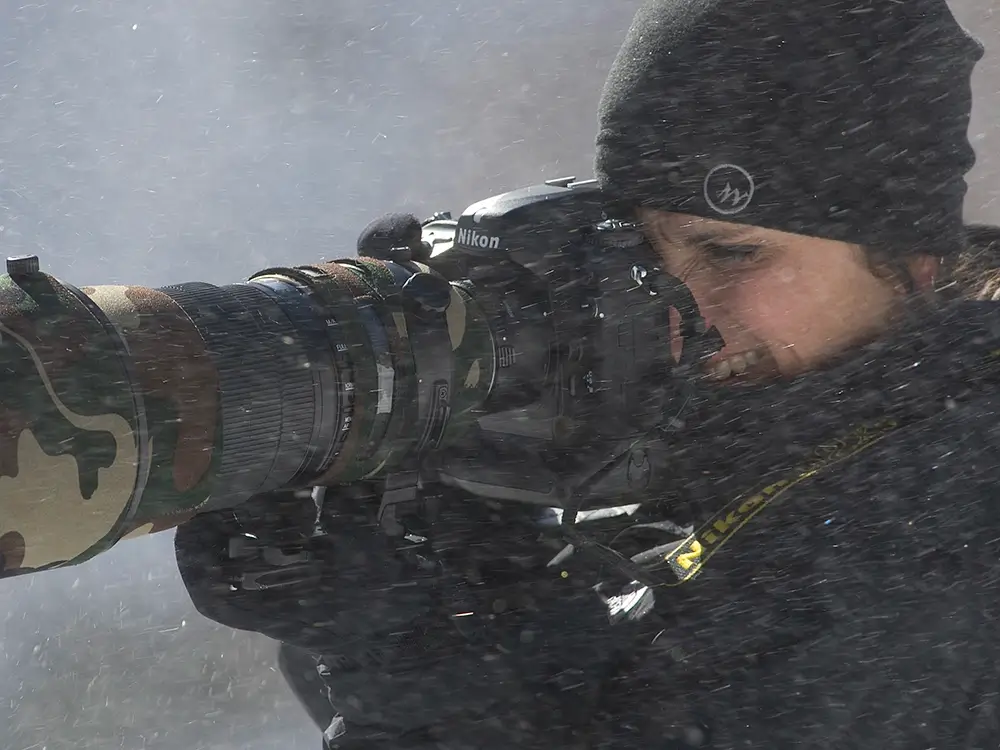
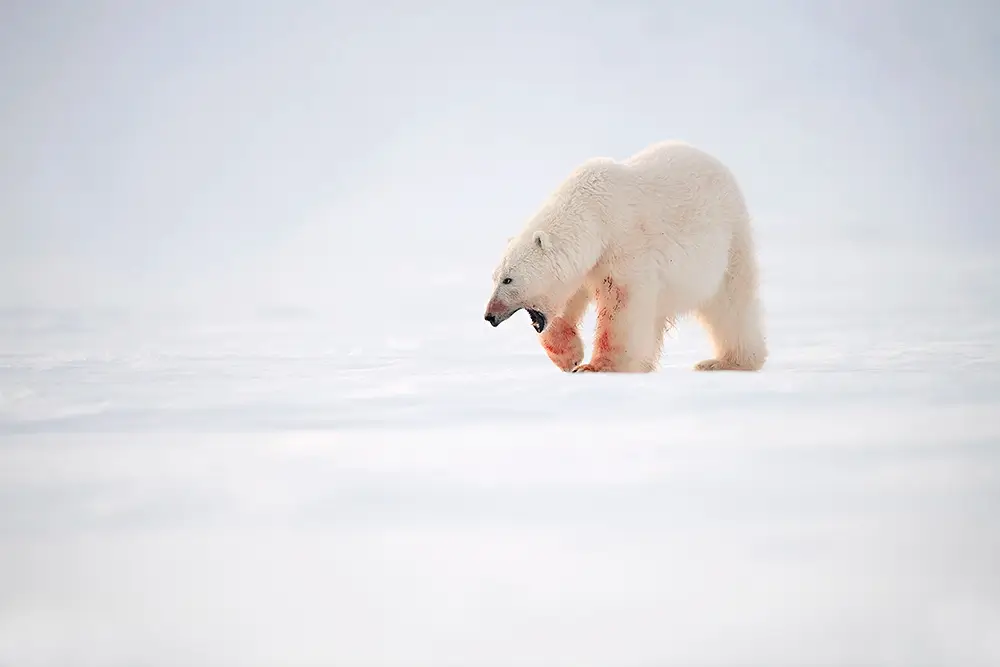
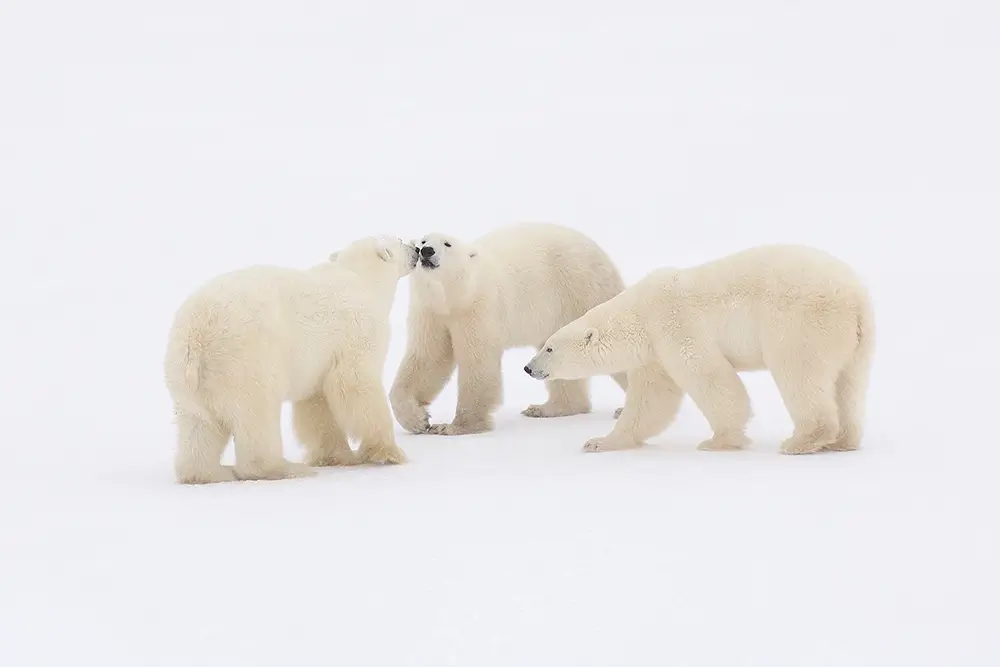
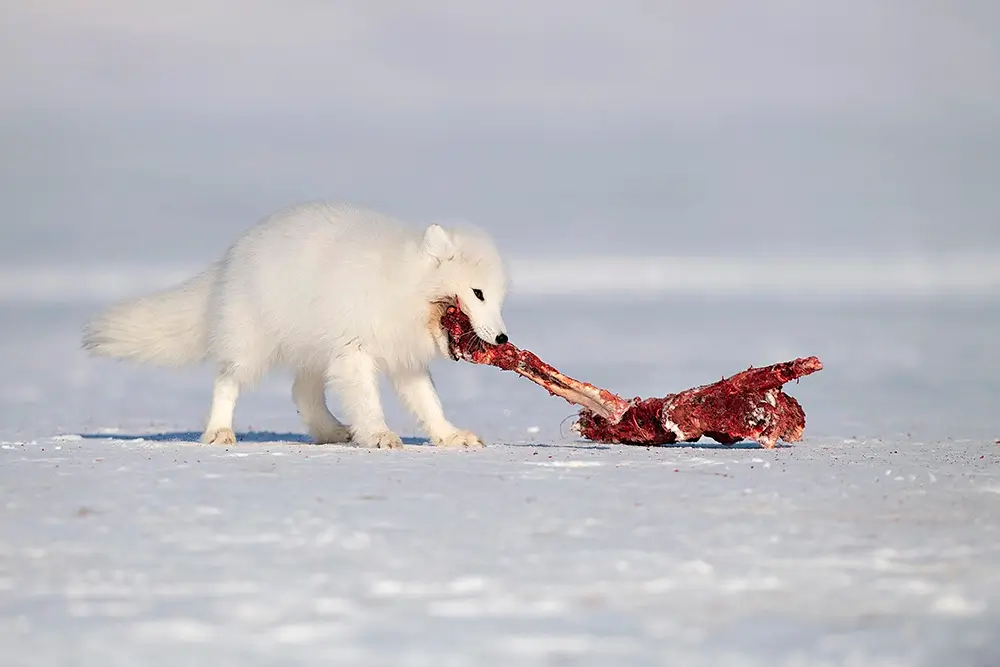
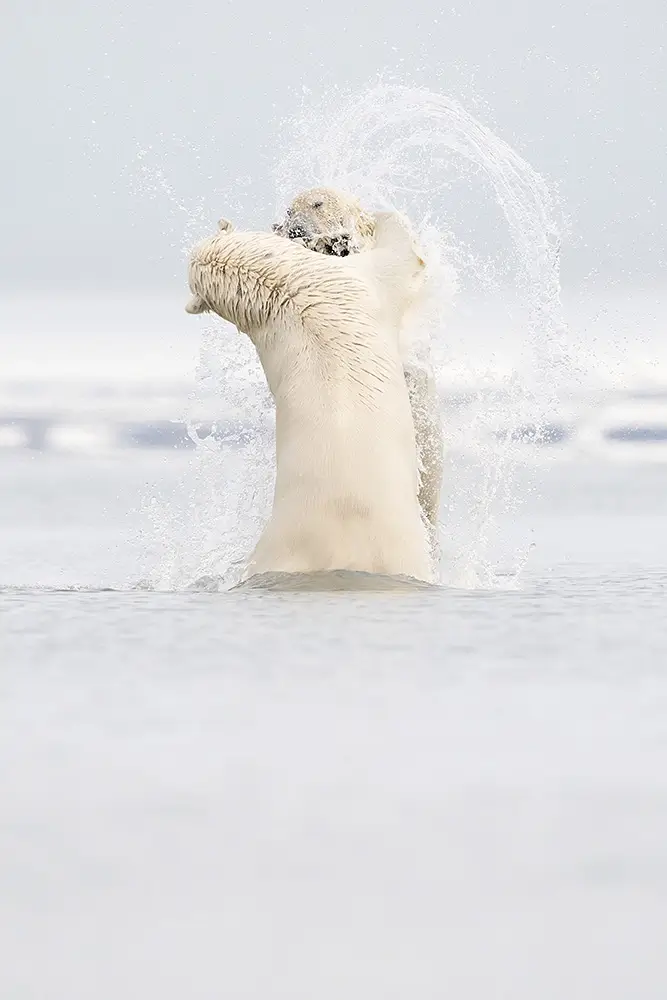
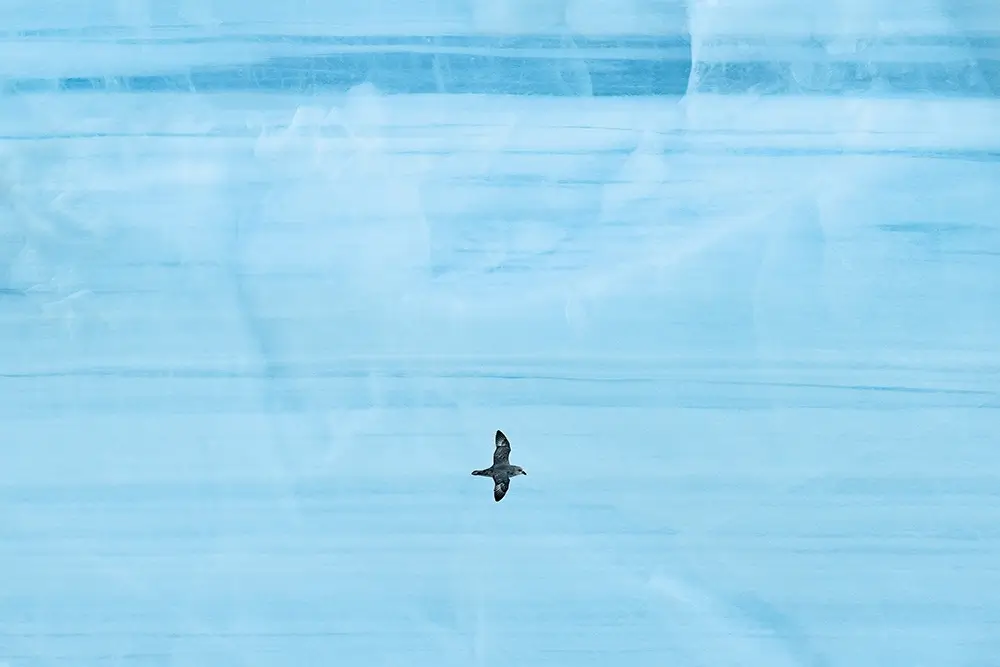
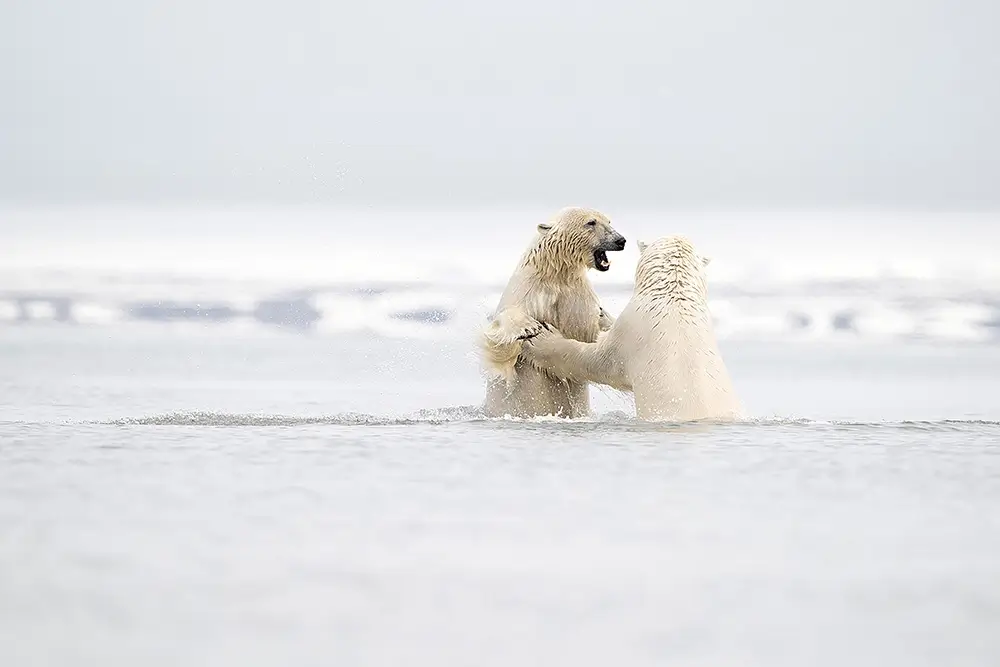
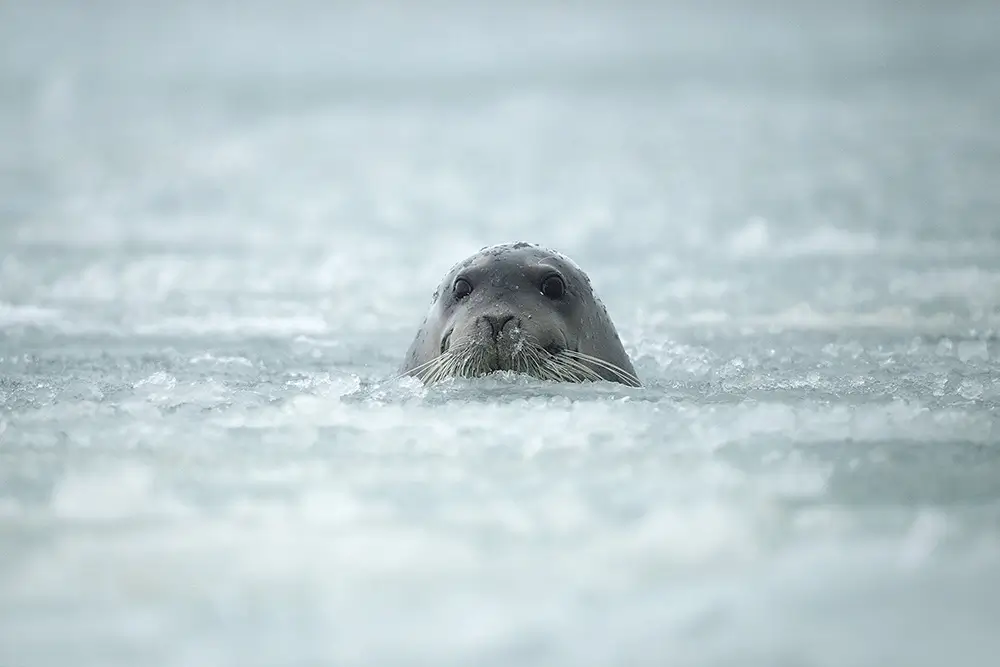
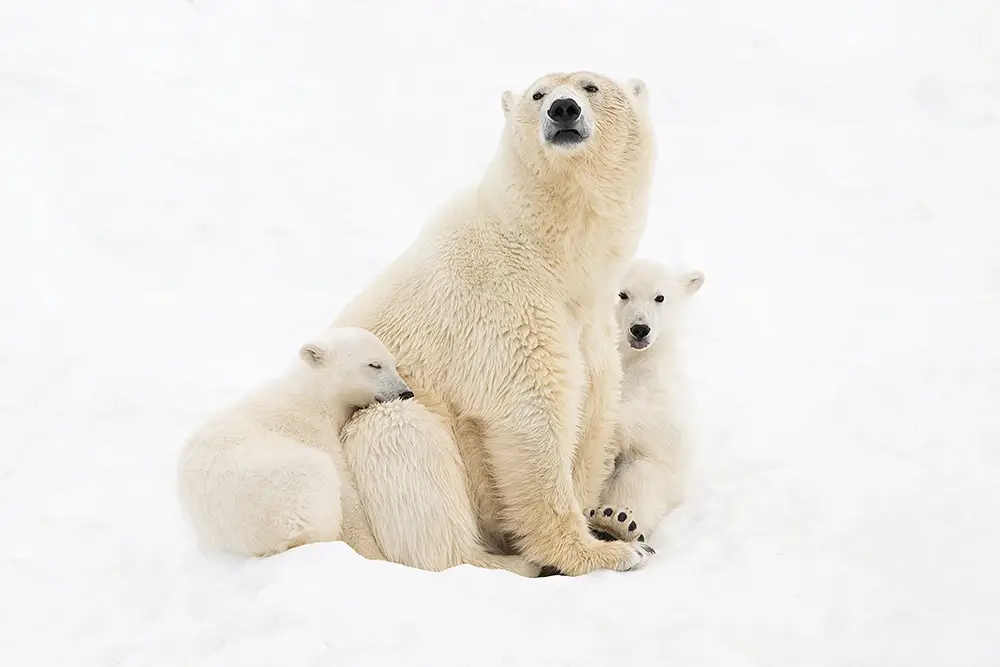
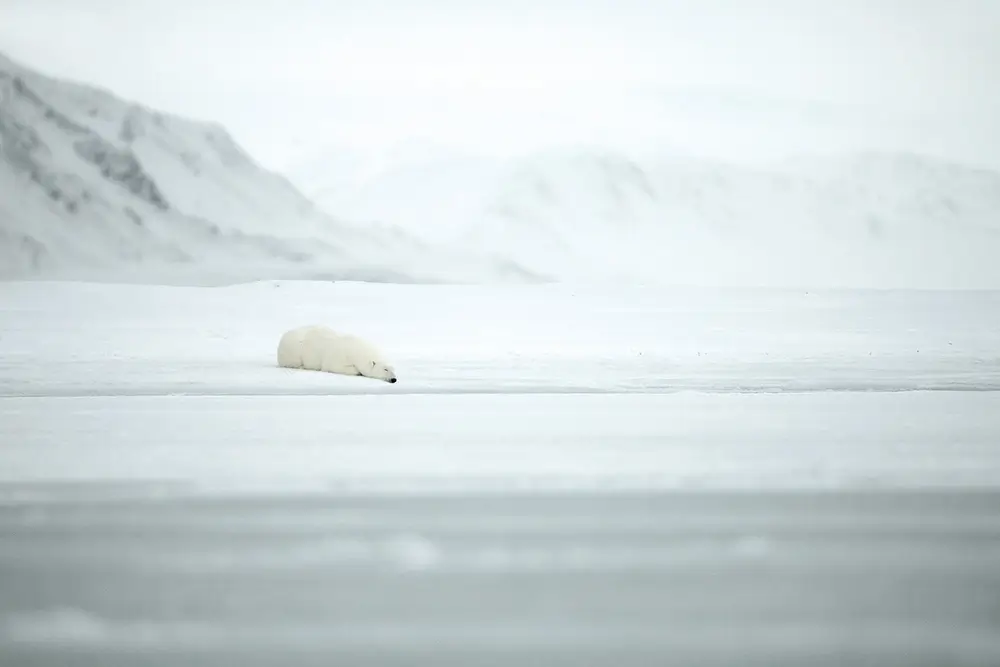
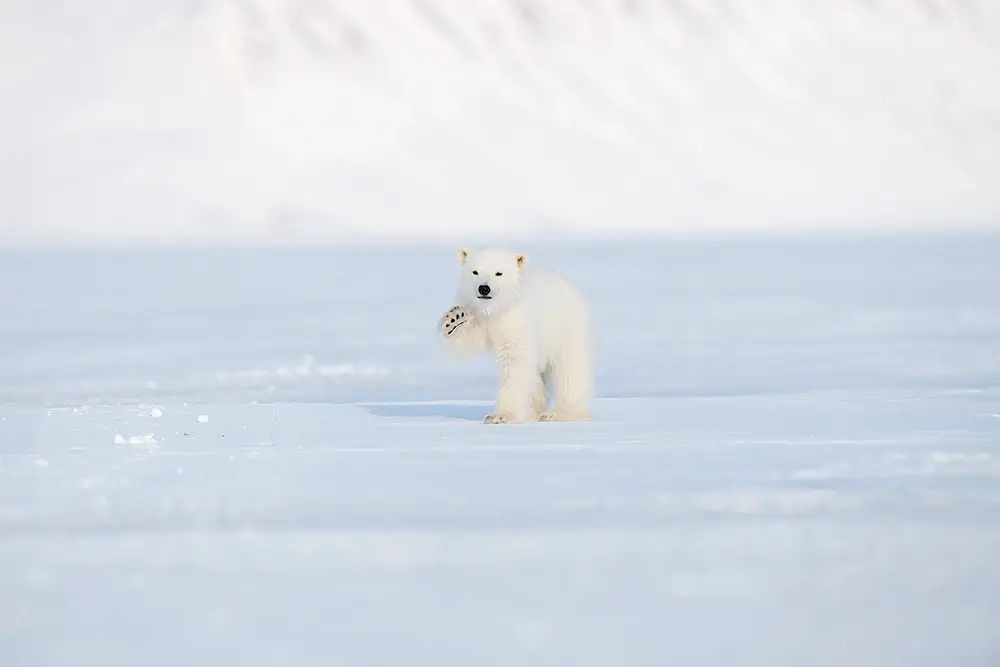
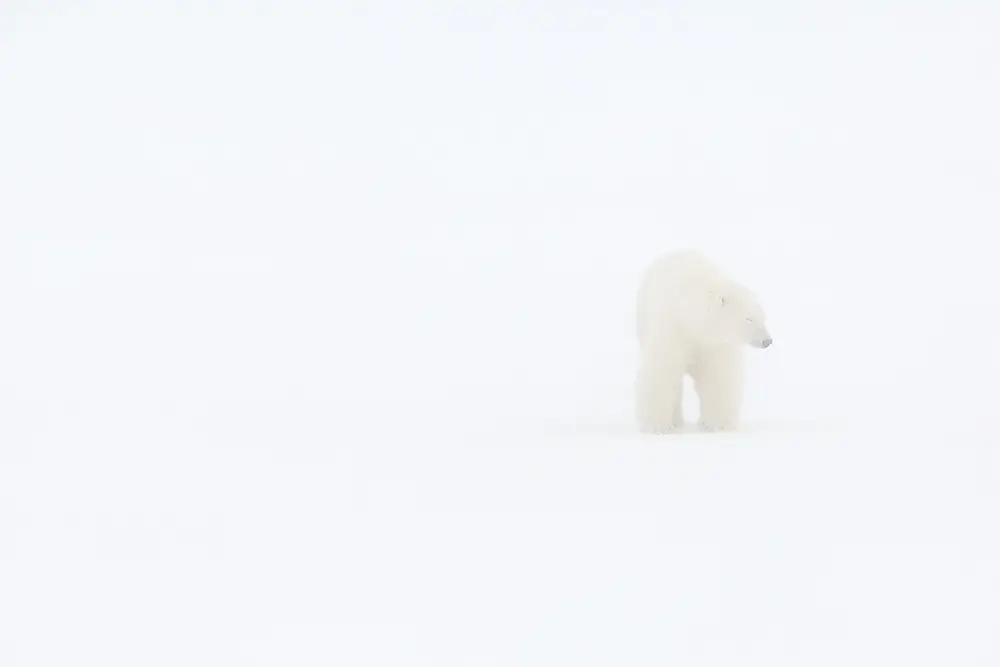
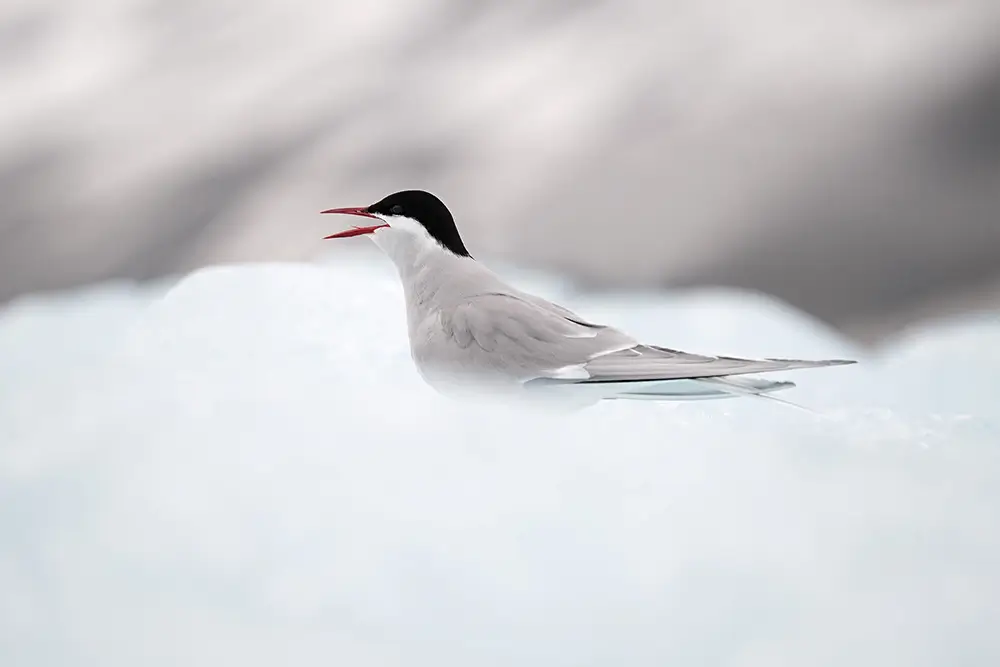
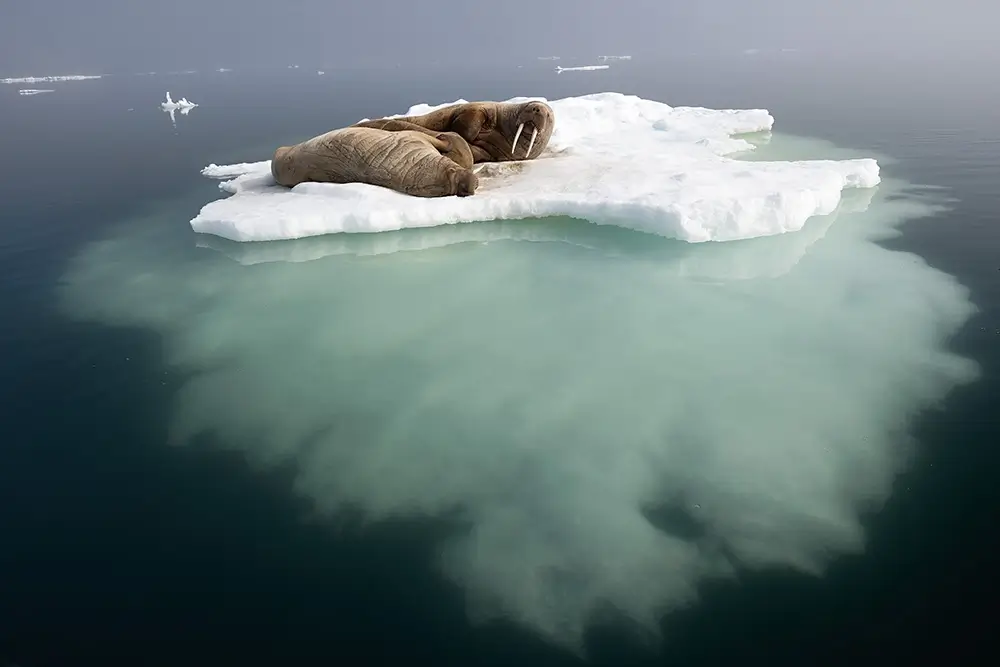
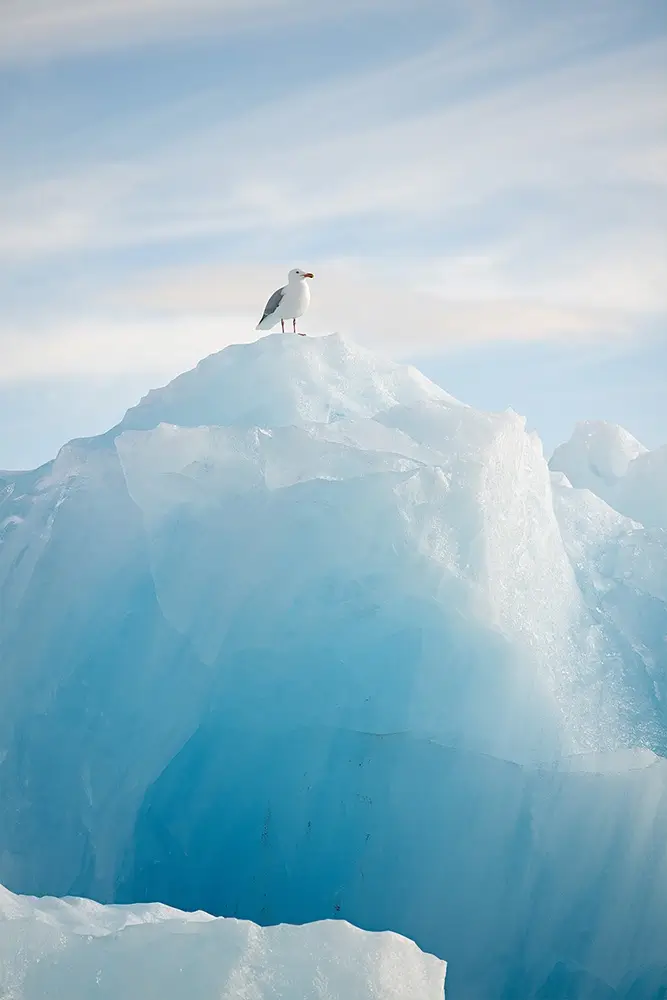
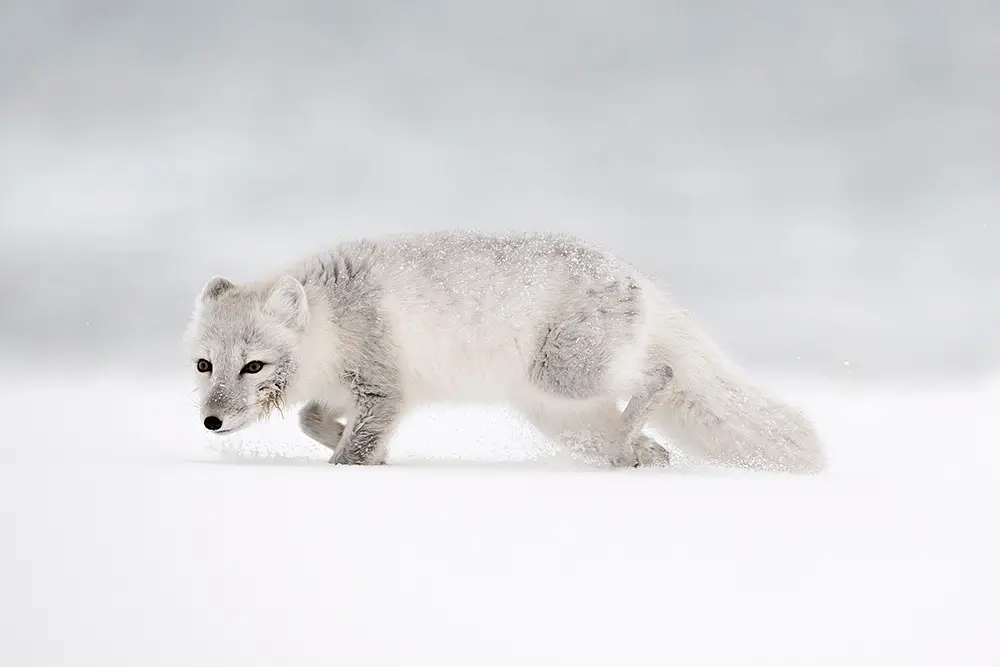
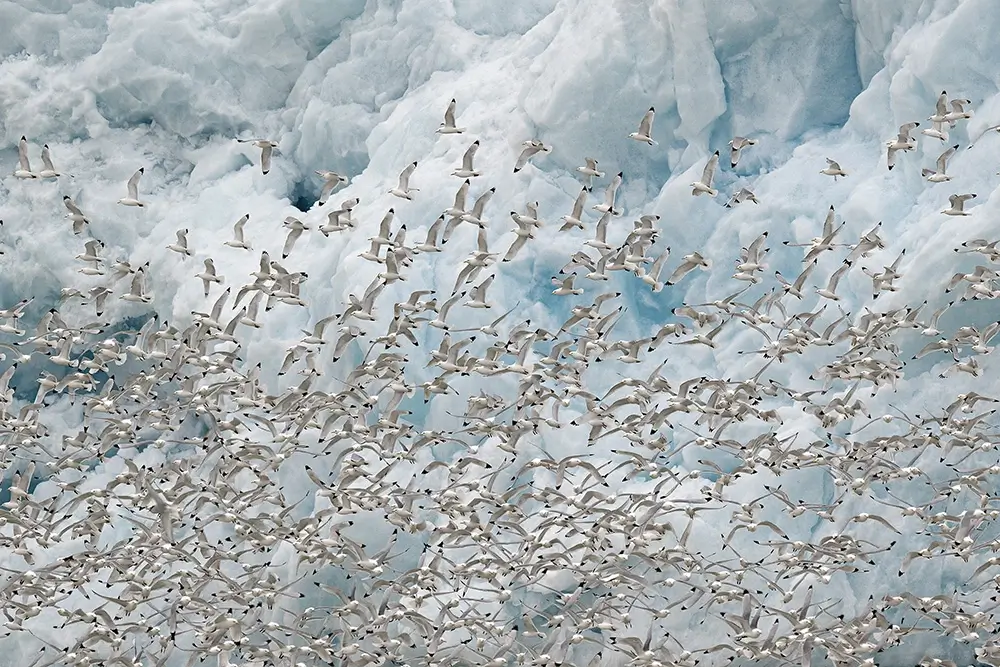
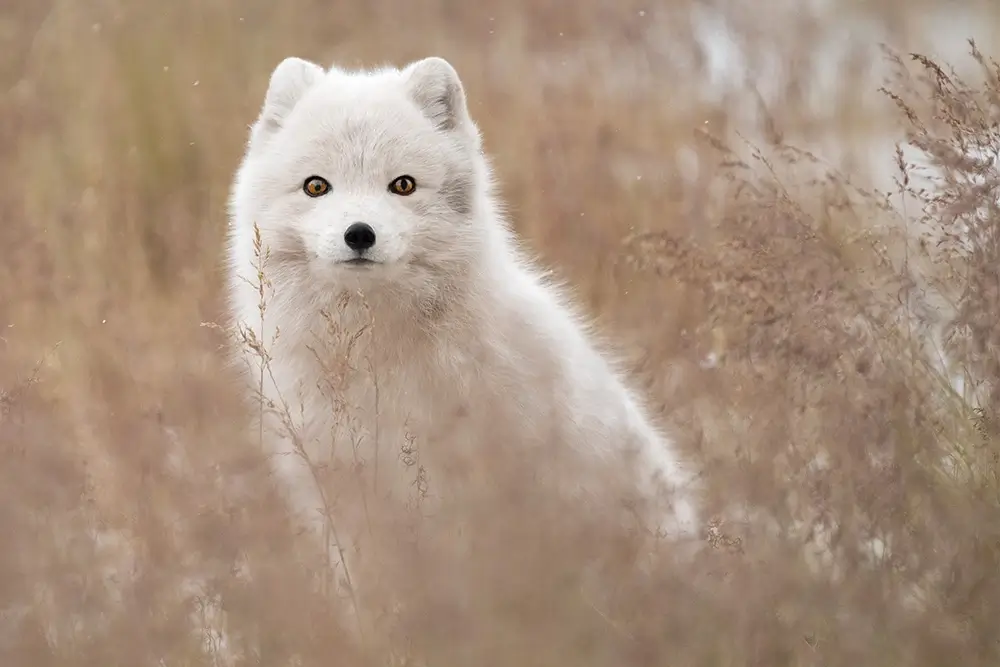
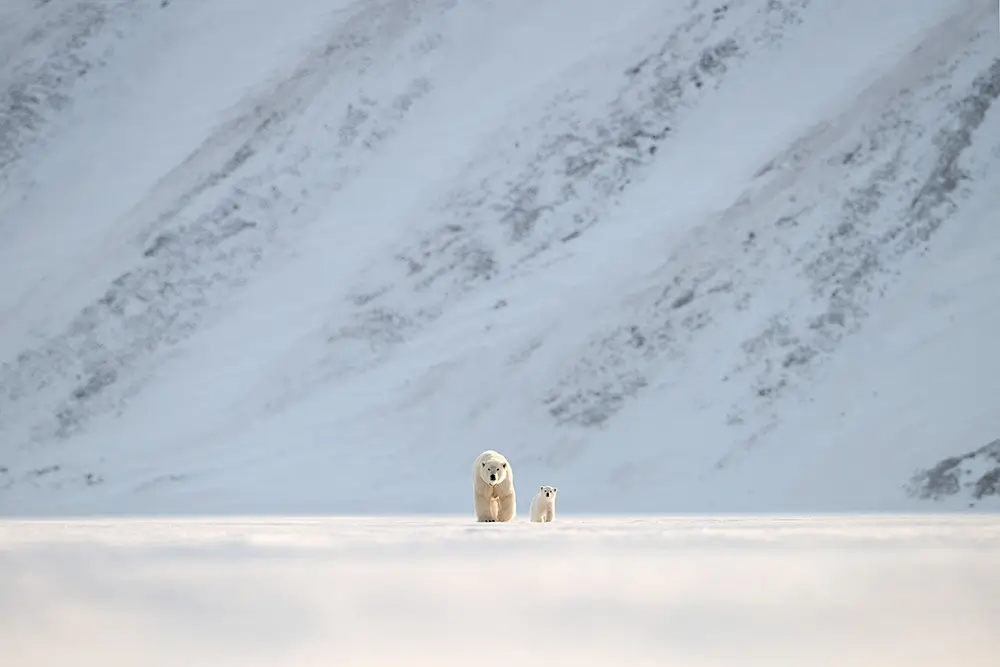
I’m a naturalist and photographer passionate about the Arctic, which have visited several times over the years. The Svalbard archipelago is a place for which I have a heartfelt and unconditional love. A land of endless spaces and profound silence, where frozen landscapes stretch beyond the horizon and wildlife exists in a state of rare, fragile beauty. There, white is never just white, but a universe of a thousand subtle shades.

Svalbard: The White Fragile Kingdom
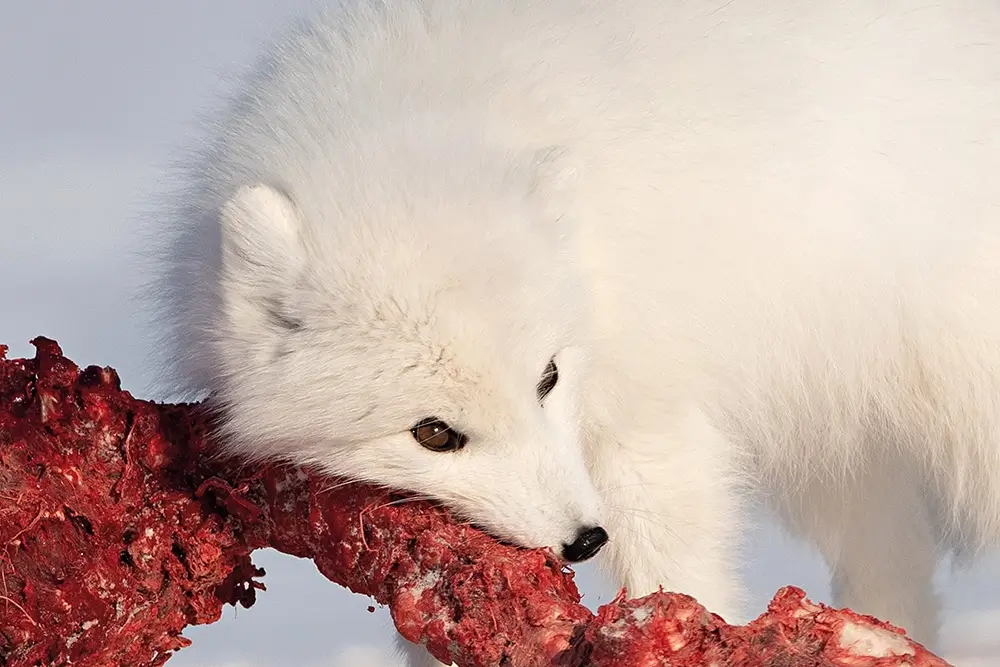
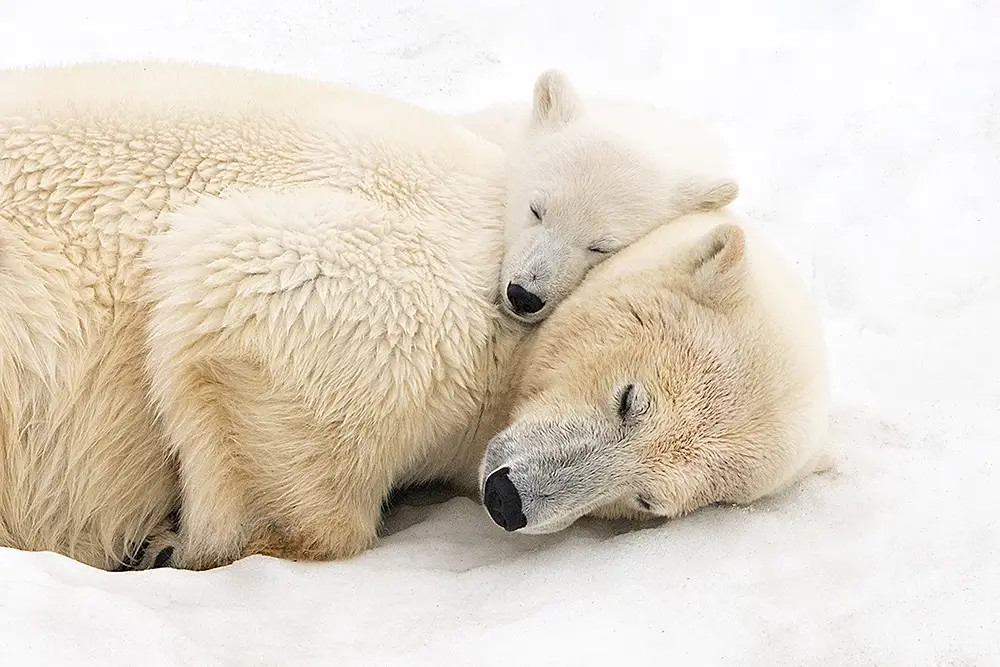
These photos are part of a larger project on the Svalbard archipelago, the result of several trips I have made and continue to make. I love photographing Svalbard throughout the year, witnessing the passage of seasons and the remarkable changes they bring to the landscape. The shifting light, the diversity of wildlife, and the subtle transformations of the terrain continually inspire me, and each trip poses unique photographic challenges.

Winter expeditions are physically demanding and logistically complex, but they reveal another side of Svalbard—a land defined by silence, solitude, and an ethereal atmosphere, with low-angle light that lingers in the sky. This season’s light brings soft pastel shades, making the scenery truly magical. From mid-April to mid-May, daylight lasts nearly 24 hours, and the incredible light conditions shift between pink, violet, blue, and red tones depending on the time of day—dreamlike conditions for photographers. This is a time of extremes: harsh and cold, and although wildlife is less abundant compared to summer, it offers an unforgettable experience of the Arctic environment.

From spring to summer, Svalbard bursts into life, hosting an incredible abundance of wildlife. I am deeply fascinated by the Arctic and the remarkable adaptations of species to its extreme environment. Each visit offers something new and unexpected and never fails to surprise me.

I’m a naturalist and photographer passionate about the Arctic, which have visited several times over the years. The Svalbard archipelago is a place for which I have a heartfelt and unconditional love. A land of endless spaces and profound silence, where frozen landscapes stretch beyond the horizon and wildlife exists in a state of rare, fragile beauty. There, white is never just white, but a universe of a thousand subtle shades.

“No photograph is worth more than the life it portrays or the landscape it inhabits.” This belief guides every step I take in the field. The welfare of wildlife and the integrity of its environment will always come before the pursuit of an image.”

AAP Magazine

AAP Magazine 54 Nature

 

Inspiring Portfolios

Call for Entries
All About Photo Awards 2026
$5,000 Cash Prizes! Juror: Steve McCurry
 
Stay up-to-date  with call for entries, deadlines and other news about exhibitions, galleries, publications, & special events.

More Great Photographers To Discover

Marie-Laure Vareilles
- Testify to the variety of cultures on our planet.Education: Interior architect. I travelled on all continents, camera in hand, to testify of the diversity of countries on our planet. Over the years I have experienced different cultures, landscapes, encounters … The cultures of the entire world are in constant evolution. My work is to serve the memory of the people and their countries all around the world.- Creation of photo montage : imagine a universe of possibilities, elaborate the encounter of the unlikely. Mixing elements, transforming scale relations, rejecting logical constructions... Today I give a new life to the thousands of negatives taken, recreating imaginary worlds where poetry, dreams and surrealism alternate.- Permanent exhibition : Marseille : galerie Massalia; Vaison la Romaine, in the old town : atelier ANSATU & MAILOAll about Marie Laure Vareilles:AAP: When did you realize you wanted to be a photographer?It was not my dream.AAP:Do you have a mentor?I remember about the first exhibition I have visited : it was Salgado with beautiful works in black and white. The subject he had worked on was men working by hand, all over the world... Beautiful.AAP: How long have you been a photographer?I took my first photo in 1985, while traveling in Turquey. It was my first trip alone abroad and I wanted to share my impresion with my family. Taking photos seemed to be the best medium for sharing places I had visited, people I had met.AAP: What or who inspires you? Since I am travelling and taking photos, I have realised how fast our world is changing. Faster and faster. Shooting is a way to keep testimony from a time which doesn’t exist any more : the more I travel, the more I realise that our differences are less and less visible.AAP: How could you describe your style?I shoot what I see, very quickly. But as soon as light is changing I shoot again ! Landscape, architecture, sky, people... many subjects can be interesting for the montages I create when I come back in my studio.AAP: What kind of gear do you use? Camera, lens, digital, film?Since the begining, I am working with Nikon cameras. During the last few years, I have definitly adopted digital camera. My last one is the D-800.AAP: Do you spend a lot of time editing your images?Not enough : after shooting, I spend a lot of time creating montages. For this reason I keep each photo, just in case ! But it might be a problem in the futur with hardware !AAP: Favorite(s) photographer(s)?They are so many. Editing a list would be a nightmare. Especially if I forgot to mention some of them.AAP: Your best memory has a photographer?I will never forget my experience in Bangladesh. I had never seen so many people working by hand, what ever they do, transport, create, make… they do not use use any machine. They work hard in bad conditions but they keep smiling!AAP: Your worst souvenir has a photographer?I had a bad time in Guinea. Working for an editor who wanted me to take photos from the Niger river and the every day life. The problem is I had to deal with blackmail from the people who were supposed to help me.
Ricardo Reis
Portugal
1981
Why I Photograph As a young person, I needed and had to put out there so many things that were stuck inside me, and very quickly, I realized that I had a different way of seeing the world. I started noticing that even if there were many people looking at the same thing as me, they weren't seeing what I was seeing. Photography became the most realistic representation of my perspective. Photography blends all the art mediums and I am inspired to create amalgamations of the dream world with the real. I love the challenge of being able to put onto paper the ideas and surreal world of my own creation. My Purpose When I create a photograph image, I want to engage in a dialogue-to make the viewer feel something, even if it's a negative reaction. I appreciate the negative reaction, because I understand I've drawn something out in the viewer: an honest reaction is more potent than an indifferent one. I want to be able to convey an inner conversation-an ambience, a vibe- to create curiosity in the viewer for the lives and moments depicted in my images. My Method I prefer to shoot with black and white 35mm film, because I find it's more honest and direct, at least for me. I like the mental exercise of having to prepare the picture in your mind first and do the chain of thoughts necessary to translate the idea into the final work. Color can be distracting and disruptive of the real intent and emotion I am trying to achieve. My favorite camera is the Canon EOS 1 RS film camera; it has plenty of functions which allow me to have more control over the final product. I love to prepare a playlist and just go and take a walk with my camera and put myself in the mood: a limbo between voyeurism and participant. My Path When I started I wanted to be a war photographer, but in my home country of Portugal, it's very difficult to get the connections necessary to achieve that. I was fortunate to get an internship at a daily newspaper in Portugal which led to my work being published in several major newspapers and magazines. I began to work more in fashion photography and was assigned to the fashion weeks that took place in Europe. During the shows, I found that I always preferred the backstage where I had more freedom to do different things, take more risks. Photography has been the driving force through all my creative pursuits. My love of music, music photography and music videos comprise a large part of my work. As a cinematographer/director for album and DVD covers, I work in collaboration with several European photography agencies in Portugal and in the UK. The more artistic side of my work is represented in several countries and in private collections, from Canada, the UK, France, Netherlands, Australia, China, Portugal, and the United States. Currently I am living in Lisbon, but who knows what's next.
Mo Verlaan
Netherlands
1963
"After graduating from the Rietvelt Art Academy in Amsterdam, I started out in experimental theatre, creating sets on location as well as performing. In 1993, I founded De Drie Gezusters with my sisters catering to (inter)national film crews on location from a converted truck. Eight years ago, my love for photography made me enter the Photo Academy. The book and series titled Resonance was part of my graduation in 2016. In these photographs my fascination with light and luminance finds its expression. The Memory of Time is a study about the plasticity of time and light, to see time and light as something elastic. For me there is a strong correlation between the impermanence of light and the fluidity of time." "In The Memory of Time I explore abstract spaces. What interests me most, are architectural structures where light can fleet in and out, creating a new space. To me light is both a tangible and evanescent medium, if not a language. By fading, molding and carving the light in my photographs, I transform reality and move into an imaginative and intuitive realm. The process involves composing layered images that nearly look like drawings, scraping off the innate realism that is part of photography, thus creating a more sensorial and subliminal world." Winner Single Image 9th Julia Margaret Cameron Award 2016, Category Architecture. Works from the series Resonance received several Honorable Mentions: Tokyo International Foto Awards 2016 (2x), The Monochrome Awards 2016 (4x), The Monovision Photography Awards 2017 (6x), IPA 2017 (2x), IPA 2018 One Shot Harmony (1x). The series Resonance was exhibited at The Indian Photography Festival 2016. The book Resonance was exhibited at: Scan Photobooks (Spain), The Griffin Museum (USA), RPSP (UK), Tripp Gallery (UK), Unveil'd (UK). Publication in the NEW2017, 100 Best Emerging Dutch Photographers of the year 2017.
Sergey Prokudin-Gorsky
Russia
1863 | † 1944
Sergey Mikhaylovich Prokudin-Gorsky (Russian, August 30, 1863 Russian Empire – September 27, 1944) was a Russian chemist and photographer. He is best known for his pioneering work in color photography of early 20th-century Russia.Prokudin-Gorsky was born in the ancestral estate of Funikova Gora, in what is now Kirzhachsky District, Vladimir Oblast. His parents were of the Russian nobility, and the family had a long military history. They moved to Saint Petersburg, where Prokudin-Gorsky enrolled in Saint Petersburg State Institute of Technology to study chemistry under Dmitri Mendeleev. He also studied music and painting at the Imperial Academy of Arts. In 1890, Prokudin-Gorsky married Anna Aleksandrovna Lavrova, and later the couple had two sons, Mikhail and Dmitri, and a daughter, Ekaterina. Anna was the daughter of the Russian industrialist Aleksandr Stepanovich Lavrov, an active member in the Imperial Russian Technical Society (IRTS). Prokudin-Gorsky subsequently became the director of the executive board of Lavrov's metal works near Saint Petersburg and remained so until the October Revolution. He also joined Russia's oldest photographic society, the photography section of the IRTS, presenting papers and lecturing on the science of photography. In 1901, he established a photography studio and laboratory in Saint Petersburg. In 1902, he traveled to Berlin and spent six weeks studying color sensitization and three-color photography with photochemistry professor Adolf Miethe, the most advanced practitioner in Germany at that time. Throughout the years, Prokudin-Gorsky's photographic work, publications and slide shows to other scientists and photographers in Russia, Germany and France earned him praise, and in 1906 he was elected the president of the IRTS photography section and editor of Russia's main photography journal, the Fotograf-Liubitel. Lithograph print of Leo Tolstoy in front of Prokudin-Gorsky's camera in Yasnaya Polyana, 1908. Perhaps Prokudin-Gorsky's best-known work during his lifetime was his color portrait of Leo Tolstoy,[6] which was reproduced in various publications, on postcards, and as larger prints for framing. The fame from this photo and his earlier photos of Russia's nature and monuments earned him invitations to show his work to the Russian Grand Duke Michael Alexandrovich and Dowager Empress Maria Feodorovna in 1908, and to Tsar Nicholas II and his family in 1909. The Tsar enjoyed the demonstration, and, with his blessing, Prokudin-Gorsky got the permission and funding to document Russia in color.[8] In the course of ten years, he was to make a collection of 10,000 photos. Prokudin-Gorsky considered the project his life's work and continued his photographic journeys through Russia until after the October Revolution. He was appointed to a new professorship under the new regime, but he left the country in August 1918. He still pursued scientific work in color photography, published papers in English photography journals and, together with his colleague S. O. Maksimovich, obtained patents in Germany, England, France and Italy.In 1920, Prokudin-Gorsky remarried and had a daughter with his assistant Maria Fedorovna née Schedrimo. The family finally settled in Paris in 1922, reuniting with his first wife and children. Prokudin-Gorsky set up a photo studio there together with his three adult children, naming it after his fourth child, Elka. In the 1930s, the elderly Prokudin-Gorsky continued with lectures showing his photographs of Russia to young Russians in France, but stopped commercial work and left the studio to his children, who named it Gorsky Frères. He died at Paris on September 27, 1944, and is buried in the Sainte-Geneviève-des-Bois Russian Cemetery.Documentary of the Russian EmpireAround 1905, Prokudin-Gorsky envisioned and formulated a plan to use the emerging technological advances that had been made in color photography to document the Russian Empire systematically. Through such an ambitious project, his ultimate goal was to educate the schoolchildren of Russia with his "optical color projections" of the vast and diverse history, culture, and modernization of the empire. Outfitted with a specially equipped railroad-car darkroom provided by Tsar Nicholas II and in possession of two permits that granted him access to restricted areas and cooperation from the empire's bureaucracy, Prokudin-Gorsky documented the Russian Empire around 1909 through 1915. He conducted many illustrated lectures of his work. His photographs offer a vivid portrait of a lost world—the Russian Empire on the eve of World War I and the coming Russian Revolution. His subjects ranged from the medieval churches and monasteries of old Russia, to the railroads and factories of an emerging industrial power, to the daily life and work of Russia's diverse population. It has been estimated from Prokudin-Gorsky's personal inventory that before leaving Russia, he had about 3500 negatives. Upon leaving the country and exporting all his photographic material, about half of the photos were confiscated by Russian authorities for containing material that seemed to be strategically sensitive for war-time Russia. According to Prokudin-Gorsky's notes, the photos left behind were not of interest to the general public. Some of Prokudin-Gorsky's negatives were given away, and some he hid on his departure. Outside the Library of Congress collection, none has yet been found.By Prokudin-Gorsky's death, the tsar and his family had long since been executed during the Russian Revolution, and Communist rule had been established over what was once the Russian Empire. The surviving boxes of photo albums and fragile glass plates the negatives were recorded on were finally stored in the basement of a Parisian apartment building, and the family was worried about them getting damaged. The United States Library of Congress purchased the material from Prokudin-Gorsky's heirs in 1948 for $3500–$5000 on the initiative of a researcher inquiring into their whereabouts. The library counted 1902 negatives and 710 album prints without corresponding negatives in the collection.(Source: en.wikipedia.org)
William Klein
United States
1928 | † 2022
William Klein (born in New York, New York, USA, on April 19, 1928) is a photographer and filmmaker noted to for his ironic approach to both media and his extensive use of unusual photographic techniques in the context of photojournalism and fashion photography. He was ranked 25th on Professional Photographer's Top 100 Most influential photographers. Trained as a painter, Klein studied under Fernand Léger and found early success with exhibitions of his work. However, he soon moved on to photography and achieved widespread fame as a fashion photographer for Vogue and for his photo essays on various cities. Despite having no training as a photographer, Klein won the Prix Nadar in 1957 for New York, a book of photographs taken during a brief return to his hometown in 1954. Klein's work was considered revolutionary for its "ambivalent and ironic approach to the world of fashion", its "uncompromising rejection of the then prevailing rules of photography" and for his extensive use of wide-angle and telephoto lenses, natural lighting and motion blur. Klein tends to be cited in photography books along with Robert Frank as among the fathers of street photography, one of those mixed compliments that classifies a man who is hard to classify. The world of fashion would become the subject for Klein's first feature film, Who Are You, Polly Maggoo?, which, like his other two fiction features, Mr. Freedom and The Model Couple, is a satire. Klein has directed numerous short and feature-length documentaries and has produced over 250 television commercials. Though American by birth, Klein has lived and worked in France since his late teens. His work has sometimes been openly critical of American society and foreign policy; the film critic Jonathan Rosenbaum once wrote that Klein's 1968 satire Mr. Freedom was "conceivably the most anti-American movie ever made." Klein was born into an impoverished Jewish family. Klein graduated from high school early and enrolled at the City College of New York at the age of 14 to study sociology. Klein joined the US Army and was stationed in Germany and later France, where he would permanently settle after being discharged. In 1948, Klein enrolled at the Sorbonne, and later studied with Fernand Léger. At the time, Klein was interested in abstract painting and sculpture. In 1952, Klein had two successful solo exhibitions in Milan and began a collaboration with the architect Angelo Mangiarotti. Klein also experimented with kinetic art, and it was at an exhibition of his kinetic sculptures that he met Alexander Liberman, the art director for Vogue. In 1966, Klein directed his first feature film, Who Are You, Polly Maggoo? He has since directed many others, including the cinéma vérité documentary Grands soirs et petits matins, the 1964 documentary Cassius the Great, re-edited with new footage as Muhammed Ali, The Greatest in 1969, and the satires Mr. Freedom and Le Couple Témoin. A long time tennis fan, in 1982 he directed The French, a documentary on the French Open tennis championship at Roland-Garros. He was awarded The Royal Photographic Society's Centenary Medal and Honorary Fellowship (HonFRPS) in recognition of a sustained, significant contribution to the art of photography in 1999. In 2012, Klein received the Outstanding Contribution to Photography Award at the annual Sony World Photography Awards in recognition of his work in the field of photography.Source: Wikipedia
Louis Faurer
United States
1916 | † 2001
Louis Faurer was an American candid or street photographer. He was a quiet artist who never achieved the broad public recognition that his best-known contemporaries did; however, the significance and caliber of his work were lauded by insiders, among them Robert Frank, William Eggleston, and Edward Steichen, who included his work in the Museum of Modern Art exhibitions In and Out of Focus (1948) and The Family of Man (1955). Growing up in Philadelphia, Faurer showed an early aptitude for illustration. He bought his first camera in 1937 from the photographer Ben Somoroff. After a couple of jobs as a photographic technician, Faurer made his way to Manhattan and into the world of fashion photography. He quickly made contacts that stood him in good stead: Robert Frank, with whom he shared a darkroom/studio and fast friendship, and Walker Evans, whom he'd long admired, who introduced him to Alexander Liberman at Vogue. Faurer did fashion photography for Vogue, Junior Bazaar, Harper's Bazaar, Mademoiselle, Elle, and Glamour, as well as assignments for Life and Look for more than twenty years. He complained that his work at Life involved too much travel, so he quit in the early 1950s. Most of the prints and negatives of his fashion work have probably been discarded, as Faurer stored them with a friend when he left the country in the late 1960s, then failed to reclaim them. It is Faurer’s personal work from the 1940s, 1950s, and 1960s for which he is best remembered. He photographed the streets of New York City and Philadelphia, capturing the restless energy of urban life. His photographs show the great variety of the city's human face. As Robert Frank said in 1994: "Faurer ... proves to be an extraordinary artist. His eye is on the pulse [of New York City] - the lonely 'Times-Square people' for whom Faurer felt a deep sympathy. Every photograph is witness to the compassion and obsession accompanying his life like a shadow. I am happy that these images survive while the world keeps changing." Faurer experimented with blur, grain, double exposures, sandwiched negatives, reflections, slow film speeds, and low lighting. His 1950 photographs of Robert Frank and his new wife Mary at the San Gennaro Festival in New York are a case in point, exploiting maximum-aperture shallow depth of field, reflections and halation of out-of-focus light sources for intimate, romantic results. One of the series attracted the attention of curator Edward Steichen who included it in the world-touring Museum of Modern Art exhibition, The Family of Man, seen by 9 million visitors, and in its catalogue, which has never been out of print. As exacting in the darkroom as he was in the field, he was notorious for being a tireless perfectionist when it came to cropping and printing his work. In the mid-and late 1960s, Faurer experimented with hand-held 16 mm film, using Arriflex and Beaulieu movie cameras, filming in the streets of Manhattan, extending his still camera style into a cinematic medium. Between 1969 and 1974 he lived and worked abroad, mostly in Paris. From the mid-1970s to the mid-1980s, Faurer taught at numerous art schools and universities, including the Parsons School of Design in New York City, Yale University, the University of Virginia in Charlottesville, The New School for Social Research and Stockton State College in New Jersey. In 1984, while running to catch a New York city bus, Faurer was struck by a car and seriously injured. He never photographed again. Faurer spoke of his “intense desire to record life as I see it” as his only motivation: “As long as I’m amazed and astonished, as long as I feel that events, messages, expressions and movements are all shot through with the miraculous, I’ll feel filled with the certainty I need to keep going.” The late Walter Hopps, who was curator of American art at the Corcoran Gallery of Art and the Smithsonian's National Collection of Fine Arts, commented on Faurer's work: "I am in awe of the high point he can reach in a photograph such as Family, Times Square, at the center of New York in the center of our century. Perhaps no other American image stands comparison with Picasso’s Family of Saltimbanques, on their imagined European plane in 1905… Faurer stands and lives as a master of his medium."Source: Wikipedia
Advertisement
All About Photo Awards 2026
Win a Solo Exhibition in March
All About Photo Awards 2026

Latest Interviews

Exclusive Interview with Anastasia Samoylova
Anastasia Samoylova is an American artist whose photographic practice is shaped by close observation and a deep attentiveness to place. Working between documentary and formal exploration, she photographs landscapes, architecture, and everyday scenes with a sensitivity to light, structure, and atmosphere. Since relocating to Miami in 2016, her work has increasingly focused on how environments—both natural and built—carry social, cultural, and emotional traces. We asked her a few questions about her practice and her way of seeing, to better understand the thoughts and experiences that shape her work—while allowing the images themselves to remain open and speak in their own time.
Exclusive Interview with Marijn Fidder
Marijn Fidder is a Dutch documentary photographer whose work powerfully engages with current affairs and contemporary social issues. Driven by a deep sense of social justice, she uses photography to speak on behalf of the voiceless and to advocate for the rights of those who are most vulnerable. Her images have been widely published in major international outlets including National Geographic, CNN Style, NRC Handelsblad, Volkskrant, GUP New Talent, and ZEIT Magazin. Her long-term commitment to disability rights—particularly through years of work in Uganda—culminated in her acclaimed project Inclusive Nation, which earned her the title of Photographer of the Year 2025 at the All About Photo Awards. She is also the recipient of multiple prestigious honors, including awards from World Press Photo and the Global Peace Photo Award. We asked her a few questions about her life and work.
Exclusive Interview with Josh S. Rose
Josh S. Rose is a multidisciplinary artist working across photography, film, and writing. His practice bridges visual and performing arts, with a strong focus on movement, emotion, and the expressive potential of the image. Known for his long-standing collaborations with leading dance companies and performers, Rose brings together authenticity and precise composition—a balance he describes as “technical romanticism.” His work has been commissioned and exhibited internationally, appearing in outlets such as Vogue, at the Super Bowl, in film festivals, and most recently as a large-scale installation for Lincoln Center for the Performing Arts. A sought-after collaborator, he has worked with major artists, cultural institutions, and brands, following a previous career as Chief Creative Officer at Interpublic Group and the founder of Humans Are Social. We asked him a few questions about his life and work.
Interview with Maureen Ruddy Burkhart
Photographer Maureen Ruddy Burkhart brings a quietly attentive and deeply human sensibility to her exploration of the world through images. Shaped by a life immersed in photography, film, and visual storytelling, her work is guided by intuition, observation, and an enduring interest in the emotional undercurrents of everyday life. With a practice rooted in both fine art traditions and documentary awareness, she approaches her subjects with sensitivity, allowing subtle moments to emerge naturally rather than be imposed. Her series Til Death, selected as the Solo Exhibition for February 2025, reflects this long-standing commitment to photography as a space for reflection rather than spectacle. Drawn to moments that exist just outside the expected frame, Burkhart’s images suggest narratives without resolving them, leaving room for ambiguity, humor, and quiet connection. We asked her a few questions about her life and work.
Exclusive Interview with Peter Ydeen
Winner of AAP Magazine #45 Travels, his series reflects this unique vision—capturing the spirit of place through subtle layers of light, color, and emotion. Whether traveling abroad or observing the rhythms of his own surroundings, Ydeen creates images that feel both grounded and enchanted, inviting viewers into a world where reality and reverie meet.
Exclusive Interview with Julie Wang
Chinese-born photographer Julie Wang brings a poetic, contemplative sensitivity to her visual exploration of the world. Having lived for nearly equal parts of her life in China, Europe, and the United States, she approaches her subjects with the nuanced perspective of someone shaped by many cultures. This blend of distance, curiosity, and emotional resonance infuses her work with a quiet depth, allowing her to reveal the fragile beauty and subtle tensions that often pass unnoticed.
Exclusive Interview with Ghawam Kouchaki
American photographer Ghawam Kouchaki brings a sharply observant and introspective gaze to the streets of Japan’s capital. Based in Los Angeles, he approaches Tokyo with the distance — and curiosity — of an outsider, allowing him to uncover the city’s subtle contradictions, quiet tensions, and fleeting gestures that often go unnoticed. His series Tokyo no no, selected as the Solo Exhibition for December 2024, explores the hidden undercurrents of urban life: the unspoken rules, the small ruptures in routine, the poetic strangeness found in everyday moments. Through muted tones, instinctive timing, and meticulous framing, Kouchaki reveals a Tokyo that exists somewhere between reality and imagination — both intimate and enigmatic. We asked him a few questions about his life and work.
Exclusive Interview with Tommi Viitala
Tommi Viitala, winner of AAP Magazine #44: Street, is a Finnish photographer celebrated for his striking and cinematic street photography. With a keen eye for atmosphere and composition, he captures fleeting urban moments that reveal the poetry of everyday life. His work often explores the tension between solitude and connection within contemporary cityscapes, blending documentary realism with artistic sensibility. Viitala’s photographs have been exhibited internationally and recognized for their strong visual storytelling and emotional depth. We asked him a few questions about his life and work.
Exclusive Interview with Robert Mack
Robert Mack is a California-based visual artist, photographer, and filmmaker. His fine art photography and films have been exhibited widely in the United States and Europe, with major shows at the Baltimore Museum of Art and the Reiss-Engelhorn Museum in Mannheim, Germany. Both institutions hold his work in their permanent collections. Working across different media, Mack has built a career exploring the complexities of human presence and representation. In 1981, while living in Baltimore, he produced The Perkins Project: Not Guilty by Reason of Insanity, a rare photographic and film study inside Maryland’s hospital for the criminally insane. These stark yet compassionate black-and-white portraits remain one of his most powerful and controversial bodies of work.
Call for Entries
All About Photo Awards 2026
$5,000 Cash Prizes! Juror: Steve McCurry