All about photo.com: photo contests, photography exhibitions, galleries, photographers, books, schools and venues.
FINAL CALL TO ENTER AAP MAGAZINE SHADOWS: PUBLICATION AND $1,000 CASH PRIZES
Gisèle Freund
Gisèle Freund

Gisèle Freund

Country: France / Germany
Birth: 1908 | Death: 2000

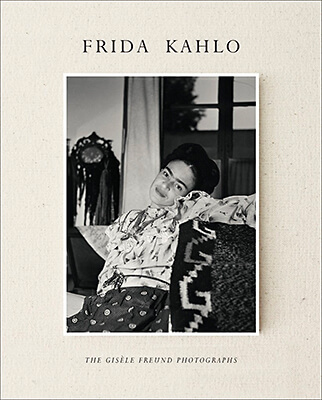
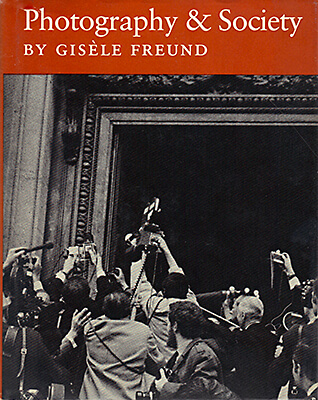
Gisèle Freund was a German-born French photographer and photojournalist, famous for her documentary photography and portraits of writers and artists. Her best-known book, Photographie et société (1974), is about the uses and abuses of the photographic medium in the age of technological reproduction. In 1977, she became President of the French Association of Photographers, and in 1981, she took the official portrait of French President François Mitterrand. She was made Officier des Arts et Lettres in 1982 and Chevalier de la Légion d'honneur, the highest decoration in France, in 1983. In 1991, she became the first photographer to be honored with a retrospective at the Musée National d’art Moderne in Paris (Centre Georges Pompidou). Freund's major contributions to photography include using the Leica Camera (with its ability to house one film roll with 36 frames) for documentary reportage and her early experimentation with Kodachrome and 35 mm Agfacolor, which allowed her to develop a "uniquely candid portraiture style" that distinguishes her in 20th century photography. She is buried at the Montparnasse Cemetery in Paris, France near her home and studio at 12 rue Lalande.

Freund was born into a textile merchant family on 19 December 1908 to Julius and Clara (nee Dressel) Freund, a wealthy Jewish couple in the Schöneberg district of Berlin. Her father, Julius Freund, was a keen art collector with an interest in the work of photographer Karl Blossfeldt, whose close-up studies explored the forms of natural objects. Freund's father bought Gisèle her first camera, a Voigtländer 6x9 in 1925 and a Leica camera as a present for her graduation in 1929. In 1931, Freund studied sociology and art history at Albert-Ludwigs-Universität Freiburg, Breisgau, Germany; and from 1932-33 she studied at the Institute for Social, Sciences, University of Frankfurt under Theodor W. Adorno, Karl Mannheim and Norbert Elias (also known as the Frankfurt School). At university, she became an active member of a student socialist group and was determined to use photography as an integral part of her socialist practice. One of her first stories, shot on May 1, 1932, "shows a recent march of anti-fascist students" who had been "regularly attacked by Nazi groups." The photos show Walter Benjamin, a good friend of Freund, and Bertolt Brecht.

In March 1933, a month after Adolf Hitler rose to power in Germany, Walter Benjamin fled to Paris on May 30, Gisèle followed him since she was both a socialist activist and a Jew. She escaped to Paris with her negatives strapped around her body to get them past the border guards. Gisèle and Walter Benjamin would continue their friendship in Paris, where Freund would famously photograph him reading at the National Library. They both studied and wrote about art in the 19th and 20th centuries as Freund continued her studies at the Sorbonne. In 1935, Andre Malraux invited Freund to document First International Congress in Defense of Culture in Paris, where she was introduced to and subsequently photographed many of the notable French artists of her day. Freund befriended the famed literary partners, Sylvia Beach of Shakespeare and Company, and Adrienne Monnier of Maison des Amis des Livres. In 1935, Monnier arranged a marriage of convenience for Freund with Pierre Blum so that Freund could obtain a visa to remain in France legally (they officially divorced after the war in 1948).

In 1936, while Sylvia Beach was visiting the United States, Freund moved into Monnier and Beach's shared apartment and they became intimates. When Beach returned, she ended her intimate relationship with Monnier yet maintained a strong friendship with both Monnier and Freund. Freund finished her Ph.D. in Sociology and Art at the Sorbonne in 1936, and Monnier published the doctoral dissertation as "La photographie en France au dix-neuvieme siècle," under the La Maison des Amis des Livres imprint by Monnier.

Monnier introduced Gisèle Freund to the artists and writers who would prove her most captivating subjects. Later that year, Freund became internationally famous with her photojournalistic piece, Northern England, which was published in Life magazine on December 14, 1936 and showed the effects of the depression in England. No magazine in France could publish color photographs at that time, so Freund's work with Life—one of the first color mass magazines—would start a lifelong relationship between the photographer and magazine. In 1938, Monnier suggested that Freund photograph James Joyce for his upcoming book, Finnegans Wake. Joyce, who disliked being photographed, invited Gisèle Freund to his Paris flat for a private screening of her previous work. He was impressed enough by Freund's work to allow her to photograph him, and over a period of three days, she captured the most intimate portraits of Joyce during his time in Paris.

In 1939, after being "twice refused admission to Tavistock Square," Freund gained the confidence of Virginia Woolf and captured the iconic color photographs of the Woolfs on display in the English National Portrait Gallery. Woolf even "agreed to change her clothes to see which best suited the colour harmony and insisted on being photographed with Leonard (and their spaniel Pinka). In some of the prints, Woolf is pale and lined, in others smiling a little and more youthful. The background of fabrics and mural panels by Bell and Grant adds to the value of the images; this was the inner sanctum of the queen of Bloomsbury where parties were given and friends came to tea. Just over a year later the house was destroyed in The Blitz."

On June 10, 1940, with the Nazi invasion of Paris looming, Freund escaped Paris to Free France in the Dordogne. Her husband by convenience, Pierre, had been captured by the Nazis and sent to a prison camp. He was able to escape and met with Freund before going back to Paris to fight in the Resistance. As the wife of an escaped prisoner, a Jew, and a Socialist, Freund "feared for her life." In 1942, with the help of André Malraux, who told his friends, "we must save Gisèle!," Freund fled to Buenos Aires, Argentina "at the invitation of Victoria Ocampo, director of the periodical Sur. Ocampo was at the center of the Argentinean intellectual elite, and through her, Freund met and photographed many great writers and artists, such as Jorge Luis Borges and Pablo Neruda."

While living in Argentina, Freund started a publishing venture called Ediciones Victoria. She writes, "In reality, I started this for the De Gaulle government in exile where I was working in the Information ministry, volontairement without payment." She also founds a relief action committee for French artists and becomes a spokesperson for Free France. In 1947, Freund signed a contract with Magnum Photos as a Latin America contributor, but by 1954, she was declared persona non grata by the U.S. Government at the height of the Red Scare for her socialist views, and Robert Capa forced her to break ties with Magnum. In 1950, her photo coverage of a bejeweled Eva Peron for Life magazine caused a diplomatic stir between the United States and Argentina and upset many of Peron's supporters—the ostentatious photographs went against the official party line of austerity; Life Magazine was blacklisted in Argentina, and once again, Freund had to escape a country with her negatives. She moved to Mexico and became friends with Diego Rivera, Frida Kahlo, Alfaro Siqueiros, and José Clemente Orozco. In 1953, she moved back to Paris permanently. Over the life of her career, she went on over 80 photojournalism assignments, primarily for Life and Time, but also Du, The Sunday Times (London), Vu, Picture Post, Weekly Illustrated, and Paris Match, among others. From the 1960s onward, Freund continued to write, and her reputation as an important portrait photographer grew with each successive exhibition. Gisèle Freund is now celebrated as one of the best portrait photographers of the twentieth century: Upon her death, "President Jacques Chirac praised her as 'one of the world's greatest photographers."

Source: Wikipedia


Ms. Freund was one of Europe's most prominent photographers and a pillar among French feminist intellectuals after settling in Paris in the 1930s. Born to a wealthy Jewish family, she became a student activist who battled the rise of Hitler's national socialism. She studied sociology in Frankfurt but was forced to flee in 1933, escaping as police were about to arrest her.

In Paris, Gisèle Freund pursued doctoral studies at the Sorbonne, where her enthusiasm for photography was met with skepticism. She met militant feminist writer Adrienne Monnier while browsing at La Maison des Amis du Livre, Monnier's book shop on the Left Bank. The shop was frequented by the likes of Simone de Beauvoir, Andre Gide, Ernest Hemingway, James Joyce, Jean-Paul Sartre and Paul Valery. Monnier became her lifelong mentor and companion, introducing her to the Parisian intellectual set and encouraging her to pursue photography.

In 1935, Ms. Freund executed a widely acclaimed series of photographs, documenting the misery of British coal miners, and met Andre Malraux. Her portrait of the author of Man's Fate--wrapped in a trench coat with a cigarette dangling from his mouth--is among her most well-known photographs. Her use of color clashed with the prevailing style of retouched black-and-white studio portraits, but she persevered, saying color "was closer to life." Gisèle Freund specialized in conveying attitudes. She focused on hands, posture and clothing. Some of her most famous photographs appeared in Life and Time magazines.

The Nazi invasion of France in 1940 interrupted her career. Gisèle Freund fled again, to southern France and later Argentina, where she worked until the war's end in 1945. She returned to France, where she earned an international reputation as the photographer of Jean Cocteau, De Beauvoir, Joyce, and Sartre, among others. Her works include Three Days With Joyce, a collection of black-and-white photographs showing the Irish writer with friends and family, and correcting proofs of his novel Finnegan's Wake. "Freund was involved in the lives of the artists and writers she photographed," said art critic Ann Cremin, who knew Ms. Freund. "She was more of a witness than a reporter."

In later years, Gisèle Freund became well-known in her adopted country, winning the National Grand Prize for Photography in 1980. She took the official photograph at the presidential inauguration of Socialist Francois Mitterrand in 1981. She gave up photography in the mid-1980s.

Source: Washington Post



Gisèle Freund's Video

Selected Books

Inspiring Portfolios

Call for Entries
AAP Magazine #56 Shadows
Publish your work in our printed magazine and win $1,000 cash prizes
 
Stay up-to-date  with call for entries, deadlines and other news about exhibitions, galleries, publications, & special events.

More Great Photographers To Discover

Bruce Barnbaum
United States
1943
Bruce Barnbaum, of Granite Falls, WA, entered photography as a hobbyist in the 1960s, and after four decades, it is still his hobby. It has also been his life's work for the past 30 years. Bruce's educational background includes Bachelor's and Master's degrees in mathematics from UCLA. After working for several years as a mathematical analyst and computer programmer for missile guidance systems, he abruptly left the field and turned to photography. Bruce has authored several books, some of which have become classics. The Art of Photography was first published in 1994 and remained in print until 2007. Bruce has been self-publishing the book ever since, but with limited distribution. Bruce is a frequent contributor to several photography magazines. His series The Master Printing Class is featured in each issue of Photo Techniques, and his articles are published regularly in LensWork. Through his workshops, articles, lectures, books, and innovative photography, Bruce has become a well-known and highly respected photographer, educator, and pioneer. Bruce is recognized as one of the finest darkroom printers on this planet, both for his exceptional black-and-white work, as well as for his color imagery. He understands light to an extent rarely found, and combines this understanding with a mastery of composition, applying his knowledge to an extraordinarily wide range of subject matter. His work is represented by more than ten galleries throughout the United States and Canada, and is in the collections of museums and private collectors worldwide.Source: O’Reilly Bruce has been an active environmental advocate for more than three decades, both independently and through organizations such as the Sierra Club (where he served on the Board of Directors of the Angeles Chapter from 1976-80, and the California Regional Conservation Committee), Audubon, the Stillaguamish Citizens’ Alliance (which he co-founded in 1991) now renamed the Mountain Loop Conservancy, 1000 Friends of Washington, and the North Cascades Conservation Council (where he has served on the Board of Directors since 1994). As a photographer he has seen the changes in our land and our landscape—almost all of them for the worse—that have taken place in the 35 years he has actively been photographing our planet. He points out that we all live on this one magical globe called “Earth,” and unless we love it, revere it, and protect it, we’ll all perish with it. Currently, we are exploiting planet earth at an unprecedented rate, saddling ourselves with many self-inflicted problems: human overpopulation, global warming, an increasing ozone hole, deforestation, overfishing of the oceans, overuse of fresh water resources, pollution of the air, land, and waters (lakes, rivers, and oceans), and many others too numerous to detail. But humanity is doing little to correct any one of these problems. We have enough knowledge to recognize the steps that should be taken to turn from our destructive ways to more intelligent, productive, and sustainable means, but we may not have the wisdom or political will to implement that knowledge.Source: Fahey/Klein Gallery
Bryan Adams
Canada
1959
Adams works as a photographer as well as musician, aside from being published in British Vogue, L'uomo Vogue, Harper's Bazaar, Esquire, Interview magazine and i-D, among others, he has also shot advertising campaigns for Guess Jeans, Sand, Converse, Montblanc, John Richmond, Fred Perry, and more recently for Escada. He has won Lead Awards twice in Germany for his fashion work, most recently June 2012 and previously in 2006. Other photographic endeavours include founding the art fashion Zoo Magazine, based in Berlin, Germany for which he shoots for regularly. His first book of photos will be released by Steidl in 2012 entitled Exposed. Previous published collaborations include; American Women June 2005, for Calvin Klein in the United States; proceeds from this book went to Memorial Sloan–Kettering Cancer Center in New York City for their breast cancer research for programs, and Made in Canada December 1999 for Flare Magazine in Canada; proceeds went to the Canadian Breast Cancer Foundation. Both books were dedicated to his friend Donna, who died of the disease. As a photographer, Adams has worked with many of his musical peers, including Lana Del Rey, The Who, Sting, Shania Twain, Mick Jagger, Arcade Fire, Ray Charles, Tina Turner, Rod Stewart, Robert Plant, Take That, Joss Stone, Plácido Domingo, Sarah McLachlan, Celine Dion, Billy Idol, Moby, Lindsay Lohan, Amy Winehouse, Annie Lennox, Peter Gabriel, Bryan Ferry, Lenny Kravitz, Die Antwoord, and Morrissey to name a few. On 27 November 2000 Adams played onstage with The Who at the Royal Albert Hall. A DVD of the concert was issued. Adams photographed the band and his photos appear in the DVD booklet. In 2002, Adams was invited, along with other photographers from the Commonwealth, to photograph Queen Elizabeth II during her Golden Jubilee; one of the photographs from this session was used as a Canadian postage stamp in 2004 and again in 2005 (see Queen Elizabeth II definitive stamp (Canada)), another portrait of both Queen Elizabeth II and Prince Philip is now in the National Portrait Gallery in London. Adams supports the Hear the World initiative as a photographer in its aim to raise global awareness for the topic of hearing and hearing loss. He photographed Michael J. Fox and Tatjana Patitz in the 2011 Carl Zeiss AG company calendar in New York City in the summer of 2010. The focus was about the size difference of the subjects in a comedic presentation. In 2011, Adams provided the cover art for Lioness: Hidden Treasures, a posthumous release by Amy Winehouse.Source: Wikipedia Rock Icon Bryan Adams' lifelong interest in photography turned into a vocation when he began shooting for fashion magazines and advertisers more than a decade ago. But it's not all models and celebrities: He most recently turned his lens on 40 British soldiers returning from Iraq and Afghanistan. His series Wounded: The Legacy of War, the subject of a 2013 book from Steidl and an exhibit at London’s Somerset House on display this month through Jan. 25, showcases the brutal (and all too common) injuries incurred in battle. "I didn't like the fact that people were getting so badly hurt, so many people were killed, were displaced, forgotten. This is my statement," says Adams, 55. On the legacy of the images, he says, "I hope [people] realize that these guys made an incredible sacrifice. War is disgusting and this is the result of what happens when we decide to beat each other up."Source: Billboard
Michael Joseph
United States
1977
Michael Joseph is a street portrait and documentary photographer. Raised just outside of New York City, his inspirations are drawn from interactions with strangers on city streets and aims to afford his audience the same experience through his photographs. His portraits are made on the street, unplanned and up close to allow the viewer to explore the immediate and unseen. Michael's project “Lost and Found” has been featured on CNN.com, AllAboutPhoto.com and published in magazines internationally. He has been exhibited nationally, notably at Daniel Cooney Fine Art (New York, NY), the Aperture Gallery (New York, NY), Project Basho Gallery (Philadelphia, PA) as well as the Rayko Gallery (San Francisco, CA). He has lectured for Amy Arbus at the International Center of Photography (New York, NY) in portraiture classes at the New England School of Photography (Boston, MA) and taught at the Light Factory (Charlotte, NC). His portraits are held in the permanent collection at the Fort Wayne Museum of Art in Indiana and private collections. He is a 2016 Photolucida Top 50 winner, LensCulture Portrait Award Finalist and a recipient of the fellowship in photography from the Massachusetts Cultural Council. Statement about the "Lost and Found" "We have secrets about traveling you wouldn't believe and we share with no one but ourselves."Huck Lost and Found is a portrait series that examines the individual souls of lost youth who abandon home to travel around the country by hitchhiking and freight train hopping. Within their personal journey driven by wanderlust, escapism or a search for transient jobs, they find a new family in their traveling friends. They are photographed on public streets using natural light, in the space in which they are found. Like graffiti on the walls of the city streets they inhabit and the trains they ride, their bodies and faces become the visual storybook of their lives. Their clothing is often a mismatch of found items. Jackets, pants and vests are self-made like a patchwork quilt, using fabric pieces of a fellow traveler's clothing embellished by metal bottle caps, buttons, safety pins, lighter parts, syringe caps, and patches. The high of freedom however, does not come without consequence. Their lifestyle is physically risky and rampant with substance abuse. Each traveler's story is different, but they are bound by a sense of community. Often unseen and mistaken by their appearances, they are some of the kindest people one might meet. Their souls are open and their gift is time. As one states, “They will give you their time because time is all they have.” And in some cases, in the family they have lost, they have found each other. Find out more about Michael Joseph in this article
Arthur Elgort
United States
1940
Arthur Elgort (born June 8, 1940) is an American fashion photographer best known for his work with Vogue magazine. Elgort was born in Brooklyn, to Sophie (née Didimamoff) and Harry Elgort (April 10, 1908 – October 23, 1998), a restaurant owner. He is of Russian-Jewish heritage. Raised in New York City, he attended Stuyvesant High School and Hunter College, where he studied painting. He lives in New York City with his wife, Grethe Barrett Holby, who is a producer, stage director, choreographer, and dramaturge, and three children, including actor and singer Ansel Elgort. Elgort began his career working as a photo assistant to Gosta "Gus" Peterson. Elgort's 1971 debut in British Vogue created a sensation in the Fashion Photography world where his soon-to-be iconic "snapshot" style and emphasis on movement and natural light liberated the idea of fashion photography. In September 2008, he told Teen Vogue that he credited Mademoiselle for his big break: "They were really brave and gave me a chance. It was the first time I was shooting a cover instead of a half-page here or there." He worked for such magazines as International and American Vogue, Glamour, GQ, Rolling Stone, and Teen Vogue, and shooting advertising campaigns with fashion labels as Chanel, Valentino, and Yves Saint Laurent. He still works for fashion publications, as well as working on his most recent 2009 advertising campaigns with Via Spiga and Liz Claiborne with Isaac Mizrahi. His work is exhibited in the permanent collections of the International Center of Photography in New York, in the Victoria and Albert Museum in London and in the Museum of Fine Arts in Houston, Texas. In 2011, Elgort won the CFDA Board of Directors' Award.Source: Wikipedia Much like photographers Martin Munkacsi and Richard Avedon before him, Arthur Elgort found inspiration working out of the studio— both in the city streets and in natural settings such as the countryside of upstate New York. Realizing that movement, humor, and natural light are all a part of the genuine photographic experience, Elgort took his models out into the world employing improvisation as a catalyst for the creative accidents to happen. As Elgort states in the Introduction to The Big Picture, “When my career was just beginning, I noticed that most of the magazines had plenty of studio photographers – All I saw were models standing still. So I decided to do something else. I took my models out on the streets of New York, Paris, or wherever I was, and the magazines liked it. It felt different.” Some of Elgort’s most recognizable photographs— candid shots of Fashion greats Linda Evangelista, Christy Turlington, Naomi Campbell, Kate Moss, and Karlie Kloss— were taken when Elgort was not “working”, moments in between shoots, models getting ready behind the scenes, or unwinding after hours. It is Elgort’s photojournalist style of capturing these spontaneous, authentic moments that make his images so effortless, genuinely reflecting the periods he documented with an honesty allowing Elgort’s images to become more and more iconic as time passes.Source: Fahey / Klein Gallery Arthur was born in 1940 in New York City. As a teenager he attended Stuyvesant High School and then went on to study painting at Hunter College. Finding the medium too lonely, he decided to try his hand at photography and soon discovered it was a talent. Shortly thereafter he made his debut in British Vogue in 1971. With just one shoot he created not only a sensation but a permanent place in the world of fashion photography. Arthur's relaxed and easy snapshot style was a breath of fresh air in a world where staged and stiff studio shoots with mannequin-like models were the norm. Arthur encouraged his subjects to move freely in the frame. The models he chose were lively, wore less make-up, and were simply enhanced by the natural light that he favored. Taking his models outside into the “real world,” where the clothes he was being asked to photograph would be worn and put to the test, became a signature of his personal style. Arthur quickly became one of the best-known and most emulated photographers in the world. The risks that he took with his photographic style changed the idea of what a fashion photograph could be and pushed the entire industry forward. For over 50 years Arthur has been a major influence, from his Vogue covers to his luxury-brand ad campaigns, his work is an inspiration. His style and influence created infinite possibilities in the world of fashion photography which he continues to explore today from his base in New York City. Source: www.arthurelgort.com
Christopher Anderson
Christopher Anderson (b.1970, Canada), a member of Magnum Photos for over ten years, has covered an innumerable list of political and social issues around the world. Whilst he is widely known for his moving photographs of fleeing Haitian immigrants aboard a sinking handmade boat named 'Believe in God', Anderson has also made pictures of Barack Obama, Al Gore and David Letterman amongst countless other people and places. Contrary to the often-unforgiving frontiers Anderson places himself in, his photographs are always imbued with palpable emotion. In a society in which a torrent of photographs from the mass media drive an apathetic view of such narratives, Anderson instead offers an alternative, poetic and intimate practice that that speaks of his own experience, whilst constructing a frame for us to experience it with him. In 2000, Christopher Anderson received the Robert Capa Gold Medal for his series on the crossing made by boat by Haitian refugees to the United States. He has also been nominated for a Pulitzer Prize. Anderson has worked for Newsweek Magazine and National Geographic Magazine and in 2011 he became the first Photographer in Residence at New York Magazine. Numerous books have been published on his work: Nonfiction (2003), Capitolio (2009), Son (2013), Stump (2014) and his latest book Approximate Joy (2018). Anderson lives and works in both New York and Barcelona.Source: The Ravestijn Gallery Christopher Anderson is known for his emotionally charged, artfully drawn images that explore themes of truth and subjectivity. He is one of today’s most influential photographers, whose origins began in war reporting and later transformed into something more intimate, blending the worlds of commercial, art and fashion work, but always with a foundation in documentary. Anderson was born in 1970 in Canada and grew up in west Texas. His photographic career began working for local newspapers. In 2000, on assignment for the New York Times Magazine , he boarded a small wooden boat with 44 Haitians trying to sail to America. The boat sank in the Caribbean. The photographs received the Robert Capa Gold Medal and marked the beginning of a ten-year period as a contract photographer for Newsweek Magazine and National Geographic Magazine. In 2011 he became New York Magazine’s first ever Photographer in Residence; a notable collaboration that would also mark Anderson’s shift into portraiture and fashion, making images of significant figures including Barack Obama, Spike Lee and Debby Harry. In 2008, after the birth of his first child, Anderson moved further away from journalistic magazine work to subjects more immediate to his personal experience. In 2012, his book, SON, was published, defining a visual direction that has come characterize to his work. Other projects created within this intensely intimate approach include Capitolio, Stump and Approximate JOY.
J.M. Golding
United States
J. M. Golding is a photographic artist based in the San Francisco Bay area. She chooses plastic, pinhole, and vintage film cameras as her primary tools: plastic cameras such as the Holga for the spontaneity they promote and their capacity to help create dreamlike images, pinhole cameras for their simplicity and their contemplative quality, and vintage film cameras for the subjectivity of the images that are possible. J. M.'s photographs have been shown internationally in numerous juried and invitational group exhibitions, and she is the recipient of the 2013 Holga Inspire Award, the Lúz Gallery Curator's Choice Award (2009), Best of Show in Wanderlust (Dickerman Prints, 2017, in collaboration with Al Brydon), and several Honorable Mentions in other juried exhibitions. Her work has also appeared in Black & White, Diffusion, Shots, F-Stop, Square, and Insight magazines, Inside the Outside, Don't Take Pictures, The Holga Darkroom, and The Shot and in two books of pinhole photographs. She has been profiled in LensCulture, F-Stop Magazine, Wobneb Magazine, Mother F-Stop, Toycamera.es, and Pinholista. About Transitional Landscapes These photographs contain transitions from outer landscape to inner, from objective landscape to subjective. Square frames of film that are typically separate join together to form new, integrated images that would not have been possible otherwise, wholes that are greater than the sum of their parts, landscapes that are simultaneously real and imaginary. In this way, and also by transcending the literal separation of the component scenes, they allude to psychoanalyst D. W. Winnicott's concept of the transitional object. The photographs embody the eye's transitions across the scene, moving incrementally from one perspective to another as they take on and combine multiple points of view. Because the overlapping exposures used to create the images are made sequentially, as compared to the single moment typically seen in photographs, the series of exposures in each image portrays transitions in time from one moment to the next, creating a connection between past and present, and possibly, present and future. Although the time and distance traversed are in many ways small, the transitions across them create surprising changes in what is visible.
Michael Knapstein
United States
1956
Michael Knapstein (born 1956, Stevens Point, Wisconsin, USA) is a fine-art photographer who has earned international recognition for his insightful and nuanced visual exploration of the American Midwest. He now lives in Middleton, Wisconsin. Michael's photographs began attracting national attention while still in high school. At the age of 17, his work earned its way into the permanent collection of the George Eastman Museum in Rochester, NY. After graduating from the College of Fine Arts and Communication at the University of Wisconsin, Knapstein began a 30+ year career in the world of advertising. He sold his ad agency in 2010 and returned to his first love of photography. Since this reemergence, Michael's work has been recognized with hundreds of awards in some of the world's most prestigious photography competitions. He is a four-time Critical Mass Finalist, Pollux Award Winner and was named International Landscape Photographer of the Year at the 5th Barcelona Foto Biennale in Barcelona, Spain. He was also named one of "14 Inspiring American Artists" by Skillshare and Feature Shoot. His work has been widely exhibited in museums and galleries around the world. The Unforgotten My photographic series “The Unforgotten” was created to honor and preserve the rapidly disappearing family farm and the rural agricultural tradition that helped build the American Midwest. During my lifetime, we have lost more than 105,000 family farms just in my home state of Wisconsin. While these traditional small farms are falling victim to corporate agriculture and urbanization, their legacy is still honored with events that celebrate the proud agricultural heritage of the Midwest. Often, these gatherings include antique agricultural equipment, sometimes dating back to the days of steam power. I explored this world for several years by attending more than 50 small agricultural fairs and rural festivals across the Midwest. I was drawn to this subject matter because these people and their farm equipment – both once symbols of progress and innovation – now stand as relics of a bygone era. The resulting images speak to themes of rural identity, memory, loss, history, heritage, pride, family, community and sense of place. To express the timeless nature of this material, I approached this project from a “straight photography” perspective in the spirit of Group f/64. My approach was informed by the iconic work of WPA artists and mid-century modernist photographers such as Adams, Weston, White, Strand, Parks and Evans. My work was also influenced by the American Regionalism movement and the work of artists including Wood, Benton, Curry, Wyeth and Hopper. These proud people and their farm machines may eventually fade into the mist of time. But perhaps through my images, their stories may forever remain Unforgotten.
Philippe Fatin
France
1962
Philippe Fatin is a photographer and a great traveller: after first stays in Mexico and South America, he discovered Asia (Nepal, India, Sri Lanka, Thailand, Japan, Burma, Cambodia, Laos, Vietnam, Korea) and fell in love with China and more particularly with the region of Guizhou. After an interlude with the Wayanas Indians in French Guyana and the publication of his first book Guyane terre d'espace, he multiplies his travels to the Miao people of Guizhou and ends up residing there for more than twenty years. He published a book Randonnée d'un photographe voyageur in China and exhibits at the Guiyang museum, he also publishes in the national and international press. He is also a collector, organized various exhibitions of his personal collections in French museums: Gold and lacquers from Burma, tribal textiles from southwest China, Nuo masks from the exorcism theatre of China accompanied by publications. In The Mounts of the Moon When I got off the Trans-Siberian Railway in 1985, I knew nothing about China. The blue of the heater set the tone on a red background. I spent the first two years getting to know this culture, before discovering a province in the southwest that was still untouched by any contact with the outside world. The last Westerners present in the region were missionaries, who were driven out of it in 1949 by the communists. The province of Guizhou is one of the poorest, along with that of Gansu. "There are never three days of good weather in a row, the inhabitant does not have three sapeques in his pocket, and there are not three lilies of the flat country." That sets the tone. This province is rich in the diversity of its ethnic minorities, who had managed to maintain an authentic way of life. The villages still lived in autarky, protected by the mountain rampart. Ninety percent of the territory is karst peaks. My camera equipment consists of two Leica M6 cameras and four lenses: 28, 35, 50, and 90mm. With 270 days of rain per year and a constant fog, I use 400 ASA B/W silver film. The access of this province being forbidden to tourism, the task was not easy. The game of cat and mouse with the local authorities was not a perennial solution to penetrate these misty mountains concealing so many secrets. My approach was to establish a base in the provincial capital. I made "Guangxi" connections, and gained the trust of the people and the local authorities. I worked hard to make them understand my work of investigating ethnic groups, especially the Miaos. I obtained special permits to stay in various valleys and villages. After years, I was able to set up different bases in villages that were completely self-sufficient. Sharing the intimacy of the people and building trust, I was able to open the doors to them. My curiosity allowed the rest It would absorb twenty years of my life, during which I photographed a way of life that surged from festivals governed by the gods and the seasons. The evolution of the country a galloping modernization was going to change the situation. Obeying the three priorities of the government: water, electricity and roads, the opening up of the province would radically shape a new face of the population and its environment. In fifteen intervals, my photographic work has thus taken on a patrimonial status. A massive folklorization of ethnic groups (amusement park, pilot village,) their acculturation by the Han mass, the race for enrichment, have contributed to a new mode of integration of these ethnic minorities. This modernization of China and its brutal change of vision of society, over a short period of time, swept away ancestral cultures. Few Westerners have lived in this province, which is now crossed by highways connecting Shanghai, or Guangzhou. My photos are a testimony acquired over the long term, on a way of life that is disappearing in favour of a strong nationalism. It seems to me essential to show the cultural richness of this people, (Nine million people). The province of Guizhou is the home of the Miao diaspora (more than three hundred clans), a threatened melting pot of traditions and rituals mostly ignored by the Han. Indeed, in this rapidly changing society, the peasant populations, known as "floating", have been the cheap labour of China's economic departure.
Advertisement
AAP Magazine #56 Shadows
Win a Solo Exhibition in May
AAP Magazine #56 Shadows

Latest Interviews

Exclusive Interview with Matthew Finley
American photographer Matthew Finley turns inward, using photography as a way to explore identity, memory, and emotional truth. Based in Los Angeles, his practice moves between performance, gesture, and found imagery, creating a visual language that is both intimate and deeply personal
Exclusive Interview with Jan Janssen
Dutch photographer Jan Janssen explores universal human experiences through his long-term project It Matters, winner of the May 2025 Solo Exhibition. Begun in 2016, the series captures intimate moments of everyday life—love, loss, connection, and belonging—across Central and Eastern Europe. Working in countries such as Turkey, Azerbaijan, and Armenia, Janssen spends extended time within communities, building relationships based on trust and respect. His approach allows him to move beyond observation, revealing deeply human and authentic moments. Rooted in travel and personal discovery, It Matters reflects Janssen’s search for what connects us all in an increasingly divided world. The project is ongoing and will culminate in a photobook scheduled for publication in 2026.
Exclusive Interview with Henk Kosche
German photographer Henk Kosche turns his lens toward the streets of Halle an der Saale, capturing everyday life in the late years of the former German Democratic Republic. At the time, Kosche was studying design and exploring the city with his camera, drawn to the atmosphere of its industrial landscape and the quiet rhythms of daily life. His series Street Photography at the End of the 80s, selected as the Solo Exhibition for July 2025, revisits a body of work created just before a period of profound change. Rediscovered decades later in a small box of 35mm negatives, these photographs offer glimpses of a city and its people at a moment suspended between the familiar and the unknown.
Exclusive Interview with Anastasia Samoylova
Anastasia Samoylova is an American artist whose photographic practice is shaped by close observation and a deep attentiveness to place. Working between documentary and formal exploration, she photographs landscapes, architecture, and everyday scenes with a sensitivity to light, structure, and atmosphere. Since relocating to Miami in 2016, her work has increasingly focused on how environments—both natural and built—carry social, cultural, and emotional traces. We asked her a few questions about her practice and her way of seeing, to better understand the thoughts and experiences that shape her work—while allowing the images themselves to remain open and speak in their own time.
Exclusive Interview with Marijn Fidder
Marijn Fidder is a Dutch documentary photographer whose work powerfully engages with current affairs and contemporary social issues. Driven by a deep sense of social justice, she uses photography to speak on behalf of the voiceless and to advocate for the rights of those who are most vulnerable. Her images have been widely published in major international outlets including National Geographic, CNN Style, NRC Handelsblad, Volkskrant, GUP New Talent, and ZEIT Magazin. Her long-term commitment to disability rights—particularly through years of work in Uganda—culminated in her acclaimed project Inclusive Nation, which earned her the title of Photographer of the Year 2025 at the All About Photo Awards. She is also the recipient of multiple prestigious honors, including awards from World Press Photo and the Global Peace Photo Award. We asked her a few questions about her life and work.
Exclusive Interview with Josh S. Rose
Josh S. Rose is a multidisciplinary artist working across photography, film, and writing. His practice bridges visual and performing arts, with a strong focus on movement, emotion, and the expressive potential of the image. Known for his long-standing collaborations with leading dance companies and performers, Rose brings together authenticity and precise composition—a balance he describes as “technical romanticism.” His work has been commissioned and exhibited internationally, appearing in outlets such as Vogue, at the Super Bowl, in film festivals, and most recently as a large-scale installation for Lincoln Center for the Performing Arts. A sought-after collaborator, he has worked with major artists, cultural institutions, and brands, following a previous career as Chief Creative Officer at Interpublic Group and the founder of Humans Are Social. We asked him a few questions about his life and work.
Interview with Maureen Ruddy Burkhart
Photographer Maureen Ruddy Burkhart brings a quietly attentive and deeply human sensibility to her exploration of the world through images. Shaped by a life immersed in photography, film, and visual storytelling, her work is guided by intuition, observation, and an enduring interest in the emotional undercurrents of everyday life. With a practice rooted in both fine art traditions and documentary awareness, she approaches her subjects with sensitivity, allowing subtle moments to emerge naturally rather than be imposed. Her series Til Death, selected as the Solo Exhibition for February 2025, reflects this long-standing commitment to photography as a space for reflection rather than spectacle. Drawn to moments that exist just outside the expected frame, Burkhart’s images suggest narratives without resolving them, leaving room for ambiguity, humor, and quiet connection. We asked her a few questions about her life and work.
Exclusive Interview with Peter Ydeen
Winner of AAP Magazine #45 Travels, his series reflects this unique vision—capturing the spirit of place through subtle layers of light, color, and emotion. Whether traveling abroad or observing the rhythms of his own surroundings, Ydeen creates images that feel both grounded and enchanted, inviting viewers into a world where reality and reverie meet.
Exclusive Interview with Julie Wang
Chinese-born photographer Julie Wang brings a poetic, contemplative sensitivity to her visual exploration of the world. Having lived for nearly equal parts of her life in China, Europe, and the United States, she approaches her subjects with the nuanced perspective of someone shaped by many cultures. This blend of distance, curiosity, and emotional resonance infuses her work with a quiet depth, allowing her to reveal the fragile beauty and subtle tensions that often pass unnoticed.
Call for Entries
AAP Magazine #56 Shadows
Publish your work in our printed magazine and win $1,000 cash prizes