All about photo.com: photo contests, photography exhibitions, galleries, photographers, books, schools and venues.
FINAL DAYS TO WIN A SOLO EXHIBITION IN MAY 2026
O. Winston Link
O. Winston Link

O. Winston Link

Country: United States
Birth: 1914 | Death: 2001

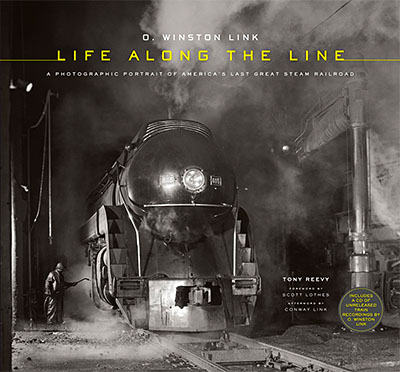
Ogle Winston Link (December 16, 1914 – January 30, 2001), known commonly as O. Winston Link, was an American photographer, best known for his black-and-white photography and sound recordings of the last days of steam locomotive railroading on the Norfolk & Western in the United States in the late 1950s. A commercial photographer, Link helped establish rail photography as a hobby. He also pioneered night photography, producing several well-known examples including Hotshot Eastbound, a photograph of a steam train passing a drive-in movie theater, and Hawksbill Creek Swimming Hole showing a train crossing a bridge above children bathing.

O. Winston Link and his siblings, Eleanor and Albert Jr., spent their childhood in the borough of Brooklyn, New York City, where they lived with their parents, Albert Link, Sr. and Anne Winston Jones Link. Link's given names honor ancestors Alexander Ogle and John Winston Jones, who had served in the U.S. House of Representatives in the 19th century. Al Link taught woodworking in the New York City Public School system, and encouraged his children's interest in arts and crafts, and first introduced Winston to photography.

Link's early photography was created with a borrowed medium format Autographic Kodak camera. By the time he was in high school, he had built his own photographic enlarger. After completing high school, Link attended the Polytechnic Institute of Brooklyn, receiving a degree in civil engineering. Before his graduation in 1937, he spoke at a banquet for the institute's newspaper, where he served as photo editor. An executive from Carl Byoir's public relations firm was present and was impressed by Link's speaking ability. He offered Link a job as a photographer.

O. Winston Link worked for Carl Byoir and Associates for five years, learning his trade on the job. He adapted to the technique of making posed photographs looking candid, as well as creatively emphasizing a point. On his first major assignment, to photograph part of the state of Louisiana in the summer of 1937, he found himself in New Iberia, the location where Cecil B. DeMille's 1938 movie "The Buccaneer", about Jean LaFitte was being filmed. Here he met his future first wife, a former Miss Ark-La-Tex, now actress/model/body double, Vanda Marteal Oglesby, who stood-in for lead actress Franciska Gaal. They 'took a shine' to one another and later that year she posed for some of his photographs in the French Quarter of New Orleans. They eventually married in 1942, but later divorced. Some of Link's photographs from this time included an image of a man aiming a gun at a pig wearing a bulletproof vest, and one eventually known as What Is This Girl Selling? or Girl on Ice, which was widely published in the United States and later featured in Life as a "classic publicity picture. According to Thomas Garver, a later assistant to Link, during his employment at Byoir's firm, Link "clearly defined a point of view and developed working methods that were to shape his entire career."

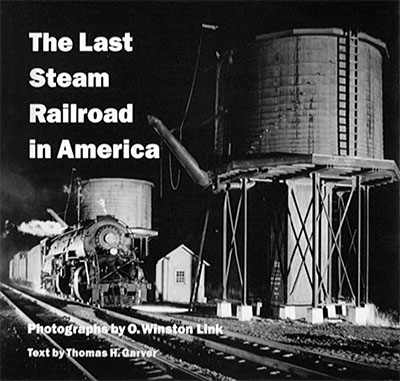
While in Staunton, Virginia, for an industrial photography job in 1955, O. Winston Link's longstanding love of railroads became focused on the nearby Norfolk and Western Railway line. N&W was the last major (Class I) railroad to make the transition from steam to diesel motive power and had refined its use of steam locomotives, earning a reputation for "precision transportation." Link took his first night photograph of the road on January 21, 1955, in Waynesboro, Virginia. On May 29, 1955 the N&W announced its first conversion to diesel and Link's work became a documentation of the end of the steam era. He returned to Virginia for about twenty visits to continue photographing the N&W. His last night shot was taken in 1959 and the last of all in 1960, the year the road completed the transition to diesel, by which time he had accumulated 2400 negatives on the project.

Although it was entirely self-financed, Link's work was encouraged and facilitated by N&W officials, from President Robert Hall Smith downwards. Besides the locomotives, he captured the people of the N&W performing their jobs on the railroad and in the trackside communities. Some of his images were of the massive Roanoke Shops, where the company had long built and maintained its own locomotives.

O. Winston Link's images were always meticulously set up and posed, and he chose to take most of his railroad photographs at night. He said "I can't move the sun — and it's always in the wrong place — and I can't even move the tracks, so I had to create my own environment through lighting." Although others, including Philip Hastings and Jim Shaughnessy, had photographed locomotives at night before, Link's vision required him to develop new techniques for flash photography of such large subjects. For instance, the movie theater image Hotshot Eastbound (Iaeger, West Virginia), photographed on August 2, 1956 [negative NW1103], used 42 #2 flashbulbs and one #0 fired simultaneously. Link, with an assistant such as George Thom, had to lug all his equipment into position and wire it up: this was done in series so any failure would prevent a picture being taken at all; and in taking night shots of moving trains the right position for the subject could only be guessed at. Link used a 4 x 5 Graphic View view camera with black and white film, from which he produced silver gelatin prints.

From 1960 until he retired in 1983 Link devoted himself to advertising. Among notable pictures taken during this period are those recording construction of the Verrazano-Narrows Bridge and other views of New York Harbor including the great ocean liners. In retirement, Link moved to South Salem, Westchester County, New York. In 1996, Link's second wife, Conchita, was arrested for (and later convicted of) stealing a collection of Link's photographs and attempting to sell them, claiming that Link had Alzheimer's disease and that she had power of attorney. She served six years in prison. After being released, she again attempted to sell some of Link's works that she had stolen, this time using the Internet auction site eBay. She received a three-year sentence. Conchita was also accused of imprisoning her husband. However, this allegation is disputed by some, and it never led to any criminal charges against Conchita. The story of Winston and Conchita became the subject of the documentary "The Photographer, His Wife, Her Lover" (2005) made by Paul Yule.

Link made a cameo appearance as a steam locomotive engineer in the 1999 film October Sky. He was actively involved with the planning of a museum of his work when he suffered a heart attack near his home in South Salem. He was transported to Northern Westchester Hospital in Mt. Kisco, Westchester County, NY where he died on January 30, 2001. Mr. Link was interred adjacent to his parents in Elmwood Cemetery, Shepherdstown, Jefferson County, West Virginia.

Source: Wikipedia


Link's reasons for shooting at night were simple. For one, it was more romantic and dramatic. For Link the trains were comparable to Garbo and Dietrich at their most glamorous. Secondly, steam from the trains against a night sky photographed white. Against a day sky it came out a dirty grey. Whatever the circumstances, Link's pictures were an intense labor of love. Indeed, he discovered, shortly after starting the Norfolk and Western project, that no one was much interested in photographs of a fast disappearing mode of transport. This was, after all, the beginning of the era of the great American car.

At first Link's photographs were appreciated for their combination of nostalgia, technical virtuosity, and – partly due to Link's famously cranky character and disposition - almost outsider artist's vision. But as photography has moved on, Link's work is increasingly seen and appreciated for the degree to which he controlled, planned, and constructed each image, prefiguring such well known contemporary artists as Gregory Crewdson and Jeff Wall, both of whom willingly acknowledge their interest in and appreciation of Link's work.

His work has been exhibited throughout the U.S., Europe and in Japan and is present in numerous major museum collections around the world. His rail photography is exhibited at the O. Winston Link Museum in Roanoke, Virginia, refurbished by the famous industrial designer, Raymond Loewy, which opened in 2004.

Source: Danziger Gallery



O. Winston Link's Video

Selected Books

Inspiring Portfolios

Call for Entries
AAP Magazine #57 Portrait
Publish your work in our printed magazine and win $1,000 cash prizes
 
Stay up-to-date  with call for entries, deadlines and other news about exhibitions, galleries, publications, & special events.

More Great Photographers To Discover

Tim Flach
United Kingdom
1958
Tim Flach is an animal photographer with an interest in the way humans shape animals and shape their meaning while exploring the role of imagery in fostering an emotional connection. Bringing to life the complexity of the animal kingdom, his work ranges widely across species, united by a distinctive stylisation reflecting an interest in how we better connect people to the natural world. He has four major bodies of work concerning different subjects: Equus (2008) focusing on the horse, Dogs Gods (2010) on canines, More Than Human (2012) a broad exploration of the world’s species, and Endangered (2017) a powerful document of species on the edge of extinction. He has published five books; Endangered (2017), Evolution (2013), More than Human, (2012), Dogs Gods (2010) and Equus (2008). Flach is an Honorary Fellow of the Royal Photographic Society, and was awarded an Honorary Doctorate from University of the Arts London in 2013. He lives and works in London with his wife and son. Source: timflach.com Over the past decade, Flach's work has increasingly focused on animals, ranging widely across species but united by a distinctive style that is derived from his concerns with anthropomorphism and anthropocentrism. His interests lie in the way humans shape animals, and shape their meaning. He has three major bodies of work: More Than Human, Dogs Gods, and Equus. Through the related books and exhibitions, Flach has attracted international interest. His images have been acquired by major public and private collections. Commissions by leading editorial and commercial clients have also garnered multiple awards, including three Cannes Lions. He has won the International Photography Award's Professional Photographer of the Year for fine art, and in 2013 was conferred with an Honorary Doctorate from Norwich University of the Arts, in recognition of his contribution to photography.
Rory J. Lewis
United Kingdom
1978
Rory J Lewis, a multi-award winning British macro wildlife photographer, is renowned for his artistic portrayal of invertebrates and ethical techniques to capture intricate wildlife images within their natural habitat. Growing up among the rolling hills of the Cotswolds, with a fascination for the local wildlife from a young age, Rory was exposed to cameras very early on, as his father was also a keen landscape photographer. After trying a few different genres, everything changed for Rory when he first aimed a macro lens at an insect. Through a blend of macro and traditional portrait techniques, Rory unveils the hidden essence of these elusive life-forms, creating compelling visuals that are both intimate and evocative. In an era marked by climate change and habitat loss endangering countless invertebrate species, Rory's images challenge viewers to perceive these often misunderstood creatures with newfound empathy and appreciation, in the hope of shedding new light on the critical roles they play within our fragile ecosystem. Rory’s works have been featured in many popular publications and have received awards from the Royal Entomological Society, World Nature Photography Awards, Gloucestershire Wildlife Trust, and was most recently the People of Nature Awards fauna photographer of the year. Rory has also represented Venus Optics Laowa lenses in their marketing on multiple occasions and has recently carried out Canon sponsored workshops in partnership with Wex Photo Video throughout the UK.
Advertisement
AAP Magazine #57 Portrait
Win a Solo Exhibition in May
AAP Magazine #57 Portrait

Latest Interviews

Exclusive Interview with Matthew Finley
American photographer Matthew Finley turns inward, using photography as a way to explore identity, memory, and emotional truth. Based in Los Angeles, his practice moves between performance, gesture, and found imagery, creating a visual language that is both intimate and deeply personal
Exclusive Interview with Jan Janssen
Dutch photographer Jan Janssen explores universal human experiences through his long-term project It Matters, winner of the May 2025 Solo Exhibition. Begun in 2016, the series captures intimate moments of everyday life—love, loss, connection, and belonging—across Central and Eastern Europe. Working in countries such as Turkey, Azerbaijan, and Armenia, Janssen spends extended time within communities, building relationships based on trust and respect. His approach allows him to move beyond observation, revealing deeply human and authentic moments. Rooted in travel and personal discovery, It Matters reflects Janssen’s search for what connects us all in an increasingly divided world. The project is ongoing and will culminate in a photobook scheduled for publication in 2026.
Exclusive Interview with Henk Kosche
German photographer Henk Kosche turns his lens toward the streets of Halle an der Saale, capturing everyday life in the late years of the former German Democratic Republic. At the time, Kosche was studying design and exploring the city with his camera, drawn to the atmosphere of its industrial landscape and the quiet rhythms of daily life. His series Street Photography at the End of the 80s, selected as the Solo Exhibition for July 2025, revisits a body of work created just before a period of profound change. Rediscovered decades later in a small box of 35mm negatives, these photographs offer glimpses of a city and its people at a moment suspended between the familiar and the unknown.
Exclusive Interview with Anastasia Samoylova
Anastasia Samoylova is an American artist whose photographic practice is shaped by close observation and a deep attentiveness to place. Working between documentary and formal exploration, she photographs landscapes, architecture, and everyday scenes with a sensitivity to light, structure, and atmosphere. Since relocating to Miami in 2016, her work has increasingly focused on how environments—both natural and built—carry social, cultural, and emotional traces. We asked her a few questions about her practice and her way of seeing, to better understand the thoughts and experiences that shape her work—while allowing the images themselves to remain open and speak in their own time.
Exclusive Interview with Marijn Fidder
Marijn Fidder is a Dutch documentary photographer whose work powerfully engages with current affairs and contemporary social issues. Driven by a deep sense of social justice, she uses photography to speak on behalf of the voiceless and to advocate for the rights of those who are most vulnerable. Her images have been widely published in major international outlets including National Geographic, CNN Style, NRC Handelsblad, Volkskrant, GUP New Talent, and ZEIT Magazin. Her long-term commitment to disability rights—particularly through years of work in Uganda—culminated in her acclaimed project Inclusive Nation, which earned her the title of Photographer of the Year 2025 at the All About Photo Awards. She is also the recipient of multiple prestigious honors, including awards from World Press Photo and the Global Peace Photo Award. We asked her a few questions about her life and work.
Exclusive Interview with Josh S. Rose
Josh S. Rose is a multidisciplinary artist working across photography, film, and writing. His practice bridges visual and performing arts, with a strong focus on movement, emotion, and the expressive potential of the image. Known for his long-standing collaborations with leading dance companies and performers, Rose brings together authenticity and precise composition—a balance he describes as “technical romanticism.” His work has been commissioned and exhibited internationally, appearing in outlets such as Vogue, at the Super Bowl, in film festivals, and most recently as a large-scale installation for Lincoln Center for the Performing Arts. A sought-after collaborator, he has worked with major artists, cultural institutions, and brands, following a previous career as Chief Creative Officer at Interpublic Group and the founder of Humans Are Social. We asked him a few questions about his life and work.
Interview with Maureen Ruddy Burkhart
Photographer Maureen Ruddy Burkhart brings a quietly attentive and deeply human sensibility to her exploration of the world through images. Shaped by a life immersed in photography, film, and visual storytelling, her work is guided by intuition, observation, and an enduring interest in the emotional undercurrents of everyday life. With a practice rooted in both fine art traditions and documentary awareness, she approaches her subjects with sensitivity, allowing subtle moments to emerge naturally rather than be imposed. Her series Til Death, selected as the Solo Exhibition for February 2025, reflects this long-standing commitment to photography as a space for reflection rather than spectacle. Drawn to moments that exist just outside the expected frame, Burkhart’s images suggest narratives without resolving them, leaving room for ambiguity, humor, and quiet connection. We asked her a few questions about her life and work.
Exclusive Interview with Peter Ydeen
Winner of AAP Magazine #45 Travels, his series reflects this unique vision—capturing the spirit of place through subtle layers of light, color, and emotion. Whether traveling abroad or observing the rhythms of his own surroundings, Ydeen creates images that feel both grounded and enchanted, inviting viewers into a world where reality and reverie meet.
Exclusive Interview with Julie Wang
Chinese-born photographer Julie Wang brings a poetic, contemplative sensitivity to her visual exploration of the world. Having lived for nearly equal parts of her life in China, Europe, and the United States, she approaches her subjects with the nuanced perspective of someone shaped by many cultures. This blend of distance, curiosity, and emotional resonance infuses her work with a quiet depth, allowing her to reveal the fragile beauty and subtle tensions that often pass unnoticed.
Call for Entries
Win A Solo Exhibition in May
Get International Exposure and Connect with Industry Insiders