All about photo.com: photo contests, photography exhibitions, galleries, photographers, books, schools and venues.
Win a Solo Exhibition this February. Juror: Harvey Stein
J.M. Golding
J.M. Golding
J.M. Golding

J.M. Golding

Country: United States

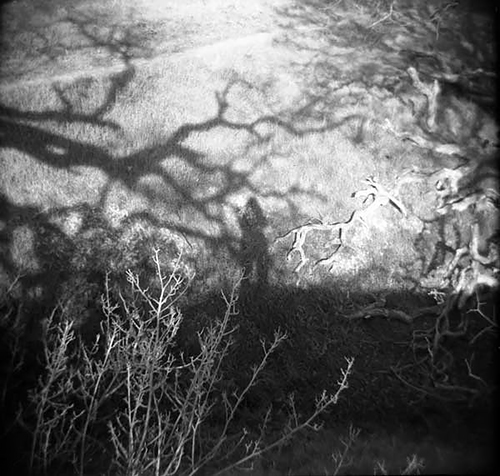
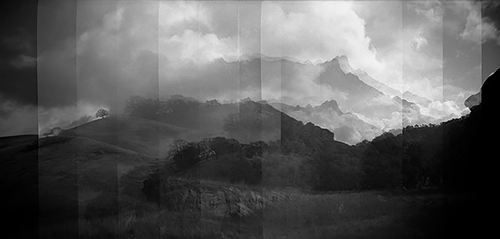
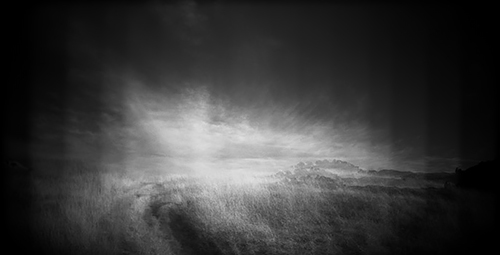
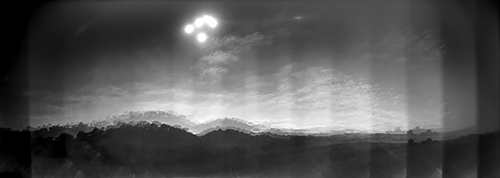
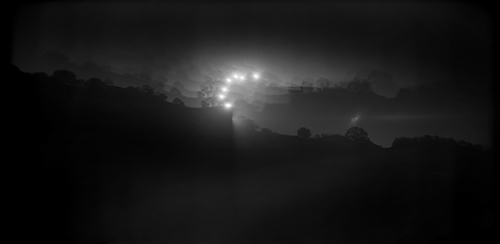
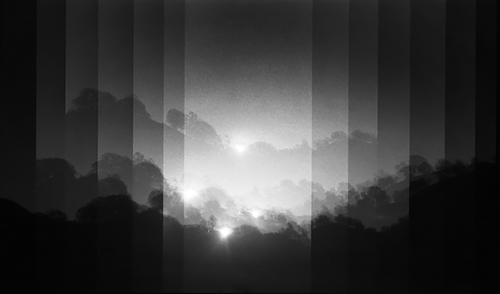
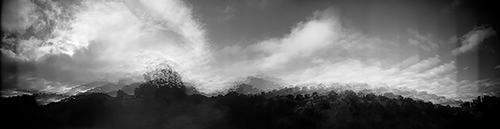
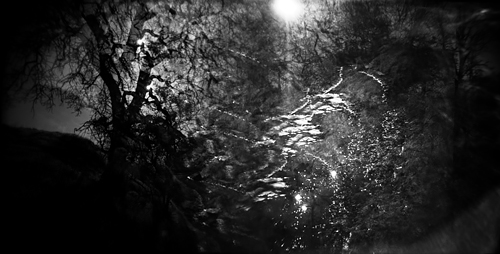
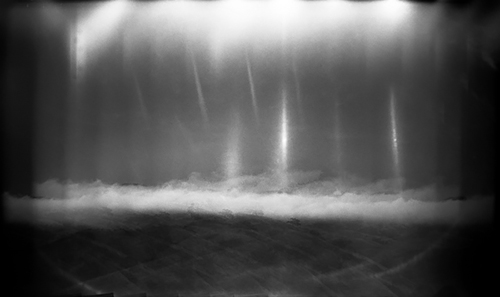
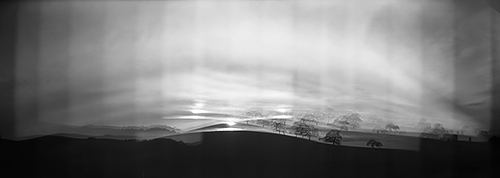
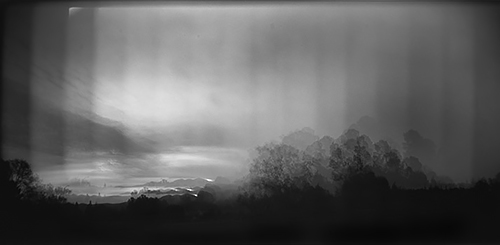
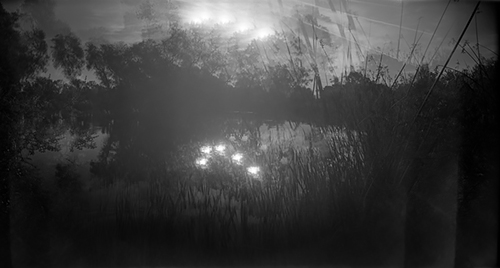
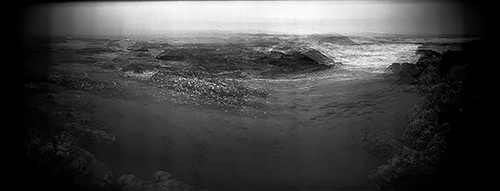
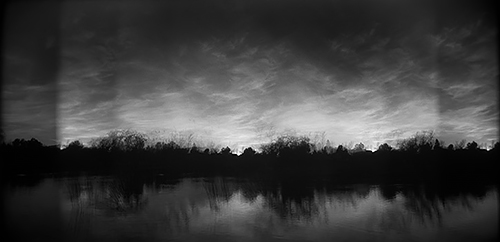
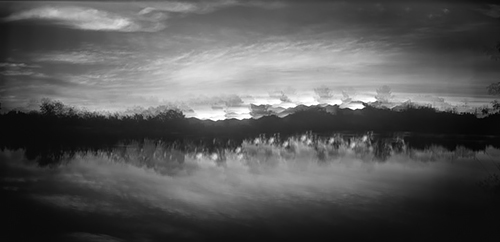
J. M. Golding is a photographic artist based in the San Francisco Bay area. She chooses plastic, pinhole, and vintage film cameras as her primary tools: plastic cameras such as the Holga for the spontaneity they promote and their capacity to help create dreamlike images, pinhole cameras for their simplicity and their contemplative quality, and vintage film cameras for the subjectivity of the images that are possible. J. M.'s photographs have been shown internationally in numerous juried and invitational group exhibitions, and she is the recipient of the 2013 Holga Inspire Award, the Lúz Gallery Curator's Choice Award (2009), Best of Show in Wanderlust (Dickerman Prints, 2017, in collaboration with Al Brydon), and several Honorable Mentions in other juried exhibitions. Her work has also appeared in Black & White, Diffusion, Shots, F-Stop, Square, and Insight magazines, Inside the Outside, Don't Take Pictures, The Holga Darkroom, and The Shot and in two books of pinhole photographs. She has been profiled in LensCulture, F-Stop Magazine, Wobneb Magazine, Mother F-Stop, Toycamera.es, and Pinholista.

About Transitional Landscapes

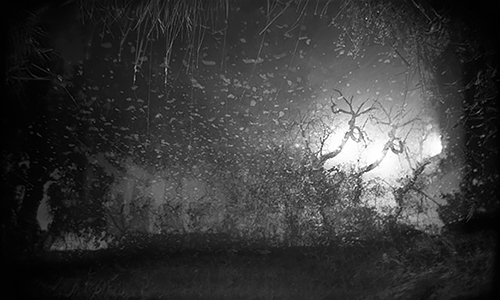
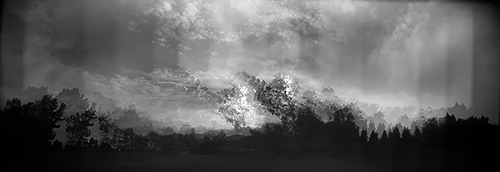
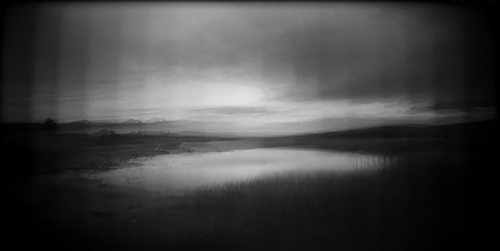
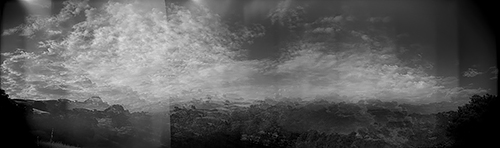
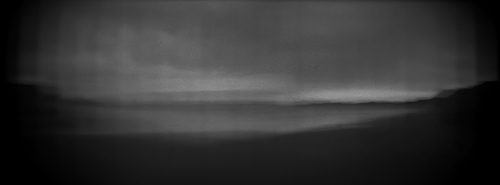
These photographs contain transitions from outer landscape to inner, from objective landscape to subjective. Square frames of film that are typically separate join together to form new, integrated images that would not have been possible otherwise, wholes that are greater than the sum of their parts, landscapes that are simultaneously real and imaginary. In this way, and also by transcending the literal separation of the component scenes, they allude to psychoanalyst D. W. Winnicott's concept of the transitional object. The photographs embody the eye's transitions across the scene, moving incrementally from one perspective to another as they take on and combine multiple points of view. Because the overlapping exposures used to create the images are made sequentially, as compared to the single moment typically seen in photographs, the series of exposures in each image portrays transitions in time from one moment to the next, creating a connection between past and present, and possibly, present and future. Although the time and distance traversed are in many ways small, the transitions across them create surprising changes in what is visible.

 

Inspiring Portfolios

Call for Entries
All About Photo Awards 2026
$5,000 Cash Prizes! Juror: Steve McCurry
 
Stay up-to-date  with call for entries, deadlines and other news about exhibitions, galleries, publications, & special events.

More Great Photographers To Discover

Mark Seymour
United Kingdom
1960
Mark Seymour is a highly acclaimed documentary wedding photographer based in Berkshire, UK, with a career spanning over 30 years. His passion for capturing authentic, candid moments has led him to photograph more than 1,000 weddings, earning him a reputation for excellence in the industry. Mark's distinctive style focuses on storytelling, aiming to document the genuine emotions and unique narratives of each couple's special day. Throughout his illustrious career, Mark has received numerous accolades, including being named the UK Wedding Photographer of the Year three times by the Master Photographers Association (MPA). He holds the distinction of being the first photographer to receive a double Fellowship and Master Craftsman status in documentary wedding photography, a recognition akin to earning three Michelin stars in the culinary world. Mark also served as a Nikon UK Ambassador from 2013 to 2018, highlighting his influence and expertise in the field Mark's work extends beyond weddings; his documentary photography has been featured in esteemed publications such as National Geographic. One of his notable portraits, capturing designer Jimmy Choo, is part of the National Portrait Gallery's collection in London. In addition to his photography, Mark is dedicated to education, leading street and documentary photography workshops through Light & Land. His workshops take participants to culturally rich destinations like India, Vietnam, and Venice, offering immersive experiences that inspire photographers to see the world through new perspectives. Mark's commitment to meaningful storytelling is evident in his personal project, "Living with Alzheimer's: A Harmonica for Ronnie," which documents his father's battle with dementia. This poignant series was exhibited at the Andipa Gallery in London during World Alzheimer's Month in 2016 and featured on Sky TV, raising awareness about the impact of Alzheimer's disease. For couples seeking a wedding photographer who combines technical precision with an empathetic approach, Mark Seymour offers a wealth of experience and a genuine passion for capturing life's most cherished moments. His work not only preserves memories but also tells the unique story of each couple's journey together.
Jean-Pierre Laffont
Jean-Pierre Laffont attended the School of Graphic Art in Vevey, Switzerland, where he graduated with a Master's Degree in Photography. He was a founding member of the Gamma USA and Sygma Photo News agencies. For more than five decades, Laffont traveled the globe, covering the news, the people, and the social and economic issues of his time. His photos were published in the world's leading news magazines, including Le Figaro, London Sunday Times, Newsweek, Paris Match, Stern, and Time. He was named one of the one hundred most important people in photography. Among the numerous awards Laffont has received are the Overseas Press Club of America's Madeline Dane Ross Award, the World Press Photo General Picture Award, University of Missouri's World Understanding Award and First Prize from the New York Newspaper Guild. In 1996 he was honored with the National French Order of Chevalier des Arts et des Lettres (a Knight in the National French Order of Arts and Letters). In 2016 Jean Pierre was named International Photographer of the Year of the Pingyao Photo Festival in China. In 2020 he received The Lucie Award for Achievement in Photojournalism and The Visa D'Or Award du Figaro Magazine for Lifetime Achievement. Laffont resides in New York with his wife Eliane, his daughter and his two granddaughters. Awards and Honors: 1962: Cross for Military Valor for his humanitarian acts during the Algerian War 1979: First Prize: New York Newspaper Guild, for "Child Labor"; Overseas Press Club: Madeline Dane Ross award, for originating the use of photography to raise awareness of child labor conditions around the world. 1980: World Press: First Prize, General Picture category; University of Missouri, School of Journalism: First Prize, World Understanding Award 1996: French National Order of Merit: named Chevalier de l'Ordre des Arts et des Lettres 2016: International Photographer of the year of The Pingyao Photo Festival; China. 2020: Lucie Award for Achievement in Photojournalism. 2020: Visa D'Or Award du Figaro Magazine for Lifetime Achievement. Bibliography: Contribution to the A Day in the Life Series (HarperCollins): 1983: A day in the life of Hawaii 1984: A day in the life of Canada 1985: A day in the life of Japan 1986: A day in the life of United States 1987: A day in the life of Spain 1987: A day in the life of USSR 1989: A day in the life of China 1990: A day in the life of Italy 1991: A day in the life of Ireland 1992: A day in the life of Hollywood Other Selected Publications: 1986: The Long March (Intercontinental Press); in commemoration of the 50th anniversary of Mao Zedong's historical Long March 1989: Trois Jour en France (Nathan/France) 1992: America Then and Now (Cohen/HarperCollins) 1999: Les 100 photos du Siècle (Editions du Chêne) 2003: America 24/7 in Manhattan (NY State) 2011: The New York Times Magazine: Photographs (Aperture Foundation) 2013: 40 ans de Photojournalisme: Generation Sygma (Editions de La Martinière/France) Monographs: 1976: CB Bible, Porter Bibb (Doubleday) 1981: Women of Iron (Playboy) 2008: Jean-Pierre Laffont Foreign Correspondent (Editions C.D.P/France) 2014: Photographer's Paradise: Turbulent America 1960-1990: (Glitterati) named best picture book by The Lucie Awards 2017: New York City Up and Down: (Glitterati) 2019: Nos Stars en Amèrique Cartes postales de Jean Pierre Laffont: (Editions de La Martinière) For special print requests please contact us directly.
Benita Suchodrev
United States
1975
Benita Suchodrev was born in the former Soviet Union and immigrated to the United States where she received her Bachelor's degree in Liberal Arts with a focus on Art History from SUNY Purchase, New York, continuing to a Master of Arts in English Literature, graduating with high honors. It was in the university darkroom where Benita developed and produced her first black and white prints. In 2008 Benita relocated to Berlin where she began an extensive documentation of the cosmopolitan city's multifaceted art scene while working on diverse photographic projects. Later she studied at the Neue Schule für Fotografie in the class of Eva Bertram. Her portrait and documentary work has been exhibited in solo and group shows nationally and internationally and is part of the Rafael Tous Foundation for Contemporary Art in Barcelona, the Michael Horbach Stiftung in Cologne as well as private collections in Moscow, Berlin and New York. She has published Of Lions and Lambs (2019) and 48 Hours Blackpool (2018) with KEHRER Verlag. Her photographs have appeared in NACHTLEBEN BERLIN 1974 – BIS HEUTE (Metrolit Verlag, 2013), BERLIN NOW (teNeues Verlag, 2009) and have been covered by various media including ARTE, THE GUARDIAN, ZEIT ONLINE, ARD, RBB24 Kulturradio, Frankfurter Allgemeine Zeitung, Berliner Zeitung, STERN.DE, AMICA Italy, ART, MARE Magazine, Neues Deutschland, Die Tageszeitung, Tagesspiegel, MIND China, The Moscow Times, Искусство – The Art Magazine Russia, among others. Benita currently lives and works in Berlin. Artist Statement "I am attracted to the poetic and the bizarre, the bold and the vulnerable. But of all things I am interested in the transitional moment between states, between blinks; that elusive split of a second between what was, what is to come, and the traces it leaves behind. The drama and ambiguity of human expression and gesture during this transitional moment is what fascinates me the most."
Mette Lampcov
Denmark
1968
Mette Lampcov is a freelance documentary photographer from Denmark, based in Los Angeles. She studied fine art in London, England and after moving to the United States 13 years ago. Her personal work includes projects about gender based violence and undocumented migrant workers in California. She is currently concentrating on a long term project "Water to Dust" documenting how climate change is affecting people and the environment around them in California. Her work has appeared in the New York Times, The Sydney Morning Herald, Open Society Foundation , BuzzFeed News, The Guardian, The Phoblographer She is a regular contributor to @everydayclimatechange and @everydaycalifornia Exhibitions: Docudays UA, International Human Rights Documentary Film Festival, Kiev. Noorderlicht Fotogalerie in Groningen Anderson Ranch - 15 stories ICP - projection "talk in images" Part of 15 Stories of Hope, Change & Justice exhibition at Johns Hopkins university Street level photoworks Glasgow with @everydayclimatechange ImagOrbetello exhibition with @everydayclimatechange Water to Dust Water to Dust : a photographic account of how climate change is affecting the people and environment of California. The project includes stories about how 149 million trees have died in the Sierra Nevada mountains, how water contamination is affecting rural communities as demand for water increases, and how California is seeing an increase in more aggressive, larger and faster moving wildfires that are devastating communities and forests. We are facing an existential threat to ourselves and our environment, she believe with a better educated and more informed public we can make better decisions for our future.
Sam Heydt
United States
1986
Sam Heydt (born April 20, 1986) is an American social practice and recycled media artist born/raised in New York City. She has lived/worked in Paris, Venice, Amsterdam, Athens, Buenos Aires, Sydney, Reykjavík, Udaipur and Vienna [current]. As a published author, producer and lifelong social activist and environmentalist, Heydt has undertaken a range of altruistic, non­-profit work and anchors her practice in advocacy. Through her unique manner of expression, she illustrates a world exploited beyond use and increasingly reduced to a bottom line. Esteemed as one of the pioneers of the recycled media movement, she works across different media- film, video, installation, photography, sculpture, sound and text and employs a range of materials, often reinventing and trespassing their associative use. Marrying images of destruction with portrayals of the American Dream, her work confronts the disillusionment of our time with the ecological and existential nightmare it is responsible for. Heydt's work has been shown in galleries, museums, art fairs and film festivals worldwide. Statement The edge is closer than we think, but illusion won't free us from reality, even as the sustained narrative of tabloids becomes history and the myth of progress continues to perpetuate inequality. As the natural world is liquidated and substituted with an artificial one, public discourse is being defined by even narrower bandwidths Our time is marked by mass extinction, product fetishism, diminishing resources, and patented seeds. The skeletons of old factories serve as caveats for a world exploited beyond use, a world increasingly reduced to a bottom line. Dissidence is drowned out by the white noise of the media, which holds the social psyche captive in with the empty promises it proposes for the future it truncates. Working across different media- film, video, installation, photography, sculpture, sound and text, Heydt presents an abstract proposition for a world on the periphery of history, one that not only appears haunted by the ghosts of the past, but built on it. Conflating time and place, her layered imagery collides, merges and disrupts logical relationships between occurrences. Through adding and subtracting meaning by combining images of destruction with portrayals of the virtues born from the American Dream, Heydt confronts the disillusionment of our time with the ecological and existential nightmare it is responsible for.
El Lissitzky
Russia
1890 | † 1941
Lazar Markovich Lissitzky, known as El Lissitzky, was a Russian artist, designer, photographer, typographer, polemicist and architect. He was an important figure of the Russian avant-garde, helping develop suprematism with his mentor, Kazimir Malevich, and designing numerous exhibition displays and propaganda works for the Soviet Union. His work greatly influenced the Bauhaus and constructivist movements, and he experimented with production techniques and stylistic devices that would go on to dominate 20th-century graphic design. Lissitzky's entire career was laced with the belief that the artist could be an agent for change, later summarized with his edict, "das zielbewußte Schaffen" (goal-oriented creation). Lissitzky, of Lithuanian Jewish оrigin, began his career illustrating Yiddish children's books in an effort to promote Jewish culture in Russia. When only 15 he started teaching, a duty he would maintain for most of his life. Over the years, he taught in a variety of positions, schools, and artistic media, spreading and exchanging ideas. He took this ethic with him when he worked with Malevich in heading the suprematist art group UNOVIS, when he developed a variant suprematist series of his own, Proun, and further still in 1921, when he took up a job as the Russian cultural ambassador to Weimar Germany, working with and influencing important figures of the Bauhaus and De Stijl movements during his stay. In his remaining years he brought significant innovation and change to typography, exhibition design, photomontage, and book design, producing critically respected works and winning international acclaim for his exhibition design. This continued until his deathbed, where in 1941 he produced one of his last works – a Soviet propaganda poster rallying the people to construct more tanks for the fight against Nazi Germany. In 2014, the heirs of the artist, in collaboration with Van Abbemuseum and leading worldwide scholars on the subject, established the Lissitzky Foundation in order to preserve the artist's legacy and to prepare a catalogue raisonné of the artist's oeuvre.Source: Tate Margarita Tupitsyn included the essays by Ulrich Pohlmann and Mathew Drutt in her book Beyond the Abstract Cabinet (1999). This book was aimed at an audience with an interest in Russian photography and modernism. The essays in this book brought Lissitzky’s work to limelight. The essays mention various aspect of his work. From 1922 to 1925, Lissitzky experimented with photograph collage and photograms. While working on photograms, Lissitzky experimented with photomontage as well. He was able to achieve vibrant compositions using several printing exposures in order to utilize the effects of transparency. These experiments help him in many advertisements he produced starting from 1924 until 1925. Lissitzky was among the first avant-gardists to revive the photogram or cameraless photographic image, combining this technique with experiments in montage to generate fantastic portraits and design proposals. Largely using photography, Lissitzky also rethought the illustrated book as an architectural form, to be tabbed through, unfolded in all directions, and made into a fully three-dimensional object. These many ideas were deployed in the service of artists and arts organizations, as well as, above all, institutions of the Soviet state, on whose behalf Lissitzky was committed to “influencing the human psyche” collectively and in the public realm. He survived the reversals of fortune suffered by so many politically committed artists in the 1930s but had chronically poor health and died of tuberculosis.Source: The Art Institute of Chicago
Aaron Siskind
United States
1903 | † 1991
Aaron Siskind was born on December 4, 1903 in New York. He was the son of Russian Jewish immigrants and the fifth of six children. After receiving his Bachelor of Social Science degree from the College of the City of New York in 1926, he went on to teach high school English in the New York public school system for 21 years. His first loves were music and poetry, but he took an interest in photography after his 1929 wedding, when he received his first camera as a honeymoon present. He began his career in photography as a documentarian in the New York Photo League in 1932. From 1936 to 1940, he oversaw the League’s Feature Group as they created documentary photo essays of political importance, fueled by a desire for social change.On the invitation of Harry Callahan, Siskind joined the faculty of the Institute of Design in Chicago in 1951, taking over as head of the photography program in 1961, when Callahan left. Siskind and Callahan, famous for their synergy as teachers and photographers, reunited in 1971 when SIskind left the Institute of Design for the Rhode Island School of Design where Callahan then taught. Siskind continued to teach at RISD until his retirement in 1976. He traveled broadly, making multiple trips to Mexico and Italy, including a stint in Rome, funded by his 1966 John Simon Guggenheim Memorial Fellowship.Siskind died at age 87 in Providence, Rhode Island. The Aaron Siskind Centennial Celebration took place in 2003 and 2004, with exhibitions at more than a dozen institutions across the country, each devoted to a different period or theme of his life and work.
Advertisement
All About Photo Awards 2026
Win a Solo Exhibition in February
All About Photo Awards 2026

Latest Interviews

Exclusive Interview with Marijn Fidder
Marijn Fidder is a Dutch documentary photographer whose work powerfully engages with current affairs and contemporary social issues. Driven by a deep sense of social justice, she uses photography to speak on behalf of the voiceless and to advocate for the rights of those who are most vulnerable. Her images have been widely published in major international outlets including National Geographic, CNN Style, NRC Handelsblad, Volkskrant, GUP New Talent, and ZEIT Magazin. Her long-term commitment to disability rights—particularly through years of work in Uganda—culminated in her acclaimed project Inclusive Nation, which earned her the title of Photographer of the Year 2025 at the All About Photo Awards. She is also the recipient of multiple prestigious honors, including awards from World Press Photo and the Global Peace Photo Award. We asked her a few questions about her life and work.
Exclusive Interview with Josh S. Rose
Josh S. Rose is a multidisciplinary artist working across photography, film, and writing. His practice bridges visual and performing arts, with a strong focus on movement, emotion, and the expressive potential of the image. Known for his long-standing collaborations with leading dance companies and performers, Rose brings together authenticity and precise composition—a balance he describes as “technical romanticism.” His work has been commissioned and exhibited internationally, appearing in outlets such as Vogue, at the Super Bowl, in film festivals, and most recently as a large-scale installation for Lincoln Center for the Performing Arts. A sought-after collaborator, he has worked with major artists, cultural institutions, and brands, following a previous career as Chief Creative Officer at Interpublic Group and the founder of Humans Are Social. We asked him a few questions about his life and work.
Interview with Maureen Ruddy Burkhart
Photographer Maureen Ruddy Burkhart brings a quietly attentive and deeply human sensibility to her exploration of the world through images. Shaped by a life immersed in photography, film, and visual storytelling, her work is guided by intuition, observation, and an enduring interest in the emotional undercurrents of everyday life. With a practice rooted in both fine art traditions and documentary awareness, she approaches her subjects with sensitivity, allowing subtle moments to emerge naturally rather than be imposed. Her series Til Death, selected as the Solo Exhibition for February 2025, reflects this long-standing commitment to photography as a space for reflection rather than spectacle. Drawn to moments that exist just outside the expected frame, Burkhart’s images suggest narratives without resolving them, leaving room for ambiguity, humor, and quiet connection. We asked her a few questions about her life and work.
Exclusive Interview with Peter Ydeen
Winner of AAP Magazine #45 Travels, his series reflects this unique vision—capturing the spirit of place through subtle layers of light, color, and emotion. Whether traveling abroad or observing the rhythms of his own surroundings, Ydeen creates images that feel both grounded and enchanted, inviting viewers into a world where reality and reverie meet.
Exclusive Interview with Julie Wang
Chinese-born photographer Julie Wang brings a poetic, contemplative sensitivity to her visual exploration of the world. Having lived for nearly equal parts of her life in China, Europe, and the United States, she approaches her subjects with the nuanced perspective of someone shaped by many cultures. This blend of distance, curiosity, and emotional resonance infuses her work with a quiet depth, allowing her to reveal the fragile beauty and subtle tensions that often pass unnoticed.
Exclusive Interview with Ghawam Kouchaki
American photographer Ghawam Kouchaki brings a sharply observant and introspective gaze to the streets of Japan’s capital. Based in Los Angeles, he approaches Tokyo with the distance — and curiosity — of an outsider, allowing him to uncover the city’s subtle contradictions, quiet tensions, and fleeting gestures that often go unnoticed. His series Tokyo no no, selected as the Solo Exhibition for December 2024, explores the hidden undercurrents of urban life: the unspoken rules, the small ruptures in routine, the poetic strangeness found in everyday moments. Through muted tones, instinctive timing, and meticulous framing, Kouchaki reveals a Tokyo that exists somewhere between reality and imagination — both intimate and enigmatic. We asked him a few questions about his life and work.
Exclusive Interview with Tommi Viitala
Tommi Viitala, winner of AAP Magazine #44: Street, is a Finnish photographer celebrated for his striking and cinematic street photography. With a keen eye for atmosphere and composition, he captures fleeting urban moments that reveal the poetry of everyday life. His work often explores the tension between solitude and connection within contemporary cityscapes, blending documentary realism with artistic sensibility. Viitala’s photographs have been exhibited internationally and recognized for their strong visual storytelling and emotional depth. We asked him a few questions about his life and work.
Exclusive Interview with Robert Mack
Robert Mack is a California-based visual artist, photographer, and filmmaker. His fine art photography and films have been exhibited widely in the United States and Europe, with major shows at the Baltimore Museum of Art and the Reiss-Engelhorn Museum in Mannheim, Germany. Both institutions hold his work in their permanent collections. Working across different media, Mack has built a career exploring the complexities of human presence and representation. In 1981, while living in Baltimore, he produced The Perkins Project: Not Guilty by Reason of Insanity, a rare photographic and film study inside Maryland’s hospital for the criminally insane. These stark yet compassionate black-and-white portraits remain one of his most powerful and controversial bodies of work.
Exclusive Interview with Alan Schaller About Irys
Alan Schaller is a London-based photographer best known for his striking black-and-white street photography and as co-founder of Street Photography International, one of the largest online communities dedicated to the genre. With years of experience both behind the camera and in building platforms that give visibility to photographers, Schaller has now turned his focus to creating a new digital space for photography itself. His latest venture, Irys, is a photography app designed by photographers, for photographers, with the aim of offering a dedicated platform where images are respected as works of art rather than treated as disposable content.
Call for Entries
All About Photo Awards 2026
$5,000 Cash Prizes! Juror: Steve McCurry