All about photo.com: photo contests, photography exhibitions, galleries, photographers, books, schools and venues.
Get Published in print AND win $1,000 CASH PRIZES. Theme: Portrait
Chris Anthony
Chris Anthony
Chris Anthony

Chris Anthony

Country: Sweden

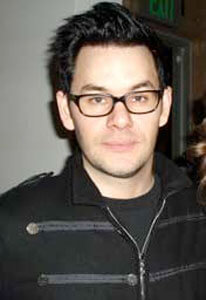
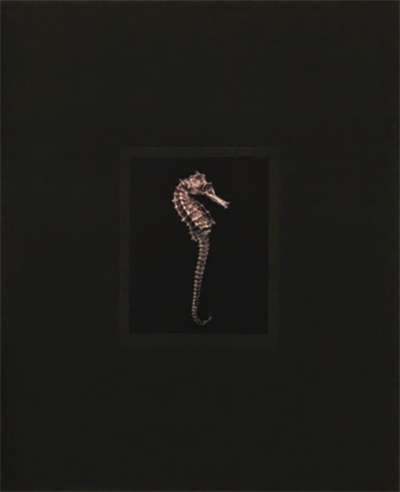
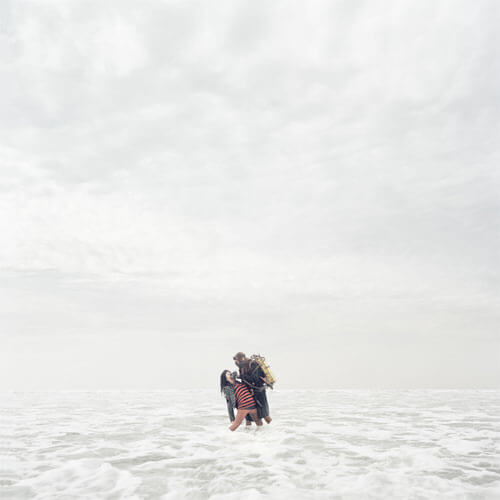
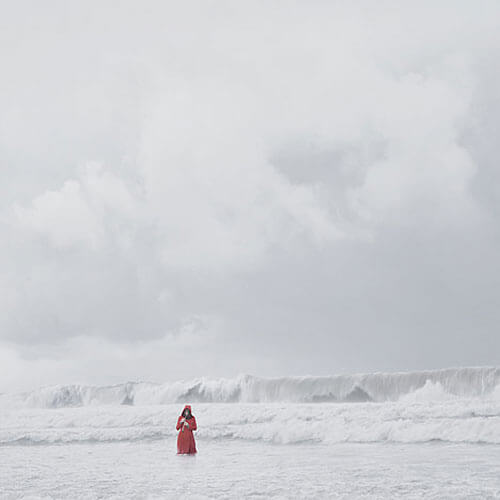
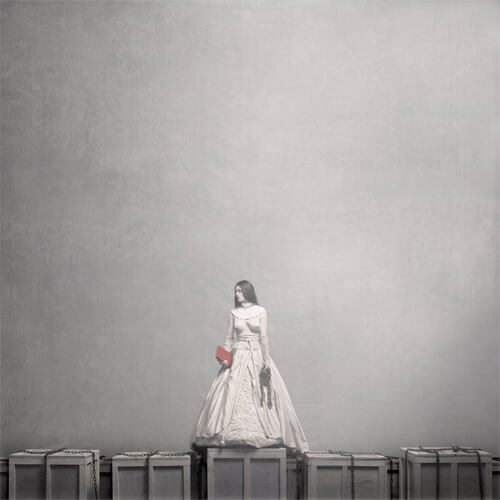
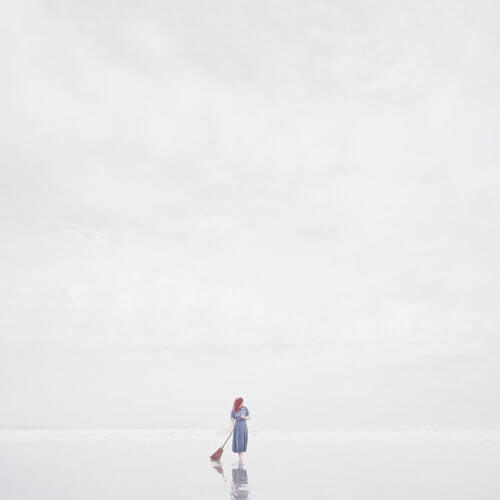
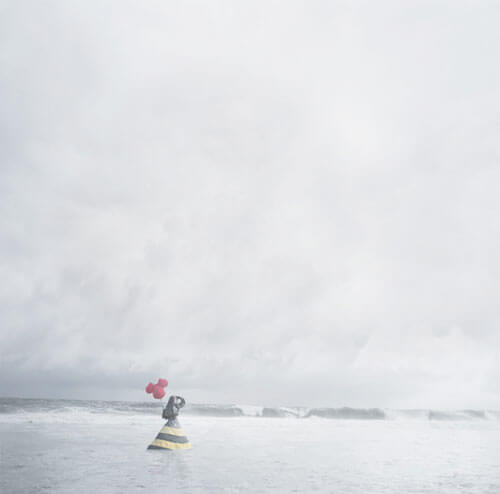
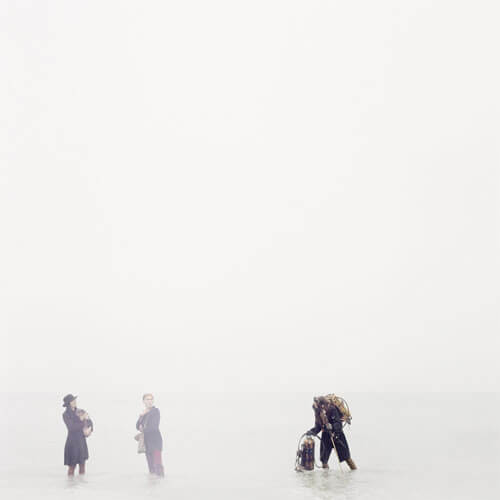
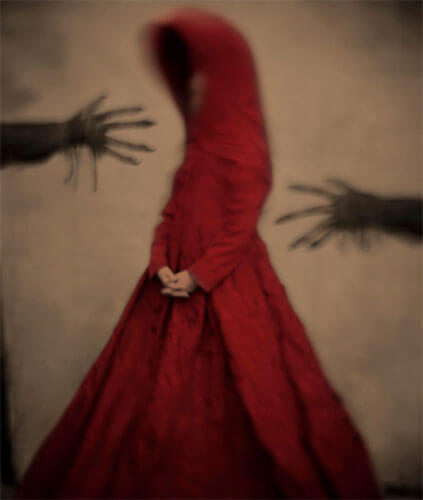
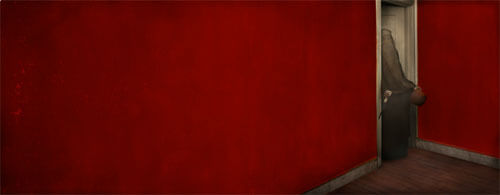
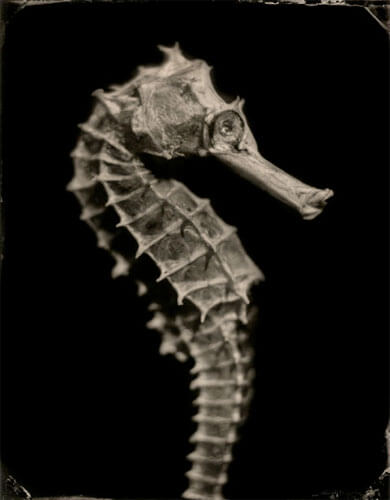
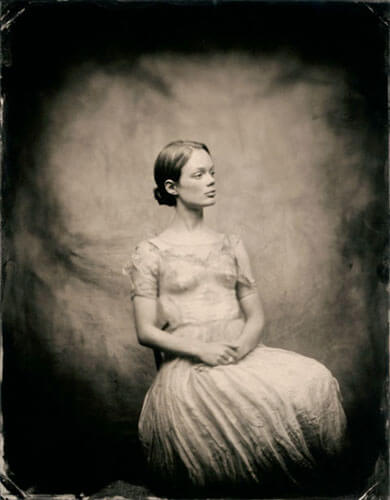
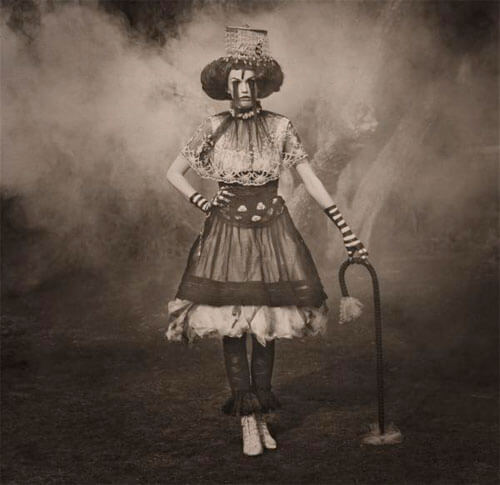
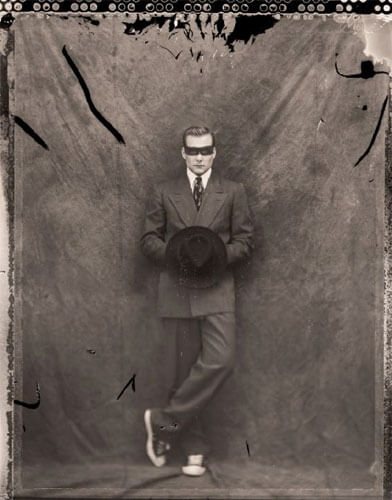
Chris Anthony is an artist from Stockholm, Sweden, primarily known for his macabre and Victorian Gothic-inspired photographs. Anthony has also directed commercials for companies such as Deutsche Telekom and music videos for groups such as The Dandy Warhols. Anthony currently specializes in photography. He often uses vintage lenses produced between 1860 and 1910 to help create an "otherworldly atmosphere." He uses 5x7 and 8x10 formats in conjunction with digital scanners in order to manipulate the images in Photoshop.

Chris Anthony has won several prestigious awards including: Black Book Raw - 50 Photographers 2008 Go Indie Photo Contest/PDN Stock Photo Guide 2008 - Professional Grand Prize Winner & Category Winner for "I'm the Most Normal Person I Know" The 2007 Grand Prize in the American Photo Images of the Year competition for "Victims and Avengers" First place in the music advertising category in the International Photography Awards 2007's Professional Photographer of the Year Competition. American Photography 23rd Annual 2007, My Chemical Romance "The Black Parade".

Source: Wikipedia


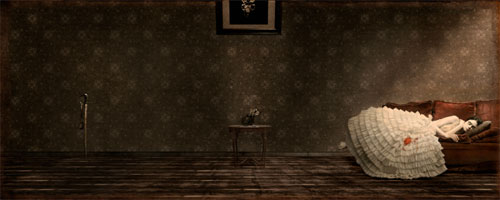
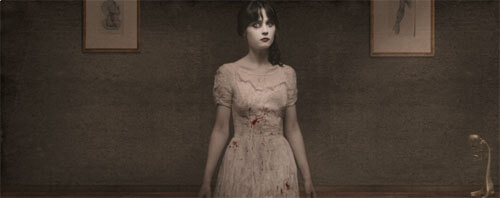
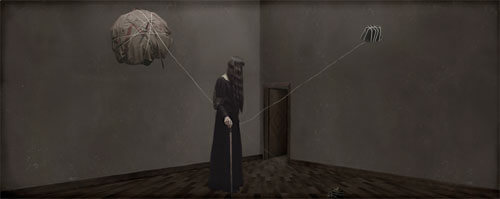
Chris Anthony's world is wonderful collection of object symbols, set design, and character development. His photographs are an intersection of Renaissance set and costume design, melted with a process that employs both antique photographic equipment and technology through post-production. His work is lush and painterly guided by deep hues of color, muted and apart in time. He creates an image that is akin to filmwork in its narrative, both cinematic and containing all the elements of a story left open-ended. His characters linger in a loosely draped studio space, a century gone by, waiting, wandering, lost in thought, casting challenge to unravel the mystery of the objects that accompany.

Chris Anthony’s work has been exhibited in Los Angeles, Stockholm, Brooklyn, Hong Kong, Washington D.C., London, Bath, San Francisco and is included in many private and public collections around the world. Publications that have featured Anthony and his work include the Los Angeles Times, Washington Post, Photo District News, Eyemazing, Art News, American Photo, Blink, Paper, Photo+, GUP, Fraction Magazine, Nylon, Black Book, Juxtapoz, Zoom, Angeleno, Huffington Post, Corriere Della Sera and LA Weekly. Clients include Chiat/Day, Sony Playstation, Sony Music, Universal Music Group, Republic Records, Warner Music, Los Angeles Magazine, Hollywood Records, Reprise, Stuttgart City Ballet, Myspace Records, Dell and USC.

Born in Sweden, Anthony currently lives and works in Los Angeles, California.

Source: Randall Scott Projects



Selected Books

Inspiring Portfolios

Call for Entries
AAP Magazine #57 Portrait
Publish your work in our printed magazine and win $1,000 cash prizes
 
Stay up-to-date  with call for entries, deadlines and other news about exhibitions, galleries, publications, & special events.

More Great Photographers To Discover

Li Zhensheng
China
1940
Li Zhensheng (born September 22, 1940) is a Chinese photojournalist who captured some of the most telling images from the Great Proletarian Cultural Revolution, better known as the Chinese Cultural Revolution. His employment at the Heilongjiang Daily, which followed the party line, and his decision to wear a red arm band indicating an alliance with Chairman Mao Zedong, allowed him access to scenes otherwise only described in written and verbal accounts. His recent publication of the book, Red-Color News Soldier exhibits both the revolutionary ideals and, more notably, many of the atrocities that occurred during the Cultural Revolution. The Heilongjiang Daily newspaper had a strict policy in accordance with a government dictate that only "positive" images could be published, which consisted mostly of smiling revolutionaries offering praise for Chairman Mao. The "negative" images, which depicted the atrocities of the time, were hidden beneath a floorboard in his house before he brought them to light at a photo exhibit in 1988. Early life Li Zhensheng was born to a poor family in Dalian, which is located in the northeastern province of Liaoning, China. At the time of his birth this was Kwantung Leased Territory, where Japan maintained the puppet regime, Manchukuo. His mother died when he was three, and his older brother, who was a member of the People's Liberation Army was killed during the Chinese Civil War. Zhensheng helped his father, who was a cook on a steamship and later as a farmer, until Zhensheng was 10-years-old. Zhensheng quickly rose to the top of his class despite starting school late. He later earned a spot at the Changchun Film School, where he acquired much of his photographic knowledge. In 1963, he briefly achieved a job at the Heilongjiang Daily, however the Socialist Education Movement soon intervened and he ended up back in the countryside for nearly two years, living with peasants and studying the works of Chairman Mao. Cultural Revolution Zhensheng returned to Harbin just months before the outbreak of the Great Proletarian Cultural Revolution in the spring of 1966. A lack of photographic film, marauding Red Guards, and a political dictate against photographing the negative aspects of the revolution restricted what he was able to portray. He soon realized that only people wearing the red-colored arm band of the Red Guards could photograph without harassment. To achieve this, he founded his own small rebel group at the newspaper. Zhensheng then captured some of the most horrific acts of the Cultural Revolution. His collection includes photos depicting dehumanizing tactics used by the Red Guards to humiliate or degrade alleged counterrevolutionaries. Some of the images depict public displays of "denunciations," where the hair of prominent individuals is shaved. Other images show people bearing "dunce" hats; people with black paint spread over their faces; others wearing signs around their necks with writings that criticize their profession or names. Zhensheng also captured scenes of public executions of counterrevolutionaries who were never given a trial for their alleged crimes. At the height of the Cultural Revolution, Zhensheng was once more sent back to the countryside in September 1969. He was sent to the May 7th Cadre School in Liuhe, a labor camp where he and his wife, Zu Yingxia, spent two years performing hard labor. Zhensheng had taken meticulous care of the documented "negative" images he captured while at the newspaper, hiding them beneath a floorboard of his one-room apartment. The dry atmosphere and mild temperatures of Harbin aided the preservation of the photographic negatives. While he was sent away, Zhensheng entrusted a friend to care for the apartment, and instructed him to never reveal the secrets it contained. Zhensheng returned to the newspaper in 1972 as the head of the photography department, and later became a professor at Peking University in 1982. About Red-Color News Soldier Red-Color News Soldier is a literal translation of the Chinese characters written on the armband Li Zhensheng wore during the Chinese Cultural Revolution. Although, he says he never gave his alliance to Chairman Mao, wearing the arm band gave him unprecedented access to historic events, which have since shaped Chinese culture. The book covers the period from just before the Cultural Revolution in 1965 to just after in 1976. It is separated into five chronological sections: 1964-1966 titled "It is right to rebel"; 1966 titled "Bombard the Headquarters"; 1966-1968 titled "The Red Sun in our hearts"; 1968-1972 titled "Revolution is not a dinner party"; and 1972-1974 titled "Die Fighting." The veteran China analyst John Gittings was among the reviewers who welcomed Li's book. He noted that Li was a Red Guard as well as a photographer and did not deny that he also led "struggle sessions" against innocent victims; but his pictures reflect a deeper desire to record and understand. Li's book was "unique" for a simple reason: "Although the post-Mao Chinese government has labeled the cultural revolution '10 years of chaos,' it still tries to suppress any real inquiry into the countless human tragedies it caused..." The book, which has not been published in China, took many years to publish. Zhensheng's "negative" pictures (those that depicted the atrocities of the cultural revolution) were first revealed publicly in March 1988 at a Chinese Press Association's photography competition in Beijing. The show, entitled "Let History Tell the Future" consisted of twenty images from his collection, which were deemed "counterrevolutionary. " In December of that year, Zhensheng met Robert Pledge, an American who was director of Contact Press Images, an international photo agency, who had come to Beijing. They agreed to work together on a book of Zhensheng's photos, but to wait until the political climate was right. Seven months later, in June 1989, the brutal events of Tiananmen Square made worldwide headlines, and Zhensheng became determined to produce a book to show the world the images from the Cultural Revolution. Work on the book began in 1999. Since Pledge did not speak Chinese, and Zhensheng did not speak English, the two had to coordinate work through the use of translators — many of whom became integral parts of their relationship. Zhensheng sent over 30,000 brown envelopes to Pledge's office in New York City, each containing photographic negatives. A number of the images are self-portraits of Zhensheng. This was the result of always returning to the paper with one extra frame on the film roll; a photojournalism technique of always being prepared to cover a breaking news event at the last minute. Zhensheng would "burn off" the last image with a photo of himself shortly before developing the film. Often the poses were humorous and playful. One such image of Zhensheng exposing his bare chest was published in the book He said he was attempting to recreate the old expression of "baring one's chest in the face of adversity," or in his case, communism. During book tours Zhensheng makes a point to speak of his love for China. He says while he disagrees with the government, he still loves his country and hopes democracy will perhaps prevail in the long-term future. He does not believe his images or the book should be considered anti-Chinese, rather a reminder of the painful past many countries endure during their evolution.Source: Wikipedia
Raquel Chicheri
Raquel Chicheri is a freelance photographer.I am from Galicia, Northern Spain but because it was cold and wet I decided to move to Fuerteventura, an island off the coast of Africa which has a much better weather. I loved photography since I was a kid, my father is a great photographer and his work inspired me from the beginning. I studied " comercio internacional" (International commerce or trade) but I only worked one year in that field and then decided to study graphic design which I liked better. I worked a few years but when I met my boyfriend who was a professional windsurfer, I began to take pictures of him and of his trips and it is at that time that I began publishing photos in windsurfing magazines. I am inspired by almost everything, kids, water, animals, street... I don't take pictures in a studio, I take my camera everywhere and when I see something that catches my attention I shoot. I spend most of my time on the beach and I broke several cameras with the sand but I don't care as long as I take good photos. If the situation is right I see it right away, I cannot wait for the situation to develop too much because I usually go for a walk with my children and I have to take care of them. I prefer the situation to be casual, I hope to capture nature and the relationship of people around it. Some situations are magical, when I realize I am in front of something special, my heart beats so fast and the happiness is absolute. There are so many cheesy, affected photos all around, I try to be different. I would love to make a complete series of photos about cuba...All about Raquel Chicheri:AAP: When did you realize you wanted to be a photographer?I realized I wanted to be a photographer when I had my children and I couldn't stop taking photos of them.AAP: Where did you study photography?I studied photography on the life school with the people who shared it with me.AAP:Do you have a mentor?LifeAAP: How long have you been a photographer?Since I met my boyfriend. I used to take windsurfing photos of him for magazines.AAP: Do you remember your first shot? What was it?It was a self-portrait.AAP: What or who inspires you?Life, people, animals, lights, situations...AAP: How could you describe your style?I prefer someone else to do it for me...AAP: What kind of gear do you use? Camera, lens, digital, film?Canon Eos Mark II 5D, my favorite lens is the 50mm f:1,4.AAP: Do you spend a lot of time editing your images?NoAAP: Favorite(s) photographer(s)?Cartier-Bresson, Doisneau, Sally Mann, Mccurry, Newton, Cristina Garcia Rodero, Murray Michel, Man Ray, Jock Sturges, Margaret de lange, Koudelka, Eve Arnold, Saudek... so many..AAP: What advice would you give a young photographer?To be what you are and not what everyone else want you to be.AAP: If you could have taken the photographs of someone else who would it be?My grandmother who already died.AAP: Anything else you would like to share?"and that people who make dates are the same kind who need lines on their writing paper, or who always squeeze up from the bottom on a tube of toothpaste" Julio Cortazar, HOPSCOTCH.
Anthony Iacuzzi
United States
1944
When I was five years old, my family emigrated from Italy to the United States. We settled in Chicago where I attended public and parochial schools and graduated from Loyola University with a B.S. in Social Sciences degree. After graduation in 1966, I began my career with a major retailer as an advertising copywriter. Eventually, I started my own company as a consultant in marketing communications. My interest in photography began as a teenager with a point'n'shoot Kodak camera. In 1967, my passion for photography took flight after purchasing my first 35mm SLR at a PX on a military base in Vietnam. I used that Mamiya-Sekor to document my 13-month experience there. For several years afterwards, I continued to capture images with that camera until it was stolen. Not long after that loss, I decided to seriously pursue photography. In 1974, while still working full-time, I enrolled as a part-time student at Columbia College, Chicago, There, I studied the history of art and photography, and how to view the world in shades of gray. I learned about chemistry and how to manipulate silver gelatin in the darkroom. I learned about esoteric color processes such as dye sublimation. I also studied the difference between good and great composition, the intricacies of a view camera, and how to approach people on the street and get them to pose willingly. In 1977, I finally earned my B. A. in Photography degree. During the 70's and 80's, I continued to pursue my career, married, bought a home, and raised three children. Although I continued to enjoy photography as a serious amateur, it wasn’t until 2009, that I fully focused my attention on fine art photography. That’s when I approached a colleague with the idea of establishing a fine art photography gallery in Evanston, Illinois. In 2010, together with two other colleagues, we co-founded Perspective Group and Photography Gallery, a not-for-profit cooperative of member artists whose mission is to promote fine art photography. I have been actively involved with Perspective Gallery ever since. Statement: My photography ranges widely in style and content. My images encompass everthing from realism through impressionism and abstraction. Artistically, my intent is to offer the viewer a unique, creative encounter with the intrinsic beauty of the ordinary and commonplace.
Laura Aguilar
Mexico/United States
1959 | † 2018
Laura Aguilar, a pioneering photographer, used her lens as a powerful tool for social empowerment and representation. Born with a keen eye and a deep sense of empathy, Aguilar sought to challenge the traditional narratives of art history by capturing the beauty and dignity of marginalized communities often overlooked by mainstream society. Aguilar's work defied convention, focusing on subjects that had long been excluded from the artistic canon. From lesbians and Latinas to individuals with disabilities and those whose bodies did not conform to societal norms, Aguilar fearlessly confronted stereotypes and celebrated the diversity of human experience. Her photographs were a testament to the strength, resilience, and inherent worth of each individual, regardless of their background or identity. I wouldn't know what to do with the perfect body. Can we get comfortable with the imperfections? – Laura Aguilar What set Aguilar apart as an artist was not only her choice of subjects but also her meticulous attention to the formal aspects of photography. Drawing inspiration from both modernist and Social Documentary traditions, Aguilar infused her work with a unique perspective informed by her own lived experience as a lesbian Latina. Through her lens, she sought to capture the essence of her subjects in a way that transcended superficial appearances, inviting viewers to connect with the humanity and complexity of each individual. Above all, Aguilar viewed art as a means of giving voice to those who had been silenced or marginalized. Her photographs served as a powerful form of advocacy, challenging viewers to confront their own biases and preconceptions while fostering empathy and understanding. Through her art, Aguilar sought to create a more inclusive and compassionate society, one where all individuals were valued and respected for who they are. I know some people see me as very childlike, naïve. Maybe so. I am. But I will be damned if I let this part of me die! – Laura Aguilar Despite facing obstacles and adversity throughout her life, Aguilar remained steadfast in her commitment to social justice and equality. Her work continues to inspire and provoke, reminding us of the importance of representation and the transformative power of art. Laura Aguilar's legacy lives on through her photographs, which serve as a testament to the enduring strength of the human spirit and the possibility of positive change.
Nelli Palomäki
Finland
1981
Nelli Palomäki was born 1981 in Forssa, Finland. At the moment she lives and works in Karkkila and Helsinki, Finland. Her timeless portraits of children and young people reveal the fragility of the moment shared with her subject. Palomäki’s photographs deal with the growth, memory and our problematic way of seeing ourselves. One of the crucial themes in her portraiture is our mortality. She describes: “We fight against our mortality, denying it, yet photographs are there to prove our inescapable destiny. The idea of getting older is heart-rending.” She is a graduate of Aalto University School of Art, Design and Architecture in Helsinki. Palomäki’s works have been exhibited in numerous international solo and group exhibitions. Selected solo shows: Shared (Galerie Les Filles du Calvaire, Paris 2018), Shared (Gallery Taik Persons, Berlin 2017), Jaettu (Forum Box, Helsinki 2016), Breathing the Same Air (Ordrupgaard Art Museum, Copenhagen 2013), Nelli Palomäki (The Finnish Museum of Photography, Helsinki 2013), Sons of Nakhimov (The Wapping Project Bankside, London 2012), As time consumes us (Les Rencontres d’Arles, Discovery Award 2012), As time consumes us (Kulturhuset, Stockholm 2011), Elsa and Viola (Next Level Projects, London 2011), Elsa and Viola (Gallery TAIK, Berlin 2009), I, Daughter (Turku Art Museum, Turku 2008). Her photographs have been shown in several group shows including Helsinki City Art Museum, Hasselblad Foundation in Gothenburg, Bruce Silverstein Gallery in New York, Daegu Photo Biennale in South Korea, The National Museum of Photography in Copenhagen, Purdy Hicks Gallery in London and Aperture Gallery in New York. Palomäki’s photography has been featured in several publications such as TIME magazine, British journal of photography, Independent magazine, New York Magazine, Zoom and Exit. Her book Breathing the Same Air was published spring 2013 by Hatje Cantz. In spring 2010 Palomäki placed 2nd in Sony World Photography Awards in portraiture category and the same year Hasselblad Foundation awarded her the Victor Fellowship Grant for the studies in London. She has been selected as one of the young emerging artist for the reGeneration2–Tomorrow's Photographers Today project. In summer 2012 Palomäki was nominated for the Discover Award at the Rencontres d’Arles in France. Permanent collections include: Moderna Museet in Stockholm; The Hague Museum of Photography, Hasselblad Foundation in Gothenburg and Helsinki Art Museum. Palomäki is represented by Gallery Taik Persons (Berlin), Galerie Les filles du calvaire (Paris) and Jackson Fine Art (Atlanta). Source: nellipalomaki.com About The Work Seen and captured by someone else’s eyes reminds us that the image we have of ourselves is not absolute, it is not truthful. In many senses the mirror lies more than a photograph. We learn to see ourselves in such a one-dimensional way, that hardly any image can satisfy us anymore. While time gnaws away at the faces of us and our close ones, we return to look at the pictures from our past. As beautiful or poignant as an image may be; as much as we could garner from it emotionally, the feeling for which we search remains intangible and elusive. We will never fully comprehend or recreate the moment, it died at the moment of its’ birth. Sadly, the portrait is just a shadow of our meeting, a small stain of the time we spend together. Each and every portrait I have taken is a photograph of me too. What I decide to see, or more likely, how I confront the things that I see, inevitably determines the final image. But more than that, the intensity of the moment shared with the subject, controls the portrait. As we stand there, with our grave faces, breathing the same heavy air; never so aware of each other’s details. One blind and lost without seeing his own appearance, one desperately trying to reach the perfect moment. The complexity of portraiture, its greatest trap, eventually always lies on its power relationships. What I desire to find and to reveal might be someone’s secret. These secrets, finally shown to the viewers, as they were mine. A portrait remains forever. It is a desperate way to stay connected to someone who, though possibly a stranger, remains so familiar. It is my way of preserving a part of that person, embalming them. Through the portrait I build a relationship with my subject. I carry my subject’s memories with me, memories, as they are, being so intimately connected with photographs. Secretly I study their faces. This is how I remember them. I wonder how they remember me. As the time eats slowly away at us, I still hold these images of them, like they are the only way I ever knew, or will know these people. And that ever pervasive feeling; I met them. They will die and eventually I too will die.
Jacopo Maria Della Valle
I was born in Rome in 1979. When I was 6 years old I received my first camera and I fell in love with it at once. The camera has always been the means to get in touch with everything around me, savor it, store it and make it mine. As a child my dream was to become a director, I studied scenography at the Academy of Fine Arts in Rome and I worked as a Digital Artist at Cinecittà, but it's through photography that I found the best way to express myself. I'm not a great lover of technique and rules, for me it's fundamental to train the eye and the heart (as Cartier-Bresson quoted) to capture moments, looks and gestures that contain stories, experiences, sensations and can communicate some emotion. The real keystone was when I put together my two great passions: photography and traveling. Traveling with the aim to photograph and photographing with the aim to travel, made me snap like a spring, every trip became an outlet to get out of the monotony of everyday life and makes me feel alive. I started traveling around Europe, in the United States, Africa and Cuba. I traveled around Asia accompanied by Terzani's reading and I was fascinated by the different Asian cultures. My main interest is the knowledge and the discovery of the authenticity of different populations which still live in respect of their particular cultural traditions. I undertake long journeys to reach the populations that still survive globalization and I always try to get in close contact with local people and live their own customs and traditions. I use the camera to connect with the other and with my shot I try to represent who I am in front of, with all his cultural and emotional baggage. This is why I prefer to take portraits, to reproduce the essence of who I meet. I hope with my photos to convey the same emotions that these meetings arouse in me.
Shoji Ueda
Japan
1913 | † 2000
Shoji Ueda was a photographer of Tottori, Japan, who combined surrealist compositional elements with realistic depiction. Most of the work for which Ueda is widely known was photographed within a strip of about 350 km running from Igumi (on the border of Tottori and Hyogo) to Hagi (Yamaguchi). Ueda was born on 27 March 1913 in Sakai (now Sakaiminato), Tottori. His father was a manufacturer and seller of geta; Shoji was the only child who survived infancy. The boy received a camera from his father in 1930 and quickly became very involved in photography, submitting his photographs to magazines; his photograph Child on the Beach, Hama no kodomo) appeared in the December issue of Camera. In 1930 Ueda formed the photographic group Chugoku Shashinka Shudan with Ryosuke Ishizu, Kunio Masaoka, and Akira Nomura; from 1932 till 1937 the group exhibited its works four times at Konishiroku Hall in Nihonbashi, Tokyo. Ueda studied at the Oriental School of Photography in Tokyo in 1932 and returned to Sakai, opening a studio, Ueda Shashinjo, when only nineteen. Ueda married in 1935, and his wife helped him to run his photographic studio. His marriage was a happy one; his wife and their three children are recurring models in his works. Ueda was active as an amateur as well as a professional photographer, participating in various groups. In 1941 Ueda gave up photography, not wanting to become a military photographer. (Toward the end of the war, he was forced to photograph the result of a fire.) He resumed shortly after the war, and in 1947 he joined the Tokyo-based group Ginryusha. Ueda found the sand dunes of Tottori excellent backdrops for single and group portraits, typically in square format and until relatively late all in black and white. In 1949, inspired by Kineo Kuwabara, then the editor of Camera, Ueda photographed the dunes with Ken Domon and Yoichi Midorikawa. Some of these have Domon as a model, far from his gruff image. The photographs were first published in the September and October 1949 issues of Camera and have been frequently anthologized. Ueda started photographing nudes on the dunes in 1951, and from 1970 he used them as the backdrop for fashion photography. The postwar concentration on realism led by Domon, followed by the rejection of realism led by Shomei Tomatsu, sidelined Ueda's cool vision. Ueda participated in "Japanese Photography" at the New York Museum of Modern Art in 1960 and had solo exhibitions in Japan, but had to wait till a 1974 retrospective held in the Nikon Salon in Tokyo and Osaka before his return to popularity. Ueda remained based in Tottori, opening a studio and camera shop in Yonago in 1965, and in 1972 moving to a new three-storey building in Yonago. The building served as a base for local photographic life. From 1975 until 1994, Ueda was a professor at Kyushu Sangyo University. Critical and popular recognition came from the mid seventies. A succession of book-length collections of new and old appeared. Ueda weathered the death in 1983 of his wife, and continued working well into the 1990s. He died of a heart attack on 4 July 2000. The Shoji Ueda Museum of Photography (Ueda Shoji Shashin Bijutsukan), devoted to his works, opened in Kishimoto (now Hoki, near Yonago) Tottori Prefecture in 1995. Source: Wikipedia
Advertisement
AAP Magazine #57 Portrait
Win a Solo Exhibition in June
AAP Magazine #57 Portrait

Latest Interviews

Exclusive Interview with Carolyn Moore
American photographer Carolyn Moore explores the inner landscape of emotion, memory, and personal transformation through a deeply intuitive photographic practice. Her work unfolds as a quiet dialogue between artist and viewer, where images become a space for reflection, vulnerability, and connection.
Exclusive Interview with Luca Desienna and Laura Estelle Barmwoldt
For over seven years, Of Lilies and Remains has explored the depths of the goth and darkwave underground, unfolding in Leipzig—a city long associated with a vibrant and enduring subcultural scene. Moving between iconic gatherings such as Wave-Gotik-Treffen and more intimate moments on the fringes, the project offers a rare and immersive glimpse into a world often misunderstood, yet rich in expression and community. Created by Luca in collaboration with Laura Estelle Barmwoldt, the work embraces a cinematic and deeply personal approach. Rather than documenting from a distance, it moves within the scene itself, capturing its atmosphere, its codes, and its quiet contradictions. The title Of Lilies and Remains hints at this duality—where beauty and darkness, fragility and strength coexist. As the book prepares for its release, we spoke with both artists about the origins of the project, their process, and what it means to document a subculture that continues to evolve while remaining true to its spirit.
Exclusive Interview with Matthew Finley
American photographer Matthew Finley turns inward, using photography as a way to explore identity, memory, and emotional truth. Based in Los Angeles, his practice moves between performance, gesture, and found imagery, creating a visual language that is both intimate and deeply personal
Exclusive Interview with Jan Janssen
Dutch photographer Jan Janssen explores universal human experiences through his long-term project It Matters, winner of the May 2025 Solo Exhibition. Begun in 2016, the series captures intimate moments of everyday life—love, loss, connection, and belonging—across Central and Eastern Europe. Working in countries such as Turkey, Azerbaijan, and Armenia, Janssen spends extended time within communities, building relationships based on trust and respect. His approach allows him to move beyond observation, revealing deeply human and authentic moments. Rooted in travel and personal discovery, It Matters reflects Janssen’s search for what connects us all in an increasingly divided world. The project is ongoing and will culminate in a photobook scheduled for publication in 2026.
Exclusive Interview with Henk Kosche
German photographer Henk Kosche turns his lens toward the streets of Halle an der Saale, capturing everyday life in the late years of the former German Democratic Republic. At the time, Kosche was studying design and exploring the city with his camera, drawn to the atmosphere of its industrial landscape and the quiet rhythms of daily life. His series Street Photography at the End of the 80s, selected as the Solo Exhibition for July 2025, revisits a body of work created just before a period of profound change. Rediscovered decades later in a small box of 35mm negatives, these photographs offer glimpses of a city and its people at a moment suspended between the familiar and the unknown.
Exclusive Interview with Anastasia Samoylova
Anastasia Samoylova is an American artist whose photographic practice is shaped by close observation and a deep attentiveness to place. Working between documentary and formal exploration, she photographs landscapes, architecture, and everyday scenes with a sensitivity to light, structure, and atmosphere. Since relocating to Miami in 2016, her work has increasingly focused on how environments—both natural and built—carry social, cultural, and emotional traces. We asked her a few questions about her practice and her way of seeing, to better understand the thoughts and experiences that shape her work—while allowing the images themselves to remain open and speak in their own time.
Exclusive Interview with Marijn Fidder
Marijn Fidder is a Dutch documentary photographer whose work powerfully engages with current affairs and contemporary social issues. Driven by a deep sense of social justice, she uses photography to speak on behalf of the voiceless and to advocate for the rights of those who are most vulnerable. Her images have been widely published in major international outlets including National Geographic, CNN Style, NRC Handelsblad, Volkskrant, GUP New Talent, and ZEIT Magazin. Her long-term commitment to disability rights—particularly through years of work in Uganda—culminated in her acclaimed project Inclusive Nation, which earned her the title of Photographer of the Year 2025 at the All About Photo Awards. She is also the recipient of multiple prestigious honors, including awards from World Press Photo and the Global Peace Photo Award. We asked her a few questions about her life and work.
Exclusive Interview with Josh S. Rose
Josh S. Rose is a multidisciplinary artist working across photography, film, and writing. His practice bridges visual and performing arts, with a strong focus on movement, emotion, and the expressive potential of the image. Known for his long-standing collaborations with leading dance companies and performers, Rose brings together authenticity and precise composition—a balance he describes as “technical romanticism.” His work has been commissioned and exhibited internationally, appearing in outlets such as Vogue, at the Super Bowl, in film festivals, and most recently as a large-scale installation for Lincoln Center for the Performing Arts. A sought-after collaborator, he has worked with major artists, cultural institutions, and brands, following a previous career as Chief Creative Officer at Interpublic Group and the founder of Humans Are Social. We asked him a few questions about his life and work.
Interview with Maureen Ruddy Burkhart
Photographer Maureen Ruddy Burkhart brings a quietly attentive and deeply human sensibility to her exploration of the world through images. Shaped by a life immersed in photography, film, and visual storytelling, her work is guided by intuition, observation, and an enduring interest in the emotional undercurrents of everyday life. With a practice rooted in both fine art traditions and documentary awareness, she approaches her subjects with sensitivity, allowing subtle moments to emerge naturally rather than be imposed. Her series Til Death, selected as the Solo Exhibition for February 2025, reflects this long-standing commitment to photography as a space for reflection rather than spectacle. Drawn to moments that exist just outside the expected frame, Burkhart’s images suggest narratives without resolving them, leaving room for ambiguity, humor, and quiet connection. We asked her a few questions about her life and work.
Call for Entries
AAP Magazine #57 Portrait
Publish your work in our printed magazine and win $1,000 cash prizes