All about photo.com: photo contests, photography exhibitions, galleries, photographers, books, schools and venues.
FINAL CALL TO ENTER AAP MAGAZINE B&W: PUBLICATION AND $1,000 CASH PRIZES
Paul Outerbridge
Paul Outerbridge

Paul Outerbridge

Country: United States
Birth: 1896 | Death: 1958

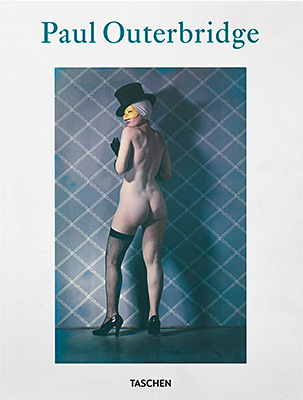
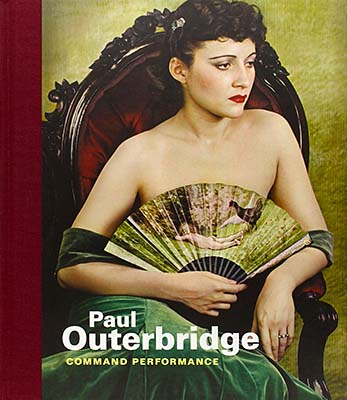
Paul Outerbridge, Jr. was an American photographer prominent for his early use and experiments in color photography. Outerbridge was a fashion and commercial photographer, an early pioneer and teacher of color photography, and an artist who created erotic nudes photographs that could not be exhibited in his lifetime.

Paul Outerbridge, while still in his teens, worked as an illustrator and theatrical designer creating stage settings and lighting schemes. After an accident caused his discharge from the Royal Canadian Naval Air Service, in 1917, he enlisted in the U.S. Army where he produced his first photographic work. In 1921, Outerbridge enrolled in the Clarence H. White school of photography at Columbia University. Within a year his work began being published in Vanity Fair and Vogue magazine.

In London, in 1925, the Royal Photographic Society invited Outerbridge to exhibit in a one-man show. Outerbridge then traveled to Paris and became friends with the artists and photographers Man Ray, Marcel Duchamp, and Berenice Abbott. In Paris he produced a layout for the French Vogue magazine, met and worked with Edward Steichen, and built the largest, most completely equipped advertising photography studio of the times. In 1929, 12 of Outerbridge's photographs were included in the prestigious, German Film und Foto exhibition.

Returning to New York in 1929, Outerbridge opened a studio producing commercial and artistic work, and began writing a monthly column on color photography for the U.S. Camera Magazine. Outerbridge became known for the high quality of his color illustrations, which were done in those years by means of an extremely complex tri-color carbro process. In 1937, Outerbridge's photographs were included in an exhibit at the Museum of Modern Art and, in 1940, Outerbridge published his seminal book, Photographing in Color, using high quality illustrations to explain his techniques. Outerbridge's vivid color nude studies included early fetish photos and were too indecent under contemporary standards to find general public acceptance. A scandal over his erotic photography led to Outerbridge retiring as a commercial photographer and moving to Hollywood in 1943. Despite the controversy, Outerbridge continued to contribute photo stories to magazines and write his monthly column. In 1945, he married fashion designer Lois Weir and worked in their joint fashion company, Lois-Paul Originals. He died of lung cancer in 1958.

One year after his death, the Smithsonian Institution staged a one-man show of Outerbridge's photographs. Although his reputation has faded, revivals of Outerbridge's photography in the 1970s and 1990s has periodically brought him into the public's awareness.

Source: Wikipedia

 

Selected Books

Inspiring Portfolios

Call for Entries
AAP Magazine #58 B&W
Publish your work in our printed magazine and win $1,000 cash prizes
 
Stay up-to-date  with call for entries, deadlines and other news about exhibitions, galleries, publications, & special events.

More Great Photographers To Discover

Astrid Reischwitz
Astrid Reischwitz is a lens-based artist whose work explores storytelling from a personal perspective. Using keepsakes from family life, old photographs, and storytelling strategies, she builds a visual world of memory, identity, place, and home. Her current focus is the exploration of personal and collective memory influenced by her upbringing in Germany. Reischwitz has exhibited at national and international museums and galleries including Newport Art Museum, Griffin Museum of Photography, Danforth Art Museum, Photographic Resource Center, The Center for Fine Art Photography (CO), Rhode Island Center for Photographic Arts, Center for Photographic Art (CA), FotoNostrum, and Gallery Kayafas. She was a Top 50 photographer at Photolucida's Critical Mass in 2020, 2019 and 2016, and a Finalist for the 2017 Lens Culture Exposure Awards. She is the recipient of the Griffin Award 2020 and was awarded solo exhibitions at Soho Photo Gallery and The Center for Fine Art Photography. Reischwitz is a Category Winner at the 14th and 15th Julia Margaret Cameron Award for Women Photographers and at the 14th and 15th Pollux Awards. Honors also include Gold and Silver Medal Awards, a Portfolio Award and the Daylight Multimedia Award at the San Francisco International Photo Show. Her work was featured in Fraction Magazine, Lenscratch, LensCulture, What Will You Rembember?, Wired Japan, Il Post Italy, P3 Portugal, Aint-Bad Magazine, The Boston Globe, NRC Handelsblad Amsterdam, as well as other media outlets. Reischwitz is a graduate of the Technical University Braunschweig, Germany, with a PhD in Chemistry. Spin Club Tapestry An exploration of memory I grew up in a small farming village in Northern Germany. A village that is bound to its history and that stands out through its traditions even today. Long ago, village women met regularly in "Spinneklumps" (Spin Clubs) to spin wool, embroider, and stitch fabrics for their homes. I imagine their conversations as they worked, the beautiful stories that lifted their spirits, as well as the stories of sadness, sorrow and loss. In modern times, village women continued to meet in this tradition, but shared stories over coffee and cake instead of needlework. These close-knit groups of women often stayed together until their death. In this series, my composite images take the form of tapestries, combining images of embroidered Spin Club fabrics with new and old photographs from the village. I connect the present and the past by recreating and re-imagining pieces of the embroidery. Spin Club tablecloths, napkins and wall hangings (some dating back to 1799) have been passed down from generation to generation. By following the stitches in these fabrics, I follow a path through the lives of my ancestors - their layout of a perfect pattern and the mistakes they made. Along the way, I add my own mistakes. The fabrics also reveal the passage of time, stained and distorted after sometimes decades of use. The patterns I have stitched myself into the paper are only abstractions of the original Spin Club designs, fragments of memory. After all, memory is fleeting, and changed forever in the act of recollection. Sometimes the stitching is incomplete, creating an invitation for future generations. Every decision we make is influenced by our history, our environment, and the society we live in. The tapestry of my life belongs to me but is stitched through with the beauty and heartache of past generations. Discover the Spin Club Tapestry Solo Exhibition
Norman Parkinson
United Kingdom
1913 | † 1990
Sir Norman Parkinson, CBE (21 April 1913 – 15 February 1990) was a celebrated English portrait and fashion photographer.Parkinson (birth name Ronald William Parkinson Smith) was born in London, and educated at Westminster School. He began his career in 1931 as an apprentice to the court photographers Speaight and Sons Ltd. In 1934 he opened his own studio together with Norman Kibblewhite. From 1935 to 1940 he worked for Harper's Bazaar and The Bystander magazines. During the Second World War he served as a reconnaissance photographer over France for the Royal Air Force. In 1947 he married the actress and model Wenda Rogerson. From 1945 to 1960 he was employed as a portrait and fashion photographer for Vogue. From 1960 to 1964 he was an Associate Contributing Editor of Queen magazine. In 1963 he moved to Tobago, although frequently returned to London, and from 1964 until his death he worked as a freelance photographer.Parkinson always maintained he was a craftsman and not an artist. From his early days as a photographer up to his death he remained one of the foremost British portrait and fashion photographers. His work, following the lead of Martin Munkacsi at Harper's Bazaar, revolutionised the world of British fashion photography in the '40s by bringing his models from the rigid studio environment into a far more dynamic outdoor setting. Humour played a central role in many of his photographs which often included himself. As well as magazine work he also created celebrated calendars featuring glamorous young women.(Source: en.wikipedia.org)
Dotan Saguy
Israel
1970
Dotan Saguy was born in a small kibbutz five miles south of Israel's Lebanese border. He grew up in a diverse working-class Parisian suburb, lived in Lower Manhattan during 9/11, and moved to Los Angeles in 2003. In 2015, Saguy decided to focus on his lifelong passion for photography after a successful career as a high-tech entrepreneur. Since then Saguy attended the prestigious Eddie Adams Workshop, Missouri Photo Workshop and studied photojournalism at Santa Monica College. Saguy's award-winning photographs have been published by National Geographic, The Guardian, The Los Angeles Times, among many other publications. Saguy teaches street photography and documentary workshops for Leica Akademie and Momenta Workshops. In 2018 Saguy's first monograph about the endangered culture of Venice Beach, CA was published by Kehrer Verlag and received a Bronze award by the prestigious Deutscher Fotobuchpreis 2018-19. Saguy lives in Los Angeles with his wife and two children. Statement I met the Reis, a Mormon family from Brazil, the day they arrived in Los Angeles in October 2018 in the yellow school bus they call home. They had come to the United States two years prior to chase the American Dream and although they had quickly found financial success, happiness proved much more elusive with long work hours and material acquisitions leaving them unsatisfied. This body of work documents the trials and tribulations of the Reis family over their 10-month stay in the City of Angels while they struggle as vehicle dwellers, improvised mechanics, unconventional parents, experimenting breadwinners while seeking happiness as a family. The interviews conducted as part of the project also raise subjects such as immigrants chasing the American dream, modern parenting, the growing urban phenomenon of people living in vehicles and rebelling against a strong religious identity in the Internet era. Articles About Nowhere to go but Everywhere Dogtown
Beth Galton
United States
Beth Galton is a photo-based artist, with an educational background in the natural sciences and three decades of experience as a professional photographer in the editorial and commercial arena. These elements of her history are the lens through which she explores the world. Her work has been recognized by organizations including Graphis, Communication Arts, the Tokyo International Foto Awards, Julia Margaret Cameron Award, IPA Awards, AAP, and the PDN Taste Awards. The Cut Food series was exhibited in Montpellier Contemporain, Aperture, and Beth Urdang Gallery. It was part of ‘The Fence’, a 7-city, traveling outdoor exhibition, it was published in the Washington Post, and covered by NPR. Both Lenscratch and Rfotofolio picked up the Memory of Absence series. Additionally, A Vita Plantae, and Memory of Absence have been exhibited at Wave Hill, Soho Photographic Gallery, The Center for Fine Art Photography (CO), The Center for Photographic Art (CA), The Florida Museum of Photographic Arts, Griffin Museum of Photography, Praxis Gallery, and SE Center for Photography. The Washington Post recently published Beth’s work from her series Covid Diary, a document of her time in confinement. About Cut Food "What started as a ubiquitous burrito shot, turned into an exploration of iconic food through a fresh perspective. We chose subjects which we felt were symbols within our Western food culture, and sought to move past the normal “appetite appeal” to look deeply and with curiosity into them. My intention was to give the ordinary a sense of magic show quality. Real, but also astonishing." About A Vita Plantae "This collection explores the relationship between art and science in a three-part series of organic images: Roots, Potato Love, and Time Preserved. These images seek to reveal some of the long-hidden truths of plants: their movement and grace, the nature of time, and the almost unbearable fragility of life. " About Memory of Absence "In 2017, my mother and father—who had not lived together for 50 years, died within 3 days of each other. In this series, I sought to convey a sense of memory and loss through the composition of found ephemera and botanical matter. The volatile botanicals represent the ever-changing nature of memory —an unstable and profoundly unreliable process."
Advertisement
AAP Magazine #58 B&W
Win a Solo Exhibition in July
AAP Magazine #58 B&W

Latest Interviews

Exclusive Interview with Carolyn Moore
American photographer Carolyn Moore explores the inner landscape of emotion, memory, and personal transformation through a deeply intuitive photographic practice. Her work unfolds as a quiet dialogue between artist and viewer, where images become a space for reflection, vulnerability, and connection.
Exclusive Interview with Luca Desienna and Laura Estelle Barmwoldt
For over seven years, Of Lilies and Remains has explored the depths of the goth and darkwave underground, unfolding in Leipzig—a city long associated with a vibrant and enduring subcultural scene. Moving between iconic gatherings such as Wave-Gotik-Treffen and more intimate moments on the fringes, the project offers a rare and immersive glimpse into a world often misunderstood, yet rich in expression and community. Created by Luca in collaboration with Laura Estelle Barmwoldt, the work embraces a cinematic and deeply personal approach. Rather than documenting from a distance, it moves within the scene itself, capturing its atmosphere, its codes, and its quiet contradictions. The title Of Lilies and Remains hints at this duality—where beauty and darkness, fragility and strength coexist. As the book prepares for its release, we spoke with both artists about the origins of the project, their process, and what it means to document a subculture that continues to evolve while remaining true to its spirit.
Exclusive Interview with Matthew Finley
American photographer Matthew Finley turns inward, using photography as a way to explore identity, memory, and emotional truth. Based in Los Angeles, his practice moves between performance, gesture, and found imagery, creating a visual language that is both intimate and deeply personal
Exclusive Interview with Jan Janssen
Dutch photographer Jan Janssen explores universal human experiences through his long-term project It Matters, winner of the May 2025 Solo Exhibition. Begun in 2016, the series captures intimate moments of everyday life—love, loss, connection, and belonging—across Central and Eastern Europe. Working in countries such as Turkey, Azerbaijan, and Armenia, Janssen spends extended time within communities, building relationships based on trust and respect. His approach allows him to move beyond observation, revealing deeply human and authentic moments. Rooted in travel and personal discovery, It Matters reflects Janssen’s search for what connects us all in an increasingly divided world. The project is ongoing and will culminate in a photobook scheduled for publication in 2026.
Exclusive Interview with Henk Kosche
German photographer Henk Kosche turns his lens toward the streets of Halle an der Saale, capturing everyday life in the late years of the former German Democratic Republic. At the time, Kosche was studying design and exploring the city with his camera, drawn to the atmosphere of its industrial landscape and the quiet rhythms of daily life. His series Street Photography at the End of the 80s, selected as the Solo Exhibition for July 2025, revisits a body of work created just before a period of profound change. Rediscovered decades later in a small box of 35mm negatives, these photographs offer glimpses of a city and its people at a moment suspended between the familiar and the unknown.
Exclusive Interview with Anastasia Samoylova
Anastasia Samoylova is an American artist whose photographic practice is shaped by close observation and a deep attentiveness to place. Working between documentary and formal exploration, she photographs landscapes, architecture, and everyday scenes with a sensitivity to light, structure, and atmosphere. Since relocating to Miami in 2016, her work has increasingly focused on how environments—both natural and built—carry social, cultural, and emotional traces. We asked her a few questions about her practice and her way of seeing, to better understand the thoughts and experiences that shape her work—while allowing the images themselves to remain open and speak in their own time.
Exclusive Interview with Marijn Fidder
Marijn Fidder is a Dutch documentary photographer whose work powerfully engages with current affairs and contemporary social issues. Driven by a deep sense of social justice, she uses photography to speak on behalf of the voiceless and to advocate for the rights of those who are most vulnerable. Her images have been widely published in major international outlets including National Geographic, CNN Style, NRC Handelsblad, Volkskrant, GUP New Talent, and ZEIT Magazin. Her long-term commitment to disability rights—particularly through years of work in Uganda—culminated in her acclaimed project Inclusive Nation, which earned her the title of Photographer of the Year 2025 at the All About Photo Awards. She is also the recipient of multiple prestigious honors, including awards from World Press Photo and the Global Peace Photo Award. We asked her a few questions about her life and work.
Exclusive Interview with Josh S. Rose
Josh S. Rose is a multidisciplinary artist working across photography, film, and writing. His practice bridges visual and performing arts, with a strong focus on movement, emotion, and the expressive potential of the image. Known for his long-standing collaborations with leading dance companies and performers, Rose brings together authenticity and precise composition—a balance he describes as “technical romanticism.” His work has been commissioned and exhibited internationally, appearing in outlets such as Vogue, at the Super Bowl, in film festivals, and most recently as a large-scale installation for Lincoln Center for the Performing Arts. A sought-after collaborator, he has worked with major artists, cultural institutions, and brands, following a previous career as Chief Creative Officer at Interpublic Group and the founder of Humans Are Social. We asked him a few questions about his life and work.
Interview with Maureen Ruddy Burkhart
Photographer Maureen Ruddy Burkhart brings a quietly attentive and deeply human sensibility to her exploration of the world through images. Shaped by a life immersed in photography, film, and visual storytelling, her work is guided by intuition, observation, and an enduring interest in the emotional undercurrents of everyday life. With a practice rooted in both fine art traditions and documentary awareness, she approaches her subjects with sensitivity, allowing subtle moments to emerge naturally rather than be imposed. Her series Til Death, selected as the Solo Exhibition for February 2025, reflects this long-standing commitment to photography as a space for reflection rather than spectacle. Drawn to moments that exist just outside the expected frame, Burkhart’s images suggest narratives without resolving them, leaving room for ambiguity, humor, and quiet connection. We asked her a few questions about her life and work.
Call for Entries
Win A Solo Exhibition in June
Get International Exposure and Connect with Industry Insiders