All about photo.com: photo contests, photography exhibitions, galleries, photographers, books, schools and venues.
Win a Solo Exhibition in April 2026 + An Exclusive Interview!
Hùng Anh Nguyễn
Hùng Anh Nguyễn
Hùng Anh Nguyễn

Hùng Anh Nguyễn

Country: Vietnam
Birth: 2002

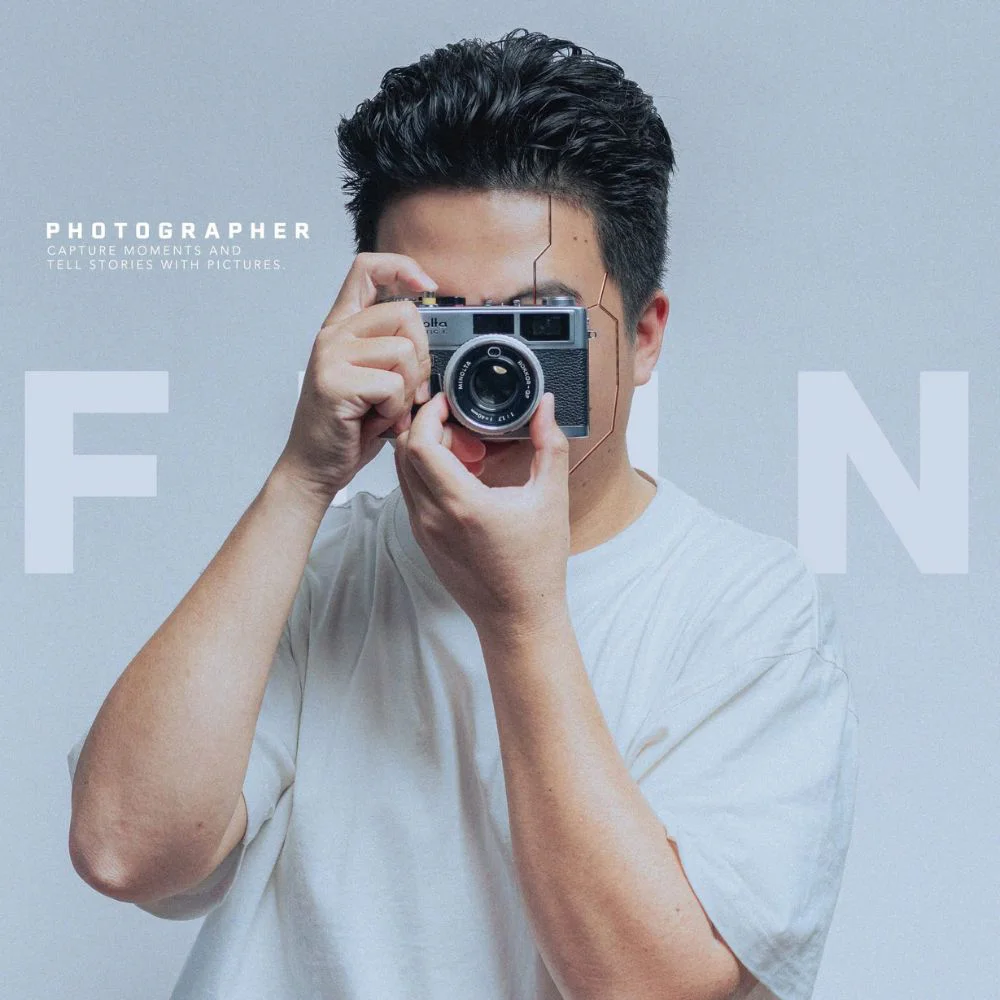
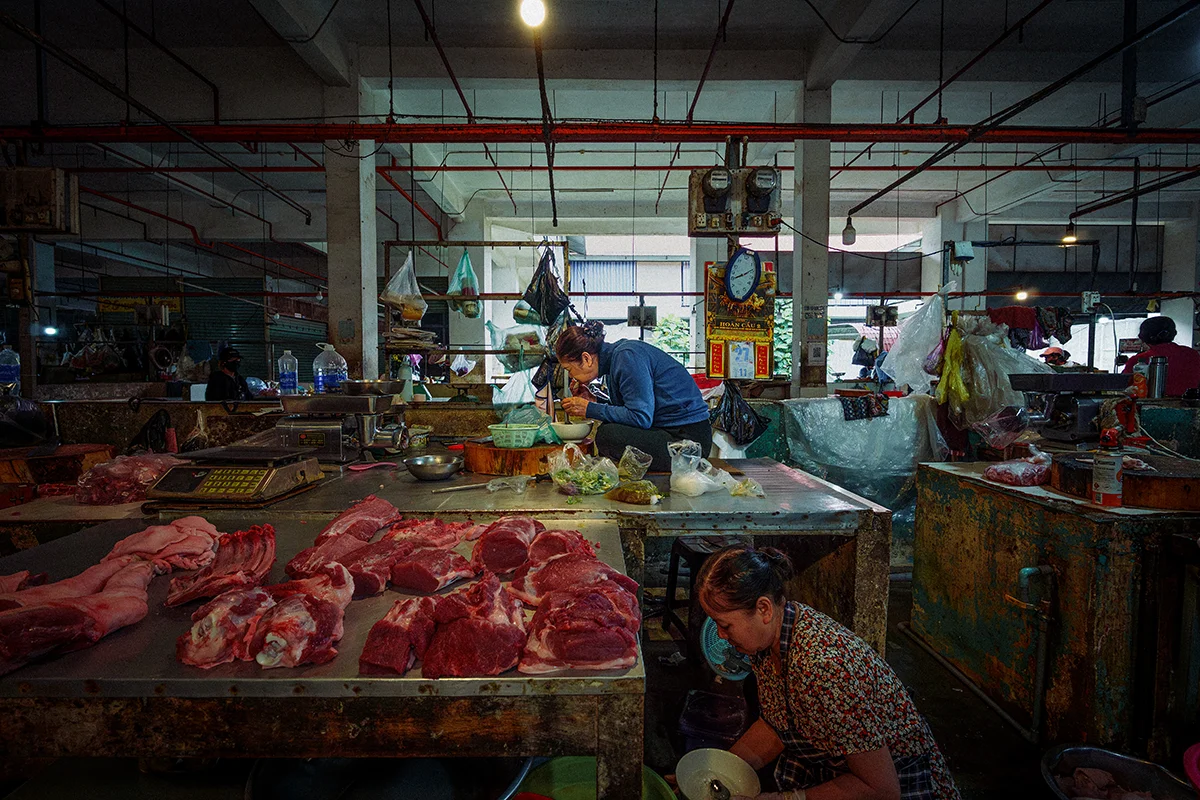
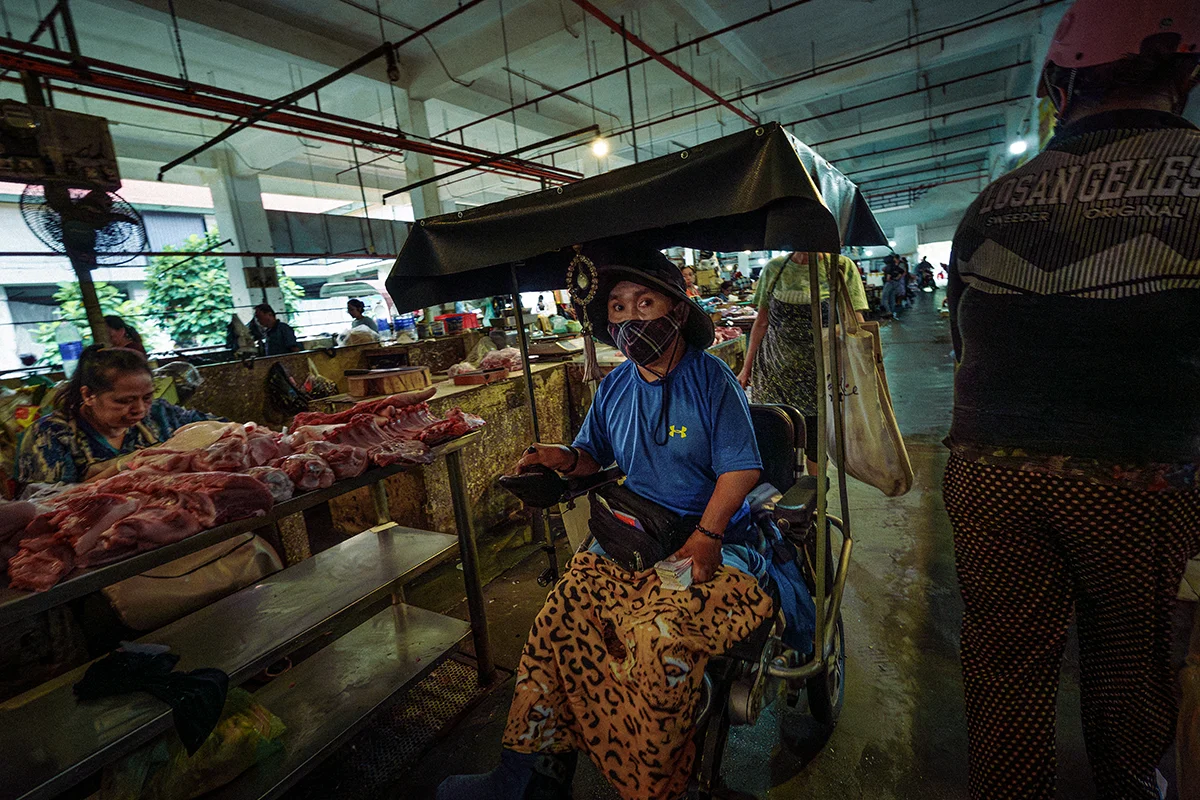
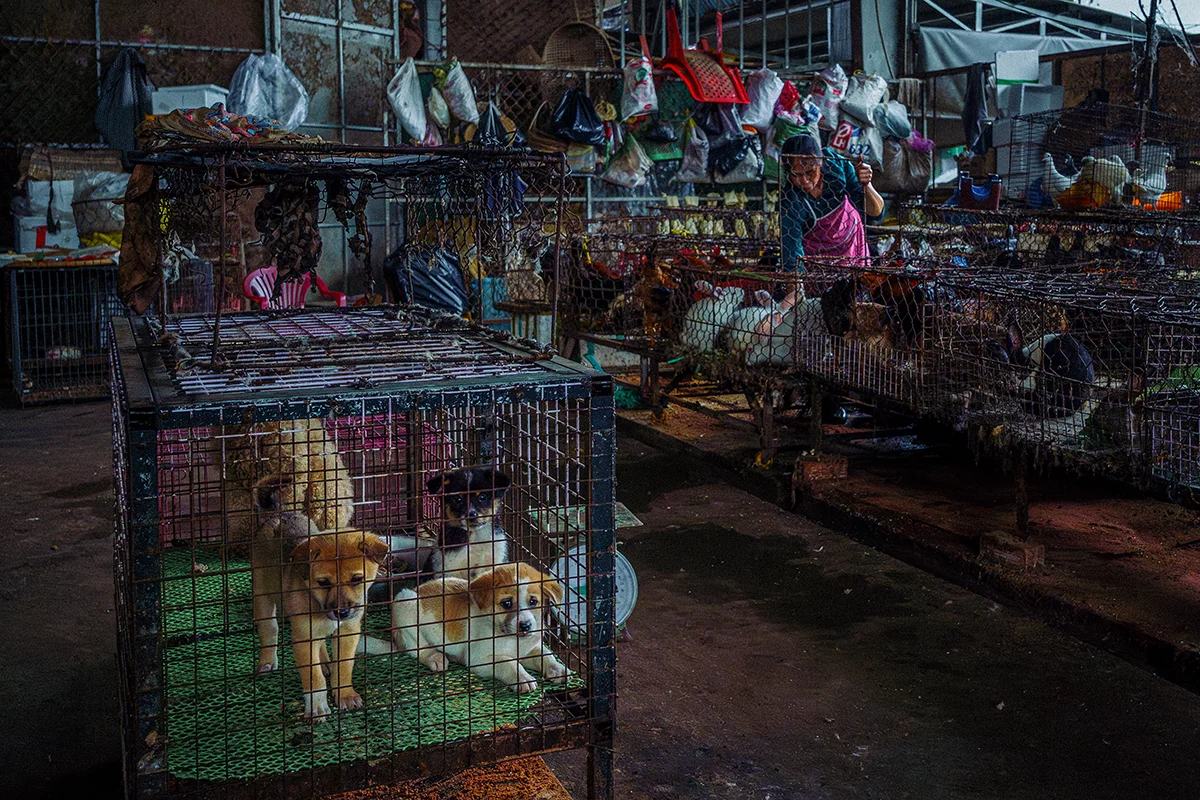
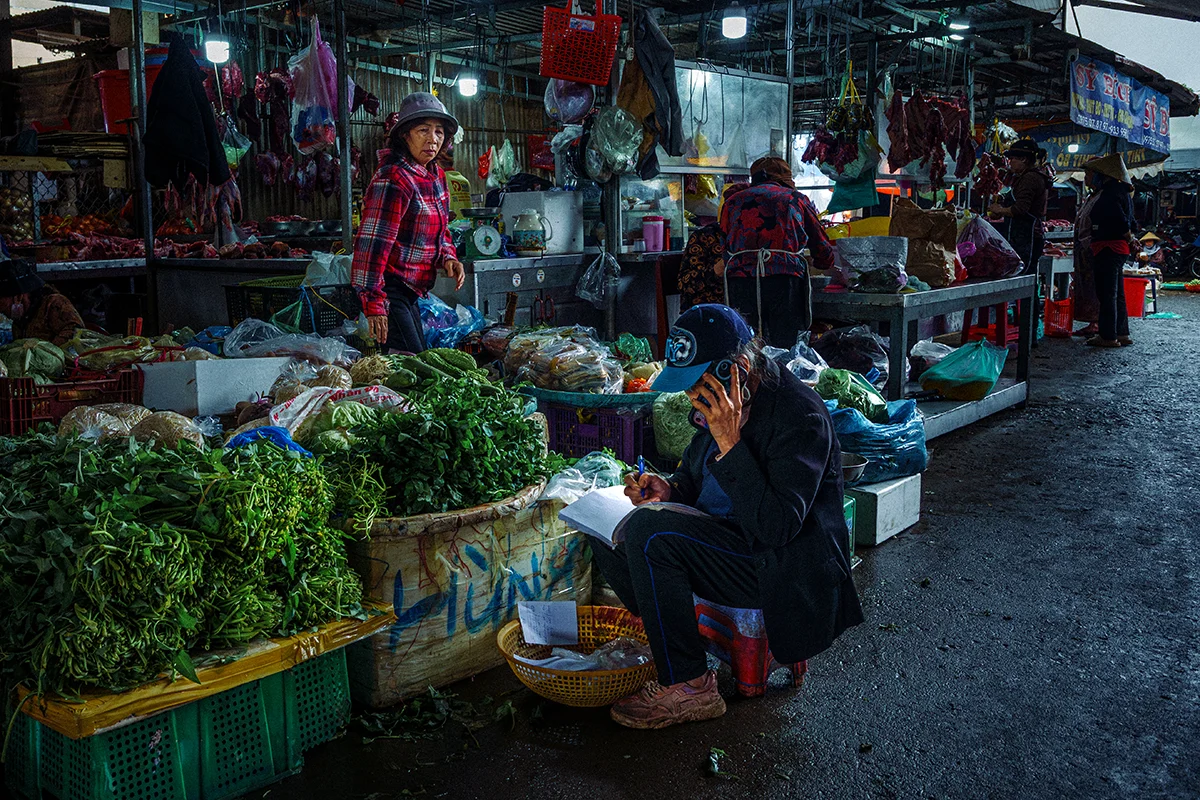
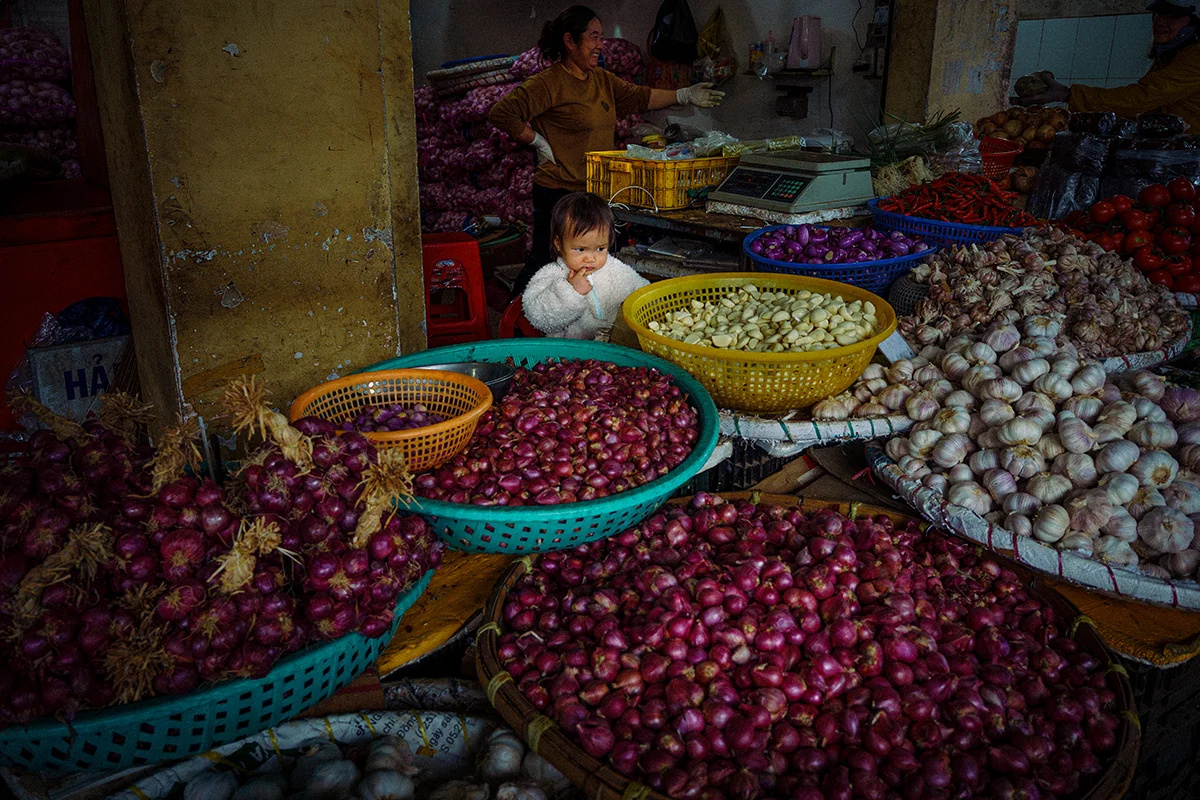
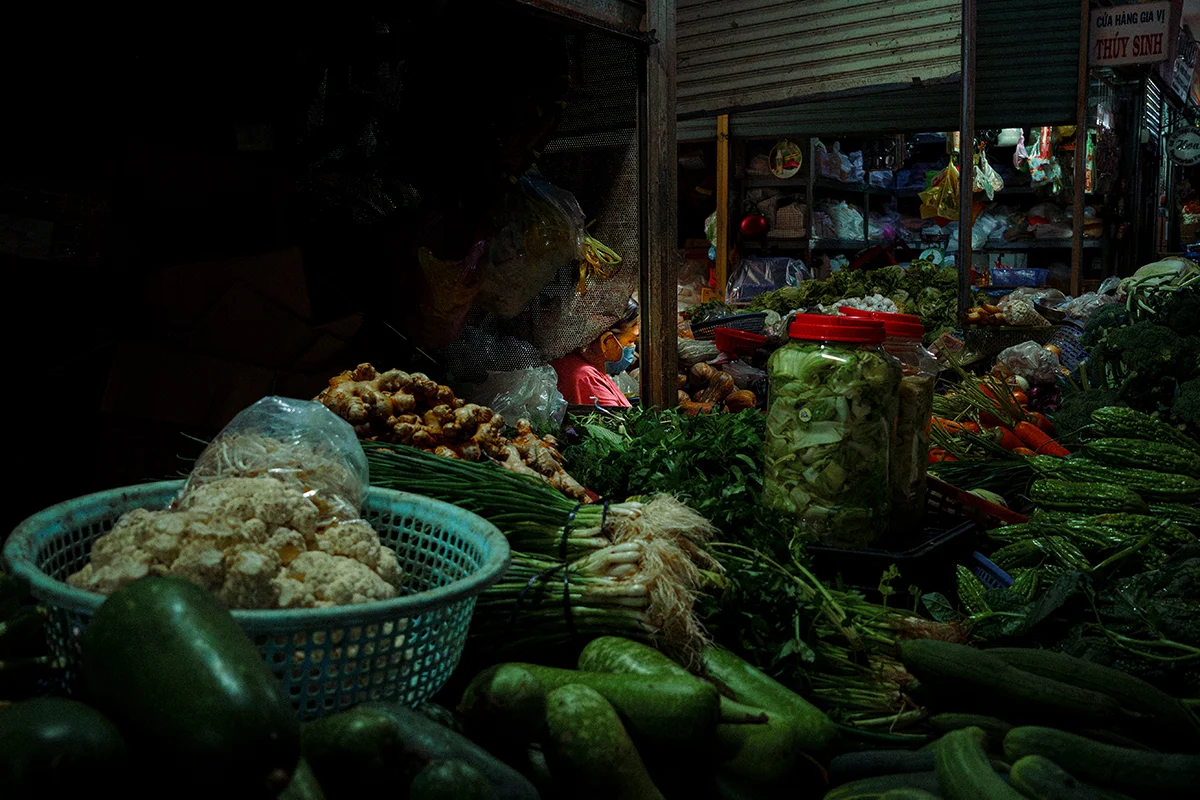
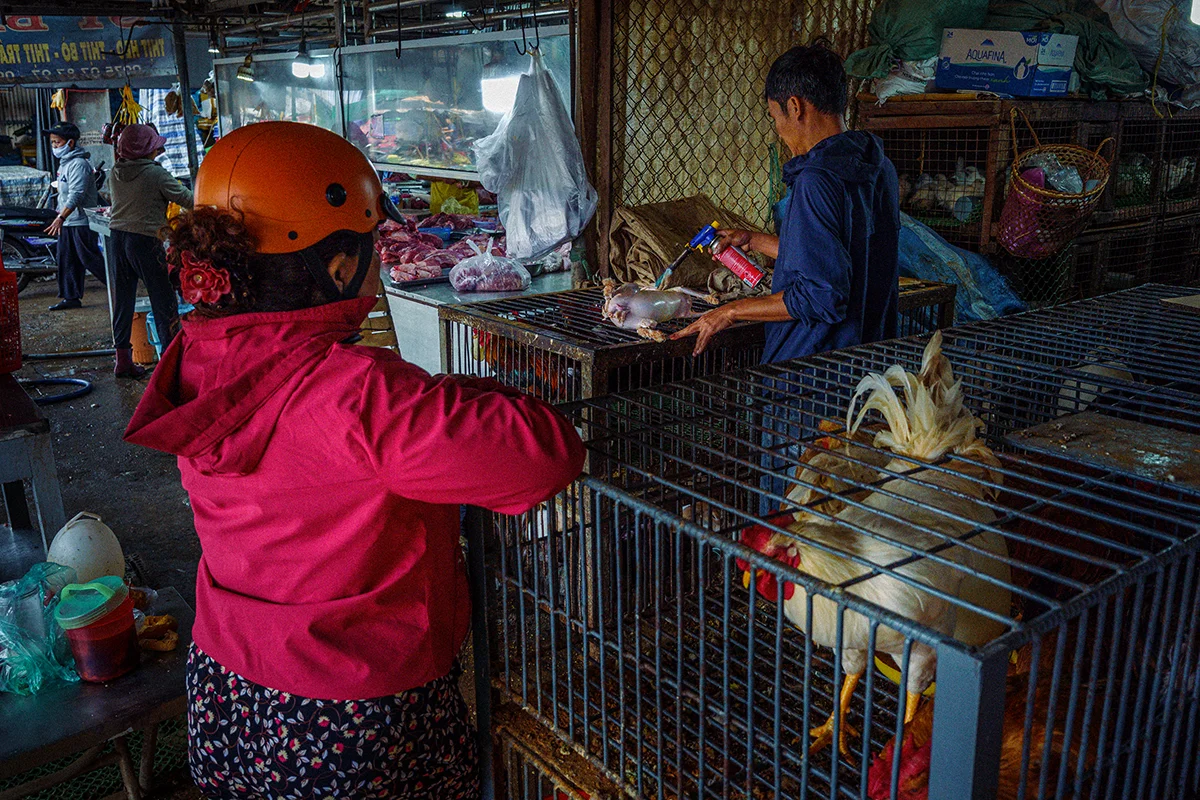
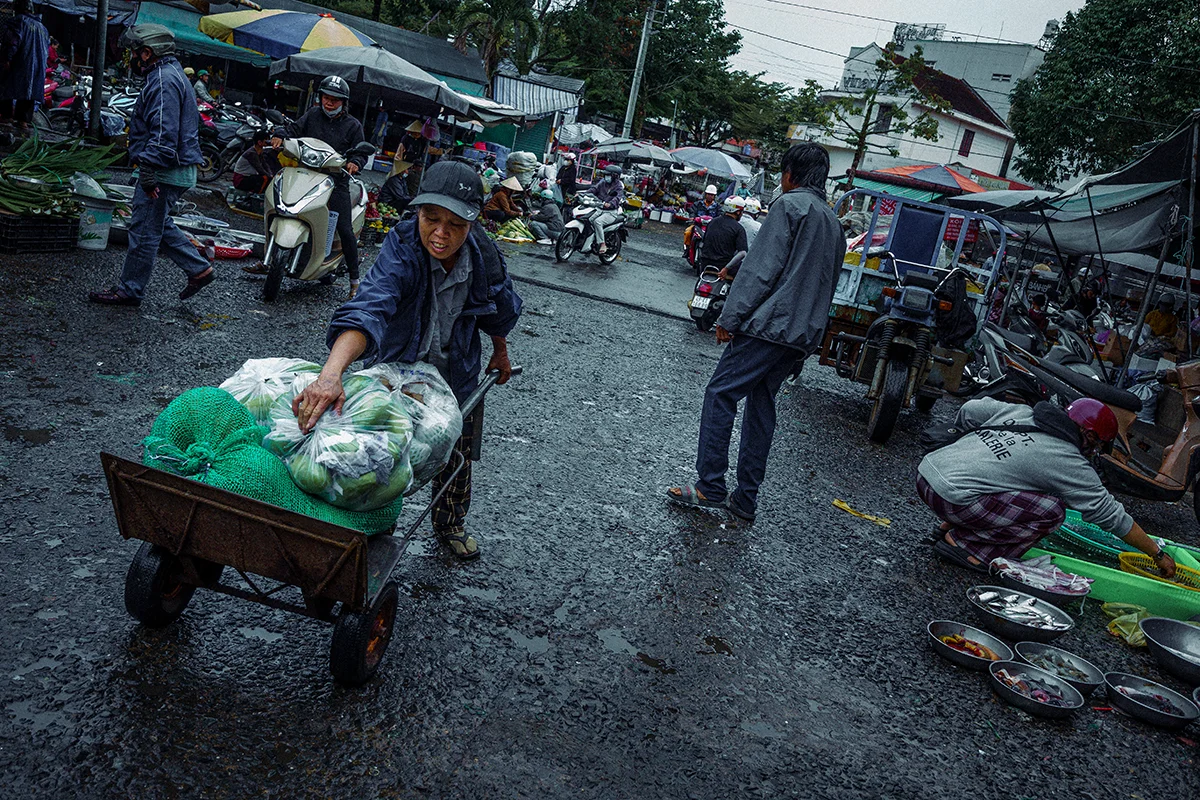
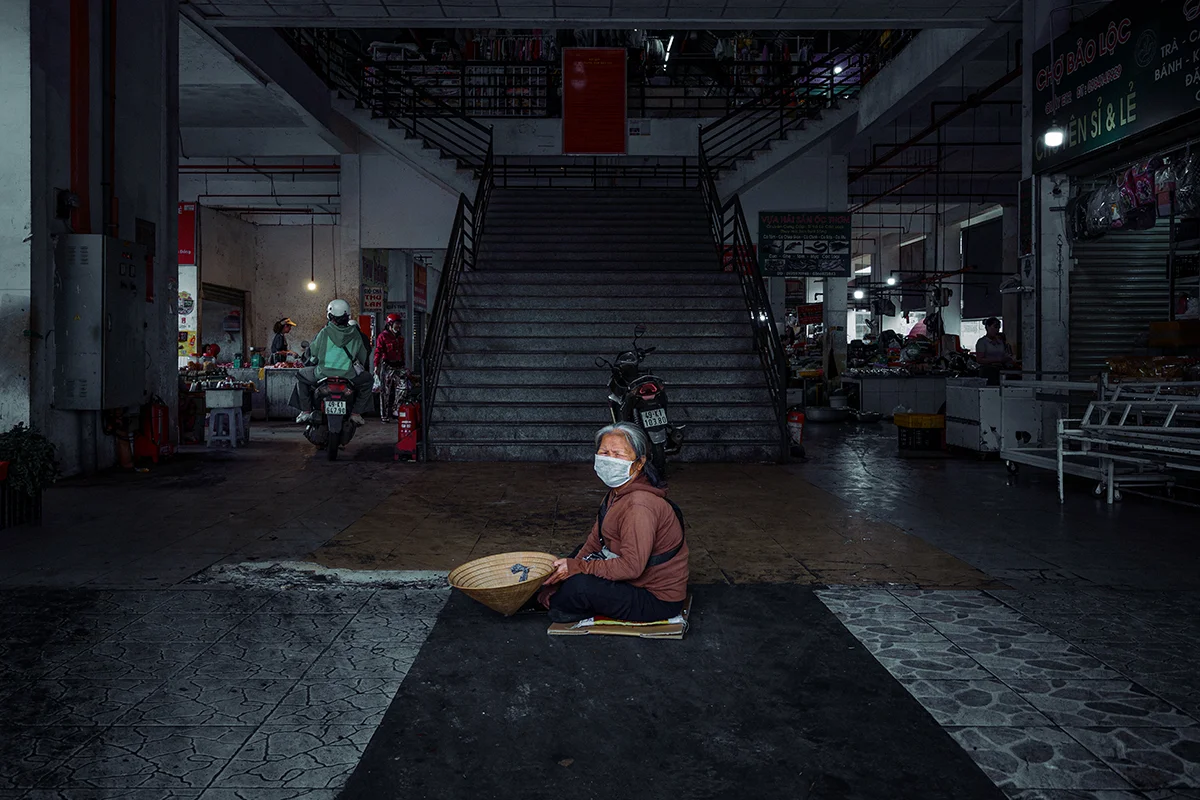
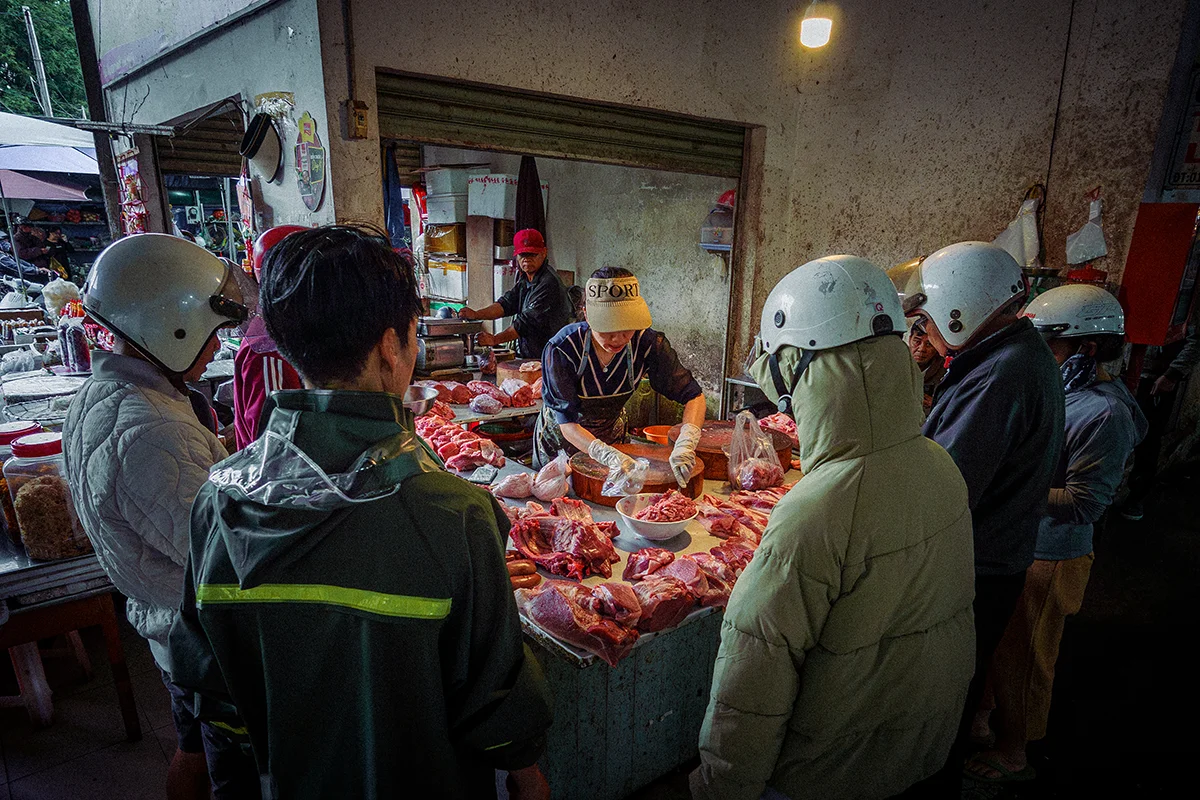
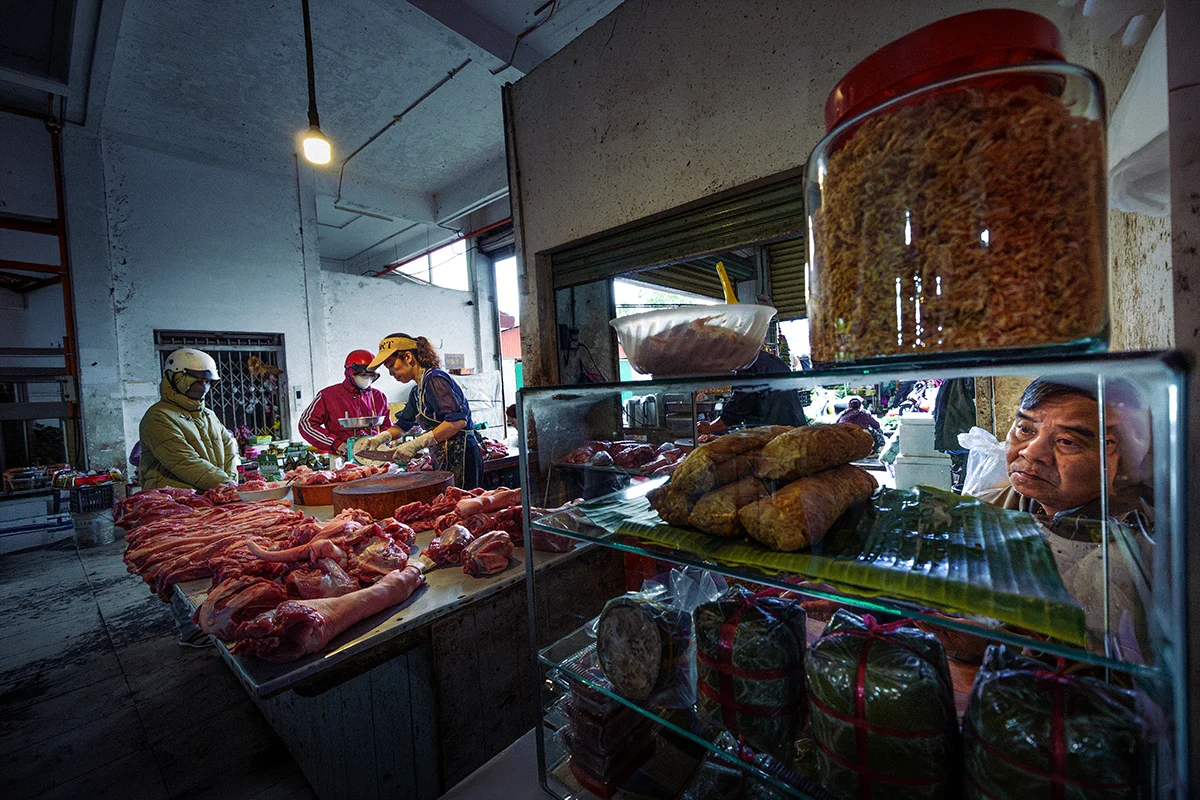
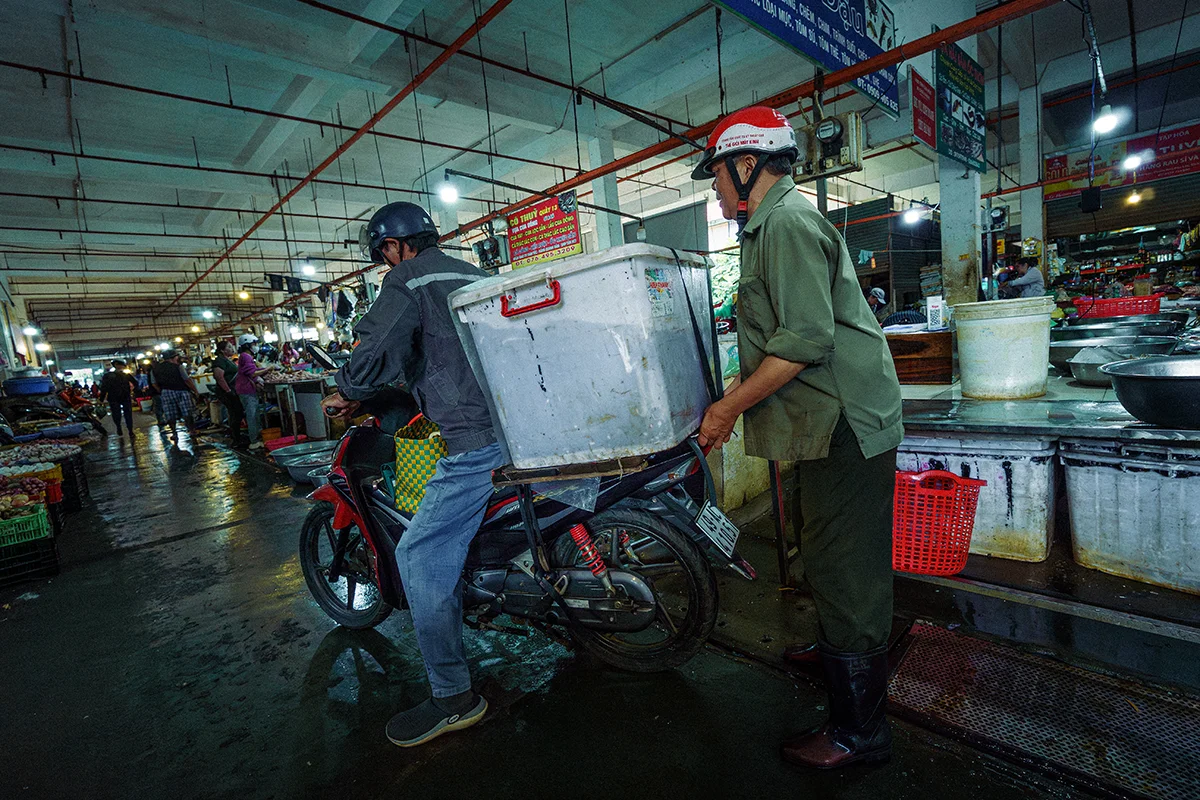
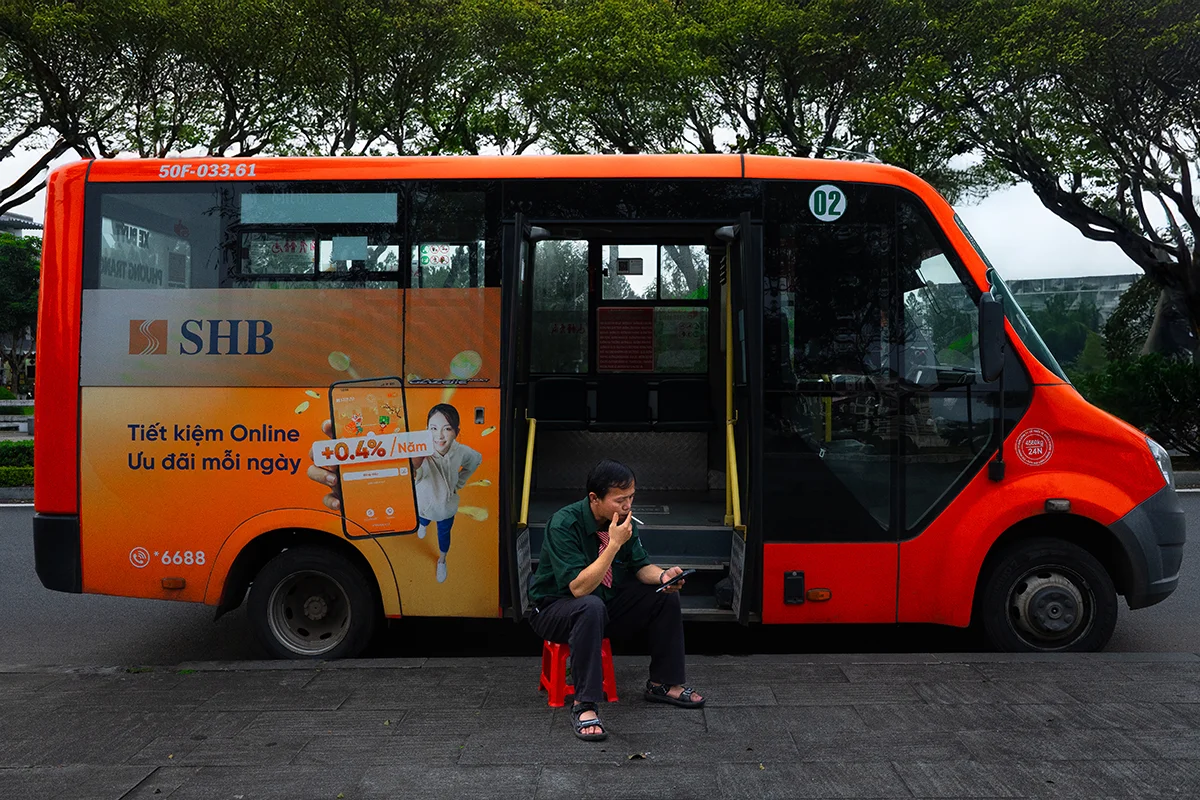
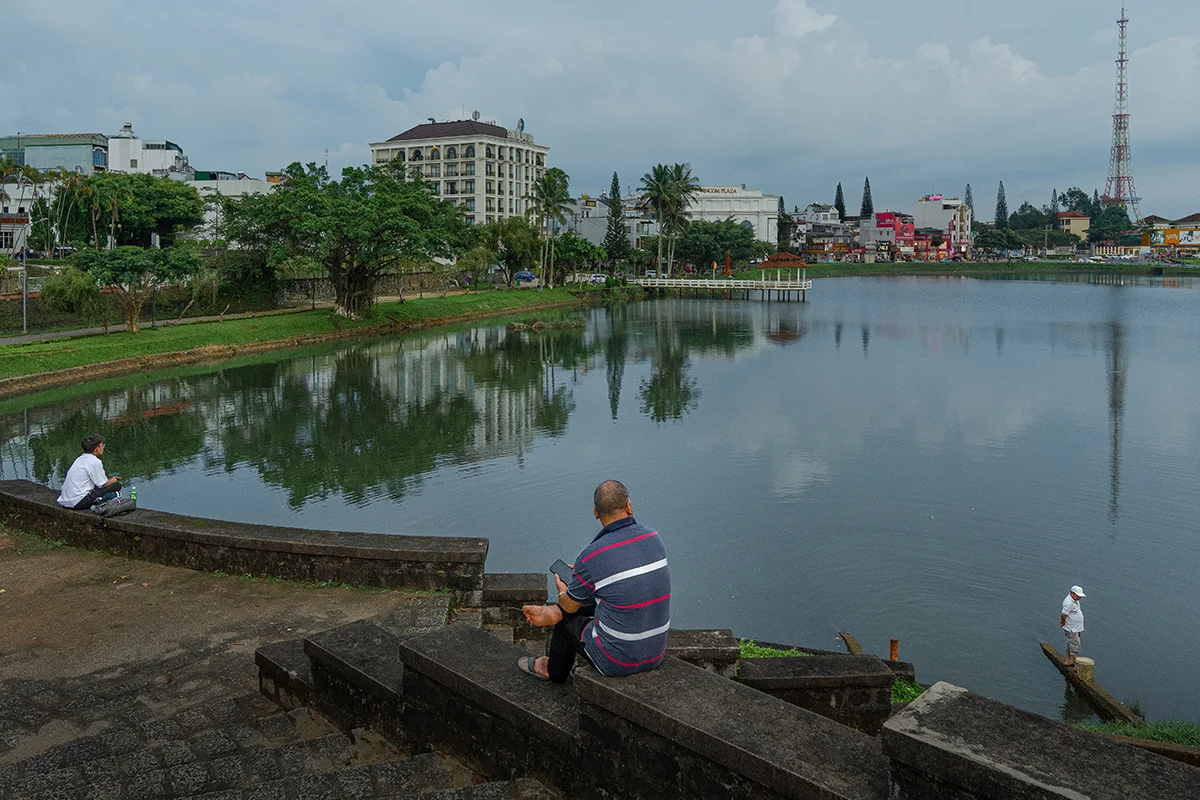
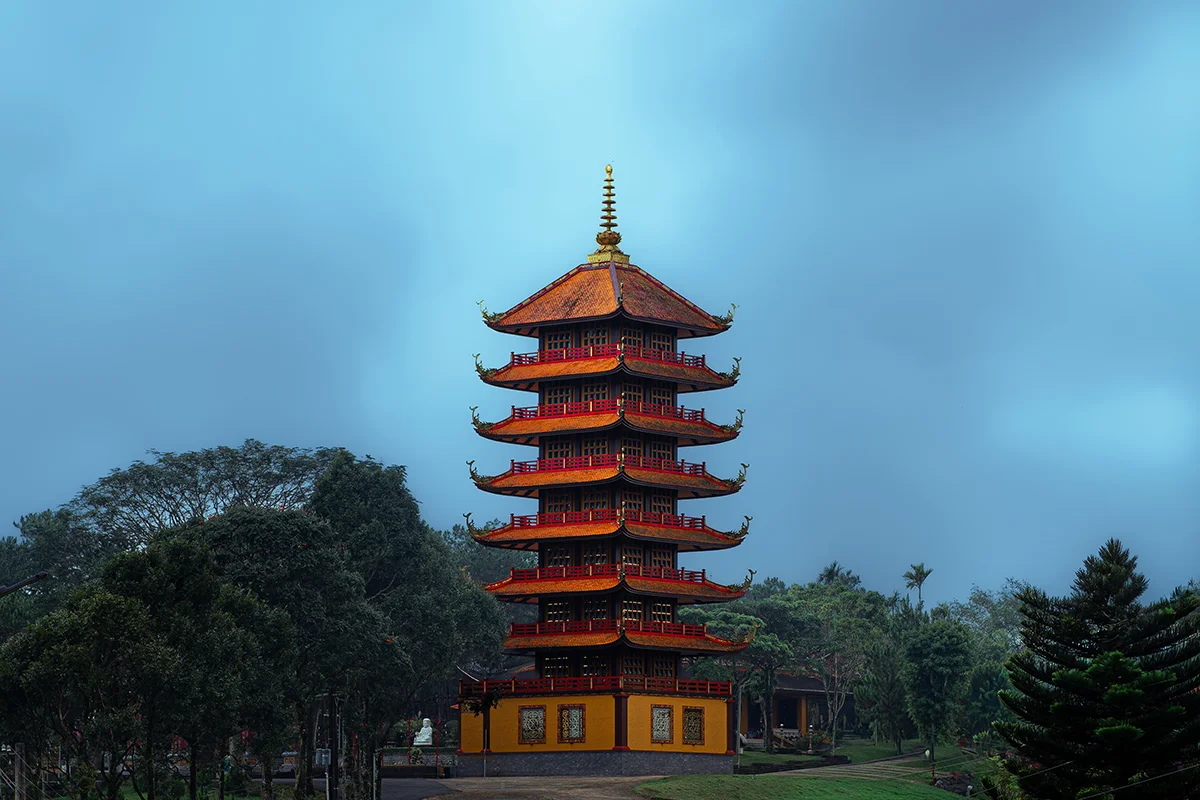
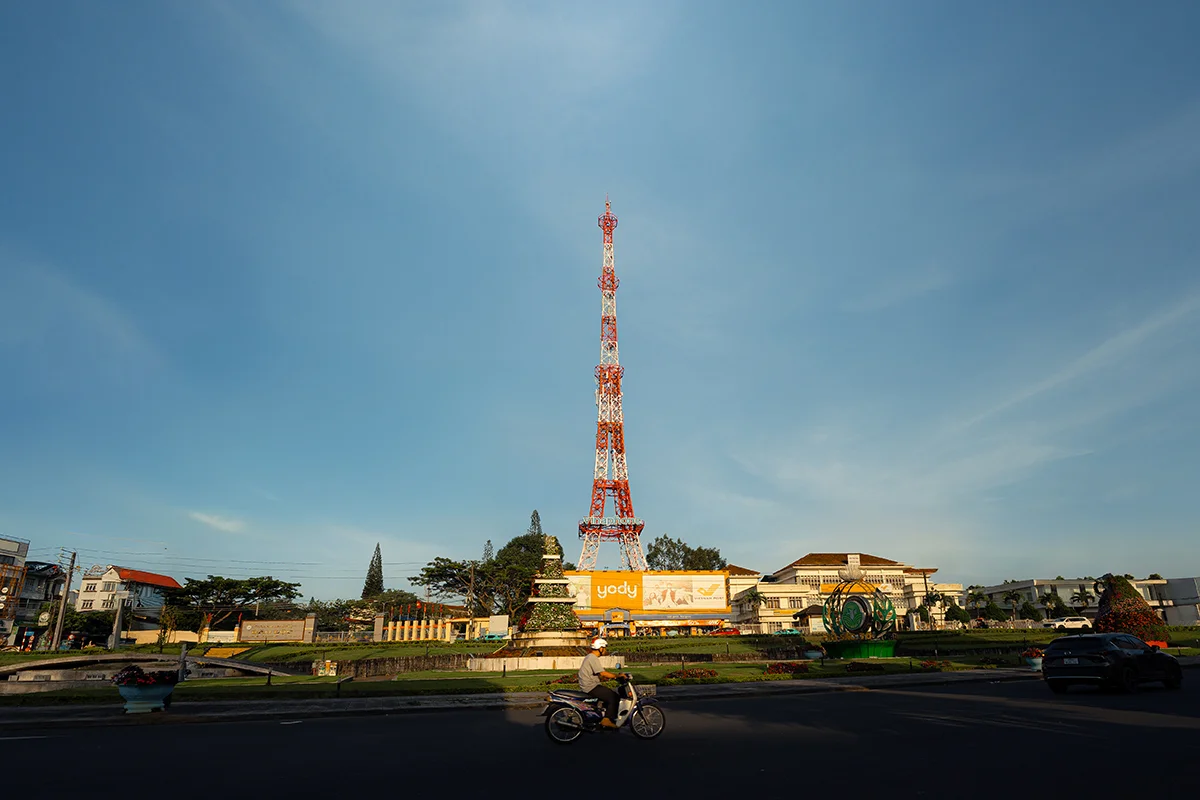
Hùng Anh Nguyễn is a photographer and media professional with seven years of experience, specializing in street-style photography. Passionate about exploring diverse perspectives and layered compositions, he seeks to reveal stories that often go unnoticed. Through light, depth, and authentic moments, he transforms everyday scenes into compelling visual narratives.

Statement
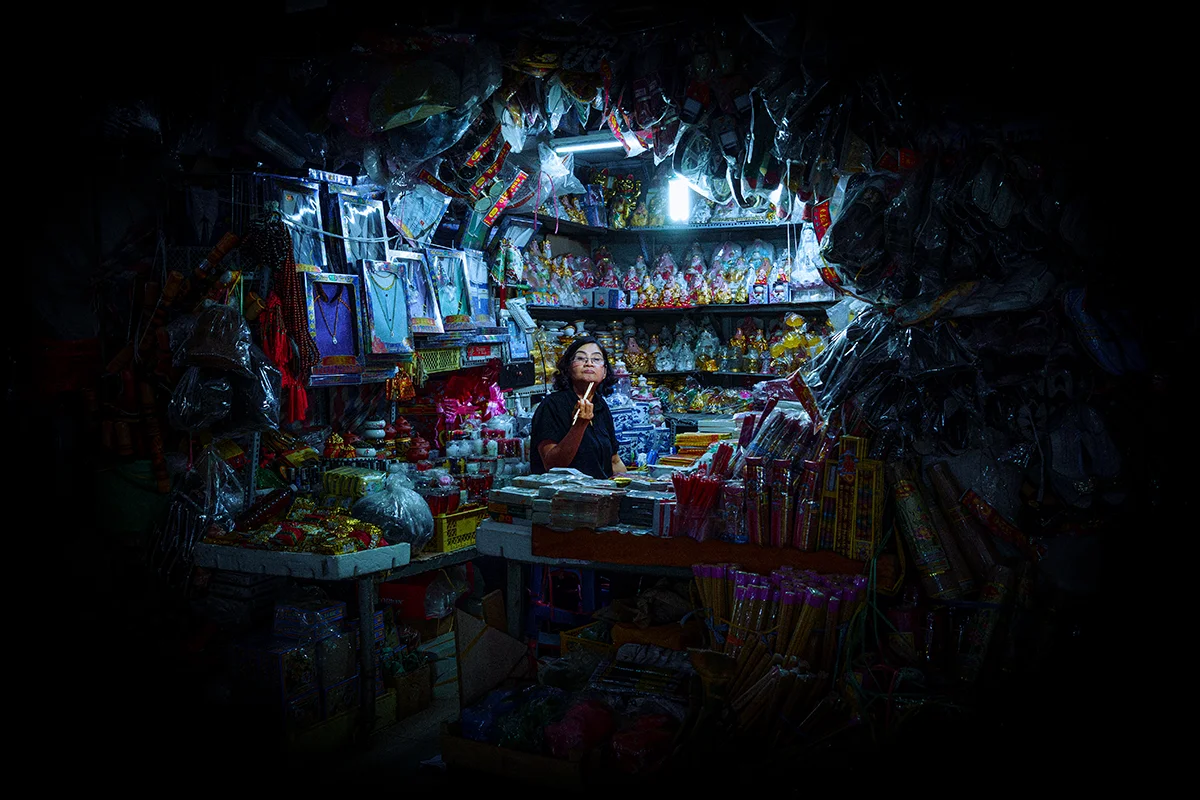
This image captures a suffocating reality where a market stall is no different from an artificial cave built from thousands of cluttered items. Surrounded on all sides by Buddha statues, joss paper, and goods piled to the ceiling, the woman sits swallowed whole by her very "livelihood." The solitary neon light doesn't create a magical glow; instead, it only highlights the grittiness, dust, and claustrophobia of an oxygen-deprived space. This is the raw face of small-scale retail: humans imprisoning themselves in dark, cramped "holes" all day long, patiently clinging to a forest of objects just to exist. Her distant gaze isn't one of meditation, but rather the weary resignation of a life besieged within a survival cave with no exit.

Awarded Photographer of the Week - Week 11, 2026

 

Inspiring Portfolios

Call for Entries
AAP Magazine #56 Shadows
Publish your work in our printed magazine and win $1,000 cash prizes
 
Stay up-to-date  with call for entries, deadlines and other news about exhibitions, galleries, publications, & special events.

More Great Photographers To Discover

Rory J. Lewis
United Kingdom
1978
Rory J Lewis, a multi-award winning British macro wildlife photographer, is renowned for his artistic portrayal of invertebrates and ethical techniques to capture intricate wildlife images within their natural habitat. Growing up among the rolling hills of the Cotswolds, with a fascination for the local wildlife from a young age, Rory was exposed to cameras very early on, as his father was also a keen landscape photographer. After trying a few different genres, everything changed for Rory when he first aimed a macro lens at an insect. Through a blend of macro and traditional portrait techniques, Rory unveils the hidden essence of these elusive life-forms, creating compelling visuals that are both intimate and evocative. In an era marked by climate change and habitat loss endangering countless invertebrate species, Rory's images challenge viewers to perceive these often misunderstood creatures with newfound empathy and appreciation, in the hope of shedding new light on the critical roles they play within our fragile ecosystem. Rory’s works have been featured in many popular publications and have received awards from the Royal Entomological Society, World Nature Photography Awards, Gloucestershire Wildlife Trust, and was most recently the People of Nature Awards fauna photographer of the year. Rory has also represented Venus Optics Laowa lenses in their marketing on multiple occasions and has recently carried out Canon sponsored workshops in partnership with Wex Photo Video throughout the UK.
Eva Chupikova
Czech Republic
Eva is a freelance illustrator and photographer based in Czechia. She was born and grew up in the mountainous region in Northern Slovakia and after earning her degree in philosophy, she went on to establish a career as a freelance graphic designer and illustrator specializing in children´s literature. Eva has been intimately connected with photography since 2016. Her body of work falls under the genre of fine art portrait and minimalist landscape photography. A minimalist approach, the absence of colors, the emphasis on space and texture connected with a sometimes near blank canvas provide Eva the necessary means to visually express herself creatively. “As a photographer, I seek beauty in basic geometric lines and shapes, which are bound in harmony with the elusive variability and diversity of natural, organic forms. Photography, for me, is a means of capturing a distilled version of reality. It serves as a tool to seek out and unveil purified connections, free from the noise of superficial information and stimuli that inundate our senses and experiences. Through the lens, I strive to isolate and reveal the essential elements that might otherwise go unnoticed in the chaos of everyday life. Each image crafted is a deliberate act of reducing distractions, allowing viewers to immerse themselves in the simplicity and harmony of the moment.“ Eva´s conceptual portrait/self-portrait photography is closely intertwined with her profession as an illustrator. Through the use of techniques such as line work, drawing or collage, she is able to infuse her portraits with surreal and symbolic elements, blurring the lines between reality and imaginary. The main theme of Eva´s portrait photography is a figure or face reduced in expression, and it serves as an initial frame, against which a fleeting moment of consciousness takes place in hints. As a photographer, Eva finds herself drawn to creating series rather than single images. A series provides her with the opportunity to develop her concepts and articulate her aesthetic visions across a sequence of complementary images. By developing a series, Eva weaves together a visual theme that transcends the limitations of a single photograph, allowing to express her photographic intention in a more nuanced way. Eva has received numerous international awards and her work has been featured in various magazines. In 2022, Eva was awarded the grand prize – the ´Grand Prix Gold Star Award´ – for the series ´Leaving´ in the prestigious international ND Photography Awards for which Eva received the title ND Discovery of the Year 2022.
Bruce Gilden
United States
1946
An Iconic street photographer with a unique style, Bruce Gilden was born in Brooklyn, New York in 1946. He first went to Penn State University but he found his sociology courses too boring for his temperament and he quit college. Gilden briefly toyed with the idea of being an actor but in 1967, he decided to buy a camera and to become a photographer. Although he did attend some evening classes at the School of Visual Arts in New York, Bruce Gilden is to be considered substantially a self-taught photographer. Right from childhood, he has always been fascinated by the life on thestreets and the complicated and fascinating motion it involves, and this was the spark that inspired his first long-term personal projects, photographing in Coney Island and then during theMardi Gras in New Orleans. Over the years he has produced long and detailed photographic projects in New York, Haiti, France, Ireland, India, Russia, Japan, England and now in America. Since the seventies his work has been exhibited in museum and art galleries all over the world and is part of many collections. The photographic style of Bruce Gilden is defined by the dynamic accent of his pictures, his special graphic qualities, and his original and direct manner of shooting the faces of passers-by with a flash. Gilden’s powerful images in black and white and now in color have brought the Magnum photographer worldwide fame.Gilden has received many awards and grants for his work, including National Endowments for the Arts fellowships (1980, 1984 and 1992), French ''Villa Medicis Hors les Murs'' grant (1995), grants from the New York State Foundation for the Arts (1979, 1992 and 2000), a Japan Foundation Artist Fellowship (1999) and in 2013 a Guggenheim Foundation fellowship.Bruce Gilden has published 23 monographs of his work, among them: Facing New York, 1992; Bleus, 1994; Haiti, 1996 (European Publishers Award for Photography); After The Off, 1999; Go, 2000; Coney Island, 2002; A Beautiful Catastrophe, 2004; Foreclosures, 2013; A complete Examination of Middlesex, 2014. In 2015, Gilden published Face, and Hey Mister Throw Me Some Beads! Un Nouveau Regard Sur la Mobilité Urbaine featuring the commission he did for the French transporation system RATP was released in April 2016. Only God Can Judge Me 2018, Lost And Found 2019, Palermo Gilden 2020, Cherry Blossom 2021.   Bruce Gilden joined Magnum Photos in 1998. He lives in Beacon, New York. Source: www.brucegilden.com Bruce Gilden is one of the most iconic street photographers of our time. Known for his graphic and often confrontational close-ups made using flash, his images have a degree of intimacy and directness that have become a signature in his work. Though he cut his teeth on the sidewalks of New York City where he grew up, he has since made significant bodies of work in Haiti, Japan, Moscow, France, Ireland and India. “I’m known for taking pictures very close,” says Gilden of his practice. “And the older I get, the closer I get.” Gilden was born in Brooklyn, New York in 1946. He studied sociology at Penn State University but didn’t complete the course. Although he briefly flirted with the idea of being an actor, Gilden decided to become a photographer in 1967, when he bought his first camera. He attended evening classes at the School of Visual Arts in New York, but largely considers himself to be self-taught. As well as his many acclaimed personal projects, Gilden has worked on commissions for Louis Vuitton, RATP Parisian transportation system, The Climate Group, and Mission Photographique Transmanche as well as publications including Wallpaper, New York Times Magazine. Gilden has received many awards and grants for his work, including National Endowments for the Arts fellowships (1980, 1984 and 1992), French “Villa Medicis Hors les Murs” grant (1995), grants from the New York State Foundation for the Arts (1979, 1992 and 2000), a Japan Foundation Artist Fellowship (1999) and in 2013 a Guggenheim Foundation fellowship. Since the seventies, his work has been exhibited in museums and galleries all over the world.Source: Magnum Photos
Janet Delaney
United States
Janet Delaney’s current photographic work uses a fine art approach to explore the social and political dynamics of city life. Her books include South of Market (MACK 2013), which documents the gentrification of a working-class neighborhood. Public Matters, (MACK 2018) addresses public life in Reagan era San Francisco and Red Eye to New York, (MACK 2021) finds public and private worlds on the stage of 1980s Manhattan. She is currently working on a sequel to South of Market, examining the impact of the arrival of new technology companies on her old neighborhood. Delaney’s awards include a Guggenheim Fellowship in 2020 and three National Endowment for the Arts Grants. Her photographs are in the collections of the San Francisco Museum of Modern Art, the de Young Museum and the High Museum, Atlanta among others. She has shown in museums and galleries locally and internationally. Janet Delaney received her MFA from the San Francisco Art Institute and held a faculty position at the University of California, Berkeley. She lives and works in Berkeley, California. Artist Statement My photographic practice actively engages the art of storytelling. I focus on both large public issues as well as more intimate, prosaic subject matter. I immerse myself fully in a place or a state of being and photograph without assumptions. Back in the studio, I organize these images to construct narratives that reflect my experience. Research is integral to each project, and when needed, I incorporate text to deepen and expand the storyline. Exhibitions offer me the opportunity to play with sequence and scale, while books provide a means to solidify and preserve my ideas. Over the years I’ve worked across various formats, exploring subjects as diverse as foreign wars, my kitchen table, forests, and cities worldwide. Artist Statement for the work submitted Revisiting a place I once called home creates a curious dissonance. During the 1980s I chronicled the early stages of gentrification in the South of Market district of San Francisco. Now, as I revisit my old neighborhood, rechristened SoMa by millennial marketers, I see a skyline bulging with new buildings. My former neighbors are eclipsed by both high-earning technology workers and those without homes whose tents line alleys and broad boulevards. In this new world I often feel as if I am standing in two places at once; the past infuses the present with both longing and confusion. In SoMa Now (working title), I sew together a complex narrative of a city I know well, blending fact and feeling to convey what is lost, what is gained and what remains in this new terrain. Article Exclusive Interview with Janet Delaney about 'Too Many Products, Too Much Pressure!'
Joanna Madloch
Poland/United States
1969
Joanna Madloch was born in Poland and moved to the United States in her thirties. A professor of literature, twenty years ago she dedicated herself to photography. She combines her interests in mythology, literature, and photography through writing a book about the photographer as an archetypal trickster. Artist Statement "I grew up in Soviet-occupied Poland. Among numerous restrictions imposed by the autocratic government on its citizens, the one I remember most vividly is an image depicting a crossed-out camera. There were “No Photography” signs on railroad crossings, on the gate to the factory where my parents worked, even near my school. I always wondered what kind of power the little machine possessed that it made the seemingly omnipotent authorities so afraid. I got my answers when I first looked through the viewfinder of a little Smena (appropriately, the name of this camera means ‘the change’). The world observed through the tiny frame appeared different -- more real and magical at the same time. Straight away, I got hooked. While for a long time it was impossible for me to own a camera, I practiced mental photography by framing the world with my hands. Now, with my camera in hand, I see myself as a flaneur with a superpower. Like a mythological trickster, I balance between different worlds, uncover visual association, and construct semantic links. My little Leica contains a portal to alternate realities. When the aperture opens, the gates between realities unlock, the boundaries get obscured, and the time/space continuum becomes irrelevant. By releasing the shutter, I catch the pictorial manifestations of these phenomena. My photographs pay homage to our grounding in primeval stories and our connection to the collective mythical past. I photograph everyday streets, but my images reveal the multiplicity of meanings embedded in our visible reality. "
Claude Cahun
France
1894 | † 1954
Claude Cahun (25 October 1894 - 8 December 1954), born Lucy Renee Mathilde Schwob, was a French Surrealist photographer, sculptor and writer. Schwob adopted the pseudonym Claude Cahun in 1914 and is best known for their self-portraits, in which they assume a variety of personae. Cahun's work was both political and personal, and often undermined traditional concepts of static gender roles. In their autobiography, Disavowals, they explained their rejection of gender, "Masculine? Feminine? It depends on the situation. Neuter is the only gender that always suits me." This declaration is an important consideration when analysing Cahun's photography as they intentionally play with and subvert the viewers' understanding of gender. This quote, together with their unconventional appearance and their gender-ambiguous pseudonym, means that it is not infrequent to see the pronoun 'they' used nowadays in critical studies on Cahun. There is no evidence that they ever adopted 'they' as their preferred pronoun, but one should take into account the cultural and historical context behind this. Given that French pronouns were extremely binary and the use of gender neutral pronouns for nonbinary individuals wasn't common in the European interwar period, it isn't unreasonable to imagine Cahun would have used gender neutral pronouns had it not been for their environment. In any case, the use of the gender neutral pronouns in reference to Cahun is less of an attempt to apply contemporary norms to a historical figure, but rather a way for their gender to remain an open question in academia. During WWII, Cahun was also active as a resistance worker and propagandist. Source: Wikipedia
Ayanava Sil
I am Ayanava Sil a resident of Kolkata, India. By education I hold a degree of Master Of Business Administration in Marketing. Photography to me is an exemption to see things differently. I am a Street and Documentary photographer, with an objective of documenting everyday life. The uncertainty and the suspense drives me the most towards these genres of Photography. Documenting people over the years has provided me with the invaluable opportunity to explore the unknown and to embrace the conglomerate realities of people. I am one of the administrators and curator of Streets Of Calcutta which is the oldest and the largest Street Photography archive of Kolkata. My works has been published and recognized by different platforms like National Geographic, National Geographic Traveller India, CNN America, Getty Images, Business Standard, World-Street-Photography Book 5, APF Street Photography Magazine, Better Photography India, Asian Photography, Chiiz Magazine etc. I have been awarded by The Andrei Stenin International Press Photo Awards, News Times, Eye Win Awards, Golden Orchid International Photography Awards etc. My works has also been exhibited in multiple photography exhibition, to name a few, Jaipur Art Summit 2016, Ariano International Film Festival 2017, Kolkata International Photography Festival 2019, Wlasnymi Slowami Film Festival 2019. Where I Bloom As the world combats with an invisible enemy, many of our lives have come to a standstill now. A month ago our lives were pretty foreseeable with simple daily conventional work that all of us were looking forward to. The coronavirus pandemic has changed the whole scenario, today countries are under locked down, schools and universities have been closed, events are cancelled and many people have been asked to work from home. We have seen the Government enforcing every preventive measure to slow the spread of the virus and flatten the curve. During this critical time, it is essential that everyone stays at home and helps to prevent the spread of this virus. In these tough times, photography is one of the major businesses that has been affected a lot by this pandemic. All studios have been shut down, weddings have been postponed, all the sports events have been cancelled and presently more than half of the world is locked down and there is no possibility of travelling. I am a photographer who loves to roam around the city unwearyingly to document life on the streets but due to the pandemic it is impossible to go out of my house to shoot now. So to keep myself in practice and to keep my sanity I chose to document my house but with a definite objective as this work of mine will have a different approach from the rest of my works. Also, I challenged myself to shoot everything through my phone only. So I started shooting every corner of my house from the ground floor to the terrace, through the windows and the doors, the plants in my house to the birds which flies above my terrace. I decide not to include any human subject and the only reason behind this decision is because we often feel like we are the most important species, but the fact is that we will fade away with time but we will leave behind a lot of things when we are gone. I tried to portray those moments keeping the photographs minimalist and graphical in form and ambiguous in nature. During all this time I had an interesting observation and I discovered that sunlight creates fascinating graphical shadow movements in different parts of my house during each phase of the day. I think that the only positive outlook amidst the COVID-19 pandemic outbreak is that nature has started healing. I do not remember when I last saw such timely Norwesters in the past few years. The Norwesters generally hit during the months of April and May. It mostly occurs late in the evening when thick, dark and black clouds start appearing in the sky. It generally moves from west to east bringing torrential rain often with strong wind and lasts only for a short period of time. The Norwesters are beneficial for cultivation purposes in West Bengal and Bangladesh. This year, the Norwesters bought different and beautiful cloud patterns and I tried to weave them within my work as well.
Daniel Sackheim
United States
1962
Daniel Sackheim, born in 1962 in Los Angeles, California, is a photographer and film and television director and producer living and working in Los Angeles. As a director, Sackheim is best known for his work on multiple highly acclaimed television series. Some of his directorial credits include: Game of Thrones, True Detective, The Americans, The Walking Dead, Jack Ryan, Servant, Better Call Saul, The Leftovers, The Man in the High Castle, Ozark, and more recently Lovecraft Country. He has received multiple Emmy nominations, more recently in 2017 for directing the Ozark episode "Tonight We Improvise," which is a category he won in 1997 for an episode of NYPD Blue. In addition to his television work, Sackheim directed the Sony feature film, The Glass House, starring Leelee Sobieski, Diane Lane, and Stellan Skarsgard, and he produced the film, The X-Files: Fight the Future, for 20th Century Fox. Alongside fellow HBO alum Tony To, Sackheim is the co-founder of Bedrock Entertainment, which produces prestige content programming streamers and premium cable platforms. Sackheim's photographic practice translates the filmic league of his career into still photography that explores the nature of mystery, urban environments, and narrative ambiguity. His attraction to spaces dominated by shadows stems from his love of film noir and its predilection for heightened reality. A member of a number of photography centers, he is also a curator for www.streetfinder.site which is a growing community for street photography. Statement A camera is like a keyhole through which one can peer into dark spaces in search of a hidden narrative I've come to define as the unknown. Using photography, I am endeavoring to shine a light on that narrative, bringing it into sharper relief. My work occupies a space dominated by shadows. This attraction to the dark and ambiguous stems from my love of film noir and the heightened reality this filmic language personifies. Like noir, my photography aims to access the subconscious, exploring a world of omnipresent solitude and alienation. Article Exclusive Interview with Daniel Sackheim
Advertisement
AAP Magazine #56 Shadows
Win a Solo Exhibition in April
AAP Magazine #56 Shadows

Latest Interviews

Exclusive Interview with Anastasia Samoylova
Anastasia Samoylova is an American artist whose photographic practice is shaped by close observation and a deep attentiveness to place. Working between documentary and formal exploration, she photographs landscapes, architecture, and everyday scenes with a sensitivity to light, structure, and atmosphere. Since relocating to Miami in 2016, her work has increasingly focused on how environments—both natural and built—carry social, cultural, and emotional traces. We asked her a few questions about her practice and her way of seeing, to better understand the thoughts and experiences that shape her work—while allowing the images themselves to remain open and speak in their own time.
Exclusive Interview with Marijn Fidder
Marijn Fidder is a Dutch documentary photographer whose work powerfully engages with current affairs and contemporary social issues. Driven by a deep sense of social justice, she uses photography to speak on behalf of the voiceless and to advocate for the rights of those who are most vulnerable. Her images have been widely published in major international outlets including National Geographic, CNN Style, NRC Handelsblad, Volkskrant, GUP New Talent, and ZEIT Magazin. Her long-term commitment to disability rights—particularly through years of work in Uganda—culminated in her acclaimed project Inclusive Nation, which earned her the title of Photographer of the Year 2025 at the All About Photo Awards. She is also the recipient of multiple prestigious honors, including awards from World Press Photo and the Global Peace Photo Award. We asked her a few questions about her life and work.
Exclusive Interview with Josh S. Rose
Josh S. Rose is a multidisciplinary artist working across photography, film, and writing. His practice bridges visual and performing arts, with a strong focus on movement, emotion, and the expressive potential of the image. Known for his long-standing collaborations with leading dance companies and performers, Rose brings together authenticity and precise composition—a balance he describes as “technical romanticism.” His work has been commissioned and exhibited internationally, appearing in outlets such as Vogue, at the Super Bowl, in film festivals, and most recently as a large-scale installation for Lincoln Center for the Performing Arts. A sought-after collaborator, he has worked with major artists, cultural institutions, and brands, following a previous career as Chief Creative Officer at Interpublic Group and the founder of Humans Are Social. We asked him a few questions about his life and work.
Interview with Maureen Ruddy Burkhart
Photographer Maureen Ruddy Burkhart brings a quietly attentive and deeply human sensibility to her exploration of the world through images. Shaped by a life immersed in photography, film, and visual storytelling, her work is guided by intuition, observation, and an enduring interest in the emotional undercurrents of everyday life. With a practice rooted in both fine art traditions and documentary awareness, she approaches her subjects with sensitivity, allowing subtle moments to emerge naturally rather than be imposed. Her series Til Death, selected as the Solo Exhibition for February 2025, reflects this long-standing commitment to photography as a space for reflection rather than spectacle. Drawn to moments that exist just outside the expected frame, Burkhart’s images suggest narratives without resolving them, leaving room for ambiguity, humor, and quiet connection. We asked her a few questions about her life and work.
Exclusive Interview with Peter Ydeen
Winner of AAP Magazine #45 Travels, his series reflects this unique vision—capturing the spirit of place through subtle layers of light, color, and emotion. Whether traveling abroad or observing the rhythms of his own surroundings, Ydeen creates images that feel both grounded and enchanted, inviting viewers into a world where reality and reverie meet.
Exclusive Interview with Julie Wang
Chinese-born photographer Julie Wang brings a poetic, contemplative sensitivity to her visual exploration of the world. Having lived for nearly equal parts of her life in China, Europe, and the United States, she approaches her subjects with the nuanced perspective of someone shaped by many cultures. This blend of distance, curiosity, and emotional resonance infuses her work with a quiet depth, allowing her to reveal the fragile beauty and subtle tensions that often pass unnoticed.
Exclusive Interview with Ghawam Kouchaki
American photographer Ghawam Kouchaki brings a sharply observant and introspective gaze to the streets of Japan’s capital. Based in Los Angeles, he approaches Tokyo with the distance — and curiosity — of an outsider, allowing him to uncover the city’s subtle contradictions, quiet tensions, and fleeting gestures that often go unnoticed. His series Tokyo no no, selected as the Solo Exhibition for December 2024, explores the hidden undercurrents of urban life: the unspoken rules, the small ruptures in routine, the poetic strangeness found in everyday moments. Through muted tones, instinctive timing, and meticulous framing, Kouchaki reveals a Tokyo that exists somewhere between reality and imagination — both intimate and enigmatic. We asked him a few questions about his life and work.
Exclusive Interview with Tommi Viitala
Tommi Viitala, winner of AAP Magazine #44: Street, is a Finnish photographer celebrated for his striking and cinematic street photography. With a keen eye for atmosphere and composition, he captures fleeting urban moments that reveal the poetry of everyday life. His work often explores the tension between solitude and connection within contemporary cityscapes, blending documentary realism with artistic sensibility. Viitala’s photographs have been exhibited internationally and recognized for their strong visual storytelling and emotional depth. We asked him a few questions about his life and work.
Exclusive Interview with Robert Mack
Robert Mack is a California-based visual artist, photographer, and filmmaker. His fine art photography and films have been exhibited widely in the United States and Europe, with major shows at the Baltimore Museum of Art and the Reiss-Engelhorn Museum in Mannheim, Germany. Both institutions hold his work in their permanent collections. Working across different media, Mack has built a career exploring the complexities of human presence and representation. In 1981, while living in Baltimore, he produced The Perkins Project: Not Guilty by Reason of Insanity, a rare photographic and film study inside Maryland’s hospital for the criminally insane. These stark yet compassionate black-and-white portraits remain one of his most powerful and controversial bodies of work.
Call for Entries
Solo Exhibition April 2026
Get International Exposure and Connect with Industry Insiders