All about photo.com: photo contests, photography exhibitions, galleries, photographers, books, schools and venues.
FINAL CALL TO ENTER AAP MAGAZINE SHADOWS: PUBLICATION AND $1,000 CASH PRIZES
Madame d
Madame d

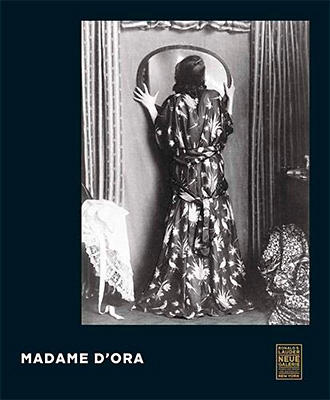
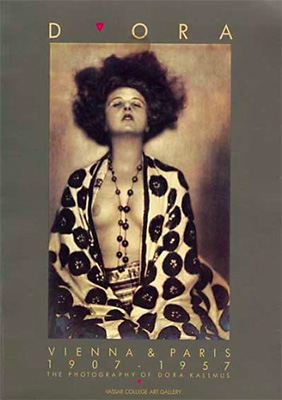
Madame d'Ora

Country: Austria
Birth: 1881 | Death: 1963

Dora Philippine Kallmus, also known as Madame D'Ora or Madame d'Ora, was an Austrian fashion and portrait photographer. Born in Vienna, Austria, in 1881 to a Jewish family, into a privileged background and coming of age amidst the creative and intellectual atmosphere of fin-de-siècle Vienna, Kallmus was extremely well cultured. Her father was a lawyer. Her sister, Anna, was born in 1878 and deported in 1941 during the Holocaust. Although her mother, Malvine (née Sonnenberg), died when she was young, her family remained an important source of emotional and financial support throughout her career.

At age 23 while on a trip to the Côte d’Azur, she purchased her first camera, a Kodak box camera. She became interested in the photography field while assisting the son of the painter Hans Makart, and in 1905 she was the first woman to be admitted to theory courses at the Graphische Lehr- und Versuchsanstalt (Graphic Training Institute), which in 1908 granted women access to other courses in photography. That same year she became a member of the Association of Austrian photographers.

She was the first woman photographer in Vienna to open her own studio and in May 1906, she was listed in the commercial register as a photographer for the first time. She established her studio called the Atelier d’Ora or Madame D'Ora-Benda with Arthur Benda. The name was based on the pseudonym "Madame d'Ora", which she used professionally. Self-styled simply as d’Ora, she initially took portraits of friends and members from her social circle. In the autumn of 1909, an exhibition of her work received a lively response from the press. Critics both praised the artistic style of her portraits and emphasized the prominent individuals who streamed in to view the show.

Over the course of her lifetime, d’Ora turned her lens on many artists, including Josephine Baker, Colette, Gustav Klimt, Tamara de Lempicka, and Pablo Picasso, among others. Alongside these commissions, she also photographed members of the Habsburg family and Viennese aristocracy, the Rothschild family, and other prominent cultural figures and politicians. D’Ora had close ties to avant-garde artistic circles and captured members of the Expressionist dance movement with her lens, including Anita Berber and Sebastian Droste. Fashion and glamor subjects were another important mainstay of her business. She regularly photographed Wiener Werkstätte fashion models and the designer Emilie Flöge of the Schwestern Flöge salon wearing artistic reform dresses.

When d’Ora moved to Paris in 1925, she shifted her focus to fashion, covering the couture scene and leading lights of the period until 1940. She befriended key figures, such as the French milliner Madame Agnès and the Spanish designer Cristóbal Balenciaga, as well as the top fashion magazine editors of the day. She also helped create and sustain glamorous images for a variety of celebrities, including Cecil Beaton, Maurice Chevalier, and Colette.

When the Nazis seized control of Paris in 1940, she was forced to close her studio and flee. She spent the war years in a semi-underground existence living in Ardèche in the southeast of France. Her sister Anna Kallmus, along with other family and friends, died in the Chełmno concentration camp. After World War II, d’Ora returned to Paris, profoundly affected by personal losses. While she lacked an elegant studio in Paris, d’Ora’s lasting connections to wealthy clients remained and many of them returned to her. While she accepted portrait commissions, mostly for financial stability, she also pushed into new, sometimes darker directions.

Around 1948, she embarked on an astonishing series of photographs in displaced persons or refugee camps, which was commissioned by the United Nations. From around 1949 to 1958, d’Ora worked on a project, which she called “my big final work.” She visited numerous slaughterhouses in Paris, and amid the pools of blood and deathly screams, she stood in an elegant suit and a hat photographing the butchered animals hundreds of times. She died on 28 October 1963. Four years prior, she had sustained injuries after being hit by a motorcycle in Paris, resulting in her returning to Vienna.

Source: Wikipedia



Madame d'Ora's Video

Selected Books

Inspiring Portfolios

Call for Entries
AAP Magazine #56 Shadows
Publish your work in our printed magazine and win $1,000 cash prizes
 
Stay up-to-date  with call for entries, deadlines and other news about exhibitions, galleries, publications, & special events.

More Great Photographers To Discover

Gabriele Galimberti
Gabriele Galimberti, born in 1977, is an Italian photographer who frequently lives on airplanes, and occasionally in Val di Chiana (Tuscany), where he was born and raised. He has spent the last few years working on long-term documentary photography projects around the world, some of which have become books, such as Toy Stories, In Her Kitchen, My Couch Is Your Couch and The Heavens. Gabriele's job consists mainly of telling the stories, through portraits and short stories, of people around the world, recounting their peculiarities and differences, the things they are proud of and the belongings with which they surround themselves; social media, in all its forms, is a fundamental part of the research needed to get in touch, discover and produce those stories. Gabriele committed to documentary photography after starting out as a commercial photographer, and after joining the artistic collective Riverboom, best known for its work entitled Switzerland Versus The World, successfully exhibited in festivals, magazines and art shows around the world. Gabriele is currently traveling around the globe, working on both solo and shared projects, as well as on assignments for international magazines and newspapers such as National Geographic, The Sunday Times, Stern, Geo, Le Monde, La Repubblica and Marie Claire. His pictures have been exhibited in shows worldwide, such as the well known Festival Images in Vevey, Switzerland, Le Rencontres de la Photographie (Arles) and the renowned V&A museum in London; they have won the Fotoleggendo Festival award in Rome and the Best In Show prize at the New York Photography Festival. Gabriele recently became a National Geographic photographer and he regularly works for the magazine. Publications Gabriele Galimberti, Paolo Woods, "The Heavens", Delpire/Dewi Lewis, Paris-London 2015 Gabriele Galimberti, "My Couch Is Your Couch", Clarkson Potter, New York 2015 Gabriele Galimberti, "In Her Kitchen", Clarkson Potter, New York 2014 (also translated in French, Chinese and Korean) Gabriele Galimberti, "Toy Stories", Abrams Book, New York 2014 Gabriele Galimberti is the Second Place Winner of All About Photo Awards 2020 with his work The Ameriguns
Jaroslav Rössler
Czech Republic
1902 | † 1990
Jaroslav Rössler was a pioneer of Czech avant-garde photography and a member of the association of Czech avant-garde artists Devětsil (Butterbur). He was born to the Czech-German father, Eduard Rössler, and a Czech mother, Adéla Nollová. From 1917 to 1920, Rössler studied in the atelier of the company owned by renowned Czech photographer František Drtikol. Subsequently, he worked with the company as a laboratory technician. At 21 years old, he began a collaboration with the art theorist Karel Teige, who assigned him to create a typographic layout for magazines Pásmo, Disk, Stavba and ReD (Revue Devětsilu). While working on these tasks, Rössler deepened his knowledge of photographic methods. In his works he utilized and combined the techniques of photogram, photomontage, collage and drawing. The beginnings of his photographic work were influenced by Cubism and Futurism, but he also attempted to create the first abstract photographs. In 1923, he became a member of the avant-garde association Devětsil. In 1925, he went on a six-month study visit to Paris. The same year he began working as a photographer in the Osvobozené divadlo in Prague. Before his second departure to Paris, he co-worked as a commercial photographer with the pictorial magazine Pestrý týden. In 1927, Rössler moved to Paris together with his wife, Gertruda Fischerová (1894–1976). Initially, he focused on commercial photography. He collaborated with the experimental studio of Lucien Lorell, and worked on commissions for notable companies such as Michelin and Shell. However, later he found an interest in the "street life" of Paris, which influenced his future stay in the city. During a demonstration, he encountered the protesters and took photographs of the event. Shortly after that he was arrested, and after a six-month imprisonment, he was expelled from the country, in 1935. The alleged reason for his expulsion was his German-sounding surname. After his return from Paris, Rössler and his wife resided in Prague, Žižkov. He opened a small photographic atelier, but difficulties associated with the management of the studio caused a significant gap in his artistic work, lasting for almost two decades. In the 1950s, he resumed his previous activities and again began experimenting with the camera and photographic techniques. He created so-called prizmata (prisms), photographs taken through a birefringent prism. Additionally, he experimented with solarisation and explored the possibilities of the Sabatier effect. Jaroslav Rössler, together with František Drtikol, Josef Sudek and Jaromír Funke, is today considered an important exponent of Czech modern photography and avant-garde art.Source: Wikipedia Jaroslav Rössler was one of the most distinctive artists of the Czech avant-garde, known for fusing disparate elements of Symbolism, Pictorialism, Expressionism, Cubism, Futurism, Constructivism, New Objectivity and abstract art. From 1917 to 1920, Rossler studied and worked as a lab technician under František Drtikol, but he quickly abandoned the pictorialist style of his famous teacher, turning instead to more avant-garde techniques and compositional approaches, including experiments with photograms, enlarged detail, diagonal composition, photomontage, double exposure, and experiments with color advertising photographs and still lifes produced with the carbro print process. Jaroslav Rössler often photographed objects against stark backgrounds, or used long exposures, to reduce subjects to their elementary lines and geometric shapes. In 1923 he became a member of the assocation of Czech avant- garde artists Devětsil. From 1927 to 1935, he lived and worked in Paris, producing work influenced by Constructivism and New Objectivity. After his return to Prague, he was relatively inactive until the late 1950s, when he renewed experimentations with solarization and photographing through a prism.Source: Robert Koch Gallery
Jennifer Thoreson (Hudson)
Jennifer B Thoreson (Hudson) is a fresh, young visual fine art photographer creating staged imagery that is both artistically stylized and meticulously crafted. Drawing inspirations from themes of faith, restitution and re-purpose, and the intricacy of personal relationships, Jennifer is a dynamic and emotional illustrator of the human heart. With an innate ability to plumb the antique, the work is soulful; seeking the use of the forgotten or discarded, eerie and quiet. Raised in a spiritual and conservative home in rural Texas, Jennifer grew up imaginative, curious, and experimental, and has used her upbringing in her intensely personal artwork to bring insight and awareness using heartfelt, acutely mapped personal experiences. Jennifer is currently working in Albuquerque. New Mexico. she is an MFA Degree Candidate at the University of New Mexico, and is studying within the studio art in Photography program. Alongside varied private portrait commissions, she is an international speaker and lecturer whose programs are sought after year after year by many professional public and private photographic organizations. She has just completed her latest major body of work entitled ‘Medic’, a collection of ten images exploring the breadth of human relationships during illness and recovery. Jennifer’s work has been a part of many group and solo exhibitions, and is represented by three major galleries across the country. Exclusive Interview with Jennifer B Thoreson (Hudson): All About Photo: Where did you study photography? Jennifer Thoreson:The University of New Mexico How long have you been a photographer?About 12 years. What or who inspires you?Thomas Demand, Ann Hamilton, Rachel Whiteread, Francesca Woodman, Deborah Turbeville, Sarah Moon, Gertrude Kassebier, Julia Margaret Cameron Do you have a favorite photograph or series?Deborah Turbeville's Past Imperfect What kind of gear do you use? Camera, lens, digital, film?I have a Nikon D3, and use the 24-70mm 2.8 for just about everything. What advice would you give a young photographer?First, commitment and conviction are paramount. If you combine conviction and energy, you've really got something. Second, be humble, engaged, passionate, and well spoken. An idea, a sentence, a project you would like to share?I'm working on a project now about re-birth and reconciliation. I'm creating large scale installations in each room of a house, and photographing them with human subjects. The house itself, and all of the furnishings are unwanted or discarded items I have collected. I'm repairing them, beautifying, and repurposing them for the photographs; sort of a baptism for each object. The finished work will be photographs; small records, or documents of the transformation. The compliment that touched you most?Someone once told me that one of my photographs helped her to cope and heal from a life crisis. It meant the world to me. If you were someone else who would it be?Imogen Heap.Your favorite photo book?'Francesca Woodman' See the Book
Filippo Poli
Italy
1978
Filippo Poli, an architect by training, is based in Milan and has worked as a photographer since 2008 with architecture studios, foundations, and publishers. His personal projects explore the cultural landscape and the evolving relationship between humans and nature, along with its consequences. His work appears in leading international magazines and publications. He received numerous accolades: 5th National New Photographic Vision León (2025), Enaire Foundation (2017, 2025), Architecture Photography Master Interior, PX3 Paris, ND Awards, Hopper Prize, Arles OFF (La Kabine), IPA Prize, Monochrome, FotoDoc, Arte Laguna, and PhotoEspaña Master Scholarship. Exhibitions include a solo show in León (2025), Dispara Gallery (collective Quatro Amigos), PhotoEspaña (2017, 2025), Venice Biennale, Climate Summit (COP25, 2019), ARCO Madrid (2018), and Vila Casas Foundation. His photographs are in public and private collections, including Enaire Foundation, Deutsches Architekturmuseum (Frankfurt), and Basho Gallery (USA). Roças of São Tomé: an [almost] lost treasure Discovering São Tomé and Príncipe is like going to an island that does not exist, so small that it does not appear on maps, and it is hard to notice it in the Gulf of Guinea—but all of us, sooner or later, have tasted a piece of it. In the mid-nineteenth century, this tropical land, made up of two islands lying on the equator, 300 km from the African coast, became the world’s largest cocoa producer. On this island, the cocoa plant found its perfect habitat and labor at will, cheaply imported from Cape Verde and the nearby African continent. It is not clear, even today, whether the archipelago was, before the arrival of the colonizers, uninhabited or already populated by people of Angolan origin. What is certain is that, from the 15th century, the island’s economy was primarily based on sugar cane production as well as the slave trade. For centuries, the island served as a classification hub for African deportees, who were embarked on ships of European powers to be sold in the American colonies. It was only in the 19th century that São Tomé and Príncipe became a wealthy colony, when Portuguese settlers founded large farms to grow coffee and cocoa. This lasted until 1869, when a slow decline began following the abolition of slavery, due to workers’ rebellions and the international boycott against the “slave cocoa” of the Portuguese colony. The production system endured until 1975; the last companies closed in 1990, and since then, this place has fallen into relative oblivion. A remarkable architectural heritage, however, still remains: the “roças.” This Portuguese term refers to the complex system of land exploitation that shaped the history of this small country for centuries under colonial rule. This vast agricultural machinery typically included greenhouses, dryers, warehouses, “senzalas”—the workers’ quarters—a church, a school, and sometimes even a railway connecting the different branches to the main roça and the sea. The main house, where the patrão—the landlord—lived, along with the hospital, dominated the entire settlement, either at the end of a monumental axis or from an elevated position of control. Both structures, characterized by Portuguese and European architectural styles, symbolized power. They were off-limits to the workers, who were subjected to strict working hours and restrictions on their freedom: they could not leave the farm or return to their homeland. Physical barriers—such as access to the main house or upper floors of hospitals reserved for Europeans—were clear, but the psychological boundaries, shaped over centuries of domination, still linger. They persist in the form of limited self-determination and organization. The people of São Tomé experience mixed feelings toward the roças: a blend of nostalgia and resentment for a past that provided work for all, but no rights. Architecture remains the last tangible symbol of this world and forms part of the population’s identity. The stories told by inhabitants reveal pride in the beauty of these structures, but also a sense of distance and impossibility toward spaces they never occupied. Even after expropriations in the 1980s, feelings of inferiority and lack of economic means prevented many from claiming ownership, leading to looting and eventual abandonment. The imposed divide between the world of the master and that of the workers has not disappeared since independence in 1975. The dichotomy between patrão and roças, masters and senzalas, has evolved into a new social boundary, reflected in the pejorative term “gente da roça”—people of the plantation—still marginalized within society. This photographic narrative, centered on around thirty roças, seeks to reconstruct the memory of these places by documenting their present condition and bringing renewed attention to an architectural heritage on the verge of disappearance. The project unfolds through two main approaches: the first focuses on the principal structures of the roças, photographed with long exposure to evoke a sense of untouchability and highlight the enduring tension between their grandeur and their surroundings; the second presents portraits of daily life within these communities, which, despite ongoing challenges, remain an active part of this history.
Advertisement
AAP Magazine #56 Shadows
Win a Solo Exhibition in May
AAP Magazine #56 Shadows

Latest Interviews

Exclusive Interview with Matthew Finley
American photographer Matthew Finley turns inward, using photography as a way to explore identity, memory, and emotional truth. Based in Los Angeles, his practice moves between performance, gesture, and found imagery, creating a visual language that is both intimate and deeply personal
Exclusive Interview with Jan Janssen
Dutch photographer Jan Janssen explores universal human experiences through his long-term project It Matters, winner of the May 2025 Solo Exhibition. Begun in 2016, the series captures intimate moments of everyday life—love, loss, connection, and belonging—across Central and Eastern Europe. Working in countries such as Turkey, Azerbaijan, and Armenia, Janssen spends extended time within communities, building relationships based on trust and respect. His approach allows him to move beyond observation, revealing deeply human and authentic moments. Rooted in travel and personal discovery, It Matters reflects Janssen’s search for what connects us all in an increasingly divided world. The project is ongoing and will culminate in a photobook scheduled for publication in 2026.
Exclusive Interview with Henk Kosche
German photographer Henk Kosche turns his lens toward the streets of Halle an der Saale, capturing everyday life in the late years of the former German Democratic Republic. At the time, Kosche was studying design and exploring the city with his camera, drawn to the atmosphere of its industrial landscape and the quiet rhythms of daily life. His series Street Photography at the End of the 80s, selected as the Solo Exhibition for July 2025, revisits a body of work created just before a period of profound change. Rediscovered decades later in a small box of 35mm negatives, these photographs offer glimpses of a city and its people at a moment suspended between the familiar and the unknown.
Exclusive Interview with Anastasia Samoylova
Anastasia Samoylova is an American artist whose photographic practice is shaped by close observation and a deep attentiveness to place. Working between documentary and formal exploration, she photographs landscapes, architecture, and everyday scenes with a sensitivity to light, structure, and atmosphere. Since relocating to Miami in 2016, her work has increasingly focused on how environments—both natural and built—carry social, cultural, and emotional traces. We asked her a few questions about her practice and her way of seeing, to better understand the thoughts and experiences that shape her work—while allowing the images themselves to remain open and speak in their own time.
Exclusive Interview with Marijn Fidder
Marijn Fidder is a Dutch documentary photographer whose work powerfully engages with current affairs and contemporary social issues. Driven by a deep sense of social justice, she uses photography to speak on behalf of the voiceless and to advocate for the rights of those who are most vulnerable. Her images have been widely published in major international outlets including National Geographic, CNN Style, NRC Handelsblad, Volkskrant, GUP New Talent, and ZEIT Magazin. Her long-term commitment to disability rights—particularly through years of work in Uganda—culminated in her acclaimed project Inclusive Nation, which earned her the title of Photographer of the Year 2025 at the All About Photo Awards. She is also the recipient of multiple prestigious honors, including awards from World Press Photo and the Global Peace Photo Award. We asked her a few questions about her life and work.
Exclusive Interview with Josh S. Rose
Josh S. Rose is a multidisciplinary artist working across photography, film, and writing. His practice bridges visual and performing arts, with a strong focus on movement, emotion, and the expressive potential of the image. Known for his long-standing collaborations with leading dance companies and performers, Rose brings together authenticity and precise composition—a balance he describes as “technical romanticism.” His work has been commissioned and exhibited internationally, appearing in outlets such as Vogue, at the Super Bowl, in film festivals, and most recently as a large-scale installation for Lincoln Center for the Performing Arts. A sought-after collaborator, he has worked with major artists, cultural institutions, and brands, following a previous career as Chief Creative Officer at Interpublic Group and the founder of Humans Are Social. We asked him a few questions about his life and work.
Interview with Maureen Ruddy Burkhart
Photographer Maureen Ruddy Burkhart brings a quietly attentive and deeply human sensibility to her exploration of the world through images. Shaped by a life immersed in photography, film, and visual storytelling, her work is guided by intuition, observation, and an enduring interest in the emotional undercurrents of everyday life. With a practice rooted in both fine art traditions and documentary awareness, she approaches her subjects with sensitivity, allowing subtle moments to emerge naturally rather than be imposed. Her series Til Death, selected as the Solo Exhibition for February 2025, reflects this long-standing commitment to photography as a space for reflection rather than spectacle. Drawn to moments that exist just outside the expected frame, Burkhart’s images suggest narratives without resolving them, leaving room for ambiguity, humor, and quiet connection. We asked her a few questions about her life and work.
Exclusive Interview with Peter Ydeen
Winner of AAP Magazine #45 Travels, his series reflects this unique vision—capturing the spirit of place through subtle layers of light, color, and emotion. Whether traveling abroad or observing the rhythms of his own surroundings, Ydeen creates images that feel both grounded and enchanted, inviting viewers into a world where reality and reverie meet.
Exclusive Interview with Julie Wang
Chinese-born photographer Julie Wang brings a poetic, contemplative sensitivity to her visual exploration of the world. Having lived for nearly equal parts of her life in China, Europe, and the United States, she approaches her subjects with the nuanced perspective of someone shaped by many cultures. This blend of distance, curiosity, and emotional resonance infuses her work with a quiet depth, allowing her to reveal the fragile beauty and subtle tensions that often pass unnoticed.
Call for Entries
AAP Magazine #56 Shadows
Publish your work in our printed magazine and win $1,000 cash prizes