All about photo.com: photo contests, photography exhibitions, galleries, photographers, books, schools and venues.
Win the First Solo Exhibition of 2026! Submit your best project now. Open Theme
Francis Frith
Portrait, Turkish Summer Costume, 1857 - David Hunter McAlpin Fund, 1966, Metropolitan Museum of Art
Francis Frith
Francis Frith

Francis Frith

Country: United Kingdom
Birth: 1822 | Death: 1898

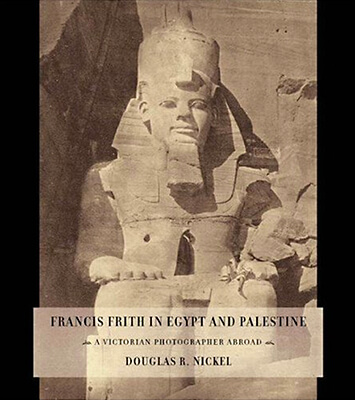
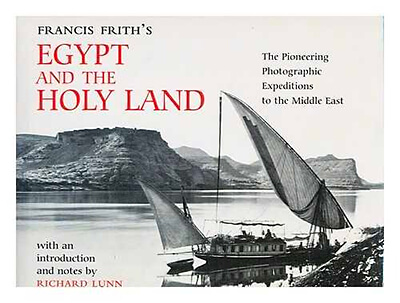
Francis Frith was an English photographer of the Middle East and many towns in the United Kingdom. Frith was born in Chesterfield, Derbyshire, attending Quaker schools at Ackworth and Quaker Camp Hill in Birmingham (c. 1828–1838), before he started in the cutlery business. He suffered a nervous breakdown in 1843, recuperating over the next two years. In 1850 he started a photographic studio in Liverpool, known as Frith & Hayward. A successful grocer, and later, printer, Frith fostered an interest in photography, becoming a founding member of the Liverpool Photographic Society in 1853. Frith sold his companies in 1855 in order to dedicate himself entirely to photography. He journeyed to the Middle East on three occasions, the first of which was a trip to Egypt in 1856 with very large cameras (16" x 20"). He used the collodion process, a major technical achievement in hot and dusty conditions. Photographs taken by Frith are held in the Conway Library of Art and Architecture at the Courtauld in London.

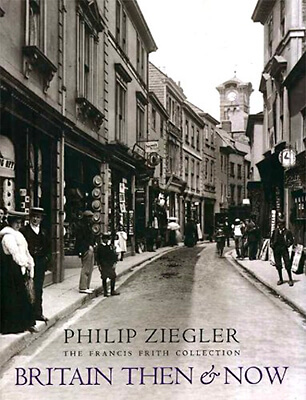
When he had finished his travels in the Middle East in 1859, he opened the firm of Francis Frith & Co. in Reigate, Surrey, as the world's first specialist photographic publisher. In 1860, he married Mary Ann Rosling (sister of Alfred Rosling, the first treasurer of the Photographic Society) and embarked upon a colossal project—to photograph every town and village in the United Kingdom; in particular, notable historical or interesting sights. Initially he took the photographs himself, but as success came, he hired people to help him and set about establishing his postcard company, a firm that became one of the largest photographic studios in the world. Within a few years, over two thousand shops throughout the United Kingdom were selling his postcards.

Many of his photographs were collected into published volumes. Initially these works were compiled by established publishing companies. However, by the 1860s, Firth realized that he could profit from publishing his own images and established the publishing company F. Frith & Co.

Frith died at his villa in Cannes, France, on 25 February 1898, aged 75. His family continued the firm, which was finally closed in 1971. Following closure of the business, Bill Jay, one of Britain's first photography historians, identified the archive as being nationally important, and "at risk". Jay managed to persuade McCann-Erikson the London advertising agency to approach their client Rothmans of Pall Mall on 14 December 1971 to purchase the archive to ensure its safety. Rothmans went ahead and acquired the archive within weeks.

Frith was re-launched in 1975 as "The Francis Frith Collection" by John Buck, a Rothmans executive, with the intention of making the Frith photographs available to as wide an audience as possible.

On 25 August 1977, Buck bought the archive from Rothmans, and has run it as an independent business since that time – trading as The Francis Frith Collection. In 2016 the company completed a two-year project to scan the entire archive and now holds over 330,000 high resolution digital images. The company website enables visitors to browse all 330,000 Frith photographs, depicting some 7,000 cities, towns and villages.

Source: Wikipedia


Born into a Quaker family in 1822 in Chesterfield, Derbyshire, Francis Frith was a remarkable person, philosophical and devoutly religious by nature and pioneering in outlook. He was a complex and multi-talented man who had a formidable instinct for business. By the time he founded his photographic publishing company in 1860 he had already established a wholesale grocery business in Liverpool which was so successful that by the mid 1850s he was able to sell it for a price which made him a the equivalent of a multi-millionaire today.

Frith had been a founder member of the Liverpool Photographic Society in 1853 – only 14 years after the invention of photography, 1839. Between 1856 and 1860, as a gentleman of leisure, he made three pioneering and sometimes dangerous photographic expeditions to the Middle East, taking bulky cameras, equipment and glass plates with him and travelling by boat, donkey, mule and camel. These journeys took him to Egypt, Nubia, Ethiopia, Sinai, Palestine, Lebanon and Syria, and established his reputation as an outstanding pioneer photographer. The photographs he took on these expeditions were marketed by the London firm of Negretti & Zambra as hugely popular stereoscopic views, and were also published in London and New York in limited edition part-works of prints, with sales totalling over £3 million in today’s value.

Source: www.francisfrith.com



Selected Books

Inspiring Portfolios

Call for Entries
AAP Magazine #54 Nature
Publish your work in AAP Magazine and win $1,000 Cash Prizes
 
Stay up-to-date  with call for entries, deadlines and other news about exhibitions, galleries, publications, & special events.

More Great Photographers To Discover

Alex Strohl
France
1989
Alex Strohl is a French photographer and author, best known for his landscape and outdoor photography. Strohl is based in Whitefish, Montana. In 2018, XXLPIX ranked him in 12th position in the "TOP100 photographers on the web" list (highest new entry). He authored a book named Alternative Living, published by Blurb in 2015. His works has been featured in publications and magazines such as Forbes, BuzzFeed, Vanity Fair, and Gentleman's Journal.Source: Wikipedia For more than a decade, photographer and entrepreneur Alex Strohl has pioneered the visual style of the outdoor industry. A renown force across all of his business pursuits, Strohl’s marketing campaigns garner clients audiences in the millions while his critically-acclaimed photography workshops pass down unrivaled experience and insight to tens of thousands of aspiring amateurs. Lauded by the likes of National Geographic, Outside Magazine, and Gentlemen’s Journal, Strohl’s influence on the direction of outdoor media is unparalleled. Drawing inspiration from the wildest alpine environments, Strohl is as comfortable in the northern Rocky Mountains of his home in Whitefish, Montana, as he is diving off the shores of icy North Atlantic archipelagos. The result is an immersive visual experience that blurs the boundaries of life and work, and of humans and nature. His timeless style and eye for subtle authentic moments transcends industries from local ski brands to the world’s foremost watchmakers. Alex is based in Whitefish, Montana—but spends the vast majority of his time on the road with his life partner Andrea Dabene and their newly born daughter Mia. He is a Canon USA Creator, 66°North Ambassador, and a Vuarnet Fellow.Source: www.alexstrohl.com
Morteza Nikoubazl
I was born in Tehran, Iran in 1974 and studied art and photography there. I started work as a freelance photographer for Iranian daily and weekly newspapers. I began working with the Reuters team as Freelance photographer since 1999 till 2013. After Reuters I worked with the New York Times International magazine, Polaris Images, Zuma Press and SIPA PRESS photo agencies and now I am working with the NurPhoto press photo agency. I am also UNHCR trusted photographer in Iran. Sense of death amid the COVID-19 outbreak in Iran Today is about one year after Government announced officially the COVID-19 cases in Iran and death still is everywhere. I could see patients who were infected by the new coronavirus in COVID-19 wards of hospitals who were breathing and after two hours they were died. In fact, life seems gone, time were stoped and people were looking for an empty hospital bed for their relatives. Sense of death is covered the daily life of people who have to fight with a new invisible enemy, and it will be getting worse when a country is under International sanctions. I was in the city of Bam for covering the earthquake in 2002-2003 and could see a U.S. Military cargo airplane landed after about 25 years since the Victory of the Islamic Revolution in Iran and I could see how the humanity could pass over the politic, but today I am witness how politic cover the humanity, sanctions still work and it pushed Iran to the end of the line of vaccine. People die left and right also medical personnel, But they hear about barriers to the import of the COVID-19 vaccines from western countries. When it comes to people's health, politics should be the last priority of countries, but it seems the politic is the first priority for the U.S., Iran and the European countries. On the other hand, Iranians cannot trust the China- Made, or Russian-Made vaccine and prefer the Iranian one, but they must wait until next year and try to be alive.
Carolyn Moore
United States
Carolyn Moore is a fourth generation Californian, raised in a family of artists and outdoor enthusiasts. Her love of nature is evident in her artwork having spent much of her formative years hiking, swimming, backpacking and enjoying the vast diversity in nature. Equally adept at both music and art, her formal education fell to music. Degrees were completed at University of California Berkeley, University of Oslo and Conservatory of Music, Norway. After a fulfilling and successful career of performance and teaching of flute, percussion and special needs music, her focus since 2005 has turned to visual expression through photography. Artistic inspiration came early in life when presented with paint brushes and a brownie box camera by her artist father at the age of 7. Mostly self taught, Carolyn has experimented with many photographic techniques - everything from digital, to film based using plastic or pinhole cameras and handmade or lensless processes. Since 2007 Carolyn has received multiple photographic honors and awards and has been juried into several exhibits at the Soho Photo Gallery, New York. Carolyn has been published in Color Magazine and has participated in multiple solo and collective exhibits both in the United States and Europe. She is currently a member of the Center for Photographic Art and proudly serves as Steering Committee Chair for Image Makers Photographers of Monterey. My Heart Exposed Photography to me, represents a composite of my personal feelings, emotions, values and experiences expressed on a canvas. It is as if the artwork is an open window where artist and viewer peer one to the other in a silent exchange. Images from “My Heart Exposed”, Volume 1, are created in a process that includes entering a meditative state where feelings, intuition and curiosity drive choices made in an experimental photographic process. This process lends an element of unpredictability, and as a result parameters are set for embracing surprises and allowing the image to evolve. The decisions I make are influenced by my innermost feelings and thus, each image presents a visually poetic reflection of my unique story. My personal story is made all the more poignant by the recent loss of family and intense emotional turmoil of the past year. This chaotic and complicated year of love, loss and strife made maintaining a sense of self a major challenge. I am often reminded of time spent in nature with lost family members, and I cherish the thought of loved one’s hands guiding me in a shared love of nature and an expression that uses plants as an artistic voice. I invite viewers to draw on their own experiences and allow their hearts to embark on a journey of reflection and discovery within each image. “My Heart Exposed”, Volume 1 are sunshine exposed Lumens with hand painted cyanotype on expired photographic paper. While developing this technique, I have experimented with different types of photographic paper, timing of exposure and elements that change the chemical reaction between plants and paper. Images evolve and change during the development process and I present captures of those stages in unaltered true color. While some images are fixed and will remain stable, others will continue to evolve and eventually dissipate altogether.
Andrew Keedle
United Kingdom
1969
Peter Allert
Peter Allert co-founded Munich-based Allert&Hoess Photography in 1989, specializing in still life , technical and scientific photography. This brought him while his study of biology before, to start as self-taught photographer. After setting up its own studio in 1991 and establishing its own light, lab and print facilities, the company made its breakthrough in 1992 with a photo series for the portfolio „Joop! – women’s shoes“. Its subsequent client list is long and prestigious: Mercedes Benz, Audi, VW, BMW, Ford, Philip Morris, McDonalds, Ballantines, Wrigleys, Veltins, Wella, Miele, Bosch, Dresdner Bank, Deutsche Bahn AG, Siemens, LogiTech, MAN, Microsoft, GREENPEACE... to name a few. Today his photography actually is artistic. His works now are altogether advanced elaborations. He is working with multiple-exposures and different focus adjustments within a photograph. Additionally he highlights his subjects with spotlights (DEDO Lights) for every individual exposure in different adjustments and configurations.Source: www.peterallert.de Interview with Peter Allert All About Photo: Where did you study photography? Peter Allert: At the age of 7, I've been fascinated by photography. I got my first camera for his birthday and it went right now with this new adventure. During the whole period of schooling and youth I was obsessed with the possibilities of this medium... it was back then to my great passion. My love of nature and my subsequent study of biology, were another fertile ground for the expansion of my photographic works in new and fascinating areas. Later, I got access to advertising photography. I worked very successfully for 17 years in advertising, primarily for the automotive industry and in fashion. Ten years ago, then started my burnout, I was too other-directed and under constant pressure. Finally I lost my soul - I fell emotionally in a Coma, which never ended and I lost all my passion for photography! Only after many painful and difficult years, then a miracle, my miracle! In September 2013, I suddenly felt a new and ever expectant strength in me. She became stronger and stronger and I got my second chance! I quickly realized that I may never work externally determined with photography again - so I had a strong desire to completely new and original ways to go in photography. And so the desire as an artist within the photograph was made to work. AAP: Do you have a mentor? PA: I am self-educator and have teach me everything completely yourself. I have been doing all learned to make all analog laboratory processes such as color negative films and slide films to develop or color enlargements and edit. But also all black & white I have processes teach me ... Method as bromoil print have inspired to my digital workflow in today's time to orient myself to it. I grew up with analog photography and this has shaped me first of all. Thus, I am now very well be able to touch this analog in my image processing to achieve! AAP: How long have you been a photographer? PA: I have worked for over 20 years as a professional photographer. Before that, I financed my studies in Biology with smaller photo jobs. My first photos were nature photography, macro photography of animals and plants. After this the portrait photograph was added. AAP: What or who inspires you? PA: Edward Steichen & Robert Mapplethorpe! Both have always touched my soul in a special way!But in general I consider myself away from These kinds of inspiration! It would be too manipulative and determined by others, to allow more of it than I do this currently... AAP: How could you describe your style? PA: My style has only an analog touch, which often is derived from the early days of analog photography. I am fascinated by this authenticity that has shaped this wonderful photography. The soul of this unique works is always a great motivator for my own photography! AAP: What kind of gear do you use? Camera, lens, digital, film? PA: I'm using a Canon EOS mark II and a zoom ED 21-70 mm and a 100 mm lens for portraits. Lately I have been photographing with the camera of my Gallaxy S4 smartphones .. just for trying new. AAP: Do you spend a lot of time editing your images? For what purpose? PA: My image processing is very complex and requires a lot of time, which I'm taking. Often I need this more than a week! It is a process, similar to an adventure through your own soul. I have to feel all this, sometimes in a painful way - they are pure emotions of myself, which I will in this work with integrate into my images. There is no motivation necessary because it is the pure passion, if the appropriate moment has arrived! It's all about that moment, that when my emotions are ready and my soul opens up entirely! AAP: Favorite(s) photographer(s)? PA: Edward Steichen & Robert Mapplethorpe! AAP: What advice would you give a young photographer? PA: My main advice is: Stay always hear and feel your self-determined and soul in your work! Everything should come from your heart and your soul and feed into your work. AAP: An idea, a sentence, a project you would like to share? PA: Photography is the dierekte wire to my soul - my pictures are the direct reflection of my soul .. this my pictures tell of my feelings and my emotions. Each photo tells its own to profound story. Each image is thus a profound adventure of a portion of my own soul! This means to me that photography today! AAP: Anything else you would like to share? PA: As a little boy I dreamed of good spirits and fairies - I was intrigued by this mystical world! And so this dream accompanied my life ... When I felt my soul again in September 2013, I knew very quickly with this message deal. I was aware that puts a special soul in some, few people! And this I felt ever again. So this new photography had to include this topic. "Ghosts & Fays" and "Souls"!
Advertisement
AAP Magazine #54 Nature
Win a Solo Exhibition this January
AAP Magazine #54 Nature

Latest Interviews

Exclusive Interview with Peter Ydeen
Winner of AAP Magazine #45 Travels, his series reflects this unique vision—capturing the spirit of place through subtle layers of light, color, and emotion. Whether traveling abroad or observing the rhythms of his own surroundings, Ydeen creates images that feel both grounded and enchanted, inviting viewers into a world where reality and reverie meet.
Exclusive Interview with Julie Wang
Chinese-born photographer Julie Wang brings a poetic, contemplative sensitivity to her visual exploration of the world. Having lived for nearly equal parts of her life in China, Europe, and the United States, she approaches her subjects with the nuanced perspective of someone shaped by many cultures. This blend of distance, curiosity, and emotional resonance infuses her work with a quiet depth, allowing her to reveal the fragile beauty and subtle tensions that often pass unnoticed.
Exclusive Interview with Ghawam Kouchaki
American photographer Ghawam Kouchaki brings a sharply observant and introspective gaze to the streets of Japan’s capital. Based in Los Angeles, he approaches Tokyo with the distance — and curiosity — of an outsider, allowing him to uncover the city’s subtle contradictions, quiet tensions, and fleeting gestures that often go unnoticed. His series Tokyo no no, selected as the Solo Exhibition for December 2024, explores the hidden undercurrents of urban life: the unspoken rules, the small ruptures in routine, the poetic strangeness found in everyday moments. Through muted tones, instinctive timing, and meticulous framing, Kouchaki reveals a Tokyo that exists somewhere between reality and imagination — both intimate and enigmatic. We asked him a few questions about his life and work.
Exclusive Interview with Tommi Viitala
Tommi Viitala, winner of AAP Magazine #44: Street, is a Finnish photographer celebrated for his striking and cinematic street photography. With a keen eye for atmosphere and composition, he captures fleeting urban moments that reveal the poetry of everyday life. His work often explores the tension between solitude and connection within contemporary cityscapes, blending documentary realism with artistic sensibility. Viitala’s photographs have been exhibited internationally and recognized for their strong visual storytelling and emotional depth. We asked him a few questions about his life and work.
Exclusive Interview with Robert Mack
Robert Mack is a California-based visual artist, photographer, and filmmaker. His fine art photography and films have been exhibited widely in the United States and Europe, with major shows at the Baltimore Museum of Art and the Reiss-Engelhorn Museum in Mannheim, Germany. Both institutions hold his work in their permanent collections. Working across different media, Mack has built a career exploring the complexities of human presence and representation. In 1981, while living in Baltimore, he produced The Perkins Project: Not Guilty by Reason of Insanity, a rare photographic and film study inside Maryland’s hospital for the criminally insane. These stark yet compassionate black-and-white portraits remain one of his most powerful and controversial bodies of work.
Exclusive Interview with Alan Schaller About Irys
Alan Schaller is a London-based photographer best known for his striking black-and-white street photography and as co-founder of Street Photography International, one of the largest online communities dedicated to the genre. With years of experience both behind the camera and in building platforms that give visibility to photographers, Schaller has now turned his focus to creating a new digital space for photography itself. His latest venture, Irys, is a photography app designed by photographers, for photographers, with the aim of offering a dedicated platform where images are respected as works of art rather than treated as disposable content.
Exclusive Interview with Guillaume Bonn
With his latest book Paradise, Inc., celebrated documentary photographer Guillaume Bonn takes us deep into the heart of East Africa, where the promises and failures of wildlife conservation collide. Far from offering a romanticized vision of nature, Bonn’s work confronts us with urgent realities: the tensions between local communities and conservation policies, the sacrifices of rangers on the frontlines, and the long-lasting impact of human activity on fragile ecosystems. Spanning more than two decades of fieldwork, the project blends powerful imagery with investigative depth, raising difficult but necessary questions about transparency, accountability, and the Western-led models that dominate conservation. Enriched by the voices of those too often left out of the conversation—including a preface by Maasai leader Ezekiel Ole Katato and an introduction by journalist Jon Lee Anderson—Paradise, Inc. is both a stunning visual journey and a call to action. In the following interview, Guillaume Bonn reflects on the making of Paradise, Inc., the ethical dilemmas at the heart of his work, and the urgent need to rethink our approach to conservation in East Africa and beyond.
Exclusive Interview with Sander Vos
Sander Vos is a fine art photographer based in London whose work seamlessly blends elements of Surrealism with portraiture. Drawing inspiration from his background in design, Vos embraces light and contrast to sculpt striking, graphic compositions. His photographs invite the viewer into a world where revelation and concealment coexist, leaving space for imagination and interpretation.
Exclusive Interview with Tomasz Trzebiatowski Editor-in-chief FRAMES Magazine
Founded in 2020 by photographer, publisher, and classical pianist Tomasz Trzebiatowski, FRAMES Magazine has quickly established itself as a thoughtful space for photography lovers who believe that powerful images deserve to live on paper. Known for its beautifully printed quarterly issues and dynamic international community, FRAMES bridges the gap between tradition and innovation in the photographic world. As editor-in-chief, Trzebiatowski has created not only a publication but a platform that celebrates diverse genres, nurtures dialogue, and champions the tactile experience of print in a digital age. In this interview, he reflects on the journey from founding FRAMES to building a global membership, the challenges of independent publishing, and the future of photography in both print and digital forms.
Call for Entries
AAP Magazine #54 Nature
Publish your work in AAP Magazine and win $1,000 Cash Prizes