145 E 57th St.
A century after André Breton’s *Surrealist Manifesto* ignited a revolution of the imagination, Throckmorton Fine Art celebrates the enduring power of Surrealism through an exhibition tracing its profound influence on photography. Bringing together works created across Europe, the United States, and Mexico, the show reveals how the Surrealist impulse reshaped both the form and spirit of photographic practice over the past hundred years.
Emerging from the psychological and cultural wreckage of World War I, Surrealism offered artists a means of liberation from rationality and the mechanized violence of modern life. Guided by Freudian theory and the anarchic spirit of Dada, its adherents sought to channel the unconscious, the dreamlike, and the forbidden. Photography became a key instrument in this pursuit—an alchemical medium capable of transforming reality into illusion. Through techniques such as photomontage, solarization, and multiple exposure, photographers rendered the invisible visible, collapsing distinctions between body and object, waking life and dream.
The exhibition features masterworks by figures such as Leonora Carrington, Kati Horna, and
Dora Maar, alongside experimental visions by Edward Weston,
André Kertész, and
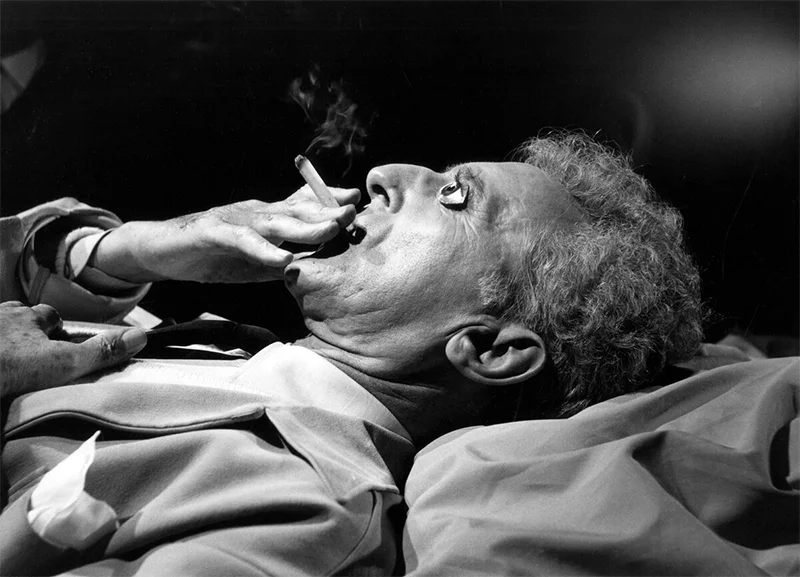
Tina Modotti. Their images reveal a fascination with the uncanny and the erotic—reflections of a world where ordinary objects take on otherworldly charge. Portraits of Jean Cocteau by
Berenice Abbott,
Lucien Clergue, and
Germaine Krull convey the Surrealist attraction to transformation, disguise, and the theatrical self.
The movement’s migration beyond Europe is also vividly represented. Mexico, a country steeped in myth and ritual, became a fertile ground for Surrealist experimentation. Works by
Manuel Álvarez Bravo,
Lola Álvarez Bravo, and María García bridge Breton’s dreamlike aesthetics with the poetic realism of Latin America. A century later, Surrealism’s legacy continues to blur the line between fantasy and truth—reminding us that imagination remains one of humanity’s most radical acts of resistance.
Image:
Lucien Clergue,
Jean Cocteau, Le Testament d'orphee, 1959 © Lucien Clergue