Weinstein Hammons Gallery presents
Elliott Erwitt: Gold Standard, the third exhibition devoted to the work of
Elliott Erwitt (1928–2023), one of the most influential photographers of the twentieth and twenty-first centuries.
The title comes from Erwitt’s own words. He once described his mentor
Henri Cartier-Bresson as “the gold standard” of photography. Erwitt meant it sincerely—Cartier-Bresson represented clarity of vision, discipline, and the elusive “decisive moment.” In this exhibition, that phrase returns to its source. Now it is Erwitt who stands as the measure: not because he imitated his mentor, but because he found his own voice—one grounded in humor and humanity.
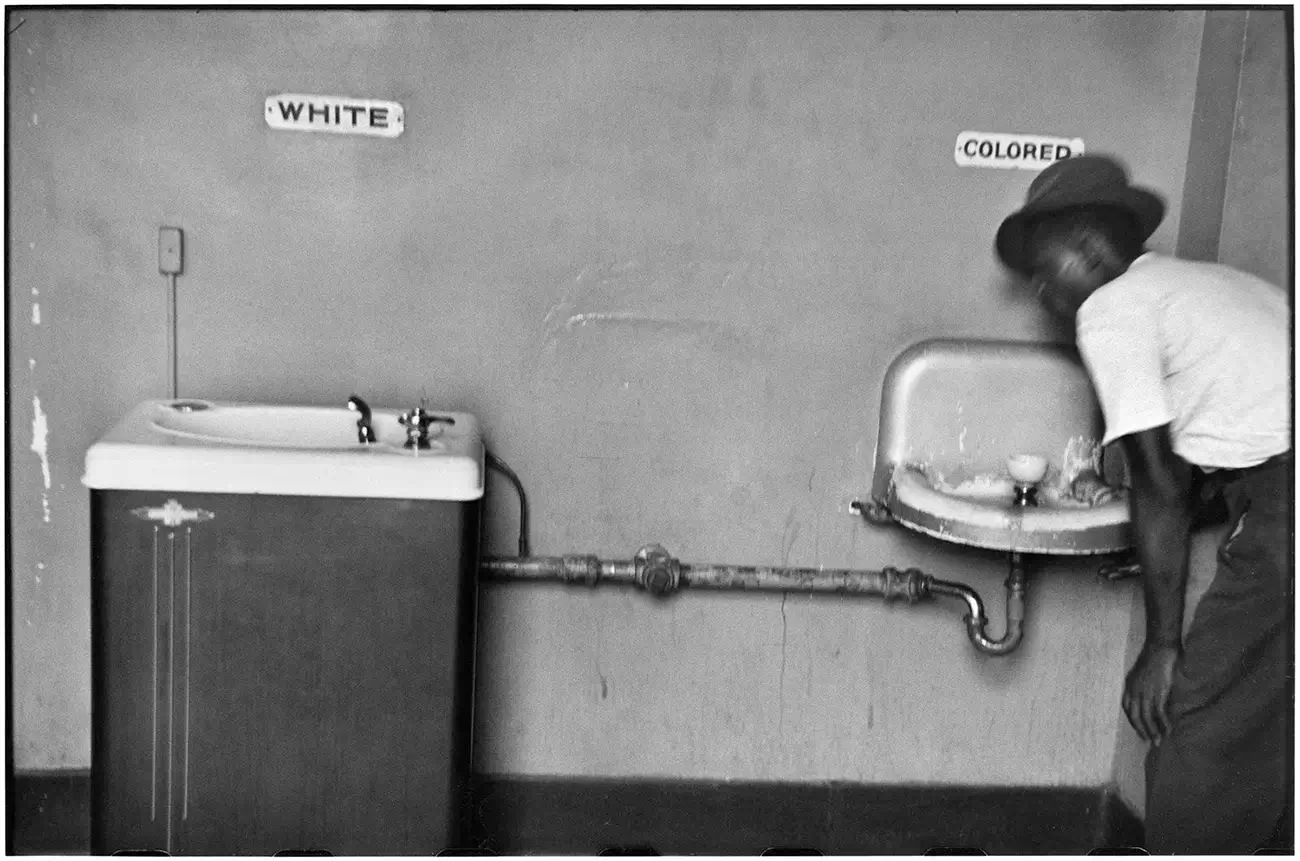
Wilmington, North Carolina 1950 © Elliott Erwitt / Magnum Photos
Erwitt’s life began in motion. Born in Paris to Russian Jewish parents and raised in Milan, he emigrated to the United States in 1939 as his family fled fascism. He often spoke about arriving in America unable to fully grasp the language. Photography became his translation device.
“I didn’t know what was going on,” he once joked,
“so I photographed it.”
That dry humor masked something deeper. The camera allowed him to belong before he could speak. It trained him to look carefully and without judgment—a habit that never left him.
By 1953, at just twenty-five, he was invited by
Robert Capa to join
Magnum Photos. The invitation came after Capa reportedly saw his work and simply said,
“You’re in.” It was the kind of understated turning point that would define Erwitt’s career: no grand announcement, just quiet recognition. He would later serve as Magnum’s president, guiding the cooperative through a pivotal era in documentary photography.
That same year, he made the photograph he fondly described as
“my first wife, first daughter, and first cat,” later included by
Edward Steichen in The Family of Man at the
Museum of Modern Art in 1955. The image is intimate, almost offhand—yet it holds the tenderness and ordinariness that defined his worldview. It is not staged sentiment. It is lived life.
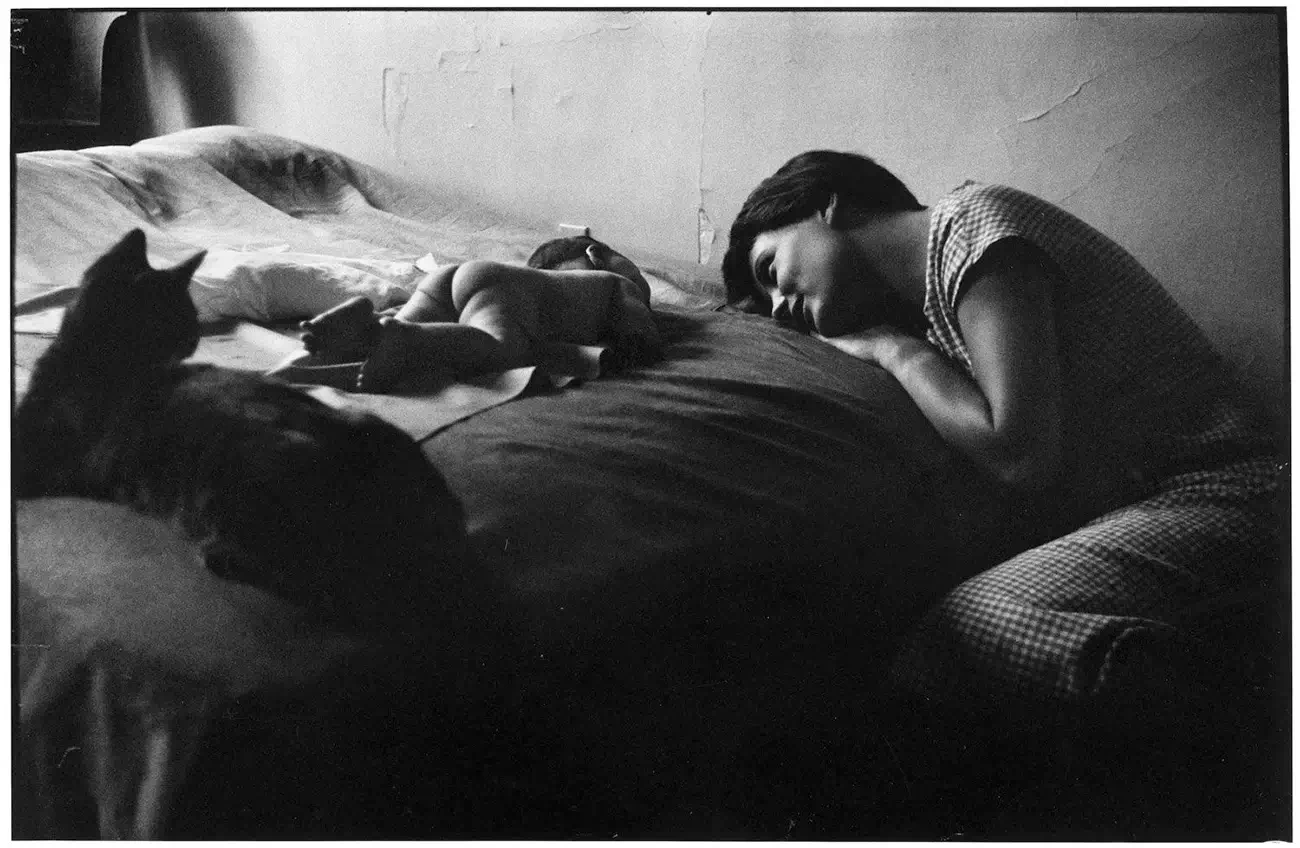
New York City 1953 © Elliott Erwitt / Magnum Photos
Erwitt often carried two cameras: one for assignments and one for himself. The first paid the bills. The second fed his curiosity.
This duality shaped his practice. On assignment, he photographed presidents and movie stars, including the famous, finger-pointing exchange between Nixon and Khrushchev in 1959. But when left to his own devices, he might turn his lens downward—to a dachshund stretching across cobblestones, or to the elegant legs of passersby juxtaposed with a small dog’s determined stance.
His dogs are legendary. Asked why he photographed them so often, Erwitt quipped,
“They don’t ask for prints.” Yet behind the joke was genuine affection. Dogs, like people, revealed character in a glance or posture. In their company, he found pure, unguarded expression.
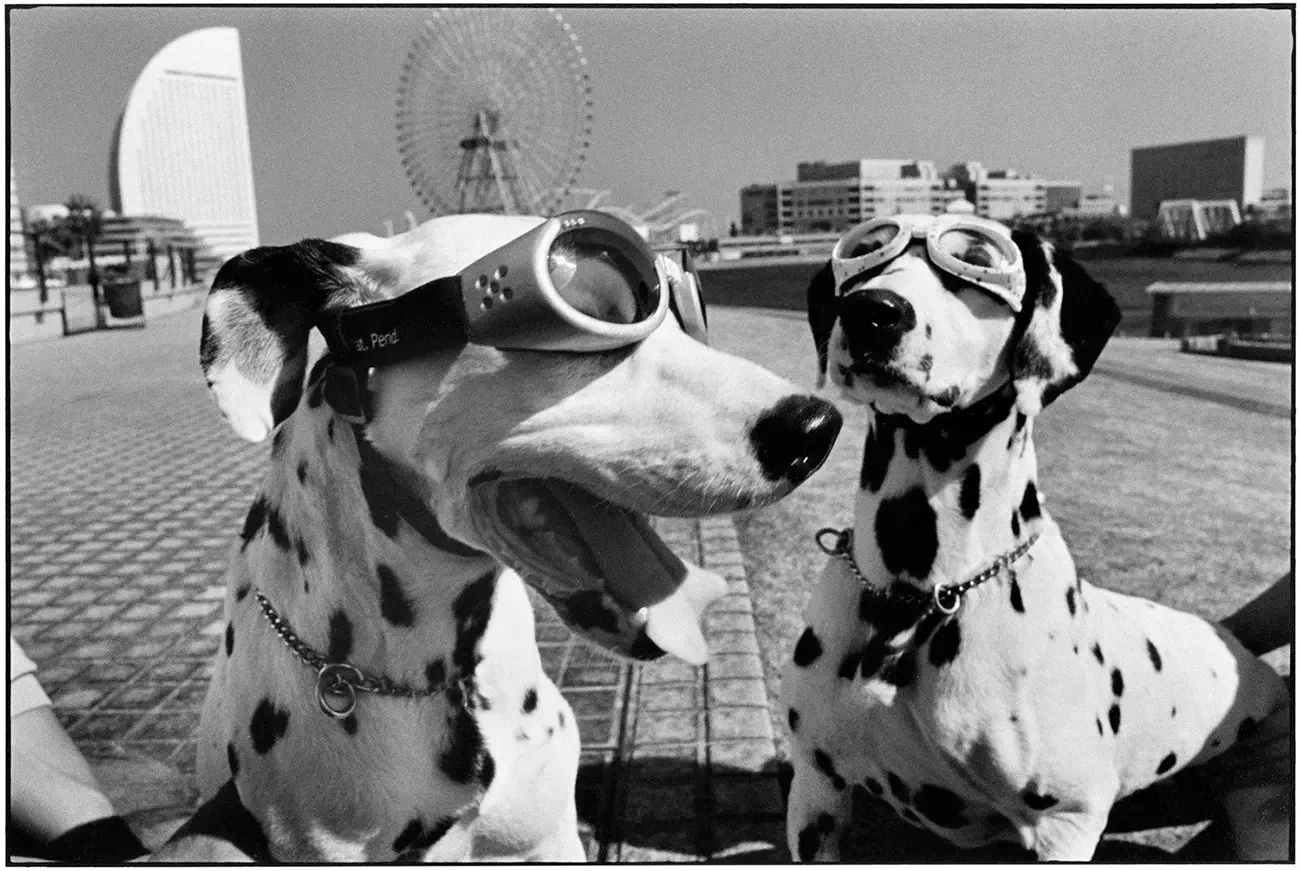
Yokohama, Japan 2003 © Elliott Erwitt / Magnum Photos
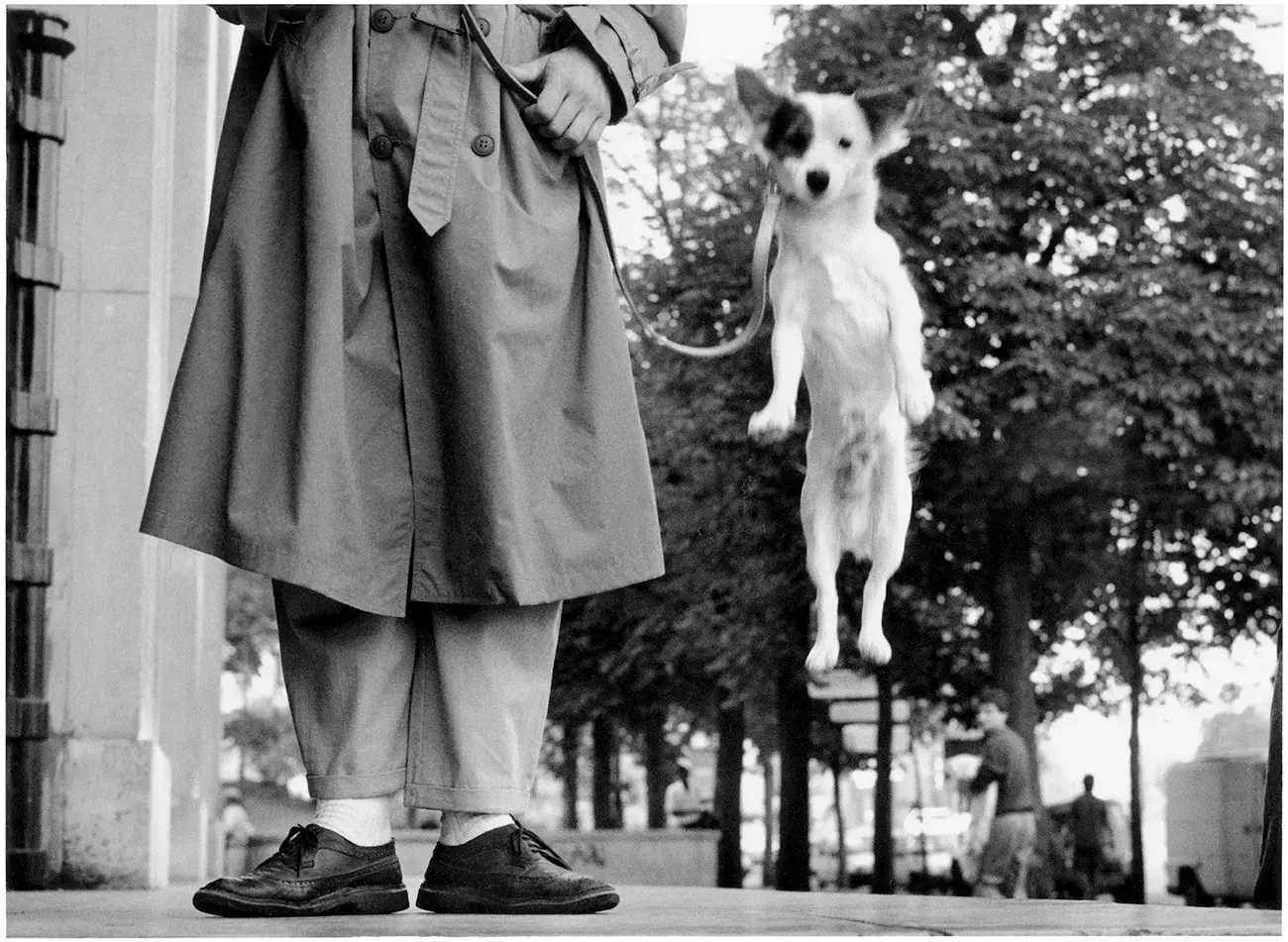
New York City 1974 © Elliott Erwitt / Magnum Photos
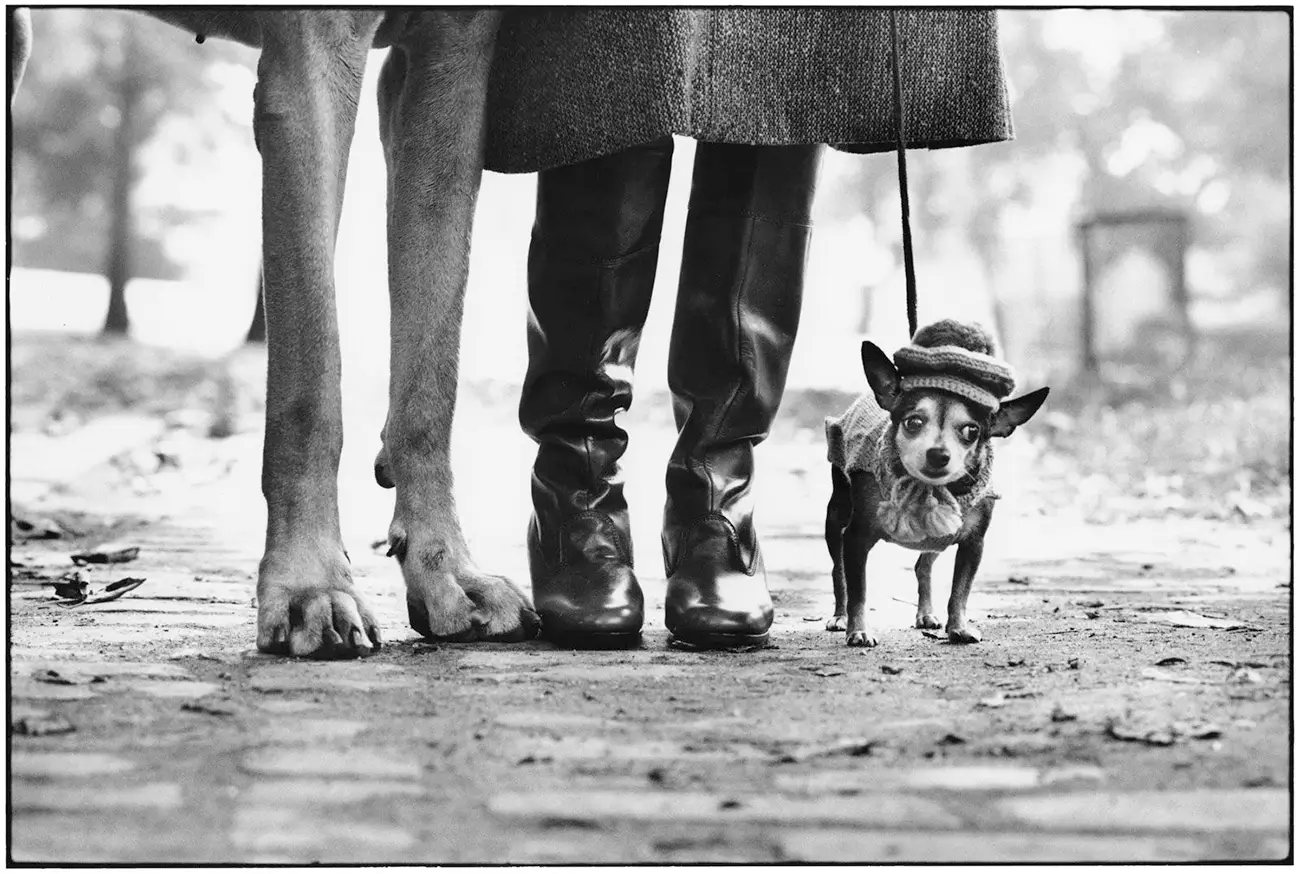
New York City 1974 © Elliott Erwitt / Magnum Photos
Erwitt’s humor was never cruel. It was observational—gentle, even conspiratorial. He trusted viewers to notice the absurdities he framed: a couple dwarfed by monumental architecture, a mirrored gesture between strangers, a political leader caught mid-blink.
He resisted grandiosity.
“Photography is an art of observation,” he said.
“It has little to do with the things you see and everything to do with how you see them.”
Spanning six decades (1949–2009), Gold Standard places iconic works beside lesser-known images, revealing how consistent his eye remained across time. Whether documenting cultural history or an ordinary sidewalk, Erwitt returned again and again to the same quiet truth: life is both funny and fragile.
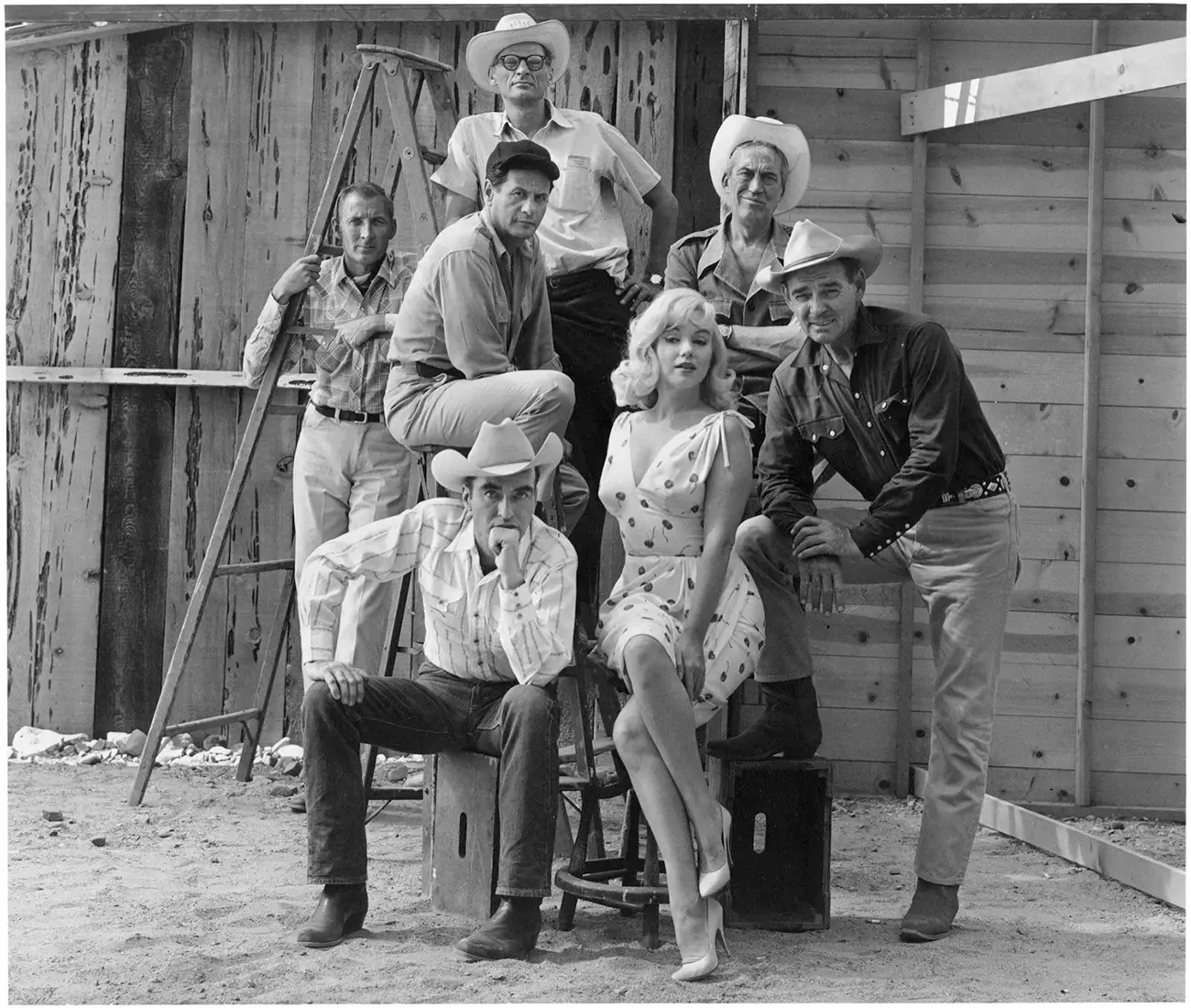
Reno, Nevada (On the set of 'The Misfits') 1960 © Elliott Erwitt / Magnum Photos
To call Elliott Erwitt the “gold standard” is not merely to praise his technical mastery. It is to recognize a sensibility. He showed that photography need not shout to endure. It can whisper. It can smile. It can pause.
At Weinstein Hammons Gallery, this exhibition invites us to slow down and look with him—to see as he did, with curiosity sharpened by displacement, compassion tempered by irony, and timing guided by instinct.
In the end, Erwitt’s legacy is not only the images he left behind, but the permission he gives us: to notice what is already there, to find poetry in the ordinary, and to understand that sometimes the most enduring standard is simply the grace of paying attention.
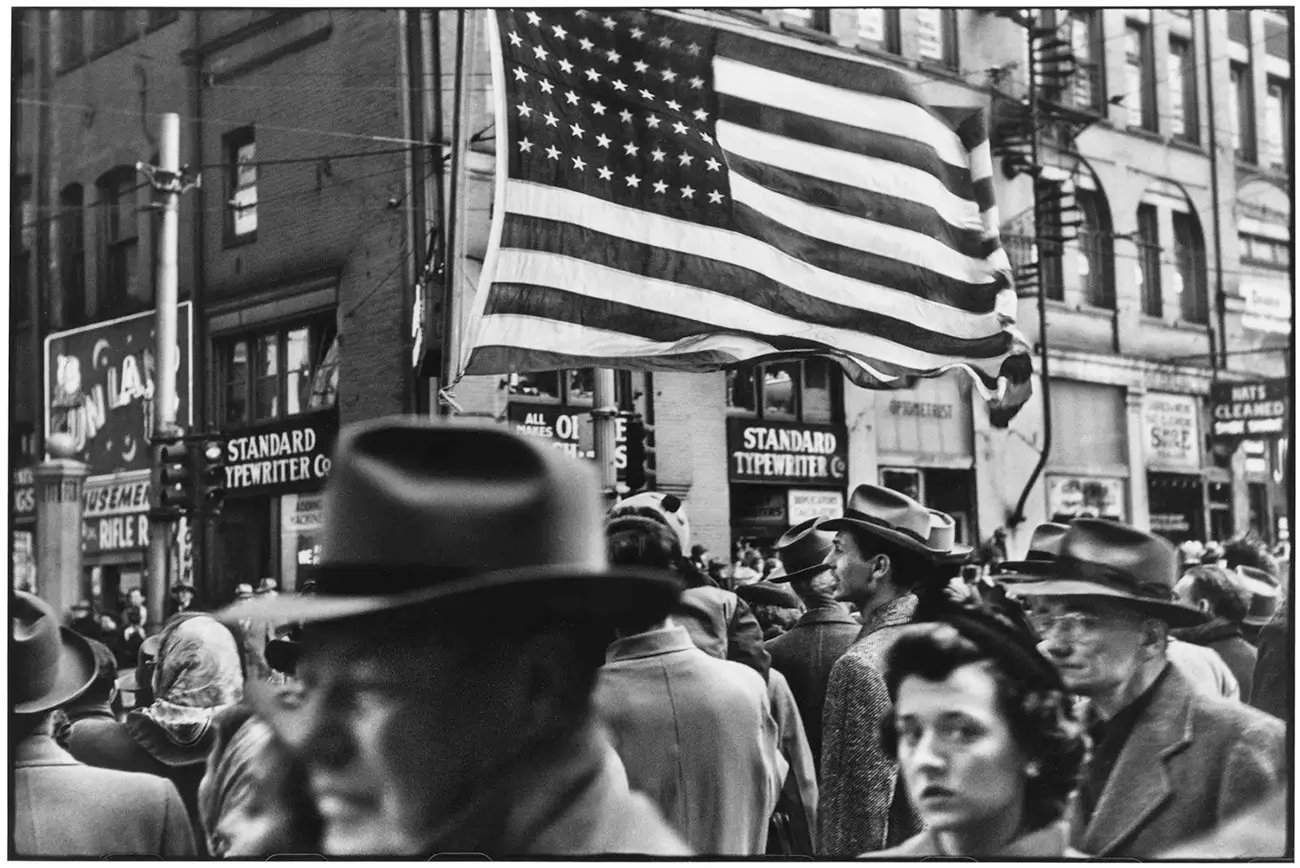
USA, Pittsburg, Pennsylvania (Crow of Armistice Day Parade) November 1950 © Elliott Erwitt / Magnum Photos
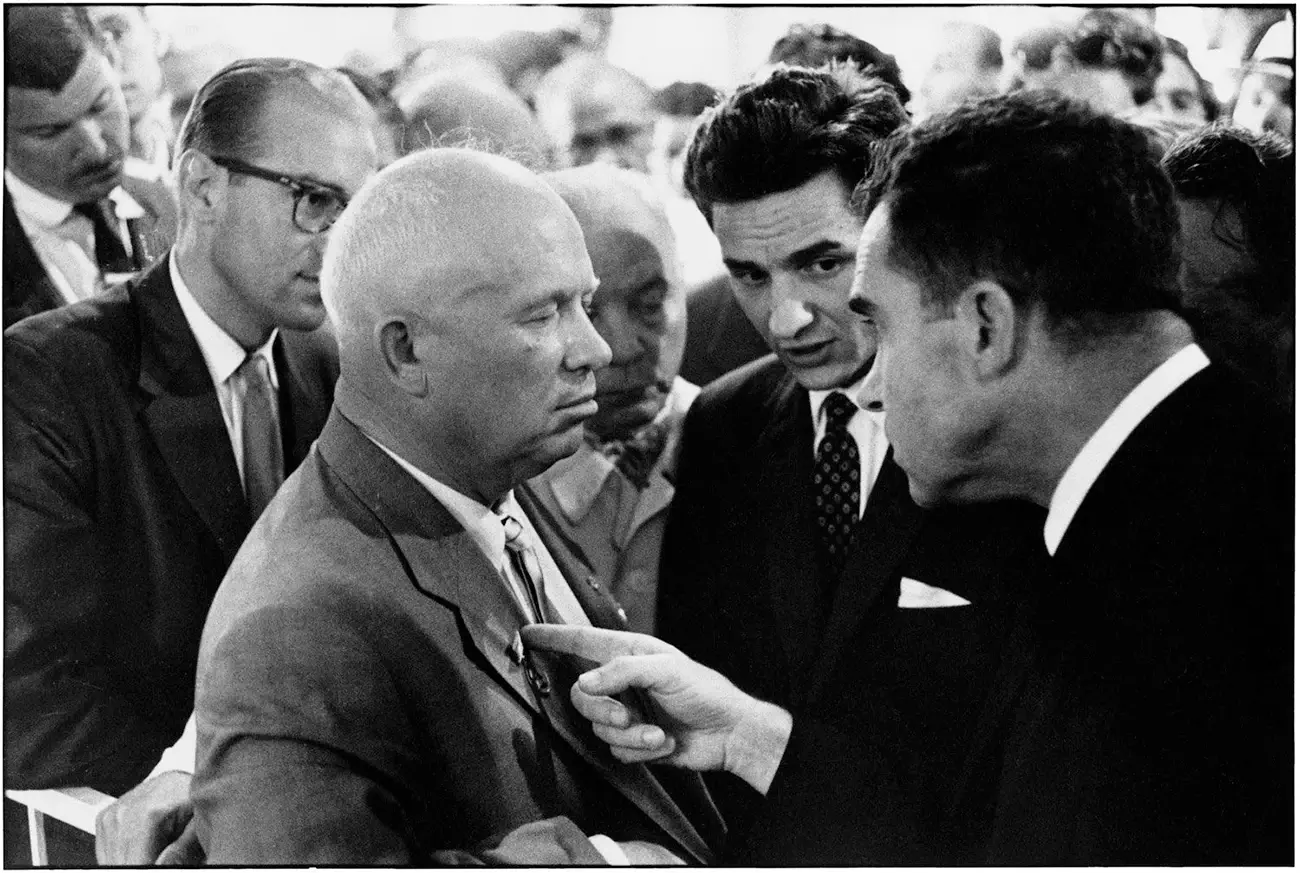
Moscow, USSR (Nikita Kruschchev and Rochard Nixon), 1959 © Elliott Erwitt / Magnum Photos