All about photo.com: photo contests, photography exhibitions, galleries, photographers, books, schools and venues.
Win a Solo Exhibition in June 2026 + An Exclusive Interview!
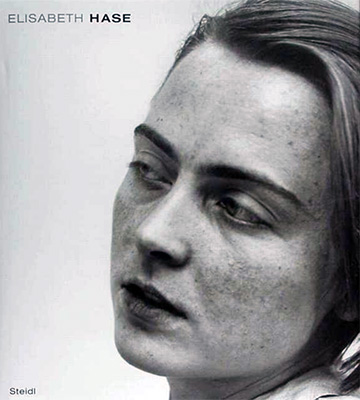
Elisabeth Hase
Elisabeth Hase
Elisabeth Hase

Elisabeth Hase

Country: Germany
Birth: 1905 | Death: 1991

Elisabeth Hase (December 16, 1905 – October 9, 1991) was a German commercial and documentary photographer active in Frankfurt from 1932 until her death in 1991, at the age of 85

Hase was born in Döhlen bei Leipzig, Germany. She studied typography and commercial art from 1924 to 1929 at the School of Applied Arts, and later at the Städelschule, under, among other teachers, Paul Renner and Willi Baumeister.

Hase was active as a photographer during the time of the transition from the Weimar Republic to the Third Reich and through post-WWII Germany. She was able to avoid government oversight of her work by establishing her own photographic studio in 1933.

Hase's work included surreal photography, such as close-up photographs of dolls.

She received several awards, several for paper designs and collages. During a two-year collaboration in the studio of Paul Wolff [de] and Alfred Tritschler [de], Hase took architectural photographs in New Objectivity style for the magazine Das Neue Frankfurt (The New Frankfurt) and documentary photographs of modern housing projects, including those of Ferdinand Kramer.

In 1932, Hase started her own business. It focused on timeless designs like still life, structures, plants, dolls, people, especially self-portraits. Often she used herself as a model in her photographic “picture stories.” Cooperation with agencies like Holland Press Service and the Agency Schostal[2] enabled her to publish her photographs internationally.

Despite the bombing of Frankfurt in 1944 by the Allies, Hare's photographic archive survived the war without major damage. Many of those works are now part of the collections held by the Folkwang Museum in Essen, Germany, in the Albertina (Vienna) in Vienna, and in the Walter Gropius estate in the Bauhaus Archive in Berlin, as well as in private collections in Germany and abroad.

Despite loss of her cameras and other technical equipment in the chaos of war, Hase was able to resume taking photographs in 1946 by the help of emigre friends who provided her with film and cameras to use. Among others subjects Hase documented was the reconstruction of St. Paul's Church in Frankfurt.

From 1949, her work focused on advertising, consisting mostly of plant portraits.
Hase died at the age of 85 in 1991 in Frankfurt am Main.

Source: Wikipedia

This new discovery is a rich body of work by a female artist who was photographing during the time of the transition from the Weimar Republic to the Third Reich and through post-WWII Germany. Hase's photographic compositions are comparable to a number of her avant-garde contemporaries such as Florence Henri, Ilse Bing, and Germain Krull.

Elisabeth Hase (1905-1991) was born in Germany and began her artistic studies in 1924 at the Art Academy in Frankfurt. During World War II Hase was able to avoid the politicization of her work by retreating to her studio. This however would not prevent her work from being wholly untouched by the war. During the air raid on Frankurt in 1944 her cameras and other equipment were lost however, quite remarkably, her archives of glass and film negatives survived. Most intriguing are Hase's self-portraits which experiment with identity and perceived reality. In one self-portrait she has photographed herself in the reflection of a silver sphere, she and the room are warped on the convex surface of the globe. In another image she is sprawled over a staircase as if fallen, with shoes and purse strewn likewise over the stairs. This practice of role-playing and adopting different personas is seen throughout Hase's portraiture.

Hase's work has been shown in museums across Germany including; the Folkwang Museum, Essen; the Historical Museum, Frankfurt; and the Museum of Photography, Braunschweig. Hase's work was exhibited in the show "Who is Afraid of Women Photographers?" at the Musée d'Orsay, Paris, France. Her work in found in prominent museum collections internationally, including The Metropolitan Museum of Art, The National Gallery, the Museum of Modern Art, The Nelson-Atkins Museum of Art, Ackland Art Museum, the Chrysler Museum of Art, Folkwang Museum in Essen, The Albertina Museum in Vienna and The Bauhaus Museum of Design in Berlin.

Source: Robert Mann Gallery

 

Selected Books

Inspiring Portfolios

Call for Entries
AAP Magazine #58 B&W
Publish your work in our printed magazine and win $1,000 cash prizes
 
Stay up-to-date  with call for entries, deadlines and other news about exhibitions, galleries, publications, & special events.

More Great Photographers To Discover

Mahya Rastegar
I am Mahya Rastegar, born 1980 in Tehran, Iran, a graduate in Photography and a Documentary Photographer, based in Tehran, Iran. I began to study Graphic Design in 2000, but quit it very soon in 2001 to find my field of interest somewhere else. After many years, in 2010, I started to study Photography, and graduated in 2013. I am mainly a social documentary photographer, most interested to capture the influential stories of women's lives.From the aspect of appearance, face and fashion, women are different from each other, but they are all the same in the way that all of them make efforts to get stronger in their inner world and possess the ability to live independently. From 2015 until now, I've been working on a long-term documentary photographing project with topic of Iranian women with influential stories. The collections of photos about each woman have the form of stories of their lives, meaning that I'm talking about the lives of these women by taking pictures of them. While holding on to the passion of presenting all type of women issues as a woman and after some serious researches and studies, I started shooting Iranian women trough different projects since 2013. In addition to all my ongoing projects, I have been working on a project called "To Remain Such a Woman" since 2016. I pictured all the women I live inside myself trough more than 10 women living under different conditions in the real/outside world (more on portfolio). This project will be released as a book soon. Some of my photos had the chance to be released on different pages and magazines such as: Panospictures, UK, L'HEBDO Magazine, France, Refinery29 Blog, PRI Org, NYTimes, women Photograph: 2018 year in Pictures, welt.de, leparisien.fr, NBC news, Euronews, Photo printing in Lens magazine 2019, Fine art photography awards 2020 (portrait nominee), Tow Phot's from NBCnews.com's November gallery of Women defying stereotypes in Iran won an AI-AP award in 2020. About Soudabeh Soudabeh was born in 27 October 1976 Soudabeh is the deputy of women bodyguards in ISBTA association. she said : "l was seeking for a sport-educational system for years to evacuate my excitements and beside that I could be able to protect myself in front of bullies and also in dangerous situations", until I got to know the international security and bodyguard training association or ISBTA. This association legally and officially works. Soudabeh's son, Pouria, was born in 25 March 1997. He was 10 when Soudabeh got divorced. Soudabeh has given motivation of independence to his son and Pouria has learned to sport and having a healthy body from his mother. The first reason I chose Soudabeh was the divorce thing.In Iran ‘s society divorce and being divorced is still a taboo for women. A divorced woman can't easily go to work and still has challenges in her work communications with men. Soudabeh and even me are divorced women and we are facing obstacles in this patriarchal society and we were able to prove ourselves with an appropriate job in this society. Which means we can continue living despite the fact that we are divorced. Soudabeh has been a body building coach for 8 years. Before being a coach she used to work in an advertising company in the graphic section. Soudabeh went to a beauty salon which is owned by one of her students. She is student of body building and she just goes to gym for sport. Soudabeh, It's right that she is doing a masculine sport but at first she is a woman and then a mother and ultimately she is a woman bodybuilder. Her position as a deputy in this organization means she can holds ISBTA bodyguard classes for women and she she can teach in this classes as a coach.
David Salcedo
Spain
1981
My maternal grandfather had a grocery store in the town, the paternal grandfather did a thousand jobs throughout Spain, the grandmothers made a living sewing clothes and faced continuous worries. My parents had to emigrate to and they ended up having a bar, where the whole family worked. I, perhaps, should have stayed with the bar, but I chose the path of light. There was no shortage of those who told me that it would be difficult and hard, but no one in my family has had it easy. Why would I be less? Years later I am full of new physical and spiritual scars, which have added to what already existed within me and always defined my way of seeing the world. And it is that I will never be able to escape from what is close to me and is the measure of everything I discover, of the tenderness that they taught me to have in my heart and the silence with which I lived for years. It is in this mixture that my photographs are macerated. The set of these circumstances, nothing special, is what has led me to win several prizes and scholarships, exhibit nationally and internationally, participate in a good number of catalogues, publish several fanzines, collaborate with the Kursala of the University of Cádiz, to publish with the publishing house Ediciones Posibles And it seems that everything was an instant. Statement Next you have Fuchina, a work on the festivals of my parents’ town, Caravaca de la Cross. To do so, I fled from the traditional way of approaching parties with three very clear ideas, also looking for them to be protagonists in a subtle way. The first of the ideas is to do a job where the sound was extracted in the middle of all the noise of some parties with more than 20 music bands and more than 50 brass bands. The second of the concepts is to play with the plans, cuts and compositions to make the viewer feel as if they were inside the festivities. Third is to create a metaphor about the general situation of the town itself with strong light and faded color. The name Fuchina refers to a liquor that decades ago was distilled illegally for parties.
Christopher Anderson
Christopher Anderson (b.1970, Canada), a member of Magnum Photos for over ten years, has covered an innumerable list of political and social issues around the world. Whilst he is widely known for his moving photographs of fleeing Haitian immigrants aboard a sinking handmade boat named 'Believe in God', Anderson has also made pictures of Barack Obama, Al Gore and David Letterman amongst countless other people and places. Contrary to the often-unforgiving frontiers Anderson places himself in, his photographs are always imbued with palpable emotion. In a society in which a torrent of photographs from the mass media drive an apathetic view of such narratives, Anderson instead offers an alternative, poetic and intimate practice that that speaks of his own experience, whilst constructing a frame for us to experience it with him. In 2000, Christopher Anderson received the Robert Capa Gold Medal for his series on the crossing made by boat by Haitian refugees to the United States. He has also been nominated for a Pulitzer Prize. Anderson has worked for Newsweek Magazine and National Geographic Magazine and in 2011 he became the first Photographer in Residence at New York Magazine. Numerous books have been published on his work: Nonfiction (2003), Capitolio (2009), Son (2013), Stump (2014) and his latest book Approximate Joy (2018). Anderson lives and works in both New York and Barcelona.Source: The Ravestijn Gallery Christopher Anderson is known for his emotionally charged, artfully drawn images that explore themes of truth and subjectivity. He is one of today’s most influential photographers, whose origins began in war reporting and later transformed into something more intimate, blending the worlds of commercial, art and fashion work, but always with a foundation in documentary. Anderson was born in 1970 in Canada and grew up in west Texas. His photographic career began working for local newspapers. In 2000, on assignment for the New York Times Magazine , he boarded a small wooden boat with 44 Haitians trying to sail to America. The boat sank in the Caribbean. The photographs received the Robert Capa Gold Medal and marked the beginning of a ten-year period as a contract photographer for Newsweek Magazine and National Geographic Magazine. In 2011 he became New York Magazine’s first ever Photographer in Residence; a notable collaboration that would also mark Anderson’s shift into portraiture and fashion, making images of significant figures including Barack Obama, Spike Lee and Debby Harry. In 2008, after the birth of his first child, Anderson moved further away from journalistic magazine work to subjects more immediate to his personal experience. In 2012, his book, SON, was published, defining a visual direction that has come characterize to his work. Other projects created within this intensely intimate approach include Capitolio, Stump and Approximate JOY.
Stephen Wilkes
United States
1957
Since opening his studio in New York City in 1983, photographer Stephen Wilkes has built an unprecedented body of work and a reputation as one of America's most iconic photographers, widely recognized for his fine art, editorial and commercial work. His photographs are included in the collections of the George Eastman Museum, James A. Michener Art Museum, Houston Museum of Fine Arts, Dow Jones Collection, Carl & Marilynn Thoma Art Foundation, Jewish Museum of NY, Library of Congress, Snite Museum of Art, The Historic New Orleans Collection, Museum of the City of New York, 9/11 Memorial Museum and numerous private collections. His editorial work has appeared in, and on the covers of leading publications such as the New York Times Magazine, Vanity Fair, Time, Fortune, National Geographic, Sports Illustrated , and many others. Wilkes' early career interpretations of Mainland China, California's Highway One, and impressionistic "Burned Objects" set the tone for a series of career-defining projects that catapulted him to the top of the photographic landscape. In 1998, a one-day assignment to the south side of Ellis Island led to a 5-year photographic study of the island's long abandoned medical wards where immigrants were detained before they could enter America. Through his photographs and video, Wilkes helped secure $6 million toward the restoration of the south side of the island. A monograph based on the work, Ellis Island: Ghosts of Freedom, was published in 2006 and was named one of TIME magazine's 5 Best Photography Books of the Year. The work was also featured on NPR and CBS Sunday Morning. In 2000, Epson America commissioned Wilkes to create a millennial portrait of the United States, "America In Detail," a 52-day odyssey that was exhibited in New York, Chicago, Los Angeles, and San Francisco. Day to Night , Wilkes' most defining project, began in 2009. These epic cityscapes and landscapes, portrayed from a fixed camera angle for up to 30 hours capture fleeting moments of humanity as light passes in front of his lens over the course of a full day. Blending these images into a single photograph takes months to complete. Day to Night has been featured on CBS Sunday Morning as well as dozens of other prominent media outlets and, with a grant from the National Geographic Society , was extended to include America's National Parks in celebration of their centennial anniversary and Bird Migration for the 2018 Year of the Bird. Most recently a new grant was extended for Canadian Iconic Species and Habitats at Risk in collaboration with The Royal Canadian Geographic Society. Day to Night : In the Field with Stephen Wilkes was exhibited at The National Geographic Museum in 2018. Day to Night was published by TASCHEN as a monograph in 2019. Wilkes' work documenting the ravages of Hurricanes Katrina and Sandy has brought heightened awareness to the realities of global climate change. He was commissioned by the Annenberg Space for Photography to revisit New Orleans in 2013 after documenting Hurricane Katrina for the World Monuments Fund. And, his images were exhibited with his photographs on Hurricane Sandy in the 2014 Sink or Swim, Designing for a Sea of Change exhibition. Wilkes directorial debut, the documentary film, Jay Myself , world premiered at DOCNYC in November 2018. The film is an in depth look into the world of photographer Jay Maisel and his move out of his 35,000 sq. foot building at 190 Bowery. Oscilloscope Laboratories has acquired the North American rights and the film opened at Film Forum in New York in July, 2019 Wilkes was a speaker at the TED2016: Dream Conference on his Day to Night series. The talk has over 1.6 million views. In 2017 Wilkes was commissioned by the US Embassy, Ottawa to create a Day to Night photograph of Canada's 150th anniversary of Confederation. Despite his intense dedication to personal projects, Wilkes continues to shoot advertising campaigns for the world's leading agencies and corporations, including: Netflix, OppenheimerFunds, SAP, IBM, Capital One, The New Yorker, Johnson & Johnson, DHL, American Express, Nike, Sony, Verizon, IBM, AT&T, Rolex, Honda. He has a robust following on Instagram of more than 500,000. Wilkes' extensive awards and honors include the Alfred Eisenstaedt Award for Magazine Photography, Photographer of the Year from Adweek Magazine, Fine Art Photographer of the Year 2004 Lucie Award, TIME Magazine Top 10 Photographs of 2012, Sony World Photography Professional Award 2012, Adobe Breakthrough Photography Award 2012 and Prix Pictet, Consumption 2014. His board affiliations include the Advisory Board of the S.I. Newhouse School of Communications; Save Ellis Island Board of Directors, on which he served for 5 years; and the Goldring Arts Journalism Board. Wilkes was born in 1957 in New York. He received his BS in photography from Syracuse University S.I. Newhouse School of Public Communications with a minor in business management from the Whitman School of Management in 1980. Wilkes, who lives and maintains his studio in Westport, CT, is represented by Bryce Wolkowitz Gallery, New York; Fahey Klein Gallery, Los Angeles; Monroe Gallery of Photography, Santa Fe and Holden Luntz Gallery, Palm Beach..
Annette LeMay Burke
United States
1964
Annette LeMay Burke (b. 1964) is a photographic artist and Northern California native who lives in the heart of Silicon Valley. Numerous family road trips throughout California and the West honed her eye for observing the landscape. By eight years old, she had her own Instamatic camera and graduated to a Minolta X-700 as a teen. While earning a BA in Earth Science from the University of California at Berkeley, she took her first darkroom class. After a career in high-tech, and studying design, Annette has now merged her interests. Her artistic practice focuses on how we interact with the natural world and the landscapes constructed by the artifacts of technology. Annette's first book, Fauxliage (Daylight Books, Spring 2021), documents the proliferation of disguised cell phone towers in the American West and how new technologies are modifying our landscapes with idiosyncratic results. Her work has been exhibited at institutions such as Center for Photographic Arts, Colorado Photographic Arts Center, Griffin Museum of Photography, Texas Photographic Society, The Center for Fine Art Photography, and Photographic Center Northwest. In 2017, she was a finalist for Photolucida's Critical Mass. Fauxliage - Disguised Cell Phone Towers of the American West Fauxliage documents the proliferation of disguised cell phone towers in the American West. For me, the fake foliage of the trees draws more attention than camouflage. The often-farcical tower disguises belie the equipment's covert ability to collect all the phone calls and digital information passing through them, to be bought and sold by advertisers and stored by the NSA. From the very start, cell towers were considered eyesores. Plastic leaves were attached in an attempt to hide the visual pollution. Over time, the disguises have evolved from primitive palms and evergreens into more elaborate costumes. The towers now masquerade as flagpoles, crosses, water towers, and cacti. Over time, as our demand for five bars of connectivity has increased, the charade has remained. I was initially drawn to the towers' whimsical appearances. The more I photographed, the more disconcerted I felt that technology was clandestinely modifying our environment. I explore how this manufactured nature is imposing a contrived aesthetic in our neighborhoods. My photographs expose the towers' idiosyncratic disguises, highlight the variety of forms, and show how ubiquitous they are in our daily lives. Their appearance is now an inescapable part of the iconic western road trip and the eight states I visited for this project. As the fifth generation (5G) of cellular technology continues to roll out, the cell tower terrain will be changing. 5G utilizes smaller equipment that is easier to hide - think fat streetlight poles. Perhaps elaborately disguised 'fauxliage' towers will begin disappearing and be considered an anachronism of the early 21st century. The decorated towers could join drive-up photo kiosks, phone booths, news stands, and drive-in movie theaters as architectural relics of the past. More about Fauxliage More about Memory Building
Mariana Basurto
Mexico
1976
My name is Mariana Basurto. I was born in Mexico City and I'm passionate about exploring the world with my camera in hand. My photography seeks to invade the intimacy of the streets, to extract and represent the magic that is perceived in everyday life and show the world from my eyes. Through my lens I seek to capture the unique and different everyday life with a personal stamp. With every click of my camera I connect with people through a smile or conversation where I have achieved spontaneity, intimacy and respect. There are three people and a country that triggered my passion for street photography at various times in my life. My grandfather and my father taught me to never stop being surprised in life and this fueled the action of exploring the planet. Today, I have visited more than seventy-five countries in the world and I have had the opportunity to live in five of them. My sister inspired me to photography when we traveled together and she captured moments with her Kodak camera from the 1980’s. Finally, having lived in a city like Shanghai motivated me to tell with my lens the fascinating stories that are lived every day in a country as special as China. I hold an Industrial Engineering degree and Professional Cook but abandoned both careers to focus on photography. I’m a member the Women street photography and Mexican Street Photography Collectives. I’m interested in documentary, travel and street photography. My medium-long-term documentary projects are: • At their home – Show how people live around the world. Through my connection on the street I have managed to enter people's homes and they have shown me how they live. • Elder beauty portrait- Document the expressions, textures and stories of elderly men and women from different cultures who through their skin show a unique beauty • Quirks – Fun and unique things from everyday life that represent cultures, places or people I have recently participated in worldwide exhibitions in Hong Kong, New York, Iran, Mexico but my greatest reward is seeing people's expressions when I show them their photo. They feel happy, heard, and represented. I currently live in Charlotte, North Carolina, in the United States in constant search of new places to visit and stories that my lens can tell Statement My photography is a unique, personal dialogue between the images and viewer, crafted with the passion and privilege of capturing human connections and truths, often challenging prevailing narratives without compromise,. My main belief is that: “Never stop being amazed”
Advertisement
AAP Magazine #58 B&W
Win a Solo Exhibition in June
AAP Magazine #58 B&W

Latest Interviews

Exclusive Interview with Carolyn Moore
American photographer Carolyn Moore explores the inner landscape of emotion, memory, and personal transformation through a deeply intuitive photographic practice. Her work unfolds as a quiet dialogue between artist and viewer, where images become a space for reflection, vulnerability, and connection.
Exclusive Interview with Luca Desienna and Laura Estelle Barmwoldt
For over seven years, Of Lilies and Remains has explored the depths of the goth and darkwave underground, unfolding in Leipzig—a city long associated with a vibrant and enduring subcultural scene. Moving between iconic gatherings such as Wave-Gotik-Treffen and more intimate moments on the fringes, the project offers a rare and immersive glimpse into a world often misunderstood, yet rich in expression and community. Created by Luca in collaboration with Laura Estelle Barmwoldt, the work embraces a cinematic and deeply personal approach. Rather than documenting from a distance, it moves within the scene itself, capturing its atmosphere, its codes, and its quiet contradictions. The title Of Lilies and Remains hints at this duality—where beauty and darkness, fragility and strength coexist. As the book prepares for its release, we spoke with both artists about the origins of the project, their process, and what it means to document a subculture that continues to evolve while remaining true to its spirit.
Exclusive Interview with Matthew Finley
American photographer Matthew Finley turns inward, using photography as a way to explore identity, memory, and emotional truth. Based in Los Angeles, his practice moves between performance, gesture, and found imagery, creating a visual language that is both intimate and deeply personal
Exclusive Interview with Jan Janssen
Dutch photographer Jan Janssen explores universal human experiences through his long-term project It Matters, winner of the May 2025 Solo Exhibition. Begun in 2016, the series captures intimate moments of everyday life—love, loss, connection, and belonging—across Central and Eastern Europe. Working in countries such as Turkey, Azerbaijan, and Armenia, Janssen spends extended time within communities, building relationships based on trust and respect. His approach allows him to move beyond observation, revealing deeply human and authentic moments. Rooted in travel and personal discovery, It Matters reflects Janssen’s search for what connects us all in an increasingly divided world. The project is ongoing and will culminate in a photobook scheduled for publication in 2026.
Exclusive Interview with Henk Kosche
German photographer Henk Kosche turns his lens toward the streets of Halle an der Saale, capturing everyday life in the late years of the former German Democratic Republic. At the time, Kosche was studying design and exploring the city with his camera, drawn to the atmosphere of its industrial landscape and the quiet rhythms of daily life. His series Street Photography at the End of the 80s, selected as the Solo Exhibition for July 2025, revisits a body of work created just before a period of profound change. Rediscovered decades later in a small box of 35mm negatives, these photographs offer glimpses of a city and its people at a moment suspended between the familiar and the unknown.
Exclusive Interview with Anastasia Samoylova
Anastasia Samoylova is an American artist whose photographic practice is shaped by close observation and a deep attentiveness to place. Working between documentary and formal exploration, she photographs landscapes, architecture, and everyday scenes with a sensitivity to light, structure, and atmosphere. Since relocating to Miami in 2016, her work has increasingly focused on how environments—both natural and built—carry social, cultural, and emotional traces. We asked her a few questions about her practice and her way of seeing, to better understand the thoughts and experiences that shape her work—while allowing the images themselves to remain open and speak in their own time.
Exclusive Interview with Marijn Fidder
Marijn Fidder is a Dutch documentary photographer whose work powerfully engages with current affairs and contemporary social issues. Driven by a deep sense of social justice, she uses photography to speak on behalf of the voiceless and to advocate for the rights of those who are most vulnerable. Her images have been widely published in major international outlets including National Geographic, CNN Style, NRC Handelsblad, Volkskrant, GUP New Talent, and ZEIT Magazin. Her long-term commitment to disability rights—particularly through years of work in Uganda—culminated in her acclaimed project Inclusive Nation, which earned her the title of Photographer of the Year 2025 at the All About Photo Awards. She is also the recipient of multiple prestigious honors, including awards from World Press Photo and the Global Peace Photo Award. We asked her a few questions about her life and work.
Exclusive Interview with Josh S. Rose
Josh S. Rose is a multidisciplinary artist working across photography, film, and writing. His practice bridges visual and performing arts, with a strong focus on movement, emotion, and the expressive potential of the image. Known for his long-standing collaborations with leading dance companies and performers, Rose brings together authenticity and precise composition—a balance he describes as “technical romanticism.” His work has been commissioned and exhibited internationally, appearing in outlets such as Vogue, at the Super Bowl, in film festivals, and most recently as a large-scale installation for Lincoln Center for the Performing Arts. A sought-after collaborator, he has worked with major artists, cultural institutions, and brands, following a previous career as Chief Creative Officer at Interpublic Group and the founder of Humans Are Social. We asked him a few questions about his life and work.
Interview with Maureen Ruddy Burkhart
Photographer Maureen Ruddy Burkhart brings a quietly attentive and deeply human sensibility to her exploration of the world through images. Shaped by a life immersed in photography, film, and visual storytelling, her work is guided by intuition, observation, and an enduring interest in the emotional undercurrents of everyday life. With a practice rooted in both fine art traditions and documentary awareness, she approaches her subjects with sensitivity, allowing subtle moments to emerge naturally rather than be imposed. Her series Til Death, selected as the Solo Exhibition for February 2025, reflects this long-standing commitment to photography as a space for reflection rather than spectacle. Drawn to moments that exist just outside the expected frame, Burkhart’s images suggest narratives without resolving them, leaving room for ambiguity, humor, and quiet connection. We asked her a few questions about her life and work.
Call for Entries
Win A Solo Exhibition in June
Get International Exposure and Connect with Industry Insiders