All about photo.com: photo contests, photography exhibitions, galleries, photographers, books, schools and venues.
FINAL DAYS TO WIN A SOLO EXHIBITION IN MAY 2026
Nadav Kander
Nadav Kander
Nadav Kander

Nadav Kander

Country: Israel
Birth: 1961

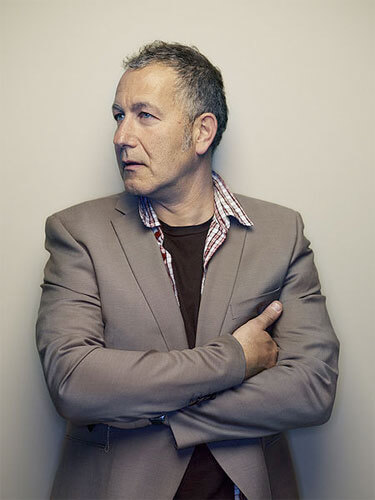
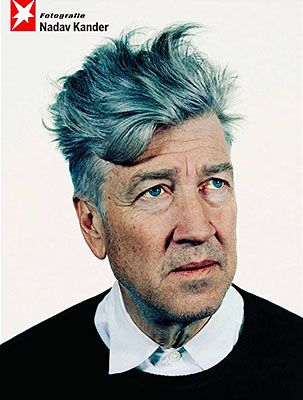
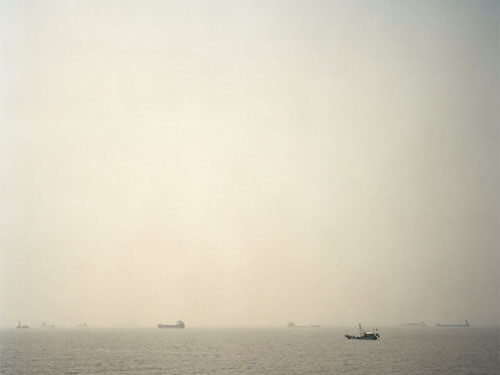
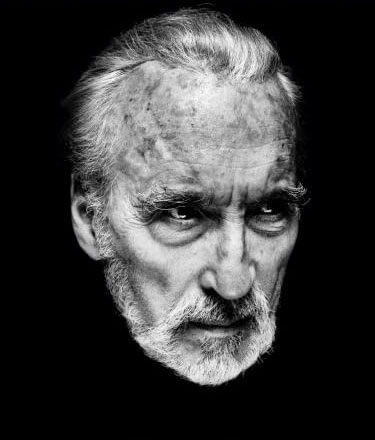
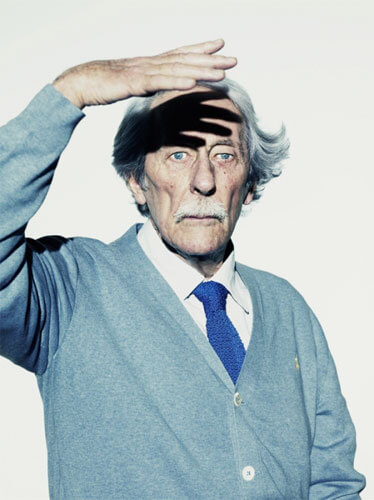
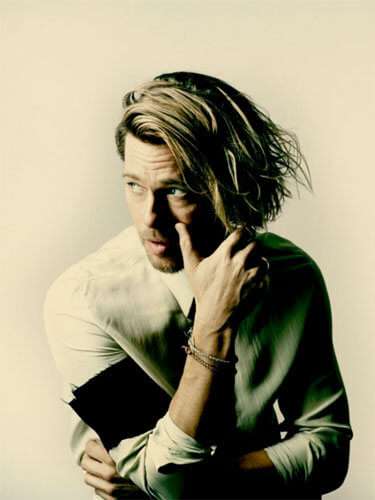
Nadav Kander is a London based photographer, artist and director, internationally renowned for his portraiture and landscapes. His work forms part of the public collection at the National Portrait Gallery and the Victoria and Albert Museum in London. Kander's work is also exhibited in numerous international galleries and museums. Kander was born in tel Aviv, tal aviv. His father flew Boeing 707s for El-Al but when he lost his eye for medical reasons he was unable to carry on flying.

His parents decided to start again in South Africa and moved to Johannesburg in 1963. Kander began taking pictures when he was 13 on a Pentax camera and later when drafted into the South African Air Force, worked in a darkroom printing aerial photographs. He moved to London in 1986, where he still resides with his wife Nicole and their three children. Kander's most celebrated images include Diver, Salt Lake, Utah 1997, in which a lone women peers out into the vast lake, and his 2009 portrait of Barack Obama photographed for The New York Times Magazine as a cover feature. Diver, Salt Lake, Utah, 1997 was also the cover image for Kander's Monograph Beauty's Nothing.

On 18 January 2009, Nadav Kander had 52 full-page colour portraits published in one issue of The New York Times Magazine. These portraits (from a series titled Obama's People) were of the people surrounding President Barack Obama, from Joe Biden (Vice President) to Eugene Kang (Special Assistant to The President). The same issue also included a series of cityscapes of Washington DC also taken by Kander. This is the largest portfolio of work by the same photographer The New York Times Magazine has ever showcased in one single issue.

Source: Wikipedia


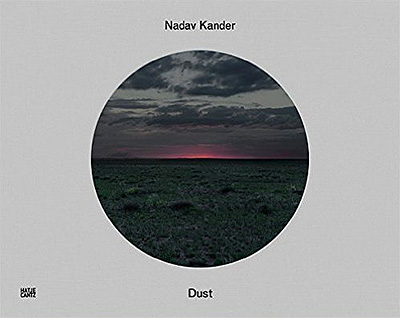
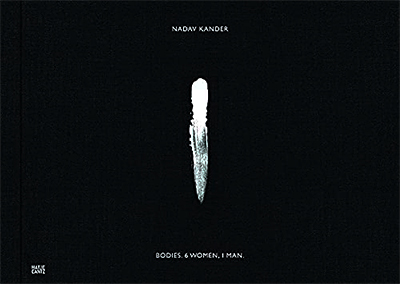
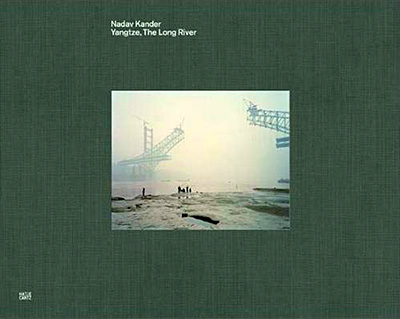
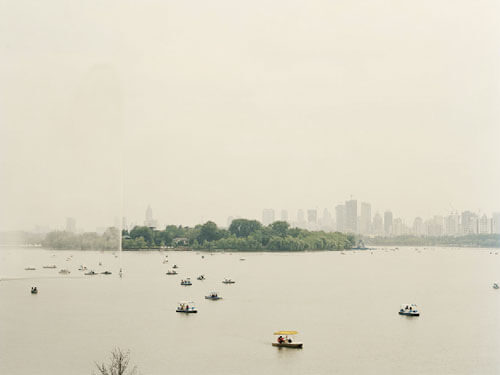
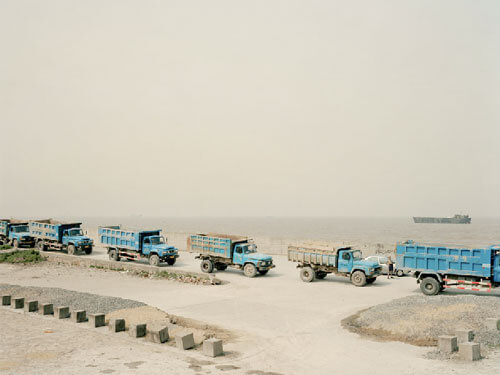
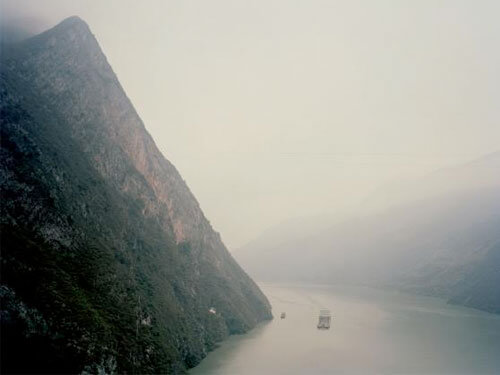
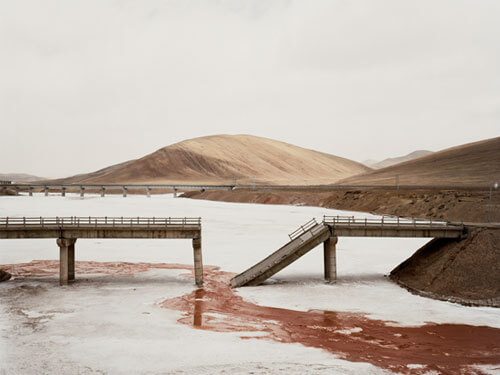
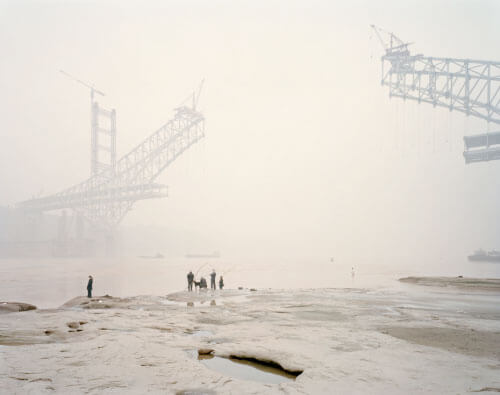
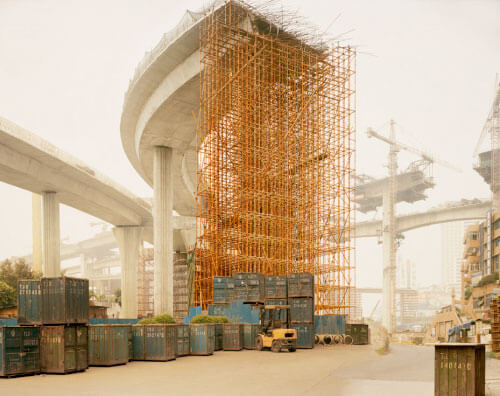
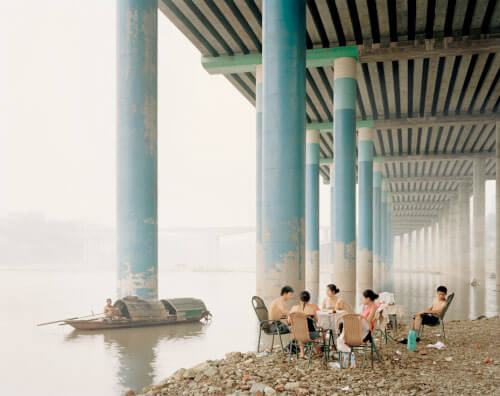
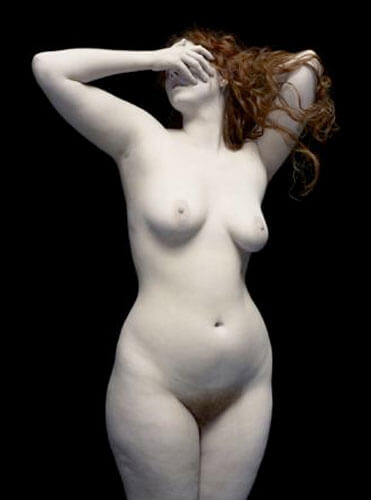
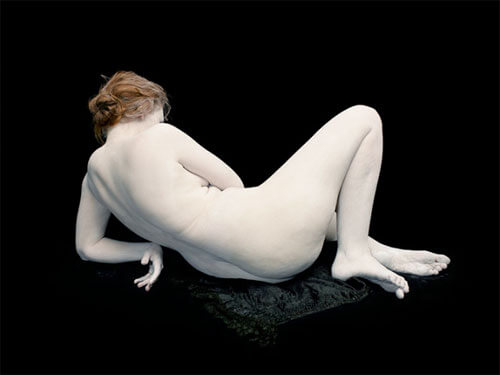
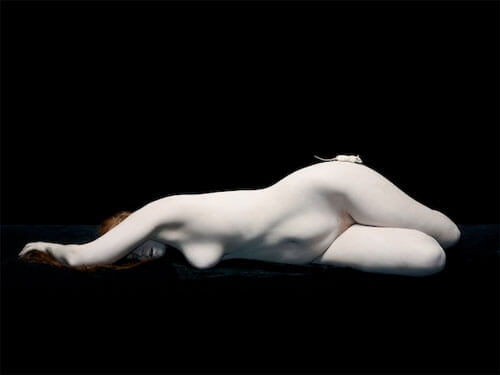
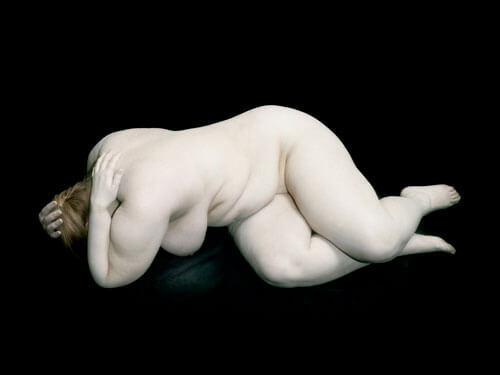
Nadav Kander lives and works in London. Selected past projects include Yangtze – The Long River, winner of the Prix Pictet award in 2009; Dust, which explored the vestiges of the Cold War through the radioactive ruins of secret cities on the border between Kazakhstan and Russia; Bodies 6 Women, 1 Man; and Obama’s People, an acclaimed 52 portrait series commissioned by the New York Times Magazine. His ongoing series, Dark Line - The Thames Estuary, is a personal reflection on the landscape of the River Thames at its point of connection with the sea, through atmospheric images of its slow-moving dark waters and seemingly infinite horizons.

Kander’s work is housed in several public collections including National Portrait Gallery, London, UK; Museum of Contemporary Photography, Chicago, USA; Marta Herford Museum, Germany; Sheldon Museum, Lincoln, USA; The Frank-Suss Collection, London, New York and Hong Kong; and Statoil Collection, Norway. He has exhibited internationally at venues including Weserburg Museum, Germany; Musée de L’Elysée, Lausanne, Switzerland; Museum of Photographic Arts, San Diego, USA; Museum of Applied Arts, Cologne, Germany; The Barbican Centre, London, UK; The Photographers’ Gallery, London, UK; Somerset House, London, UK; Palais de Tokyo, Paris, France; and Herzliya Museum of Contemporary Art, Israel. Recent fellowships and awards include an Honorary Fellowship Award from the Royal Photographic society.

Source: Flowers Gallery


"I hated school with dedication. A shame, but true. I wasn’t hugging and saying tearful goodbyes on the final day. I just left and I have never returned. Having a very bad accident on my motorbike that I had had since I was 15 (a Triumph 650 Tiger), was a hinge event. Prior to this I had been a practising hard man and going nowhere. Working on the machines during the day and riding in groups at night was my life. After the accident when I was 17, I never rode again and my focus shifted back to photography. South Africa forced its white male citizens to partake in National Service, and I somehow ensured I was drafted into the Air force and then into a darkroom where I printed aerial pictures for two years. It was here that I became certain I wanted to become a lens based artist. A Photographer back then. I met Nicole Verity at about this time.

The day after I cleared out of the Air force I started working for Harry De Zitter, and a few months later, soon after my 21st birthday, I left for England. At the end of 1985 I was back in South Africa and met up with Nicole again. She joined me in England in 1986. We squatted in a block of flats two streets away from where we later bought a house. We married in the wilds of Africa in 1991."
-- Nadav Kander

Source: www.nadavkander.com

 

Nadav Kander's Video

Selected Books

Inspiring Portfolios

Call for Entries
AAP Magazine #57 Portrait
Publish your work in our printed magazine and win $1,000 cash prizes
 
Stay up-to-date  with call for entries, deadlines and other news about exhibitions, galleries, publications, & special events.

More Great Photographers To Discover

Clay Lipsky
United States
Clay Lipsky is a fine art photographer & Emmy Award winning graphic designer based in Los Angeles. He has applied his unique visual style across a variety of mediums, from print and multimedia to TV and film. Despite his varied interests, photography has always been a part of Clay’s life. Recently, he has experienced a new-found interest with the medium and is now passionately focused on pursuing photography as fine art, free from clients and limitless in creative possibilities. Clay is self-taught and strives to create images that can stand the test of time. His photos have been exhibited in various group shows, including those at the Annenberg Space for Photography, MOPLA, Pink Art Fair Seoul, Wall Space, Rayko and Impossible Project Spaces in NYC & Warsaw, Poland. Clay has been published internationally in print and online, most notably with Esquire Russia, Wired Italia, Fraction, Square, Lenscratch, Diffusion, i-ref, Daily News (UK), Yahoo! Lifestyle (Germany), La Republica (Italy), Libération (France), Shots & um[laut] Magazines. Clay Lipsky's project, In Dark Light, is intriguing on a number of levels. First, the work was created, for the most part, on a trip to Iceland and as we know, creating conceptual fine art images while in a foreign place, with no opportunity for previsualization, is not an easy task. But somehow, Clay instinctively found a narrative and way of working within a concentrated period of time. The other interesting aspect is what the work is about. Making imagery about depression, about loss and solitude has to have subtle nuances that are at once personal and universal, and Clay captured this subject with emotion and simplicity. Clay works as fine art photographer and graphic in Los Angeles. His photos have been exhibited in group shows across the country, including the Annenberg Space for Photography, MOPLA, Pink Art Fair Seoul, PhotoPlace and Impossible Project NYC. He has been featured internationally in print and online in publications such as Fraction, Square, Diffusion, F-Stop, PH and Shots Magazines. Recently, he was a featured "Ten" through Jennifer Schwartz Gallery, and North Light Press will be publishing an edition of his Cuba photos through their 11+1 series. He is also an avid self-publisher with several titles that exhibit as part of the Indie Photobook Library. Source: www.lenscratch.com About the series In Dark Light This series of self portraits examines my loss of identity and enduring personal journey through depression. It is a solitary path that encompasses loss of home and parent, the pursuit of beauty, work and perseverance under no religious or visceral compass. Imagined as a vast, shadowed plane it is a private purgatory mired in fog with colors muted and senses numbed. The varied landscape acts as metaphor for life's many obstacles. Beyond the horizon lies hope for brighter days and so the lone soul carries on, albeit cast in dark light. Discover Clay Lipsky's Interview
Ferit Kuyas
Turkey
1955
Living and working near Zurich, Switzerland, Ferit Kuyas fully committed himself to photography in the eighties after graduating from law school. Working mainly on personal projects, he published several books. After visiting Shanghai for commissioned work, Ferit's travels brought him often back to China. His most recent book publication is City of Ambition with large cityscapes from the megalopolis Chongqing, China, which got published in October 2009. 2011 he started working on Aurora, a project with cityscapes and portraits in Guatemala City. Ferit's photographs have been shown in museums, galleries and festivals in Europe, America and Asia. His work is represented in private, corporate and public collections in the United States, England, Belgium, Switzerland, Germany and Turkey. He received a number of awards, among them the Kodak Photobook-Award and the Hasselblad Masters. "Amidst the thousands of images we see, there are some that impact on a deep personal level. It’s like they enter your body in some way and reveal themselves to you in-dreams or come to you at moments in the day when you should be concentrating on the finances, or driving the car. Ferit’s images affected me in this way. From the first time I saw them, their sheer audacity delighted me. I can meditate on it and take myself on a journey. Even if photography did die, it would never die inside me – people like Ferit have filled me up with images forever." - Rhonda Wilson, Rhubarb, Rhubarb, Birmingham UK.Source: www.feritkuyas.net Ferit Kuyas (1955) was born in Istanbul, Turkey. He studied architecture and law in Zurich, Switzerland and graduated 1982 in jurisprudence from the University of Zurich. Working mainly on personal projects, he published several books. After visiting Shanghai for commissioned work, Ferit’s travels brought him often back to China. His most recent body of work is City of Ambition with large cityscapes from the megalopolis Chongqing, China, which got published in October 2009. Ferit’s photographs have been shown in museums, galleries and festivals in Europe, America and Asia. His work is represented in private, corporate and public collections in the United States, England, Belgium, Switzerland, Germany and Turkey. He received a number of awards, among them the Kodak Photobook-Award, the Guatephoto Award and the Hasselblad Masters.Source: Stephen Cohen Gallery
Martín Chambi
Peru
1891 | † 1973
Martín Chambi Jiménez was a Peruvian photographer, originally from southern Peru. He was one of the first major Indigenous Latin American photographers. Recognized for the profound historic and ethnic documentary value of his photographs, he was a prolific portrait photographer in the towns and countryside of the Peruvian Andes. As well as being the leading portrait photographer in Cuzco, Chambi made many landscape photographs, which he sold mainly in the form of postcards, a format he pioneered in Peru. In 1979, New York's Museum of Modern Art held a Chambi retrospective, which later traveled to various locations and inspired other international expositions of his work. Martín Chambi was born into a Quechua-speaking peasant family in one of the poorest regions of Peru, at the end of the nineteenth century. When his father went to work in a Carabaya Province gold mine on a small tributary of the River Inambari, Martin went along. There he had his first contact with photography, learning the rudiments from the photographer of the Santo Domingo Mine near Coaza (owned by the Inca Mining Company of Bradford, Pa). This chance encounter planted the spark that made him seek to support himself as a professional photographer. With that idea in mind, he headed in 1908 to the city of Arequipa, where photography was more developed and where there were established photographers who had taken the time to develop individual photographic styles and impeccable technique. Chambi initially served as an apprentice in the studio of Max T. Vargas, but after nine years set up his own studio in Sicuani in 1917, publishing his first postcards in November of that year. In 1923 he moved to Cuzco and opened a studio there, photographing both society figures and his Indigenous compatriots. During his career, Chambi also traveled the Andes extensively, photographing landscapes, Inca ruins, and local people. Chambi began his work as a photographer as an apprentice to Max T. Vargas in Arequipa, Peru. During this time as an apprentice, Chambi learned different ways of manipulating light for portraits in the studio. His daughter, Julia Chambi, is quoted as saying, "my father was enchanted by light." His studio in Cuzco included a set of blinds and shutters made specifically so that he could alter the natural lighting to best suit his photographs. Furthermore, most of Chambi's photos of Indigenous people were taken outside so that he could use only natural lighting. Chambi produced a variety of works over his career as a photographer. Within the studio, he took many portraits of both wealthy and elite members of society, as well as the Indigenous people; he also took many self-portraits. Chambi is well-known for his work in documenting the Indigenous culture, including Machu-Picchu and other ruins. In a magazine interview in 1936, he is quoted saying "in my archive I have more than two hundred photographs of diverse aspects of the Quechua culture." He took pictures of ruins and architecture, but also tried to capture the events of everyday life. With regard to Chambi's diverse work, Jorge Heredia once said, "He has been the photographer of whites who seek after his images, but also of Indians and Mestizos." In addition to taking photographs for individual commissions or for his own personal interests, Chambi also used his photographs in other publications. One such publication was the use of his photographs in postcards. The other main use for his photographs was in a weekly Argentine newspaper called La Nación ("The Nation") where he contributed photographs of artists, writers, and any other assignments he was commissioned to do. Chambi traveled to Chile to exhibit some of his artworks and used his artistic skills to allow the audience to understand how the photographer prioritized the Indigenous outcome that relates to the Peruvians and the Chileans. There were some arguments that the two countries disagreed with each other when involving the differences of race, indigeneity, and civilization. The photographer managed to redevelop the process through his artwork, letting the viewers and art critics to understand these types of political issues that concern the Chileans and the Peruvians. The Peruvians were able to accept Indigenous people from various countries, but the Chileans did not accept them because of the 'pacification' campaigns of the late 19th century. The Mapuche leaders discuss educational benefits; however, they were dealing with some problems with governmental authorities that involves Chile and Peru. Chambi was determined to debunk racial stereotypes, but often up reinforcing them. El Sol, La Nacion, and other news critics prioritize the photographer's artwork because it would enable them to discuss national boundaries and open up ideological debate. Eighty-eight images by Peruvian photographer Martin Chambi have been added to the archives of the famous Instituto Moreira Salles (IMS) in Brazil. It gives the public an opportunity to discover one of the first major, indigenous Latin American photographers. Face Andina features nearly 90 photographs and 23 postcards of studio portraits and the urban and rural landscapes of Cuzco, Arequipa and Puno.Source: Wikipedia
Yusuf Sevinçli
Turkey
1980
Sevinçli’s images are highly personal, subjective and dreamlike, in which place and time are uncertain, redolent instead of a deeply felt vision of the world. His fleeting images of everyday life have an air of timelessness about them. Aesthetically and formally they manifest Sevinçli’s respect and deep engagement with the history of photography. Yusuf Sevinçli earned a bachelor’s degree in communications at Marmara University (Istanbul) in 2003, and attended a Masterclass dedicated to documentary photography in Sweden in 2005. From that moment on, he started building his own work through different series which include Good Dog (2012), Marseille (2014), Walking (2015) and exhibited in several solo and group shows in Le Botanique (Brussels, Belgium), Galerie Les Filles du Calvaire (Paris, France), Arter (Istanbul, Turkey), Angkor Festival (Angkor, Cambodia), Istanbul Modern (Istanbul, Turkey), Gallery Boavista (Lisbon, Portugal), Atelier de Visu (Marseille, France), Elipsis Gallery (Istanbul, Turkey), Rencontres d’Arles (Arles, France). One of his latest series ‘Dérive’ has been presented in several places in France, such as La Filature in Mulhouse, Le Château d’Eau in Toulouse, L’Atelier, Nantes as well as in Moscow during the city’s Biennal of Photography in 2016. He lives and works in Istanbul. Published books; Good Dog (Filigranes Editions, 2012), Marseille (le bec en l’air, 2014), Walking (Filigranes Editions, 2015), PUT (Fail Books, 2017). Source: Galerist Discover Oculus
Advertisement
AAP Magazine #57 Portrait
Win a Solo Exhibition in May
AAP Magazine #57 Portrait

Latest Interviews

Exclusive Interview with Matthew Finley
American photographer Matthew Finley turns inward, using photography as a way to explore identity, memory, and emotional truth. Based in Los Angeles, his practice moves between performance, gesture, and found imagery, creating a visual language that is both intimate and deeply personal
Exclusive Interview with Jan Janssen
Dutch photographer Jan Janssen explores universal human experiences through his long-term project It Matters, winner of the May 2025 Solo Exhibition. Begun in 2016, the series captures intimate moments of everyday life—love, loss, connection, and belonging—across Central and Eastern Europe. Working in countries such as Turkey, Azerbaijan, and Armenia, Janssen spends extended time within communities, building relationships based on trust and respect. His approach allows him to move beyond observation, revealing deeply human and authentic moments. Rooted in travel and personal discovery, It Matters reflects Janssen’s search for what connects us all in an increasingly divided world. The project is ongoing and will culminate in a photobook scheduled for publication in 2026.
Exclusive Interview with Henk Kosche
German photographer Henk Kosche turns his lens toward the streets of Halle an der Saale, capturing everyday life in the late years of the former German Democratic Republic. At the time, Kosche was studying design and exploring the city with his camera, drawn to the atmosphere of its industrial landscape and the quiet rhythms of daily life. His series Street Photography at the End of the 80s, selected as the Solo Exhibition for July 2025, revisits a body of work created just before a period of profound change. Rediscovered decades later in a small box of 35mm negatives, these photographs offer glimpses of a city and its people at a moment suspended between the familiar and the unknown.
Exclusive Interview with Anastasia Samoylova
Anastasia Samoylova is an American artist whose photographic practice is shaped by close observation and a deep attentiveness to place. Working between documentary and formal exploration, she photographs landscapes, architecture, and everyday scenes with a sensitivity to light, structure, and atmosphere. Since relocating to Miami in 2016, her work has increasingly focused on how environments—both natural and built—carry social, cultural, and emotional traces. We asked her a few questions about her practice and her way of seeing, to better understand the thoughts and experiences that shape her work—while allowing the images themselves to remain open and speak in their own time.
Exclusive Interview with Marijn Fidder
Marijn Fidder is a Dutch documentary photographer whose work powerfully engages with current affairs and contemporary social issues. Driven by a deep sense of social justice, she uses photography to speak on behalf of the voiceless and to advocate for the rights of those who are most vulnerable. Her images have been widely published in major international outlets including National Geographic, CNN Style, NRC Handelsblad, Volkskrant, GUP New Talent, and ZEIT Magazin. Her long-term commitment to disability rights—particularly through years of work in Uganda—culminated in her acclaimed project Inclusive Nation, which earned her the title of Photographer of the Year 2025 at the All About Photo Awards. She is also the recipient of multiple prestigious honors, including awards from World Press Photo and the Global Peace Photo Award. We asked her a few questions about her life and work.
Exclusive Interview with Josh S. Rose
Josh S. Rose is a multidisciplinary artist working across photography, film, and writing. His practice bridges visual and performing arts, with a strong focus on movement, emotion, and the expressive potential of the image. Known for his long-standing collaborations with leading dance companies and performers, Rose brings together authenticity and precise composition—a balance he describes as “technical romanticism.” His work has been commissioned and exhibited internationally, appearing in outlets such as Vogue, at the Super Bowl, in film festivals, and most recently as a large-scale installation for Lincoln Center for the Performing Arts. A sought-after collaborator, he has worked with major artists, cultural institutions, and brands, following a previous career as Chief Creative Officer at Interpublic Group and the founder of Humans Are Social. We asked him a few questions about his life and work.
Interview with Maureen Ruddy Burkhart
Photographer Maureen Ruddy Burkhart brings a quietly attentive and deeply human sensibility to her exploration of the world through images. Shaped by a life immersed in photography, film, and visual storytelling, her work is guided by intuition, observation, and an enduring interest in the emotional undercurrents of everyday life. With a practice rooted in both fine art traditions and documentary awareness, she approaches her subjects with sensitivity, allowing subtle moments to emerge naturally rather than be imposed. Her series Til Death, selected as the Solo Exhibition for February 2025, reflects this long-standing commitment to photography as a space for reflection rather than spectacle. Drawn to moments that exist just outside the expected frame, Burkhart’s images suggest narratives without resolving them, leaving room for ambiguity, humor, and quiet connection. We asked her a few questions about her life and work.
Exclusive Interview with Peter Ydeen
Winner of AAP Magazine #45 Travels, his series reflects this unique vision—capturing the spirit of place through subtle layers of light, color, and emotion. Whether traveling abroad or observing the rhythms of his own surroundings, Ydeen creates images that feel both grounded and enchanted, inviting viewers into a world where reality and reverie meet.
Exclusive Interview with Julie Wang
Chinese-born photographer Julie Wang brings a poetic, contemplative sensitivity to her visual exploration of the world. Having lived for nearly equal parts of her life in China, Europe, and the United States, she approaches her subjects with the nuanced perspective of someone shaped by many cultures. This blend of distance, curiosity, and emotional resonance infuses her work with a quiet depth, allowing her to reveal the fragile beauty and subtle tensions that often pass unnoticed.
Call for Entries
Win A Solo Exhibition in May
Get International Exposure and Connect with Industry Insiders