All about photo.com: photo contests, photography exhibitions, galleries, photographers, books, schools and venues.
FINAL CALL TO ENTER AAP MAGAZINE SHADOWS: PUBLICATION AND $1,000 CASH PRIZES
Slim Aarons
Slim Aarons

Slim Aarons

Country: United States
Birth: 1916 | Death: 2006

Slim Aarons was an American photographer noted for his images of socialites, jet-setters, and celebrities. At 18 years old, Aarons enlisted in the United States Army, worked as a photographer at the United States Military Academy, and later served as a combat photographer in World War II and earned a Purple Heart. Aarons said combat had taught him the only beach worth landing on was "decorated with beautiful, seminude girls tanning in a tranquil sun."

After the war, Aarons moved to California and began photographing celebrities. In California, he shot his most praised photo, Kings of Hollywood, a 1957 New's Year's Eve photograph depicting Clark Gable, Van Heflin, Gary Cooper, and James Stewart relaxing at a bar in full formal wear. Aaron's work appeared in Life, Town & Country, and Holiday magazines.

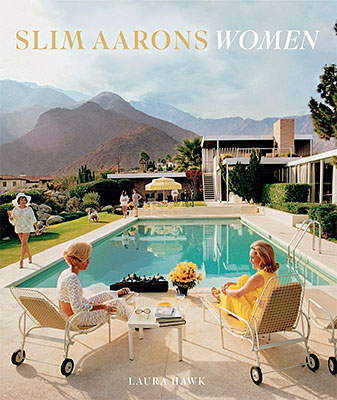
Aarons never used a stylist, or a makeup artist. He made his career out of what he called "photographing attractive people doing attractive things in attractive places." An oft-cited example of this approach is his 1970 Poolside Gossip shot at the Kaufmann Desert House designed by Richard Neutra, with owner Nelda Linsk as one of the models in the photo. "I knew everyone," he said in an interview with The (London) Independent in 2002. "They would invite me to one of their parties because they knew I wouldn't hurt them. I was one of them." Alfred Hitchcock's film, Rear Window (1954), whose main character is a photographer played by Jimmy Stewart, is set in an apartment reputed to be based on Aarons' apartment.

When you photograph a lot of women, you get to know things.

-- Slim Aarons


In 1997, Mark Getty, the co-founder of Getty Images, visited Aarons in his home and bought Aarons' entire archive.

In 2017, filmmaker Fritz Mitchell released a documentary about Aarons, called Slim Aarons: The High Life. In the documentary, it is revealed that Aarons was Jewish and grew up in conditions that were in complete contrast to what he told friends and family of his childhood. Aarons claimed that he was raised in New Hampshire, was an orphan, and had no living relations. After his death in 2006, his widow and daughter learned the truth that Aarons had grown up in a poor immigrant Yiddish-speaking family on the Lower East Side of Manhattan. As a boy his mother was diagnosed with mental health issues and admitted to a psychiatric hospital, which caused him to be passed around among relatives. He resented and had no relationship with his father and had a brother, Harry, who would later commit suicide. Several documentary interviewees postulate that if Aarons's true origins had been known, his career would have been unlikely to succeed within the restricted world of celebrity and WASP privilege his photography glamorized.

Source: Wikipedia


Slim Aarons was a celebrated American photographer who chronicled the leisurely lifestyle of the rich and famous in his captivating shots of beguiling figures in luxurious environments. The glamorous world of his photographs, in which effortlessly beautiful and wealthy people lounge poolside, became an iconic series that allowed Aarons access to shoot some of the most candid portraiture of the 20th century.

We love how Aarons worked without any need for stylists or elaborate lighting, instead preferring to photograph celebrities just as they were, creating alluring scenes that are a window into a different lifestyle. In presenting glimpses of the rich and famous engrossed in leisurely pursuits, the artist exposes elements of a life that would otherwise not be on view, allowing his audience to live the high life - vicariously.

Born and raised in New York, Aarons began taking pictures at the age of eighteen, after enlisting in the US Army, where he served as an official combat photographer during WWII. In a career that spanned six decades, Aarons’ camera lens moved from soldiers to stars and celebrities, and the self-proclaimed realisation that the only beaches worth photographing were "decorated with beautiful, seminude girls tanning in a tranquil sun."

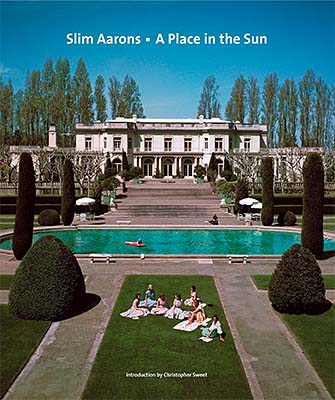
Over the course of his 50 year career, Aarons was a regular contributor to magazines such as Life, Town & Country, Vogue and Holiday and received an exclusive look into the lives of figures such as the Kennedys, Marilyn Monroe and Grace Kelly. In 1997, Mark Getty of Getty Images bought Aarons’ entire archive of photographs, and published a book of his work Poolside with Slim Aarons a decade later. Aarons’ intimately candid scenes have given him an era-defining legacy as one of the most influential photographers of his generation.

Source: Art Republic



Slim Aarons's Video

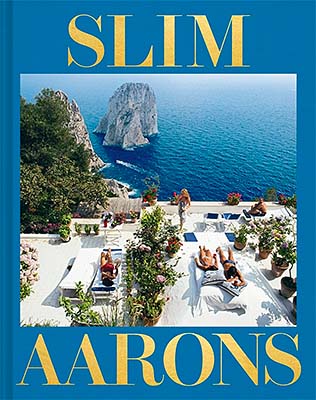
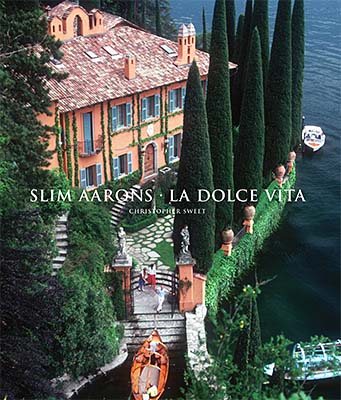
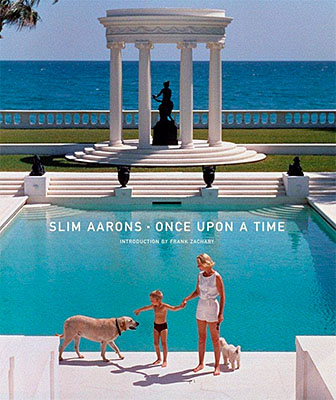
Selected Books

Inspiring Portfolios

Call for Entries
AAP Magazine #56 Shadows
Publish your work in our printed magazine and win $1,000 cash prizes
 
Stay up-to-date  with call for entries, deadlines and other news about exhibitions, galleries, publications, & special events.

More Great Photographers To Discover

Michael Joseph
United States
1977
Michael Joseph is a street portrait and documentary photographer. Raised just outside of New York City, his inspirations are drawn from interactions with strangers on city streets and aims to afford his audience the same experience through his photographs. His portraits are made on the street, unplanned and up close to allow the viewer to explore the immediate and unseen. Michael's project “Lost and Found” has been featured on CNN.com, AllAboutPhoto.com and published in magazines internationally. He has been exhibited nationally, notably at Daniel Cooney Fine Art (New York, NY), the Aperture Gallery (New York, NY), Project Basho Gallery (Philadelphia, PA) as well as the Rayko Gallery (San Francisco, CA). He has lectured for Amy Arbus at the International Center of Photography (New York, NY) in portraiture classes at the New England School of Photography (Boston, MA) and taught at the Light Factory (Charlotte, NC). His portraits are held in the permanent collection at the Fort Wayne Museum of Art in Indiana and private collections. He is a 2016 Photolucida Top 50 winner, LensCulture Portrait Award Finalist and a recipient of the fellowship in photography from the Massachusetts Cultural Council. Statement about the "Lost and Found" "We have secrets about traveling you wouldn't believe and we share with no one but ourselves."Huck Lost and Found is a portrait series that examines the individual souls of lost youth who abandon home to travel around the country by hitchhiking and freight train hopping. Within their personal journey driven by wanderlust, escapism or a search for transient jobs, they find a new family in their traveling friends. They are photographed on public streets using natural light, in the space in which they are found. Like graffiti on the walls of the city streets they inhabit and the trains they ride, their bodies and faces become the visual storybook of their lives. Their clothing is often a mismatch of found items. Jackets, pants and vests are self-made like a patchwork quilt, using fabric pieces of a fellow traveler's clothing embellished by metal bottle caps, buttons, safety pins, lighter parts, syringe caps, and patches. The high of freedom however, does not come without consequence. Their lifestyle is physically risky and rampant with substance abuse. Each traveler's story is different, but they are bound by a sense of community. Often unseen and mistaken by their appearances, they are some of the kindest people one might meet. Their souls are open and their gift is time. As one states, “They will give you their time because time is all they have.” And in some cases, in the family they have lost, they have found each other. Find out more about Michael Joseph in this article
Szymon Brodziak
What you see, is who you are - says Szymon Brodziak, the master of black and white photography. The youngest aritist exhibited at the Museum of Photography - Helmut Newton Foundation in Berlin (2015). The best black & white campaign photographer of the world, acclaimed by the jury of FashionTV Photographers Awards, during 2013 Cannes Film Festival. In 2019, Brodziak confrmed his mastery by winning 1st Place in World's Top 10 Black & White Photographers contest curated by OneEyeland. He loves to photograph women. He's inspired mainly by locations, where he brings to life his monochromatic visions. Brodziak received Johnnie Walker Keep Walking Award for constant fulflment of dreams and passion for setting new paths in the search of beauty. In Europe, Brodziak received numerous medals and honourable mentions in various editions of the renowed Prix de la Photographie Paris, both for commercial and personal projects, including the title of Advertising Photographer of the Year (2016). In the USA, he won frst place in Fashion category in two photo competitions: International Photography Awards (2016) and Black and White Spider Awards (2016), which rewards the best monochromatic images from all over the word. His frst photo album ONE had its ofcial premiere in Rome (2014). It presents the frst 10 years of his professional activity. The publication starts with a personal dedication from June Newton, wife to the legendary photographer Helmut Newton. Szymon's new photographic book entitled WHAT YOU SEE IS WHO YOU ARE won a Gold Medal (Book: Cover) and 2 Bronze Medals (Book: Fine Art & Other) at Prix de la Photographie Paris 2019 and also Honorable Mention at 2019 International Photography Awards (USA). The artist's work can be seen and ordered in his own galleries of photography located in Poland and are also available worldwide at Online Shop www.szymonbrodziak.com as well as www.saatchiart.com/brodziak.
Alicia Moneva
"The common thread in all my work is the footprint of the human, with humanized objects and spaces made by man, architectural painting and photography, trying to explain social and psychological concepts through the figure. Coming from the world of painting my type of photography is built. Based on a generic idea, will be taking individual photos that will form part of the final work. Each shot in digital format, will later join with the help of photoshop. This tool is almost exclusively used for the matrix composition. All these pictures are real, the waters of colors are stained for each session, lights, ropes, etc. are used maybe that way I put me more in the concept that I want to express. My work models are people I know, in my environment, there is a complicity and prior understanding, they bring to the session his way of expressing the idea, much enriched the work. Also, say the interest that raised me shadows, which is evidenced in my way of photographing. Penumbra, in my opinion, they dimension the vacuum of space, they materialize it, make it real. My work is the antithesis of the photography, which I would call operating room, without just shadows. Overhead view of my work, is strongly influenced by the years that I was in contact with the architects. At the end of my studies of biological sciences I worked continuously with them. My task there was the explanation of the urban projects through roof planes. With a pictorial abstraction were given a human scale. I was very lucky, I found interesting people that opened a world of possibilities, which taught me to see after looking at. At the same time, painting was transformed into something serious in my life, I started to exhibit and to devote myself more professionally to art. Photography was in principle a work tool, a tool more for my collection of data, it helped me to paint everything you had no way of doing so natural. Little by little I found comfortable with the photographic image and the human figure to express the ideas that were emerging. I went through a very unproductive at work time, since I opposed the painting to photography, when they were actually for me very complementary. At this time that seemed to lost went back to College, first studying psychology and later philosophy. None of the two races ended them, as it was not so important to have an academic degree, but if you continue learning, similar of being alive. My exhibitions were photography, although in principle and respect for the world of photography, I thought that I was an intruder, had the desire and the security to do so, also the need. Self-portrait I submit for publication to reflect a state of confusion we all, from time to time we have suffered, when a mesh does not let you see clearly the reality. As if it were a necessary self-deception on occasions." -- Alicia Moneva - Madrid, October 2013 Interview with Alicia Moneva AAP: When did you realize you wanted to be a photographer?It was progressive. I needed to work with the human figure and I felt more comfortable with photography. AAP: Where did you study photography?I didn't study painting or photography. My teachers were architects who knew the method and had perception. AAP: How long have you been a photographer?I have been taking photographs for 20 years but, professionally, just 10. AAP: Do you remember your first shot? What was it?They were objects that I wanted to paint in my Studio and I couldn't move them from the place they were. And also black and white portraits, many portraits. AAP: What or who inspires you?I am inspired by philosophy, anthropology, biology... and now also particle physics. Science and arts basically. AAP: Do you have a favorite photograph or series?My favorite series are the last I have been working on: The disease in our culture, which is about chronically ill people, the unknown heroes of our time. It is a tribute to them, their carers and families. AAP: What kind of gear do you use? Camera, lens, digital, film?When I started I used an old Pentax, with black and white rolls for portraits and color rolls for objects I painted later. Now I work with a Canon 5D Mark II and a Canon 7D. The lenses are also Canon. AAP: Do you spend a lot of time editing your images? For what purpose?My pictures are made of many individual photographs. I use photo editing programs to assemble and compose the final image. For me it is important to convey the idea I have in mind and I edit the photos until I think the concept is understood. AAP: Favorite(s) photographer(s)?I really like Spanish creativity. My favorite are perhaps Chema Madoz for his pulchritudinous images which I would summarize in "less is more". And Cristina García Rodero because she transmits me all the strength of human feelings. AAP: What advice would you give a young photographer?To be passionate about what he is doing, to follow his instincts. And, especially, to be honest with what he thinks, beacuse that will be his way of looking at what the others see. AAP: What mistake should a young photographer avoid?Wanting to be very original? Or thinking you already know everything? AAP: An idea, a sentence, a project you would like to share?I would mention a fragment of one of José Hierro's poems that summarizes well how sometimes a moment can be turned into something timeless. "...But there are things that do not die and others who never lived. And there are some that fill the universe, And it is not possible to get rid of its memory." (José Hierro / "Alegría" 1947). AAP: What are your projects?I have been working lately on a new project with another Spanish photographer, Judith Sansó. It is shared project with a performance which combines photography and video art. The first of these series is called "the distance between her and yesterday is a photo" and talks about memories and how they shape our personality. These are some of the links to the performance and the making of the video work: YouTube video (In Spanish) YouTube video YouTube video AAP: Your best memory as a photographer?None in particular. I like when I start a new project. AAP: Your worst souvenir as a photographer?I can't remember. A well-known neurologist (Á. Pascual Leone) once said that it's more important to forget than to remember, especially bad memories AAP:If you were someone else who would it be?I would have liked to be a good silent film director like Fritz Lang, Renoir or Murnau.
Sean Perry
United States
1968
Sean Perry is an Austin-based photographer creating atmospheric portraits of the built environment across Texas, New York, and Japan. His photographs and books are held in the permanent collections of the Museum of Fine Arts, Houston; Amon Carter Museum of American Art; Harry Ransom Center; The Wittliff Collections; Yale University; Seattle Art Museum; and the Menil Collection. In 2009 he was selected as a finalist for the Hasselblad Masters Award. Perry attended Berklee College of Music and was a working musician before establishing his photographic practice in 1996. Cloverleaf Press published his first limited edition book, Transitory, in 2006, followed by Fairgrounds in 2008. Both were featured as a case study in Publish Your Photography Book (Princeton Architectural Press, 2011 & 2014). In 2025, he released Fairgrounds: Box Set, a lettered edition of 26. His photographs have been published in The New York Times Magazine, Billboard, New York, Graphis, L'Œil de la Photographie, and American Photography. He has served as Department Chair of Photography & Visual Media at Austin Community College since 2018, and previously taught at the School of Visual Arts in New York City. In 2023, he co-founded Photobook Austin with Bryan Schutmaat. Interview with Sean Perry (2014) All About Photo: When did you realize you wanted to be a photographer? Sean Perry: When I was younger I didn't know or have access to any professional photographers, but I really loved movies and looked at a lot of books. At that time I got into music and everything else was just secondary. As a musician I always thought about pictures and the visual atmosphere great songs provoke and in my thirties I started photographing and haven’t stopped. Where did you study photography? With whom? I don’t have a formal background studying photography but it’s not quite right to say I'm self taught either. One of my old bandmates, Jeff Miller is a brother to me, a great photographer and my first teacher - I learned about cameras, making good pictures and printing in the darkroom. That experience was also my first big introduction to contemporary artists like Joel-Peter Witkin and The Starns. I later had important mentors in a photographer I assisted for, Frank Curry and a sculptor who has had a tremendous influence on me as an artist and photographer, John Christensen. Do you have a mentor? I have a few friends and colleagues who I admire and trust that I ask for insight and guidance with various things... Elizabeth Avedon, Jace Graf, Stephen Clark - there are others. I ask different people, different questions for different reasons if that makes sense. I think it's important to deeply consider who you ask and why. I've been a client of Mary Virginia Swanson for many years and her savvy is always invaluable, I truly owe her a great deal. I'm always learning and seeking out the chance to improve and grow. How long have you been a photographer? I have been making pictures consistently since 1996 and started working professionally in 1998. Do you remember your first shot? What was it? What I remember most are the pictures that when I saw the film, they made me feel that the image was somehow better, or more than my capability at the time. It would lead to months of chasing and trying to catch up to the image. The first time that happened was of a barren tree in the wintertime, backlit. I remember making the other pictures from that time, but the experience of seeing something unexpected back on the contact sheets always sticks with me as meaningful. What or who inspires you? Music always. Also the discovery and study of people that give themselves to their pursuits with the discipline and heart to be excellent. New York City. Late fall leading to snow and cold weather makes me happy. How could you describe your style? A little romantic but not sentimental - sci-fi but not overtly conceptual. I always work to make beautiful images and objects that don’t apologize for their consideration of aesthetic and design. My experience has taught me there is a strange, small line between beautiful and pretty, arbitrary and yet often substantial. I think my favorite word or aim for my work is earnest, and hopefully elegant. I try to be consistent and to quote someone I deeply respect, Paul Rand – "Don’t try to be original, just try to be good." What kind of gear do you use? Camera, lens, digital, film? I’m fluent in digital tools and use them to manage images online etcetera, but I have used the same camera gear for over twelve years. Hasselblad 501CM with a 120mm lens and 25A Red filter. Tri-X film in A12 backs. Processed in D76, 1 to 1. Silver gelatin prints bleached and then toned in combinations of sepia and selenium or platinum–palladium prints from enlarged negatives. Do you spend a lot of time editing your images? I tend to run film and then not look at it for a while.... I then go through the contact sheets and make work prints of the things that seem to have promise. As the series and work evolves the process of editing, sequencing and design kicks in. After the edges of a project are more or less in place, I’ll go back again and see what I may have missed on the contact sheets. Favorite(s) photographer(s)? If I am only allowed one, Irving Penn – hands down, no one else. I love books and too many favorites to list, but in no particular order others would be Saul Leiter, Ted Croner, Robert & Shana Parke-Harrison, Tom Baril, Louis Faurer, Edward Burtynsky, Albert Watson, Hiroshi Sugimoto, Berenice Abbott and Matt Mahurin. What advice would you give a young photographer? Fearlessly make all the bad pictures you need to in order to get to the good ones. Not thoughtlessly in the number of images, but without hesitation in the intent to chase your ideas. When you are disappointed, try to understand why specifically – was it a technical mistake your effort and experience will resolve over time or was it about vision in what you could or could not see at that moment. The technical things are usually easier to improve upon, I have found the other takes additional perseverance and courage. For myself there is always the confrontation of closing the distance between the potency I’m after and the many challenges at hand while guiding it there. I think the biggest secret is simply not to quit. What mistake should a young photographer avoid? Everyone is different, so very hard to say. I believe one truth for myself has been it’s more valuable to invest time in what your pictures, your life, your point of view are all about and less energy worrying about the urgency sometimes encouraged in technology and shorter term concerns. Play long ball. An idea, a sentence, a project you would like to share? I am currently administrating an ambitious project that connects college students with high school students, creating mentorship and the development of visual language. For the college students it is to illustrate the value of mentorship from both sides, as well as create meaningful dialogue about photography and image making. It provides a mechanism for high school students to share and express their photographic work with a new audience and has direct, tangible advantages for everyone involved – accenting the importance of communication and emphasizing the photography community's tradition of portfolio review. Your best memory has a photographer? All of my favorite memories are darkroom related. My first darkroom was in John Christensen's studio, I deeply miss those days and that place. I would often print all day and all night - it's where I learned about photo-chemistry and the subtleties of split-toning and other irresistible alchemy. Your worst souvenir as a photographer? My checking account. If you could have taken the photographs of someone else who would it be? It's an interesting question but it reminds me of a rock & roll story, urban legend I remember as a kid and recently retold in Esquire Magazine. When Van Halen was touring in the late 70’s they were opening for Ted Nugent who admired Eddie Van Halen's guitar tone. Among other things, Eddie would hide one of his effect pedals (a tape echo) in an old bomb casing, adding to the mystery of his great tone and why he sounded the way he did. Everyone believed he had a "magic" black box. During sound check, Ted Nugent got the chance to play through Eddie’s rig and was disappointed to discover his guitar tone was unchanged – he sounded like he always did and whatever he loved about Eddie's tone was in his hands and not in the gear. I think photographs are like that, there are many pictures I would be thrilled if I had produced but in the end I can only make what is in my hands and heart. The images I love that others have made don't represent my life and could never belong to me. I remain a fan and audience to my heroes, happily so.
Ayanava Sil
I am Ayanava Sil a resident of Kolkata, India. By education I hold a degree of Master Of Business Administration in Marketing. Photography to me is an exemption to see things differently. I am a Street and Documentary photographer, with an objective of documenting everyday life. The uncertainty and the suspense drives me the most towards these genres of Photography. Documenting people over the years has provided me with the invaluable opportunity to explore the unknown and to embrace the conglomerate realities of people. I am one of the administrators and curator of Streets Of Calcutta which is the oldest and the largest Street Photography archive of Kolkata. My works has been published and recognized by different platforms like National Geographic, National Geographic Traveller India, CNN America, Getty Images, Business Standard, World-Street-Photography Book 5, APF Street Photography Magazine, Better Photography India, Asian Photography, Chiiz Magazine etc. I have been awarded by The Andrei Stenin International Press Photo Awards, News Times, Eye Win Awards, Golden Orchid International Photography Awards etc. My works has also been exhibited in multiple photography exhibition, to name a few, Jaipur Art Summit 2016, Ariano International Film Festival 2017, Kolkata International Photography Festival 2019, Wlasnymi Slowami Film Festival 2019. Where I Bloom As the world combats with an invisible enemy, many of our lives have come to a standstill now. A month ago our lives were pretty foreseeable with simple daily conventional work that all of us were looking forward to. The coronavirus pandemic has changed the whole scenario, today countries are under locked down, schools and universities have been closed, events are cancelled and many people have been asked to work from home. We have seen the Government enforcing every preventive measure to slow the spread of the virus and flatten the curve. During this critical time, it is essential that everyone stays at home and helps to prevent the spread of this virus. In these tough times, photography is one of the major businesses that has been affected a lot by this pandemic. All studios have been shut down, weddings have been postponed, all the sports events have been cancelled and presently more than half of the world is locked down and there is no possibility of travelling. I am a photographer who loves to roam around the city unwearyingly to document life on the streets but due to the pandemic it is impossible to go out of my house to shoot now. So to keep myself in practice and to keep my sanity I chose to document my house but with a definite objective as this work of mine will have a different approach from the rest of my works. Also, I challenged myself to shoot everything through my phone only. So I started shooting every corner of my house from the ground floor to the terrace, through the windows and the doors, the plants in my house to the birds which flies above my terrace. I decide not to include any human subject and the only reason behind this decision is because we often feel like we are the most important species, but the fact is that we will fade away with time but we will leave behind a lot of things when we are gone. I tried to portray those moments keeping the photographs minimalist and graphical in form and ambiguous in nature. During all this time I had an interesting observation and I discovered that sunlight creates fascinating graphical shadow movements in different parts of my house during each phase of the day. I think that the only positive outlook amidst the COVID-19 pandemic outbreak is that nature has started healing. I do not remember when I last saw such timely Norwesters in the past few years. The Norwesters generally hit during the months of April and May. It mostly occurs late in the evening when thick, dark and black clouds start appearing in the sky. It generally moves from west to east bringing torrential rain often with strong wind and lasts only for a short period of time. The Norwesters are beneficial for cultivation purposes in West Bengal and Bangladesh. This year, the Norwesters bought different and beautiful cloud patterns and I tried to weave them within my work as well.
Advertisement
AAP Magazine #56 Shadows
Win a Solo Exhibition in May
AAP Magazine #56 Shadows

Latest Interviews

Exclusive Interview with Matthew Finley
American photographer Matthew Finley turns inward, using photography as a way to explore identity, memory, and emotional truth. Based in Los Angeles, his practice moves between performance, gesture, and found imagery, creating a visual language that is both intimate and deeply personal
Exclusive Interview with Jan Janssen
Dutch photographer Jan Janssen explores universal human experiences through his long-term project It Matters, winner of the May 2025 Solo Exhibition. Begun in 2016, the series captures intimate moments of everyday life—love, loss, connection, and belonging—across Central and Eastern Europe. Working in countries such as Turkey, Azerbaijan, and Armenia, Janssen spends extended time within communities, building relationships based on trust and respect. His approach allows him to move beyond observation, revealing deeply human and authentic moments. Rooted in travel and personal discovery, It Matters reflects Janssen’s search for what connects us all in an increasingly divided world. The project is ongoing and will culminate in a photobook scheduled for publication in 2026.
Exclusive Interview with Henk Kosche
German photographer Henk Kosche turns his lens toward the streets of Halle an der Saale, capturing everyday life in the late years of the former German Democratic Republic. At the time, Kosche was studying design and exploring the city with his camera, drawn to the atmosphere of its industrial landscape and the quiet rhythms of daily life. His series Street Photography at the End of the 80s, selected as the Solo Exhibition for July 2025, revisits a body of work created just before a period of profound change. Rediscovered decades later in a small box of 35mm negatives, these photographs offer glimpses of a city and its people at a moment suspended between the familiar and the unknown.
Exclusive Interview with Anastasia Samoylova
Anastasia Samoylova is an American artist whose photographic practice is shaped by close observation and a deep attentiveness to place. Working between documentary and formal exploration, she photographs landscapes, architecture, and everyday scenes with a sensitivity to light, structure, and atmosphere. Since relocating to Miami in 2016, her work has increasingly focused on how environments—both natural and built—carry social, cultural, and emotional traces. We asked her a few questions about her practice and her way of seeing, to better understand the thoughts and experiences that shape her work—while allowing the images themselves to remain open and speak in their own time.
Exclusive Interview with Marijn Fidder
Marijn Fidder is a Dutch documentary photographer whose work powerfully engages with current affairs and contemporary social issues. Driven by a deep sense of social justice, she uses photography to speak on behalf of the voiceless and to advocate for the rights of those who are most vulnerable. Her images have been widely published in major international outlets including National Geographic, CNN Style, NRC Handelsblad, Volkskrant, GUP New Talent, and ZEIT Magazin. Her long-term commitment to disability rights—particularly through years of work in Uganda—culminated in her acclaimed project Inclusive Nation, which earned her the title of Photographer of the Year 2025 at the All About Photo Awards. She is also the recipient of multiple prestigious honors, including awards from World Press Photo and the Global Peace Photo Award. We asked her a few questions about her life and work.
Exclusive Interview with Josh S. Rose
Josh S. Rose is a multidisciplinary artist working across photography, film, and writing. His practice bridges visual and performing arts, with a strong focus on movement, emotion, and the expressive potential of the image. Known for his long-standing collaborations with leading dance companies and performers, Rose brings together authenticity and precise composition—a balance he describes as “technical romanticism.” His work has been commissioned and exhibited internationally, appearing in outlets such as Vogue, at the Super Bowl, in film festivals, and most recently as a large-scale installation for Lincoln Center for the Performing Arts. A sought-after collaborator, he has worked with major artists, cultural institutions, and brands, following a previous career as Chief Creative Officer at Interpublic Group and the founder of Humans Are Social. We asked him a few questions about his life and work.
Interview with Maureen Ruddy Burkhart
Photographer Maureen Ruddy Burkhart brings a quietly attentive and deeply human sensibility to her exploration of the world through images. Shaped by a life immersed in photography, film, and visual storytelling, her work is guided by intuition, observation, and an enduring interest in the emotional undercurrents of everyday life. With a practice rooted in both fine art traditions and documentary awareness, she approaches her subjects with sensitivity, allowing subtle moments to emerge naturally rather than be imposed. Her series Til Death, selected as the Solo Exhibition for February 2025, reflects this long-standing commitment to photography as a space for reflection rather than spectacle. Drawn to moments that exist just outside the expected frame, Burkhart’s images suggest narratives without resolving them, leaving room for ambiguity, humor, and quiet connection. We asked her a few questions about her life and work.
Exclusive Interview with Peter Ydeen
Winner of AAP Magazine #45 Travels, his series reflects this unique vision—capturing the spirit of place through subtle layers of light, color, and emotion. Whether traveling abroad or observing the rhythms of his own surroundings, Ydeen creates images that feel both grounded and enchanted, inviting viewers into a world where reality and reverie meet.
Exclusive Interview with Julie Wang
Chinese-born photographer Julie Wang brings a poetic, contemplative sensitivity to her visual exploration of the world. Having lived for nearly equal parts of her life in China, Europe, and the United States, she approaches her subjects with the nuanced perspective of someone shaped by many cultures. This blend of distance, curiosity, and emotional resonance infuses her work with a quiet depth, allowing her to reveal the fragile beauty and subtle tensions that often pass unnoticed.
Call for Entries
AAP Magazine #56 Shadows
Publish your work in our printed magazine and win $1,000 cash prizes