All about photo.com: photo contests, photography exhibitions, galleries, photographers, books, schools and venues.
FINAL CALL TO ENTER AAP MAGAZINE SHADOWS: PUBLICATION AND $1,000 CASH PRIZES
Homai Vyarawalla
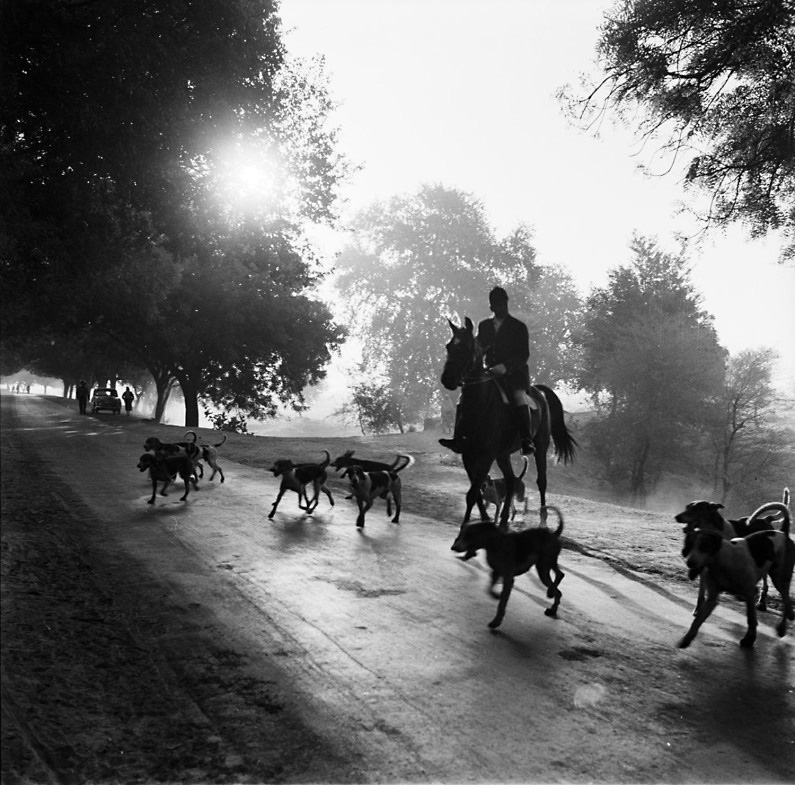
A fox hunt in Delhi led by Col. Sahni, early 1940s
Homai Vyarawalla
Homai Vyarawalla

Homai Vyarawalla

Country: India
Birth: 1913 | Death: 2012

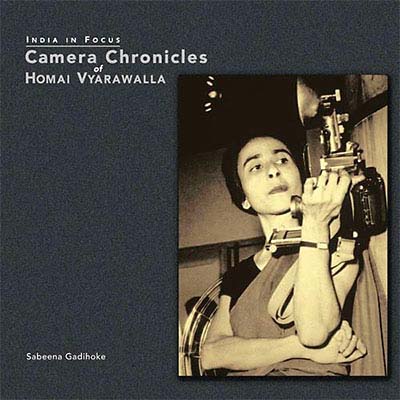
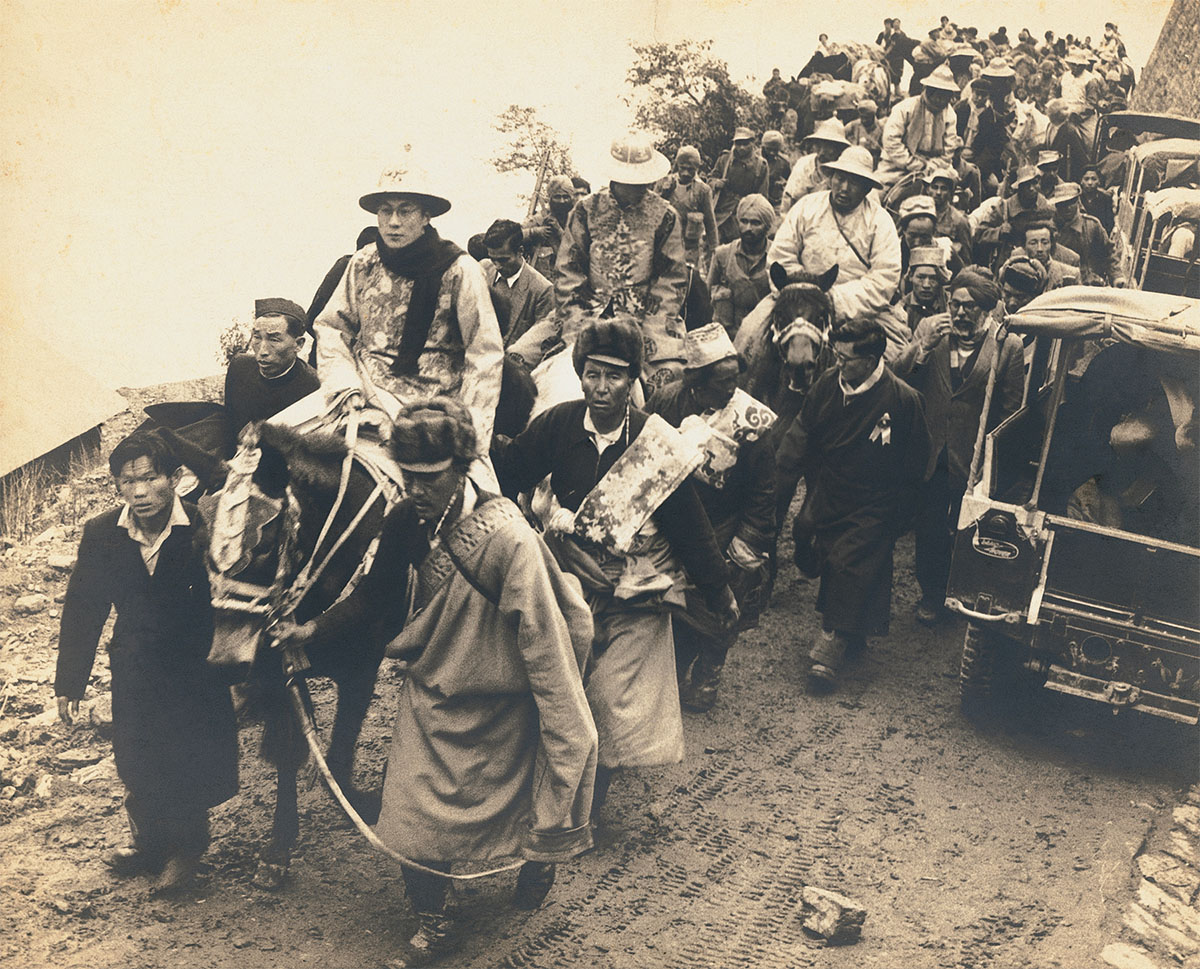
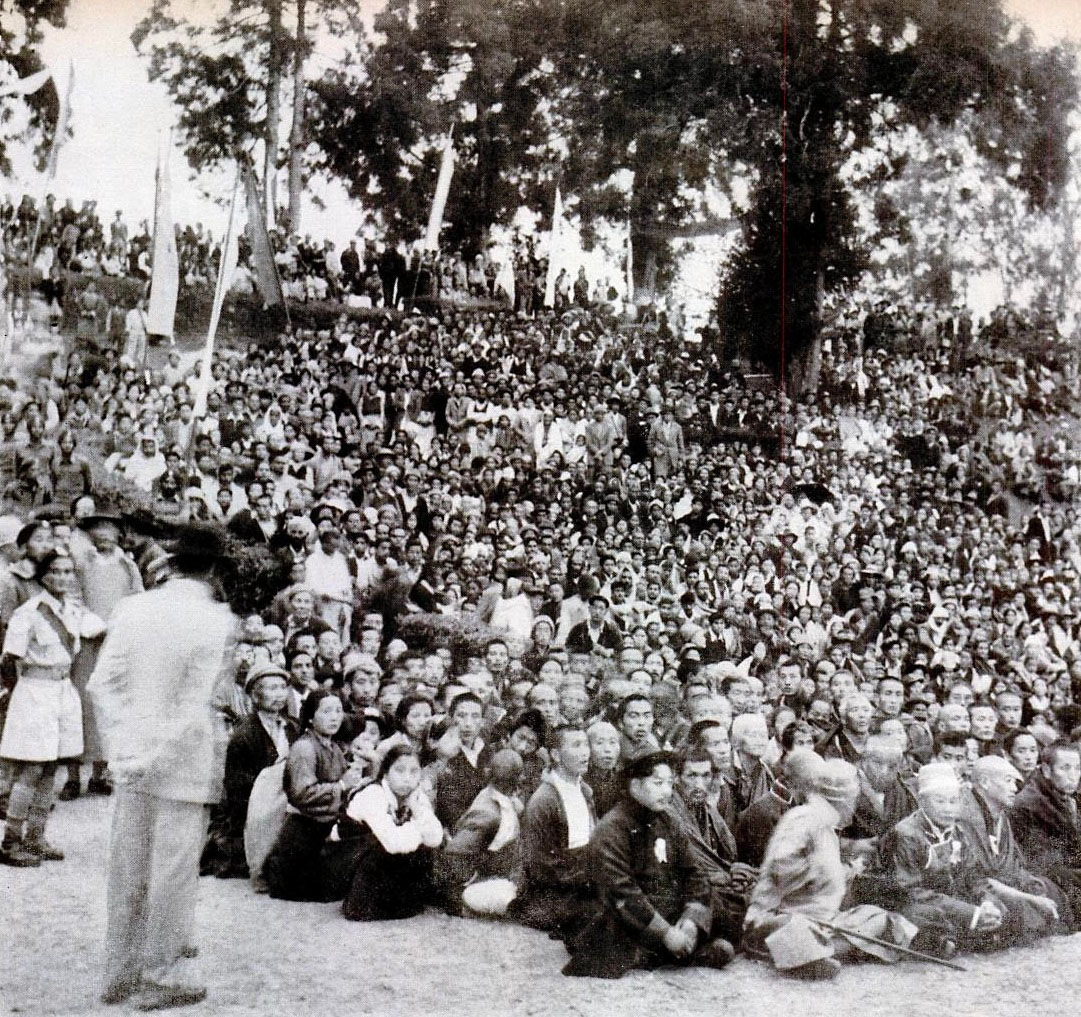
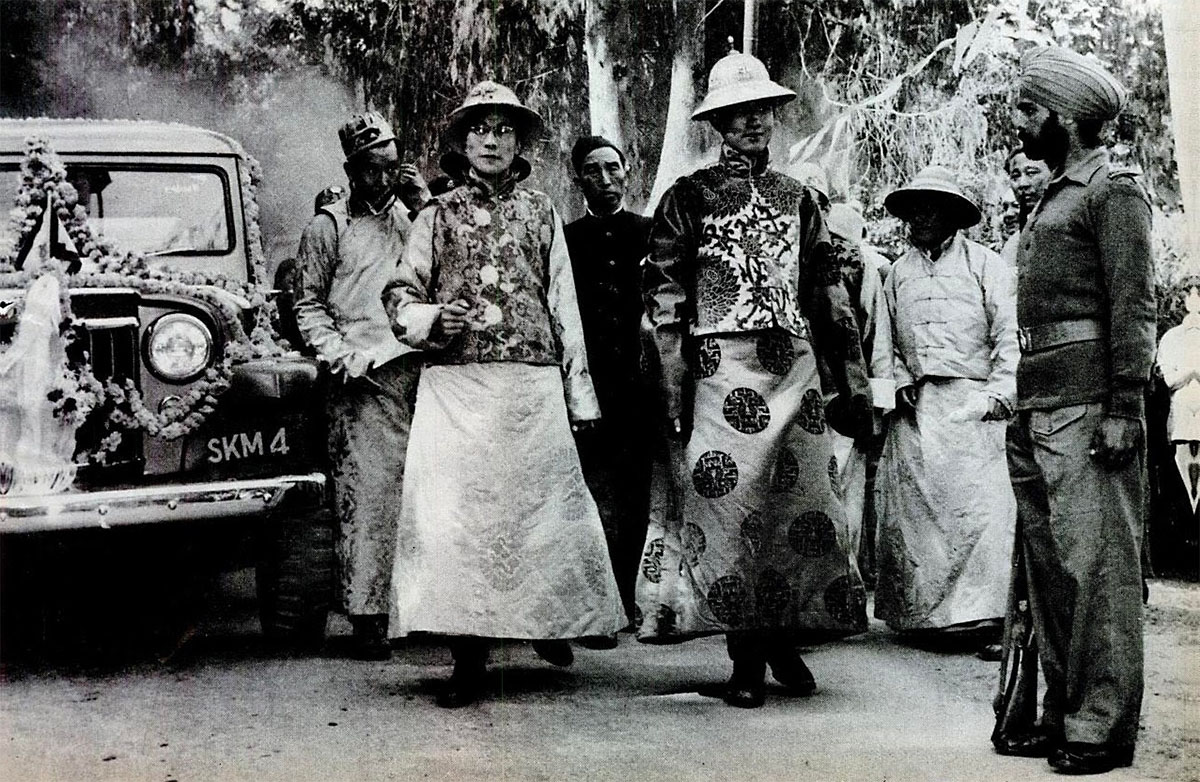
Homai Vyarawalla, India's first woman photojournalist, is best known for documenting the country's transition from a British colony to a newly independent nation. Vyarawalla was born on 9 December 1913 in the western Indian state of Gujarat. Her family belonged to India's tiny but influential Parsi community.

She spent much of her childhood on the move because her father was an actor in a travelling theatre group. But the family soon moved to Mumbai (then Bombay), where she attended the JJ School of Art. She was in college when she met Manekshaw Vyarawalla, a freelance photographer, who she would later marry. It was he who introduced her to photography.

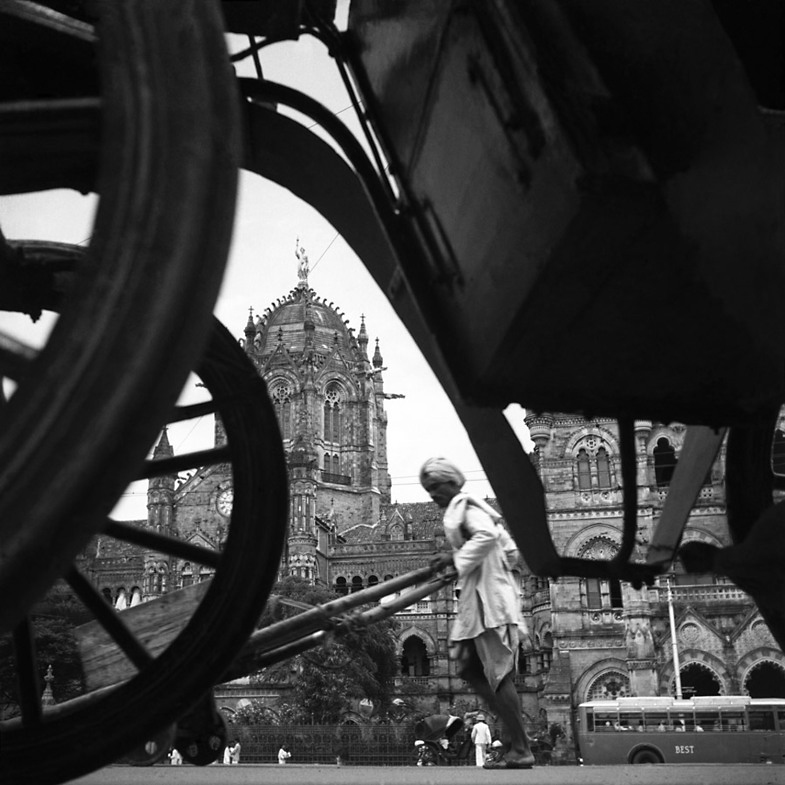
She received her first assignment - to photograph a picnic - while she was still in college. It was published by a local newspaper, and soon she started to pick up more freelance assignments. Vyarawalla began to draw more attention after her photographs of life in Mumbai were published in The Illustrated Weekly of India magazine.

The Vyarawallas moved to Delhi in 1942 after they were hired to work as photographers for the British Information Service. Homai Vyarawalla, one of few female photojournalists working at the time in Delhi, was often seen cycling through the capital with her camera strapped to her back.

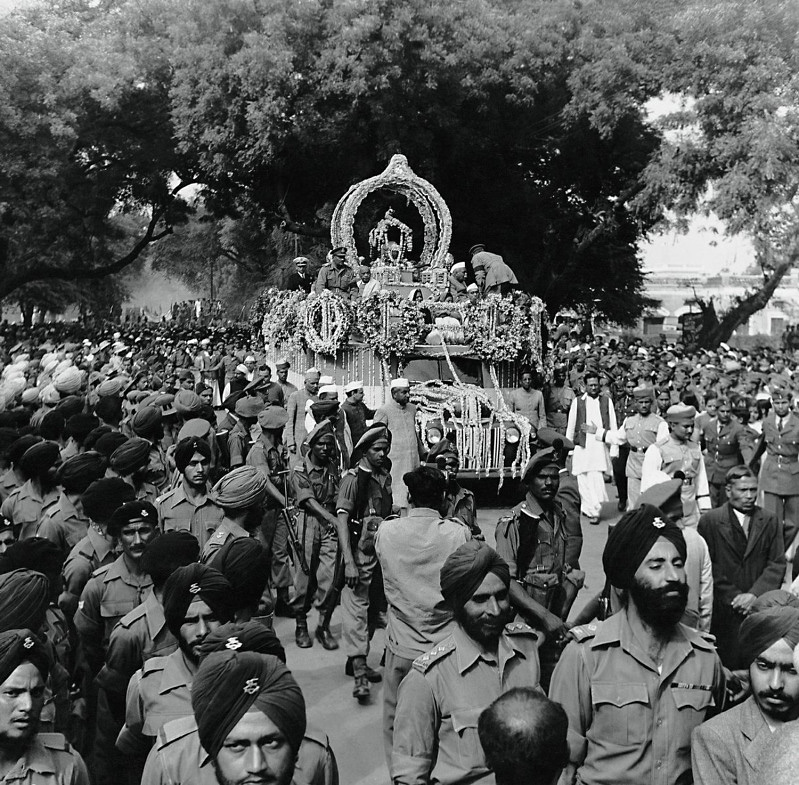
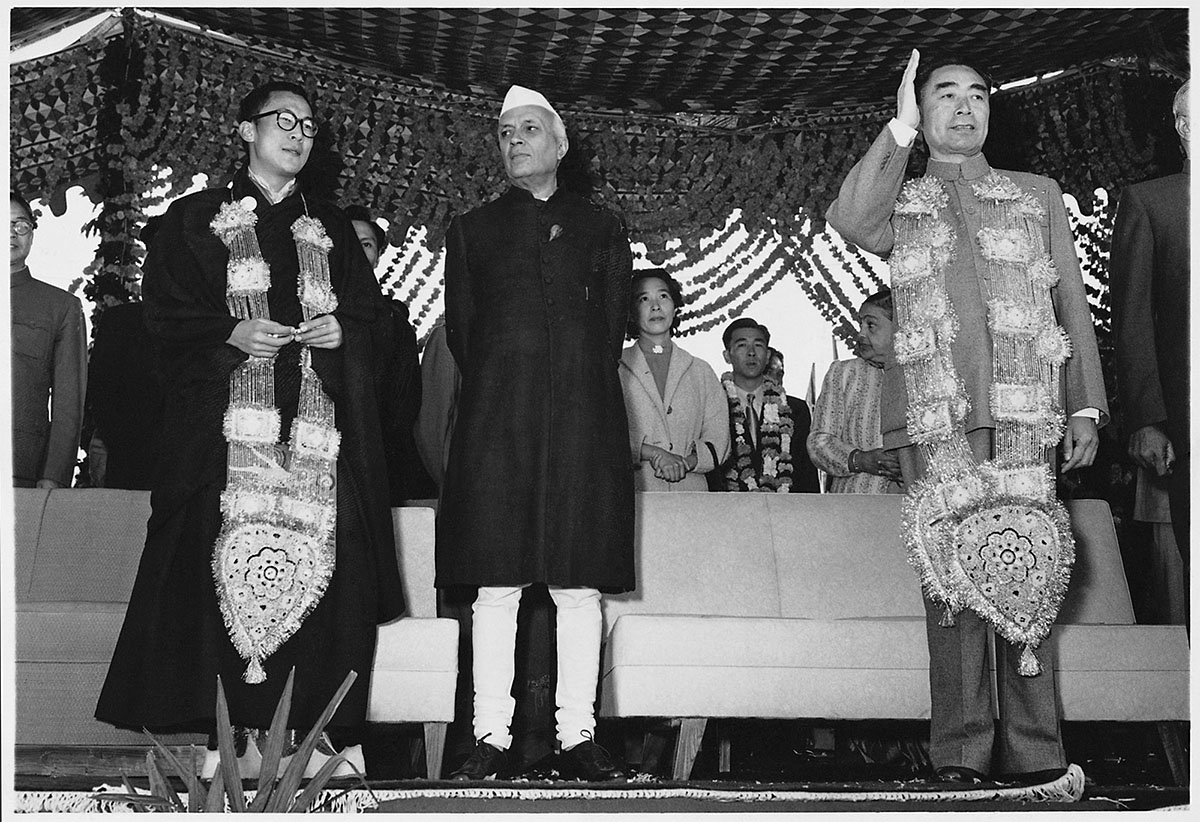
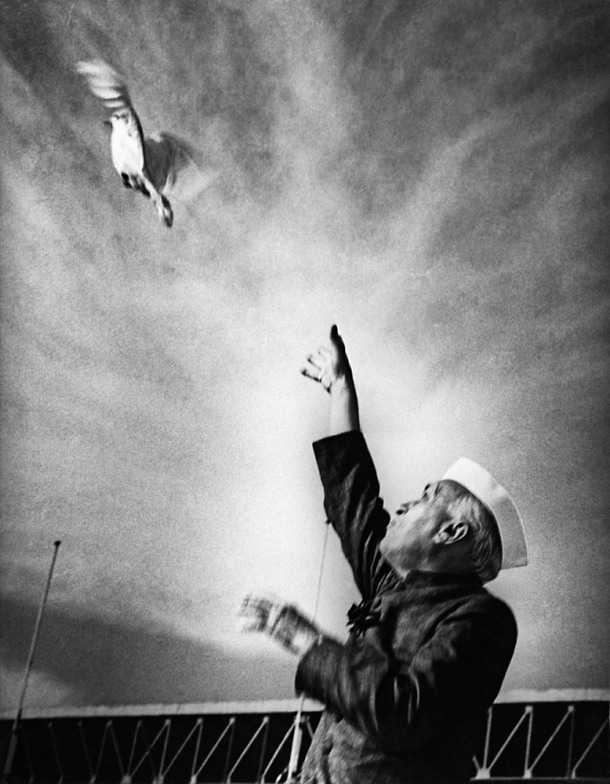
She took her most iconic images, however, after India became independent - from the departure of the British from India, to the funerals of Mahatma Gandhi and former prime minister Jawaharlal Nehru. Homai Vyarawalla also photographed most prominent independence leaders. But she said in an interview that her biggest regret was that she missed photographing the meeting where Mahatma Gandhi was assassinated. She was on her way to attend it when her husband called her back for some other work.

Her work also includes candid, close-up photographs of celebrities and dignitaries who visited India in the years following independence, including China's first prime minister Zhou Enlai, Vietnamese leader Ho Chi Minh, Queen Elizabeth II and US President John F Kennedy. Vyarawalla photographed many famous people but Mr Nehru figures most prominently in her work as her "favourite subject". She said in an interview that when Mr Nehru died she "cried, hiding my face from other photographers".

Ms Vyarawalla clicked her last picture in 1970, retiring after a four-decade-long career. She left Delhi after her husband died in 1969 and moved to Gujarat. She was awarded India's second highest civilian honour, the Padma Vibhushan, in 2011. She died on 16 January 2012 at the age of 92.

Source: BBC



Homai Vyarawalla's Video

Selected Books

Inspiring Portfolios

Call for Entries
AAP Magazine #56 Shadows
Publish your work in our printed magazine and win $1,000 cash prizes
 
Stay up-to-date  with call for entries, deadlines and other news about exhibitions, galleries, publications, & special events.

More Great Photographers To Discover

Alex Majoli
Italy
1971
Alex Majoli (b. 1971, Italy) is a photographer whose work has focused on the human condition and the theater within our daily lives. He has received many awards including the Guggenheim Fellowship in 2015, the W. Eugene Smith Grant(2017), the Getty Images Grant For Editorial Photography 2009, and the Infinity Award for Photojournalism in 2003. He has been a member of Magnum Photos since 2001 and is represented by Howard Greenberg Gallery NY.Source: LensCulture At the age of 15, Alex Majoli joined the F45 Studio in Ravenna, working alongside Daniele Casadio. While studying at the Art Institute in Ravenna, he joined Grazia Neri Agency and traveled to Yugoslavia to document the conflict. He returned many times over the next few years, covering all major events in Kosovo and Albania. Majoli graduated from art school in 1991. Three years later, he made an intimate portrayal of the closing of an asylum for the insane on the island of Leros, Greece, a project that became the subject of his first book, Leros. In 1995 Majoli went to South America for several months, photographing a variety of subjects for his ongoing personal project, Requiem in Samba. He started the project Hotel Marinum in 1998, on life in harbor cities around the world, the final goal of which was to perform a theatrical multimedia show. That same year he began making a series of short films and documentaries. After becoming a full member of Magnum Photos in 2001, Majoli covered the fall of the Taliban regime in Afghanistan, and two years later the invasion of Iraq. He continues to document various conflicts worldwide for Newsweek, The New York Times Magazine, Granta and National Geographic. Majoli, in collaboration with Thomas Dworzak, Paolo Pellegrin and Ilkka Uimonen, had an extremely successful exhibition and installation Off Broadway in New York in 2004, which traveled to France and Germany. He then became involved in a project for the French Ministry of Culture entitled BPS, or Bio-Position System, about the social transformation of the city of Marseilles. A recently completed project, Libera me, is a reflection on the human condition. In 2013 Majoli, in collaboration with Pellegrin, completed a massive photographic project in the Congo, which resulted in a his largest book project to date being published with Aperture, in 2015.Source: Magnum Photos At the age of fifteen, Alex Majoli joined the F45 photo agency in Ravenna, Italy, and he graduated from the city’s art Institute in 1991. While in art school, Majoli became a member of Grazia Neri Agency and traveled to Yugoslavia to document the ongoing political conflict. In 1995, Majoli published his first book documenting the patients in a mental hospital that was formerly used as a military hospital in Leros, Greece. That same year he traveled to Brazil where he started the project Tudo Bom. In this, he visualizes the darker side of a complex society where daily life is often shaped by hardship and violence. Majoli has been working on this project for twenty years. The series Hotel Marinum that Majoli started in 1998 documents life in harbor cities around the world and was inspired by his life growing up in the port of Ravenna. Majoli has been a member of Magnum Photos since 2001 and has worked on assignments for a variety of publications, including The New York TIME Magazine, Newsweek, The New Yorker, and National Geographic. Majoli has been inspired by the theories of the Sicilian playwright Luigi Pirandello, who believed there is a thin line between theater and real-life and that people take on a role in their daily lives. Over the years, the photographer has examined this philosophy more fully. Majoli does not aspire to document reality. Rather, in his more personal projects, he explores this idea of people as actors in their own lives. In his most recent work, he uses powerful strobe lights to make his subjects aware of the roles they play in the scene that he records. The result is cinematic; the dark surroundings of a scene highlight powerful human emotions.Source: International Center of Photography
Mahdiyeh Afshar Bakeshloo
Mahdiyeh Afshar Bakeshloo (born 1995 in Tehran) is a professional photographer in the category of fine art and concept from Iran. Afshar has been studying photography professionally for 2 years in an academy since 2014 and is currently working in Tehran. Mostly she deal with human issues by referring to inner feelings that combined them with the inanimate environment. The starting point of her works have always been his surroundings and personal feelings. Sensitively, she tries to explore her relationship with the world around her today. Afshar held her first group exhibition at Mojdeh Gallery. Her most famous collection is "The light in the city", which takes a look at contemporary Tehran. Reason for popularity of this collection was due to a special technique that was done by manipulating the photo. So far, it has received various awards from world festivals such as IPA, Monochrome photography awards, Fine Art Photography Awards, ND Photography Awards, and Spider Photography Awards. Afshar says about her photos: “Each of my projects describes human emotions such as sadness, loneliness, confusion. I try to make viewers find their hidden feeling in my photos. Every time I take a photo, my personal feelings affect my work and shape my inner thoughts. I want to have something in common with my audience to talk to them. " Most of Afshar's works are presented in single black and white photos. Her photos has been published in various Magazine such as Float Photo Magazine, Humble Arts Foundation, F-stopmagazine, More Art please. She has participated in many exhibitions in Iran, Greece and Rome.
Paul Outerbridge
United States
1896 | † 1958
Paul Outerbridge, Jr. was an American photographer prominent for his early use and experiments in color photography. Outerbridge was a fashion and commercial photographer, an early pioneer and teacher of color photography, and an artist who created erotic nudes photographs that could not be exhibited in his lifetime. Paul Outerbridge, while still in his teens, worked as an illustrator and theatrical designer creating stage settings and lighting schemes. After an accident caused his discharge from the Royal Canadian Naval Air Service, in 1917, he enlisted in the U.S. Army where he produced his first photographic work. In 1921, Outerbridge enrolled in the Clarence H. White school of photography at Columbia University. Within a year his work began being published in Vanity Fair and Vogue magazine. In London, in 1925, the Royal Photographic Society invited Outerbridge to exhibit in a one-man show. Outerbridge then traveled to Paris and became friends with the artists and photographers Man Ray, Marcel Duchamp, and Berenice Abbott. In Paris he produced a layout for the French Vogue magazine, met and worked with Edward Steichen, and built the largest, most completely equipped advertising photography studio of the times. In 1929, 12 of Outerbridge's photographs were included in the prestigious, German Film und Foto exhibition. Returning to New York in 1929, Outerbridge opened a studio producing commercial and artistic work, and began writing a monthly column on color photography for the U.S. Camera Magazine. Outerbridge became known for the high quality of his color illustrations, which were done in those years by means of an extremely complex tri-color carbro process. In 1937, Outerbridge's photographs were included in an exhibit at the Museum of Modern Art and, in 1940, Outerbridge published his seminal book, Photographing in Color, using high quality illustrations to explain his techniques. Outerbridge's vivid color nude studies included early fetish photos and were too indecent under contemporary standards to find general public acceptance. A scandal over his erotic photography led to Outerbridge retiring as a commercial photographer and moving to Hollywood in 1943. Despite the controversy, Outerbridge continued to contribute photo stories to magazines and write his monthly column. In 1945, he married fashion designer Lois Weir and worked in their joint fashion company, Lois-Paul Originals. He died of lung cancer in 1958. One year after his death, the Smithsonian Institution staged a one-man show of Outerbridge's photographs. Although his reputation has faded, revivals of Outerbridge's photography in the 1970s and 1990s has periodically brought him into the public's awareness. Source: Wikipedia
Lúa Ribeira
Spain
1986
Lúa Ribeira (born 1986) is a Galician photographer, based in Bristol in the UK. She is a Nominee member of Magnum Photos and was a joint winner of the Jerwood/Photoworks Award in 2017. Her series Noises is about femininity and British dancehall culture. She studied documentary photography at the University of Wales, Newport, graduating in 2016. Ribeira's series Noises, about femininity and Jamaican dancehall culture in the UK, was published as Noises in the Blood in 2017.Source: Wikipedia Lúa Ribeira’s practice is characterized by its collaborative nature, extensive research and an immersive approach to her subject matter. She is interested in using the photographic medium as a means to create encounters that establish relationships and question structural separations between people. Ribeira was born in 1986, in Galicia, northern Spain. She graduated in Graphic Design at BAU School of Design, Barcelona in 2011, and earned a first-class honours in a BA in Documentary Photography from the University of South Wales in 2016. Since graduating, she has continued her academic engagement as a guest lecturer at various universities, including the University of Westminster, University of the West of England, and Complutense University of Madrid. Ribeira’s work has received several awards and honors, including the Firecracker Grant for Women in Photography, and the Jerwood/Photoworks award. Her work has been published in book form by Fishbar, London in 2017, features in the publication Firecrackers: Female Photographer Now published by Thames and Hudson in 2017, in and Raw View Magazine‘s, “Women looking at Women” in 2016. Her work has been exhibited internationally in both solo and group shows in venues including Impressions Gallery, Bradford, Ffotogallery Cardiff, Belfast Exposed gallery, Beijing International Photography Biennale, and many more. Other publications Ribeira’s work has been featured in include The British Journal of Photography, Paper Journal, Refinery 21, AnOther, and Tate magazine. Selected commercial clients include Chanel, Carla Lopez handbags, Birmingham Botanical Gardens, and Wire Magazine. She joined Magnum photos as a nominee in 2018.Source: Magnum Photos Since graduating from the documentary photography course at the University of South Wales last year, Lúa Ribeira has gone from strength to strength. In addition to the Firecracker Grant, which she was awarded in 2015 while still a student, her work was recently selected by Susan Meiselas to appear in Raw View magazine’s Women Looking at Women issue, which the Magnum photographer guest edited. She is also making a name for herself commercially, with commissions for the likes of handbag designer Carla Lopez and with editorial clients such as Wired. Her images have been shown at international festivals, including Photo España in 2014 and Gazebook Festival in 2015, and she has also been awarded a Jerwood Photoworks Grant for future projects in 2018. Thus far, Ribeira is perhaps best known for Noises in the Blood, an ongoing investigation into Jamaican dancehall culture, shown at London’s Fishbar Gallery earlier this year and published by its photobook wing. The series stems from the photographer’s love of the musical genre but also acknowledges her discomfort with its explicit, sexual lyrics. “That feeling bothered me,” says Ribeira. “I did not fully understand it.”Source: British Journal of Photography
Martin Schoeller
Germany
1968
Martin Schoeller is one of the world's preeminent contemporary portrait photographers. He is most known for his extreme-close up portraits, a series in which familiar faces are treated with the same scrutiny as the unfamous. The stylistic consistency of this work creates a democratic platform for comparison between his subjects, challenging a viewer's existing notions of celebrity, value and honesty. Growing up in Germany, Schoeller was deeply influenced by August Sander's countless portraits of the poor, the working class and the bourgeoisie, as well as Bernd and Hilla Becher, who spawned a school of photographic typology known as the Becher-Schüler. Schoeller's close-up portraits emphasize, in equal measure, facial features, of his subjects - world leaders and indigenous groups, movie stars and the homeless, athletes and artists - leveling them in an inherently democratic fashion. Schoeller studied photography at the Lette Verein and moved to New York in the mid-1990s where he began his career. Producing portraits of people he met on the street, his work soon gained recognition for its strong visual impact and since 1998 he has contributed to publications such as National Geographic, The New Yorker, Vanity Fair, TIME Magazine,The New York Times Magazine, Rolling Stone and GQ, among others. Martin's print and motion work has appeared in many major advertising campaigns ranging from pharmaceuticals, cars and entertainment. His work has won many awards, but most recently he received praise for his Colin Kaepernick image in Nike's “Just do it” campaign which won a prestigious D&AD black pencil and the outdoor Grand Prix at Cannes. Some other advertising clients include: KIA, Chevron, Allstate, HBO, Coca-Cola, AT&T, Mercedes, DreamWorks, Southwest Airlines, GE and Johnnie Walker. Schoeller's portraits are exhibited and collected internationally, appearing in solo exhibitions in Europe and the United States, as well as part of the permanent collection of the National Portrait Gallery, Smithsonian Institution, Washington, DC. Martin lives and works in New York City Must Read Articles 75 Portraits of Holocaust Survivors Photographed by Martin Schoeller Martin Schoeller exhibits with 'Holocaust Survivors' in Maastricht A native of Germany, Schoeller, who now lives and works in New York, honed his skills by working with Annie Leibovitz. “Watching her deal with all of the elements that have to come together—subjects, lighting, production, weather, styling, location—gave me an insight into what it takes to be a portrait photographer,” he explains. Equally important for Schoeller was the photography of German minimalists Bernd and Hilla Becher, who “inspired me to take a series of pictures, to build a platform that allows you to compare.” Schoeller’s portraiture brings viewers eye-to-eye with the well-known and the anonymous. His close-up style emphasizes, in equal measure, the facial features, both studied and unstudied, of his subjects—presidential candidates and Pirahã tribespeople, movie stars and artists—leveling them in an inherently democratic fashion. Schoeller’s photographs challenge us to identify the qualities that may, under varying circumstances, either distinguish individuals or link them together, raising a critical question: "What is the very nature of the categories we use to compare and contrast."Source: National Portrait Gallery Websites martinschoeller.com @martinschoeller @martinschoellerstudio.com Agency August Image Galleries Camera Work A Gallery Exhibition Death Row Exonerees
Bernd and Hilla Becher
In the realm of photography, Bernd and Hilla Becher are celebrated as pioneers whose work not only revolutionized the perception of industrial landscapes but also shaped the course of conceptual photography in the 20th century. Born in Germany, Bernd Becher (1931–2007) and Hilla Becher (1934–2015) met as students at the Kunstakademie Düsseldorf in the late 1950s, where they forged a partnership both personally and professionally that would endure for over five decades. Bernd initially studied painting before shifting his focus to photography under the tutelage of the eminent photographer Otto Steinert. It was during this period that he began to develop his signature style characterized by precise, objective, black-and-white images of industrial structures. Hilla, meanwhile, studied graphic and printing techniques, which would later prove instrumental in the meticulous printing process integral to their photographic work. The couple's collaboration blossomed as they embarked on a lifelong mission to document the vanishing industrial landscape of post-war Germany and beyond. Their photographs primarily featured industrial structures such as mine shafts, water towers, gas tanks, and blast furnaces, meticulously captured with a straightforward, documentary approach devoid of sentimentality or subjective interpretation. What set the Bechers apart was their systematic approach to photography. They meticulously cataloged these structures, arranging them in grids or typologies that emphasized the inherent beauty and functional aesthetics of these often-overlooked forms. Their work transcended mere documentation, offering viewers a profound meditation on the intersection of industry, architecture, and human labor. Throughout their career, the Bechers remained dedicated to their craft, tirelessly traveling across Europe and the United States to capture industrial sites before they disappeared due to modernization and economic shifts. Their influence extended beyond their own photographic output; they also imparted their knowledge and passion for photography as educators at the Kunstakademie Düsseldorf, where they mentored numerous students who would go on to make significant contributions to the field. Bernd and Hilla Becher's legacy endures not only through their extensive body of work but also through the impact they had on subsequent generations of photographers. Their commitment to preserving and elevating the industrial landscape through photography transformed the perception of these structures, elevating them to objects of aesthetic contemplation and cultural significance. Today, their photographs are cherished as timeless artifacts that capture the beauty and dignity of the industrial age, ensuring that their legacy will endure for generations to come.
Patricia McElroy
United States
Patricia McElroy was born in Philadelphia and raised in Ireland, a duality that continues to shape both her life and work. After graduating from the National College of Art & Design in Dublin, she returned to the U.S., where she and her husband built a successful design business. While her career has moved fluidly between art, design, and entrepreneurship, photography has remained her most personal and enduring form of expression—a way to explore themes of memory, place, identity, and belonging. Between Then & Now Six years ago, McElroy’s 94-year-old mother came from Ireland for what was meant to be a short visit. Her deteriorating eyesight and dementia made it clear she could no longer live on her own and a new chapter quietly began for them both. At first, McElroy picked up her camera as a way to hold onto the mother she knew, but what started as a gesture of preservation soon became something more—a quiet reflection on how memory drifts, resurfaces, and reshapes itself over time. In many ways, her mother exists in both places even now—her memories drifting between both lands, echoing the family’s own migration story. McElroy realized that migration doesn’t just alter geography—it reshapes how we remember and where we feel we belong. Distance doesn’t erase the past, but reframes it, softening some details and sharpening others. This led McElroy to examine her own immigrant experience, using her mother’s life and their shared generational story as a lens to explore the complexities of memory, migration, cultural identity, family, and home. In doing so, she recognized that her past and present photographic work had long been rooted in these themes. Her growing archive—both personal and inherited—became part of the exploration, revealing a continuity in her artistic voice that had always been quietly present. For McElroy, immigration has never been a single moment, but a rhythm—an ongoing dance between two places, two cultures, and two selves. Her family has long carried two homes in their hearts, navigating the layered contradictions of belonging. Ireland is where their roots run deep, where legacy is woven into the land; America is where reinvention lives, where possibility expands. Over time, the boundary between the two became less defined—not a point of conflict, but a quiet acceptance of a life shaped by both. McElroy captures the fragile space where cultural and emotional threads bind past to present. Her images speak to love, loss, resilience, and the ways migration and remembrance shape who we are and where we feel we belong. In telling her own family’s story, she’s also telling a more universal story—of beauty found, and life lived fully in the journey Between Then & Now.
Advertisement
AAP Magazine #56 Shadows
Win a Solo Exhibition in May
AAP Magazine #56 Shadows

Latest Interviews

Exclusive Interview with Matthew Finley
American photographer Matthew Finley turns inward, using photography as a way to explore identity, memory, and emotional truth. Based in Los Angeles, his practice moves between performance, gesture, and found imagery, creating a visual language that is both intimate and deeply personal
Exclusive Interview with Jan Janssen
Dutch photographer Jan Janssen explores universal human experiences through his long-term project It Matters, winner of the May 2025 Solo Exhibition. Begun in 2016, the series captures intimate moments of everyday life—love, loss, connection, and belonging—across Central and Eastern Europe. Working in countries such as Turkey, Azerbaijan, and Armenia, Janssen spends extended time within communities, building relationships based on trust and respect. His approach allows him to move beyond observation, revealing deeply human and authentic moments. Rooted in travel and personal discovery, It Matters reflects Janssen’s search for what connects us all in an increasingly divided world. The project is ongoing and will culminate in a photobook scheduled for publication in 2026.
Exclusive Interview with Henk Kosche
German photographer Henk Kosche turns his lens toward the streets of Halle an der Saale, capturing everyday life in the late years of the former German Democratic Republic. At the time, Kosche was studying design and exploring the city with his camera, drawn to the atmosphere of its industrial landscape and the quiet rhythms of daily life. His series Street Photography at the End of the 80s, selected as the Solo Exhibition for July 2025, revisits a body of work created just before a period of profound change. Rediscovered decades later in a small box of 35mm negatives, these photographs offer glimpses of a city and its people at a moment suspended between the familiar and the unknown.
Exclusive Interview with Anastasia Samoylova
Anastasia Samoylova is an American artist whose photographic practice is shaped by close observation and a deep attentiveness to place. Working between documentary and formal exploration, she photographs landscapes, architecture, and everyday scenes with a sensitivity to light, structure, and atmosphere. Since relocating to Miami in 2016, her work has increasingly focused on how environments—both natural and built—carry social, cultural, and emotional traces. We asked her a few questions about her practice and her way of seeing, to better understand the thoughts and experiences that shape her work—while allowing the images themselves to remain open and speak in their own time.
Exclusive Interview with Marijn Fidder
Marijn Fidder is a Dutch documentary photographer whose work powerfully engages with current affairs and contemporary social issues. Driven by a deep sense of social justice, she uses photography to speak on behalf of the voiceless and to advocate for the rights of those who are most vulnerable. Her images have been widely published in major international outlets including National Geographic, CNN Style, NRC Handelsblad, Volkskrant, GUP New Talent, and ZEIT Magazin. Her long-term commitment to disability rights—particularly through years of work in Uganda—culminated in her acclaimed project Inclusive Nation, which earned her the title of Photographer of the Year 2025 at the All About Photo Awards. She is also the recipient of multiple prestigious honors, including awards from World Press Photo and the Global Peace Photo Award. We asked her a few questions about her life and work.
Exclusive Interview with Josh S. Rose
Josh S. Rose is a multidisciplinary artist working across photography, film, and writing. His practice bridges visual and performing arts, with a strong focus on movement, emotion, and the expressive potential of the image. Known for his long-standing collaborations with leading dance companies and performers, Rose brings together authenticity and precise composition—a balance he describes as “technical romanticism.” His work has been commissioned and exhibited internationally, appearing in outlets such as Vogue, at the Super Bowl, in film festivals, and most recently as a large-scale installation for Lincoln Center for the Performing Arts. A sought-after collaborator, he has worked with major artists, cultural institutions, and brands, following a previous career as Chief Creative Officer at Interpublic Group and the founder of Humans Are Social. We asked him a few questions about his life and work.
Interview with Maureen Ruddy Burkhart
Photographer Maureen Ruddy Burkhart brings a quietly attentive and deeply human sensibility to her exploration of the world through images. Shaped by a life immersed in photography, film, and visual storytelling, her work is guided by intuition, observation, and an enduring interest in the emotional undercurrents of everyday life. With a practice rooted in both fine art traditions and documentary awareness, she approaches her subjects with sensitivity, allowing subtle moments to emerge naturally rather than be imposed. Her series Til Death, selected as the Solo Exhibition for February 2025, reflects this long-standing commitment to photography as a space for reflection rather than spectacle. Drawn to moments that exist just outside the expected frame, Burkhart’s images suggest narratives without resolving them, leaving room for ambiguity, humor, and quiet connection. We asked her a few questions about her life and work.
Exclusive Interview with Peter Ydeen
Winner of AAP Magazine #45 Travels, his series reflects this unique vision—capturing the spirit of place through subtle layers of light, color, and emotion. Whether traveling abroad or observing the rhythms of his own surroundings, Ydeen creates images that feel both grounded and enchanted, inviting viewers into a world where reality and reverie meet.
Exclusive Interview with Julie Wang
Chinese-born photographer Julie Wang brings a poetic, contemplative sensitivity to her visual exploration of the world. Having lived for nearly equal parts of her life in China, Europe, and the United States, she approaches her subjects with the nuanced perspective of someone shaped by many cultures. This blend of distance, curiosity, and emotional resonance infuses her work with a quiet depth, allowing her to reveal the fragile beauty and subtle tensions that often pass unnoticed.
Call for Entries
AAP Magazine #56 Shadows
Publish your work in our printed magazine and win $1,000 cash prizes