All about photo.com: photo contests, photography exhibitions, galleries, photographers, books, schools and venues.
FINAL DAYS TO WIN A SOLO EXHIBITION IN MAY 2026

Second Nature at Anchorage Museum

From October 03, 2025 to April 05, 2026
Share
Second Nature at Anchorage Museum
625 C Street
Anchorage, AL 99501
Second Nature: Photography in the Age of the Anthropocene is a sweeping exploration of how contemporary photographers interpret humanity’s profound and often irreversible impact on the planet. Bringing together the work of forty-three artists from across the globe, the exhibition reveals a generation of image-makers who have redefined the possibilities of photography in response to the environmental realities of our time. Their work captures not only the altered landscapes of Earth but also the evolving relationship between humans, technology, and nature itself.

Emerging alongside the rise of digital technologies in the early 2000s—and the growing recognition of the Anthropocene as a new geological epoch—these artists transformed the medium into a tool of reflection and critique. Through experimental techniques, digital manipulation, and conceptual rigor, they document the consequences of human industry, urbanization, and climate disruption, while also uncovering unexpected beauty and resilience within damaged ecosystems. In their images, glaciers glow with unnatural colors, forests fragment into pixels, and oceans shimmer under the weight of unseen change.

Second Nature examines this dual vision: the wonder of creation and the gravity of loss. The photographs on view question the boundaries between the natural and the artificial, asking how we might see the Earth anew when so much of it bears the trace of human touch. The exhibition thus becomes both a mirror and a warning—a meditation on how images shape our understanding of the world we are reshaping.

Organized by the Nasher Museum of Art at Duke University in partnership with the deCordova Sculpture Park and Museum, Second Nature is curated by Jessica May and Marshall N. Price. Together, they illuminate a crucial dialogue about art’s role in witnessing and responding to a planet in flux.

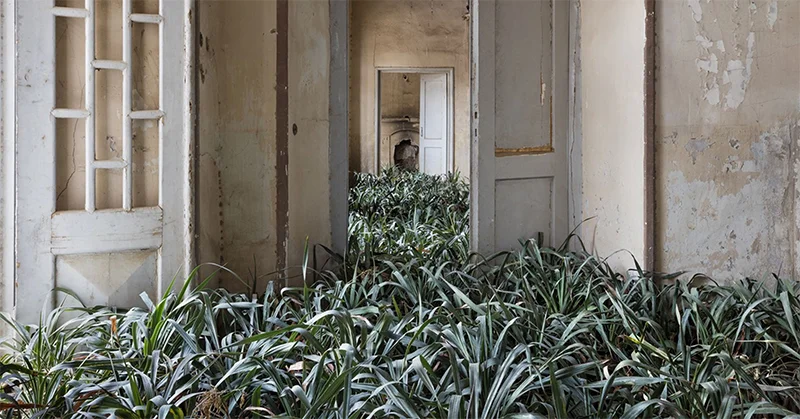
Image: Gohar Dashti, Untitled #2 from the series Home, 2017. Archival digital pigment print, artist’s proof 1/2, 313/8 x 47 3/16 inches (80 x 120 cm). Courtesy of the artist and Robert Klein Gallery. © Gohar Dashti.
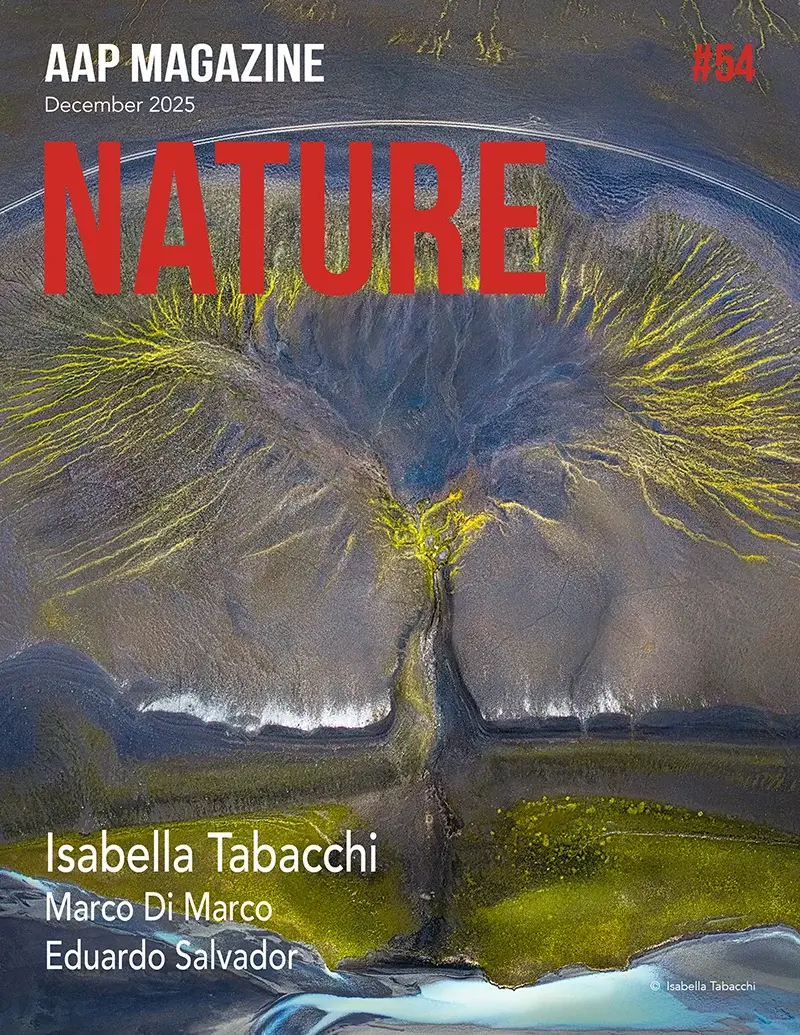
Our printed edition showcases the winners of AAP Magazine call of entries
All About Photo Magazine
Issue #54
Stay up-to-date  with call for entries, deadlines and other news about exhibitions, galleries, publications, & special events.

Exhibitions Closing Soon

Sage Ni’Ja Whitson: These Walking Glories
California African American Museum | Los Angeles, CA
From November 18, 2025 to April 05, 2026
Sage Ni’Ja Whitson: These Walking Glories unfolds as a solemn, expansive meditation on memory, ritual, and collective care. On view from November 18, 2025 through April 5, 2026, the exhibition presents a powerful selection from Whitson’s ongoing Illumination Catalogue, an evolving ceremonial archive that honors Black trans lives lost while affirming the presence and vitality of those still living. Rooted in grief yet oriented toward transformation, the work positions art as a site of mourning, remembrance, and spiritual inquiry. Developed during Whitson’s residency at the California African American Museum, the project responds to the persistent and devastating violence faced by transgender communities in the United States. Since 2022, the artist has traveled to ninety locations across fifteen states, each tied to the death of a Black transgender person between 2018 and the present. At each site, Whitson enacted and documented rituals shaped in dialogue with local trans communities, grounding cosmic reflection in lived, communal experience. These ceremonies ask profound questions about loss, ancestry, and how lives are marked beyond earthly records. The exhibition brings together ritual objects, custom-made essences, photographs, and sound recordings generated through this journey, alongside a series of live performance events. Oral histories and sonic elements create a layered environment in which voice, breath, and presence become forms of testimony. Central to the work is a collective action protocol that tracks lunar cycles and astronomical events corresponding to each individual’s birth and death, weaving personal histories into a broader cosmological framework. Through this process, Whitson reframes mourning as an act of continuity rather than closure. Curated by Cameron Shaw, These Walking Glories situates ceremony as both artistic method and ethical practice. The exhibition invites viewers into a space of slow attention, encouraging reflection on how communities remember, protect, and honor one another. Neither monument nor archive alone, the work insists on care as an ongoing responsibility. In bearing witness to loss while celebrating survival, Whitson offers a vision of remembrance that is active, relational, and grounded in collective possibility.
Fíodóireacht Bheirte / A Weaving of Two
Northside Artspace Lofts Gallery | Minneapolis, MN
From February 07, 2026 to April 05, 2026
A Weaving of Two is a collaborative exhibition that unfolds as a gentle conversation between sound, image, and material, presented at Northside Artspace Lofts Gallery in Minneapolis from February 7 to April 5, 2026. Created by photographers Saoirse and Sarah Weiss, this exhibition invites viewers into an intimate terrain shaped by connection, memory, and shared presence. Rooted in attentiveness rather than spectacle, the project offers a space to slow down and consider how belonging is built through everyday gestures and collective rituals. Through distinct yet complementary approaches, the artists explore different forms of care. Saoirse’s photographs move through the charged atmosphere of the dance floor, where bodies gather in trust and mutual protection. Her images trace moments of closeness and release, capturing how movement and music create temporary sanctuaries of shared experience. In contrast, Sarah Weiss turns her lens toward domestic spaces, family ties, and the quiet rhythms of daily life. Her work dwells on the small, often overlooked acts that sustain relationships over time. Together, these bodies of work form a visual and emotional weave between chosen family and blood family, public gathering and private refuge. The exhibition’s title, Fíodóireacht Bheirte / A Weaving of Two, reflects this interlacing of perspectives, where differences are not flattened but held in balance. The installation extends beyond traditional photography, incorporating fiber elements and mixed media to create a tactile, immersive environment that echoes the artists’ shared interest in material storytelling and spatial experience. Sarah Weiss’s practice draws on film photography to honor the subtleties of personal histories and relational narratives. By combining photographic imagery with fiber arts, she constructs sculptural installations that invite viewers to move through the work rather than simply observe it. This approach aligns with her ongoing explorations in collaborative projects and installation-based series, where reflection and repetition become tools for meaning-making. Open to the public and free to attend, A Weaving of Two is a family-friendly event that emphasizes accessibility and community. The exhibition includes live music, opportunities to engage directly with the artists, and a welcoming atmosphere supported by refreshments. With special thanks to George Slade for organizing the exhibition, this project stands as a thoughtful offering—one that honors care, collaboration, and the quiet strength found in shared creative labor. Image: © Saoirse and Sarah Weiss
Dimpy Bhalotia: Small Lens, Big World
Florida Museum of Photographic Arts -FMOPA | Tampa, FL
From January 15, 2026 to April 05, 2026
This exhibition celebrates the remarkable creative potential of the cell phone as a tool for artistic expression, featuring the poetic and deeply human work of award-winning Indian photographer Dimpy Bhalotia. Known internationally for her black-and-white street photography, Bhalotia captures fleeting gestures, emotional resonance, and the beauty of the everyday with cinematic intensity. Her photographs remind us that compelling storytelling does not depend on complex equipment—it arises from intuition, timing, and a keen sensitivity to life’s spontaneous choreography. Born and raised in Mumbai and now based in London, Dimpy Bhalotia initially pursued fashion design at the London College of Fashion before finding her true voice through photography. Her elegant and dynamic compositions have earned her recognition from the International Photography Awards (IPA), the Prix de la Photographie Paris (Px3), and the iPhone Photography Awards, where she was named Photographer of the Year in 2020. Her work has been featured in publications such as The Guardian, The Washington Post, BBC, and L’Officiel, and exhibited in galleries and museums worldwide. More than a traditional exhibition, this presentation is a celebration of accessibility and creativity—a space where art meets everyday experience. Visitors are invited to see the world through Bhalotia’s lens and to recognize their own capacity for visual storytelling. In a time when nearly everyone carries a camera, her work stands as an inspiring testament to the idea that artistry begins not with technology, but with vision, courage, and awareness. Image: Dimpy Bhalotia (Indian, b. 1987) Shoulder Birds, November 2018 © Dimpy Bhalotia
Gottfried Jäger and the Founders of the Generative Photography
Sous Les Etoiles Gallery | New York, NY
From January 21, 2026 to April 10, 2026
Gottfried Jäger and the Founders of the Generative Photography, presented at Sous les Étoiles Gallery from January 21 to April 10, 2026, offers a rare opportunity to revisit a pivotal chapter in the history of photographic abstraction. The exhibition traces the emergence of generative photography as a radical alternative to the expressive traditions that long dominated the medium. Rather than privileging intuition or the singular moment, these artists embraced systems, repetition, and rules, allowing images to unfold through carefully designed processes. An opening reception on January 24 invites viewers to engage directly with this foundational approach to photographic thinking. At the center of the exhibition stands Gottfried Jäger, whose theoretical and artistic contributions gave generative photography its name and conceptual clarity. His seminal series Pinhole Structures exemplifies this method with remarkable precision. Using simple optical devices and predefined parameters, Jäger produced images that seem at once rigorous and poetic, revealing how minimal interventions can generate complex visual results. These works emphasize photography not as a mirror of reality, but as a system capable of constructing its own visual logic through light, time, and repetition. Surrounding Jäger’s work are key contributions by earlier pioneers including Roger Humbert, Carl Strüwe, Heinrich Heidersberger, Peter Keetman, Hein Gravenhorst, and Karl Martin Holzhäuser. Working exclusively with analog tools, these photographers explored serial production, mechanical movement, and abstraction decades before digital technologies made such approaches commonplace. Their images, often derived from industrial forms, architectural rhythms, or experimental camera techniques, demonstrate how structure and variation can replace traditional composition while remaining deeply rooted in photographic materiality. Seen today, these works resonate strongly with contemporary image-making practices driven by algorithms, code, and artificial intelligence. Yet the exhibition underscores that generative thinking in photography did not originate with computers. Instead, it emerged from a disciplined engagement with process and constraint, where creativity was embedded in the design of systems rather than in spontaneous gestures. By revisiting these foundational experiments, Gottfried Jäger and the Founders of the Generative Photography reminds us that many of today’s most advanced visual strategies are grounded in ideas patiently developed long before the digital era.
Talamh: Contemporary Irish Photography
Momentum | Miami, FL
From March 12, 2026 to April 11, 2026
Talamh: Contemporary Irish Photography, presented at Momentum Gallery Miami, offers a nuanced and contemporary meditation on Ireland as a land shaped by continuity and contradiction. Bringing together works by members of the Dublin-based Island Photographers alongside invited artist Linda Brownlee, the exhibition reflects a collective inquiry into place, memory, and transformation. Supported by Culture Ireland and the Consulate General of Ireland in Miami, Talamh extends an ongoing dialogue about Irish identity into an international context. Translated from the Gaelic word for land, Talamh examines Ireland as a terrain marked by tension—between myth and material reality, extraction and renewal, permanence and flux. Across diverse photographic approaches, the artists consider how landscapes absorb human presence over time. Quarries, rural expanses, urban edges, and altered terrains appear not as static backdrops, but as active participants in cultural and psychological life. The land is shown as something worked, inhabited, remembered, and imagined all at once. These photographs move fluidly between inner and outer worlds. Traces of folklore and inherited narratives quietly surface alongside contemporary infrastructures shaped by economic and political forces. Roads, housing developments, and scarred earth speak to the realities of modern living, while echoes of deep time remind viewers that today’s Ireland is built—literally and symbolically—upon ancient ground. The result is an Ireland that resists simplification, revealing itself as layered, restless, and alive. Rather than presenting a singular vision, Talamh invites multiple ways of seeing. The works explore the psychogeography of place, asking how land carries emotion, belief, and collective memory. Human presence is often implied rather than explicit, embedded in gestures of use, absence, and transformation. This subtlety encourages reflection on how ideas of nationhood and belonging are continually shaped by movement through space. As an artist-led collective, Island Photographers plays a vital role in fostering critical engagement with contemporary photography in Ireland. Through exhibitions, talks, and education, the group strengthens photography’s position within Irish visual culture. Talamh stands as an extension of this mission, presenting Ireland as a lived and embodied landscape—poised between history and the unfolding present.
The Lost Beauty of Humankind: Robert Bergman’s Portraits in the Hill Collection
Hill Art Foundation | New York, NY
From January 15, 2026 to April 11, 2026
The Lost Beauty of Humankind: Robert Bergman’s Portraits in the Hill Collection brings together photography and painting to reconsider one of art’s oldest questions: who deserves to be seen. Presented at the Hill Art Foundation, this exhibition offers a rare opportunity to encounter Robert Bergman’s large-scale portraits alongside works drawn from centuries of portraiture, creating a dialogue that spans time, medium, and tradition. Robert Bergman’s photographs, made on American streets between the mid-1980s and early 1990s, depict people encountered by chance—individuals whose lives are often overlooked or unrecorded. Rendered in rich color and close framing, these portraits possess a quiet intensity that recalls the gravity of Old Master painting. Faces emerge from dark grounds with clarity and restraint, inviting sustained attention rather than quick consumption. Each subject appears suspended outside of a specific moment, anchored instead in presence and inner life. By placing Bergman’s work in conversation with paintings by artists such as Rubens and Bassano, as well as modern figures including Warhol and Auerbach, the exhibition reveals a shared commitment to human dignity. Across centuries, these artists approach portraiture not as idealization, but as recognition. Like earlier painters who turned to people from the margins as models for sacred or monumental works, Bergman directs his lens toward those rarely afforded the honor of being closely observed. What distinguishes Bergman’s portraits is their insistence on engagement. The viewer is not positioned as a distant observer but as an active participant in an encounter. The subjects meet our gaze with openness, reserve, or quiet resolve, creating a charged space of empathy and reflection. These images do not offer narratives or explanations; instead, they ask for patience, humility, and attention. The Lost Beauty of Humankind ultimately proposes that beauty is neither fashionable nor idealized, but rooted in presence, vulnerability, and shared humanity. Through Bergman’s unwavering gaze and the historical echoes surrounding it, the exhibition reminds us that portraiture can still function as a meeting point between the visible and the unseen—where recognition becomes an ethical act and looking becomes a form of care. Image: Robert Bergman. [untitled], 1987 Archival pigment print © Robert Bergman
Homegrown Curated by Patrick Martinez
Charlie James Gallery | Los Angeles, CA
From February 20, 2026 to April 11, 2026
From February 20 to April 11, 2026, Charlie James Gallery presents Homegrown, an exhibition curated by Patrick Martinez that turns inward to trace a lineage of artistic practice within his own family. Bringing together works by Eliseo Martinez, Eliseo Martinez JR., Daniel Martinez, Ismael Martinez, Ruben Martinez, Rayvan Martinez, Chris Martinez, and Patrick Martinez himself, the exhibition reveals a shared visual language shaped by Los Angeles and sustained across generations. What emerges is less a survey than a conversation—between fathers and sons, cousins and brothers—about craft, labor, and the city that formed them. In assembling these works for the first time, Martinez discovered striking formal affinities. The bold graphic sensibility of his cousin Rayvan Valdez Martinez (Gonzales), who worked at La Raza Silkscreen/Graphic Center between 1977 and 1982, resonates with the crisp linework of Patrick’s own Pee Chee folder series and his recent Home Depot drawings. Activism, design, and printmaking converge in these pieces, suggesting that political urgency and visual clarity have long traveled together in the family’s history. Photographs by his father and sculptures by his grandfather further underscore a deep engagement with the Southern California landscape—its light, its signage, its vernacular architecture—handled with patience and technical care. Running concurrently is Patrick Martinez: Left in Ruins, the artist’s fourth solo exhibition with the gallery. Created over the past two years, these new paintings, drawings, sculptures, and neon works distill nearly a decade of formal experimentation. Martinez works at the scale of the street, transforming the visual debris of Los Angeles—hand-painted signs, chain-link fences, lush flora—into layered meditations on migration, displacement, and civic identity. His neons, in particular, evoke both the promise and precarity of the city’s mythology. At the same time, Martinez will unveil a site-specific installation at Frieze Los Angeles, installing six neon works in the fair’s entrance hall that confront recent ICE kidnappings across the country. Together, these projects affirm that what is homegrown is not merely inherited—it is cultivated, challenged, and carried forward with purpose.
Ralph Lemon: From Out of Space
Paula Cooper Gallery | New York, NY
From February 26, 2026 to April 11, 2026
Paula Cooper Gallery presents a focused yet expansive exhibition of works by Ralph Lemon: From Out of Space, on view from February 26 through April 11, 2026, at 521 West 21st Street. Bringing together pieces created between 2001 and 2025, the exhibition spans drawing, painting, photography, and video, offering a rare opportunity to encounter the visual dimensions of an artist best known for reshaping the language of performance. This presentation marks Lemon’s first solo exhibition at the gallery and follows the wide acclaim of his 2024 survey at MoMA PS1, which reaffirmed the breadth and urgency of his practice. Born in 1952, Lemon emerged from New York’s postmodern dance scene as a choreographer and founder of the Ralph Lemon Dance Company, active from the mid-1980s through the 1990s. Over time, his work expanded decisively beyond the stage, dissolving boundaries between movement, image, and text. The works in this exhibition reflect that evolution, revealing how gesture, repetition, and silence migrate from the body into drawing and image-making. Even in still form, Lemon’s compositions retain a sense of duration and embodied thought, echoing the rhythms of performance. Central to Lemon’s artistic legacy is an ongoing engagement with history, race, and the fragile workings of memory. His landmark Geography Trilogy traced these concerns across continents through performances, writings, scores, and photographs, establishing a model for interdisciplinary inquiry that continues to resonate. The visual works on view here extend that inquiry inward, often appearing spare or intimate, yet charged with layers of personal and collective reference. Photography and video function not as documentation, but as parallel modes of thinking, where presence and absence are carefully held in tension. Paula Cooper Gallery, long recognized for championing artists who challenge formal and conceptual conventions, provides a fitting context for this presentation. Seen together, these works affirm Ralph Lemon’s position as a singular figure whose practice resists easy classification. Rooted in performance yet fully at home within the visual arts, his work reminds viewers that meaning often emerges in the spaces between disciplines, where memory, movement, and image quietly converge. Image: Ralph Lemon, Duck with Headless Belle, 2001, gelatin silver print, 5 x 7 inches. © Ralph Lemon. Courtesy Paula Cooper Gallery.
Analog: 30th Anniversary Exhibition
Anton Kern Gallery | New York, NY
From March 04, 2026 to April 11, 2026
Analog unfolds at Anton Kern Gallery as a vivid reflection on thirty years of artistic dialogue, intuition, and risk. Marking the gallery’s anniversary, the exhibition traces a path back to 1996, when its first press release framed art as a proposition—an open-ended gesture rather than a conclusion. That spirit resonates throughout the show, where each work carries the texture of its time while resisting fixed interpretation. The analog era evoked here is not simply technological; it suggests a slower, tactile engagement with making and looking, where uncertainty becomes a method and discovery remains central. At the core of this exhibition stands Anton Kern himself, whose approach to art revolves around a deep, almost personal connection to artists and their processes. Raised in a painter’s environment, he gravitates toward works that feel alive—surfaces that reveal hesitation, revision, and play. There is a palpable sense that the gallery operates less as a polished container and more as an extension of the studio. Colors clash and harmonize, gestures remain visible, and forms appear suspended between completion and possibility. This sensibility aligns with a broader history of postwar and contemporary art, where imperfection and spontaneity challenge traditional ideas of finish and mastery. The exhibition gathers an expansive network of artists whose practices span generations and geographies, from figures like Andy Warhol and Georg Baselitz to more contemporary voices such as Alvaro Barrington and Julie Curtiss. Their works do not seek uniformity; instead, they form a loose constellation of attitudes toward image-making, materiality, and meaning. Humor, irony, and conceptual play weave throughout, echoing the irreverent tone of Maurizio Cattelan’s words that punctuate the exhibition’s framework. Here, the idea and its execution fold into one another, blurring distinctions between thinking and making. Analog ultimately proposes art as an ongoing conversation shaped by friendship, curiosity, and a willingness to embrace the unresolved. Even the gesture of distributing VHS tapes and stickers evokes a sense of shared culture rooted in memory and exchange. Within this space, every artwork feels like a beginning—an invitation to look again, to question, and to remain open to what emerges next. Image: Nobuyoshi Araki Untitled (Erotos), 1993 © Nobuyoshi Araki, Courtesy of Anton Kern Gallery
Ana González: RÍO
Sean Kelly Gallery New York | Los Angeles, CA
From February 27, 2026 to April 11, 2026
Ana González: RÍO, presented at Sean Kelly Gallery, marks the artist’s third solo exhibition with the gallery and unfolds as a poetic journey through water, memory, and transformation. Conceived as a river in motion, the exhibition guides visitors through shifting terrains—dense forests, cascading streams, and humid tropical air—using textiles, painting, porcelain, and video to evoke both sensual immersion and ecological urgency. An opening reception with the artist invites audiences to enter this contemplative current from the very first encounter. At the heart of the exhibition are new works from González’s Devastations series, constructed from sublimated photographic images of rivers flowing from the Amazon basin and the Andes Mountains. Drawing inspiration from Indigenous cosmologies that regard rivers and forests as living beings, González physically unravels her textile surfaces thread by thread. This deliberate act of deconstruction mirrors the gradual erosion of fragile ecosystems under the weight of extraction and industrial expansion. Newly introduced hues deepen the metaphor: a rose tone recalling the luminous haze of Amazonian dusk, and a radiant gold referencing El Dorado—here reimagined as a symbol of nature’s true wealth rather than colonial ambition. Verdant greens evoke both lush vegetation and the language of global finance, underscoring the tension between sacred land and commodified resource. González’s paintings and works on paper appear to hover between emergence and dissolution, as though suspended in mist. Forms blur, drip, and evaporate, suggesting landscapes remembered as much as observed. In these gestures, painting becomes an act of preservation—an insistence on holding space for environments at risk of disappearance. Porcelain sculptures, crafted in Limoges and suspended like cascading heliconias and orchids, extend this meditation into three dimensions. Their luminous white surfaces convey refinement and delicacy while quietly alluding to vulnerability and fracture. A newly created video piece completes the immersive experience, capturing ambient rainforest sounds recorded during the artist’s travels by boat. The exhibition concludes with a vitrine of journals, sketches, and small porcelain forms, assembling a personal archive of pilgrimage. Through RÍO, González invites reflection on interconnectedness and responsibility, urging a renewed reverence for the waterways and forests that sustain both ecological balance and collective imagination. Image: © Ana González, courtesy of the Sean Kelly Gallery
Pello Irazu: Matter
Yancey Richardson Gallery | New York, NY
From March 05, 2026 to April 11, 2026
Pello Irazu: Matter marks a new chapter in the Spanish artist’s ongoing investigation into the physical and conceptual weight of images. Presented at Yancey Richardson Gallery from March 5 through April 11, 2026, the exhibition brings together recent photographic and sculptural works that press against the traditional boundaries separating image, object, and space. Long recognized as a key figure in the renewal of Basque sculpture since the 1980s, Irazu extends his formal language by intensifying the dialogue between photography and three-dimensional form. Working within the studio as both subject and laboratory, Irazu constructs sculptures from everyday materials—cardboard, wood blocks, provisional supports—casting and painting them before reassembling the elements into spare, architectonic structures. He then photographs these arrangements and intervenes directly on the prints with painted lines and textured fields of color. In Matter, these interventions expand into complex lattices that evoke woodgrain, metal, and plastic, partially concealing the underlying studio scenes. The photograph no longer functions as a transparent window but as a dense surface where representation and material presence collide. The accompanying wall sculptures echo this vocabulary of layered planes and intersecting angles. Painted to mirror the textures embedded in the photographs, they destabilize the viewer’s sense of orientation, shifting according to perspective and light. Rather than offering a fixed form, the works suggest an image in flux—something constructed, deconstructed, and reassembled before our eyes. In several new pieces, Irazu incorporates silkscreened photographs of his own hands at work onto acrylic elements integrated into the sculptures, foregrounding the act of making as both subject and structure. By dramatizing the mechanics of creation, Irazu questions whether an image can possess mass and occupy the same experiential space as the viewer. Matter ultimately proposes that images are not immaterial illusions but composite forms—built, fractured, and reconstituted—capable of embodying both physical substance and conceptual depth. Image: Pello Irazu, Demolition Strategies 2, 2025. Acrylic paint on photograph, 25 1/2 x 17 3/4 inches. © Pello Irazu, courtesy of the Yancey Richardson Gallery
Family Forms
Tang Museum | Saratoga Springs, NY
From November 15, 2025 to April 12, 2026
Family Forms, presented in the Winter Gallery at the Tang Museum from November 15, 2025 through April 12, 2026, brings together art and archival photography to consider one of the most intimate and enduring structures of human life: the family. Drawing largely from the museum’s own holdings, the exhibition reflects on kinship, caregiving, and belonging, inviting visitors to look beyond convention and recognize the many ways people come together to create support systems and shared histories. While the nuclear household has long dominated American cultural narratives, the works assembled here propose a broader and more nuanced understanding. Photographs by artists such as Milton Rogovin and Mike Disfarmer capture multigenerational bonds and working-class resilience, emphasizing continuity across time. In contrast, staged and conceptual approaches by Laurie Simmons and Yinka Shonibare CBE probe the constructed nature of domestic ideals, revealing how identity, race, gender, and power shape the image of family in both subtle and overt ways. The exhibition also highlights collaborative and collective practices. Works by For Freedoms underscore the political dimensions of care and community, while projects by Jesse Freidin foreground chosen families and LGBTQ+ kinship networks. Historical materials, including pieces by the mid-century collective PaJaMa, situate contemporary conversations within a longer lineage of artists who have reimagined domestic space as a site of experimentation and solidarity. Curated by Corinne Moss-Racusin, Skidmore Professor of Psychology, alongside Rebecca McNamara, the Frances Young Tang ’61 Associate Curator, Family Forms bridges scholarship and visual culture. By placing documentary images, vernacular photographs, and contemporary artworks in dialogue, the exhibition encourages reflection on how families are shaped—by choice, by circumstance, and by care—and how these evolving forms continue to define personal and collective experience. Image: contributors: Stanley Acosta ’27, Unrecorded artist, title unknown, 1970. This photograph shows a very quiet yet powerful moment. A Black newly married couple’s closeness, matching outfits, and casual attitude draw the audience into the private moment of two people who are just about to start their lives together. The image seems to be simple, but it also gives the opportunity to think more deeply about the concepts of place and belonging. In the 1970s, towns with the name Stillwater were, for the most part, inhabited by White people and thus this couple and their home take on a greater significance. They may have faced hardships in building a stable life in a neighborhood where daily life could be determined by race or class barriers both visible and hidden. The living room is no longer just a setting; it is proof of strength, pride, and silent persistence in the struggle to create a life in an area that might have been discriminatory. Psychological studies on social justice tell us that family life has the power to shield people from discriminatory stress, but, at the same time, social boundaries can have great influence on daily life. The couple’s love story may be one such case. Their apparent bond implies emotional stabilization and assistance while the environment (Stillwater) drives us to think about how families cope with racially segregated places and assert their right of belonging there. The photograph does not provide one unambiguous meaning, however: in what ways does this scene reflect on the interplay of love, home, and identity within the world of social inequality?

Advertisement
AAP Magazine #57 Portrait
Win a Solo Exhibition in May
AAP Magazine #57 Portrait
Call for Entries
AAP Magazine #57 Portrait
Publish your work in our printed magazine and win $1,000 cash prizes

Related Articles

All About Photo Presents ’Alpine Hiatus’ by Filippo Poli
In Alpine Hiatus: The Snow No Longer Tastes Like Snow, Italian photographer and architect Filippo Poli turns his camera toward a landscape caught between memory and mutation. The project unfolds as both personal archaeology and ecological reflection — an inquiry into what remains when the snow, once a symbol of purity and permanence, becomes an artifact of artifice. Winner of the April 2026 All About Photo Solo Exhibition contest, Poli’s work traces the dissonance between remembrance and reality, offering a haunting meditation on disappearance.
Magnum Square Print Sale in Partnership with The Photographers’ Gallery: Odyssey
Odyssey is more than a journey. It is a search for meaning, a crossing of thresholds, a story of growth and resilience. Bringing together a wide range of work from over 100 photographers, this Square Print Sale traces the paths we take across borders, through memory, and into the unknown. Presented in collaboration with The Photographers’ Gallery, the collection off ers works by artists including Martin Parr, Daidō Moriyama, Eve Arnold, Nadav Kander, Steve McCurry, Juno Calypso, Karen Knorr and more.
Elements of Wonder: When Nature Becomes Art by Jon McCormack
To coincide with Earth Day, CENTER, the nonprofit photography organization based in Santa Fe, NM, presents Elements of Wonder: When Nature Becomes Art, a photographic exhibition by Jon McCormack. The exhibition will be on view at CENTER from April 17 through May 17, 2026, with an Opening Reception on Friday, April 17, 5:00 – 7:00 PM, and an Artist Talk on April 30, from 5:30 – 6:30 PM (MT).
Gordon Parks: The South in Color
Jackson Fine Art is delighted to announce our spring exhibition Gordon Parks: The South in Color organized in partnership with The Gordon Parks Foundation. The exhibition is timed to commemorate two important milestones - the 70th anniversary of the landmark publication of Parks’ images of the segregated South in Life magazine and the 20th anniversary of the founding of The Gordon Parks Foundation. The South in Color will present more than thirty photographs from the artist’s Segregation Story series and debut a brand-new portfolio published by the Foundation. The exhibition brings together many of Parks’ images not previously shown in the gallery, alongside some of his most recognized such as At Segregated Drinking Fountain, Mobile, Alabama, to offer a fresh look at the series, and deepen its emotional and historical resonance.
Marilyn Stafford, Lee Miller, Colin Jones for UNSEEN at Art Rotterdam
The Albumen Gallery programme for UNSEEN at Art Rotterdam 2026 brings together three iconic names of mid-20th century photography. At a first glance the works of Marilyn Stafford, Lee Miller and Colin Jones cover quite a wide spectrum of photography. Notwithstanding that there are shared aspects across their respective bodies of work that invite interesting comparison with respect to thematic and artistic approach.
Circulation(s) Festival of young European photography
For its sixteenth edition, the Circulation(s) Festival continues to champion emerging European photography and its intersections with contemporary art. Founded in 2009 at the CENTQUATRE-PARIS, the festival has grown into a key platform for young creators, highlighting plural perspectives and experimental practices.
Colour Me Modern: Claire Aho and the New Woman
Colour Me Modern: Claire Aho and the New Woman, celebrates the vibrant photography of the pioneering Finnish artist, Claire Aho (1925-2015) who brought wit, colour and cinematic flair to postwar image-making across her work in fashion, advertising and editorial. Presented by Hundred Heroines, the UK’s only museum dedicated to women in photography, this free exhibition, split over two sites, highlights how Aho, known as ‘the Grand Old Lady of Finnish Photography,’ helped shape a new visual language for Finland, presenting confi dent, contemporary women and transforming everyday scenes into carefully staged moments of style.
Fragilities & Resilience by Thibault Gerbaldi at the Jardin du Luxembourg
From March 21 to July 19, 2026, the French Senate will host Fragilities & Resilience, the first solo exhibition in France of internationally acclaimed photographer Thibault Gerbaldi. Presented outdoors on the iconic grilles of the Jardin du Luxembourg in Paris 6ème, the exhibition features 80 striking photographs captured across five continents, offering a breathtaking exploration of the fragile yet enduring connections between humans and nature. Entry is free, making this a rare opportunity for the public to experience Gerbaldi’s work on a monumental scale.
All About Photo Presents ’ Civilization’ by Damien Aubin
In Civilization, Damien Aubin turns his lens toward environments shaped not by nature, but by ambition. These are places engineered at a scale that exceeds the individual — infrastructures, industrial complexes, vast architectural systems that dwarf the human body and often eclipse it entirely. There are no protagonists here. No narratives unfolding in real time. Instead, Aubin photographs what remains when activity recedes: structures that continue to stand, operate, or simply endure.
Call for Entries
Win A Solo Exhibition in May
Get International Exposure and Connect with Industry Insiders