Analog unfolds at Anton Kern Gallery as a vivid reflection on thirty years of artistic dialogue, intuition, and risk. Marking the gallery’s anniversary, the exhibition traces a path back to 1996, when its first press release framed art as a proposition—an open-ended gesture rather than a conclusion. That spirit resonates throughout the show, where each work carries the texture of its time while resisting fixed interpretation. The analog era evoked here is not simply technological; it suggests a slower, tactile engagement with making and looking, where uncertainty becomes a method and discovery remains central.
At the core of this exhibition stands Anton Kern himself, whose approach to art revolves around a deep, almost personal connection to artists and their processes. Raised in a painter’s environment, he gravitates toward works that feel alive—surfaces that reveal hesitation, revision, and play. There is a palpable sense that the gallery operates less as a polished container and more as an extension of the studio. Colors clash and harmonize, gestures remain visible, and forms appear suspended between completion and possibility. This sensibility aligns with a broader history of postwar and contemporary art, where imperfection and spontaneity challenge traditional ideas of finish and mastery.
The exhibition gathers an expansive network of artists whose practices span generations and geographies, from figures like Andy Warhol and Georg Baselitz to more contemporary voices such as Alvaro Barrington and Julie Curtiss. Their works do not seek uniformity; instead, they form a loose constellation of attitudes toward image-making, materiality, and meaning. Humor, irony, and conceptual play weave throughout, echoing the irreverent tone of Maurizio Cattelan’s words that punctuate the exhibition’s framework. Here, the idea and its execution fold into one another, blurring distinctions between thinking and making.
Analog ultimately proposes art as an ongoing conversation shaped by friendship, curiosity, and a willingness to embrace the unresolved. Even the gesture of distributing VHS tapes and stickers evokes a sense of shared culture rooted in memory and exchange. Within this space, every artwork feels like a beginning—an invitation to look again, to question, and to remain open to what emerges next.
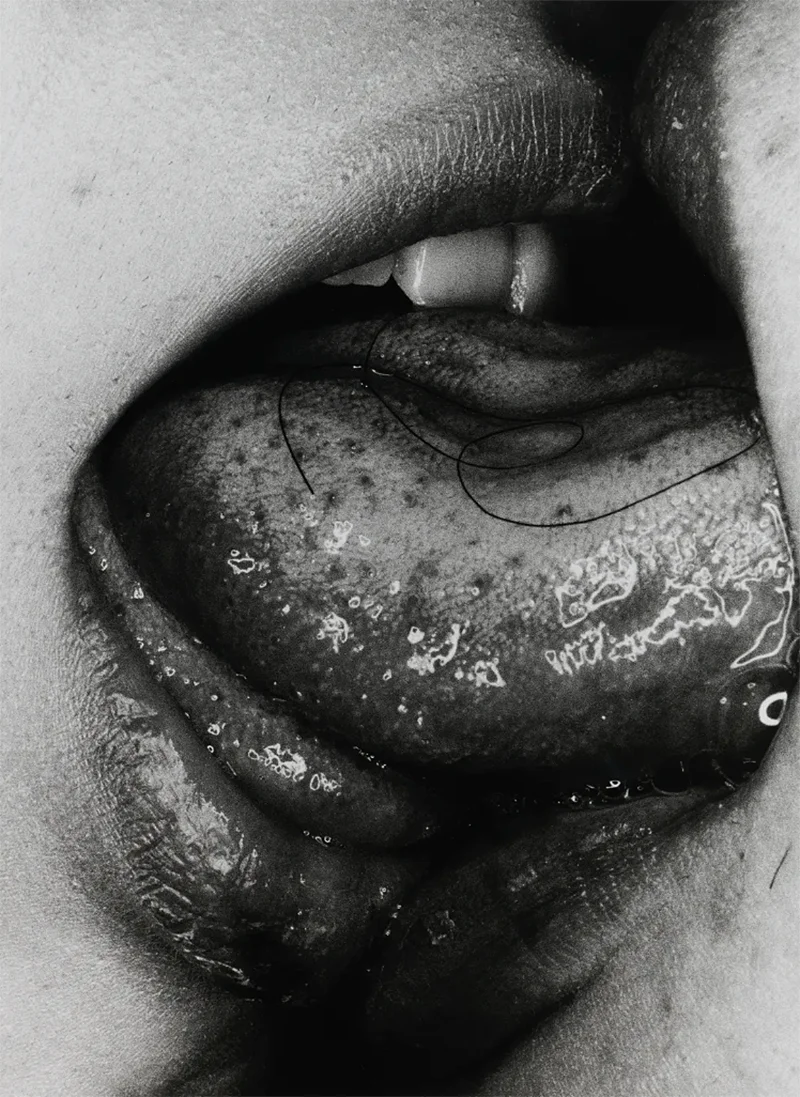
Image:
Nobuyoshi Araki
Untitled (Erotos), 1993
© Nobuyoshi Araki, Courtesy of Anton Kern Gallery