All about photo.com: photo contests, photography exhibitions, galleries, photographers, books, schools and venues.
Win the First Solo Exhibition of 2026! Submit your best project now. Open Theme
Evgenia Arbugaeva
Evgenia Arbugaeva

Evgenia Arbugaeva

Country: Russia
Birth: 1985

Evgenia Arbugaeva (born 1985) is a photographer of the Russian Arctic. Having grown up in Yakutsk, she has an empathy with the people living in the far north and the difficult living conditions they experience, and several of her photographic projects have involved them. The National Geographic has funded her to photograph the people and economic changes on Russia's northern coast.

Arbugaeva was born in Tiksi, a small port town of the Sakha Republic on the Arctic Sea, near the mouth of the Lena River. As part of the Soviet Union, Tiksi supported military airfields and became the world's most northern settlement with over 5000 people. Her memories of the place include pink mountains, whiteout snowstorms in which she lost all sense of place, fields of snow colored green or gold by the surrounding light, and auroras in the endless night of winter. One of her childhood heroes was explorer Jacques Cousteau. At the age of eight, and at the fall of the Soviet Union, she and her family moved to Yakutsk, "the coldest city on earth" and a place that she found much less visually appealing. She studied management in Moscow before moving to New York City. There, she studied photography at the International Center of Photography, graduating in 2009. 19 years after moving from her hometown, Arbugaeva decided to move back to Tiksi because she could no longer remember anything from the town. These memories had faded so much to the point where they seemed unreal.

Arbugaeva's photographic method involves living with her subjects on a long enough term to become friends with them and for them to relax in front of her camera. For instance, in one of her projects she traveled with Siberian hunters for the tusks of mammoths, newly exposed by global warming. She won the trust of the hunters by stitching up the injured hand of the head of the group. She often works without a camera, scouting locations that she returns to frequently until the lighting and inspiration combine to give her a photo.

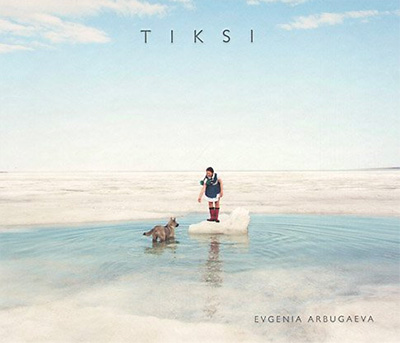
In 2010 Arbugaeva returned to Tiksi, now becoming a ghost town, on a personal visit to compare it to her memories, but left the town with only one photo she liked, of a teenage girl playing on the seashore. Inspired by the photo, she traveled back to Tiksi in 2011 to meet the girl and her family and to document their daily life, overlain with her own memories. Despite the decline of the town and the difficult life there (which drove her host family to plan their own departure), her photos in this project are "bright and whimsical, their compositions and vivid colours redolent of the books she read there as a child".

Arbugaeva learned of the weather stations of northern Russia in a dog sledding incident, when she and her father had to take shelter from bad weather at one of the stations. In her project Weather Man, she took a two-month passage on an icebreaker to 22 of the stations, including the station at Khodovarikha, where she met meteorologist Vyacheslav (Slava) Korotki. The portrait taken of Vyacheslav Korotki is an intimate story of an individualistic man, who is facing the fading winter of the Arctic. In early 2014, she returned to Khodovarikha by helicopter for a two-and-a-half-week visit and photography session with Korotki. Based on this work, a much darker series of photos than the ones from Tiksi, she published a profile of Korotki in The New Yorker.

Arbugaeva's other photography projects have included nomadic Yakut reindeer herders in Sakha, and Amani, a sequence of fictionalized images set on an abandoned anthropological research station on a former German coffee plantation in Tanzania.

Arbugaeva is the 2013 winner of Leica's Oskar Barnack Award for her work in Tiksi, for which she also received a Magnum Foundation International Emergency Fund grant in 2012. In 2018, National Geographic named her as one of their four inaugural Media Innovation Fellows, funding her to photograph the people and economic changes on Russia's northern coast.

Source: Wikipedia



Evgenia Arbugaeva's Video

Selected Books

Inspiring Portfolios

Call for Entries
All About Photo Awards 2026
$5,000 Cash Prizes! Juror: Steve McCurry
 
Stay up-to-date  with call for entries, deadlines and other news about exhibitions, galleries, publications, & special events.

More Great Photographers To Discover

Irving Penn
United States
1917 | † 2009
Irving Penn was born on June 16, 1917 in Plainfield, New Jersey, to Harry Penn and Sonia Greenberg. In 1922, Irving Penn's younger brother, Arthur Penn, was born, who would go on to become a film director and producer. Irving Penn attended the Philadelphia Museum School of Industrial Art (now the University of the Arts) from 1934 to 1938, where he studied drawing, painting, graphics, and industrial arts under Alexey Brodovitch. While still a student, Penn worked under Brodovitch at Harper's Bazaar, where several of Penn's drawings were published. Irving Penn worked for two years as a freelance designer and making his first amateur photographs before taking Brodovitch's position as the art director at Saks Fifth Avenue in 1940. Penn remained at Saks Fifth Avenue for a year before leaving to spend a year painting and taking photographs in Mexico and across the US. When Irving Penn returned to New York, Alexander Liberman offered him a position as an associate in the Vogue magazine Art Department, where Penn worked on layout before Liberman asked him to try his hand at photography for the magazine. Irving Penn photographed his first cover for Vogue magazine in 1943 and continued to work at the magazine throughout his career, shooting covers, portraits, still lifes, fashion, and photographic essays. In the 1950s, Penn founded his own studio in New York and began making advertising photographs. Over the years, Penn's list of clients grew to include General Foods, De Beers, Issey Miyake, and Clinique. Irving Penn met fashion model Lisa Fonssagrives at a photo shoot in 1947. In 1950, the two married at Chelsea Register Office, and two years later Lisa gave birth to their son, Tom Penn, who would go on to become a metal designer. Lisa Fonssagrives died in 1992. Irving Penn died aged 92 on October 7, 2009 at his home in Manhattan. Source: Wikipedia
Homai Vyarawalla
India
1913 | † 2012
Homai Vyarawalla, India's first woman photojournalist, is best known for documenting the country's transition from a British colony to a newly independent nation. Vyarawalla was born on 9 December 1913 in the western Indian state of Gujarat. Her family belonged to India's tiny but influential Parsi community. She spent much of her childhood on the move because her father was an actor in a travelling theatre group. But the family soon moved to Mumbai (then Bombay), where she attended the JJ School of Art. She was in college when she met Manekshaw Vyarawalla, a freelance photographer, who she would later marry. It was he who introduced her to photography. She received her first assignment - to photograph a picnic - while she was still in college. It was published by a local newspaper, and soon she started to pick up more freelance assignments. Vyarawalla began to draw more attention after her photographs of life in Mumbai were published in The Illustrated Weekly of India magazine. The Vyarawallas moved to Delhi in 1942 after they were hired to work as photographers for the British Information Service. Homai Vyarawalla, one of few female photojournalists working at the time in Delhi, was often seen cycling through the capital with her camera strapped to her back. She took her most iconic images, however, after India became independent - from the departure of the British from India, to the funerals of Mahatma Gandhi and former prime minister Jawaharlal Nehru. Homai Vyarawalla also photographed most prominent independence leaders. But she said in an interview that her biggest regret was that she missed photographing the meeting where Mahatma Gandhi was assassinated. She was on her way to attend it when her husband called her back for some other work. Her work also includes candid, close-up photographs of celebrities and dignitaries who visited India in the years following independence, including China's first prime minister Zhou Enlai, Vietnamese leader Ho Chi Minh, Queen Elizabeth II and US President John F Kennedy. Vyarawalla photographed many famous people but Mr Nehru figures most prominently in her work as her "favourite subject". She said in an interview that when Mr Nehru died she "cried, hiding my face from other photographers". Ms Vyarawalla clicked her last picture in 1970, retiring after a four-decade-long career. She left Delhi after her husband died in 1969 and moved to Gujarat. She was awarded India's second highest civilian honour, the Padma Vibhushan, in 2011. She died on 16 January 2012 at the age of 92.Source: BBC
Matthew Portch
United Kingdom
1970
I was born and raised in Bristol, England through the '70s and '80s in a typical suburb. As a child, television and movies were my favourite distraction, especially anything from the United States. The backdrop of the North American scenery felt like an exotic antidote to the humdrum of the English city suburbs and countryside. I was a keen illustrator spending hours pouring over the minutia of the subject matter. I wanted my drawings to feel as close to reality as possible. This work saw me enrolled in college at a young age where I studied Photography and Graphic Design. Drawing on my childhood memories, the visuals of the American landscape remained a major influence on my photography. I became inspired by North American photographers of the '60s and '70s who were prevalent in using large format film. This laborious system of capture enhanced these seemingly ordinary looking street scenes and vistas with fastidious detail. I discovered a more modern process in the form of a technical camera, digital back, and precision optics, then proceeded to cast my own journey. I like my pictures to be aesthetically simple, clean and graphic, which resonates with my background in design. I prefer the images to retain an air of perplexity, so keeping them free of people and any notable present-day object helps suspend them in a moment in time. As with most large format photography techniques, when I photograph a scene I capture everything across the frame in complete focus. This can lend a heightened sense of reality. Given each picture is deliberately simple and mundane – the detail of the capture is just as important as the subject matter and becomes a character of the image in itself. I use the full size of the sensor and prefer not to crop. Restricting myself to this discipline is almost a digital reverence to large format film. My creative vision is to capture a calm and melancholic disposition in the landscape and create a scene of discernible simplicity to evoke an emotional and response from within. About Lost America Lost America examines a quiet stillness in a forgotten landscape that is, in a sense: 'on-pause'. Backwater towns and rural corners are juxtaposed with the ambiguity of detached suburbia. Places appear frozen in time, their inhabitants absent or long since departed. Ardently stagnant in their appearance, the images aim to unlock a moment of reflective contemplation and instil a melancholic feeling of familiarity. One might not notice or acknowledge these spaces, especially when viewed within the vast stretch of America's panorama. Yet, when framed as a single vignette, the places can appear to echo a moment of mournful reverie. Or, for some, they might behold an alluringly sombre, everlasting impression.
Graciela Iturbide
Graciela Iturbide was born in 1942 in Mexico City. In 1969 she enrolled at the age of 27 at the film school Centro de Estudios Cinematográficos at the Universidad Nacional Autónama de México to become a film director. However she was soon drawn to the art of still photography as practiced by the Mexican modernist master Manuel Alvarez Bravo who was teaching at the University. From 1970-71 she worked as Bravo's assistant accompanying him on his various photographic journeys throughout Mexico. In the early half of the 1970s, Iturbide traveled widely across Latin America in particular to Cuba and several trips to Panama. In 1978 Graciela Iturbide was commissioned by the Ethnographic Archive of the National Indigenous Institute of Mexico to photograph Mexico's indigenous population. Iturbide decided to document and record the way of life of the Seri Indians, a group of fisherman living a nomadic lifestyle in the Sonora desert in the north west of Mexico, along the border with Arizona, US. In 1979 she was invited by the artist Francisco Toledo to photograph the Juchitán people who form part of the Zapotec culture native to Oaxaca in southern Mexico. Iturbide's series that started in 1979 and runs through to 1988 resulted in the publication of her book Juchitán de las Mujeres in 1989. Between 1980 and 2000, Iturbide was variously invited to work in Cuba, East Germany, India, Madagascar, Hungary, Paris and the US, producing a number of important bodies of work. She has enjoyed solo exhibitions at the Centre Pompidou (1982), San Francisco Museum of Modern Art (1990), Philadelphia Museum of Art (1997), The J. Paul Getty Museum (2007), MAPFRE Foudation, Madrid (2009), Photography Museum Winterthur (2009), and Barbican Art Gallery (2012), between others. Iturbide is the recipient of the W. Eugene Smith Memorial Foundation Award, 1987; the Grand Prize Mois de la Photo, Paris, 1988; a Guggenheim Fellowship for the project 'Fiesta y Muerte', 1988; the Hugo Erfurth Award, Leverkusen, Germany, 1989; the International Grand Prize, Hokkaido, Japan, 1990; the Rencontres Internationales de la Photographie Award, Arles, 1991; the Hasselblad Award, 2008; the National Prize of Sciences and Arts in Mexico City in 2008; an Honorary Degree in photography from the Columbia College Chicago in 2008; and an Honorary Doctorate of Arts from the San Francisco Art Institute in 2009.Source: www.gracielaiturbide.org Graciela Iturbide photographs everyday life, almost entirely in black-and-white, following her curiosity and photographing when she sees what she likes. She was inspired by the photography of Josef Koudelka, Henri Cartier-Bresson, Sebastiao Salgado and Manuel Álvarez Bravo. Her self-portraits especially reflect and showcase Bravo's influence and play with innovation and attention to detail. Iturbide eschews labels and calls herself complicit with her subjects. With her way of relating to those she is photographing, she is said to allow her subjects to come to life, producing poetic portraits. She became interested in the daily life of Mexico's indigenous cultures and people (the Zapotec, Mixtec, and Seri) and has photographed life in Mexico City, Juchitán, Oaxaca and on the Mexican/American border (La Frontera). With focus on identity, sexuality, festivals, rituals, daily life, death, and roles of women, Iturbide's photographs share visual stories of cultures in constant transitional periods. There's also juxtaposition within her images between urban versus rural life, and indigenous versus modern life. Iturbide's main concern has been the exploration and investigation of her own cultural environment. She uses photography as a way of understanding Mexico; combining indigenous practices, assimilated Catholic practices and foreign economic trade under one scope. Art critic, Oscar C. Nates, has describes Iturbide's work as "anthropoetic." Iturbide has also photographed Mexican-Americans in the White Fence (street gang) barrio of Eastside Los Angeles as part of the documentary book A Day in the Life of America (1987). She has worked in Argentina (in 1996), India (where she made her well-known photo, "Perros Perdidos" (Lost Dogs)), and the United States (an untitled collection of photos shot in Texas). One of the major concerns in her work has been "to explore and articulate the ways in which a vocable such as 'Mexico' is meaningful only when understood as an intricate combination of histories and practices." She is a founding member of the Mexican Council of Photography. She continues to live and work in Coyoacán, Mexico. In awarding her the 2008 Hasselblad Award, the Hasselblad Foundation said: "Graciela Iturbide is considered one of the most important and influential Latin American photographers of the past four decades. Her photography is of the highest visual strength and beauty. Graciela Iturbide has developed a photographic style based on her strong interest in culture, ritual and everyday life in her native Mexico and other countries. Iturbide has extended the concept of documentary photography, to explore the relationships between man and nature, the individual and the cultural, the real and the psychological. She continues to inspire a younger generation of photographers in Latin America and beyond." Some of Iturbide's recent work documents refugees and migrants. In her work Refugiados (2015), offers a stark contrast between love and family and danger and violence showing a smiling mother holding her child in front of a hand-painted mural of Mexico dotted with safety and danger zones. The largest institutional collection of Iturbide's photographs in the United States is preserved at the Wittliff collections, Texas State University, San Marcos, TX.Source: Wikipedia
Advertisement
All About Photo Awards 2026
Win a Solo Exhibition this January
All About Photo Awards 2026

Latest Interviews

Exclusive Interview with Peter Ydeen
Winner of AAP Magazine #45 Travels, his series reflects this unique vision—capturing the spirit of place through subtle layers of light, color, and emotion. Whether traveling abroad or observing the rhythms of his own surroundings, Ydeen creates images that feel both grounded and enchanted, inviting viewers into a world where reality and reverie meet.
Exclusive Interview with Julie Wang
Chinese-born photographer Julie Wang brings a poetic, contemplative sensitivity to her visual exploration of the world. Having lived for nearly equal parts of her life in China, Europe, and the United States, she approaches her subjects with the nuanced perspective of someone shaped by many cultures. This blend of distance, curiosity, and emotional resonance infuses her work with a quiet depth, allowing her to reveal the fragile beauty and subtle tensions that often pass unnoticed.
Exclusive Interview with Ghawam Kouchaki
American photographer Ghawam Kouchaki brings a sharply observant and introspective gaze to the streets of Japan’s capital. Based in Los Angeles, he approaches Tokyo with the distance — and curiosity — of an outsider, allowing him to uncover the city’s subtle contradictions, quiet tensions, and fleeting gestures that often go unnoticed. His series Tokyo no no, selected as the Solo Exhibition for December 2024, explores the hidden undercurrents of urban life: the unspoken rules, the small ruptures in routine, the poetic strangeness found in everyday moments. Through muted tones, instinctive timing, and meticulous framing, Kouchaki reveals a Tokyo that exists somewhere between reality and imagination — both intimate and enigmatic. We asked him a few questions about his life and work.
Exclusive Interview with Tommi Viitala
Tommi Viitala, winner of AAP Magazine #44: Street, is a Finnish photographer celebrated for his striking and cinematic street photography. With a keen eye for atmosphere and composition, he captures fleeting urban moments that reveal the poetry of everyday life. His work often explores the tension between solitude and connection within contemporary cityscapes, blending documentary realism with artistic sensibility. Viitala’s photographs have been exhibited internationally and recognized for their strong visual storytelling and emotional depth. We asked him a few questions about his life and work.
Exclusive Interview with Robert Mack
Robert Mack is a California-based visual artist, photographer, and filmmaker. His fine art photography and films have been exhibited widely in the United States and Europe, with major shows at the Baltimore Museum of Art and the Reiss-Engelhorn Museum in Mannheim, Germany. Both institutions hold his work in their permanent collections. Working across different media, Mack has built a career exploring the complexities of human presence and representation. In 1981, while living in Baltimore, he produced The Perkins Project: Not Guilty by Reason of Insanity, a rare photographic and film study inside Maryland’s hospital for the criminally insane. These stark yet compassionate black-and-white portraits remain one of his most powerful and controversial bodies of work.
Exclusive Interview with Alan Schaller About Irys
Alan Schaller is a London-based photographer best known for his striking black-and-white street photography and as co-founder of Street Photography International, one of the largest online communities dedicated to the genre. With years of experience both behind the camera and in building platforms that give visibility to photographers, Schaller has now turned his focus to creating a new digital space for photography itself. His latest venture, Irys, is a photography app designed by photographers, for photographers, with the aim of offering a dedicated platform where images are respected as works of art rather than treated as disposable content.
Exclusive Interview with Guillaume Bonn
With his latest book Paradise, Inc., celebrated documentary photographer Guillaume Bonn takes us deep into the heart of East Africa, where the promises and failures of wildlife conservation collide. Far from offering a romanticized vision of nature, Bonn’s work confronts us with urgent realities: the tensions between local communities and conservation policies, the sacrifices of rangers on the frontlines, and the long-lasting impact of human activity on fragile ecosystems. Spanning more than two decades of fieldwork, the project blends powerful imagery with investigative depth, raising difficult but necessary questions about transparency, accountability, and the Western-led models that dominate conservation. Enriched by the voices of those too often left out of the conversation—including a preface by Maasai leader Ezekiel Ole Katato and an introduction by journalist Jon Lee Anderson—Paradise, Inc. is both a stunning visual journey and a call to action. In the following interview, Guillaume Bonn reflects on the making of Paradise, Inc., the ethical dilemmas at the heart of his work, and the urgent need to rethink our approach to conservation in East Africa and beyond.
Exclusive Interview with Sander Vos
Sander Vos is a fine art photographer based in London whose work seamlessly blends elements of Surrealism with portraiture. Drawing inspiration from his background in design, Vos embraces light and contrast to sculpt striking, graphic compositions. His photographs invite the viewer into a world where revelation and concealment coexist, leaving space for imagination and interpretation.
Exclusive Interview with Tomasz Trzebiatowski Editor-in-chief FRAMES Magazine
Founded in 2020 by photographer, publisher, and classical pianist Tomasz Trzebiatowski, FRAMES Magazine has quickly established itself as a thoughtful space for photography lovers who believe that powerful images deserve to live on paper. Known for its beautifully printed quarterly issues and dynamic international community, FRAMES bridges the gap between tradition and innovation in the photographic world. As editor-in-chief, Trzebiatowski has created not only a publication but a platform that celebrates diverse genres, nurtures dialogue, and champions the tactile experience of print in a digital age. In this interview, he reflects on the journey from founding FRAMES to building a global membership, the challenges of independent publishing, and the future of photography in both print and digital forms.
Call for Entries
Solo Exhibition January 2026
Get International Exposure and Connect with Industry Insiders