All about photo.com: photo contests, photography exhibitions, galleries, photographers, books, schools and venues.
FINAL DAYS TO WIN A SOLO EXHIBITION IN MAY 2026
Rineke Dijkstra
Rineke Dijkstra

Rineke Dijkstra

Country: Netherlands
Birth: 1959

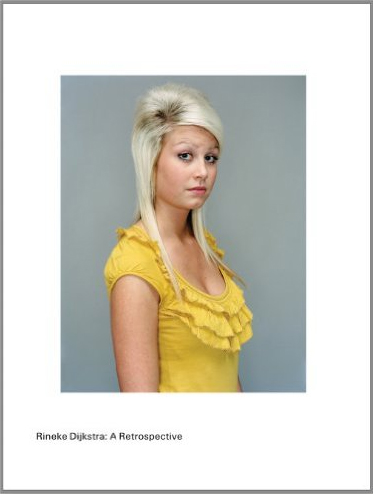
Rineke Dijkstra was trained at the Gerrit Rietveld Academy, Amsterdam. Her first solo exhibition took place in 1984 at de Moor in Amsterdam. Dijsktra's photographs have appeared in numerous international exhibitions, including the 1997 and 2001 Venice Biennale, the 1998 Bienal de Sao Paulo, Turin's Biennale Internationale di Fotografia in 1999 and the 2003 International Center for Photography's Triennial of Photography and Video in New York. Solo exhibitions of her work have been shown at the Museum fur Moderne Kunst, Germany (2013), the Guggenheim Museum, New York (2012), the Fotomuseum Winterthur, Switzerland (2005), and the Art Institute of Chicago, Chicago (2001). She is the recipient of a number of awards, including the Kodak Award Nederland (1987), the Art Encouragement Award Amstelveen (1993), the Werner Mantz Award (1994), the Citibank Private Bank Photography Prize (1998), and the Macallan Royal Photography Prize (2012).

Source: Marian Goodman Gallery


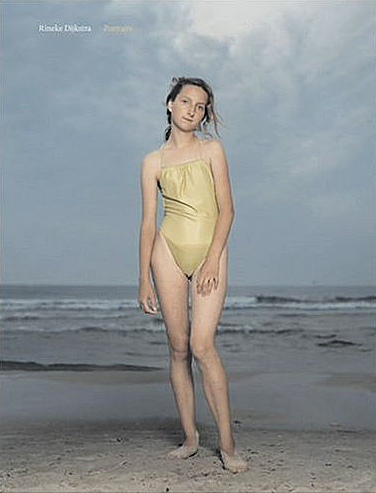
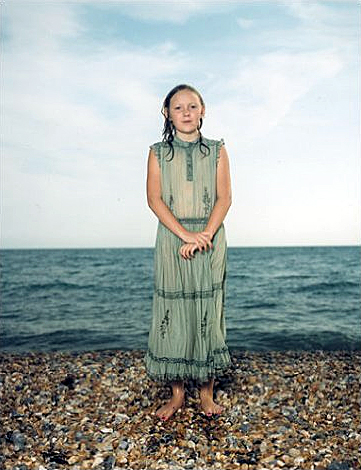
Rineke Dijkstra was born in Sittard, the Netherlands, in 1959. She studied photography at the Gerrit Rietveld Academie in Amsterdam from 1981 to 1986. Through the late 1980s, she photographed people in clubs for magazines in the Netherlands and worked for corporations as a portraitist. In 1990 she injured her hip when her car was struck by a bicycle. A self-portrait produced during her rehabilitation, in which she is seen having just emerged from a pool, exhausted, sparked a new direction in her work. Commissioned by a Dutch newspaper to make photographs based on the notion of summertime, Dijkstra took provocative photographs of adolescent bathers. These ultimately formed her breakthrough Beaches series (1992–96), which featured her young subjects in different locations in the United States and Europe. From this point on, people in transitional moments would be a major theme in her work. In 1994 she photographed mothers in the moments after giving birth and bullfighters about to enter the arena; she also commenced a series of images of Almerisa, an adolescent Bosnian refugee, whom she continued to photograph until 2003. Dijkstra ventured into video with The Buzz Club, Liverpool, UK/Mysteryworld, Zaandam, NL, taping adolescents at raves between 1996 and 1997. She has also focused on particular individuals entering the military, as in her images of Olivier Silva, a French Foreign Legionnaire (2000–01), and new inductees into the Israeli army (2002–03). For the series Park Portraits (2003–06), Dijkstra photographed children, adolescents, and teenagers momentarily suspending their varied activities to stare into the lens from scenic spots in Amsterdam’s Vondelpark, Brooklyn’s Prospect Park, Madrid’s El Parque del Retiro, and Xiamen’s Amoy Botanical Garden, among others.

Source: Guggenheim

 

Rineke Dijkstra's Video

Selected Books

Inspiring Portfolios

Call for Entries
AAP Magazine #57 Portrait
Publish your work in our printed magazine and win $1,000 cash prizes
 
Stay up-to-date  with call for entries, deadlines and other news about exhibitions, galleries, publications, & special events.

More Great Photographers To Discover

Moises Saman
Spain / United States
1974
Moises Saman (born 1974) is a Spanish-American photographer, based in Tokyo. He was born Lima, Peru. Saman is considered "one of the leading conflict photographers of his generation" and is a full member of Magnum Photos. He worked as a photojournalist in the Middle East from 2011 to 2014. Saman is best known for his photographs from the wars in Iraq: the Gulf War, the Iraq War, and the Iraqi Civil War but has also worked in Afghanistan, Egypt, Libya, and Syria including in rebel-held areas there. He covered the Arab Spring and the Syrian Civil War for The New Yorker and has worked for Human Rights Watch. His book Discordia (2016) is about the revolution in Egypt and the broader Arab Spring. Saman has won multiple awards from World Press Photo and Pictures of the Year International, and has received a Guggenheim Fellowship. In 2010 Saman was invited to join Magnum Photos as a nominee and became a full member in 2014.Source: Wikipedia Moises Saman was born in 1974 in Lima, Peru, but spent most of his youth in Barcelona, Spain, after his family moved there. Moises studied communications and sociology in the United States at California State University, graduating in 1998. It was during his last year in university that Moises first became interested in becoming a photographer, influenced by the work of a number of photojournalists that had been covering the wars in the Balkans. Moises interned at several small newspapers in California, and after graduating from university he moved to New York City to complete a summer internship at New York Newsday newspaper. That fall, upon completion of the internship, Moises spent a month traveling in Kosovo photographing the immediate aftermath of the last Balkan war. In 2000, Moises joined Newsday as a staff photographer, a position he held until 2007. During his seven years at Newsday, Moises’ work focused on covering the fallout of the 9/11 attacks, spending most of his time traveling between Afghanistan, Iraq, and other Middle Eastern countries. In the fall of 2007, Moises left Newsday to become a freelance photographer represented by Panos Pictures. During that time he became a regular contributor for The New York Times, Human Rights Watch, Newsweek, and Time Magazine, among other international publications.Source: World Press Photo
Anton Gorlin
Australia
Anton Gorlin is a landscape and real estate photographer, who tries to capture the essence of the moment and beauty of shapes and forms. Originally from Ukraine, he now lives and works in Gold Coast, Australia. Anton enjoys the beauty of Australian nature and does several trips a year to keep his portfolio growing. Prints of his photos landed in Ukraine, Russia, Germany, Australia, USA and other countries. Anton's works have been published in various magazines and newspapers internationally. Photography for Anton started off as a hobby when he was sent to Australia for the first time for business. He got a compact camera and became involved instantly. After a short course to get into the techie stuff, he bought his first DSLR Nikon D80 and it served him well for years - until it got drowned in the ocean. Anton is mostly self-taught. After that short initial course, he gained 99% of his knowledge through the internet, articles and later digital editing course by Sean Bagshaw. Editing was always harder to master and Sean's course appeared to be a game changer for him. Anton has been freelancing since 2011 as a real estate photographer and in 2018 he's started growing his business, getting more clients and getting more involved in the real estate photography. Anton runs a photography blog with educational guides and tutorials and some free 4K wallpapers for download. He also performs landscape photography workshops in Gold Coast, Australia and editing lessons both online and offline.
Denis Olivier
France
1969
My first encounter with photography took place when my parents performed some strange static dances with an object in front of their face. Later they would close themselves up in a special room under the house for long periods of time, and no one was allowed in. They diligently made sure that they were left to their own devices while inside. One day I was given permission to enter the room and allowed to stay, but on the condition that I didn't move or went out. I remember there was a unique chemical perfume and a red light. I was bewildered: my parents appeared flashing a white light on a piece of paper using a strange apparatus. Then they dipped it into a clear liquid and Behold! I couldn't believe it, A miracle! They were wizards who created pictures. In the following years I didn't really follow his experiments, I was too young to manipulate cameras and I preferred to draw. Photography, Architecture and Art was always present around us and I still remember the black and white exhibitions that we visited. When I was a teenager, I continued to draw and started to paint a little. I even took part in some local exhibitions. At the age of 17 I began to take some photographs, I was especially fascinated by mineralogical micro mounts. I started studying biochemistry, but after 3 years I changed to Poitiers school of fine-arts, and took an interest in computer graphics and generated imagery. While I was there I meet Alain Fleig who introduced me to art photography. I also felt a need to practice photography, and with a friend we spent a lot of time learning how to develop films and photographs. We did sessions with models, scenery, and discovered France. The second year I had my first personal exhibition in a gallery, which was a great experience, then a training placement with Philippe Salaün, who was at this time Robert Doisneau's developer. Following this I did some jobs for organizations, shows and commissioned works. I then started in December 1995 working with computer graphics and made use of the Internet. I worked in artistic direction for several years, then digital cameras came along and I found a way to work quickly and experiment without using too many resources such as film, chemicals, photo sensitive paper and of course the wonderful resource of water.
Josef Sudek
Czech Republic
1896 | † 1976
Josef Sudek was a Czech photographer, best known for his photographs of Prague. Sudek was originally a bookbinder. During The First World War he was drafted into the Austro-Hungarian Army in 1915 and served on the Italian Front until he was wounded in the right arm in 1916. Although he had no experience with photography and was one-handed due to his amputation, he was given a camera. After the war he studied photography for two years in Prague under Jaromir Funke. His Army disability pension gave him leeway to make art, and he worked during the 1920s in the romantic Pictorialist style. Always pushing at the boundaries, a local camera club expelled him for arguing about the need to move forwards from 'painterly' photography. Sudek then founded the progressive Czech Photographic Society in 1924. Despite only having one arm, he used large, bulky cameras with the aid of assistants. Sudek's photography is sometimes said to be modernist. But this is only true of a couple of years in the 1930s, during which he undertook commercial photography and thus worked "in the style of the times". Primarily, his personal photography is neo-romantic. Sudek's restored atelier in Prague – Újezd His early work included many series of light falling in the interior of St. Vitus cathederal. During and after World War II Sudek created haunting night-scapes and panoramas of Prague, photographed the wooded landscape of Bohemia, and the window-glass that led to his garden (the famous The Window of My Atelier series). He went on to photograph the crowded interior of his studio (the Labyrinths series). His first Western show was at George Eastman House in 1974 and he published 16 books during his life. Known as the "Poet of Prague", Sudek never married, and was a shy, retiring person. He never appeared at his exhibit openings and few people appear in his photographs. Despite the privations of the war and Communism, he kept a renowned record collection of classical music. (Source: en.wikipedia.org)
Tina Sturzenegger
Switzerland
1980
Tina Sturzenegger is a Swiss photographer specializing in food, still life, and visual storytelling. Her artistic practice explores the aesthetics of food and its cultural, social, and emotional significance. Two elements drive her fascination with this subject: the striking visual appeal of food in all its forms and its role in shaping societal structures. Influenced by the bold aesthetics of the 1970s and 80s, Tina blends elements of design, fashion, and nostalgia to create immersive, almost cinematic tableaus where food becomes both subject and symbol. By pushing boundaries and defying conventions, her work challenges perceptions, evoking a dialogue between indulgence and restraint, artifice and authenticity—always with a sense of playfulness woven throughout. After completing a business administration degree, Tina taught herself photography and high-end image retouching. Her work has been exhibited at the MIA Photo Fair in Milan, the Tokyo International Photo Awards, and Galerie Joseph in Paris, among others. She has collaborated with renowned national and international clients, including Denner AG, Farner Consulting, Nestlé Switzerland AG, UBS (Switzerland) AG, Michel Reybier Hospitality. Tina is represented in the DACH region by the Zurich-based agency Visualeyes Artists and has been a jury member of the Art Directors Club in Zurich since 2020. More about her work can be found at tinasturzenegger.com. About Series: Melt down This series delves into the complex relationship between food and society. It explores how our bodies become canvases for judgment, shaped by evolving dietary trends and societal norms. The work is a satirical examination of the pressures and contradictions surrounding modern consumption habits. The images are intentionally exaggerated, turning familiar items into provocative symbols. A blow dryer melts butter, evoking the artificial manipulation of natural elements. Heart-shaped lollipops adhered to legs highlight the clash between indulgence and imposed ideals of beauty. Mice leaping over a sandwich transform a simple meal into a staged battlefield of perceived nutritional good and evil. Through this visual narrative, the series critiques the demonization of carbohydrates, sugar, alcohol, and gluten. By presenting these dietary culprits in absurd scenarios, it challenges viewers to question societal obsessions with purity and perfection in food choices. The playful yet pointed approach invites reflection on the broader cultural and personal implications of what we consume. I styled, photographed and edited it. Awarded Photographer of the Week - Week 13
James Fee
United States
1949 | † 2006
James Fee was an American photographer best known for his photographs of abandoned factories and lonely highways. He was born in the town of Knoxville, Iowa. Fee drove from Iowa to California after graduating from high school and settled in San Francisco. He married Sharon Kitzman in San Francisco. Fee has also lived in New York City and Los Angeles. A Graflex Norita 66 with extension tubes, tele-extenders, and mid-century telephoto lenses was used for much of Fee's earlier personal work. The camera and equipment were stolen in the early 1990s while he was working on his "Photographs of Americana" series. Fee discovered that it was difficult to replace the camera and began experimenting with the Russian-made Kieve 90 with lens embellishments. Fee appreciated the irony of finishing the series with a Russian camera. Because of Fee's approach to photography, museum curators gave his exhibitions titles like "American Noir" and "The Weight of Time." His photographs can be found in the permanent collections of the San Diego Museum of Photographic Arts, the William Benton Museum of Art, and the Getty Museum. Fee once worked with sculptor George Herms, who shared his love of the Beat Generation. Fee later taught photography at the Art Center College of Design in Pasadena, California, from 1994 to 2003. He began teaching at Otis College of Art and Design in Los Angeles in 1993. Fee photographed images he thought represented declining cultural icons in the United States, such as crumbling drive-in movie theaters and rusted, abandoned cars. During World War II, Fee's father, Russell James Fee, served in the United States Navy as a medical corpsman attached to the Marine Corps. During a tense battle on Peleliu Island in 1944, he captured images of his fellow sailors and Marines as well as the aftermath of battles. Russell Fee passed away in 1972. In 1998, James Fee visited Peleliu Island and photographed remnants of World War II battles, such as rusted and overgrown tanks, roads, and the tip of a sunken Japanese fighter plane. He attempted to photograph the same scenes that his father had captured more than 50 years before. Fee created an exhibit called the "Peleliu Project" in which he artistically combined his own photographs with images taken by his father. The exhibition toured the United States and was first shown at the Craig Krull Gallery in Santa Monica in 2001 before being permanently housed at the San Diego Museum of Photographic Arts. James Fee is survived by his wife of 30 years, Elena Stoyanov (NJ), and Illya Eric Isaac Fee (CA), his son from his first marriage. Fee was found dead in Beverly Hills, California. Hepatitis C and liver cancer were the causes of his death. At the time of his father's death, Illya Fee was by his side.
Advertisement
AAP Magazine #57 Portrait
Win a Solo Exhibition in May
AAP Magazine #57 Portrait

Latest Interviews

Exclusive Interview with Matthew Finley
American photographer Matthew Finley turns inward, using photography as a way to explore identity, memory, and emotional truth. Based in Los Angeles, his practice moves between performance, gesture, and found imagery, creating a visual language that is both intimate and deeply personal
Exclusive Interview with Jan Janssen
Dutch photographer Jan Janssen explores universal human experiences through his long-term project It Matters, winner of the May 2025 Solo Exhibition. Begun in 2016, the series captures intimate moments of everyday life—love, loss, connection, and belonging—across Central and Eastern Europe. Working in countries such as Turkey, Azerbaijan, and Armenia, Janssen spends extended time within communities, building relationships based on trust and respect. His approach allows him to move beyond observation, revealing deeply human and authentic moments. Rooted in travel and personal discovery, It Matters reflects Janssen’s search for what connects us all in an increasingly divided world. The project is ongoing and will culminate in a photobook scheduled for publication in 2026.
Exclusive Interview with Henk Kosche
German photographer Henk Kosche turns his lens toward the streets of Halle an der Saale, capturing everyday life in the late years of the former German Democratic Republic. At the time, Kosche was studying design and exploring the city with his camera, drawn to the atmosphere of its industrial landscape and the quiet rhythms of daily life. His series Street Photography at the End of the 80s, selected as the Solo Exhibition for July 2025, revisits a body of work created just before a period of profound change. Rediscovered decades later in a small box of 35mm negatives, these photographs offer glimpses of a city and its people at a moment suspended between the familiar and the unknown.
Exclusive Interview with Anastasia Samoylova
Anastasia Samoylova is an American artist whose photographic practice is shaped by close observation and a deep attentiveness to place. Working between documentary and formal exploration, she photographs landscapes, architecture, and everyday scenes with a sensitivity to light, structure, and atmosphere. Since relocating to Miami in 2016, her work has increasingly focused on how environments—both natural and built—carry social, cultural, and emotional traces. We asked her a few questions about her practice and her way of seeing, to better understand the thoughts and experiences that shape her work—while allowing the images themselves to remain open and speak in their own time.
Exclusive Interview with Marijn Fidder
Marijn Fidder is a Dutch documentary photographer whose work powerfully engages with current affairs and contemporary social issues. Driven by a deep sense of social justice, she uses photography to speak on behalf of the voiceless and to advocate for the rights of those who are most vulnerable. Her images have been widely published in major international outlets including National Geographic, CNN Style, NRC Handelsblad, Volkskrant, GUP New Talent, and ZEIT Magazin. Her long-term commitment to disability rights—particularly through years of work in Uganda—culminated in her acclaimed project Inclusive Nation, which earned her the title of Photographer of the Year 2025 at the All About Photo Awards. She is also the recipient of multiple prestigious honors, including awards from World Press Photo and the Global Peace Photo Award. We asked her a few questions about her life and work.
Exclusive Interview with Josh S. Rose
Josh S. Rose is a multidisciplinary artist working across photography, film, and writing. His practice bridges visual and performing arts, with a strong focus on movement, emotion, and the expressive potential of the image. Known for his long-standing collaborations with leading dance companies and performers, Rose brings together authenticity and precise composition—a balance he describes as “technical romanticism.” His work has been commissioned and exhibited internationally, appearing in outlets such as Vogue, at the Super Bowl, in film festivals, and most recently as a large-scale installation for Lincoln Center for the Performing Arts. A sought-after collaborator, he has worked with major artists, cultural institutions, and brands, following a previous career as Chief Creative Officer at Interpublic Group and the founder of Humans Are Social. We asked him a few questions about his life and work.
Interview with Maureen Ruddy Burkhart
Photographer Maureen Ruddy Burkhart brings a quietly attentive and deeply human sensibility to her exploration of the world through images. Shaped by a life immersed in photography, film, and visual storytelling, her work is guided by intuition, observation, and an enduring interest in the emotional undercurrents of everyday life. With a practice rooted in both fine art traditions and documentary awareness, she approaches her subjects with sensitivity, allowing subtle moments to emerge naturally rather than be imposed. Her series Til Death, selected as the Solo Exhibition for February 2025, reflects this long-standing commitment to photography as a space for reflection rather than spectacle. Drawn to moments that exist just outside the expected frame, Burkhart’s images suggest narratives without resolving them, leaving room for ambiguity, humor, and quiet connection. We asked her a few questions about her life and work.
Exclusive Interview with Peter Ydeen
Winner of AAP Magazine #45 Travels, his series reflects this unique vision—capturing the spirit of place through subtle layers of light, color, and emotion. Whether traveling abroad or observing the rhythms of his own surroundings, Ydeen creates images that feel both grounded and enchanted, inviting viewers into a world where reality and reverie meet.
Exclusive Interview with Julie Wang
Chinese-born photographer Julie Wang brings a poetic, contemplative sensitivity to her visual exploration of the world. Having lived for nearly equal parts of her life in China, Europe, and the United States, she approaches her subjects with the nuanced perspective of someone shaped by many cultures. This blend of distance, curiosity, and emotional resonance infuses her work with a quiet depth, allowing her to reveal the fragile beauty and subtle tensions that often pass unnoticed.
Call for Entries
Win A Solo Exhibition in May
Get International Exposure and Connect with Industry Insiders