All about photo.com: photo contests, photography exhibitions, galleries, photographers, books, schools and venues.
FINAL CALL TO ENTER AAP MAGAZINE SHADOWS: PUBLICATION AND $1,000 CASH PRIZES
Johnny Kerr
Johnny Kerr
Johnny Kerr

Johnny Kerr

Country: United States
Birth: 1982

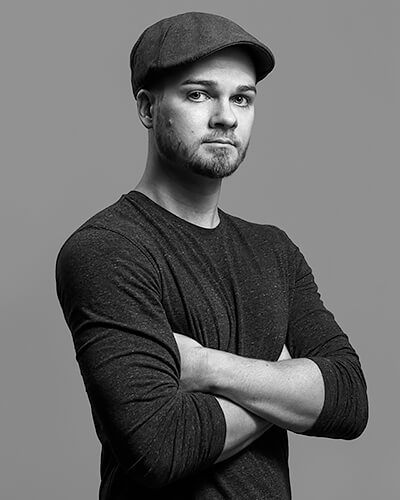
Johnny Kerr is a fine art photographer based in the West Valley of Arizona’s Phoenix Metropolitan Area. Johnny is self-taught in the craft of photography but entered into his study of the medium with many years of art education and design experience. In 2003 he earned a Bachelor’s degree in Media Arts from the Art Institute of Phoenix and went on to make his living as a graphic designer.

Johnny began learning and experimenting with photography in 2011 and in 2013 decided to shift his focus, pursuing photography as his primary medium of expression. He cites his graphic design experience, along with his appreciation for minimalist design, as having the largest influence on his vision as a fine art photographer.

After deciding to change careers Johnny went back to school, earning his Master of Arts in Education degree in 2010. Johnny currently makes his living as a photography teacher in the greater Phoenix area, where he lives with his wife and daughter.

STATEMENT
Growing up in Arizona has certainly given me an appreciation for the unique beauty of the desert. However, I have never found my desert surroundings to be particularly inspiring in my artistic endeavors.

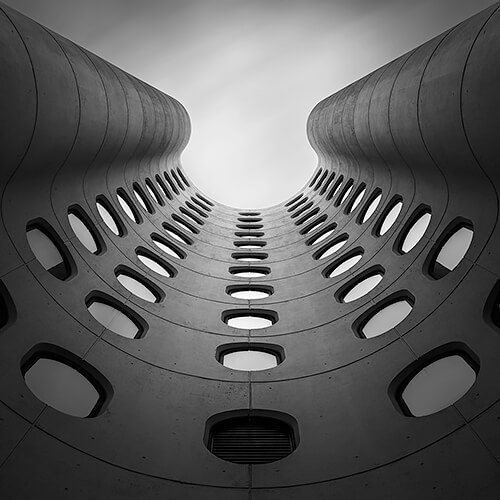
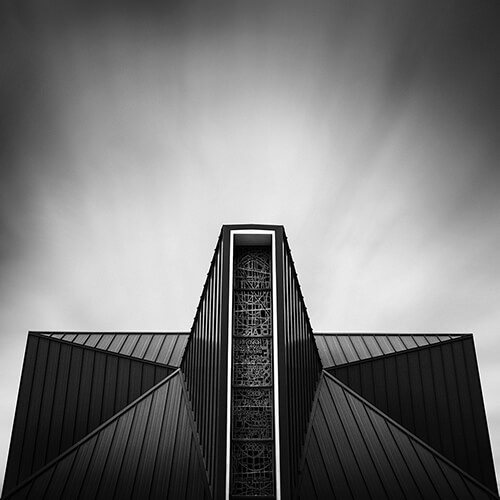
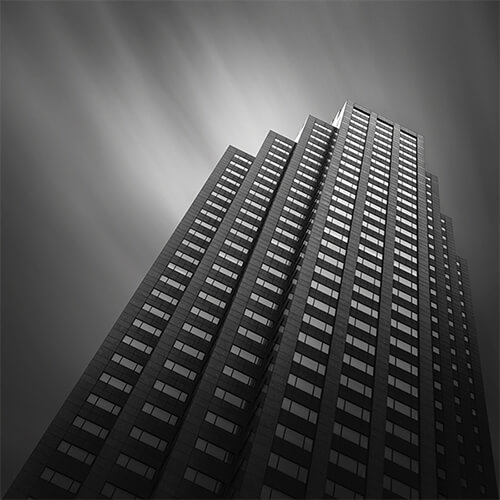
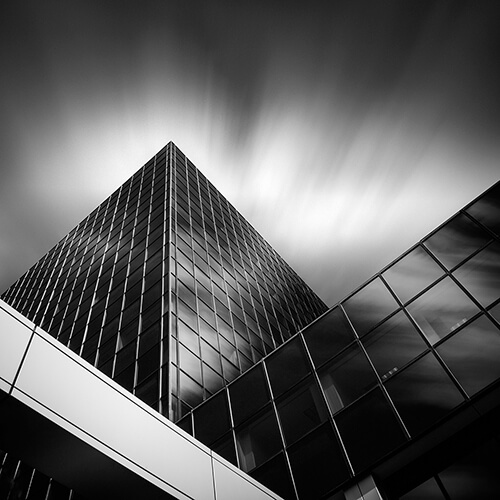
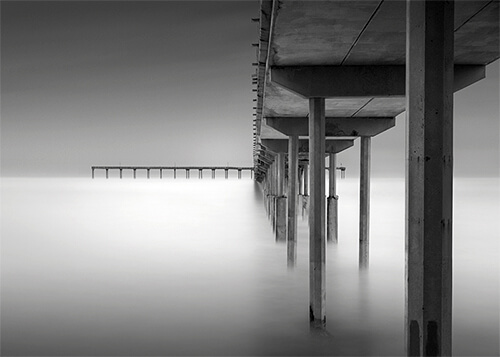
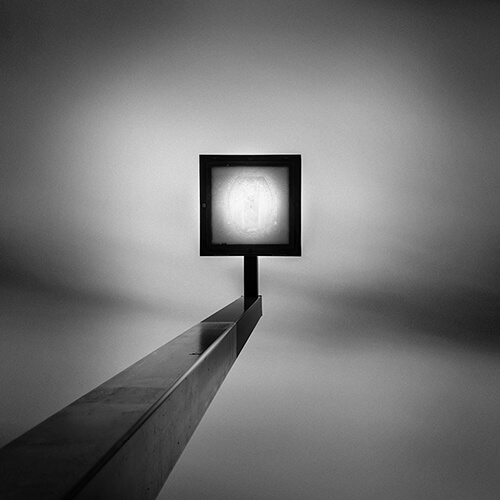
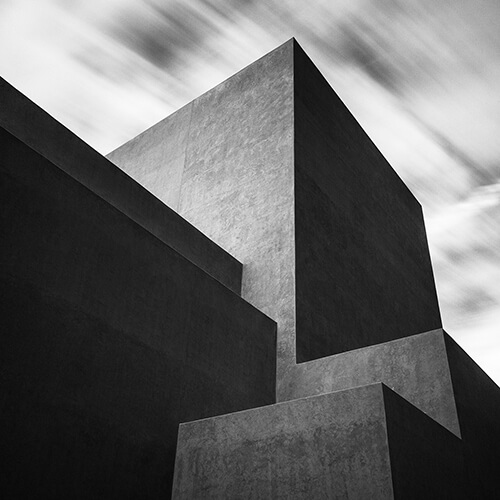
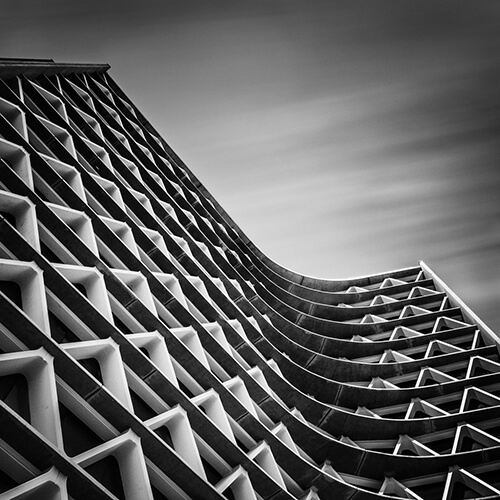
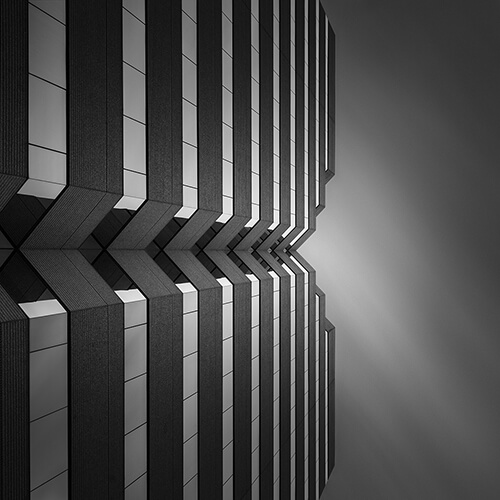
Lacking the inspiration to capture my natural surroundings in a representational manner, I have found freedom and gratification in abstraction. I found architecture to be an inspiring subject matter for its graphic qualities, but my photographs are not really about the buildings. Each photograph is a study of the rudimentary elements that catch my attention: shape, space, volume, line, rhythm, etc.

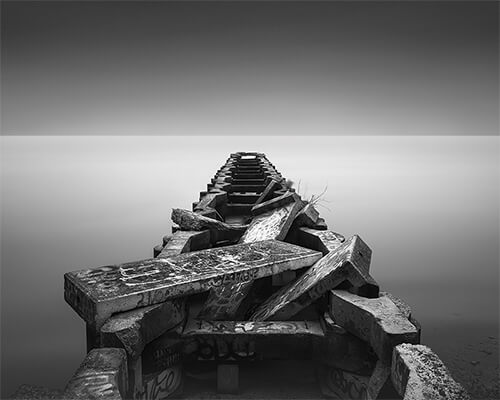
Drawing heavily from my graphic design experience, each architecture photograph represents an exercise in isolating those basic elements and trying to present them in a harmonious design. Often I have incorporated long exposure techniques to create images that seem to exist outside of the reality our eyes perceive on a daily basis. My goal has not been to abstract the subject beyond recognition, but to simplify, to pull it out of its usual context, and try to see the ordinary surroundings of city life in a new way.

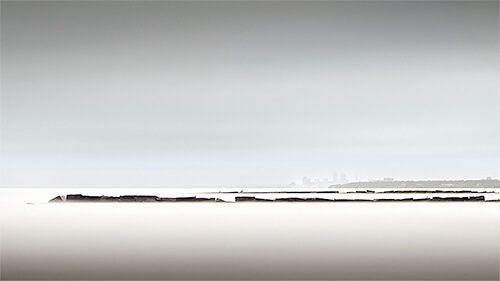
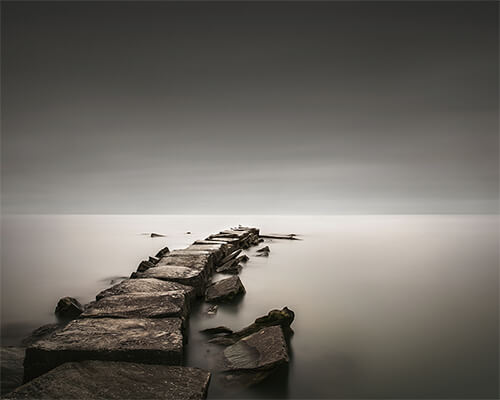
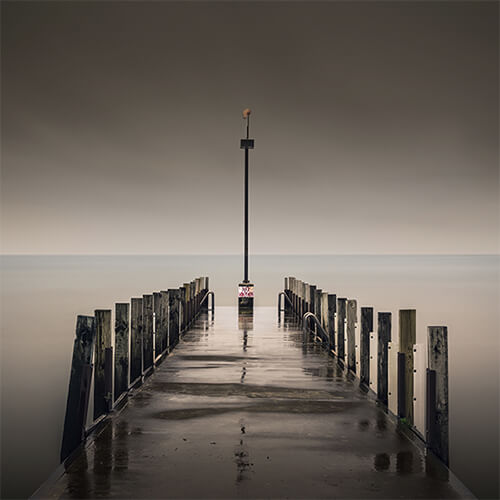
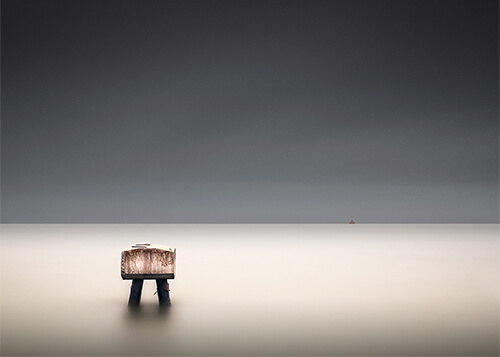
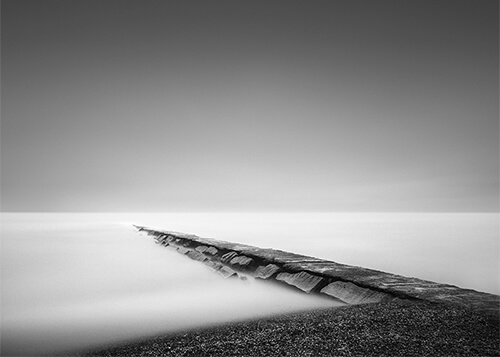
The lessons I learned from my exercises in abstracting architecture have also carried through into other subject matter, including landscape and seascape, helping me to find solace and inspiration in unexpected places.

 

Inspiring Portfolios

Call for Entries
AAP Magazine #56 Shadows
Publish your work in our printed magazine and win $1,000 cash prizes
 
Stay up-to-date  with call for entries, deadlines and other news about exhibitions, galleries, publications, & special events.

More Great Photographers To Discover

Louise Dahl-Wolfe
United States
1895 | † 1989
Louise Dahl-Wolfe was an American photographer. She is known primarily for her work for Harper's Bazaar, in association with fashion editor Diana Vreeland. Louise Emma Augusta Dahl was born November 19, 1895 in San Francisco, California to Norwegian immigrant parents; she was the youngest of three daughters. In 1914, she began her studies at the California School of Fine Arts (now the San Francisco Institute of Art), where she studied design and color with Rudolph Schaeffer, and painting with Frank Van Sloan. She took courses in life drawing, anatomy, figure composition and other subjects over the next six years. After graduating, Dahl-Wolfe worked in designing electric signs and interiors. In 1921, Dahl-Wolfe met with photographer Anne Brigman, who inspired her to take up photography. Her first dark-room enlarger was a makeshift one she built herself, which used a tin can, an apple crate, and a part of a Ghirardelli chocolate box for a reflector. She studied design, decoration and architecture at Columbia University, New York in 1923. From 1927 to 1928, Dahl-Wolfe traveled with photographer Consuelo Kanaga, who furthered her interest in photography. Her first published photograph, titled Tennessee Mountain Woman, was published in Vanity Fair (U.S. magazine 1913–36). In 1928 she married the sculptor Meyer Wolfe, who constructed the backgrounds of many of her photos. Dahl-Wolfe was known for taking photographs outdoors, with natural light in distant locations from South America to Africa in what became known as "environmental" fashion photography. Compared to other photographers at the time who were using red undertones, Dahl-Wolfe opted for cooler hues and also corrected her own proofs, with one example of her pulling proofs repeatedly to change a sofa's color from green to a dark magenta. She preferred portraiture to fashion photography. Notable portraits include: Mae West, Cecil Beaton, Eudora Welty, W. H. Auden, Christopher Isherwood, Orson Welles, Carson McCullers, Edward Hopper, Colette and Josephine Baker. She is known for her role in the discovery of a teenage Lauren Bacall whom she photographed for the March 1943 cover of Harper's Bazaar. One of her favorite subjects was the model Mary Jane Russell, who is estimated to have appeared in about thirty percent of Dahl-Wolfe's photographs. She was a great influence on photographers Irving Penn and Richard Avedon. One of her assistants was fashion and celebrity photographer, Milton H. Greene. From 1933 to 1960, Dahl-Wolfe operated a New York City photographic studio that was home to the freelance advertising and fashion work she made for stores including Bonwit Teller and Saks Fifth Avenue. From 1936 to 1958 Dahl-Wolfe was a staff fashion photographer at Harper’s Bazaar. She produced portrait and fashion photographs totaling 86 covers, 600 color pages and countless black-and-white shots. She worked with editor Carmel Snow, art director Alexey Brodovitch and fashion editor Diana Vreeland, and traveled widely. In 1950, she was selected for "America's Outstanding Woman Photographers" in the September issue of Foto. From 1958 until her retirement in 1960, Dahl-Wolfe worked as a freelance photographer for Vogue, Sports Illustrated, and other periodicals. Louise Dalhl-Wolfe lived many of her later years in Nashville, Tennessee. She died in New Jersey of pneumonia in 1989. The full archive of Dahl-Wolfe's work is located at the Center for Creative Photography (CCP) at the University of Arizona in Tucson, which also manages the copyright of her work. In 1999, her work was the subject of a documentary film entitled Louise Dahl-Wolfe: Painting with Light. The film featured the only surviving modern footage of Dahl-Wolfe, including extensive interviews. It was written and directed by Tom Neff, edited by Barry Rubinow and produced by Neff and Madeline Bell.Source: Wikipedia Born in Alameda, California, Dahl-Wolfe studied at the San Francisco Institute of Art. In 1921, while working as a sign painter, she discovered the photographs of Anne Brigman, a Pictorialist based in California and associated with the Stieglitz circle in New York. Although greatly impressed by Brigman's work, Dahl-Wolfe did not take up photography herself until the early 1930s. Travel with the photographer Consuelo Kanaga in Europe in 1927-28 piqued her interest in photography once again. In 1932, when she was living with her husband near the Great Smoky Mountains, she made her first published photograph, Tennessee Mountain Woman. After it was published in Vanity Fair in 1933, she moved to New York City and opened a photography studio, which she maintained until 1960. After a few years producing advertising and fashion photographs for Woman's Home Companion, Saks Fifth Avenue, and Bonwit Teller, she was hired by Carmel Snow as a staff fashion photographer for Harper's Bazaar in 1936. Dahl-Wolfe remained with the magazine until 1958, after which time she accepted freelance assignments from Vogue and Sports Illustrated until her retirement in 1960. Dahl-Wolfe was especially well-known during the infancy of color fashion photography for her exacting standards in reproducing her images. Her insistence on precision in the color transparencies made from her negatives resulted in stunning prints whose subtle hues and unusual gradations in color set the standard for elegance in the 1940s and 1950s. In addition, she pioneered the active yet sophisticated image of the "New Woman" through her incorporation of art historical themes and concepts into her photographs.Source: International Center of Photography "I believe that the camera is a medium of light, that one actually paints with light. In using the spotlights with reflecting lights, I could control the quality of the forms revealed to build a composition. Photography, to my mind, is not a fine art. It is splendid for recording a period of time, but it has definite limitations, and the photographer certainly hasn't the freedom of the painter. One can work with taste and emotion and create an exciting arrangement of significant form, a meaningful photograph, but a painter has the advantage of putting something in the picture that isn't there or taking something out that is there. I think this makes painting a more creative medium." — Louise Dahl-Wolf, 1984 Dahl-Wolfe preferred portraiture to fashion work, and while at Harper's she photographed cultural icons and celebrities including filmmaker Orson Wells, writer Carson McCullers, designer Christian Dior, photographer Cecil Beaton, writer Colette, and broadcast journalist Edward R. Murrow. In addition to her Harper's responsibilities, Dahl-Wolfe was able to pursue her own vision in the studio and sometimes even while on assignment. For example, she asked a model to pose for the unpublished Nude in the Desert while on location in California's Mojave Desert shooting swimsuits that would appear in the May 1948 edition of Harper's. From 1958 until her retirement in 1960, Dahl-Wolfe worked as a freelance photographer for Vogue, Sports Illustrated, and other periodicals. Major exhibitions of her work include Women of Photography: An Historical Survey at San Francisco Museum of Modern Art; The History of Fashion Photography and Recollections: Ten Women of Photography at International Museum of Photography, George Eastman House, Rochester, New York; and Portraits at the Center for Creative Photography, University of Arizona, Tucson. Retrospectives include shows at Grey Art Gallery, New York University; Cheekwood Fine Arts Center, Nashville, Tennessee; and Louise Dahl-Wolfe: A Ninetieth Birthday Salute at the Museum of Contemporary Photography, Chicago. Louise Dalh-Wolfe lived many of her later years in Nashville, Tennessee, though she died in New Jersey of pneumonia in 1989.Source: International Center of Photography
Lee Friedlander
United States
1934
Lee Friedlander (born July 14, 1934) is an American photographer and artist. In the 1960s and 70s, working primarily with 35mm cameras and black and white film, Friedlander evolved an influential and often imitated visual language of urban "social landscape," with many of his photographs including fragments of store-front reflections, structures framed by fences, posters and street-signs. Friedlander studied photography at the Art Center College of Design located in Pasadena, California. In 1956, he moved to New York City where he photographed jazz musicians for record covers. His early work was influenced by Eugène Atget, Robert Frank, and Walker Evans. In 1960, the Guggenheim Memorial Foundation awarded Friedlander a grant to focus on his art and made subsequent grants in 1962 and 1977. Some of his most famous photographs appeared in the September 1985 Playboy, black and white nude photographs of Madonna from the late 1970s. A student at the time, she was paid only $25 for her 1979 set. In 2009, one of the images fetched $37,500 at a Christie's Art House auction. Working primarily with Leica 35mm cameras and black and white film, Friedlander's style focused on the "social landscape". His photographs used detached images of urban life, store-front reflections, structures framed by fences, and posters and signs all combining to capture the look of modern life. In 1963, the International Museum of Photography at George Eastman House mounted Friedlander's first solo exhibition. Friedlander was then a key figure in curator John Szarkowski's 1967 "New Documents" exhibition, at the Museum of Modern Art in New York City along with Garry Winogrand and Diane Arbus. In 1973, his work was honored in Rencontres d'Arles festival (France) with the screening "Soirée américaine : Judy Dater, Jack Welpott, Jerry Uelsmann, Lee Friedlander" présentée par Jean-Claude Lemagny. In 1990, the MacArthur Foundation awarded Friedlander a MacArthur Fellowship. Friedlander now works primarily with medium format cameras (e.g. Hasselblad Superwide). Whilst suffering from arthritis and housebound, he focused on photographing his surroundings. His book, Stems, reflects his life during the time of his knee replacement surgery. He has said that his "limbs" reminded him of plant stems. These images display textures which were not a feature of his earlier work. In this sense, the images are similar to those of Josef Sudek who also photographed the confines of his home and studio. He was awarded The Royal Photographic Society's Special 150th Anniversary Medal and Honorary Fellowship (HonFRPS) in recognition of a sustained, significant contribution to the art of photography in 2003. In 2005, the Museum of Modern Art presented a major retrospective of Friedlander's career, including nearly 400 photographs from the 1950s to the present. In the same year he received a Hasselblad International Award. The retrospective exhibition was presented again in 2008 at the San Francisco Museum of Modern Art. Concurrent to this retrospective, a more contemporary body of his work, America By Car, was displayed at the Fraenkel Gallery, also in San Francisco. "America By Car" was on display at the Whitney Museum of American Art in New York City in late 2010. He is the father of cellist Erik Friedlander, and Anna Friedlander. Source: Wikipedia
Stefano Azario
Born in Paris, July 31 1966, Stefano Azario is a photographer and director now living between Milan and New York. Stefano began taking photographs at the age of 11 in 1977, shortly after the loss of his father. His family moved from Italy to London in 1979, where he studied photography at the London College of Printing from 1984 to 1987. Having developed a reputation as one of the best-known commercial photographers of children and babies, Stefano is currently concentrating more in documentary and fine art photography. A turning point in Stefano's career came in 1992 when Vogue Bambini began commissioning him regularly until the magazine's demise in 2018. In 2013, Stefano was asked to plan and photograph an entire issue of the magazine. In 1994, Stefano started shooting Gap Kids and BabyGap global advertising campaigns and continued uninterrupted for over 25 years. Major publications, advertising agencies, and globally known brands have worked with him. Benetton, Uniqlo, and Armani are just a few of the brands he has collaborated with. In his photography, Stefano tries above all to lead from the heart. With the likes of Dorothea Lange, Irving Penn and Luigi Ghirri as inspiration, Stefano is nimble in his working ways; at home directing on large video sets or shooting solo. Whether accessing his intimate and tender vision of children and babies or shooting in the Indonesian forest, he enjoys using a whole gamut of different cameras, films and technology, constantly challenging his way of seeing. His last exhibition "In Cerca Della Retta Via" at the No Gallery in Pontremoli, was put together with the patronage of the Italian Ministry of Culture as part of the Lunigiana Land Art festival in 2022. Statement Through the viewfinder I aim to capture fleeting, heartfelt moments that tell compelling human stories. I seek to make order of the world around me, to share an intuitive perspective, in the hope that my images can evoke emotions and memories, connecting viewer and subject. Throughout my career I have been drawn to projects that explore themes of childhood and relationships, seeking to convey experiences that shape us in these formative years. More recently I have roamed other areas from landscape to portraiture to expand and challenge my photographic practice and storytelling ability. In Search of a Path
MG Vander Elst
Belgium/United States
1967
Raised In Antwerp, Belgium, MG Vander Elst is a Fine Art Photographer and holds a Certificate of Photography from The Portfolio Center in Atlanta, Ga. She worked as a photographer’s assistant in NYC and developed her Portraiture work which later expanded to include, still life, abstract and landscape work. Art was all around her growing up in Antwerp, where she regularly visited the Ruben’s house, studied the Dutch Masters, and shared her parents love for Modern Art. The light, gesture and intimacy of the Dutch masters and the minimalism of modernists still influence her work. MG’s fine art photography approach is intuitive, stemming from an idea or an emotion. Whether photographing landscape, florals or abstracts she tries to make visible what is invisible, pursuing that intimate moment between inhale and exhale. Statement MG’s latest work in florals, still life and abstract work all stem from the same place, a place of loss, identity and forging ahead. Letting go "Floral images are my new center, I use flowers that I encounter in my neighborhood and local shops, it is no surprise to learn that these flowers embody the range of emotions I have been going through, like remembrance, growth, healing, refuge, and love. Through this process I am learning that photographing the simple lines and daintiness of these flowers they become an exercise in form, in juxtapositions and in letting go. In closely observing the shifting shapes of these living forms, who then transition, mature, and wilt I witness the contrasting paradox in beauty when blossoming or dying combined with their shaggy stalk and the petal’s ethereal texture which generates this visual dissonance that captivate me. I am not frozen and no longer afraid, but instead I am finding a rise of energy in this newfound freedom of moving in a place I have never been." Finding my Way "At the onset of the Pandemic, I lost my mother, simultaneously, my eldest son was preparing to leave for college. With the loss of my mother, I became the adult, the matriarch. The guidance I trusted and the intimacy I relied on was gone, that comfort of being the child vanished. With the anticipation of my son’s departure, I was thrusted into an uncharted emotional landscape, one where I felt undefined as a mother and did not know how to move forward. So, returning to myself and turning the camera onto my body is my way forward. By abstracting my body, I examine the shapes and textures of my form; in this pause, I am able to explore and chart my new emotional landscape. This way I am relearning who I am in order to know where I am going." Conformity "When I am creating still life’s in my own domestic spaces or in my studio. I am asking questions about my life today, as a woman, as mother and as a spouse. Whose ideas about myself am I conforming to? Why do I possess a pink razor, Is this herbal tea really soothing me? By calling attention to the everyday mundane possessions, we surround ourselves with, my intention is clear from the start. In certain instances, I juxtapose them with random objects, or I deliberately leave them by themselves. But by posing these objects in specific places I am adding a tension to the image and the one-dimensional image becomes a multi-dimensional exploration of the time we live in. I am making room for consideration, focusing on what that object means to us and what it evokes in us and why we surround ourselves with it. I aim to create a pause." AAP Magazine: AAP Magazine 26 Shapes Article Silences
Carol Beckwith
United States
Thirty years of work on the African continent have carried Carol Beckwith and Angela Fisher across 270,000 miles and through remote corners of 40 countries in exploration of more than 150 African cultures. In the process, this team of world-renowned photographers has produced fourteen widely acclaimed books and made four films about traditional Africa. They have been granted unprecedented access to African tribal rites and rituals and continue to be honored worldwide for their powerful photographs documenting the traditional ceremonies of cultures thousands of years old. As an intrepid team of explorers, they are committed to preserving sacred tribal ceremonies and African cultural traditions all too vulnerable to the trends of modernity. The Beckwith-Fisher images are the result of a long, enduring and deeply respectful relationship with African tribal peoples. This, combined with their photographic skills, creates an intimate portrayal of ceremonies long held secret that might have never been recorded. Their work preserves and presents the power, complexity and celebration found within the rituals of African tribal life. Their extraordinary photographs are recorded in fourteen best-selling books and in their films. Their new book “Painted Bodies” (2012) follows “Maasai” (1980), “Nomads of Niger” (1983), “Africa Adorned” (1984), “African Ark” (1990), “African Ceremonies” (1999), “Passages” (2000), “Faces of Africa” (2004), “Lamu: Kenya’s Enchanted Island” (2009), and “Dinka” (2010). The special limited-edition books, hand printed in Santiago, Chile, are titled “Surma,” “Karo,” “Maasai,” and “Dinka.” “African Ceremonies,” their defining body of work, is a double volume, pan-African study of rituals and rites of passage from birth to death, covering 93 ceremonies from 26 countries. This book won the United Nations Award for Excellence for “vision and understanding of the role of cultural traditions in the pursuit of world peace.” Honored twice with the Annisfield-Wolf Book Award in race relations for “outstanding contributions to the understanding of cultural diversity and prejudice,” Angela and Carol are also winners of the Royal Geographical Society of London’s Cherry Kearton Medal for their contribution to the photographic recording of African ethnography and ritual. The photographers have made four films about traditional Africa, including Way of the Wodaabe (1986), The Painter and the Fighter, and two programs for the Millennium Series Tribal Wisdom and the Modern World. Numerous exhibitions of their photography and films have been shown in museums and galleries around the world. In 2000 their Passages exhibition opened at the Brooklyn Museum of Art featuring 97 mural photographs, six video films and a selection of African masks, sculpture and jewelry. This exhibition has traveled to seven museums on three continents. Aware that traditional cultures in Africa are fast disappearing, Carol and Angela are working with an urgency to complete the third volume of their ongoing study of African Ceremonies with the goal of covering the remaining traditional ceremonies in the 13 African cultures in which they have not yet worked.Source: carolbeckwith-angelafisher.com
Steeve Luncker
Switzerland
1969
Born in 1969 in Switzerland, Steeve Iuncker lives and works in Geneva. He studied at the Photography School in Vevey and is Agence VU' member since 2000.“Press photographer (he works part-time for a daily newspaper), Steeve Iunker tirelessly questions the role(s) of photography and of the image in the fields of information and documentary today in a radical and political way…[his work] aims to get close to the taboos relating to the body, to death and to the standard social conception of big issues that affect human thought. Either he stays with an Aids patient in the terminal phase, he represents the professional life of an old prostitute, he confronts himself with the crisis in Gaza, he stores images of celebrities adorned with diamonds at Cannes Festival, discovers the backstage area of a fashion show, follows the police while investigating on crimes, or reveals the astounding world of plastic surgery, Steeve Iunker doesn’t chase icons. He shows. In a realistic, free and salutary way. Even if it might seem provocative or shocking. He only wants us to agree to see. To be responsible and clear-sighted.”Christian Caujolle.He has recently finished the first phase of a project dealing with the subject of death. He wishes to expose to Geneva the realities that its police department, University Institute of Legal Medicine and the Murith Funeral Services must face regularly. The second ongoing phase of the project consists of photographing the places and traces behind individual deaths in order to reveal an often unknown reality that is tossed into the realm of fiction by Hollywood movies. Source: Agence VU
Advertisement
AAP Magazine #56 Shadows
Win a Solo Exhibition in May
AAP Magazine #56 Shadows

Latest Interviews

Exclusive Interview with Matthew Finley
American photographer Matthew Finley turns inward, using photography as a way to explore identity, memory, and emotional truth. Based in Los Angeles, his practice moves between performance, gesture, and found imagery, creating a visual language that is both intimate and deeply personal
Exclusive Interview with Jan Janssen
Dutch photographer Jan Janssen explores universal human experiences through his long-term project It Matters, winner of the May 2025 Solo Exhibition. Begun in 2016, the series captures intimate moments of everyday life—love, loss, connection, and belonging—across Central and Eastern Europe. Working in countries such as Turkey, Azerbaijan, and Armenia, Janssen spends extended time within communities, building relationships based on trust and respect. His approach allows him to move beyond observation, revealing deeply human and authentic moments. Rooted in travel and personal discovery, It Matters reflects Janssen’s search for what connects us all in an increasingly divided world. The project is ongoing and will culminate in a photobook scheduled for publication in 2026.
Exclusive Interview with Henk Kosche
German photographer Henk Kosche turns his lens toward the streets of Halle an der Saale, capturing everyday life in the late years of the former German Democratic Republic. At the time, Kosche was studying design and exploring the city with his camera, drawn to the atmosphere of its industrial landscape and the quiet rhythms of daily life. His series Street Photography at the End of the 80s, selected as the Solo Exhibition for July 2025, revisits a body of work created just before a period of profound change. Rediscovered decades later in a small box of 35mm negatives, these photographs offer glimpses of a city and its people at a moment suspended between the familiar and the unknown.
Exclusive Interview with Anastasia Samoylova
Anastasia Samoylova is an American artist whose photographic practice is shaped by close observation and a deep attentiveness to place. Working between documentary and formal exploration, she photographs landscapes, architecture, and everyday scenes with a sensitivity to light, structure, and atmosphere. Since relocating to Miami in 2016, her work has increasingly focused on how environments—both natural and built—carry social, cultural, and emotional traces. We asked her a few questions about her practice and her way of seeing, to better understand the thoughts and experiences that shape her work—while allowing the images themselves to remain open and speak in their own time.
Exclusive Interview with Marijn Fidder
Marijn Fidder is a Dutch documentary photographer whose work powerfully engages with current affairs and contemporary social issues. Driven by a deep sense of social justice, she uses photography to speak on behalf of the voiceless and to advocate for the rights of those who are most vulnerable. Her images have been widely published in major international outlets including National Geographic, CNN Style, NRC Handelsblad, Volkskrant, GUP New Talent, and ZEIT Magazin. Her long-term commitment to disability rights—particularly through years of work in Uganda—culminated in her acclaimed project Inclusive Nation, which earned her the title of Photographer of the Year 2025 at the All About Photo Awards. She is also the recipient of multiple prestigious honors, including awards from World Press Photo and the Global Peace Photo Award. We asked her a few questions about her life and work.
Exclusive Interview with Josh S. Rose
Josh S. Rose is a multidisciplinary artist working across photography, film, and writing. His practice bridges visual and performing arts, with a strong focus on movement, emotion, and the expressive potential of the image. Known for his long-standing collaborations with leading dance companies and performers, Rose brings together authenticity and precise composition—a balance he describes as “technical romanticism.” His work has been commissioned and exhibited internationally, appearing in outlets such as Vogue, at the Super Bowl, in film festivals, and most recently as a large-scale installation for Lincoln Center for the Performing Arts. A sought-after collaborator, he has worked with major artists, cultural institutions, and brands, following a previous career as Chief Creative Officer at Interpublic Group and the founder of Humans Are Social. We asked him a few questions about his life and work.
Interview with Maureen Ruddy Burkhart
Photographer Maureen Ruddy Burkhart brings a quietly attentive and deeply human sensibility to her exploration of the world through images. Shaped by a life immersed in photography, film, and visual storytelling, her work is guided by intuition, observation, and an enduring interest in the emotional undercurrents of everyday life. With a practice rooted in both fine art traditions and documentary awareness, she approaches her subjects with sensitivity, allowing subtle moments to emerge naturally rather than be imposed. Her series Til Death, selected as the Solo Exhibition for February 2025, reflects this long-standing commitment to photography as a space for reflection rather than spectacle. Drawn to moments that exist just outside the expected frame, Burkhart’s images suggest narratives without resolving them, leaving room for ambiguity, humor, and quiet connection. We asked her a few questions about her life and work.
Exclusive Interview with Peter Ydeen
Winner of AAP Magazine #45 Travels, his series reflects this unique vision—capturing the spirit of place through subtle layers of light, color, and emotion. Whether traveling abroad or observing the rhythms of his own surroundings, Ydeen creates images that feel both grounded and enchanted, inviting viewers into a world where reality and reverie meet.
Exclusive Interview with Julie Wang
Chinese-born photographer Julie Wang brings a poetic, contemplative sensitivity to her visual exploration of the world. Having lived for nearly equal parts of her life in China, Europe, and the United States, she approaches her subjects with the nuanced perspective of someone shaped by many cultures. This blend of distance, curiosity, and emotional resonance infuses her work with a quiet depth, allowing her to reveal the fragile beauty and subtle tensions that often pass unnoticed.
Call for Entries
AAP Magazine #56 Shadows
Publish your work in our printed magazine and win $1,000 cash prizes