All about photo.com: photo contests, photography exhibitions, galleries, photographers, books, schools and venues.
FINAL CALL TO ENTER AAP MAGAZINE WOMEN: GET PUBLISHED AND WIN $1,000
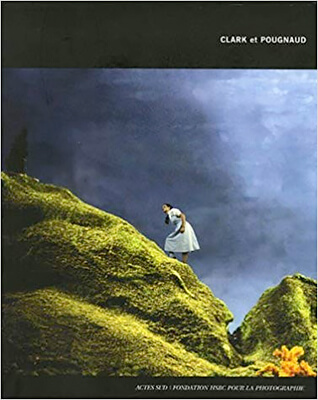
Clark et  Pougnaud
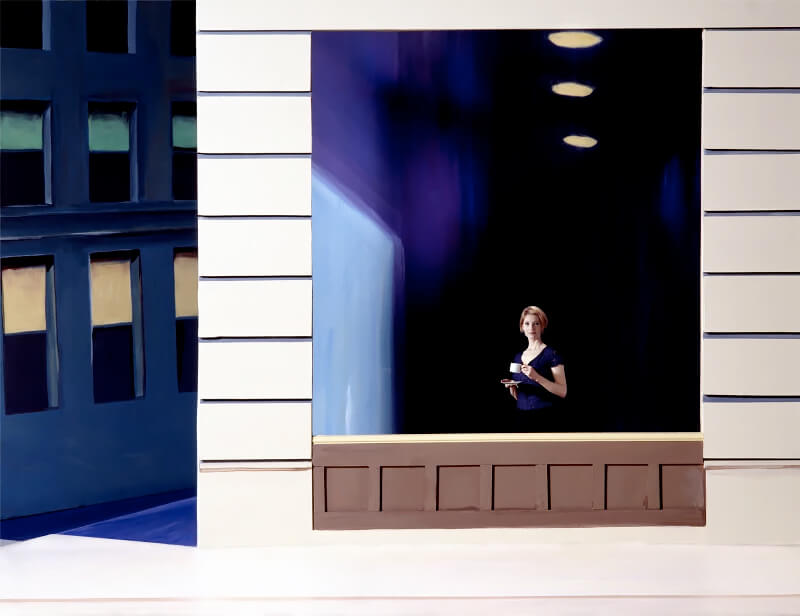
Clark et  Pougnaud
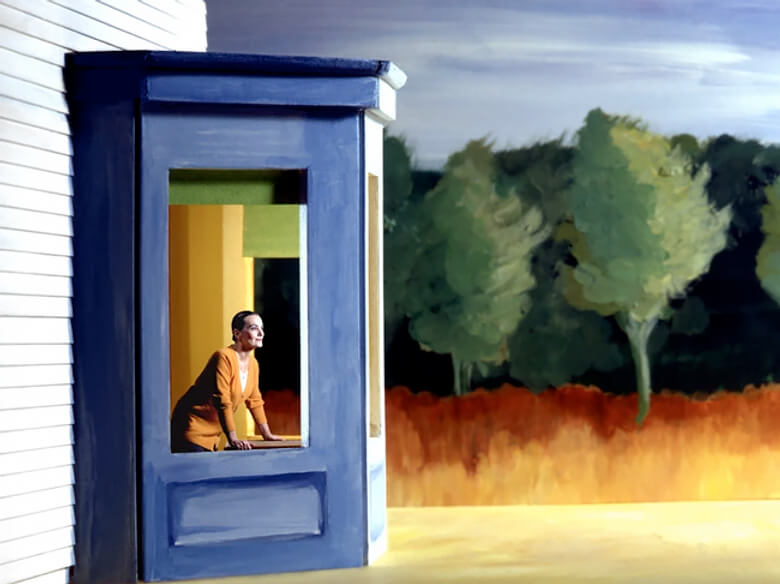
Clark et  Pougnaud

Clark et Pougnaud

Country: France

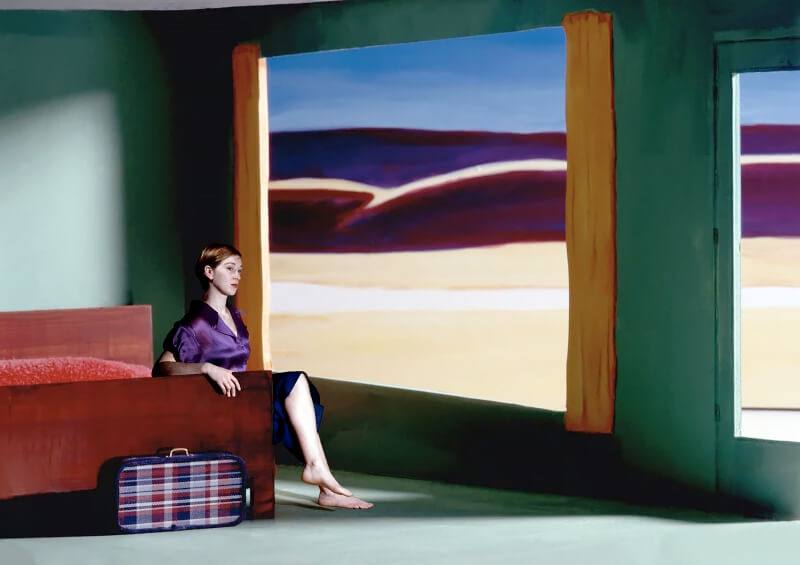
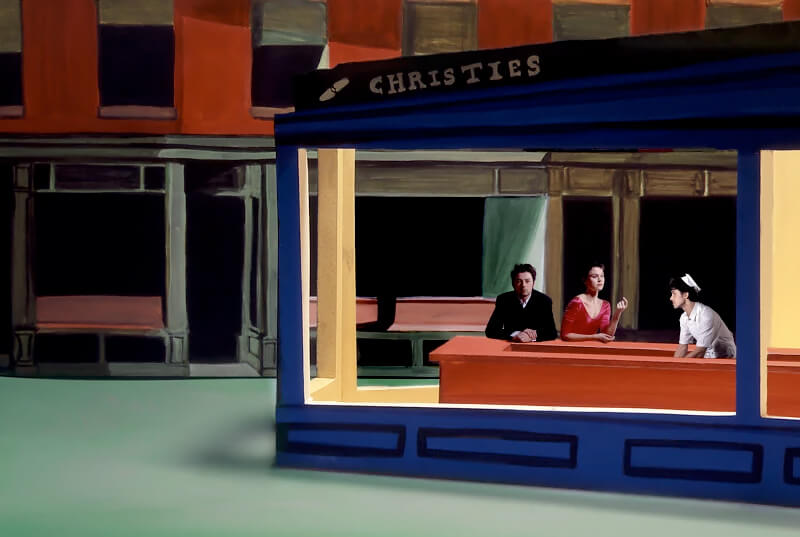
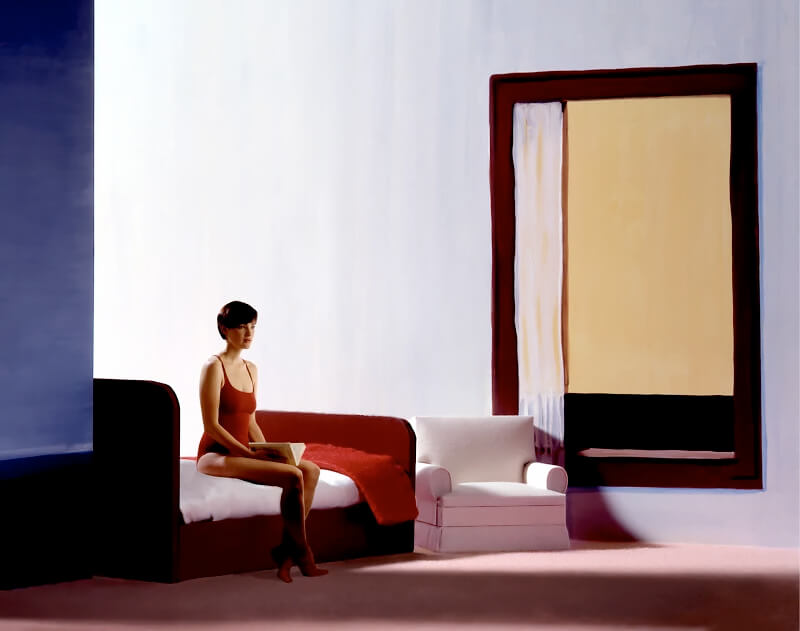
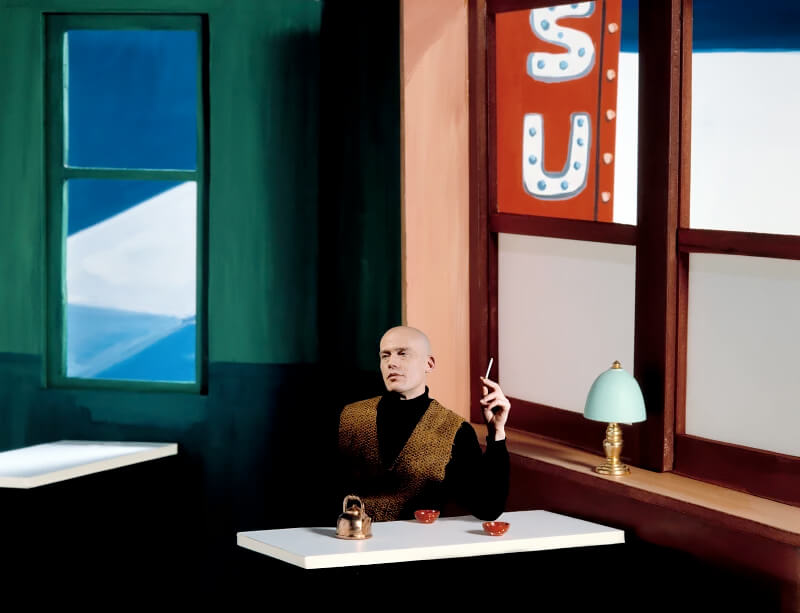
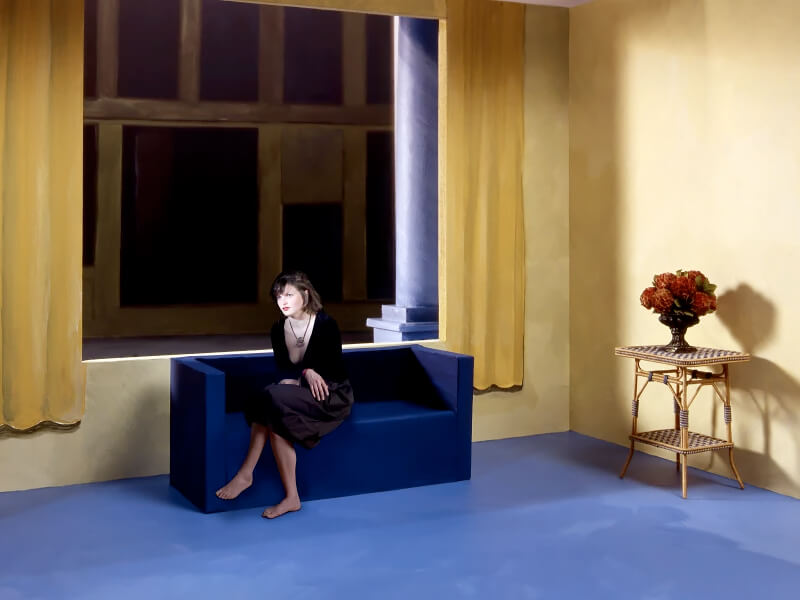
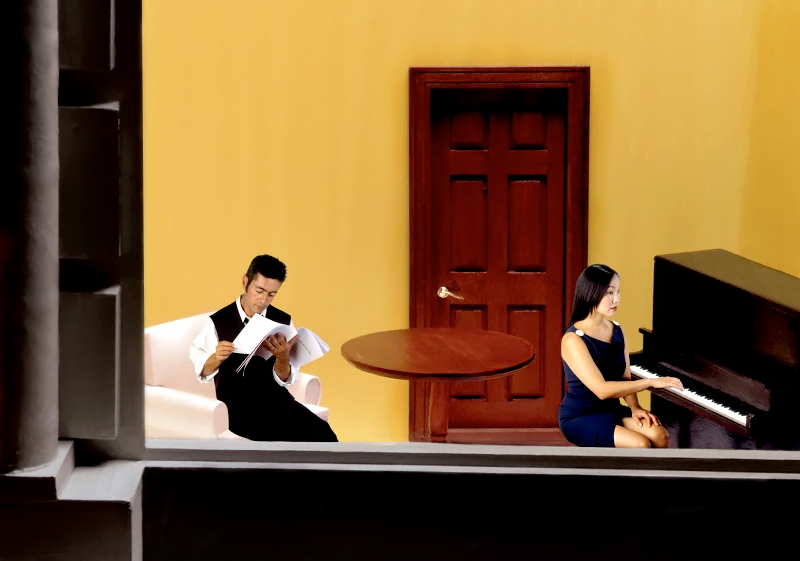
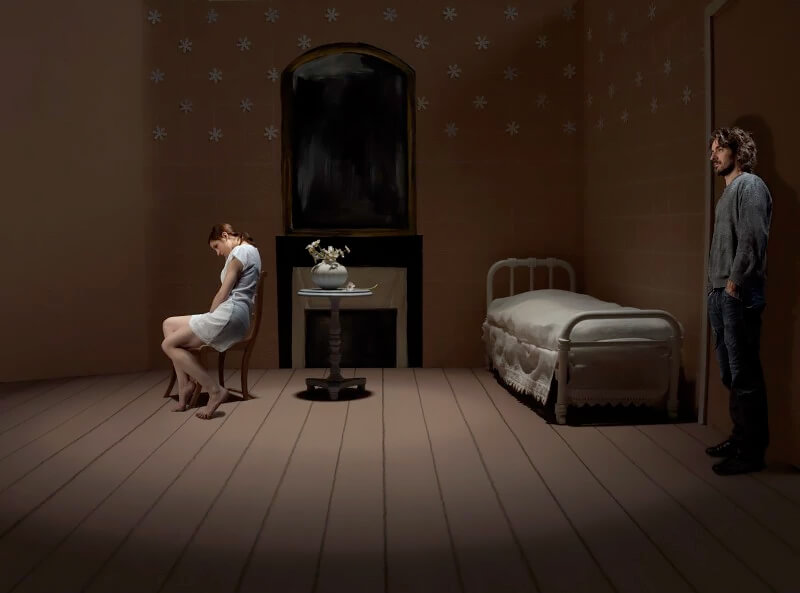
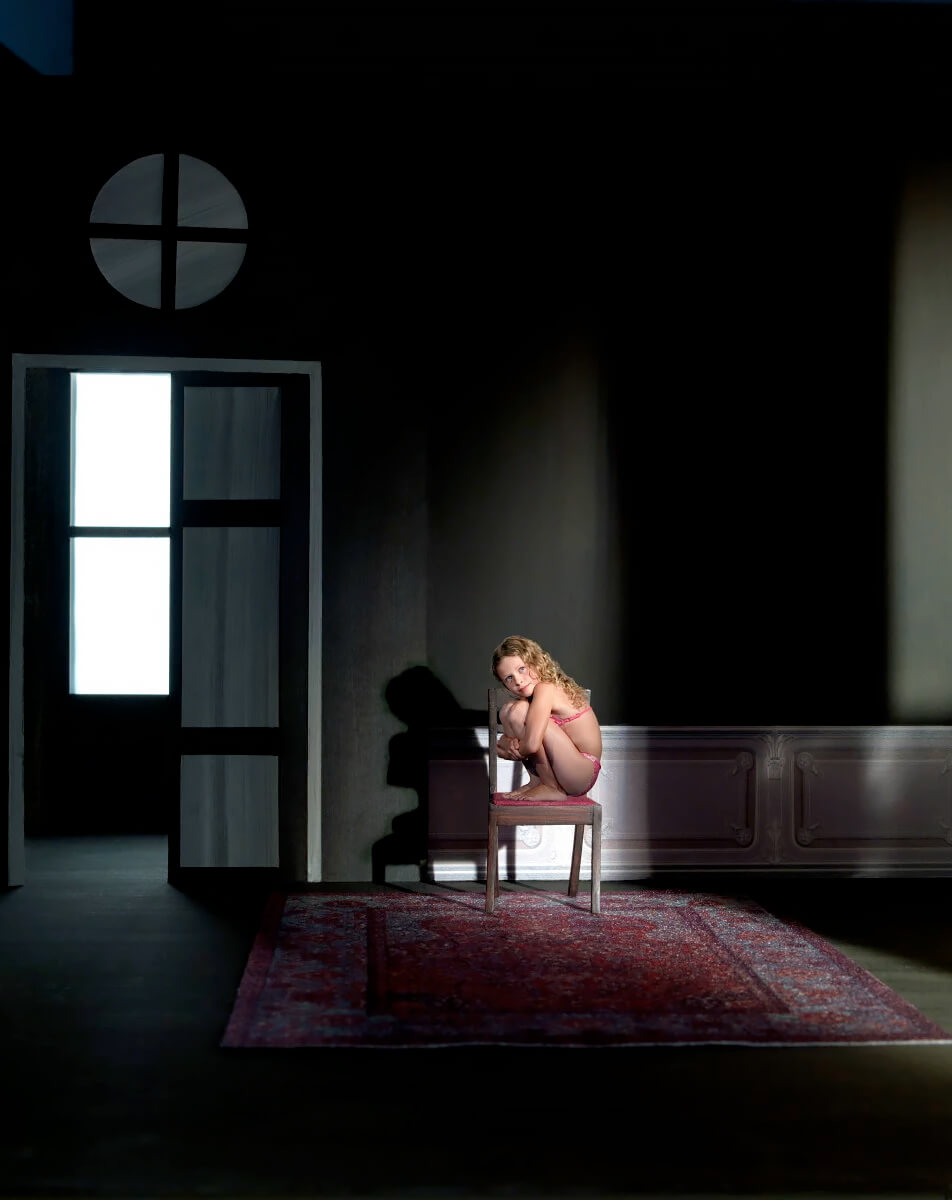
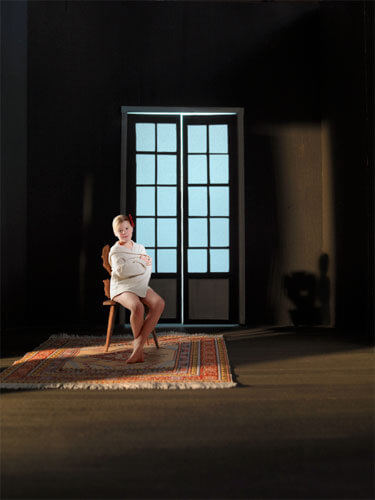
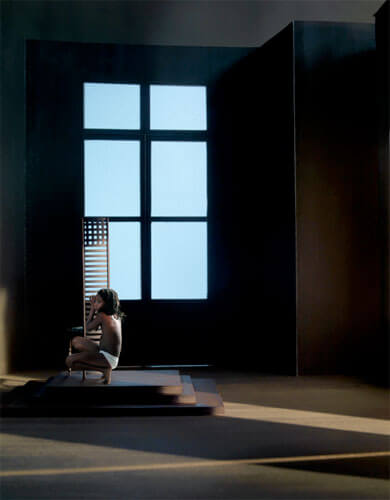
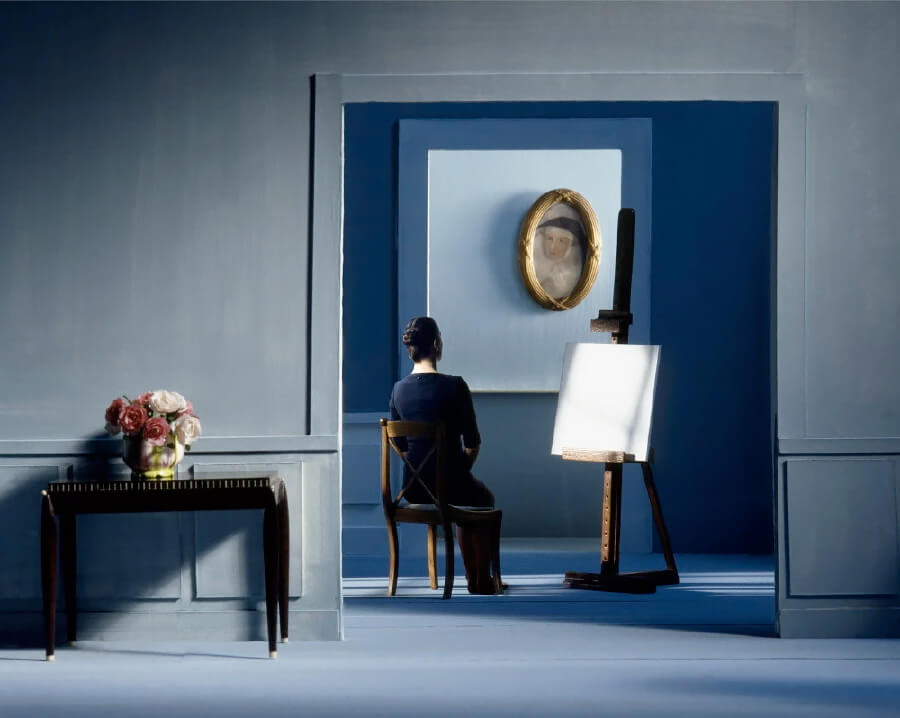
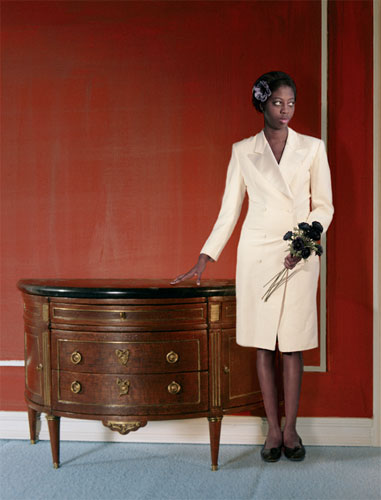
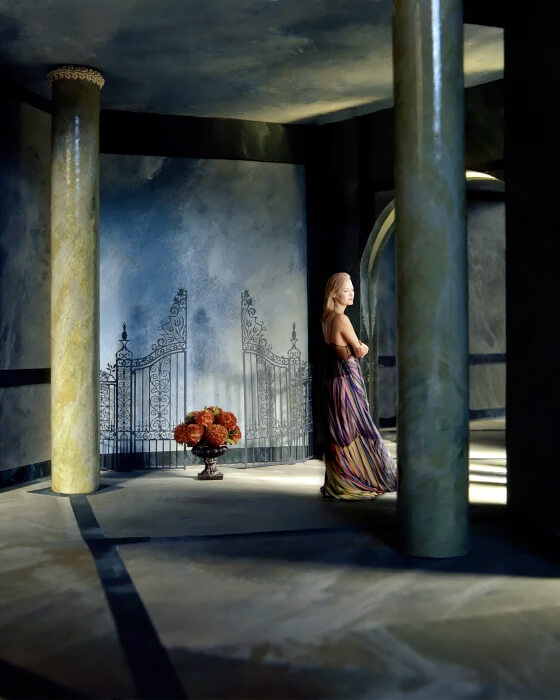
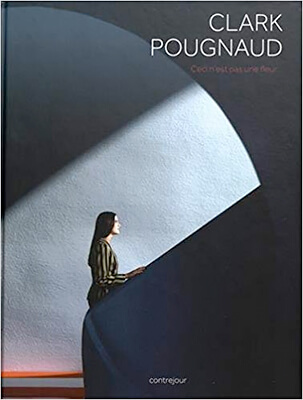
Clark and Pougnaud born in 1963 and 1962 respectively were both raised in France. Clark comes from a line of photographers. He started as his father’s asistant before opening his own studio in the 80’s. Pougnaud was strongly influenced by her grandmothers, both painters, and her mother who comes from the theatre world. In the late 90’s they became partners and worked in duo. Clark is taking pictures and Pougnaud is building sets in which the models will take place. Clark’s north american roots and the 5 years period Pougnaud spent in the US, naturally had an effect upon their work. In 2000 they received an award for their first serie of photographs as a tribute to Edward Hopper’s paintings, which was followed by an exhibition at the Maison Europeenne de la Photographie in Paris. In 2006 they received the HSBC ‘s award for photography. They live and work in Paris. They «make» approximately 10 pictures per year. «slow art» is their response to the speed process to which the human being is confronted today. Their pictures are shown in artfairs worldwide by galleries.

Source: www.clarkpougnaud.com


Clark et Pougnaud's Video

Selected Books

Inspiring Portfolios

Call for Entries
AAP Magazine #55 Women
Publish your work in our printed magazine and win $1,000 cash prizes
 
Stay up-to-date  with call for entries, deadlines and other news about exhibitions, galleries, publications, & special events.

More Great Photographers To Discover

Roger Grasas
Spain
1970
Roger Grasas (Barcelona, 1970) begins his professional career as a photographer in 1998 documenting cooperation projects for national and international foundations and NGOs as well as for UNESCO. Since then, traveling becomes the core of his artistic work, translating his experiences and reflections into visual arts. Between 2005 and 2009 he is the director of the BisouFoto communication studio and co-founder of the phototroupe Studio agency. In both projects he is in charge of the commissions related to travel photography, editorial portrait and social report. Regular contributor to several Spanish and international publications. In 2009 he moves to Riyadh (Saudi Arabia) where he leads the foundation of the photography department at Imagine Communication, a high end quality agency for social photography and events. During his stay in Saudi Arabia and later on until 2016 he develops the project 'Inshallah', a personal project about the extreme transformation of Middle eastern societies through the urban contemporary landscape in countries such as Saudi Arabia, Bahrain, Qatar, Emirates, Oman etc. His body of work approaches the role and importance that technology reveals within the post-modern digital society, the state of strangeness and confusion that human being suffers in the contemporary landscape and the increasingly connections between art and science. Sociopolitical issues such as globalization and philosophical concepts such as the 'difference', 'hyperreality' and 'alienation' generated by the postcapitalist society and the accelerated implementation of new technologies are also common places of their work. Since 1997 he has combined his professional activity with teaching in photography. Between 1997 and 2004 he teaches Photography and Landscape Production courses at the UPC's Image and Multimedia Technology Center. He also works as an academic at the Groc School of Plastic Arts (Barcelona), at the Communication Faculty of the National Autonomous University of Mexico and at the Mamori Art Lab Foundation in Brazil. He has also given various workshops and seminars related to travel anthropology and contemporary society such as "The Art of Travel: Photography and Travel" and "Why Travel? Ethics and Aesthetics of Leisure and Tourism". His His works have been exhibited on galleries of Spain, France, Netherlands, Germany, U.S.A., El Salvador, Saudi Arabia and Mexico. About 'Min Turab' In the space of a few decades, the landscapes of the Arab Gulf region have undergone a wholesale mutation driven by increased income from the oil, globalization and mass tourism. These countries have seen so a huge transformation, moving from the nomadic lifestyle of the bedouin tribes to a hi-tech urban society. The work takes the title from an arabic expression meaning “from the land”, and is an observation of this process oscillation between these two poles: an austere, traditional civilization on one extreme, and a postmodern culture under the powerful influence of capitalism and consumerism on the other. Founded on the idea of travel as an artistic method, these photographs hold up a mirror to the dyad of nature and technology in a place where the old and the new come together and the lines between them blur. This tension is evident both in the vast desert landscapes and in the images of cities, where the past and the future are compressed into the close quarters of the present. These representations of the landscapes of Saudi Arabia, Oman, Bahrain, Kuwait, United Arab Emirates and Qatar throw into sharp relief the binary opposition of the natural and the constructed. This sense of dislocation feeds into this idea of travel as an artistic dérive, drifting with no particular destination in mind, in search of new situations and experiences. In these dreamlike images, the author reflects on the concepts of the real and the unreal, with viewers left uncertain as to what is really going on. Almost completely lacking in human presence, these photographs show the mark left upon the landscape by consumer society at the same time as they seek out the beauty in strangeness. With a dry wit, the artist focuses his gaze on the idea of the simulacrum. The visual and conceptual glimpses of this world documents the colonization of contemporary landscapes by technology and the alienation of human beings in the digital societies of the Arabian Gulf countries. These images of silent architecture do not offer viewers any conclusions, but rather invite them to reflect and leave the way clear for a multiplicity of interpretations that connect with viewers' own imaginary.
Beth Moon
United States
1956
San Francisco Bay Area artist, Beth Moon, has gained international recognition for her large-scale, richly toned platinum prints. Since 1999, Moon’s work has appeared in more than sixty solo and group exhibitions in the United States, Italy, England, France, Israel, Brazil, Dubai, Singapore, and Canada. Her work is held in numerous public and private collections, including the Museum of Fine Arts, Houston, the Museum of Photographic Arts in San Diego, and the Fox Talbot Museum in Wiltshire, England. In 2013, Between Earth and Sky, the first monograph of her work, was published by Charta Art Books of Milan. In 2014, Abbeville Press published, Ancient Trees: Portraits of Time, with a third book to follow that same year from Galerie Vevais, La Lange Verte. Moon studied fine art at the University of Wisconsin before moving to England where she experimented with alternative photographic processes and learned to make platinum prints. Source: www.vervegallery.com Beth Moon was born in Neenah, Wisconsin and studied fine art at the University of Wisconsin. Classes in painting, life drawing, sculpture, and design would set the groundwork for her work in photography, which was to come years later. Moving to England, a country with a love for all things arboreal, gave her a fresh look at a land that boasts the largest concentration of ancient trees. Inspired by these trees she decided to make a series of their portraits. Unhappy with the photographic tonality and stability of ink-jet printing, she started to experiment with alternative printing processes, learning platinum/palladium printing, an ideal process for her vision. She concentrated on mastering this printing technique, doing all of her own printing. “By using the longest lasting photographic process, I hope to speak about survival, not only of man and nature’s but to photography’s survival as well. For each print I mix ground platinum and palladium metals, making a tincture that is hand-coated onto heavy watercolor paper and exposed to light. There are many steps involved in creating the final print and these are as important to me as the capturing of the image," said Moon. A platinum print can last for centuries, drawing on the common theme of time and survival, pairing photographic subject and process. Source: www.josephsaxton.com
Jessica Todd Harper
United States
1975
Jessica spent much of her childhood wandering around museums with a sketchbook, copying paintings. This traditional artistic preparation took an unexpected course when she started making photographs as a teenager, but the familiar canvases of her childhood heroes -John Singer Sargent, Whistler, Vermeer- still have their influences today: she is interested in making intimate, psychological portraits, where the environment plays a large role. Jessica Todd Harper uses portraiture to explore the subtle tensions within daily family interactions and the complexity of human relationships. Her work is grounded in art historical tradition, but with a psychological undercurrent that marks its modernity. A silver medalist in the Prix de la Photographie in Paris (2014), she was an Outwin Boochever Portrait Competition prizewinner (2016) and selected that same year for the Taylor Wessing Portrait competition at the National Portrait Gallery in London. Her work will be significantly represented in Kinship, opening at the Smithosonian's National Portrait Gallery in late 2022, and running until 2024. Harper has published two prize-winning books of photography, Interior Exposure (2008) and The Home Stage (2014) (both Damiani Editore). Damiani’s third book of her work, Here, is due out in late 2022. HERE Like 17th-century Dutch painters who made otherwise ordinary interior scenes appear charged with meaning, Pennsylvania-based photographer Jessica Todd Harper (born 1975) looks for the value in everyday moments. The characters in her imagery are the people around her—friends, herself, family—but it is not so much they who are important as the way in which they are organized and lit by Harper. A woman helping her child practice the piano is not a particularly sacred moment, but as in a Vermeer painting, the way the composition and lighting influence the content suggests that perhaps it is. This collection of photographs presented in Harper's third monograph makes use of what is right in front of the artist, what is here, a place that many of us came to contemplate especially during the pandemic. Beauty, goodness and truth can reveal themselves in daily life, as in the Dutch paintings of everyday domestic scenes that are somehow lit up with mysterious import. Harper shows how our unexamined or even seemingly dull surroundings can sometimes be illuminating. Exlusive Interview with Jessica Todd Harper about her Book Here
Chen Jiagang
China
1962
Born in 1962 in Chong Qing, Chen Jiagang began his career as a celebrated architect and real estate developer before making the transition to photography. In 1999, he was named one of twelve "Outstanding Young Architects" by the United Nations. Jiagang is the founder of the Sichuan Upriver Museum, the first private museum in China and the author of Third Front (Timezone 8 Limited, 2007). He currently lives and works in Beijing.Source: Edwynn Houk Gallery Although originally trained as an architect (and awarded by the UN the accolade of being one of the 12 ‘outstanding young architects' in China), Chen Jiagang has been a practicing photographer for over 12 years, and has exhibited widely since 1999. He has twice been awarded the Excellent Works Award at the annual China Photographic Arts Exhibitions. Chen photographs often feature obsolete and useless factories, hidden away in his country's hinterlands. Among these monumental, abandoned ruins, these industrial leftovers, he places ghostly human figures, reminding us of the workers who lost their jobs and were sent back home to start again. He documents the effects on society of China's extraordinary development drive in these large, sumptuous compositions.Source: Waterhouse & Dodd 1980-1984 studied in Architecture Department of Chongqing Architecture College from 1980 to 1984. 1984-1992 worked in Southwest Architecture Design Institute as a National Certified Architect, and had been awarded grand architecture prizes in various types for many times. 1992 founded the Company of Chengdu Haosi Property Development. 1996 the Company of Sichuan Gangjia Architecture Design. 1997 founded Sichuan Upriver Stock Co., Ltd. 1997 founded Upriver Art Gallery, the first private Art Gallery in China. 1998 founded Chengdu Upriver Guildhall and Kunming Upriver Guildhall. 1999 elected as one of the twelve "Outstanding Young Architect" of China by UN. 2001 Bigining to be an artist from then on. 2002 The excellent works prize of the 20th China Photographic Exhibition. 2003 The excellent works prize of the 21th China Photographic Exhibition. Personal Exhibitions 2012 Diseased City, Paris-Beijing Photo Gallery, Paris, France Chen Jiagang photography, Galerie Forsblom, Helsinki, Finland
Berenice Abbott
United States
1898 | † 1991
Berenice Abbott was an American photographer best known for her portraits of between-the-wars 20th-century cultural figures, New York City photographs of architecture and urban design of the 1930s, and science interpretation in the 1940s to 1960s. Abbott was born in Springfield, Ohio, and brought up in Ohio by her divorced mother, née Lillian Alice Bunn (m. Charles E. Abbott in Chillicothe OH, 1886). She attended Ohio State University for two semesters but left in early 1918 when her professor was dismissed because he was a German teaching an English class. She moved to New York City, where she studied sculpture and painting. In 1921 she traveled to Paris and studied sculpture with Emile Bourdelle. While in Paris, she became an assistant to Man Ray, who wanted someone with no previous knowledge of photography. Abbott took revealing portraits of Ray's fellow artists. Abbott was part of the straight photography movement, which stressed the importance of photographs being unmanipulated in both subject matter and developing processes. She also disliked the work of pictorialists who had become popular during a substantial span of her career, leaving her work without support from this school of photographers. Most of Abbott's work was influenced by what she described as her unhappy and lonely childhood. This gave her the strength and determination to follow her dreams. Throughout her career, Abbott's photography was very much a reflection of the rise in the development of technology and society. Her works documented and extolled the New York landscape. This was guided by her belief that a modern-day invention such as the camera deserved to document the 20th century. The film Berenice Abbott: A View of the 20th Century, which showed 200 of her black and white photographs, suggests that she was a "proud proto-feminist"; someone who was ahead of her time in feminist theory. Before the film was completed she questioned, "The world doesn't like independent women, why, I don't know, but I don't care." She identified publicly as a lesbian and lived with her partner, art critic Elizabeth McCausland, for 30 years. Berenice Abbott's life and work are the subject of the 2017 novel The Realist: A Novel of Berenice Abbott, by Sarah Coleman.Source: Wikipedia Let us first say what photography is not. A photograph is not a painting, a poem, a symphony, a dance. It is not just a pretty picture, not an exercise in contortionist techniques and sheer print quality. It is or should be a significant document, a penetrating statement, which can be described in a very simple term—selectivity. -- Berenice Abbott Berenice Abbott was born and raised in Ohio where she endured an erratic family life. In 1918, after two semesters at Ohio State University, she left to join friends associated with the Provincetown Players, in Greenwich Village. There she met Djuna Barnes, Kenneth Burke, Elsa von Freytag-Loringhoven, Edna St. Vincent Millay, Little Review editors Margaret Anderson and Jane Heap, and other influential modernists. From 1919-1921, while studying sculpture, Abbott supported herself as an artist's model, posing for photographers Nikolas Muray and Man Ray. She also met Marcel Duchamp, and participated in Dadaist publications. Abbott moved to Paris in 1921, where she continued to study sculpture (and in Berlin), and to support herself by modeling. During 1923-1926, she worked as Man Ray's darkroom assistant (he had also relocated to Paris) and tried portrait photography at his suggestion. Abbott's first solo exhibition, in 1926, launched her career. In 1928 she rescued and began to promote Eugène Atget's photographic work, calling his thirty years of Parisian streetscapes and related studies "realism unadorned." In 1929 Abbott took a new artistic direction to tackle the scope (if not the scale) of Atget's achievement in New York City. During 1929-38, she photographed urban material culture and the built environment of New York, documenting the old before it was torn down and recording new construction. From 1934-58, she also taught photography at the New School. During 1935-39, Abbott worked as a "supervisor" for the Federal Art Project to create Changing New York (her free-lance work and New School teaching commitment made her ineligible for unemployment relief) . From 1939-60, Abbott photographed scientific subjects, concluding with her notable illustrations for the MIT-originated Physical Sciences Study Committee's revolutionary high school physics course. In 1954, she photographed along the length of US 1; the work never found a publisher. In 1968, Abbott sold the Atget archive to the Museum of Modern Art in New York, and moved permanently to her home in central Maine (bought in 1956 and restored over several decades) . 1970 saw Abbott's first major retrospective exhibition, at the Museum of Modern Art. Her first retrospective portfolio appeared in 1976, and she received the International Center of Photography's Lifetime Achievement Award in 1989. She died at home in Monson, Maine in December 1991.Source: New York Public Library I took to photography like a duck to water. I never wanted to do anything else. Excitement about the subject is the voltage which pushes me over the mountain of drudgery necessary to produce the final photograph. -- Berenice Abbott In 1929, Abbott returned to the United States, where she embarked on her best-known body of work--a documentation of New York City for which she developed her famous bird's-eye and worm's-eye points of view. She worked on the project independently through the early years of the Depression, and in 1935, secured funding from the Federal Art Project (a part of the Works Progress Administration). Her pictures were published as Changing New York (1939), which was both critically and commercially successful; it remains a classic text for historians of photography. One of Abbott's later final projects was an illustration of a scientific phenomenon, produced in the 1950s in collaboration with the Physical Sciences Study Committee based at the Massachusetts Institute of Technology. Although not as well known as her New York work, these pictures are exquisite examples of her acumen for technical experimentation and her natural instinct for combining factual photographic detail with stunning artistic accomplishment. With their clear visual demonstration of abstract scientific principles, the photographs were chosen to illustrate physics textbooks of the 1950s and 1960s.Source: International Center of Photography
Carl Mydans
United States
1907 | † 2004
Carl Mydans was an American photographer who worked for the Farm Security Administration and Life magazine. Mydans grew up playing on the Mystic River near Medford, near Boston, Massachusetts. His father was an oboist. Mydans became devoted to photography while in college at Boston University. While working on the Boston University News he abandoned childhood dreams of being a surgeon or a boat builder in favor of journalism. His first reporting jobs were for The Boston Globe and the Boston Herald. After college, he went to New York as a writer for American Banker and then in 1935 to Washington to join a group of photographers in the Farm Security Administration. There he worked with other photographers like Dorothea Lange and Ben Shahn to document the conditions of the American rural workers. In 1935, he traveled throughout New England and America's South, documenting the end of a rural-based economy, and gained a measure of renown for his images of bedraggled Arkansas farmers and their families. It was the Great Depression, and the poorest of America's poor were devastated by the economic downturn. "One picture, of a Tennessee family living in a hut built on an abandoned truck chassis, portrays the misery of the times," noted Mydans' Times of London obituary, "as starkly as any photographs by his more celebrated contemporaries." In 1936, he joined Life as one of its earliest staff photographers (Alfred Eisenstaedt, Margaret Bourke-White, Thomas McAvoy and Peter Stackpole were the original staff photographers) and a pioneering photojournalist. Mydans recorded photographic images of life and death throughout Europe and Asia during World War II traveling over 45,000 miles (72,000 km). In 1941, the photographer and Shelley Mydans were the first husband and wife team on the magazine's staff. Shelley and Carl were captured by the invading Japanese forces in the Philippines and interned for nearly a year in Manila, then for another year in Shanghai, China, before they were released as part of a prisoner-of-war exchange in December 1943. After their release, Mydans was sent back into Europe for pivotal battles in Italy and France. By 1944, Mydans was back in the Philippines to cover MacArthur's return. Mydans snapped the moment when General Douglas MacArthur purposefully strode ashore in the Philippines in 1945, The legendary officer had declared, when the Japanese came in 1942, "I shall return," and Mydans' photograph of the formidable general immortalized that claim for posterity. Some asserted that it must have been staged, but Mydans resolutely defended the photograph as entirely spontaneous, though he did admit that MacArthur was savvy about public-relations opportunities. The general had appeared in Mydans' other memorable image from that assignment, watching with other top U.S. brass as a Japanese delegation signed the official documents of surrender on an early September day in 1945. "No one I have ever known in public life had a better understanding of the drama and power of a picture," Mydans, said about MacArthur. Mydans also captured the signing of Japan's surrender aboard the U.S.S. Missouri. Some of Mydans's other famous pictures include the bombing of Chongqing, angry French citizens shaving the heads of women accused of sleeping with Germans during the occupation in 1944; a roomful of excited royal youngsters and their staid older relatives in 1954; and a 1950 portrait of Douglas MacArthur smoking a pipe. But he also photographed the war from the viewpoint of the ordinary soldier or sailor. "Resourceful and unruffled, Mr. Mydans sent back pictures of combat that even now define how some remember World War II, Korea, and other conflicts," noted The New York Times. Despite his two years in captivity, Mydans bore no ill will toward the Asian nation, and accepted an assignment to head Time-Life's Tokyo bureau with his wife. Time-Life was the publisher of Time, Life and other top magazines, which Mydans continued to provide with an array of visual stories. In 1948, he just happened to be in the city of Fukui when a destructive earthquake struck; some of his shots were taken on the street while buildings were collapsing around him. After covering the Korean War, Mydans traveled the globe for the next two decades for Life before the publication folded in 1972. When it was relaunched several years later, he was still listed as one of its contributing photographers. He died on August 16, 2004, of heart failure at his home in Larchmont, New York, at the age of 97. Widowed in 2002, Mydans was survived by his daughter, Misty, a California attorney; and his son, Seth, Asia correspondent for The New York Times.Source: Wikipedia Having started out as a newspaper reporter, Carl Mydans switched over to the camera and at the height of the Depression worked for the Farm Security Administration, documenting the travails of migrant farm families. After signing on with LIFE, he and his wife, Shelley, became the magazine’s first roaming photographer-reporter team. In 1941 they were sent to China to cover Japanese bombing raids there; late in the year they were trapped in Manila when the Japanese overran the Philippines, and they were held captive for nearly two years before being repatriated in a POW exchange. When the prison camp was about to be liberated, Douglas MacArthur sent Mydans in with the first tanks. Of course, Mydans’s picture of MacArthur “returning” to the Philippines is one of history’s most celebrated photographic images. Mydans was known also for his intriguing portraits of such as Pound and Faulkner. In the words of David Hume Kennerly, “Carl Mydans is a photographer’s photographer and a human’s human.” In the prison camp at Santo Tomas in the Philippines, said Shelley Mydans, “they didn’t feed us, so we were very hungry, and we were sick sometimes.” Rogers and Todd, at right, were among the three dozen men with whom Carl shared a room at the prison. Between them, the duo lost 131 pounds during their four years of internment.Source: LIFE
Advertisement
AAP Magazine #55 Wmen
Win a Solo Exhibition in April
AAP Magazine #55 Wmen

Latest Interviews

Exclusive Interview with Anastasia Samoylova
Anastasia Samoylova is an American artist whose photographic practice is shaped by close observation and a deep attentiveness to place. Working between documentary and formal exploration, she photographs landscapes, architecture, and everyday scenes with a sensitivity to light, structure, and atmosphere. Since relocating to Miami in 2016, her work has increasingly focused on how environments—both natural and built—carry social, cultural, and emotional traces. We asked her a few questions about her practice and her way of seeing, to better understand the thoughts and experiences that shape her work—while allowing the images themselves to remain open and speak in their own time.
Exclusive Interview with Marijn Fidder
Marijn Fidder is a Dutch documentary photographer whose work powerfully engages with current affairs and contemporary social issues. Driven by a deep sense of social justice, she uses photography to speak on behalf of the voiceless and to advocate for the rights of those who are most vulnerable. Her images have been widely published in major international outlets including National Geographic, CNN Style, NRC Handelsblad, Volkskrant, GUP New Talent, and ZEIT Magazin. Her long-term commitment to disability rights—particularly through years of work in Uganda—culminated in her acclaimed project Inclusive Nation, which earned her the title of Photographer of the Year 2025 at the All About Photo Awards. She is also the recipient of multiple prestigious honors, including awards from World Press Photo and the Global Peace Photo Award. We asked her a few questions about her life and work.
Exclusive Interview with Josh S. Rose
Josh S. Rose is a multidisciplinary artist working across photography, film, and writing. His practice bridges visual and performing arts, with a strong focus on movement, emotion, and the expressive potential of the image. Known for his long-standing collaborations with leading dance companies and performers, Rose brings together authenticity and precise composition—a balance he describes as “technical romanticism.” His work has been commissioned and exhibited internationally, appearing in outlets such as Vogue, at the Super Bowl, in film festivals, and most recently as a large-scale installation for Lincoln Center for the Performing Arts. A sought-after collaborator, he has worked with major artists, cultural institutions, and brands, following a previous career as Chief Creative Officer at Interpublic Group and the founder of Humans Are Social. We asked him a few questions about his life and work.

Interview with Maureen Ruddy Burkhart
Photographer Maureen Ruddy Burkhart brings a quietly attentive and deeply human sensibility to her exploration of the world through images. Shaped by a life immersed in photography, film, and visual storytelling, her work is guided by intuition, observation, and an enduring interest in the emotional undercurrents of everyday life. With a practice rooted in both fine art traditions and documentary awareness, she approaches her subjects with sensitivity, allowing subtle moments to emerge naturally rather than be imposed. Her series Til Death, selected as the Solo Exhibition for February 2025, reflects this long-standing commitment to photography as a space for reflection rather than spectacle. Drawn to moments that exist just outside the expected frame, Burkhart’s images suggest narratives without resolving them, leaving room for ambiguity, humor, and quiet connection. We asked her a few questions about her life and work.
Exclusive Interview with Peter Ydeen
Winner of AAP Magazine #45 Travels, his series reflects this unique vision—capturing the spirit of place through subtle layers of light, color, and emotion. Whether traveling abroad or observing the rhythms of his own surroundings, Ydeen creates images that feel both grounded and enchanted, inviting viewers into a world where reality and reverie meet.
Exclusive Interview with Julie Wang
Chinese-born photographer Julie Wang brings a poetic, contemplative sensitivity to her visual exploration of the world. Having lived for nearly equal parts of her life in China, Europe, and the United States, she approaches her subjects with the nuanced perspective of someone shaped by many cultures. This blend of distance, curiosity, and emotional resonance infuses her work with a quiet depth, allowing her to reveal the fragile beauty and subtle tensions that often pass unnoticed.
Exclusive Interview with Ghawam Kouchaki
American photographer Ghawam Kouchaki brings a sharply observant and introspective gaze to the streets of Japan’s capital. Based in Los Angeles, he approaches Tokyo with the distance — and curiosity — of an outsider, allowing him to uncover the city’s subtle contradictions, quiet tensions, and fleeting gestures that often go unnoticed. His series Tokyo no no, selected as the Solo Exhibition for December 2024, explores the hidden undercurrents of urban life: the unspoken rules, the small ruptures in routine, the poetic strangeness found in everyday moments. Through muted tones, instinctive timing, and meticulous framing, Kouchaki reveals a Tokyo that exists somewhere between reality and imagination — both intimate and enigmatic. We asked him a few questions about his life and work.
Exclusive Interview with Tommi Viitala
Tommi Viitala, winner of AAP Magazine #44: Street, is a Finnish photographer celebrated for his striking and cinematic street photography. With a keen eye for atmosphere and composition, he captures fleeting urban moments that reveal the poetry of everyday life. His work often explores the tension between solitude and connection within contemporary cityscapes, blending documentary realism with artistic sensibility. Viitala’s photographs have been exhibited internationally and recognized for their strong visual storytelling and emotional depth. We asked him a few questions about his life and work.
Exclusive Interview with Robert Mack
Robert Mack is a California-based visual artist, photographer, and filmmaker. His fine art photography and films have been exhibited widely in the United States and Europe, with major shows at the Baltimore Museum of Art and the Reiss-Engelhorn Museum in Mannheim, Germany. Both institutions hold his work in their permanent collections. Working across different media, Mack has built a career exploring the complexities of human presence and representation. In 1981, while living in Baltimore, he produced The Perkins Project: Not Guilty by Reason of Insanity, a rare photographic and film study inside Maryland’s hospital for the criminally insane. These stark yet compassionate black-and-white portraits remain one of his most powerful and controversial bodies of work.
Call for Entries
AAP Magazine #55 Women
Publish your work in our printed magazine and win $1,000 cash prizes