By Guillermo M. Ferrando
Publisher: La Fábrica
Publication date: November 2025
Print length: 192 pages
Language: English
Price Range:
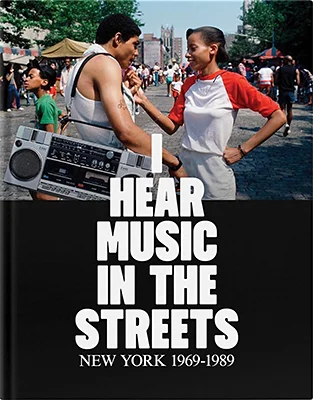
I Hear Music in the Streets: New York 1969–89 is a vibrant, sprawling portrait of a city and its underground heartbeat — a visual tribute to New York’s music subcultures during two transformative decades. The book gathers snapshots from more than 60 photographers, offering a kaleidoscopic archive of moments when hip-hop, punk, disco, Latin rhythms, street dance, and the spontaneous energy of corners, subways or summer parties converged to create something new.
Organized into eight thematic chapters — from “The Bronx Boys” to “Our Latin Thing,” “The Subways” to “Days of Disco” — the collection maps not only musical evolution, but shifts in identity, styling, community, and cultural expression. Photographs by artists like Arlene Gottfried, Peter Hujar, Susan Meiselas, Martha Cooper, Jamel Shabazz and many others portray a city alive with defiance, creativity, resilience — a metropolis where style, sound and survival intertwined.
There’s urgency in these images — block-party gatherings in the Bronx, break-dancers on summer night sidewalks, disco lights in cramped clubs, street-corner musicians carrying boomboxes as if they carried the weight of a generation. The book evokes a city before gentrification and skyrocketing rents, when public space, subculture and community still found room to breathe and evolve. The photographs resonate with the raw energy of those years: improvisation, hybridity, multicultural exchange and a sense that every street belonged to someone.
Guided by a foreword from music historian Tim Lawrence, the book situates each image in social, cultural and historical context — showing how photography became a tool not just for documentation but for identity, resistance and memory. Far from a sanitized history, it’s a celebration of grit and spontaneity, of people using music and community as survival, protest, joy and art.
I Hear Music in the Streets feels like a time capsule and an anthem: a chronicle of a city in flux, a record of voices who shaped culture from below, and a reminder that music and community often flourish on sidewalks, subway platforms, basements and rooftops — long before the lights of fame and the filters of nostalgia.