At 440 Gallery,
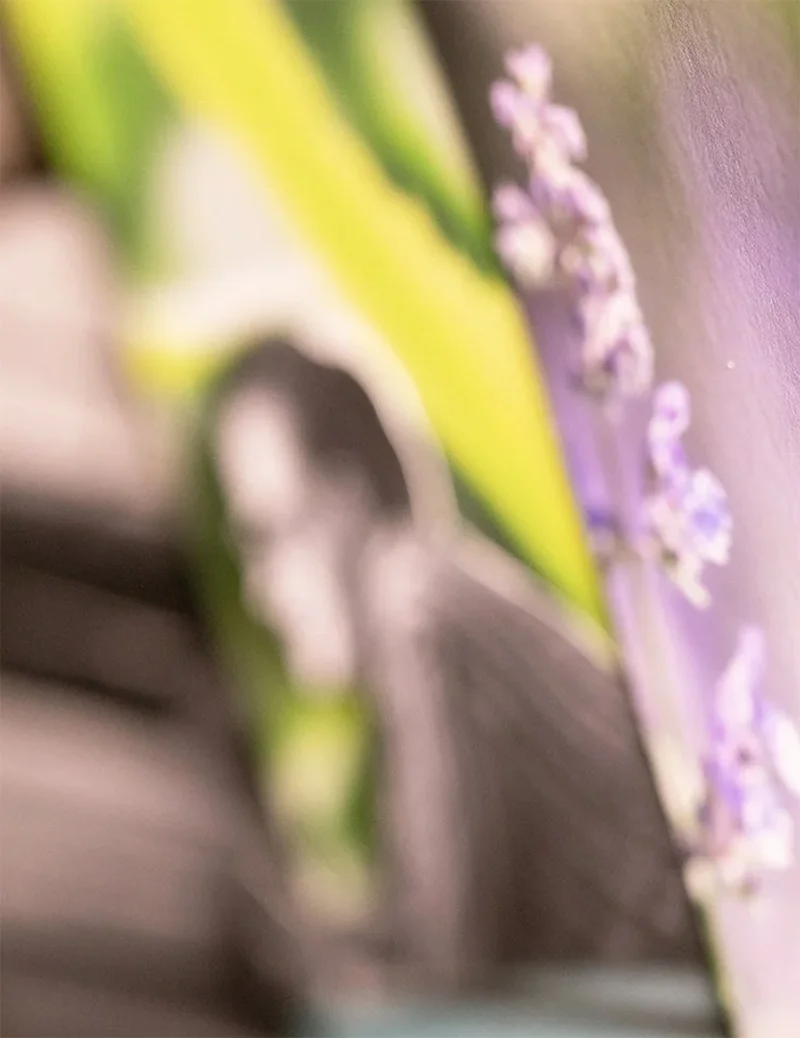
Meet Me Underwater unfolds as an intimate and layered exploration of perception, identity, and the shifting terrain of self-understanding. In this new body of work, artist Leigh Blanchard turns inward, drawing from her recent autism diagnosis to construct images that operate as both refuge and revelation. At first glance, the compositions appear soft, even lyrical—fields of color, texture, and light that suggest calm. Yet beneath this surface lies a quieter tension, one that invites sustained looking and careful attention.
Blanchard’s approach resists conventional definitions of photography. Combining lens-based imagery with fiber elements, collage, and experimental processes such as scanography, she builds tactile surfaces that blur distinctions between mediums. Threads, seams, and layered fragments become visual metaphors, evoking the complexities of sensory experience and the act of piecing together meaning. The resulting works feel both constructed and organic, as if assembled from memory, emotion, and observation all at once.
The exhibition emerges from a deeply personal moment, but its resonance extends beyond autobiography. Blanchard addresses the dissonance between internal clarity and external misunderstanding, particularly in a cultural context where autism is often misrepresented or oversimplified. Her images do not illustrate this tension directly; instead, they embody it. Viewers encounter a visual language that oscillates between comfort and unease, familiarity and ambiguity, mirroring the artist’s own navigation of identity and perception.
This is Blanchard’s fifth solo presentation at the gallery, and it reflects a continued commitment to experimentation and introspection. Her practice aligns with a broader movement in contemporary photography that embraces hybridity and challenges the boundaries of the medium. In
Meet Me Underwater, the photograph no longer serves as a fixed record but as a site of transformation—where materials, processes, and lived experience converge to produce images that are as much felt as they are seen.
In a moment saturated with images, Blanchard’s work slows the gaze. It asks not only what we see, but how we see—and what remains just beneath the surface.
Image:
© Leigh Blanchard