All about photo.com: photo contests, photography exhibitions, galleries, photographers, books, schools and venues.
FINAL DAYS TO ENTER AAP MAGAZINE SHADOWS: GET PUBLISHED AND WIN $1,000

Sarah Sense: Land, Line, Blood, Memory

From March 26, 2026 to April 24, 2026
Share
Sarah Sense: Land, Line, Blood, Memory
600 Mount Pleasant Avenue | Roberts Hall 124
Providence, RI 02908
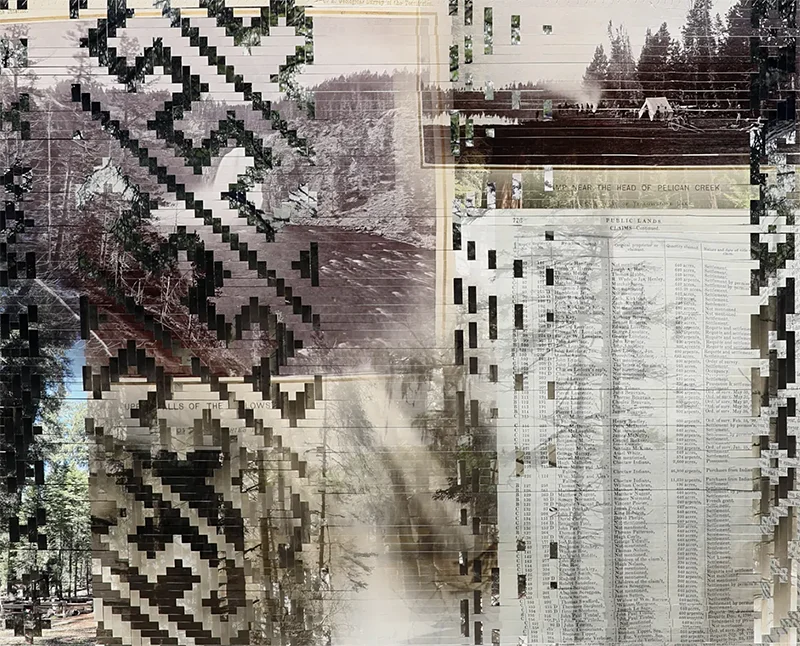
Sarah Sense: Land, Line, Blood, Memory, on view at Bannister Gallery at Rhode Island College from March 26 to April 24, 2026, presents a deeply layered exploration of landscape, ancestry, and the ways histories are constructed and preserved. Drawing from her heritage as a Chitimacha and Choctaw artist, Sense approaches photography not as a fixed record, but as a material that can be reworked, challenged, and transformed.

At the center of the exhibition are her intricate photoweavings, where images of U.S. National Parks intertwine with archival maps, land deeds, and historical documents. These elements, often associated with authority and ownership, are physically cut and reassembled through a weaving process rooted in Indigenous traditions. The gesture is both formal and symbolic: it disrupts the illusion of neutrality embedded in photographs and cartography, revealing instead a layered and contested understanding of place.

Sense’s method draws directly from techniques passed through generations, particularly from the basketry practices of her grandmothers. By translating these patterns into photographic form, she bridges past and present, craft and image, memory and lived experience. The resulting works extend beyond the flat surface, folding and rising into sculptural forms that echo natural rhythms—cascading like water, branching like trees, or tightening into dense, tactile knots. These physical transformations emphasize that land itself carries stories that cannot be contained within a single viewpoint.

The exhibition also reflects a sustained engagement with archives and sites historically shaped by displacement. By photographing and reworking official records, Sense questions the narratives that have long defined these landscapes, offering instead a perspective grounded in continuity and cultural resilience. Her work insists that memory is not static, but constantly woven through acts of care, interpretation, and return.

Land, Line, Blood, Memory stands as both a visual and conceptual reclamation, where the act of making becomes inseparable from the act of remembering.

Image: Sarah Sense, Land, Line, Blood, Memory 5, 2025, woven archival inkjet prints on Hahnemuhle bamboo paper and Hahnemuhle rice paper, wax, Arches watercolor paper, cotton thread, artist tape, 36" x 44.5" © Sarah Sense, courtesy of Bruce Silverstein Gallery

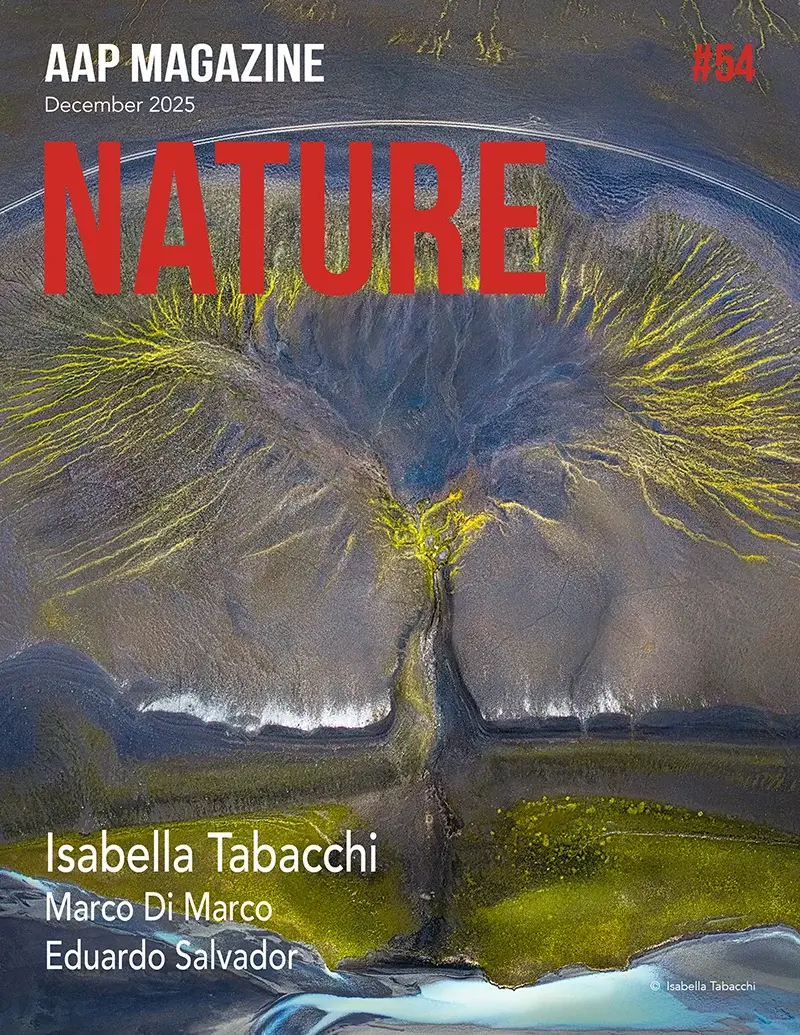
Our printed edition showcases the winners of AAP Magazine call of entries
All About Photo Magazine
Issue #54
Stay up-to-date  with call for entries, deadlines and other news about exhibitions, galleries, publications, & special events.

Exhibitions Closing Soon

Ephemeral Field Journal by Sarah Schorr
Leica Gallery Boston | Boston, MA
From January 09, 2026 to March 22, 2026
Ephemeral Field Journal by Sarah Schorr, on view at Leica Gallery Boston from January 9 to March 22, presents a poetic and deeply considered exploration of care—care for the environment, for history, and for one another. Rooted in sustained research and long-term engagement, the exhibition reflects Schorr’s commitment to understanding landscapes not as static motifs, but as living systems shaped by time, attention, and vulnerability. At the heart of the project lies Monet’s garden, conceived by the artist as an immersive experiment in color, light, and reflection. Through years of working within this storied site, Schorr approaches the garden as a laboratory for perception, echoing Monet’s own pursuit of “seeing.” Yet her images also register subtle disruptions: shifts in water levels, plant life under stress, and the quiet signals of climate change. The garden becomes both a place of beauty and a site of inquiry, where vision is inseparable from responsibility. Water plays a central role in Schorr’s practice, functioning simultaneously as subject, material, and conceptual framework. By integrating photography with paint and site-specific water samples, she constructs layered works that blur the boundaries between documentation and abstraction. These composite images transform ponds and canals into reflective surfaces that hold memory, data, and emotion. In doing so, Schorr invites viewers to slow down and consider water as a witness to environmental change and human intervention. Bringing together works created in France, Denmark, and Massachusetts, Ephemeral Field Journal extends beyond a single location to trace a broader, interconnected ecology. The exhibition suggests that care is not a fixed gesture but an ongoing practice—one that requires attention, patience, and humility. Schorr’s work offers a quiet yet urgent meditation on how we observe the world, how we alter it, and how, through sustained looking, we might learn to protect what is fragile before it disappears.
Robert Rauschenberg´s New York: Pictures from the Real World
Museum of the City of New York | New York, NY
From September 12, 2025 to March 22, 2026
In celebration of the centennial of Robert Rauschenberg (1925–2008), and in partnership with the Robert Rauschenberg Foundation, the Museum of the City of New York (MCNY) presents Robert Rauschenberg’s New York: Pictures from the Real World, a major exhibition opening on September 12, 2025. This dynamic show explores Rauschenberg’s innovative integration of photography and found objects into his art, reflecting his deep engagement with “the real world” and his complex relationship with New York City. Widely regarded as one of the most influential artists of postwar New York, Rauschenberg’s irreverent approach to art-making pushed the envelope for an entire generation, reshaping the art world in New York and around the world. At the heart of his practice was a desire to incorporate the tangible world around him into his art. Gathering materials and inspiration from his surroundings, he often brought found objects and images sourced or reproduced from magazines and newspapers into his paintings and sculptures. But Rauschenberg was not merely a user of found imagery; he was also a photographer with a bold creative vision— an essential aspect of his artistic practice that is the focus of the exhibition. The show is organized into three sections—Early Photographs, In + Out City Limits, and Photography in Painting—tracing the evolution of Rauschenberg’s photographic practice and its interplay with painting, sculpture, and assemblage. His earliest images are largely intimate portraits and experiments with formal elements such as framing, light and shadow, and flattening the picture plane. The centerpiece of the exhibition is In + Out City Limits, a three-year (1979–81) photographic survey conducted across the United States—a project Rauschenberg had originally conceived decades earlier as a student at Black Mountain College in North Carolina. His New York photographs from this project reveal his fascination with the signs and symbols of human culture, even in the most humble or discarded remnants of the city. Together, these photographs emphasize his observational rigor and his constant effort to channel the fleeting, ineffable moments of life into his work—revealing a deep sensitivity to the social landscape. In addition, the exhibition presents a selection of works created between 1963 and 1994 that combine Rauschenberg’s New York City photographs with images taken around the world, illustrating how he re-contextualized his photographic imagery through his innovative creative process. Image: Robert Rauschenberg, Wet Flirt (Urban Bourbon), 1994. Courtesy Robert Rauschenberg Foundation
Elliot & Erick Jiménez: El Monte
Pérez Art Museum Miami - PAMM | Miami, FL
From August 28, 2025 to March 22, 2026
Elliot & Erick Jiménez: El Monte is the first solo museum exhibition of the artist duo Elliot & Erick Jiménez. The photographers, identical twin brothers, present an entirely new body of work inspired by the spiritual tradition of Lucumí—a syncretic Afro-Caribbean religion that emerged in late nineteenth-century Cuba bringing together elements of Yoruba, Catholicism, and Spiritism—and by Lydia Cabrera’s seminal text El Monte. First published in Cuba in 1954, El Monte is a foundational study of Afro-Cuban religions that was translated into English for the first time in 2023, significantly broadening access to its insights on Caribbean spiritual practices. This exhibition highlights the Jiménez twins’ bicultural upbringing as Cuban Americans raised in the Lucumí tradition. At the center of the exhibition is a large structure that dominates the gallery space, its interior evoking both a chapel and a forest. The installation references syncretic Caribbean religions, their Catholic counterparts, and the Cuban monte (forest or wilderness)—a site associated with mystery, transformations, and spiritual encounters. Various works explore the artists’ relationship as identical twins, the structure itself symbolizing the shared space of the womb. Other works reimagine well-known art historical compositions through the lens of Lucumí, examining its intersections with colonialism and the Western art historical canon. While the exhibition primarily features photographs, it also includes sculptural elements interspersed throughout the gallery. Together, these works invite visitors to engage with themes of wonder, mystery, self-reflection, and discovery. Image: Elliot & Erick. El Monte (Ibejí), 2024. Archival pigment print
Susan Meiselas: Crossings
Photographic Center Northwest | Seattle, WA
From January 15, 2026 to March 22, 2026
The exhibition brings together a powerful constellation of images that trace the lived realities of people moving across borders, revealing the human stories often overshadowed by political rhetoric. First shown in 1990, Susan Meiselas’s historic project returns with renewed force, weaving together her documentary photographs from Nicaragua and El Salvador in the 1970s and 1980s and her panoramic views of the US–Mexico border from 1989. These earlier works now converse with more recent photographs taken in 2018, forming a site-specific installation that underscores the persistence of displacement, hope, and resilience across time. Seen today, these images resonate with unsettling clarity. Immigration enforcement in the United States has intensified, defined by heightened surveillance and militarized strategies that treat movement as a threat rather than a human necessity. Yet Meiselas’s photographs insist on careful looking. They ask viewers to recognize the patterns that repeat across generations and to acknowledge the shared aspirations that transcend geography: the search for safety, possibility, and a future for one’s family. The exhibition expands further through the works of contemporary artists Monica Lozano, Elizabeth Piñeda, and Griselda San Martin. Their projects illuminate the border as a lived space—one marked by rupture, risk, and profound emotional depth. Piñeda’s tribute to the unnamed dead of the Arizona desert, San Martin’s documentation of a father and daughter separated by metal mesh, and Lozano’s exploration of the moment in which “home” dissolves all reveal stories too often erased or reduced to statistics. Together, these voices reaffirm that the border is not a single line on a map, but a complex landscape shaped by courage, longing, and endurance. Like Meiselas’s enduring practice, the exhibition invites viewers to look closely, to remember, and to hold fast to the humanity threaded through every crossing. Image: Caught heading north along Interstate 5, 10:00 a.m., U.S.-Mexican Border, San Diego County, California, 1989, courtesy of Susan Meiselas © Susan Meiselas
The Scenic Daguerreotype in America 1840–1860
Wadsworth Atheneum Museum of Art | Hartfort, CT
From July 10, 2025 to March 22, 2026
Invented in France by Louis-Jacques-Mandé Daguerre in the 1830s, the daguerreotype rapidly became the first widely practiced photographic process worldwide. By 1853, photographers in the United States produced an estimated three million a year, mostly portraits. But between 1840 and 1860, an innovative language of scenic outdoor daguerreotypes developed despite the technical challenges of the process. Surviving examples of these jewel-like scenic daguerreotypes number in the few thousands. This exhibition looks at eighty three, most selected from an important private collection. Included are two of the earliest American landscape photographs, extraordinary full-plate daguerreotypes made in 1840-41 by Samuel Bemis (1789–1881) and never before exhibited in public, and a street scene in Cincinnati made around 1851 by James Presley Ball (1825–1904). Gain an incredible view into mid-nineteenth-century American life and the beginnings of American landscape photography that emerged concurrently with the Hudson River School of painters. These forgotten but pioneering daguerreotypes laid the foundation for the scenic and urban landscape tradition that would dominate American photography in the twentieth century. Image: St. Anthony Falls, Minneapolis, Minnesota, Attributed to Alexander Hesler (1823-1895) and Joel Whitney (1822-1886). Sixth plate daguerreotype. Greg French Collection.
Resistance in Memory - Visions of Sudan
The Africa Center | New York, NY
From November 01, 2025 to March 22, 2026
Resistance in Memory – Visions of Sudan, presented at The Africa Center from November 1, 2025 through March 22, 2026, brings together forty-two photographs by twelve emerging Sudanese photographers whose work bears witness to a nation in profound transformation. Rooted in lived experience, the exhibition offers an essential counter-narrative to distant headlines, foregrounding voices that insist on visibility, dignity, and remembrance amid one of the most devastating humanitarian crises of our time. Structured chronologically across nine thematic sections, the exhibition traces Sudan’s recent history from the hopeful uprising of 2019 to the realities of war, displacement, and exile that followed. The photographs move between moments of collective resistance and deeply personal scenes, revealing how political rupture reverberates through daily life. Streets filled with protest, quiet domestic interiors, fractured journeys across borders, and pauses of reflection all coexist, forming a visual archive shaped by urgency and care. Rather than offering a single narrative, Resistance in Memory embraces complexity. Memory becomes both a fragile and powerful force: a way to honor those lost, to sustain belief in unfinished revolutions, and to remain connected across generations and geographies. The images speak of families divided by necessity, of repeated displacement, and of the emotional weight carried by those who stay behind. Yet woven throughout is an enduring sense of hope, expressed through gestures of solidarity, resilience, and quiet defiance. Curated with close collaboration between artists and institutions, the exhibition affirms photography’s role as testimony and resistance. These works do not ask for sympathy; they demand recognition. By centering Sudanese perspectives, Resistance in Memory – Visions of Sudan challenges erasure and invites viewers to engage with the human consequences of conflict beyond statistics. The exhibition ultimately stands as a living record—one that preserves memory while asserting the right of Sudan’s people to define their own history and future.
Binh Danh, Belonging in the National Parks
The Center for Photographic Art (CFPA) | Carmel, CA
From February 14, 2026 to March 22, 2026
The Center for Photographic Art presents Belonging in the National Parks, a solo exhibition by acclaimed artist Binh Danh that reflects on identity, inclusion, and shared stewardship of America’s most treasured landscapes. Using the luminous and reflective medium of the daguerreotype, Danh turns the viewer’s gaze inward, merging their image with that of the natural world. Each polished plate becomes both window and mirror, reminding us that these protected spaces—often symbols of collective heritage—are also deeply personal sites of belonging and exclusion. Through this interplay of image and reflection, the series reconsiders who has historically been invited into the narrative of the American landscape and who has been left outside its frame. Reviving a 19th-century process to engage with 21st-century questions, Danh bridges past and present through the meditative act of photographic creation. The daguerreotype’s silver surface, delicate yet enduring, embodies the tension between fragility and permanence that defines our relationship with nature. In this work, history and memory are inseparable from light and time; as viewers move before each piece, their shifting reflections animate the image, echoing the constant transformation of both land and identity. The result is an invitation to see ourselves not as observers of nature but as participants within it, responsible for its preservation and inclusivity. Binh Danh, known for his innovative blending of historical techniques with contemporary concerns, explores themes of home, displacement, and remembrance throughout his practice. His works are held in major collections, including the Smithsonian American Art Museum, the National Gallery of Art, SFMOMA, the de Young, and the Asian Art Museum. His 2023 book, Binh Danh: The Enigma of Belonging, was awarded the inaugural Minami Book Grant for Asian American Visual Artists. Danh currently serves as an associate professor of art at San José State University. Image: unique daguerreotype © Binh Danh
Richard Corman: A Wonderful World
Picto New York | Brooklyn, NY
From January 23, 2026 to March 22, 2026
Richard Corman: A Wonderful World, opening January 23, 2026 at Picto New York, offers a moving tribute to the enduring spirit of jazz and blues through a series of intimate black-and-white portraits. Far from mere documentation, these photographs invite viewers into a quiet, shared space with musicians whose lives have been shaped by rhythm, resilience, and improvisation. Each image reveals a moment of presence—eyes meeting the lens with candor, grace, and lived experience etched into every line and gesture. Corman’s approach is grounded in attentiveness and respect, allowing personality to surface without spectacle. The musicians appear unguarded, suspended between performance and reflection, carrying the weight of their histories alongside the joy of creation. Printed as finely crafted inkjet works on Hahnemühle PhotoRag paper and presented in custom-made maple frames, the photographs possess a tactile depth that echoes the warmth and texture of analog sound. The care taken in production mirrors the care evident in the portraits themselves. Enhancing this visual experience, live piano performances accompany the exhibition, transforming the gallery into a place of communion between image and sound. Music drifts through the space, animating the photographs and reminding visitors that these faces belong to voices, hands, and lives devoted to expression. The exhibition becomes not only something to observe, but something to inhabit—an environment where photography and music resonate together, honoring the artists who shaped generations of listeners. Born and based in New York, Richard Corman’s sensibility is deeply informed by the city’s creative pulse and by his formative years studying art history and psychology, as well as his apprenticeship with Richard Avedon. That lineage is felt in his ability to distill complexity into clarity, intimacy into strength. Made possible through the support of the Jazz Foundation of America, A Wonderful World stands as both a celebration and an act of gratitude—an acknowledgment of musicians whose contributions continue to echo far beyond the frame. Image: Richard Corman – George Coleman, Apollo Theater, NYC 2024 © Richard Corman
In the Shadow of the Border
Photographic Center Northwest | Seattle, WA
From January 15, 2026 to March 22, 2026
In the Shadow of the Border offers a powerful, resonant look at the human consequences of movement, division, and the hope — and heartbreak — that borders embody. On view from January 15 to March 22, 2026, the exhibition brings together the voices of three contemporary artists — Monica Lozano, Elizabeth Piñeda and Griselda San Martin — each bearing witness to lives shaped by physical and political boundaries. Monica Lozano’s work confronts the moment of transition: when “home” becomes a fragile memory and people step into an uncertain in-between. Her images trace the precarious journeys of immigrants, refugees, and asylum seekers — individuals navigating deserts, checkpoints, and uncertain terrain — exploring how displacement reshapes identity, erases certainty, and tests collective humanity. Through meticulous composition and empathy, Lozano captures courage and vulnerability in equal measure, framing each crossing as both rupture and encounter. Elizabeth Piñeda’s series Sin Nombre en Esta Tierra Sagrada turns the Arizona borderlands into a testament of loss and remembrance. Her work honors the thousands who perished trying to cross, those whose names were never written down, whose stories remain unfinished. In deserts of light and silence, Piñeda creates a sanctified space of memory — a quiet act of mourning, respect, and acknowledgment for the lives erased by borders. Griselda San Martin’s contribution, notably her video piece The Other Side, documents the fragile rituals of connection made possible only at points like Friendship Park — rare places where families separated by policy and geography attempt brief reunion. Through the steel mesh of the fence they whisper, touch fingertips, exchange glances: human affection mediated by metal and distance. The piece captures longing, resilience, and the painful beauty of love constrained by lines on a map. Together, the works in In the Shadow of the Border paint the border not as a static line, but as a living terrain shaped by memory, pain, hope, and survival. They challenge us to look beyond politics and policies — to confront the faces and stories that animate these borderlands. In these images, borders become landscapes of human endurance, empathy, and the relentless search for belonging. Image: Form 'The Other Side' video, 2016 © Griselda San Martin
Felipe Jácome: The Unbroken Project
Gilman Contemporary | Ketchum, ID
From February 26, 2026 to March 26, 2026
In The Unbroken Project, photographer Felipe Jácome brings together movement, memory, and the physical remnants of violence to create an arresting visual narrative. Developed in collaboration with Ukrainian photographer and dancer Svitlana Onipko, the series foregrounds dancers of the Ukrainian National Ballet who continue to embody grace despite the upheaval around them. Their gestures, suspended in carefully composed frames, become an affirmation of endurance in the face of conflict. Printed directly onto spent bullet casings, each image transforms a symbol of destruction into an unexpected vessel for beauty and tribute. Rather than illustrating war through scenes of devastation, Jácome focuses on the resilience of those who continue to create. The dancers’ bodies—extended, defiant, unwavering—carry a sense of quiet insistence. Movement becomes a form of resistance, a declaration of presence when displacement threatens to erase identity. The contrast between the delicate lines of ballet and the harshness of the metal surfaces amplifies the emotional weight of the project, merging vulnerability with strength in a single gesture. Jácome’s broader photographic practice has long centered on stories shaped by migration, environmental strain, and conflict. With The Unbroken Project, he deepens this commitment by working with materials directly tied to wartime reality. The decision to repurpose bullet casings is both symbolic and restorative, allowing the artists to reclaim the objects’ narrative and redirect it toward healing. A portion of sales from the project supports relief and recovery initiatives in Ukraine, extending the work’s impact far beyond the gallery setting. Together, Jácome and Onipko craft a visual language that honors resilience without overlooking the brutality that necessitates it. The project stands as a testament to the enduring power of creativity—how art, even when born from conflict, can illuminate the unbroken spirit that survives within it. Image: Dasha 1 UV print on bullet casings and epoxy resin © Felipe Jácome
Jim Dow: Courthouse
Joseph Bellows Gallery | La Jolla, CA
From February 28, 2026 to March 28, 2026
Jim Dow: Courthouse is on view at Joseph Bellows Gallery from February 28 through March 28, 2026, revisiting a landmark photographic undertaking from the American Bicentennial era. Between 1976 and 1977, Jim Dow joined twenty-three other photographers commissioned for the Joseph E. Seagram’s County Court House Project, an ambitious effort to document civic architecture across the United States. The resulting archive—more than 11,000 negatives depicting over 1,100 county courthouses—now resides in the Prints and Photographs Division of the Library of Congress, forming one of the most comprehensive visual surveys of its kind. Dow focused on the South Atlantic and South-Central states, approaching each courthouse not as an isolated monument but as a living anchor within its town. Working with an 8 x 10-inch large-format camera, he recorded facades, interiors, and surrounding streets with measured precision. The clarity of gelatin silver contact prints reveals brickwork, clock towers, worn steps, and modest landscaping in exacting detail. Yet these photographs extend beyond architectural record. By situating each structure within its broader environment—adjacent storefronts, open skies, quiet squares—Dow evokes the rhythms of local life and the symbolic weight these buildings carry as centers of governance and gathering. Critics have recognized the project as a rare fusion of documentary rigor and cultural reflection, aligning it with earlier national surveys while retaining a distinctly contemporary sensibility. Dow’s images neither romanticize nor diminish their subjects; instead, they honor regional variation and vernacular character. In their symmetry and restraint, they echo traditions of American documentary photography while affirming the enduring relevance of careful observation. Born in Boston in 1942 and educated at the Rhode Island School of Design, Dow has balanced artistic practice with decades of teaching at institutions including Harvard and Princeton. His broader body of work—chronicling roadside architecture and signage—shares with Courthouse a deep respect for the built landscape. This exhibition underscores how, through patience and craft, photography sustains a record of civic identity that might otherwise fade from view. Image: Jury Box, Grady County Courthouse, Cairo, GA, 1976, vintage gelatin silver print © Jim Dow. Courtesy of the Joseph Bellows Gallery
Brassaï: Secret Paris
Howard Greenberg Gallery | New York, NY
From February 07, 2026 to March 28, 2026
Brassaï: Secret Paris, on view from February 7 to March 28, 2026, at Howard Greenberg Gallery, offers a rare and atmospheric journey into the hidden corners of the French capital. Presented in collaboration with Grob Gallery in Geneva, the exhibition brings together nearly forty photographs that reveal Brassaï’s singular vision of Paris after dark, combining iconic images from Paris by Night with works from The Secret Paris, a series long kept from public view for its provocative and intimate subject matter. When Paris by Night was first published in 1933, it forever altered how the city was imagined and photographed. Brassaï wandered the streets until dawn, capturing mist-covered boulevards, quiet cafés, lovers in shadow, and figures on the margins of society with an empathy that felt both poetic and unsparing. These images distilled the mystery and sensuality of nocturnal Paris, shaping a visual language that continues to influence photographers today. The inclusion of photographs from The Secret Paris deepens this portrait of the city. These images push beyond romance into more concealed worlds, revealing spaces and encounters that challenged the moral boundaries of their time. Seen alongside the more familiar night scenes, they underscore Brassaï’s commitment to portraying Paris in its full complexity, without embellishment or censorship. The exhibition coincides with a newly released edition of Paris by Night, as well as a major presentation of Brassaï’s work at the Moderna Museet in Stockholm, reaffirming his international significance. Born Gyula Halász in 1899, Brassaï arrived in Paris in the 1920s and quickly became one of its most perceptive chroniclers, earning the nickname “the eye of Paris.” His background in journalism informed a practice rooted in observation, patience, and narrative depth. Beyond Paris, Brassaï photographed extensively across Europe and the Americas, though much of this work remains lesser known. Brassaï: Secret Paris brings focus back to the city that shaped him, presenting a timeless meditation on urban life, desire, and the enduring allure of the night. Image: © Estate Brassaï-RMN, Courtesy of Howard Greenberg Gallery, New York
Advertisement
AAP Magazine #56 Shadows
Win a Solo Exhibition in May
AAP Magazine #56 Shadows
Call for Entries
AAP Magazine #56 Shadows
Publish your work in our printed magazine and win $1,000 cash prizes

Related Articles

Elements of Wonder: When Nature Becomes Art by Jon McCormack
To coincide with Earth Day, CENTER, the nonprofit photography organization based in Santa Fe, NM, presents Elements of Wonder: When Nature Becomes Art, a photographic exhibition by Jon McCormack. The exhibition will be on view at CENTER from April 17 through May 17, 2026, with an Opening Reception on Friday, April 17, 5:00 – 7:00 PM, and an Artist Talk on April 30, from 5:30 – 6:30 PM (MT).
Gordon Parks: The South in Color
Jackson Fine Art is delighted to announce our spring exhibition Gordon Parks: The South in Color organized in partnership with The Gordon Parks Foundation. The exhibition is timed to commemorate two important milestones - the 70th anniversary of the landmark publication of Parks’ images of the segregated South in Life magazine and the 20th anniversary of the founding of The Gordon Parks Foundation. The South in Color will present more than thirty photographs from the artist’s Segregation Story series and debut a brand-new portfolio published by the Foundation. The exhibition brings together many of Parks’ images not previously shown in the gallery, alongside some of his most recognized such as At Segregated Drinking Fountain, Mobile, Alabama, to offer a fresh look at the series, and deepen its emotional and historical resonance.
Marilyn Stafford, Lee Miller, Colin Jones for UNSEEN at Art Rotterdam
The Albumen Gallery programme for UNSEEN at Art Rotterdam 2026 brings together three iconic names of mid-20th century photography. At a first glance the works of Marilyn Stafford, Lee Miller and Colin Jones cover quite a wide spectrum of photography. Notwithstanding that there are shared aspects across their respective bodies of work that invite interesting comparison with respect to thematic and artistic approach.
Circulation(s) Festival of young European photography
For its sixteenth edition, the Circulation(s) Festival continues to champion emerging European photography and its intersections with contemporary art. Founded in 2009 at the CENTQUATRE-PARIS, the festival has grown into a key platform for young creators, highlighting plural perspectives and experimental practices.
Colour Me Modern: Claire Aho and the New Woman
Colour Me Modern: Claire Aho and the New Woman, celebrates the vibrant photography of the pioneering Finnish artist, Claire Aho (1925-2015) who brought wit, colour and cinematic flair to postwar image-making across her work in fashion, advertising and editorial. Presented by Hundred Heroines, the UK’s only museum dedicated to women in photography, this free exhibition, split over two sites, highlights how Aho, known as ‘the Grand Old Lady of Finnish Photography,’ helped shape a new visual language for Finland, presenting confi dent, contemporary women and transforming everyday scenes into carefully staged moments of style.
Fragilities & Resilience by Thibault Gerbaldi at the Jardin du Luxembourg
From March 21 to July 19, 2026, the French Senate will host Fragilities & Resilience, the first solo exhibition in France of internationally acclaimed photographer Thibault Gerbaldi. Presented outdoors on the iconic grilles of the Jardin du Luxembourg in Paris 6ème, the exhibition features 80 striking photographs captured across five continents, offering a breathtaking exploration of the fragile yet enduring connections between humans and nature. Entry is free, making this a rare opportunity for the public to experience Gerbaldi’s work on a monumental scale.
All About Photo Presents ’ Civilization’ by Damien Aubin
In Civilization, Damien Aubin turns his lens toward environments shaped not by nature, but by ambition. These are places engineered at a scale that exceeds the individual — infrastructures, industrial complexes, vast architectural systems that dwarf the human body and often eclipse it entirely. There are no protagonists here. No narratives unfolding in real time. Instead, Aubin photographs what remains when activity recedes: structures that continue to stand, operate, or simply endure.
Elliott Erwitt: Gold Standard
Weinstein Hammons Gallery is pleased to present Elliott Erwitt: Gold Standard, the third exhibition of photographs by Elliott Erwitt (1928–2023), one of the most influential photographers of the twentieth and twenty-first centuries.
FotoFocus Announces Big Tent Opening of FotoFocus Center
This summer, FotoFocus will expand on their vision and embark on a new chapter with the launch of Big Tent, the inaugural exhibition at the new FotoFocus Center, a 14,700 square foot, purpose-built structure to house photographic exhibitions and year-round programs. Bringing together work by over fifty artists (including An-My Lê, Catherine Opie, Dawoud Bey, Gordon Parks, Justine Kurland, Mitch Epstein, RaMell Ross, Sky Hopinka, Tina Barney and many more), the exhibition (on view May 29-August 22) reflects upon the current state of American democracy while also considering the efficacy of photography to be a catalyst for meaningful change.
Call for Entries
Solo Exhibition May 2026
Get International Exposure and Connect with Industry Insiders