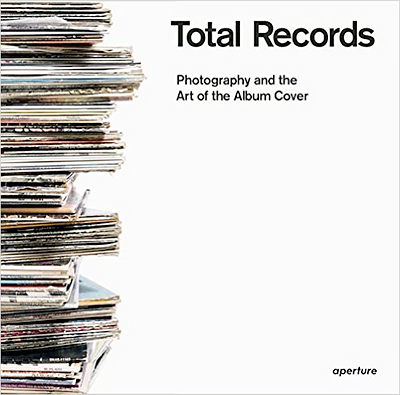
Musicians and designers have also sifted through photography's rich history for powerful photographs to match and keep company with the music enclosed within: Anders Peterson's classic Café Leibnitz portrait of a man nestled into a partner, stands in for Tom Waits on the cover of Swordfishtrombones; Big Star and Alex Chilton push the listener into a corner with William Eggleston's Red Ceiling on their album Radio City; Rage Against the Machine goes for the jugular with the anonymous Vietnam War photo of the self-immolation of a Buddhist monk. Iconic images like the Abbey Road crosswalk are deeply inscribed in our collective memory, but we know few details about the photographer of the image. All of these-and more-are included in this compendium of electrifying images and the albums they grace. Total Records reveals the artists behind some of the most striking images on vinyl sleeves and takes us on a journey through the cultural history of the twentieth century.
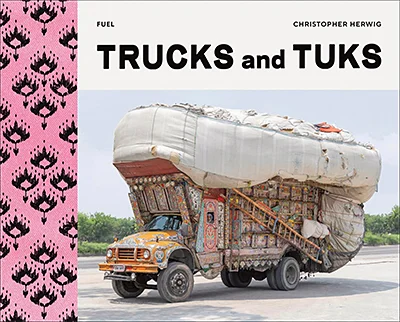
Trucks and Tuks explores the vibrant world of decorated vehicles across South Asia, revealing how everyday modes of transport become moving works of art. In this richly illustrated volume, photographer Christopher Herwig turns his lens toward a visual tradition that blends craftsmanship, storytelling and personal expression, transforming roads and highways into open-air galleries.
Across India, Pakistan, Nepal and Sri Lanka, these vehicles carry far more than passengers or cargo. They bear dreams, prayers, aspirations and humor. A truck might feature a majestic eagle rising toward stormy skies, while a tuk tuk may be adorned with shimmering portraits of beloved film stars or painted verses calling for luck and protection. Every motif — from floral garlands to supernatural beings — is chosen with intention, giving each vehicle its own identity and voice.
Herwig spent four years traveling more than 10,000 kilometers to document this kaleidoscopic tradition. His journey reveals not only regional variations in style but also the cultural significance behind each embellishment. In Pakistan’s north, trucks often boast intricate wooden crowns, their curved shapes echoing royal headpieces; in Sri Lanka, tuks may carry devotional symbols alongside contemporary pop culture icons, capturing the joyful coexistence of old and new. Typography, too, plays a central role: hand-painted slogans offer blessings, convey social messages or simply urge fellow drivers to blow their horns.
Yet this exuberant form of folk art stands at a crossroads. Government regulations, coupled with mass-produced decorations, threaten to dull the individuality that once defined these vehicles. Herwig’s project takes on an archival role, preserving a tradition whose future is uncertain.
Trucks and Tuks is not only a photographic survey but also a tribute to the artists, drivers and communities who imbue the region’s roads with color and character. It celebrates the resilience of creativity in everyday life and invites readers to see ordinary vehicles as powerful symbols of cultural heritage.
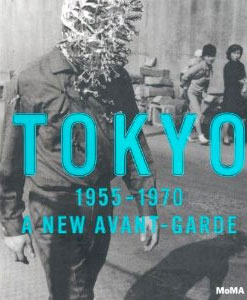
Tokyo 1955-1970: A New Avant-Garde explores the extraordinary convergence of artists and other creators in Japan's capital city during the radically transformative postwar period. Examining works from a range of media--painting, sculpture, photography, drawing, printmaking, video and film, as well as graphic design, architecture, musical composition and dance--this is the first publication in English to focus in depth on the full scope of postwar art in Japan. During this period, Tokyo was a vibrant hub that attracted such critical artistic figures as Taro Okamoto, Hiroshi Nakamura, Ay-O, Yoko Ono, Mieko Shiomi and Tetsumi Kudo; photographers Daido Moriyama, Eikoh Hosoe and Shomei Tomatsu; illustrators and graphic designers Tadanori Yokoo, Kohei Sugiura and Kiyoshi Awazu; and architects Arata Isozaki and Kisho Kurokawa; as well as many important artists' collectives. Curator Doryun Chong's essay investigates Tokyo's sociopolitical context and the massive urban changes that set the stage for the city to emerge as a vital node in the international avant-garde network. Essays by scholars Hayashi Michio and Miryam Sas and curator Mika Yoshitake discuss critical concepts in art and culture at this time, including "graphism," which manifested itself across various mediums; the development of new sculptural languages; and the "intermedia" tendency that engendered provocative cross-pollination among artistic genres. Masatoshi Nakajima provides an illustrated chronology and Yuri Mitsuda supplies artist biographies. Tokyo 1955-1970: A New Avant-Garde brings fresh insight to this dynamic metropolis during a time of remarkable artistic burgeoning.
For some travelers, a hotel is simply a place to stay. For LEONE, it is an experience shaped by atmosphere, people, and a sense of belonging. His third book, *A Place We Like*, grew out of a years-long search for that elusive feeling. Published as the inaugural title under the Leisure imprint of C41 Magazine, the project serves as both a visual guide to some of Europe’s most remarkable hotels and a personal reflection on the meaning of hospitality.
Discover Crossing, Kaplan’s powerful documentary photography project capturing Roxham Road, the irregular Canada-US border crossing used by refugees from 2018 to 2023.
Spurred by Trump-era immigration policies, this tiny site between New York and Quebec became a safe, highly unusual microcosm of global migration. Over four years, Kaplan photographed the entire ecosystem—from local cab drivers and border police to the asylum-seekers themselves. Moving past traditional media tropes of victimhood, these photographs challenge stereotypes to highlight the immense courage and resilience required to step into an unknown future before the site's closure in 2023.
I have spent years looking at Lee Friedlander’s America. It has always been a country of sharp angles, cluttered street corners, and shadows that seem to swallow the photographer whole. So when I picked up his latest monograph, Life Still, I expected the familiar noise of his world. Instead, I found something stranger: a 91-year-old master holding his breath.
Part of a bigger journey of liberation through self-exploration, this new photobook by Jo Ann Chaus is above all a collection of self-portraits, complemented by landscapes, still lifes and domestic interiors observed and inhabited by the photographer-cum-model
Blending photography and poetry, Burnt Eyes explores nostalgia, memory, and identity, offering a profound reflection on the complexities of belonging and the stories that shape us.
Seasons of Time by Nathalie Rubens is an intimate and fearless photobook exploring the emotional distance and deep connection between mother and daughter, while confronting the beauty, vulnerability, and physical reality of a woman’s aging body with rare honesty.
1804 continues Rich-Joseph Facun’s exploration of life in the Appalachian foothills of Southeast Ohio, this time turning his lens toward the local university and its complex, symbiotic relationship with the surrounding community.
GOST Books presents Robin Bernstein’s debut photobook MAPALAKATA, a compelling visual investigation into landscape, memory, and the layered histories of Southern Africa. The project offers a nuanced reflection on how geography is not only inhabited, but continually rewritten through movement, extraction, and shifting narratives of belonging.