Released today by
Reporters Without Borders,
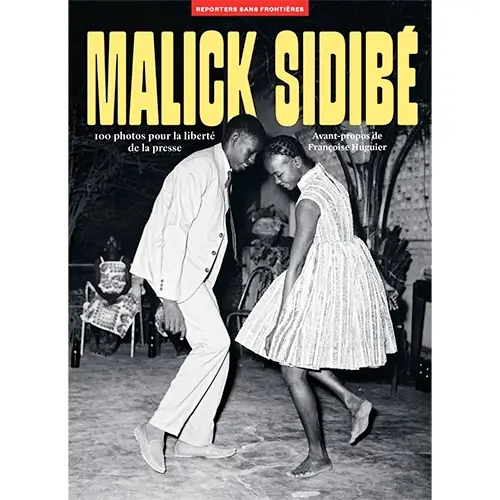
'Malick Sidibé, 100 Photos for Press Freedom' celebrates the work of one of the most influential photographers of the twentieth century.
Through a selection of iconic images, the album revisits the vibrant world of
Malick Sidibé, whose photographs captured the spirit of a generation coming of age in post-independence Mali.
Often called “the eye of Bamako,” Sidibé built a visual memory of a country in transformation.
Rather than focusing on political events or traditional reportage, his photographs tell a different story: that of everyday life, youth culture, and the optimism that swept through Malian society in the years following independence.
A photographer of a new era
Malick Sidibé was born in 1935 in Soloba, a village south of Bamako near the Guinean border.
Initially trained in drawing and jewelry design, he earned a diploma in jewelry in 1955 before discovering photography through Gérard Guillat, known locally as “Gégé la Pellicule.”
In the early 1960s, Sidibé opened his own studio in Bagadadji, a lively neighborhood in the Malian capital.
There, he developed a distinctive portrait style defined by spontaneity and intimacy.
Friends, couples, students, and families came to his studio to mark important moments in their lives.
Against patterned backdrops or simple settings, his subjects posed with confidence and individuality, often dressed in their finest clothes.
The studio quickly became one of the city’s cultural hubs.
But Sidibé’s work extended far beyond its walls.
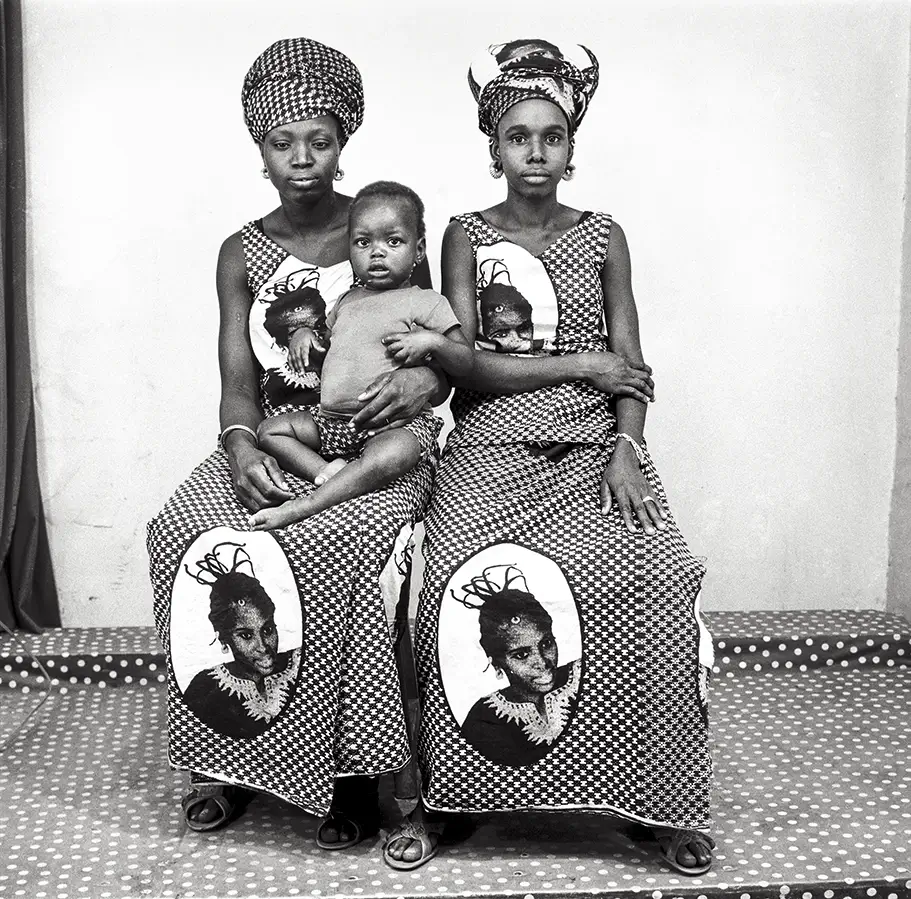
Les deux coépouses, Studio Malick, Bamako, 1972 © Malick Sidibé
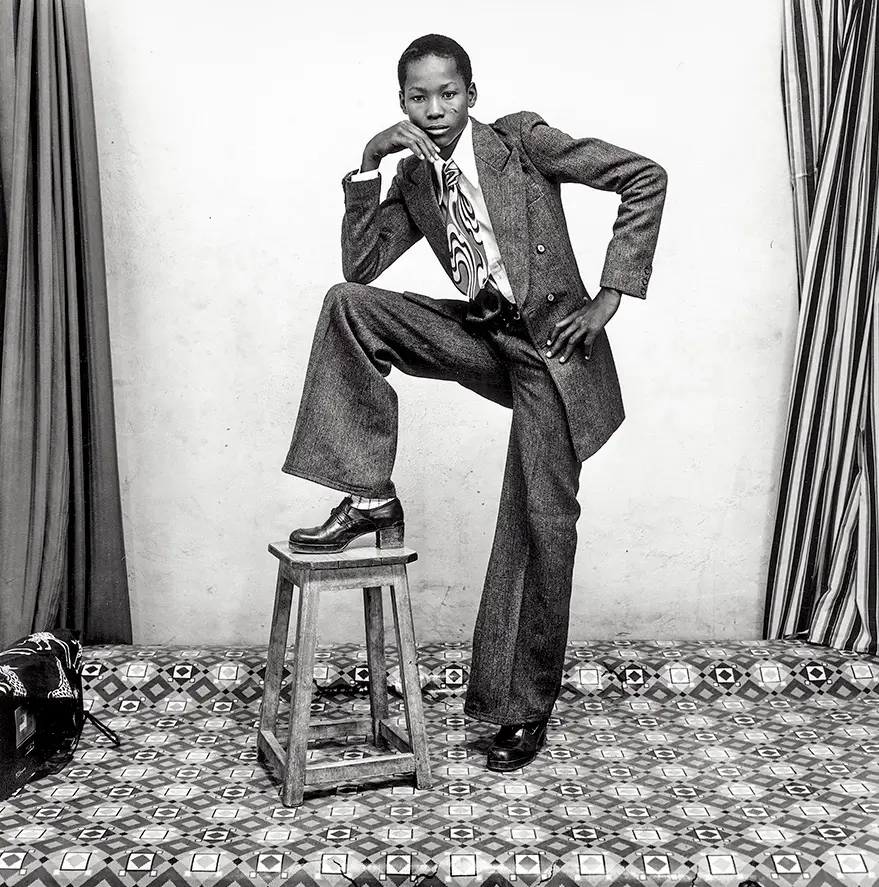
Un jeune gentleman, Studio Malick, Bamako, 1978 © Malick Sidibé
In the years after the independence of Mali in 1960, Bamako experienced a wave of cultural excitement.
Young people embraced new music from Europe, the United States, and Cuba, forming dance clubs and organizing late-night parties.
Sidibé became a regular presence at these gatherings, camera in hand.
At clandestine dances and “surprise parties,” he documented the energy of a generation discovering its freedom.
Young men in tailored suits and women in elegant dresses danced to rock, soul, and Afro-Cuban rhythms.
Fashion, music, and movement merged into a new urban identity.
Weekends often ended at dawn along the banks of the Niger River, which flows through Bamako.
From these nights of celebration, Sidibé produced photographs filled with rhythm and vitality—images that conveyed the joy and confidence of a society looking toward the future.
Through these scenes, he became an intuitive chronicler of a historical moment: the birth of a modern Malian identity.
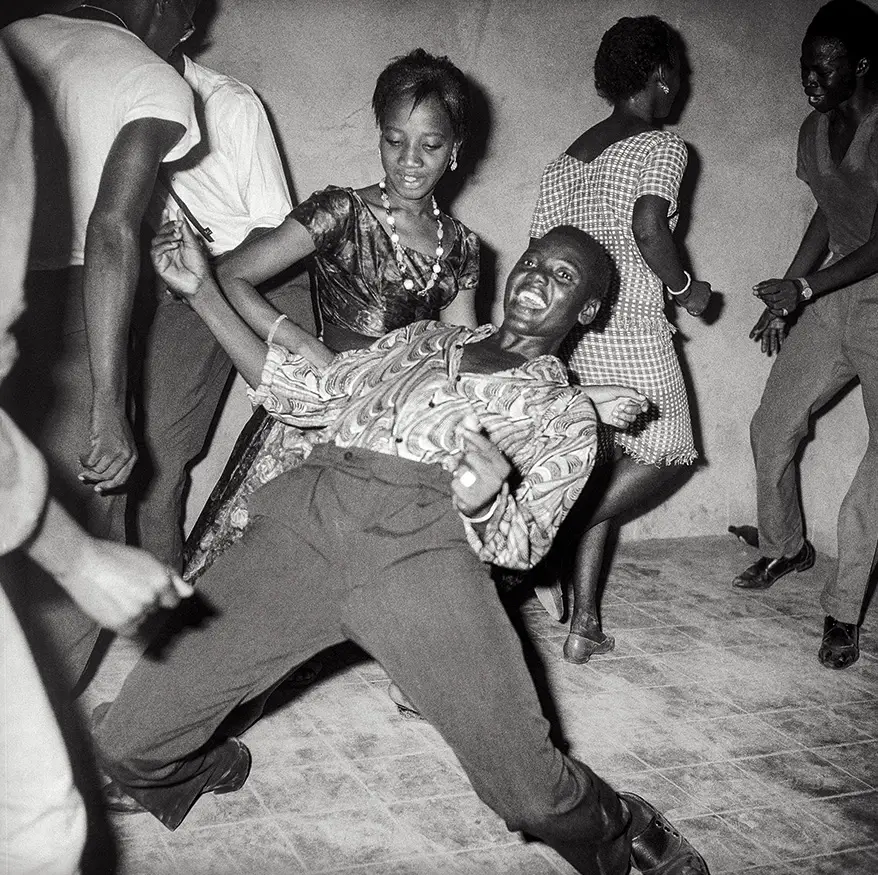
Regardez-moi !, 1962 © Malick Sidibé
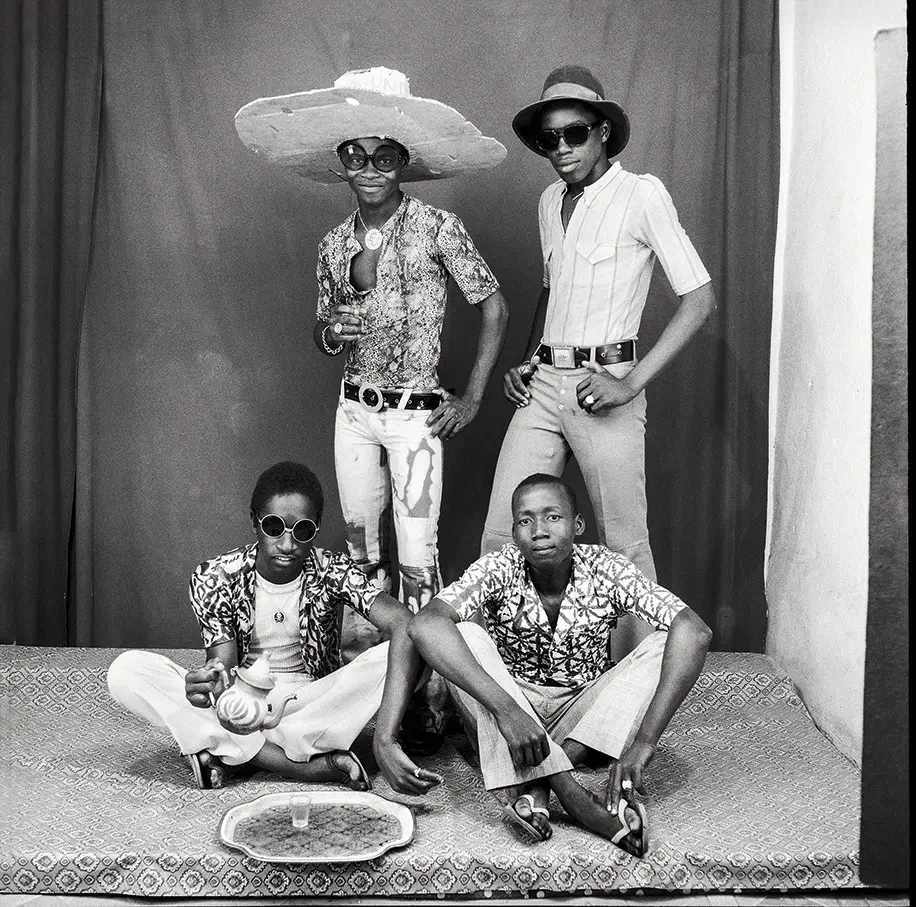
Amis des espagnols, Studio Malick, Bamako, 1968 © Malick Sidibé
While Sidibé was widely admired in Mali for decades, international recognition came later.
In the 1990s, the photographer
Françoise Huguier helped introduce his work to a broader audience, revealing the modernity and depth of his images to galleries and museums outside Africa.
His reputation continued to grow, culminating in 2007 when he received the Golden Lion for Lifetime Achievement at the Venice Biennale.
By then, his photographs—joyful portraits, dance-floor scenes, and playful studio images—had become iconic representations of African modernity.
Sidibé died in 2016 in Bamako, leaving behind a vast archive and an enduring influence on contemporary photography.
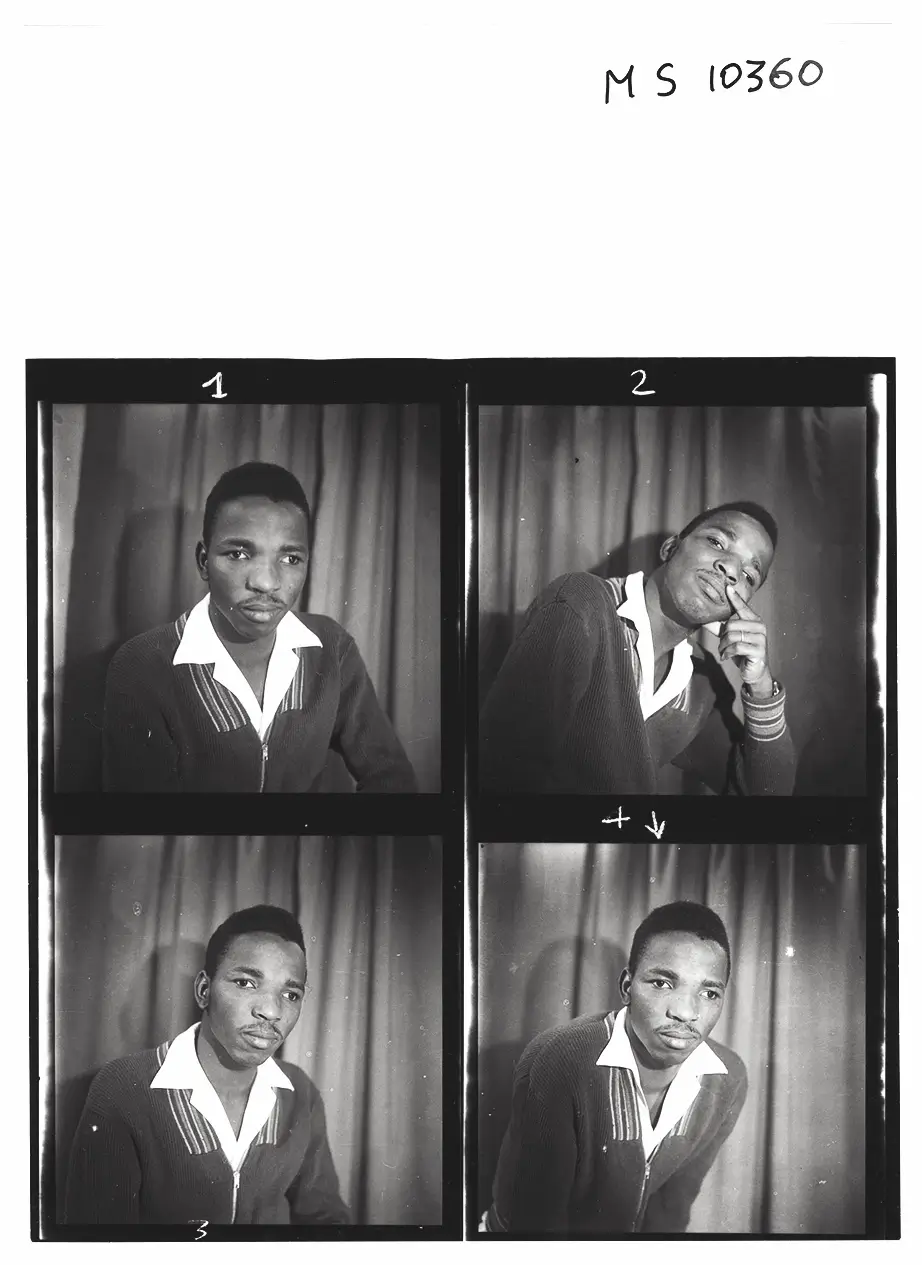
Malick Sidibé, autoportrait, circa 1960 © Malick Sidibé
The new RSF album offers a 120-page journey through Sidibé’s work, bringing together iconic photographs with texts by writers, curators, and photographers who knew him or were inspired by his legacy, including Manthia Diawara, André Magnin, Laura Serani, and Senegalese photographer Omar Victor Diop. The book opens with a foreword by Françoise Huguier, founder of the Rencontres de la photographie de Bamako.
Like every title in the collection,
Malick Sidibé, 100 Photos for Press Freedom is more than a photography book. Beyond its artistic value, the publication supports a broader mission: since its founding in 1985,
Reporters Without Borders has worked to defend press freedom and support journalists worldwide through advocacy, legal and material assistance, and safety programs. The sale of its photography albums remains a vital source of funding for these efforts, with all proceeds helping protect independent journalism.
The final pages of the album are dedicated to press freedom and the work of RSF. They review key developments affecting journalists in 2025, including the rise in reporters killed by armed groups, state forces, or organized crime. The section also highlights media working under extreme pressure, such as the exiled newsroom of
8AM Media, which continues to report on Afghanistan despite the impossibility of operating openly in
Kabul. The album also pays tribute to journalists who risk their freedom or their lives to report the facts, including
Francisca Christy Rosana,
Nour Swirki, and
Dmytro Khyliuk. Together, these stories remind readers that supporting press freedom also means supporting those who work tirelessly to inform the world.
With
Malick Sidibé, 100 Photos for Press Freedom, readers discover not only the work of a master photographer but also the visual story of a society discovering itself—through music, style, friendship, and the joy of youth.
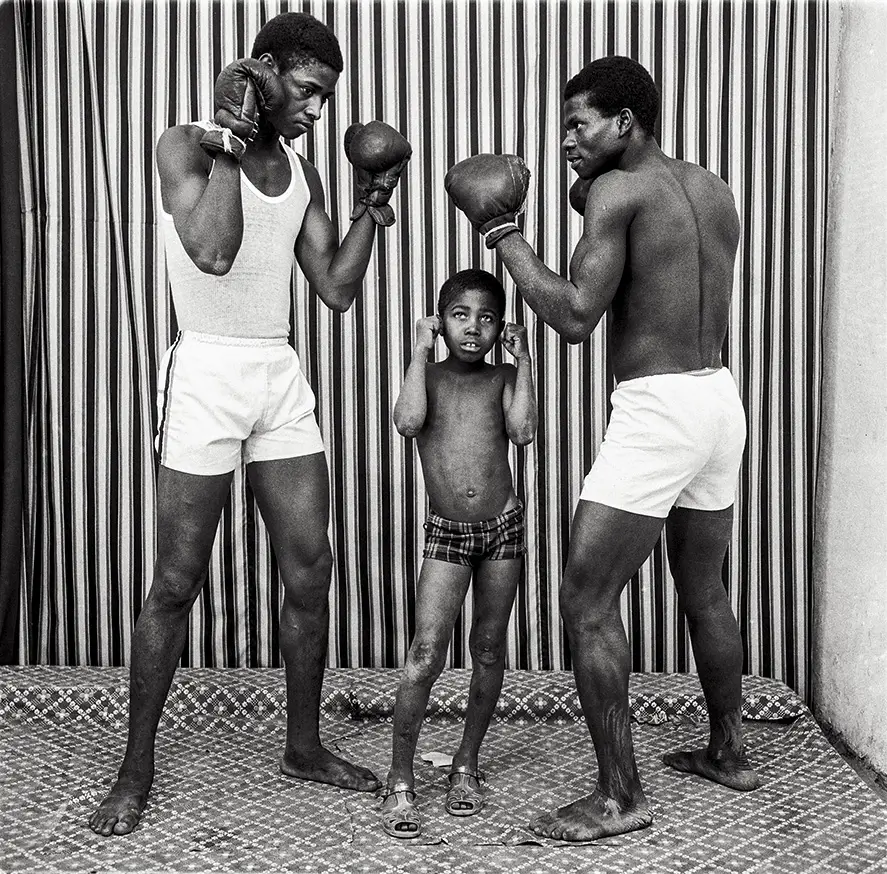
Entraînement de boxe, Studio Malick, Bamako, 1975 © Malick Sidibé
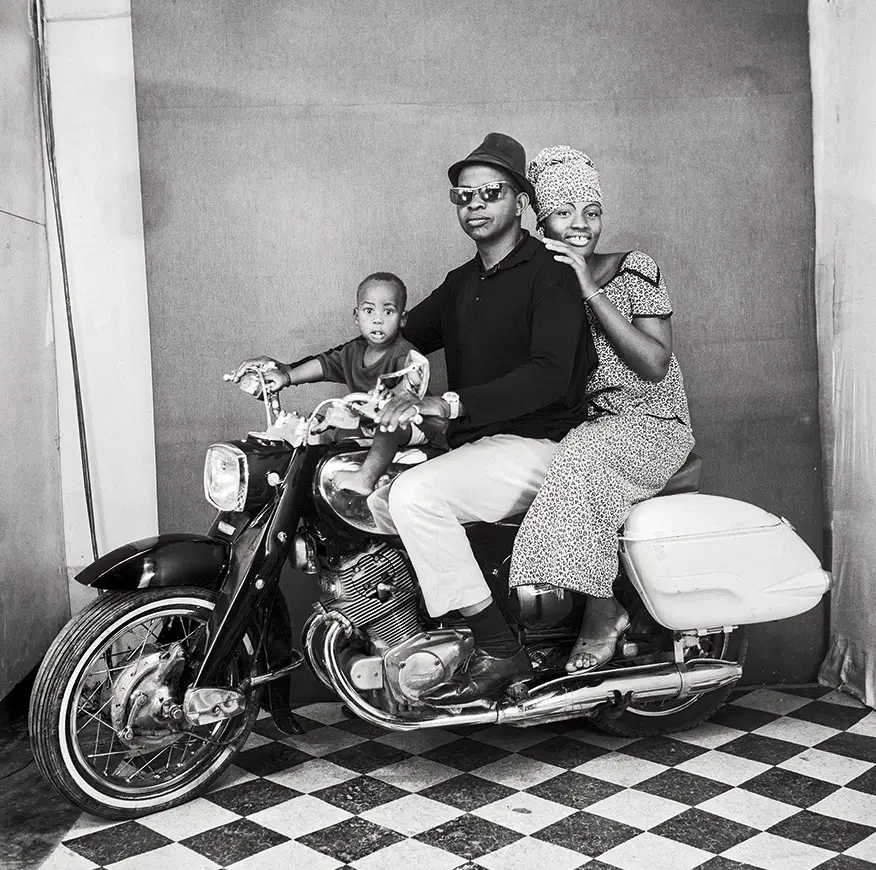
Toute la famille à moto, 1962 © Malick Sidibé
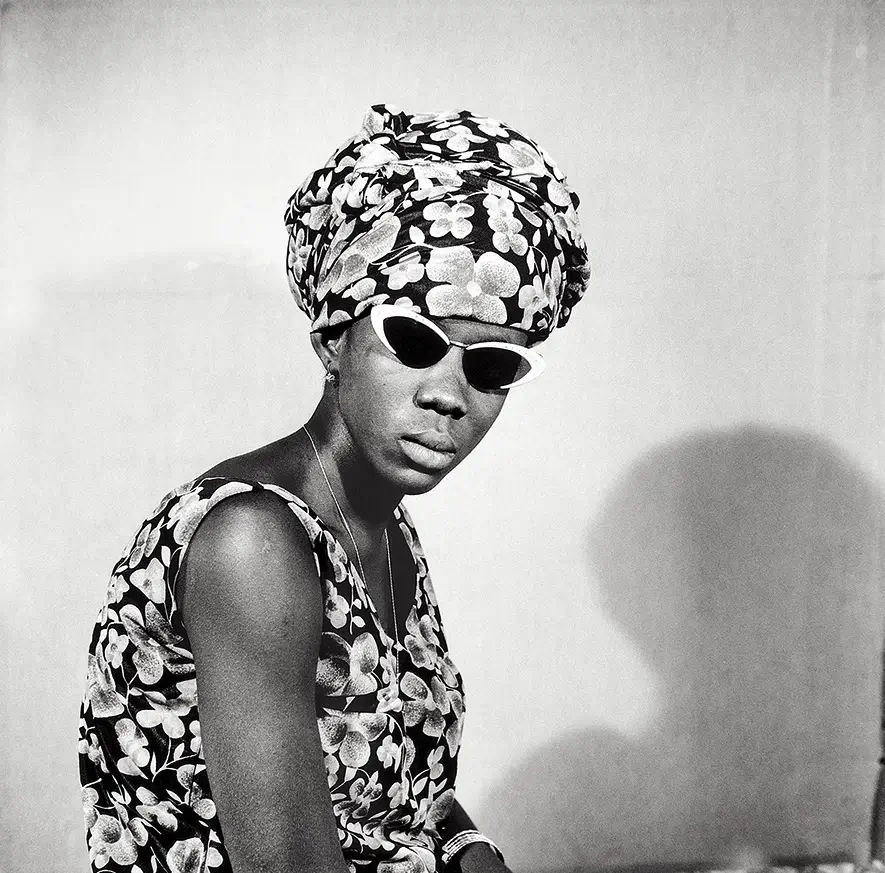
Melle Kadiatou Touré avec mes verres fumés, 1969 © Malick Sidibé