In the winter of 2021,
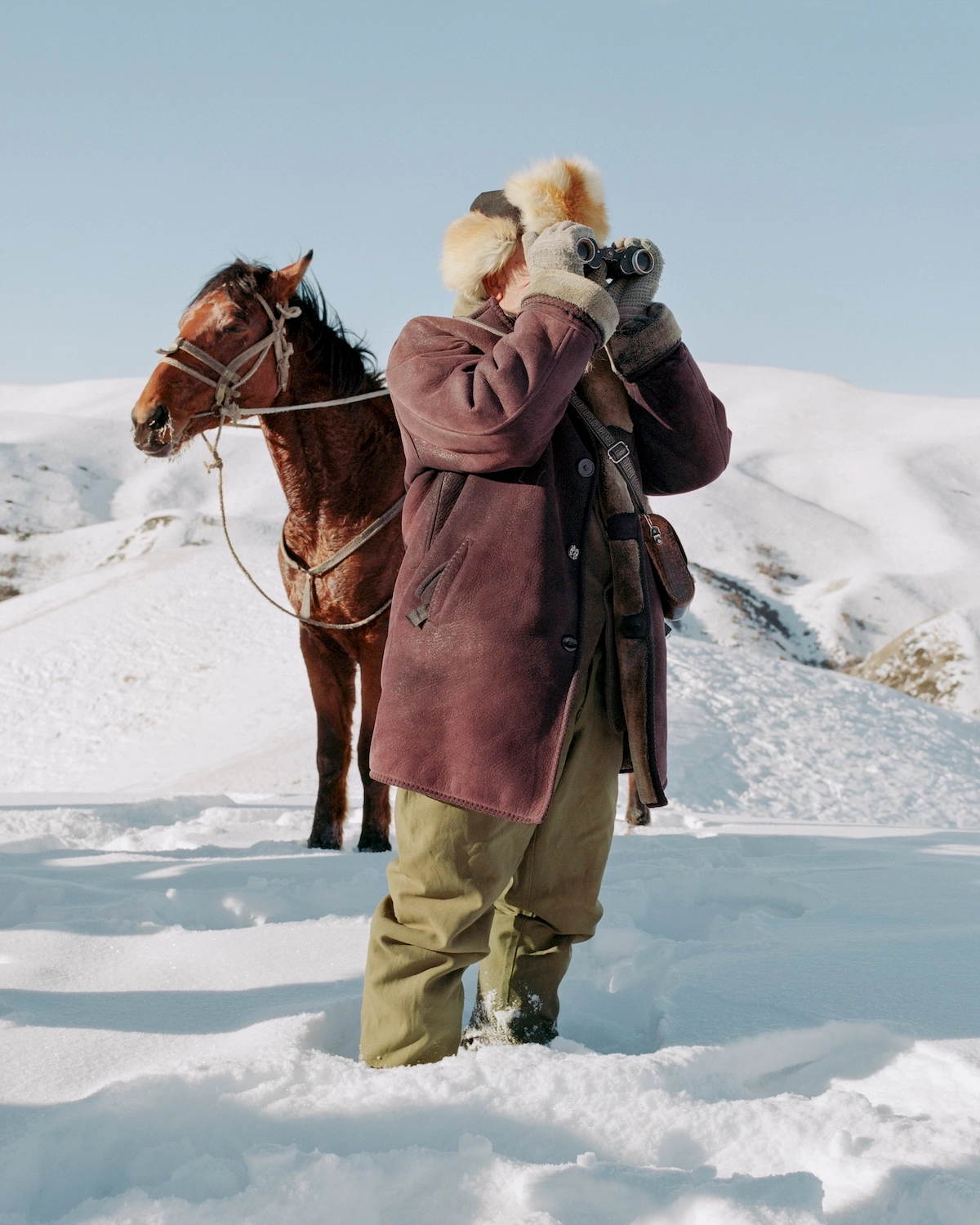
Luke Oppenheimer arrived in the Tien Shan mountains of central Kyrgyzstan with a straightforward assignment: document the wolves that prey on livestock in the remote shepherding village of Ottuk. Each year, wolves descend from the high ridges to kill dozens of horses and countless sheep. For families whose wealth is measured in hooves and wool, these losses are catastrophic. The men ride into the mountains during the harshest winter months to track and hunt the predators, navigating blizzards and subzero nights in defense of their herds.
But what began as a one-month reporting trip unfolded into something far deeper. The resulting body of work, Ottuk, is not simply about wolves. It is about a community living at the edge of survival, where one night of brutal cold can undo a lifetime of labor.
In Kyrgyzstan, there is a saying: “It only takes one frost.” The phrase carries both meteorological and existential weight. A sudden freeze can blanket the valleys in ice, trapping animals beneath snow and sealing their fate. In the morning, shepherds may find their flocks stiff and scattered across the white expanse. A single storm can wipe out a family’s entire livelihood.
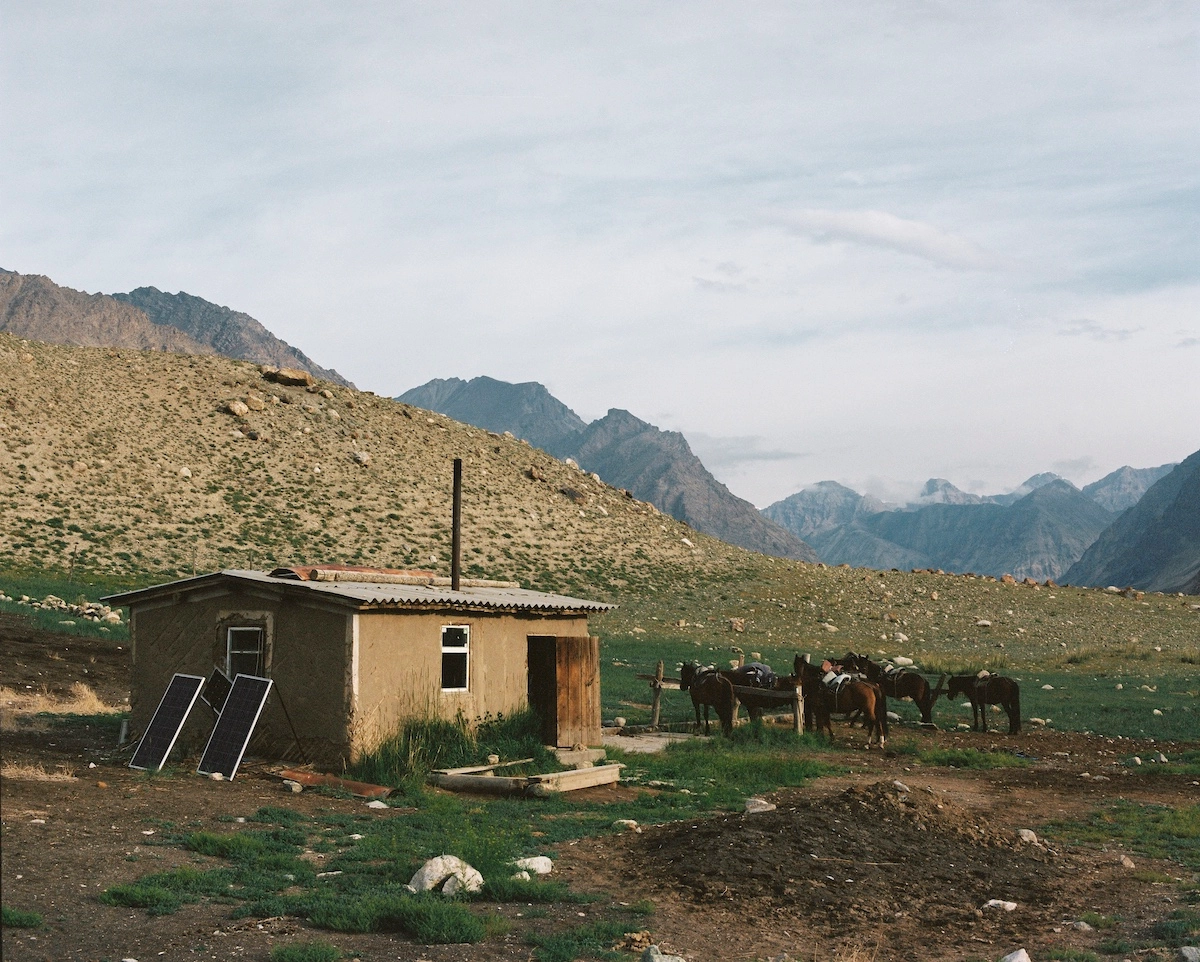
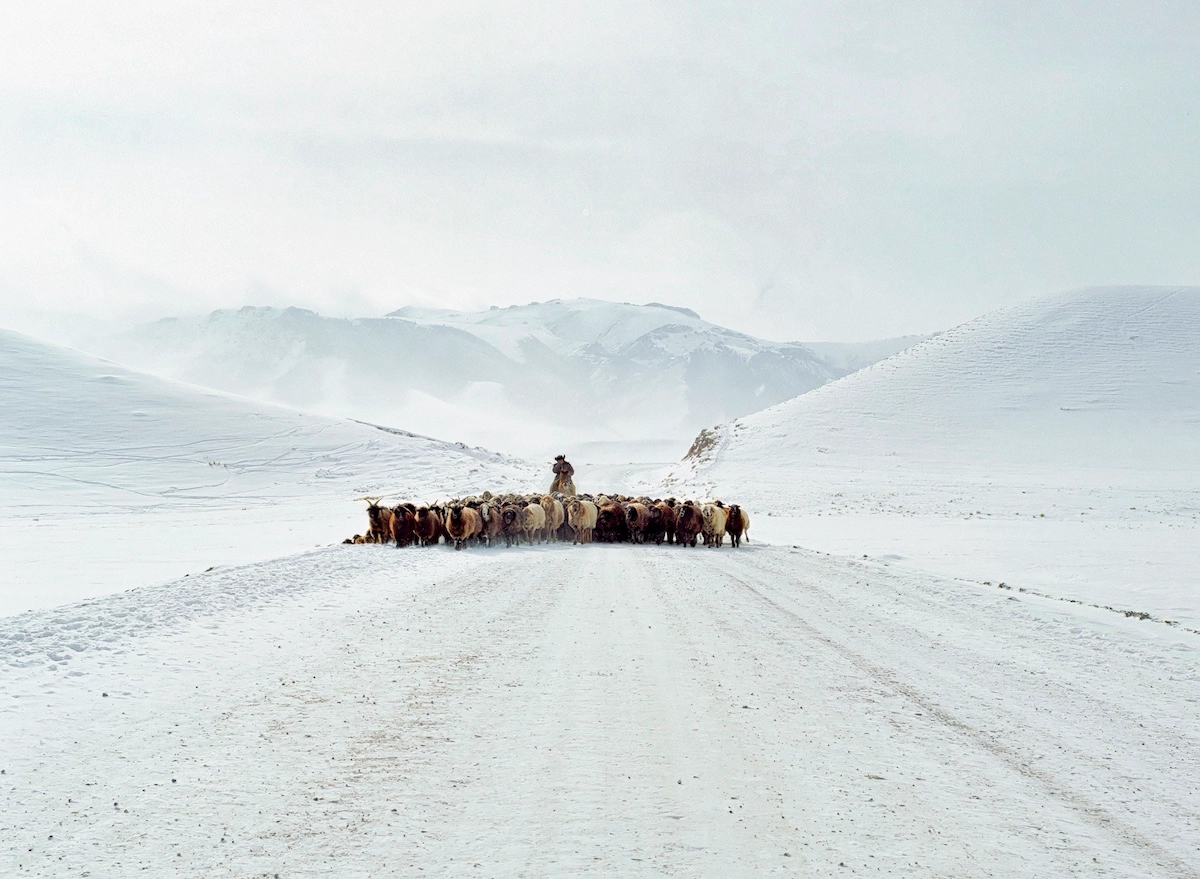
Ottuk lingers in this fragile space between endurance and loss. The photographs trace the rhythms of winter: horses moving like dark brushstrokes across the snow, men on horseback scanning ridgelines for wolves, boys learning early the responsibilities that await them. The landscape dominates every frame—vast, indifferent, breathtaking. Mountains loom like silent arbiters of fate. The cold is not merely a condition; it is a presence.
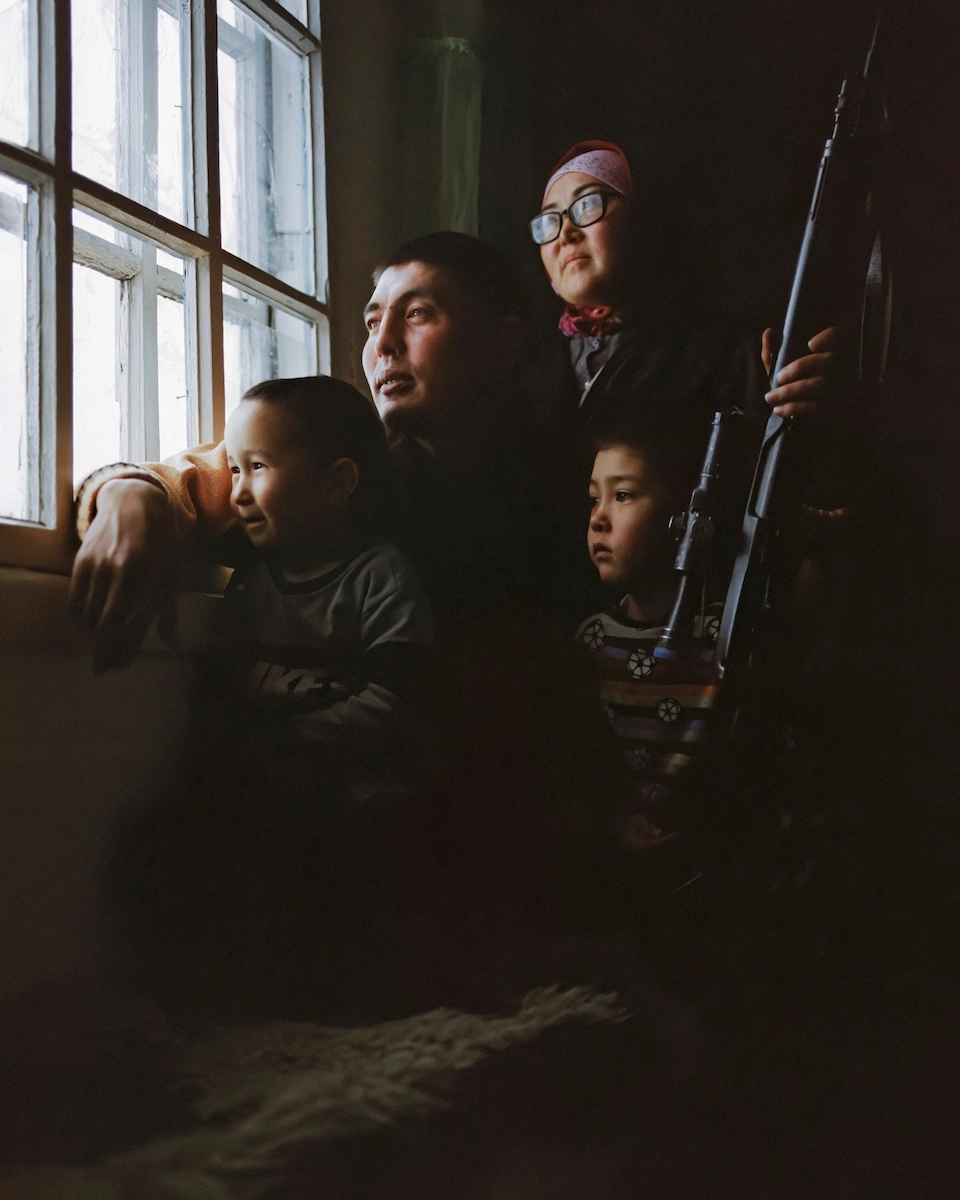
Yet the book’s heart lies in its intimacy. Over four years, Oppenheimer returned again and again, gradually earning the trust of the villagers and eventually being adopted by one family. This closeness transforms the work. The camera is no longer observing from the outside; it sits at the dinner mat, rides along on hunts, waits in the dim interior of a home lit by a single bulb. Hospitality emerges as a moral cornerstone. Guests are welcomed even when food is scarce. Loyalty is not abstract—it is proven through action, through shared risk, through the keeping of one’s word.
The wolves themselves remain mostly unseen, hovering at the edges of the narrative. Their presence is felt in the tension of saddled horses at dawn, in the long rifles slung over shoulders, in the wary glances cast toward distant ridges. They are antagonists, but not villains. In Ottuk, predator and shepherd are bound within the same unforgiving ecosystem. Both struggle to survive the winter. Both are shaped by the same terrain.
The book also explores the invisible pressures within the village: old feuds, obligations between families, the unspoken hierarchy of age and gender. Injuries linger without access to modern medical care. Illness can spread quickly in isolation. A broken leg, a lost herd, a dispute left unresolved—each carries consequences that ripple through generations. Life here is stripped to essentials: honor, duty, kinship. Words matter because survival depends on trust.
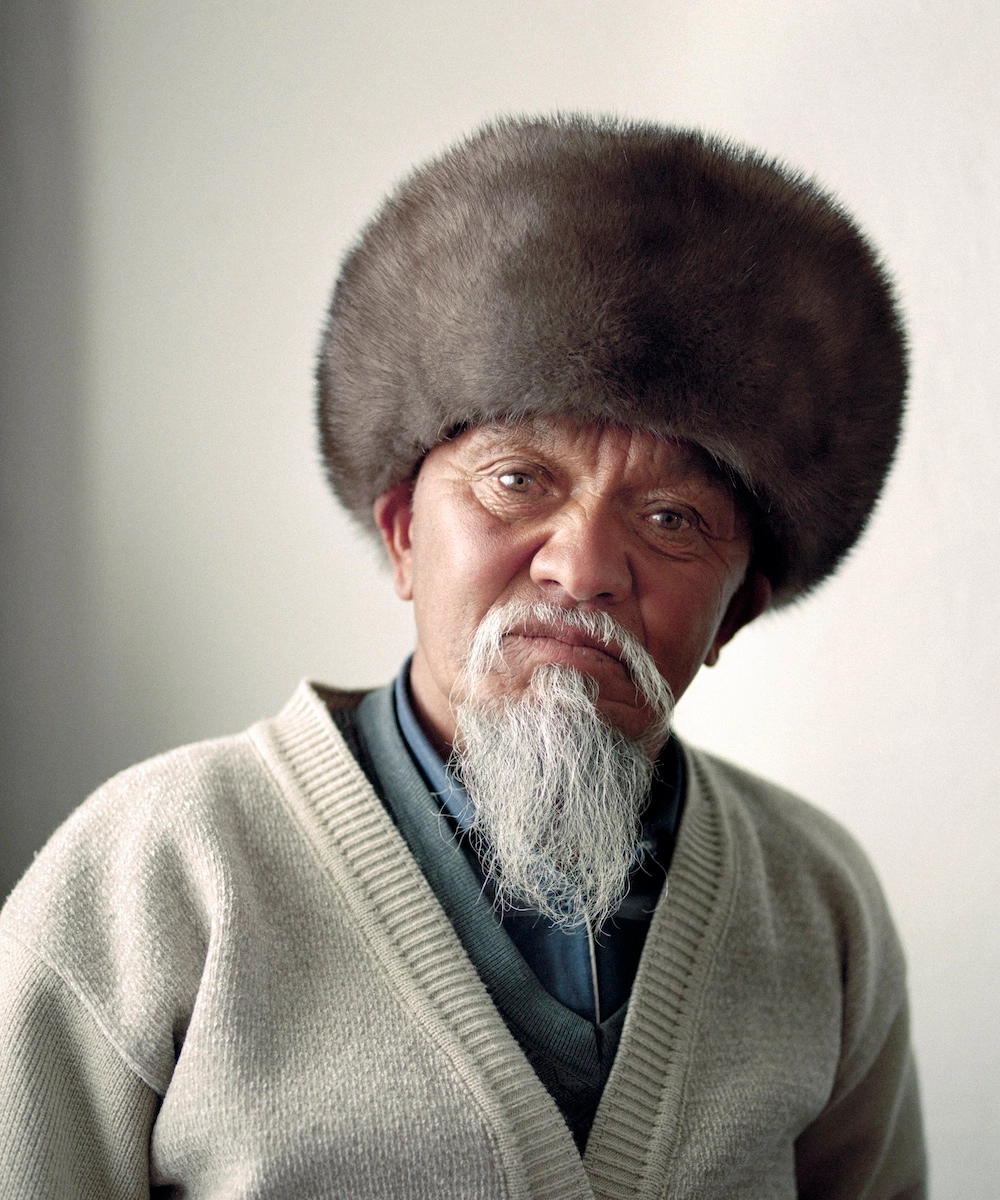
Visually, Ottuk is stark yet tender. Snowfields stretch into abstraction, punctuated by the dark geometry of yurts and barns. Faces are weathered but luminous. Children appear both playful and solemn, already initiated into a world where hardship is ordinary. The sequencing of images mirrors the cadence of winter itself—periods of stillness interrupted by sudden motion, quiet domestic scenes followed by the urgency of a hunt.
What makes the project remarkable is its sense of time. Four years allowed the work to move beyond spectacle. Rather than framing Ottuk as an exotic outpost, the book reveals a living community negotiating modern pressures while holding fast to ancestral patterns. The ancient practice of mounted wolf hunts coexists with satellite dishes and smartphones. Change arrives slowly, but it arrives.
Ultimately, Ottuk is a meditation on resilience. It asks what it means to live where survival is never guaranteed, where prosperity can vanish in a single frost. It honors a way of life shaped not by convenience but by necessity. The villagers endure because they must. They hunt because they must. They welcome strangers because hospitality defines them.
The story that began with wolves ends with something more enduring: belonging. Through patience and presence, Oppenheimer’s project becomes an intimate portrait of a village and its landscape—of people bound to the mountains, and to one another, by forces as relentless as winter itself.
About Luke Oppenheimer
Luke Oppenheimer is a writer and documentary photographer from rural Oklahoma with a background in agroforestry and sustainable farming. After earning a degree in Latin American History from the University of Missouri–Kansas City, he spent several years living and working across South America before producing his first photographic project along the Brazil– Paraguay border. Since studying at the International Center of Photography in New York, he has worked extensively throughout Latin America, Central Asia, and Southeast Asia, developing long-term collaborations with Modern Huntsman magazine and contributing to publications and organizations including the Amazon Aid Foundation and Eurasianet. His work explores the relationships between rural communities, the landscapes they inhabit, and the wildlife alongside which they live.
www.luke-oppenheimer.com
@luke_oppenheimer