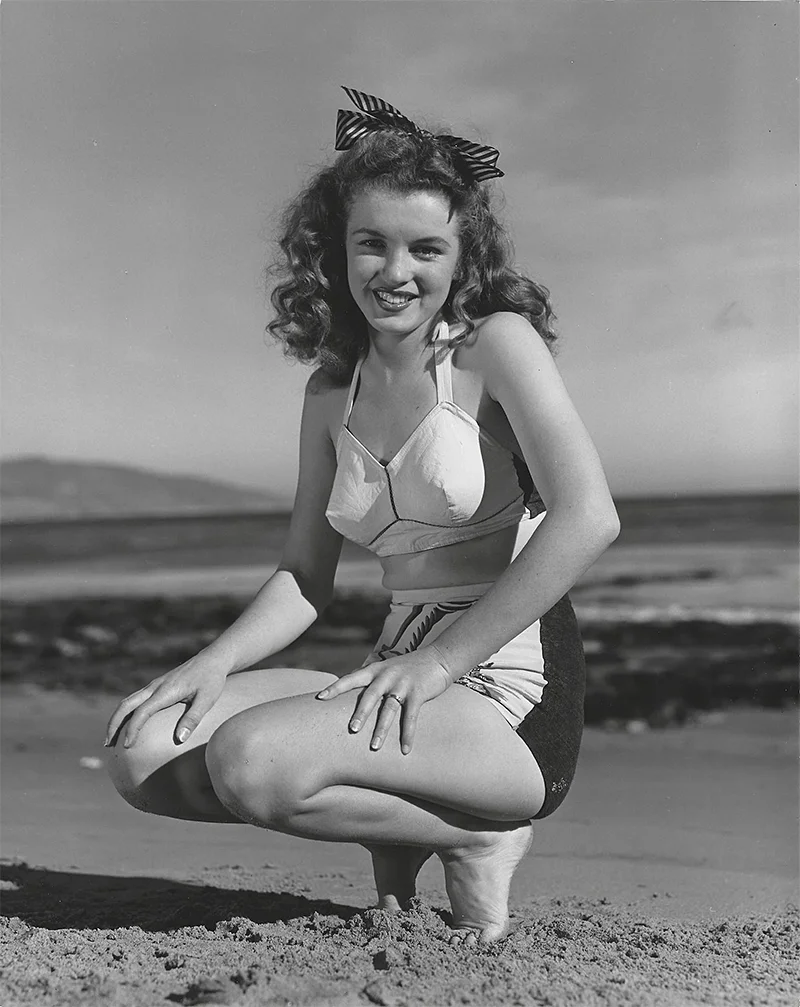
Becoming Marilyn, on view from June 18 to August 21, 2026, revisits one of the most photographed figures of the twentieth century through the images that helped build and preserve her public identity. The exhibition follows Marilyn Monroe from her early days as Norma Jeane Mortenson to the final months of her life, showing how photography turned her into a lasting cultural figure long before and long after her death at 36.
The show traces that rise through photographs by André de Dienes, who captured the young Norma Jeane on the beach, and
Bert Stern, whose
Vogue session came just weeks before Monroe died in 1962. In between, the exhibition brings together work by Milton Greene,
Philippe Halsman,
Cecil Beaton,
Richard Avedon, Sam Shaw,
Elliott Erwitt and Lawrence Schiller, among others. Some of the images are familiar, while others are less often seen, but all point to the same fact: Monroe understood the camera, and the camera helped make Monroe.
That relationship remains central to her legacy. Photographer Sam Shaw once described it simply: the camera loved Marilyn, and Marilyn loved the camera. The pictures in
Becoming Marilyn show that exchange at different stages of her career, from the freshness of an emerging star to the polished confidence of an icon. They also reveal how carefully her image was shaped, from soft glamour to the more controlled elegance of her final portrait sessions.
The exhibition also looks beyond Monroe herself to the wider culture she shaped. Frank Powolny’s portrait of Marilyn later inspired Andy Warhol’s silkscreens, while
David LaChapelle and Patrick Demarchelier echoed and updated her image in work tied to contemporary celebrity and fashion. That afterlife matters because Monroe did not remain a figure of the past. She became a template for how femininity, fame and visual identity are still staged today.
Seen together, the photographs in this exhibition chart not just a star’s career, but the making of a modern myth.
Image:
André De Dienes Marilyn Monroe (Norma Jeane), 1945
(© André de Dienes / MUUS Collection)