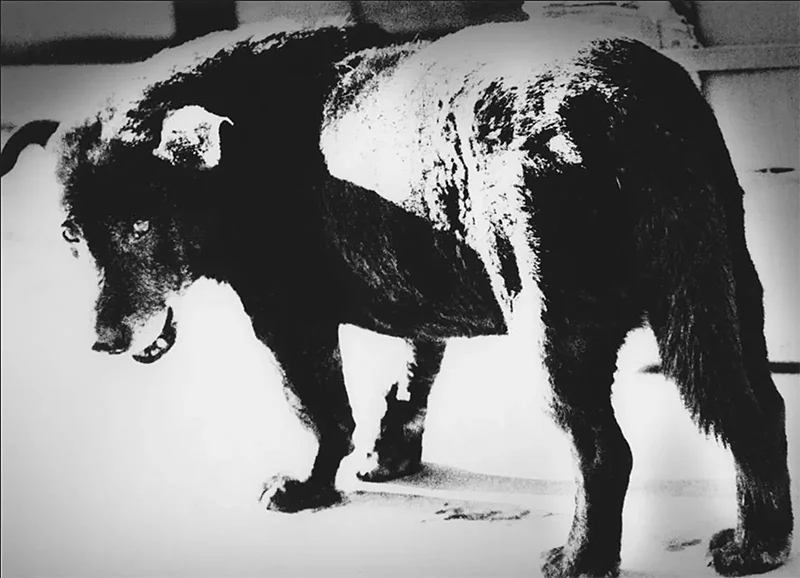
Daido Moriyama: The Hunter gathers images that read like footsteps through a city at fever pitch, a body of work that treats street photography as a practice of collision rather than calm observation. Moriyama’s pictures operate by impulse: a flicker of light, a passing shoulder, a neon sign shorn of context—moments seized in grain and blur that refuse the tidy clarity of documentary realism. What remains is a residue of encounter, a texture of presence that feels more like memory than reportage.
Aligned with the restless energy of the Provoke generation,
Daido Moriyama prefers sensation over explanation. His aesthetic—are, bure, boke—accepts noise, blur, and imperfect focus as honest instruments. Grain becomes rhythm, blur becomes motion, and the fraying of image edges signals a world that resists containment. In these pictures the city is not backdrop but collaborator, an unpredictable force that punctures intention and demands a more elastic language of seeing.
There is pleasure here but also a kind of urgency: the camera moves as quickly as the eye, indexing the accidental and the marginal with equal curiosity. Faces fragment into gestures, storefronts dissolve into planes of light, and anonymous bodies assemble into anonymous dramas. The effect is cinematic without rehearsal—snapshots that accumulate into a film of the street, each frame offering a rumor of story rather than a completed narrative.
Moriyama’s work also carries a private register. The same instinct that drives his street pictures follows him into interiors and relationships, producing images that feel intimate and fugitive. Whether in public or in quieter spaces, his photographs keep the viewer slightly off balance, invited to lean in and accept uncertainty.
Daido Moriyama: The Hunter does not promise truth in the old sense; it offers, instead, an ethics of attention—an argument for looking fast and looking hard, for honoring the fragment as the form most faithful to contemporary life.
Image:
Eyes of a Stray Dog, 1971
© Daido Moriyama, Courtesy of the Peter Fetterman Gallery