
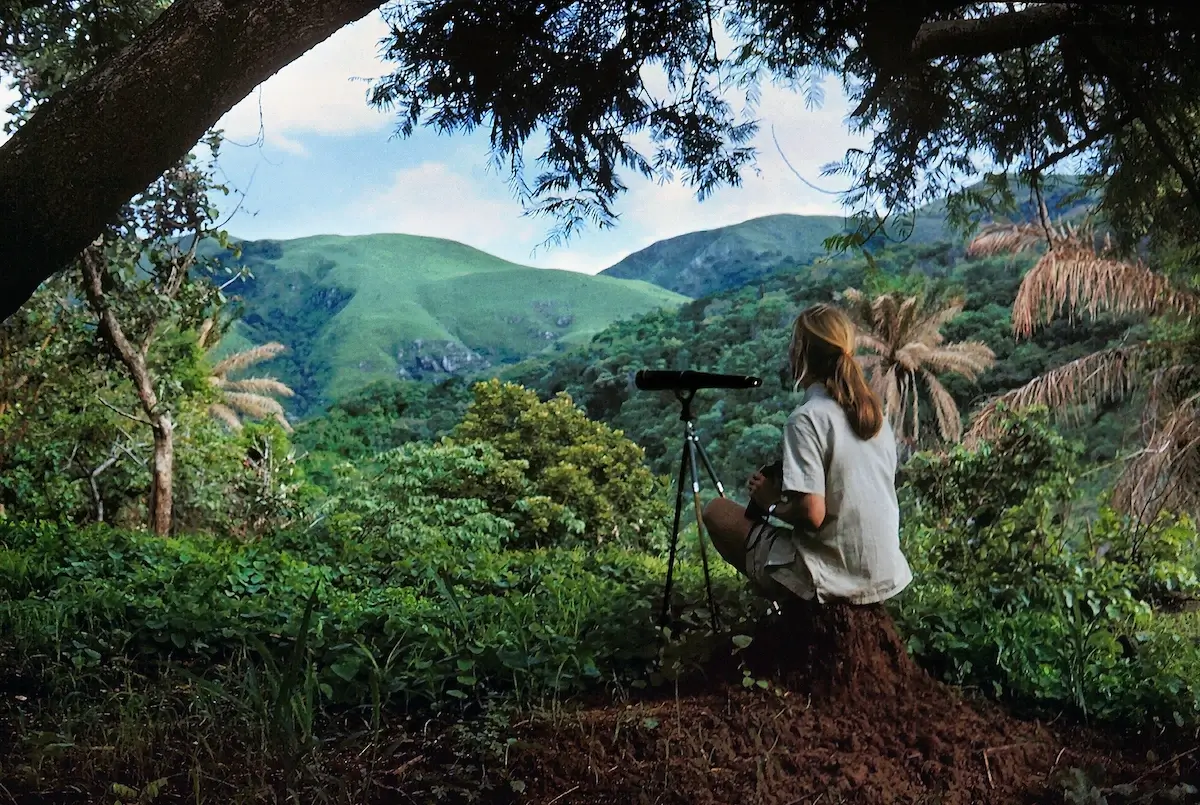
Jane Goodall. Self Portrait.© Jane Goodall / Courtesy of Vital Impacts.
In her early days at Gombe, Dr. Jane Goodall spent many hours sitting on a high peak with binoculars or a telescope, searching the forest below for chimpanzees. She took this photo of herself with a camera fastened to a tree branch.
Says Dr. Goodall, I was really excited to see that that photo of me looking out at the valley at Gombe with my trusty lightweight telescope was chosen. It was taken in, I think, 1962. I was on my own, very high up in the hills and I thought what a great photo this would make.
I had to find a place where there was a tree that was just right for balancing the camera. I had to set up the tripod and fiddle about until I had the tripod and the imagined image of me framed just right. That was in the days before digital so I had to wait a long time before I got the results back from National Geographic. I was pretty proud of myself. I love that picture.
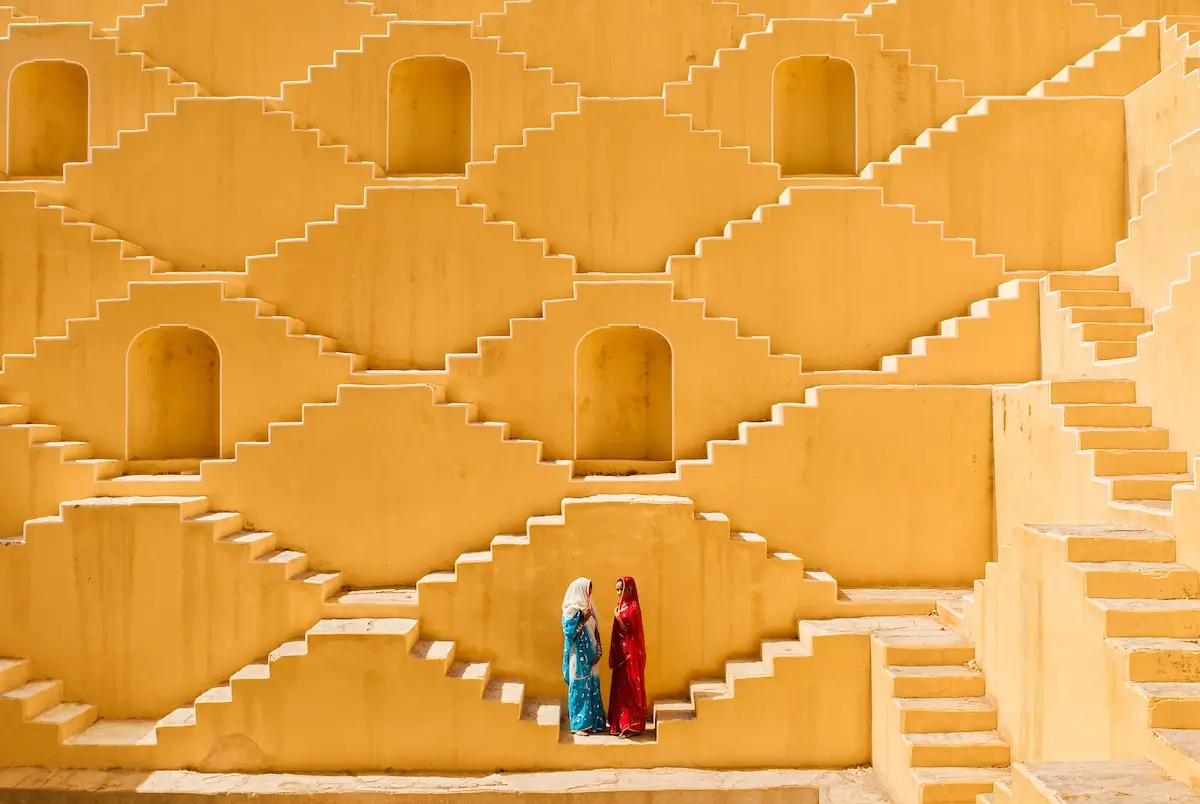
Well 2009© Ami Vitale / Courtesy of Vital Impacts.
In Jaipur’s arid Thar desert, Manisha and Jasmin Singh stand in a centuries-old stepwell — an architectural marvel once brimming with water and life. Built to sustain entire communities through harsh dry seasons, many of these wells now lie empty. As groundwater vanishes, women must walk farther each year to find what was once at their doorstep.
Ami Vitale’s career stands as a testament to her deep dedication to documenting and addressing global crises. As an acclaimed National Geographic photographer, writer, and documentary filmmaker, as well as the founder of Vital Impacts, Ami has consistently spotlighted critical issues affecting our world. Her journey began in conflict zones, where she observed firsthand how environmental degradation—from resource scarcity to climate change—intensifies human suffering and conflict.
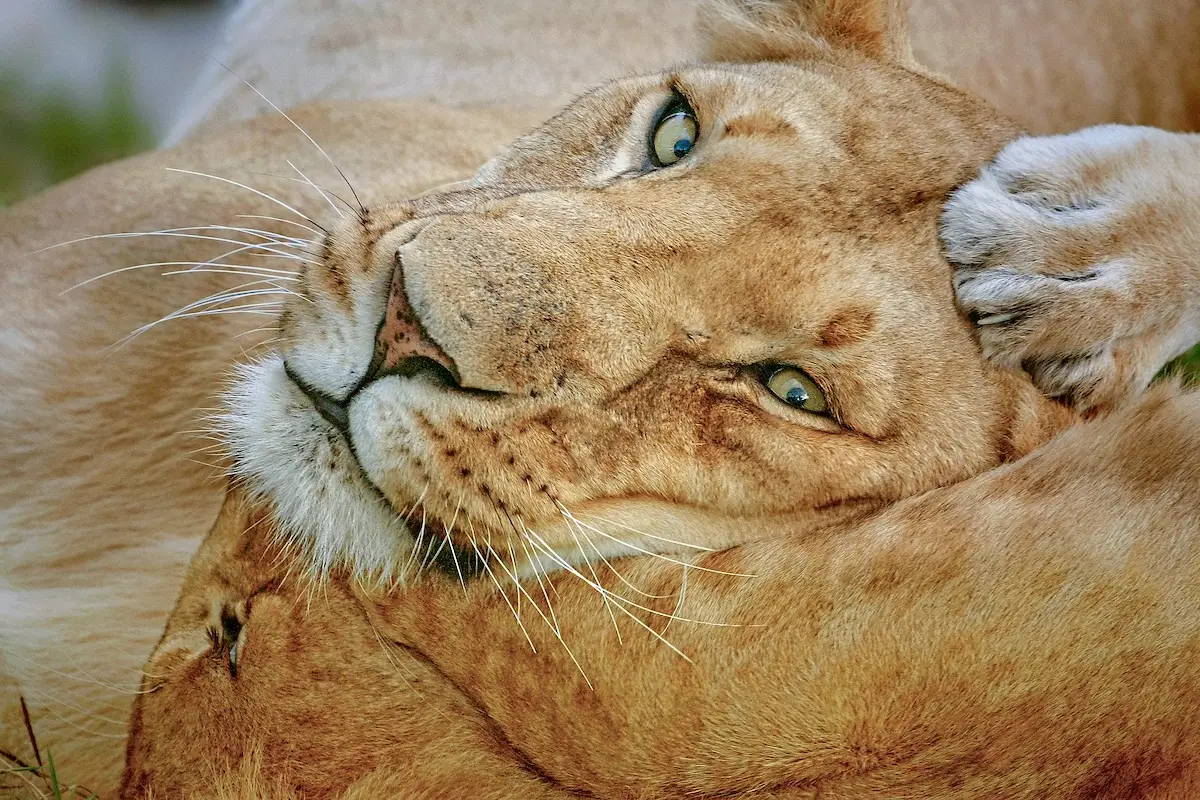
Lion Mania - Masai Mara, Kenya © Georgina Goodwin / Courtesy of Vital Impacts.
In the heart of Kenya’s Masai Mara, I captured this fleeting yet powerful moment between two lionesses mid-tussle. Lions (Panthera leo) are both apex predators and deeply social creatures, their survival depending on the strength of the pride. Here, power and vulnerability coexist — the raw force of the lionesses’ clash balanced by the fragility of their species, now facing steep population declines from habitat loss, human-wildlife conflict, and diminishing prey. The Masai Mara is one of the last great strongholds for lions, yet even here they are under pressure. Across Africa, lion populations have fallen by nearly half in the last 25 years, making every glimpse of their resilience — and their struggles — a reminder of what is at stake. I am Georgina Goodwin, a documentary photographer born and based in Kenya. My work focuses on Nature, Community and Conservation, telling stories that connect people to the urgent need to protect our natural world. A Canon trainer, mentor and former Canon Ambassador, my work has been published and exhibited internationally.
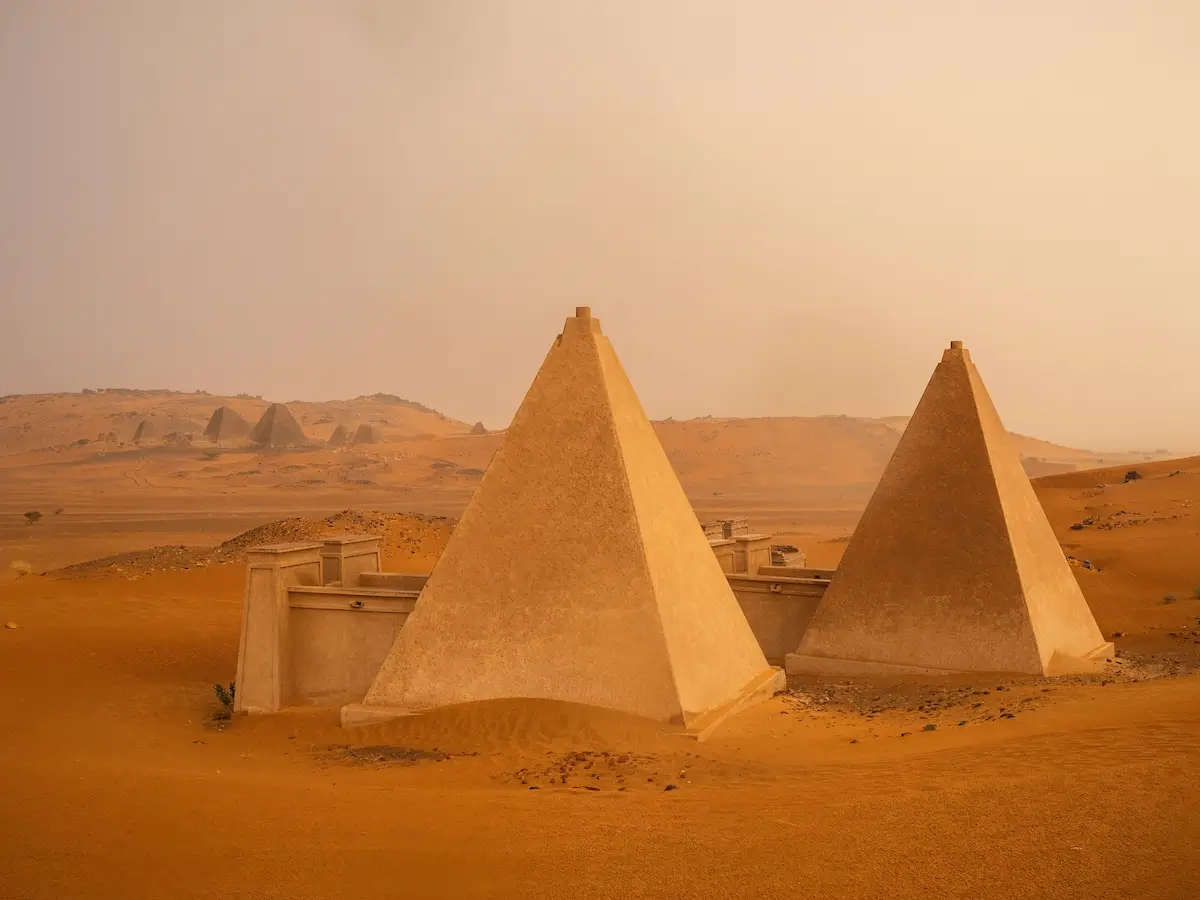
Meroepyramid © Nichole Sobecki / VII / Courtesy of Vital Impacts.
A “haboob,” or sandstorm, rolls across the Meroë pyramids in Sudan. Most of the 41 tombs here belong to the royals of the powerful Kingdom of Kush (900 B.C. to A.D. 400), which ruled large parts of the middle Nile Valley. Nichole Sobecki is a photographer and filmmaker based in Nairobi, Kenya. She aims to create photographs and films that demand consideration for the lives of those represented – their joys, challenges, and ultimately their humanity. Amidst our fractured present existence, she believes that a well-told story can cut through the noise, deepen empathy, and inspire a more conscious world.
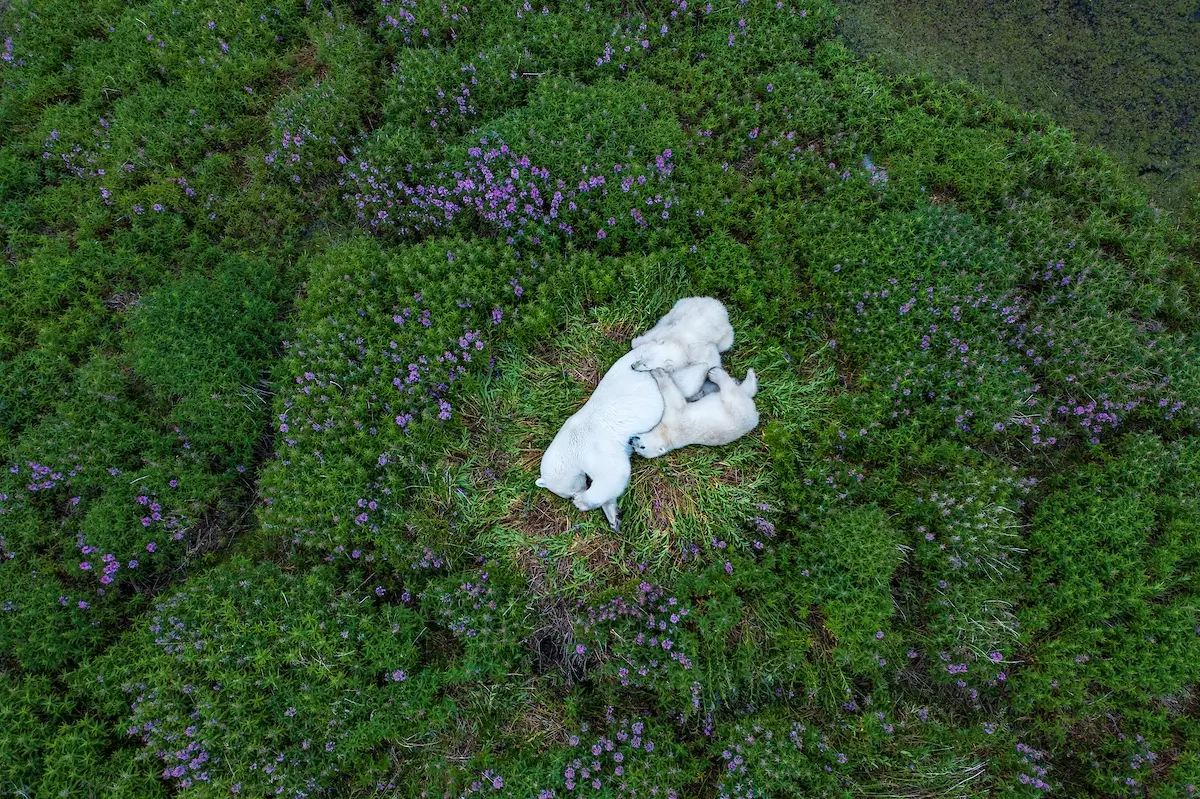
Flower Bears. © 2023 Martin Gregus/ Courtesy of Vital Impacts.
Polar Bears Wilma, Bamm Bamm, and Pebbles sleep amongst the fireweed, resting in a bed they made for themselves that morning this trio was our #1 favourite during the expedition in 2020, which resulted in the series 33 Days among the Bears. Martin Gregus has numerous projects and expeditions in the works, both in Canada and internationally. In 2021, he won the Rising Star Portfolio Award in the National History Museum’s prestigious Wildlife Photographer of the Year (WPY) competition and his documentary film on his time with the animals, 33 Days Among Bears.
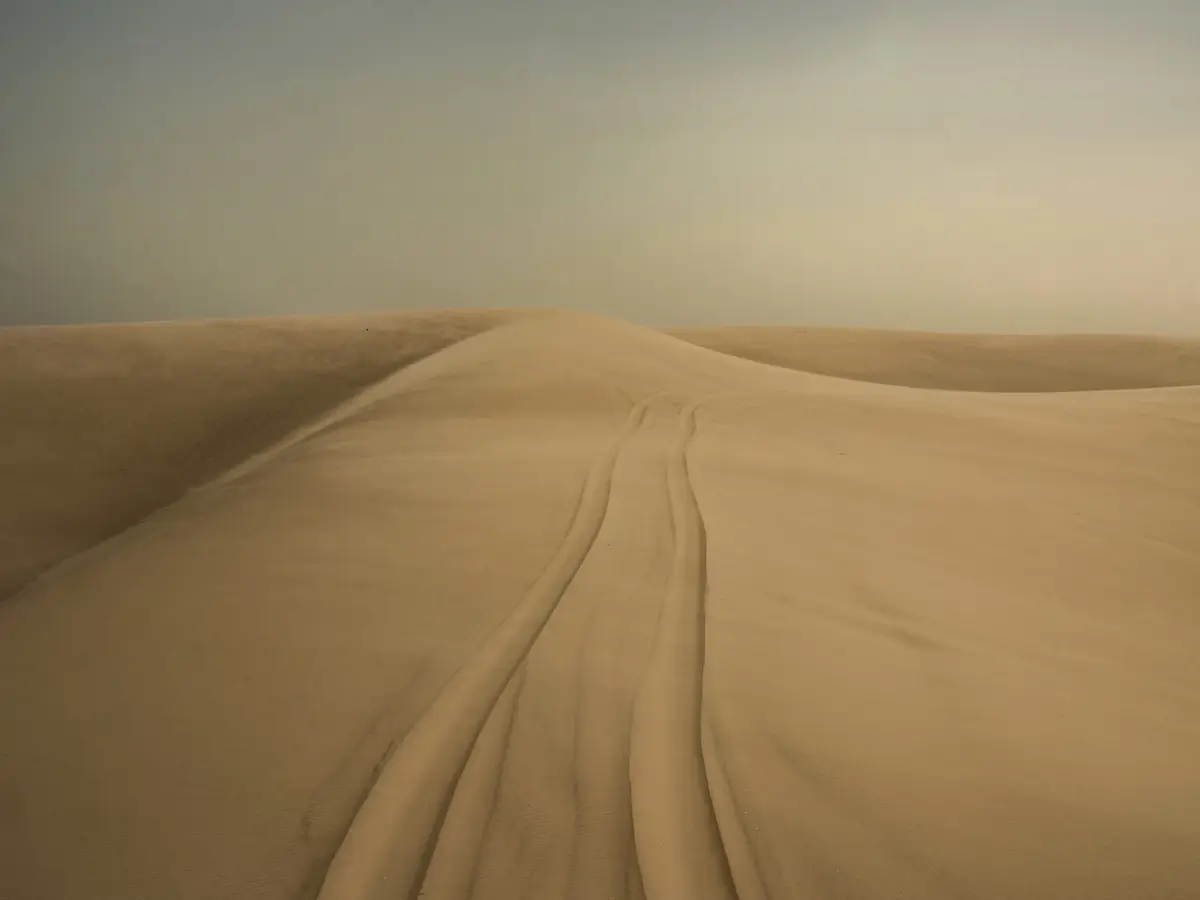
A Pillar of Salt. ©Cristina De Middel / Courtesy of Vital Impacts.
Lençois Maranhenses, September 2023. After 10 years as a photojournalist, Cristina De Middel shifted her practice to a more conceptual approach in order to question the documentary value of photography. In 2012 she produced the acclaimed series The Afronauts, triggering a decade of work around the role of photography in creating stereotypes. Besides her prolific career as an author, and as an active member of the photography community, Cristina has been invited to curate festivals like Lagos Photo, PhotoEspaña, and San José Photo in Uruguay. She has published more than 14 photobooks and her work is constantly on show in different institutions and venues. Cristina is also on the board of Vist Projects, a platform to support Latin American visual story-telling and she is a member of Magnum Photos agency and its president since 2022.
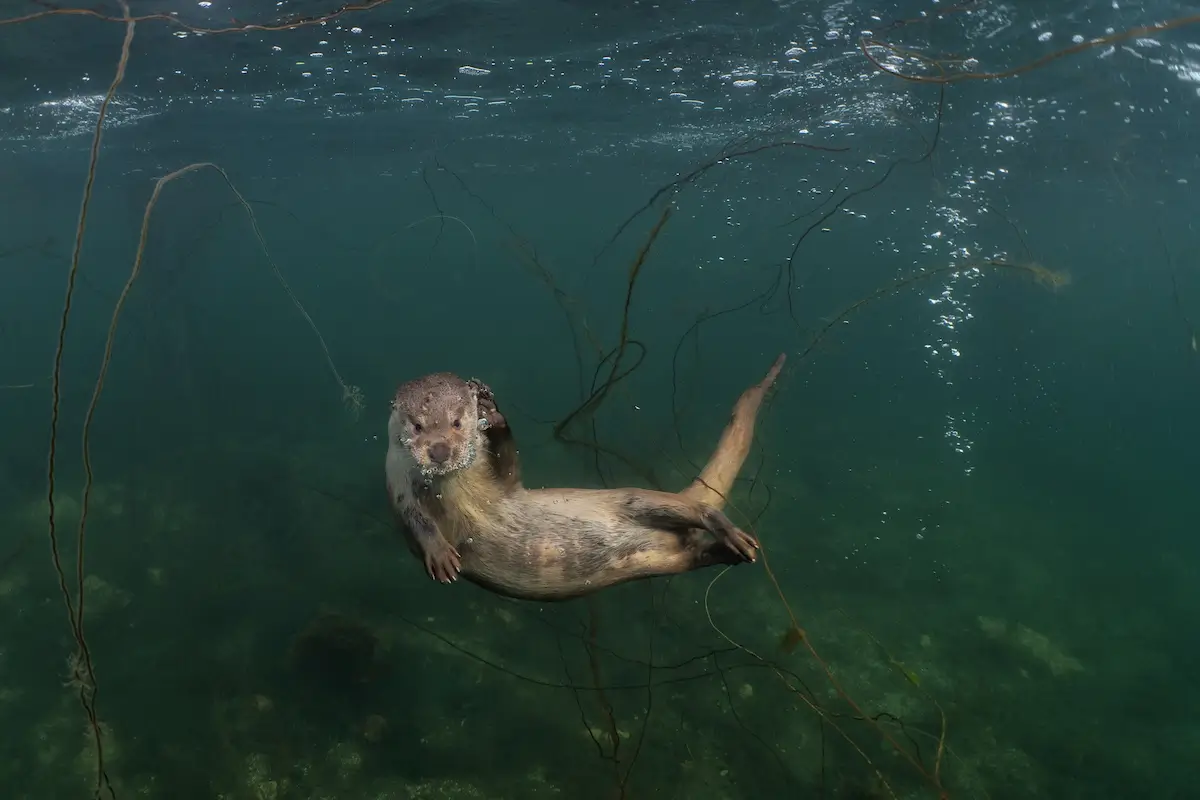
'Molly' the otter, underwater in Shetland. © Charlie Hamilton James / Courtesy of Vital Impacts.
Charlie Hamilton James is a photographer and filmmaker specializing in conservation issues and wildlife with a particular interest in East Africa, the Amazon and otters.
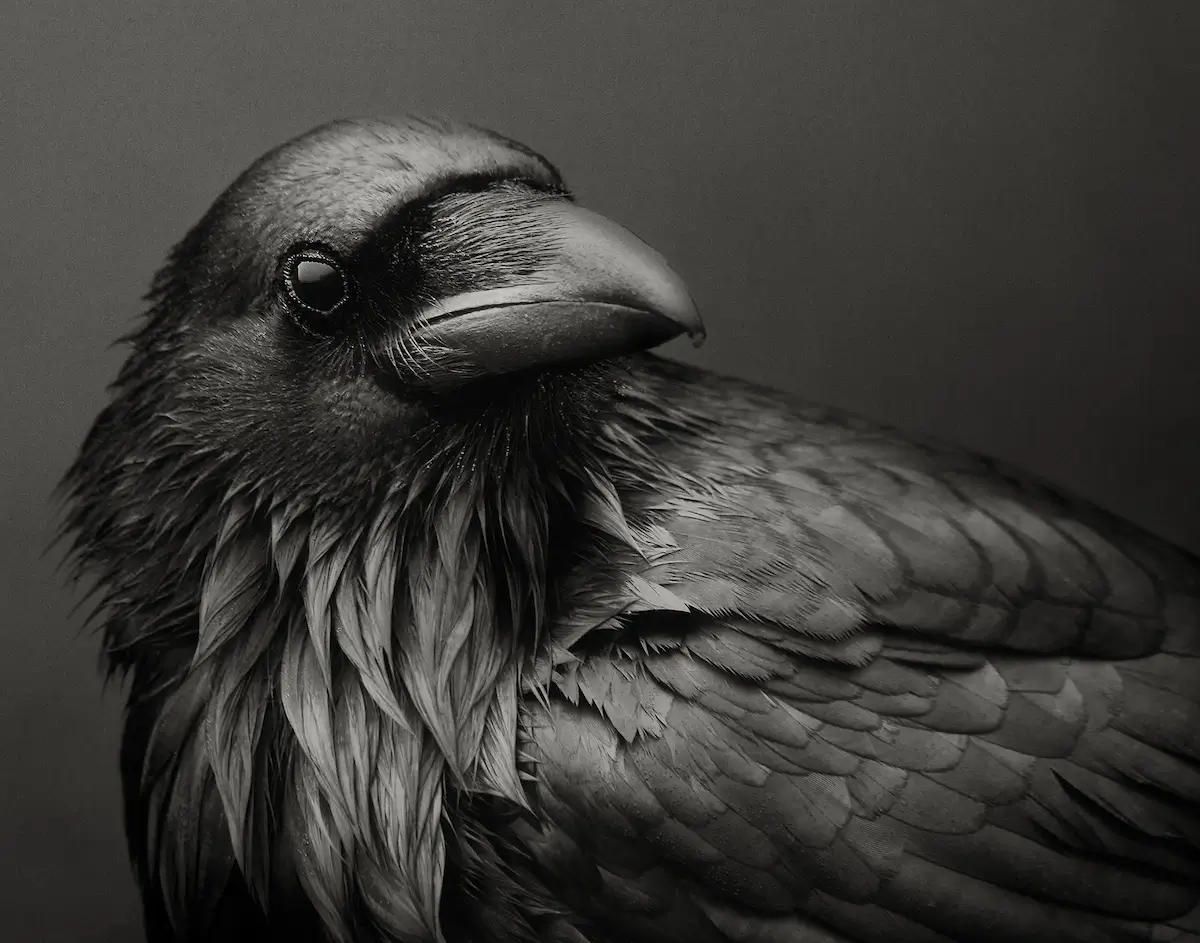
Odin's Cove #25. © Beth Moon / Courtesy of Vital Impacts.
Odin’s Cove is about a sense of place. It is a celebration of the beauty of nature in a visually stimulating landscape where untamed bramble and ivy suggest ancient origins. Where a regenerative view of the earth can be found, in the lush cliffs that gently slope to the sea, where music can be heard in the beating of a raven’s wing.
This project evolved from a series of trips to a very special part of the California coastline where I developed what I can only call a friendship with a pair of ravens. Over a three-year period I made many trips to this unique area and as my relationship with the ravens grew – they taught me many things about their lives and personalities.
Part pirate, part prophet, makers of magic and mischief, their throaty calls can be heard echoing through these hills. This series portrays their trust in me, their loyalty to each other, the territory they rule, and their life in the wild.
Limited Edition
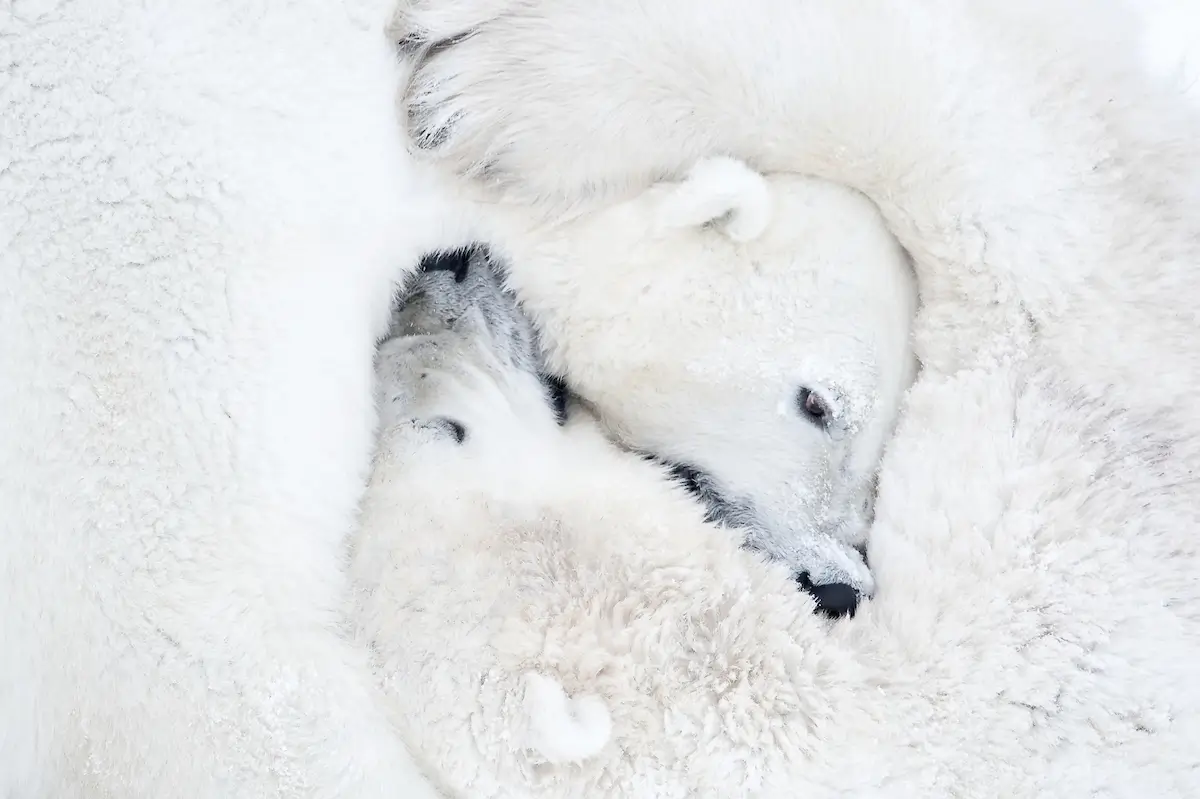
The Hug. © Daisy Gilardini/ Courtesy of Vital Impacts.
Watching polar bears spar is one of the highlights of observing bears in fall in northern Manitoba.
Nestled on the shore of the Hudson Bay, Churchill, sits on the annual migration path of the polar bears, when they transition from land to sea.
It’s the largest known concentration of polar bears in the world. Young sub-adults and adults often spend their time sparring or play-fighting.
Scientists have various explanations for this behaviour. It reinforces relationships and helps establish a hierarchy, provides practice for real future fights over potential mates, and helps them get into shape for the coming seal hunting season.
Limited Edition
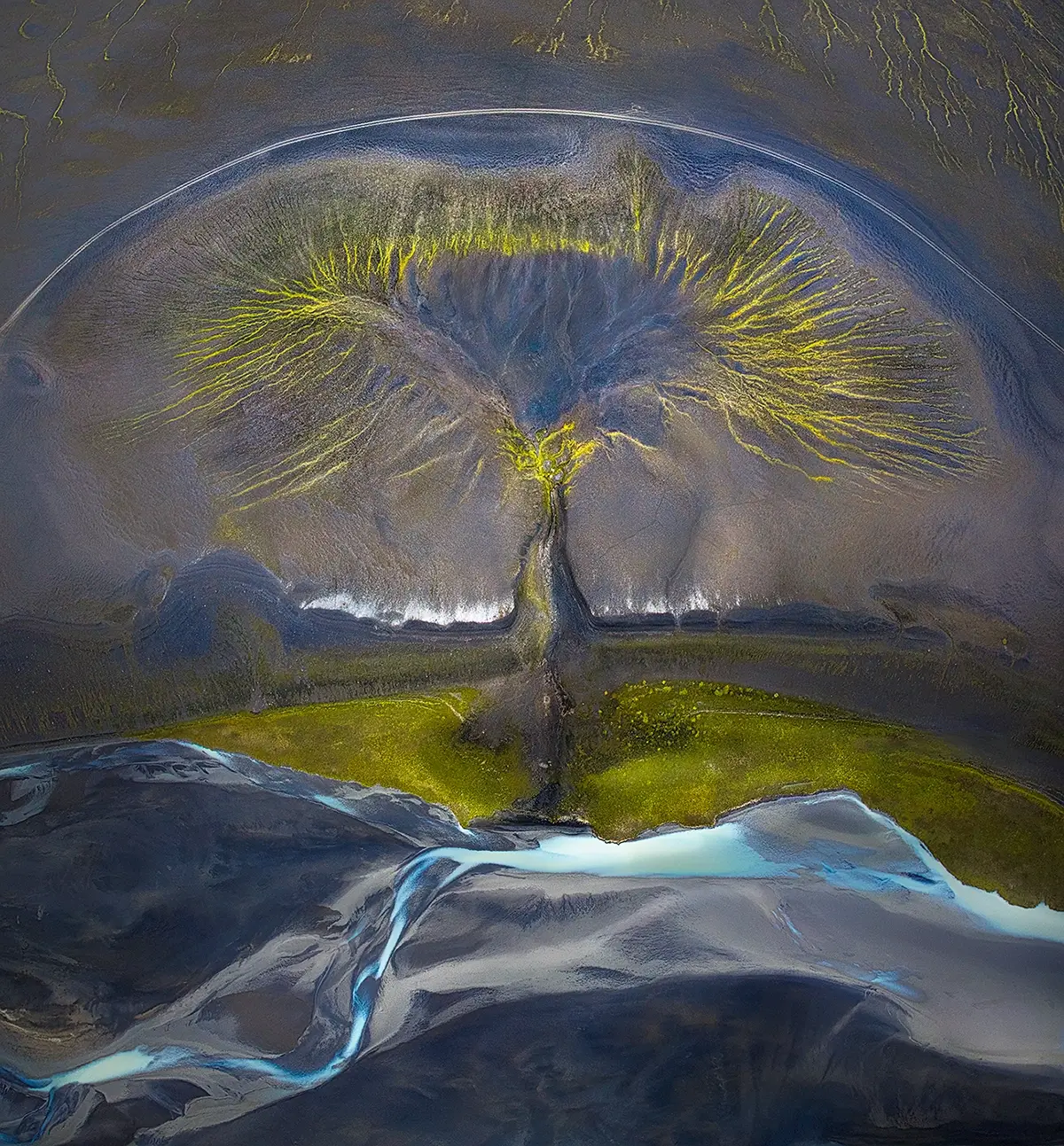
Tree of Life© Isabella Tabacchi/ Courtesy of Vital Impacts.
This aerial photograph taken in the highlands of Iceland, titled Tree of Life, features an intricate natural landscape that resembles a tree. The image showcases a network of river deltas and streams spread out like tree branches, framed against a strikingly dark and textured landscape. The branching streams are a vibrant yellow-green, contrasting sharply with the dark grayish-brown surroundings, giving the appearance of a tree’s canopy.
At the base, a light blue river meanders through the scene, resembling the roots of this metaphorical tree. This river appears to have carved through the earth, leaving behind smooth, curved lines and creating a natural composition reminiscent of veins or neural pathways, lending a sense of organic symmetry to the image. The water's path, coupled with sediment and plant growth, enhances the visual impact, blending the colors and textures beautifully.
The entire scene seems encapsulated by a semicircular formation above, further enhancing the “Tree of Life” illusion. This image is an example of nature’s artistry, where geological and biological elements converge to form a visual masterpiece that speaks to the beauty and complexity of our planet’s landscapes.
Isabella Tabacchi is an Italian landscape photographer capturing emotional, and dreamlike views of natural landscapes across the globe.
Limited Edition
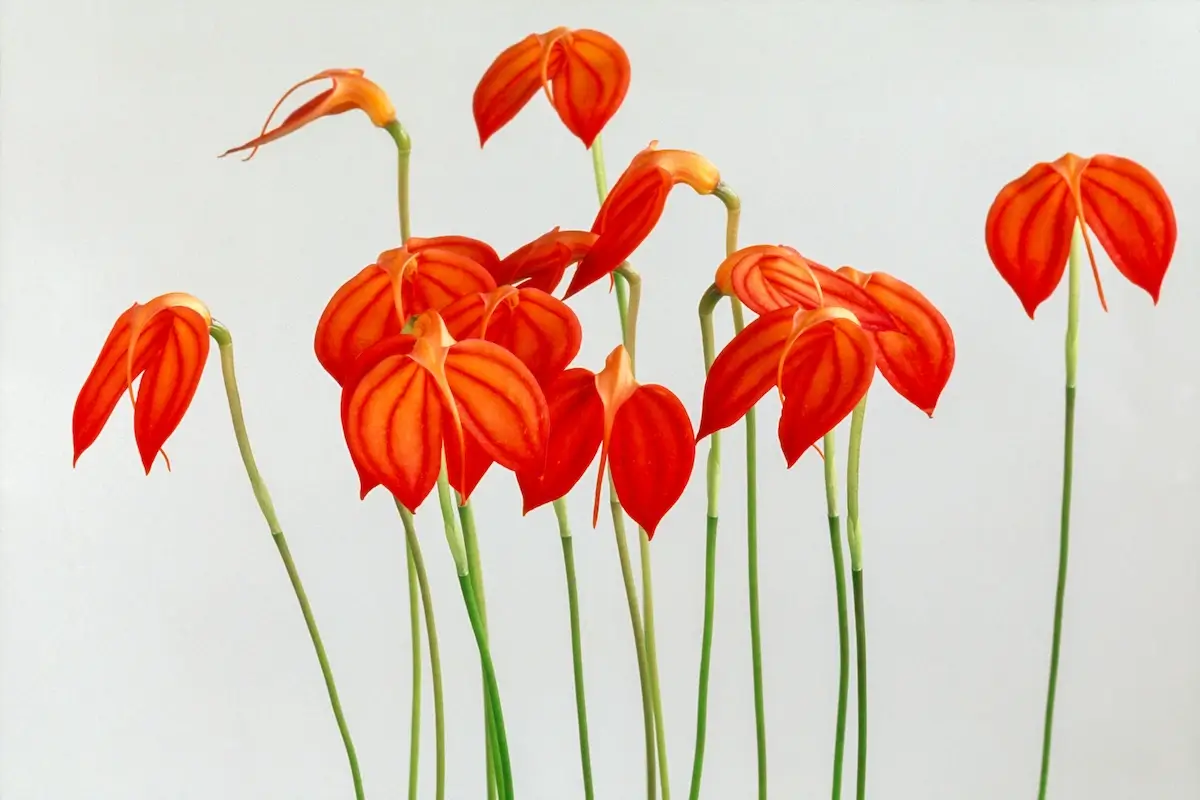
Orchid, Private Collection. © Frans Lanting/ Courtesy of Vital Impacts.
Captured a set of blooming orange and red wildflower Orchids. Frans Lanting has documented wildlife and wild places from Africa to Antarctica for more than three decades, creating a unique body of work that conveys a passion for nature, a sense of wonder about the earth, and concern for our living planet.
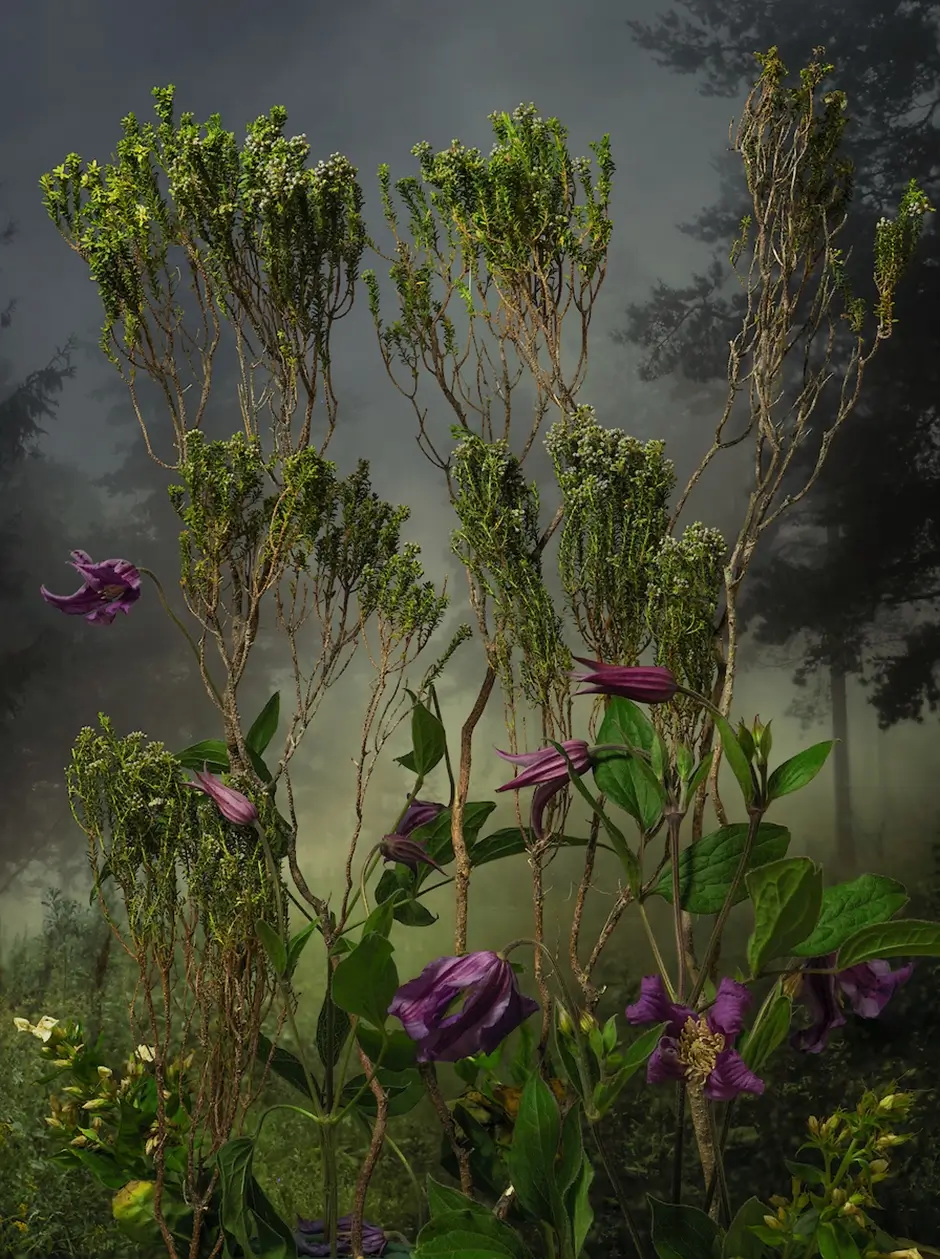
Empetrum Nigrum. © Tine Poppe/ Courtesy of Vital Impacts.
Born and bred in industrial scale greenhouses, cut flowers have no contact with nature and generate high CO2 emissions - not unlike humans in the Western world. Flowers are powerful symbols. People around the world use them to mark rites of passage and significant life events. In the Victorian era, flowers were considered the best medium to express feelings. Each type of flower was associated with specific, symbolic meaning. Previously the western world’s supply of cut flowers derived from local run green houses. Today most of the flowers we buy in our stores have been transported by plane or lorries from industrial scale digitally run greenhouses around the world. Colombia, Ecuador and equatorial East Africa are the largest producers of cut flowers in the world. The greenhouses contribute to high water use and chemical runoff. On top of pollutants and water use, flowers can generate serious carbon emissions because of refrigeration and long-haul transport. Stems may be transported up to 6000 miles in refrigerated airplane holds. When grown in cooler climates, flowers need heated greenhouses and generate high CO2 emissions because of its high electricity usage. The portrayed cut flowers were shot against a background of prints of images from vulnerable areas of the world. When giving these magnificent flowers and plants close attention, they become a mysterious, dreamlike universe in themselves and a reminder of the incredible beauty of nature that we are at serious risk of losing.
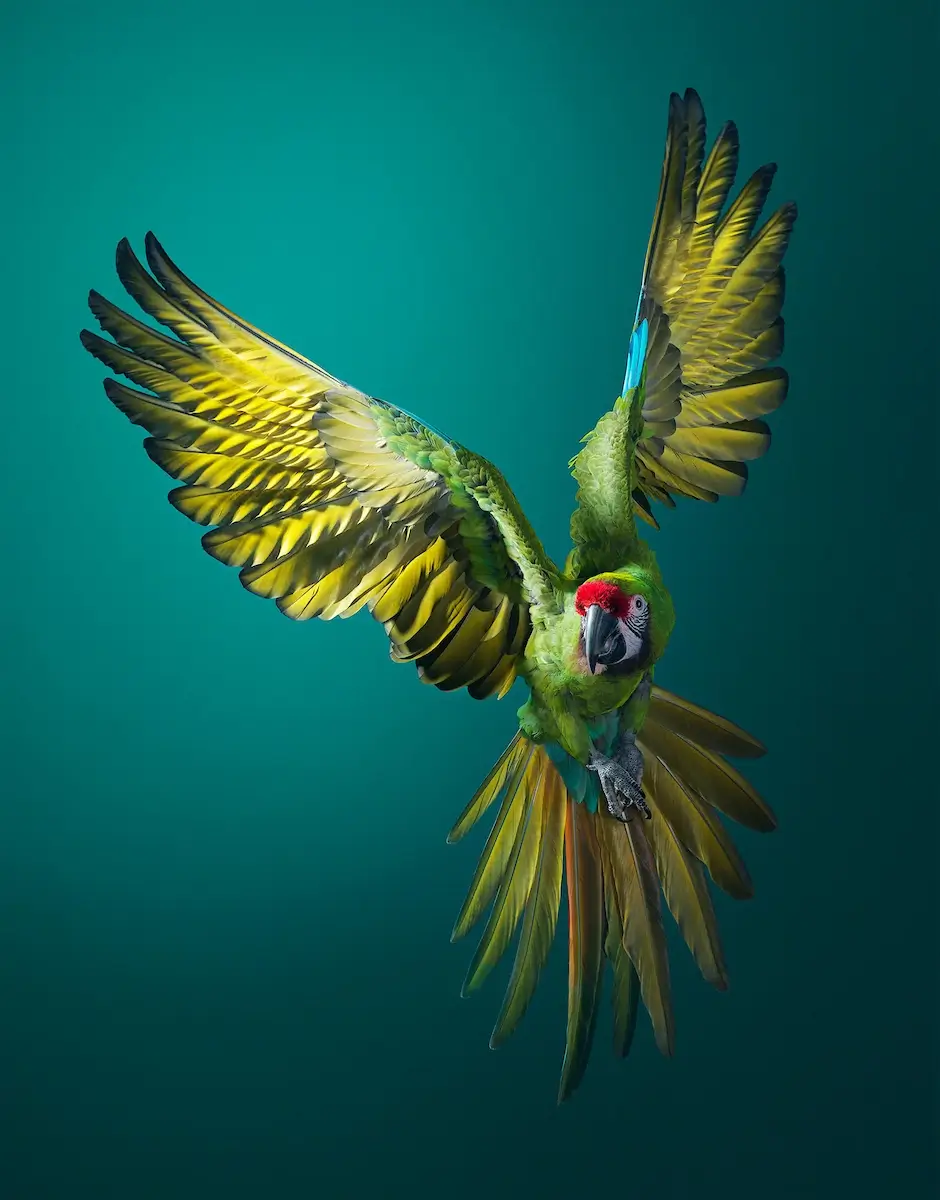
Military Macaw Front On © Tim Flach/ Courtesy of Vital Impacts.
My project Endangered gave me the opportunity to witness many species around the world on the brink of extinction, and to meet the extraordinary people working tirelessly to protect them. These experiences reinforced my belief that conservation is ultimately about relationships, between species, habitats, and the people committed to safeguarding them.
Earth Month offers an important moment to reflect on our connection to the natural world. My work is driven by the belief that photography can help bridge the distance between ourselves and other species, encouraging empathy by making the natural world feel more personal and relatable.
If we can recognise something of ourselves in another species, perhaps it becomes easier to care not only about their future, but also about the protection of the habitats we all depend on. It has never been more important to connect people with nature; our future depends on it.
Limited Edition