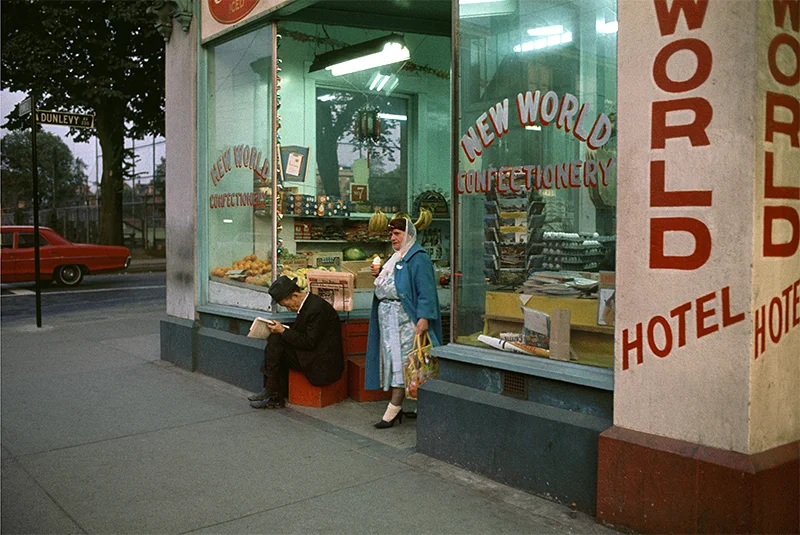
CHROMAZONE: Catherine DeLattre and Fred Herzog brings together the work of two photographers who embraced color long before it became widely accepted within artistic photography. Presented at OSMOS in New York, the exhibition highlights how both artists explored the expressive possibilities of color film at a time when black-and-white imagery still dominated the medium. On view through May 2, 2026, the exhibition invites visitors to experience two distinct yet complementary visions shaped by patience, curiosity, and an enduring fascination with everyday life.
Catherine DeLattre began photographing in the late 1960s, a period when most photography programs emphasized monochrome techniques. Rather than following convention, she chose to work with color negative film using a twin-lens reflex Mamiya camera. Growing up near the industrial landscapes of western Pennsylvania, DeLattre developed an attentive eye for subtle details in ordinary surroundings. Her images frequently explore quiet corners of American life, capturing subtle atmospheres rather than dramatic spectacle. While she is widely recognized for her series
Shoppers, made on New York’s Upper West Side between 1979 and 1980, the exhibition also includes landscapes from northeastern Pennsylvania that reveal expansive rural spaces, modest homes, and the calm solitude of overlooked places.
Fred Herzog approached color photography with a similar sense of independence. Born in Germany and later settling in Vancouver, he spent decades documenting the city’s streets using Kodachrome slide film. During the 1950s and 1960s, when color photography was often dismissed as commercial or amateur, Herzog wandered through working-class neighborhoods such as Chinatown and East Hastings with his camera. Storefronts, hand-painted signs, buses, pedestrians, and small businesses formed a vibrant urban tapestry. His images convey the rhythms of daily life while celebrating the richness of color found in ordinary streets.
Both artists only produced many of their final prints years later, once digital printing technologies allowed color photographs to be reproduced with greater depth and fidelity. This delayed materialization adds another layer to their work, bridging the era in which the images were captured with contemporary methods of presentation.
CHROMAZONE reveals how DeLattre and Herzog each cultivated a deeply personal relationship with color, transforming familiar environments into vivid records of place, memory, and observation.
Image:
New World Confectionary, 1965
Archival pigment print © Fred Herzog, courtesy of OSMOS Gallery