Andy Warhol: On Repeat, on view at the Zimmerli Art Museum from February 11 to July 31, 2026, offers a compelling reconsideration of one of the most familiar figures in American art. Moving beyond the instantly recognizable icons of Pop, the exhibition focuses on repetition and duration as fundamental strategies in Warhol’s practice. By bringing together early durational films and later serial photographs, the show reveals how time, stillness, and return shaped his exploration of identity, visibility, and self-performance.
At the heart of the exhibition are Warhol’s Screen Tests, intimate film portraits created in the mid-1960s in which sitters face the camera in near silence. These works, along with projections of films such as
Outer and Inner Space, slow the act of looking to a near standstill. Familiar and overlooked figures alike—artists, performers, and cultural outsiders—are shown suspended in time, their expressions subtly shifting as the camera’s gaze lingers. What emerges is not spectacle, but vulnerability, as presence is both amplified and eroded through prolonged attention.
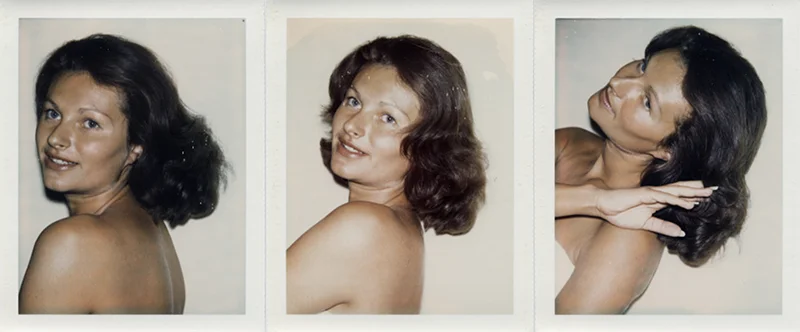
The photographic works extend this inquiry into seriality and repetition. Polaroids and photographs are presented in sequences that echo contact sheets or photobooth strips, emphasizing Warhol’s fascination with the minute differences produced by repetition. A single face, pose, or gesture becomes a site of variation rather than sameness. These accumulations reflect a distinctly American visual condition, shaped by mass media, celebrity, and the relentless circulation of images, while also anticipating contemporary concerns about self-image and exposure.
Seen together, the films and photographs suggest that Warhol understood the camera as an active force rather than a neutral tool. His repeated images do not merely document individuals; they test the limits of endurance, charisma, and self-awareness under the pressure of being seen.
Andy Warhol: On Repeat invites viewers to slow down, stay with the image, and reconsider an artist often reduced to surface. In doing so, the exhibition reclaims Warhol as a subtle observer of time, identity, and the fragile space between appearance and disappearance.
Image:
Andy Warhol, Lynda Palevsky, 1973. Polacolor Type 108 on paper. Gift of The Andy Warhol Foundation for the Visual Arts. © 2025 The Andy Warhol Foundation for the Visual Arts, Inc. / Licensed by Artists Rights Society (ARS), New York. Used with permission of @warholfoundation.