And I Saw New Heavens and a New Earth presents a powerful reckoning with identity, memory, and resistance through the lives and work of
Claude Cahun and Marcel Moore — two visionary artists whose shared life and collaboration challenged conventions of gender, art, and politics. This show gathers photographs, writings, drawings, and historical documents alongside newly commissioned narratives by writer and oral historian Svetlana Kitto, unveiling a rich portrait of partnership, creativity, and defiance.
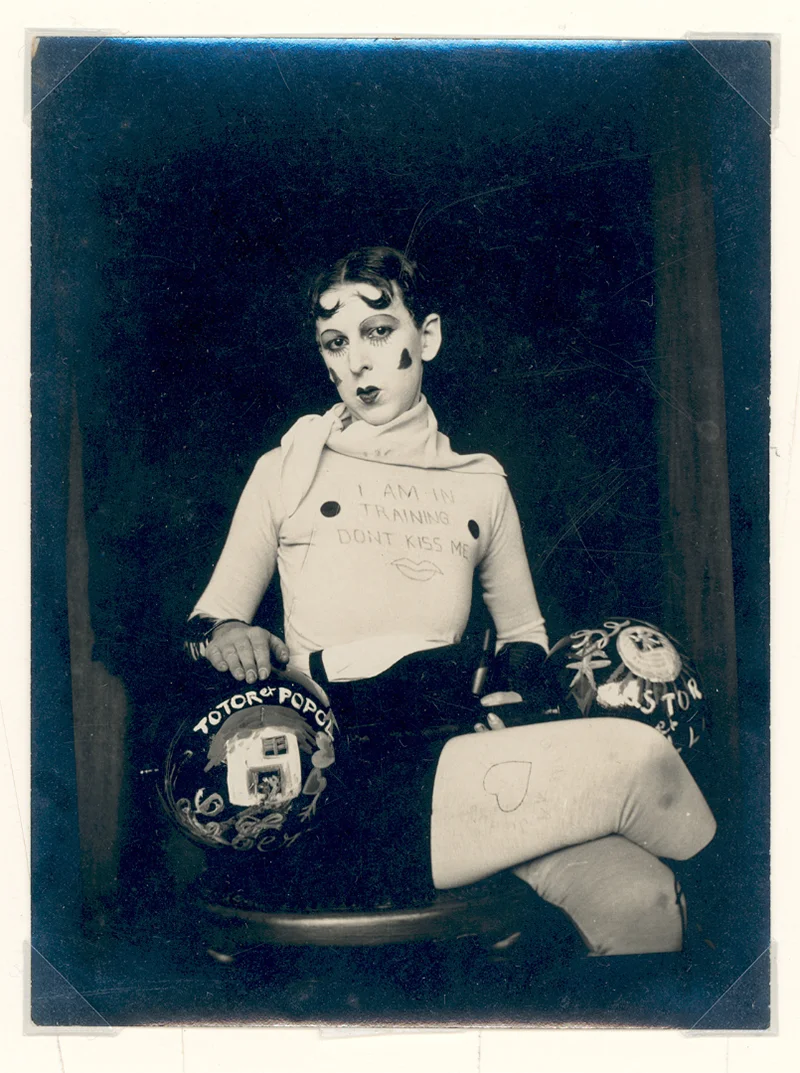
Born in early 20th-century Nantes, Cahun and Moore adopted gender-neutral pseudonyms, embraced fluid identity, and from the 1920s onwards used costumes, mirrors, photomontage and theatrical self-portraits to subvert binary constructions of gender. Over decades they wove art, literature, and performance into a single radical act of self-invention. Their images—enigmatic, uncanny, and often haunting—played with illusion and reality, refusing simplification or categorization.
When the Nazi occupation reached Jersey during World War II, Cahun and Moore turned their art into resistance. Risking everything, they clandestinely distributed anti-fascist pamphlets, fliers, and satirical messages to German soldiers — using their creativity as a weapon against oppression. Arrested, tried, and condemned to death, they survived only because liberation came in time. Many of their works were destroyed, yet fragments survived. This exhibition seeks to restore their voices, their vision, and their courage.
More than a retrospective,
And I Saw New Heavens and a New Earth traces an arc from aesthetic rebellion to political resistance — from the surrealist salon to underground fight for freedom. Through layered imagery, personal artifacts, and intimate storytelling, the show invites viewers to confront the endurance of love, the fragility of identity, and the power of art as defiance.
Above all, this exhibition pays tribute to two lives intertwined — not only as lovers and collaborators, but as pioneers of gender fluidity, of queer visibility, and of art as politics. To encounter their work today is to confront history, to witness the persistence of memory, and to imagine new possibilities beyond imposed binaries.
Image:
Claude Cahun, title unknown, ca. 1927. Silver gelatin print. Courtesy Jersey Heritage Collections. © Claude Cahun