All about photo.com: photo contests, photography exhibitions, galleries, photographers, books, schools and venues.
FINAL CALL TO ENTER AAP MAGAZINE SHADOWS: PUBLICATION AND $1,000 CASH PRIZES

Photography from The Menil Collection: Curated by Wendy Watriss

From December 12, 2025 to May 31, 2026
Share
Photography from The Menil Collection: Curated by Wendy Watriss
1533 Sul Ross Street
Houston, TX 77006
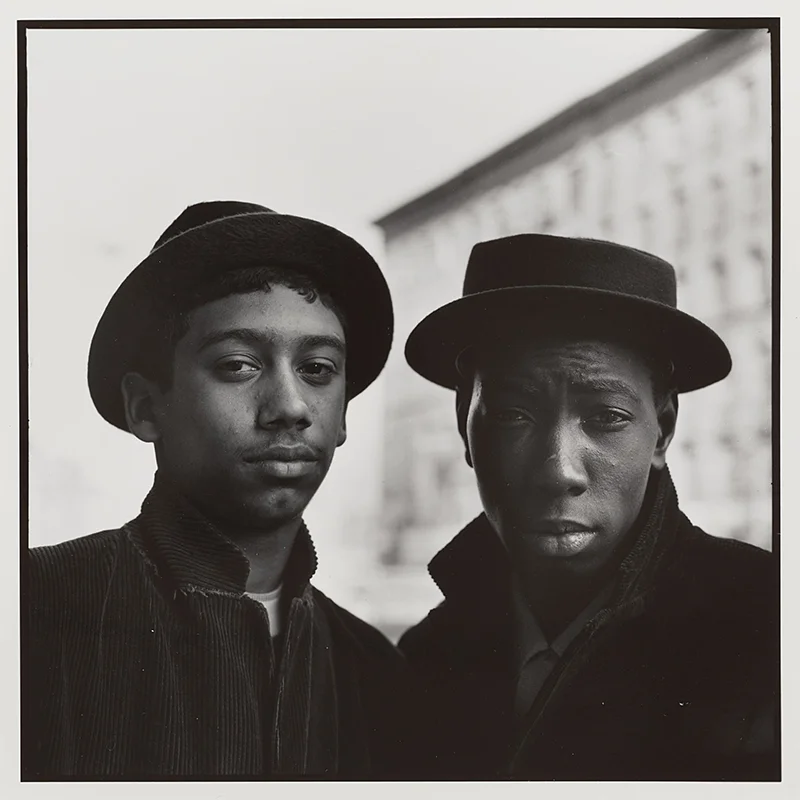
The Menil Collection presents Photography from The Menil Collection: Curated by Wendy Watriss, a major exhibition exploring the power of documentary photography to illuminate social realities and provoke dialogue. On view from December 12, 2025, through May 31, 2026, the exhibition gathers works by influential photographers such as Henri Cartier-Bresson, Larry Burrows, Bruce Davidson, Danny Lyon, and Charles Moore—artists who each found extraordinary meaning within the rhythms of everyday life.

Curated by Houston-based photographer and photojournalist Wendy Watriss, the exhibition offers a deeply personal interpretation of the Menil’s photographic holdings. Watriss selected images that not only reflect the strength of the collection but also the humanist vision of the museum’s founders, John and Dominique de Menil. “This exhibition,” Watriss notes, “was shaped by three sets of eyes—my own, and the de Menils’. It is a chance to reconnect with their remarkable way of seeing the world and engaging with art.”

The de Menils began collecting photographs in the late 1960s, when the medium was still fighting for its place within fine art. They viewed photography as an accessible and essential art form capable of revealing the shared experiences of humanity. Their early acquisitions, which later formed the foundation of the Menil’s collection, were guided by a belief in art’s potential to bridge culture, ethics, and empathy.

For Watriss, this project also marks a return to the roots of her own artistic journey. Alongside her late husband Fred Baldwin, she co-founded FotoFest in 1986, an international photography biennial that transformed Houston into a global hub for photographic dialogue. The Menil’s commitment to connecting art and social justice inspired their work, shaping both their practice and their community engagement.

Presented in honor of FotoFest’s 40th anniversary, Photography from The Menil Collection celebrates not only the enduring legacy of the de Menils and Watriss but also photography’s unique capacity to bear witness, question, and connect.

Image: Bruce Davidson, East 100th Street, 1966. Gelatin silver print. 7 3/16 × 7 3/16 in. (18.3 × 18.3 cm). The Menil Collection, Houston, Anonymous gift. © Bruce Davidson/Magnum Photos. Photo: Paul Hester

Our printed edition showcases the winners of AAP Magazine call of entries
All About Photo Magazine
Issue #54
Stay up-to-date  with call for entries, deadlines and other news about exhibitions, galleries, publications, & special events.

Exhibitions Closing Soon

Caroline Gray: Dancing Deeply, Dream
Skidmore Contemporary Art | Laguna Beach, CA
From February 24, 2026 to March 30, 2026
Caroline Gray: Dancing Deeply, Dream is presented from February 24 through March 30, 2026 at Skidmore Contemporary Art. The exhibition gathers a recent body of work devoted to underwater dancers, images that blur the boundary between choreography and current. Within the gallery, viewers encounter photographs that seem to hover between stillness and motion, where bodies drift in luminous suspension and the surface of the water becomes a shifting mirror. California-based photographer Caroline Gray approaches her subjects with a painter’s sensitivity to light, color, and atmosphere. Beneath the surface, gravity relinquishes its authority. Fabric billows, limbs arc and recoil, hair traces calligraphic lines through the water. The dancers’ gestures expand and contract in response to unseen tides, creating compositions that feel both spontaneous and carefully resolved. Gray describes a fascination with the sensuousness of the human body in water, and her images convey that captivation through soft tonal gradations and radiant highlights. The work resonates with the dreamlike experimentation associated with photographers such as André Kertész, while also recalling the theatrical aquatic tableaux of contemporary artists like Christy Lee Rogers. Yet Gray maintains a distinct visual language. Her underwater realm does not function as spectacle alone; it becomes a contemplative space where human presence meets the immensity of the natural world. The figures appear at once powerful and vulnerable, enveloped by a medium that both supports and obscures them. Exhibited in California and the United Kingdom, Gray’s photographs reflect an ongoing dialogue between body and environment. In Dancing Deeply, Dream, water serves as collaborator rather than backdrop. The resulting images suggest that identity, like motion beneath the surface, remains fluid—shaped by light, breath, and the quiet pull of unseen currents. Image: Caroline Gray, Dancing With Light 63 x 57 inches, 2014 photograph © Caroline Gray
Alvin Lester: Portraits of Jackson Ward and Beyond
Virginia Museum of Fine Arts | Richmond, VA
From October 11, 2025 to March 30, 2026
The exhibition Alvin Lester: Portraits of Jackson Ward and Beyond presents twenty compelling portraits taken by photographer Alvin Lester in the late 1980s and early 1990s, capturing the heart and humanity of Richmond’s historic neighborhoods. With a keen eye for character and community, Lester turned his lens toward the people and businesses that defined Jackson Ward—once known as the “Harlem of the South”—as well as the surrounding areas of Northside and Church Hill. Through his portraits, Lester documented beauticians, bakers, real estate brokers, and journalists—individuals whose daily work sustained Richmond’s Black business and cultural life. His images reveal the vibrancy and resilience of the city’s Second Street business district, a place that, in the decades following the Civil War, became a cornerstone of Black entrepreneurship and civic pride. Lester’s approach was both personal and historical: he understood that a city’s essence is reflected in those who build, serve, and nurture it. Each portrait is more than a likeness; it is an act of preservation. Lester’s work honors not only the individuals he photographed but also the collective memory of a community that has faced—and transcended—economic, political, and social challenges. His subjects are presented with dignity and intimacy, standing as symbols of endurance and continuity within Richmond’s evolving landscape. Now part of the Virginia Museum of Fine Arts collection, these photographs form a visual archive of a crucial period in the city’s history. Curated by Dr. Sarah Kennel, the exhibition invites viewers to reflect on how photography can both record and celebrate cultural heritage. In capturing the soul of Jackson Ward and beyond, Alvin Lester leaves a lasting tribute to the spirit of Black Richmond—a reminder that community, rooted in history, continues to define the life of a city. Image: Robert Wagstaff, Shoe Cobbler (detail), 1989–91, Alvin Lester (American, born 1947), gelatin silver print. Virginia Museum of Fine Arts, National Endowment for the Arts Fund, 2025.96. © Alvin Lester
Josephine Sacabo: Now or Never
A Gallery For Fine Photography | New Orleans, LA
From December 13, 2025 to March 30, 2026
Now or Never by Josephine Sacabo invites viewers into a realm where memory, longing, and poetic reverie meet the tactile richness of the photogravure process. The exhibition presents twenty new photogravures — including a quartet of hand-colored works — each one a delicate convergence of light, texture, and emotional depth. On view from December 13, 2025 through March 30, 2026, the show also marks the release of Sacabo’s latest book, TAGGED, available in both trade and collector’s editions. Sacabo divides her time between New Orleans and Mexico, two places that deeply inform her visual sensibility. Born in Laredo, Texas and educated at Bard College, she spent years living and working in France and England before settling in New Orleans. Over time, her artistic path shifted: from a more documentary-influenced origin to a deeply personal, introspective style rooted in poetry and metaphor. The landscapes, light, and atmosphere of her homes dissolve into dreamlike visions that feel both intimate and universal. Her work often begins with words. Inspired by poets such as Rilke, Baudelaire, Sor Juana Inés de la Cruz, and Juan Rulfo, Sacabo crafts images that serve as visual poems — meditations on identity, memory, and presence. Each photograph becomes a translation of language into light and shadow, where reality is filtered through dream, memory, and longing. This gives her images a suspended quality: familiar, yet removed, real yet uncanny. The photogravure medium — with its rich tonal range, deep blacks, and subtle gradients — lends itself to this sense of inner depth. Hand-colored pieces add another layer of nuance, suggesting emotion, loss, and hope beyond the black-and-white register. In the gallery, the prints appear as fragile relics from an inner world, inviting viewers to step quietly between memory and imagination. For nearly fifty years, Sacabo has built a body of work that transcends traditional photographic boundaries. Her photographs are not mere representations but meditations — beautiful, haunting, and soulful. Now or Never is more than an exhibition: it is an invitation to dwell in silence, to reflect on what lies beyond visible surface, and to discover the poetry inherent in light, shadow, and time. Image: Sacabo: "Eve,” 2025 - © Josephine Sacabo
Melinda Hurst Frye and Jessica Hayes: As Above So Below
Griffin Museum of Photography | Winchester, MA
From January 12, 2026 to March 30, 2026
As Above So Below brings together the distinct yet resonant practices of Melinda Hurst Frye and Jessica Hays in an exhibition that reflects on ecology, perception, and the emotional landscapes shaped by place. Presented at the Griffin Museum’s satellite gallery in the Lafayette City Center Passageway in downtown Boston, the exhibition unfolds in a transitional urban space—an apt setting for work that considers what lies beneath surfaces and beyond immediate sight. Through photography and alternative processes, both artists invite viewers to slow down and look closely, whether at the forest floor or the inner terrain of human experience. Melinda Hurst Frye’s work centers on the often-overlooked understory of the Pacific Northwest. Using a flatbed scanner as a camera, she embraces a deliberate, contemplative method that allows natural materials to register time, touch, and proximity. Her images reveal mosses, fungi, and regenerative cycles that sustain forest ecosystems, offering a quiet meditation on interdependence and stewardship. Rooted in Cascadia, her practice bridges art and ecology, transforming scientific observation into poetic visual narratives that honor resilience and renewal. Jessica Hays approaches landscape from a more internal perspective, blending personal history with broader environmental and psychological concerns. Grounded in the American West, her work examines how land shapes identity, memory, and mental health. Through pigment prints, handmade books, video, and experimental processes, Hays explores themes of trauma, solastalgia, and climate grief, particularly in relation to wildfires and their lasting impact on communities. Her images move fluidly between the personal and the collective, reflecting shared anxieties while preserving intimate emotional truths. Together, Frye and Hays create a dialogue between what is seen and what is felt, between natural systems and human vulnerability. The exhibition’s title gestures toward this balance, suggesting a mirrored relationship between outer environments and inner states. While their approaches differ in technique and tone, both artists share a commitment to attentiveness, care, and the acknowledgment of cycles—destruction and regeneration, loss and restoration. As Above So Below offers a thoughtful encounter with photography as a tool for witnessing and reflection. In a time of environmental uncertainty and emotional strain, the exhibition reminds us that understanding our surroundings—whether beneath our feet or within ourselves—remains essential to navigating a changing world. Image: © Jessica Hayes
Frederic Weber: Revenants
Klompching Gallery | New York, NY
From January 12, 2026 to March 31, 2026
Frederic Weber: Revenants, presented at Klompching Gallery from January 12, 2016 through March 31, 2026, brings newly revealed works from the artist’s archive into the present, offering a contemplative meditation on memory, materiality, and time. Long known for his meticulous table-top still lifes, Weber constructs intimate photographic worlds from fragments—ephemera drawn from magazines, journals, newspapers, and his own personal archive. These carefully assembled sets are then photographed full-frame on medium-format film, preserving a tactile richness that resists the speed and disposability of contemporary image culture. At first glance, the photographs are visually seductive, defined by lush color, layered surfaces, and precise compositional balance. Yet beneath this formal beauty lies a deeper tension. The images feel suspended between documentation and invention, as if each object carries a second life shaped by context, memory, and displacement. By re-photographing photographs and printed matter, Weber collapses distinctions between original and reproduction, presence and trace, turning the still life into a site of quiet psychological inquiry. The genesis of Revenants emerged from an act of rediscovery. While searching his archive for a single negative, Weber encountered images long forgotten—photographs that resurfaced unexpectedly, carrying emotional weight that had gone unrecognized at the time of their making. Digitally scanning these analog negatives years later, he found them transformed by distance, both personal and temporal. They appeared like apparitions, familiar yet estranged, speaking not only of the past but of what remained unseen within it. This body of work unfolds as an exploration of the unconscious, imagined as a darkened house filled with hidden rooms. Each photograph offers a brief illumination—an emotion, a longing, a fleeting thought—before receding again into shadow. Together, these images form a subtle dialogue between who the artist was and who he has become, between loss and recovery, forgetting and recognition. Revenants ultimately invites viewers to reflect on their own archives of memory, and on the quiet power of images to return, transformed, when we least expect them. Image: Revenants, Untitled No. 6 (2025) Archival Pigment Print on Canson Platine Fibre Rag © Frederic Weber
Winter Group Exhibition
C+C Photography Gallery Palm Beach | Palm Beach, FL
From January 15, 2026 to March 31, 2026
Winter Group Exhibition, on view from January 15 through March 31, 2026 at C+C Photography Gallery, ushers in the height of the Palm Beach season with a vibrant survey of classic and contemporary photography. Located at 313 1/2 Worth Avenue, the gallery presents a dynamic installation that bridges eras, genres, and perspectives, offering collectors and visitors an opportunity to engage with masterworks alongside compelling new voices in the medium. The exhibition brings together a distinguished roster of artists whose images have shaped the visual language of fashion, portraiture, documentary, and conceptual photography. Iconic works by Horst P. Horst and George Hoyningen-Huene evoke the elegance and sculptural refinement of twentieth-century fashion imagery, while photographs by Norman Parkinson capture a spirit of movement and modern glamour. In dialogue with these historic figures, contemporary practitioners such as Steve McCurry and Dean West expand the narrative through richly colored storytelling and meticulously staged scenes. The selection further explores portraiture and constructed identity through the satirical lens of Alison Jackson, as well as evocative landscape and wildlife studies by Guadalupe Laiz. Architectural fantasies by Laurent Chéhère introduce an element of surreal transformation, while documentary and street perspectives add immediacy and human connection. Together, these works reveal photography’s enduring capacity to oscillate between observation and invention. Installed with an eye toward visual rhythm and thematic resonance, the Winter Group Exhibition celebrates photography as both historical record and evolving art form. By presenting a range of styles—from silver gelatin prints to bold contemporary color compositions—the exhibition reflects the gallery’s commitment to honoring tradition while embracing innovation. In the refined setting of Worth Avenue, this seasonal presentation offers a compelling reminder of photography’s power to define cultural memory and contemporary vision alike. Image: Nathan Coe, Breaking the Rules Again, 2019 © Nathan Coe, courtesy of the C+C Photography Gallery
Evidence II
Gail Severn Gallery | Ketchum, ID
From February 27, 2026 to April 02, 2026
Evidence II is presented from February 27 through April 2, 2026 at Gail Severn Gallery, bringing together large-format photographs by Laura McPhee and Luis González Palma. Though distinct in subject and atmosphere, their works share a quiet investigation of the traces left by human presence. Landscapes, portraits, and fragments of everyday life reveal how memory, history, and environment intertwine, creating images that invite contemplation rather than quick conclusions. McPhee’s photographs consider the land as a layered record of time. Working primarily in the deserts and remote regions of the American West, she documents environments where geological processes and human intervention intersect. Rivers carve slow pathways through ancient rock while mines, roads, and scattered objects testify to more recent histories. With the clarity of large-format photography, her images reveal minute details: rusted machinery, fragments of glass, discarded toys, and other remnants that quietly narrate stories of labor, settlement, and abandonment. These scenes function as visual chronicles of how landscapes absorb and reflect human ambition, resilience, and ecological consequence. In contrast, González Palma turns his attention toward the human face. His portraits, often rooted in the cultural history of Guatemala, possess a meditative stillness that emphasizes gaze and presence. Faces appear luminous against darkened backgrounds, suggesting both intimacy and mystery. For the artist, the act of looking becomes a psychological exchange in which viewer and subject confront one another across time and experience. Through subtle tonal variations and carefully constructed compositions, the photographs explore themes of identity, memory, and the enduring weight of social and political histories. Seen together, the works in Evidence II form a dialogue between place and person. McPhee’s landscapes reveal environments marked by human action, while González Palma’s portraits reflect the inner worlds shaped by culture and history. Both approaches consider what photographs hold beyond the visible surface: gestures, absences, and unresolved narratives that linger long after the shutter closes. Image: Laura McPhee Evening (Bent Lodgepole), Fourth of July Creek Canyon, Custer County, Idaho, 2011 1/5 Archival pigment print © Laura McPhee
Zainab Aliyu: A litany for past suns
Baxter Street | New York, NY
From February 04, 2026 to April 02, 2026
Zainab Aliyu: A litany for past suns, on view at BAXTER ST at the Camera Club of New York from February 4 to April 2, 2026, presents a deeply considered meditation on memory, technology, and the fragile architecture of archives. Through reimagined stereographic images and an immersive installation, Aliyu interrogates how systems designed to preserve knowledge often distort or silence lived experience, particularly within Black communal and familial histories. The exhibition unfolds as both an act of remembrance and a refusal of inherited modes of seeing. Drawing from photographs found in her late grandmother’s home in Nigeria alongside images shared by members of a wider community, Aliyu creates paired works that resist linear narratives. Historically rooted in colonial observation, stereoscopy is reclaimed here as a relational tool, linking images across generations, geographies, and emotional registers. Viewers are asked to lean in, to look slowly and attentively, countering the distant, extractive gaze that has long shaped photographic archives. In this closeness, gaps in memory and meaning become palpable rather than resolved. The exhibition space itself echoes domestic interiors shaped by absence and recollection. Everyday materials—rugs, curtains, fragments of gates, cupboards, and jewelry—appear subtly displaced, their familiar functions interrupted. Earth-toned surfaces and patterned floors evoke kitchens, courtyards, and studio backdrops, while symbolic motifs frame access as something negotiated rather than granted. These spatial gestures extend stereoscopy beyond images, encouraging movement through memory as a layered, bodily experience. Aliyu’s engagement with technology is equally critical and intimate. Early experiments with computational sorting and automated captions revealed the inability of such systems to register emotional depth or historical nuance. Rather than discarding these failures, she incorporates them, allowing misreadings and erasures to surface alongside speculative texts drawn from oral history and personal recollection. This tension stages a dialogue between machine logic and embodied knowledge, underscoring the limits of technological objectivity. Grounded in a lineage of Black feminist archival thought, A litany for past suns offers no definitive record. Instead, it affirms memory as porous, contested, and alive. The exhibition becomes a quiet invocation—honoring what has been lost, questioning how it has been framed, and inviting viewers to imagine futures shaped by care, attention, and shared responsibility. Image: © Zainab Aliyu
Dean Majd: Hard Feelings
Baxter Street | New York, NY
From February 04, 2026 to April 02, 2026
Dean Majd: Hard Feelings, presented at BAXTER ST at the Camera Club of New York from February 4 to April 2, 2026, marks the debut solo exhibition of Queens-based, Palestinian-American artist Dean Majd. Rooted in lived experience and personal loss, the exhibition unfolds as an intimate meditation on friendship, grief, and masculinity. What begins as a response to the sudden death of a childhood friend evolves into a profound visual archive of a tightly knit circle navigating pain, loyalty, and survival within the ever-shifting landscape of New York City. Photographed largely at night using point-and-shoot cameras, Majd’s images move fluidly between moments of tenderness and confrontation. The work captures rituals of belonging alongside flashes of volatility, revealing masculinity not as a fixed posture but as a fragile, emotional state shaped by trauma and love. Majd’s camera does not observe from a distance; it participates. As trust deepens, the boundary between artist, subject, and witness collapses, allowing moments of raw vulnerability to surface without spectacle or judgment. Drawing on the visual gravity of Baroque tenebrism, Majd employs deep shadows and sudden illumination to heighten emotional intensity. This interplay of darkness and light mirrors the psychological terrain of the images themselves, where violence and care coexist. His approach aligns with a diaristic photographic tradition that favors proximity and emotional risk over detached documentation. The result is a body of work that resists romanticization while remaining deeply compassionate, shaped by empathy rather than voyeurism. Created across years marked by personal upheaval and the collective rupture of the COVID-19 pandemic, Hard Feelings mythologizes everyday lives often overlooked or misunderstood. Scars, bruises, and exhaustion become quiet testaments to endurance, while moments of connection suggest the possibility of healing. Majd’s photographs insist on presence—on seeing fully—and offer space for emotions typically suppressed in the name of survival. In doing so, the exhibition becomes both an elegy and an offering: a call to confront pain honestly, and to recognize vulnerability as an essential act of humanity. Image: © Dean Majd
Wendell Minshew: Vignettes
Viewpoint Photographic Art Center | Sacramento, CA
From March 11, 2026 to April 04, 2026
Wendell Minshew: Vignettes, presented from March 11 to April 4, 2026 in the Step Up Gallery at Viewpoint Photographic Art Center, invites viewers into a series of quiet, concentrated encounters. Each work offers a fragment—an isolated moment drawn from a broader architectural and cultural landscape—where small visual stories emerge from the surrounding noise of the world. These images do not aim to describe entire places, but rather to distill their essence through intimacy and restraint. Created during and following the pandemic, this body of work reflects a period of slowed observation and material exploration. Minshew turned inward, experimenting with alternative printing surfaces and processes that could hold both fragility and depth. Translucent vellum, parchment, and tracing tissue become active participants in the image, not merely supports. Gilded with whisper-thin layers of gold, silver, copper, and aluminum leaf, the prints glow subtly, transforming familiar man-made structures into meditative visual objects suspended between presence and memory. The small scale of the photographs encourages close viewing. Warm-toned black-and-white imagery emphasizes line, geometry, and tonal nuance, while white gold leaf applied to the reverse side of the vellum introduces reflected light that shifts as the viewer moves. Without glazing to separate image from observer, the works respond to changing angles and ambient light, creating a dynamic viewing experience that feels almost tactile. Each piece becomes less a fixed photograph and more a living surface, shaped by time, motion, and perception. Minshew’s decades-long engagement with photographic printmaking is evident in the precision and confidence of these works. Drawing from a deep knowledge of both historical and experimental processes, he bridges traditional craftsmanship with contemporary curiosity. His images carry the weight of experience while remaining open, exploratory, and quietly innovative—proof that mastery can coexist with ongoing discovery. Vignettes ultimately asks viewers to slow down and look closely. In these modestly scaled, carefully constructed works, light becomes narrative and surface becomes space. What at first appears minimal unfolds into something richly layered, offering moments of contemplation where the ordinary is transformed into something quietly luminous and enduring. Image: © Wendell Minshew
Nasim Moghadam: And Yet, We See
SF Camerawork | San Francisco, CA
From January 21, 2026 to April 04, 2026
SF Camerawork presents Nasim Moghadam: And Yet, We See, an exhibition that transforms acts of looking into gestures of resistance. Installed as a series of sculptural and photographic environments, the work confronts the mechanisms through which power controls visibility, particularly in relation to women’s bodies and voices. Moghadam does not treat photography as a fixed image but as a material language—one that can be carried, fragmented, and reassembled to challenge erasure and reclaim agency. At the heart of the exhibition is a sustained response to the 2022 Iranian protests and the survivors who were blinded by state violence. In Fallen Eyes, images of their eyes are transferred onto magnolia leaves gathered and prepared by hand. As the leaves dry and curl, they retain these gazes, creating an installation that is both fragile and unyielding. Nature becomes a witness, and the collective field of eyes returns the look, reversing the direction of power and refusing disappearance. Questions of visibility continue in Black Bars, a series of veiled self-portraits in which Moghadam places her own body at stake. Layers of fabric obscure her face, not as an act of concealment imposed from outside, but as a choice that asserts control over what can and cannot be seen. The veil functions as a surface of transformation, complicating assumptions about exposure, legibility, and identity. Looking here becomes an ethical encounter rather than a consumptive act. In Noose, Moghadam confronts the physical and psychological threat of oppression through a fabric-based installation incorporating women’s hair and black textiles. What might read as a symbol of violence is reconfigured into a space of mourning, solidarity, and vigilance. Grief is acknowledged without surrender, and vulnerability is held alongside resilience. Throughout And Yet, We See, Moghadam dismantles the imperial gaze by insisting that vision is reciprocal. Her works occupy the space between refuge and exposure, echoing strategies of survival shaped under surveillance. In returning the gaze, the exhibition affirms that to see—and to insist on being seen—is an enduring act of courage. Image: © Nasim Moghadam
Franka Gabler: Echoes of Nature
Viewpoint Photographic Art Center | Sacramento, CA
From March 11, 2026 to April 04, 2026
Franka Gabler: Echoes of Nature, on view from March 11 to April 4, 2026 at the Main Gallery of the Viewpoint Photographic Art Center in Sacramento, invites visitors into the quiet, reflective spaces of the natural world through the lens of award-winning landscape photographer Franka Gabler. Her work is less about sweeping panoramas and more about the intimate details, subtle moods, and fleeting moments that reveal the essence of a place. Gabler’s photographs capture the lingering impressions left by the natural world—the soft haze of a misty morning, the delicate interplay of light and shadow on a snow-laden forest floor, or the quiet stillness of a lakeshore at dusk. These are moments that calm the mind, steady the breath, and evoke a sense of connection to the rhythms of the environment. In her approach, intuition guides the eye: she follows what calls to her, allowing the subtle and overlooked to emerge as subjects of quiet power and beauty. Born in Croatia and now residing in California’s Sierra Nevada foothills near Yosemite, Gabler has spent decades exploring the interplay between light, atmosphere, and emotional resonance in the landscape. Her work often balances abstraction and documentation, presenting scenes that are at once specific and universal, intimate yet expansive. Whether in color or black-and-white, her images convey mood, depth, and the sensory experience of being present in nature. Recognized internationally for her contributions to landscape photography, Gabler has received top awards including the 2022 Landscape Photography World Awards overall prize and accolades from the Natural Landscape Photography Awards. Her portfolio “Expressive Yosemite” was featured in Lens Work Photography Magazine, reflecting her ability to translate the Sierra’s fleeting moments into lasting, meditative experiences. Echoes of Nature offers viewers a chance to slow down, witness the quiet poetry of natural spaces, and reconnect with the inner landscapes shaped by time spent outdoors. Gabler’s work reminds us that even the briefest encounters with nature can leave enduring impressions that inspire reflection, balance, and wonder. Image: © Franka Gabler
Advertisement
AAP Magazine #56 Shadows
Win a Solo Exhibition in May
AAP Magazine #56 Shadows
Call for Entries
AAP Magazine #56 Shadows
Publish your work in our printed magazine and win $1,000 cash prizes

Related Articles

Magnum Square Print Sale in Partnership with The Photographers’ Gallery: Odyssey
Odyssey is more than a journey. It is a search for meaning, a crossing of thresholds, a story of growth and resilience. Bringing together a wide range of work from over 100 photographers, this Square Print Sale traces the paths we take across borders, through memory, and into the unknown. Presented in collaboration with The Photographers’ Gallery, the collection off ers works by artists including Martin Parr, Daidō Moriyama, Eve Arnold, Nadav Kander, Steve McCurry, Juno Calypso, Karen Knorr and more.
Elements of Wonder: When Nature Becomes Art by Jon McCormack
To coincide with Earth Day, CENTER, the nonprofit photography organization based in Santa Fe, NM, presents Elements of Wonder: When Nature Becomes Art, a photographic exhibition by Jon McCormack. The exhibition will be on view at CENTER from April 17 through May 17, 2026, with an Opening Reception on Friday, April 17, 5:00 – 7:00 PM, and an Artist Talk on April 30, from 5:30 – 6:30 PM (MT).
Gordon Parks: The South in Color
Jackson Fine Art is delighted to announce our spring exhibition Gordon Parks: The South in Color organized in partnership with The Gordon Parks Foundation. The exhibition is timed to commemorate two important milestones - the 70th anniversary of the landmark publication of Parks’ images of the segregated South in Life magazine and the 20th anniversary of the founding of The Gordon Parks Foundation. The South in Color will present more than thirty photographs from the artist’s Segregation Story series and debut a brand-new portfolio published by the Foundation. The exhibition brings together many of Parks’ images not previously shown in the gallery, alongside some of his most recognized such as At Segregated Drinking Fountain, Mobile, Alabama, to offer a fresh look at the series, and deepen its emotional and historical resonance.
Marilyn Stafford, Lee Miller, Colin Jones for UNSEEN at Art Rotterdam
The Albumen Gallery programme for UNSEEN at Art Rotterdam 2026 brings together three iconic names of mid-20th century photography. At a first glance the works of Marilyn Stafford, Lee Miller and Colin Jones cover quite a wide spectrum of photography. Notwithstanding that there are shared aspects across their respective bodies of work that invite interesting comparison with respect to thematic and artistic approach.
Circulation(s) Festival of young European photography
For its sixteenth edition, the Circulation(s) Festival continues to champion emerging European photography and its intersections with contemporary art. Founded in 2009 at the CENTQUATRE-PARIS, the festival has grown into a key platform for young creators, highlighting plural perspectives and experimental practices.
Colour Me Modern: Claire Aho and the New Woman
Colour Me Modern: Claire Aho and the New Woman, celebrates the vibrant photography of the pioneering Finnish artist, Claire Aho (1925-2015) who brought wit, colour and cinematic flair to postwar image-making across her work in fashion, advertising and editorial. Presented by Hundred Heroines, the UK’s only museum dedicated to women in photography, this free exhibition, split over two sites, highlights how Aho, known as ‘the Grand Old Lady of Finnish Photography,’ helped shape a new visual language for Finland, presenting confi dent, contemporary women and transforming everyday scenes into carefully staged moments of style.
Fragilities & Resilience by Thibault Gerbaldi at the Jardin du Luxembourg
From March 21 to July 19, 2026, the French Senate will host Fragilities & Resilience, the first solo exhibition in France of internationally acclaimed photographer Thibault Gerbaldi. Presented outdoors on the iconic grilles of the Jardin du Luxembourg in Paris 6ème, the exhibition features 80 striking photographs captured across five continents, offering a breathtaking exploration of the fragile yet enduring connections between humans and nature. Entry is free, making this a rare opportunity for the public to experience Gerbaldi’s work on a monumental scale.
All About Photo Presents ’ Civilization’ by Damien Aubin
In Civilization, Damien Aubin turns his lens toward environments shaped not by nature, but by ambition. These are places engineered at a scale that exceeds the individual — infrastructures, industrial complexes, vast architectural systems that dwarf the human body and often eclipse it entirely. There are no protagonists here. No narratives unfolding in real time. Instead, Aubin photographs what remains when activity recedes: structures that continue to stand, operate, or simply endure.
Elliott Erwitt: Gold Standard
Weinstein Hammons Gallery is pleased to present Elliott Erwitt: Gold Standard, the third exhibition of photographs by Elliott Erwitt (1928–2023), one of the most influential photographers of the twentieth and twenty-first centuries.
Call for Entries
Solo Exhibition May 2026
Get International Exposure and Connect with Industry Insiders