All about photo.com: photo contests, photography exhibitions, galleries, photographers, books, schools and venues.
Submit your Best Project to Win a Solo Exhibition this March!

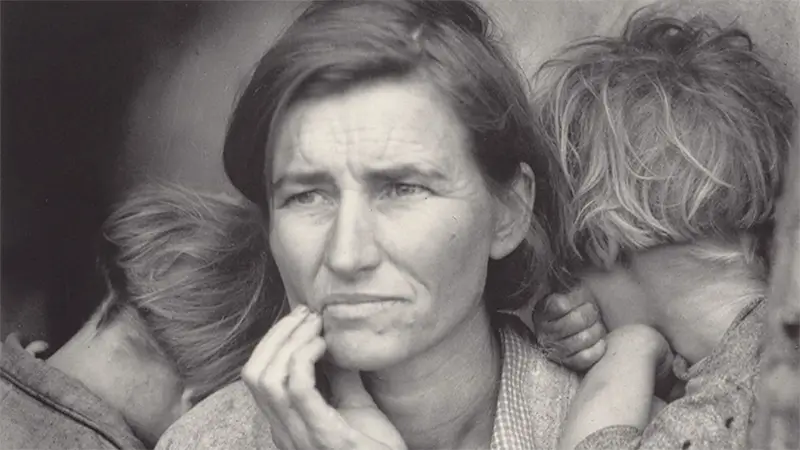
Dorothea Lange: Seeing People

From April 12, 2025 to February 15, 2026
Share
Dorothea Lange: Seeing People
160 West Liberty Street
Reno, NV 89501
During her long, prolific, and groundbreaking career, the American photographer Dorothea Lange made some of the most iconic portraits of the 20th century. Dorothea Lange: Seeing People reframes Lange’s work through the lens of portraiture, highlighting her unique ability to discover and reveal the character and resilience of those she photographed.

Featuring 100 photographs, the exhibition addresses her innovative approaches to picturing people, emphasizing her work on social issues including economic disparity, migration, poverty, and racism.

This exhibition debuted at the National Gallery of Art in 2023 and is curated by Philip Brookman, consulting curator in the department of photographs, National Gallery of Art. The Nevada Museum of Art’s presentation of Dorothea Lange: Seeing People will be the only West Coast venue for this exhibition.

This exhibition is organized by the National Gallery of Art, and is part of its Across the Nation program to share the nation’s collection with museums around the country.
Our printed edition showcases the winners of AAP Magazine call of entries
All About Photo Magazine
Issue #53
Stay up-to-date  with call for entries, deadlines and other news about exhibitions, galleries, publications, & special events.

Exhibitions Closing Soon

Eyes in Gaza II
St. James Chapel of the Cathedral of St. John the Divine | New York, NY
From January 22, 2026 to February 12, 2026
Eyes in Gaza II arrives in New York as a quiet yet unflinching act of witness, presented by the Lucie Foundation at the St. James Chapel of the Cathedral of St. John the Divine. On view from January 22 to February 12, 2026, the exhibition gathers firsthand photographic accounts from within the Gaza Strip, a territory where daily life, memory, and survival are in constant jeopardy. Set within a sacred architectural space long associated with reflection and moral conscience, the exhibition invites visitors to slow down and confront images shaped by urgency, loss, and endurance. The roots of Eyes in Gaza II trace back to the Lucie Impact Award, which since 2018 has honored outstanding journalistic contributions in photography. In a historic decision, the 2023 award was granted not to a single author but to a collective of Gaza-based photojournalists whose work documented unfolding events in real time. Their photographs, often produced under extreme danger, circulated globally and reshaped public understanding of the conflict. This second chapter revisits those voices, presenting images by photographers who risked everything to record what they saw, felt, and endured. Years later, the circumstances that prompted the original project remain painfully unresolved. Eyes in Gaza II brings together earlier photographs alongside more recent images from those still able to work on the ground, while acknowledging the many journalists who have been forced into exile or silence. Each photograph functions as a fragment of a larger narrative, revealing everyday moments alongside profound tragedy. Together, the images resist abstraction, grounding geopolitical realities in human experience and personal testimony. The exhibition is made possible through the support of the Cathedral of St. John the Divine and its leadership, whose openness has allowed this urgent body of work to reach a wider audience. Eyes in Gaza II is also a memorial, dedicated to Omar Al-Derawi, a 2023 Lucie Impact Award honoree killed in January 2025. His legacy, and that of his colleagues, endures through images that insist on being seen, remembered, and reckoned with. Image: Saher Alghorra. Palestinian children play on a swing between the tents of displaced people in the Khan Yunis camp in the southern Gaza Strip on October 28, 2024. © Saher Alghorra
Scott Offen: Grace
Griffin Museum of Photography | Winchester, MA
From December 08, 2025 to February 12, 2026
Grace, a seven-year collaborative project by Scott Offen, is a profound meditation on intimacy, aging, and selfhood. In this work, Offen photographs alongside his partner, Grace, examining the nuanced intersections of gender, representation, autonomy, and visibility over the course of a long-term relationship. By situating Grace within both domestic interiors and mythic outdoor landscapes, the project navigates how personal identity evolves in private and public spheres, and how presence is felt even in moments of solitude. Within domestic interiors, Grace’s essence permeates the space, revealing traces of her life and agency even when she is not physically in frame. These quiet moments reflect the ways intimacy and familiarity shape understanding, capturing the subtle gestures and rhythms that constitute everyday life. Outdoors, mythic landscapes become a character in themselves—like fantastical realms reminiscent of Wonderland or Oz, the natural world oscillates between the whimsical, the eerie, and the sublime, inviting viewers to consider the interplay between human presence and environment, and how landscapes shape our perception of identity. Offen’s photographic approach blends traditional and contemporary methods, from 8×10 large format to digital photography, producing images that are at once meticulously composed and emotionally resonant. The resulting series foregrounds Grace’s autonomy and explores the larger questions surrounding aging and visibility in a society often dismissive of older women, presenting both vulnerability and strength in equal measure. First published as a monograph by L’Artiere in 2025, Grace has been exhibited nationally and recognized in festivals and reviews across major photography publications, solidifying Offen’s place among contemporary photographers exploring intimate collaboration and identity. On view at The Griffin @ WinCam, this exhibition offers a rare opportunity to experience a deeply personal, collaborative exploration of life, love, and the enduring complexity of human presence, both indoors and in the vast, unpredictable landscapes that mirror our inner worlds. Image: © Scott Offen
Only the Landscape Has Changed
The Hulett Collection | Tulsa, OK
From December 06, 2025 to February 14, 2026
Only the Landscape Has Changed invites viewers into a contemplative space where three artists—Pentti Sammallahti, Chico Seay, and Wesley Stringer—approach the familiar world with distinct yet harmonious sensitivity. Their works, gathered in this new exhibition at The Hulett Collection, reveal the ways quiet observation can anchor us in an ever-shifting present. As the surroundings transform with season, memory, and passage, these artists show how moments of stillness continue to hold meaning. Sammallahti’s photographs carry the unmistakable calm of someone who has spent a lifetime watching the horizon. His images blend intimacy with expansiveness, allowing a lone bird, a path of snow, or a pale sky to become meditations on distance and nearness. Each scene feels suspended, as if time has briefly softened its grip, offering a glimpse into the delicate bond between solitude and presence. Chico Seay turns toward the Southern landscape with an eye sharpened by memory. His photographs often feel like recollections anchored in place—quiet corners where light, texture, and history converge. Through this lens, the familiar becomes layered with emotion, revealing how the land holds stories long after the moment has passed. Seay’s work invites viewers to sense the echoes beneath the surface, where personal and collective memory intertwine. Wesley Stringer, by contrast, gravitates toward the peripheries of contemporary life. He finds clarity in what is often overlooked: the fleeting gesture, the shift of shadow, the temporary arrangement of everyday forms. In these understated scenes, Stringer uncovers an order that appears and dissolves almost at once, reminding us of the rhythm found in ordinary transitions. Together, Sammallahti, Seay, and Stringer create a quiet conversation about time’s movement and the resilience of perception. Their works suggest that although the landscapes around us may transform, the act of truly seeing—rooted in patience, humility, and attention—remains constant. Image: Pentti Sammallahti Finnish, b. 1950 Katonah, New York, 2000 Gelatin silver print Image 6.5 x 6.5" | Paper 8 x 10" | Matted 11 x 14"" at The Hulett Collection © Pentti Sammallahti
PhotoNOLA Invitational
Arthur Roger Gallery | New Orleans, LA
From December 06, 2025 to February 14, 2026
PhotoNOLA Invitational at Arthur Roger Gallery brings together a dynamic group of artists whose practices reflect the richness and diversity of contemporary photography. Anchored by the work of Kennedi Carter, recipient of the 2025 PhotoNOLA Review Prize, and Camille Farrah Lenain, awarded the Michael P. Smith Fund for Documentary Photography, the exhibition foregrounds two distinct yet complementary approaches to visual storytelling. Through portraiture and narrative-driven imagery, their photographs explore identity, place, and the evolving ways images can speak to lived experience. Kennedi Carter’s work centers Black subjects with clarity, warmth, and conviction, examining the textures of everyday life alongside its deeper social realities. Her images balance intimacy and assertion, offering portraits that affirm presence while resisting simplification. In her recent series focused on Black cowboys in the American South, Carter expands familiar cultural narratives, revealing a lineage that is often overlooked. Shot in New Orleans, the project connects horsemanship, land, and community, presenting cowboy culture as complex, regional, and deeply rooted rather than singular or nostalgic. Camille Farrah Lenain approaches photography through a documentary lens shaped by her transnational background. Her work is attentive to nuance, emphasizing layered identities and the spaces where personal histories intersect with broader social structures. Working between France and Louisiana, Lenain’s photographs challenge fixed readings of culture and belonging, favoring instead a multiplicity of perspectives. Her images invite sustained engagement, encouraging viewers to consider how stories unfold over time and across geographies. The exhibition is further enriched by new and recent work from Jamal Barnes, Daymon Gardner, Hunter Holder, Jason Kerzinski, Leslye Kohl, Charles Lovell, Colin Roberson, and Meg Turner. Together, these artists span documentary, environmental portraiture, and experimental practices, reflecting the breadth of photographic expression emerging from the Gulf South and beyond. PhotoNOLA Invitational affirms New Orleans as a vital site for photography today, celebrating artists who continue to expand the medium while remaining grounded in observation, storytelling, and place. Image: Kennedi Carter Untitled (KCAR 0005) 2025 at Arthur Roger Gallery © Kennedi Carter
The Abstract Image
Praxis Gallery | Minneapolis, MN
From January 20, 2026 to February 14, 2026
The Abstract Image, on view at Praxis Photo Arts Center from January 20 to February 14, 2026, brings together photographic works that deliberately step away from description and toward visual exploration. Rather than anchoring meaning in identifiable subjects, the exhibition emphasizes photography as a language of form—one shaped by light, color, texture, rhythm, and spatial tension. Here, the camera becomes less a tool of documentation than an instrument for inquiry, revealing how abstraction can reframe the act of seeing itself. Across the exhibition, images unfold through surfaces and structures that invite sustained attention. Shadows dissolve into geometry, color fields pulse with quiet energy, and lines intersect in ways that feel both deliberate and intuitive. These photographs do not ask to be read quickly; instead, they reward lingering observation. By removing the certainty of representation, the works encourage viewers to respond sensorially and emotionally, allowing perception to guide interpretation rather than narrative or context. The artists featured employ a wide range of lens-based strategies, from experimental camera techniques to darkroom interventions and digitally mediated processes. Some images originate in the physical world but are transformed through framing and reduction, while others approach pure abstraction, untethered from any recognizable reference. Together, these approaches demonstrate how abstraction has long been embedded in the photographic tradition, from early modernist experiments to contemporary practices that continue to test the medium’s limits. Juried by the Praxis Directors, The Abstract Image reflects a commitment to photography as both a disciplined craft and an open field of experimentation. The exhibition affirms abstraction not as an escape from reality, but as another way of engaging with it—one that values ambiguity, formal intelligence, and visual clarity. By focusing on how images are built rather than what they depict, the exhibition highlights photography’s enduring capacity to surprise, challenge, and expand our understanding of visual experience. Image: Out of Control , USA. © Bernice Williams
Ashima Yadava: Font Yard
Chung 24 Gallery | San Francisco, CA
From January 07, 2026 to February 14, 2026
Ashima Yadava: Front Yard, presented at Chung 24 Gallery from January 7 to February 14, 2026, offers a quietly radical rethinking of documentary photography through collaboration, intimacy, and shared authorship. Rooted in the symbolic space of the “front yard,” the exhibition frames domestic thresholds as sites where personal histories, cultural memory, vulnerability, and resilience intersect. Here, the home becomes both a literal and metaphorical landscape—one that reflects love, fear, silence, and survival across diverse communities in the San Francisco Bay Area. At the heart of this body of work is Yadava’s refusal of the traditional, one-sided documentary gaze. Instead, she invites her subjects into the image-making process itself. Families are given black-and-white photographic prints and encouraged to color, mark, or embellish them as they choose. These gestures—thumbprints forming balloons, flowers outlining poetic lines in Tamil or Urdu—transform the photograph into a living, tactile conversation. The resulting images reveal not only how people wish to be seen, but how they understand themselves within broader social and emotional realities. The project spans households from varied socio-economic backgrounds, each contributing a distinct visual and cultural language. Poetry, text, ornament, and touch coexist within the photographic frame, collapsing boundaries between documentation and expression. These collaborative acts often open the door to deeper dialogue, allowing stories to unfold slowly and organically. What emerges is a collective portrait of communities negotiating identity, belonging, and care amid uncertainty and global unrest. Yadava’s practice has long positioned photography as a tool for social engagement and reform, and Front Yard continues this commitment with remarkable sensitivity. By foregrounding collaboration over extraction, the work suggests that understanding begins not with observation, but with participation. In a world marked by division and distrust, this exhibition proposes a gentler, enduring alternative: the shared sowing of visual seeds that affirm connection, dignity, and humanity. Image: Ashima Yadava, Frontyard_Manju_02 (AP 2/2) Archival Pigment Print of Original Inkjet Print with Mixed Media 22 x 17 in, at Chung 24 Gallery © Ashima Yadava
Landscapes
Praxis Gallery | Minneapolis, MN
From January 20, 2026 to February 14, 2026
Landscapes, presented at Praxis Photo Arts Center from January 20 to February 14, 2026, explores the enduring relationship between photography and place. Landscape has long been a foundational subject in the history of the medium, valued for its ability to describe the world while also reflecting the inner life of the photographer. In this exhibition, the landscape appears in many forms—expansive and panoramic, intimate and closely observed, or abstracted into textures and details that invite slower, more contemplative looking. The works on view move fluidly between nature as it exists beyond human intervention and environments shaped by human presence. Untouched vistas coexist with altered terrains, revealing how land is continuously negotiated, occupied, and transformed. Roads, structures, and subtle traces of activity suggest stories of habitation and change, while quieter images emphasize stillness and resilience. Together, these photographs resist a single definition of landscape, presenting it instead as a living, evolving condition. Emotional and psychological undercurrents run throughout the exhibition. Many of the images function as repositories of memory, carrying echoes of attachment, loss, and longing. Familiar places become sites of reflection, while distant or imagined terrains evoke desire and uncertainty. In this way, the landscape operates not only as subject matter but also as metaphor—an external form mirroring internal states of mind and experience. Juried by Aline Smithson, Landscapes brings together diverse photographic approaches that expand how land and place can be understood. The exhibition highlights the camera’s unique ability to translate space into feeling, offering viewers a chance to reconsider their own relationship to the environments they inhabit or imagine. By embracing both observation and interpretation, the exhibition affirms landscape photography as a vital and expressive field—one that continues to evolve alongside our changing relationship with the world around us. Image: Land Heist, USA. © Sangram
Roni Horn: Water, Water on the Wall, You’re the Fairest of Them All
The Museum of Contemporary Art Denver (MCA Denver) | Denver, CO
From September 12, 2025 to February 15, 2026
This exhibition brings together works by Roni Horn in a range of mediums—sculpture, photography, drawing, and bookmaking—offering the first presentation devoted entirely to her exploration of water. Among the featured works are You are the Weather, Part 2 (2010–11), a series of one hundred photographs depicting a woman immersed in Iceland’s geothermal pools; a group of newly unveiled cast glass sculptures whose luminous surfaces suggest the stillness and depth of liquid; and volumes from To Place, Horn’s ongoing series of artist books begun in 1989, which probe the intricate ties between self, landscape, and perception. For Horn, water is both subject and metaphor—a material through which she examines the mutable nature of identity and emotion. In her writing, she describes water as shifting endlessly between states: calm and turbulent, pure and opaque, soft and hard. This language of paradox underscores her larger inquiry into how something that appears constant is, in fact, perpetually in flux. The qualities she attributes to water—its weight, transparency, and volatility—mirror the contradictions inherent in human experience, where clarity and uncertainty often coexist. In the context of the American West, this focus acquires a deeper resonance. Water has long been regarded as a dependable and abundant element, yet climate change and population growth are revealing its fragility. Horn’s meditations on water, therefore, speak not only to inner transformation but also to ecological vulnerability. Her art becomes an invitation to look more closely at what sustains us—materially and spiritually—and to recognize the precarious balance between stability and change. Through these works, Horn transforms water into a lens for understanding both our environment and the shifting contours of identity itself. Image: Installation view, Roni Horn: Water, Water on the Wall, You’re the Fairest of Them All, Museum of Contemporary Art Denver, September 12, 2025 — February 15, 2026. Photos by Wes Magyar.
This Is a Thing
RISD Museum of Art | Providence, RI
From August 23, 2025 to February 15, 2026
Museums are living collections—constantly evolving gatherings of objects, ideas, and stories shaped by time, curiosity, and generosity. Each piece within their walls carries both a history and a sense of presence, connecting past intentions with present meaning. This Is a Thing brings together more than forty works on paper, created between 1774 and 2022, to explore the nature of objects and the many ways they occupy our imagination. Drawn from recent acquisitions by the RISD Museum’s Department of Prints, Drawings, and Photographs, these works reflect an ongoing dialogue between artists and the material world. From precise studies of natural forms to abstract explorations of texture and space, the exhibition embraces a wide spectrum of thing-ness. Some pieces approach the object as a subject of affection—a cherished item rendered with tenderness—while others critique or question the role of objects in shaping human identity. Figures pose alongside tools, fragments, and inventions; landscapes dissolve into arrangements of forms that blur the line between living and made things. The result is a meditation on how artists perceive, reconstruct, and give life to the inanimate. Equally, This Is a Thing highlights the act of collecting itself—the processes, decisions, and collaborations that determine what becomes part of the museum’s story. Each acquisition tells of an encounter between artist, curator, donor, and institution, affirming the museum as a community of shared vision. Ultimately, this exhibition invites visitors to reconsider what makes a “thing” worth preserving. Whether humble or monumental, familiar or strange, every work in this collection testifies to the endless interplay between human creativity and the world of objects—reminding us that to make, to keep, and to look closely are among the most enduring things we do. Image: Edward Grazda, Mycroyan Apartments, Kabul, Afghanistan (housing projects built by the Soviets), 1992, gelatin silver print © Edward Grazda
Norman Rockwell: From Camera to Canvas
New Britain Museum of American Art | New Britain, CT
From September 26, 2025 to February 15, 2026
Norman Rockwell: From Camera to Canvas reveals an intimate and little-known side of one of America’s most beloved artists. For over forty years, photography served as the foundation of Rockwell’s creative process—his bridge between imagination and the finished painting. After producing initial sketches, Rockwell turned to the camera to stage his ideas, choreographing every detail of gesture, light, costume, and expression to bring his vision vividly to life before he ever touched a brush to canvas. During the early and mid-twentieth century, photography was a common tool among illustrators seeking accuracy and efficiency. Yet Rockwell’s use of the medium far exceeded mere documentation. A perfectionist with an unwavering eye for detail, he transformed his reference photographs into fully realized works of art. He scouted locations, directed amateur models, and meticulously arranged props, ensuring that each photograph conveyed the story, warmth, and humanity that would later define his paintings. Each camera study became a rehearsal for his final act on canvas—a performance both technical and deeply emotional. These photographs offer a rare glimpse into Rockwell’s method, revealing how he translated reality into the timeless scenes that shaped American visual culture. His photographic compositions capture the same charm, humor, and empathy that animate his finished illustrations, while also exposing the layers of planning and artistry behind their creation. They stand as more than mere references; they are visual stories in their own right, echoing the painter’s narrative genius in another form. Featuring more than 150 photographs, tear sheets, paintings, and drawings, this exhibition traces Rockwell’s creative evolution and the essential role photography played in it. Curated by Ron Schick and Stephanie Haboush Plunkett, and organized by the Norman Rockwell Museum in Stockbridge, Massachusetts, it invites visitors to rediscover Rockwell’s art through the lens of the camera that shaped his vision. Image: Gene Pelham, Photographs for Going and Coming, 1947, Cover illustration for The Saturday Evening Post, August 30, 1947, Norman Rockwell Museum Collection, Norman Rockwell Art Collection Trust, ST1976_2992; ST1976_2993 © Norman Rockwell Family Agency
Mario Giacomelli: La Gente, La Terra
Santa Barbara Museum of Art | Santa Barbara, CA
From September 07, 2025 to February 15, 2026
Mario Giacomelli (1925–2000) stands among the most influential figures in postwar Italian photography, a self-taught artist whose vision reshaped the boundaries of the medium. Born in the small Adriatic town of Senigallia, Giacomelli left school at the age of thirteen to work as a typesetter, later serving briefly in the Italian army. His path to art was far from conventional: in 1950, he opened a small printshop in his hometown, and three years later, he purchased his first camera. What began as a curiosity quickly evolved into a lifelong exploration of image-making, where the darkroom became a place of invention and transformation. Giacomelli approached photography as a field of experimentation, manipulating film and paper to create stark contrasts and bold compositions that captured the psychological texture of postwar Italy. His landscapes of the Marche region—rolling hills, furrowed vineyards, and solitary figures—became metaphors for resilience and renewal. The rural terrain, seen through his lens, transforms into near-abstract compositions, echoing the emotional power of contemporary painting while remaining deeply rooted in the land and its people. His portraits and scenes of everyday life, gathered under the series La Gente (The People), reveal an unvarnished intimacy with his subjects. Whether depicting farmers, priests, or children at play, Giacomelli’s photographs blend compassion and melancholy, reflecting the contradictions of a society emerging from war into a period of rapid modernization known as il miracolo economico italiano. The exhibition Mario Giacomelli: La Gente, La Terra presents 36 photographs spanning from 1955 to 1980, drawn entirely from the Santa Barbara Museum of Art’s collection. Together, the portfolios La Gente and Paesaggio (Landscape) form a poetic dialogue between humanity and nature, offering a timeless vision of Italy’s enduring spirit. The Paesaggio portfolio is a recent gift from Carol Vernon and Robert Turbin, enriching the museum’s collection with Giacomelli’s singular vision of light, shadow, and life. Image: Mario Giacomelli, Storie di terra from the portfolio "Paesaggio," 1955, printed 1981. Gelatin silver print. SBMA, Gift of Carol Vernon and Robert Turbin in Memory of Marjorie and Leonard Vernon, 2025.10.1. © Mario Giacomelli
In Focus: Photographing Plants
Delaware Art Museum | Wilmington, DE
From September 20, 2025 to February 15, 2026
In Focus: Photographing Plants, on view from September 20, 2025, to February 15, 2026, invites viewers to explore the beauty and diversity of plant life through the lens of photographers spanning the 20th and 21st centuries. Curated to complement the exhibition of Peter Moriarity’s work, this presentation draws from the Museum’s photography collection, highlighting the ways artists have observed, interpreted, and celebrated flora over time. The exhibition features a remarkable selection of photographers whose approaches range from meticulous realism to expressive abstraction. Tom Baril’s work emphasizes form and detail, while Paul Caponigro captures the contemplative and spiritual qualities of the natural world. Imogen Cunningham’s pioneering images showcase the elegance and structure inherent in plant forms, and Alida Fish offers delicate studies that reveal subtle textures and patterns. Erica Lennard brings a contemporary perspective, blending traditional botanical observation with modern compositional sensibilities. By bringing together these diverse visions, In Focus: Photographing Plants illuminates the evolving relationship between photographers and their subjects. Plants are presented not merely as objects of documentation but as sources of inspiration, reflection, and aesthetic inquiry. This exhibition underscores photography’s ability to reveal the intricate details and ephemeral qualities of the natural world, offering audiences a deeper appreciation for both botanical forms and the artistic practice that celebrates them. Visitors are invited to engage with the collection thoughtfully, considering how each image interprets light, shape, and texture to convey the life and presence of plants. From historic approaches to contemporary explorations, the show emphasizes photography’s enduring power to transform the everyday into the extraordinary, capturing the quiet elegance and complexity of the plant world. Image: Windy Scene with Tree, 1900. William B. Post (1857–1921). Platinum print, sheet: 7 1/2 × 9 3/8 inches. Delaware Art Museum, Gift of Robert D. LeBeau, 2007.
Advertisement
AAP Magazine #55 Wmen
Win a Solo Exhibition in March
AAP Magazine #55 Wmen
Call for Entries
AAP Magazine #55 Women
Publish your work in our printed magazine and win $1,000 cash prizes

Related Articles

Photo Vogue Festival: Women by Women
The PhotoVogue Festival, the first conscious fashion photography festival to bridge ethics and aesthetics, returns to Milan for its tenth anniversary in 2026. From March 1 to 4, during Milan Fashion Week, the festival will take place at the Biblioteca Nazionale Braidense, one of Italy’s most historic and prestigious libraries—a fitting venue for a milestone edition that underscores the festival’s commitment to thoughtful, socially engaged photography.
Ruth Orkin: Women on the Move
Few photographers shaped the visual language of the mid-20th century with the clarity, empathy, and narrative force of Ruth Orkin. Long recognized as a key figure in the rise of American photojournalism, Orkin forged a body of work that placed women—ordinary and extraordinary—at the center of the modern world. Ruth Orkin: Women on the Move, on view at the National Museum of Women in the Arts from December 12, 2025, through March 29, 2026, revisits this legacy through 21 iconic and intimate photographs made between the 1950s and 1970s.
World Press Photo Exhibition 2025
For the first time in New York City, the World Press Photo Exhibition 2025 opens its doors, presenting the 42 winners of the annual World Press Photo Contest. This year’s selection brings together striking and thought-provoking images that capture the defining issues of our time, offering a window into urgent global stories through the lens of exceptional photographers.
All About Photo Presents ’When The Pavement Breathes’ by Margarita Mavromichalis
When The Pavement Breathes is a vivid exploration of those fleeting, often overlooked moments that quietly transform the mundane into the extraordinary. Through spontaneous and candid encounters, Margarita Mavromichalis reveals a street world alive with subtle disruptions—unexpected juxtapositions, fleeting expressions, visual coincidences, and delicate details that momentarily suspend routine perception. In her images, the street is not merely a backdrop for daily life but a living, breathing stage where the ordinary continuously flirts with surprise.
The Gordon Parks Foundation Celebrates 20 Years
The Gordon Parks Foundation is celebrating its 20th anniversary with a yearlong series of exhibitions, publications, fellowships and events, all of which will highlight how the legacy of Gordon Parks (1912–2006) continues to inform contemporary artistic practice in new and innovative ways. Since its founding in 2006 to steward Parks’ multifaceted work as a photographer, musician, writer and filmmaker, the Foundation has steadily grown and expanded its capacity to provide crucial support to emerging, mid-career and late-career artists across a wide variety of disciplines. This focus on interdisciplinarity is at the heart of both the Foundation and the legacy of Parks himself, who believed unreservedly in the power of art to be a catalyst for social change and to illuminate the human condition.
Eugène Atget: The Making of a Reputation
The International Center of Photography (ICP) is proud to present Eugène Atget: The Making of a Reputation, an exhibition that examines how Eugène Atget (1857–1927) came to be regarded as one of the forefathers of modern photography through the timely and tireless advocacy of Berenice Abbott. Featuring historic prints from ICP’s collection alongside landmark publications and other printed ephemera, the exhibition reconsiders the role that Abbott played in establishing Atget’s now-canonical status, sometimes to the detriment of her own remarkable career as a photographer. Though Atget didn’t live to see it, Abbott became the ideal steward, proving that every photographer needs a champion.
Zhang Kechun: The Yellow Desert
Huxley-Parlour is pleased to present The Yellow Desert, a photography exhibition by contemporary Chinese photographer Zhang Kechun. Featuring eleven new large-format works from his latest series, begun in August 2025, the exhibition explores the Gobi Desert across Northern China and Southern Mongolia. Through landscape photography that bridges history, culture, and human presence, Zhang Kechun examines the complex relationship between desolation, memory, and modern life in this vast and evolving terrain.
All About Photo Presents ’Fay and Gay’ by Samantha Yancey
The project Fay and Gay by Samantha Yancey, on view throughout January 2026, offers an intimate and deeply human portrait of devotion, routine, and shared identity. This compelling body of work centers on Fay and Gay, twin sisters born in 1936 near Pelahatchie, Mississippi, whose lives have unfolded side by side for nearly nine decades.
Alia Ali
Gilman Contemporary presents a striking introduction to the work of Alia Ali, an artist whose multicultural background spanning Yemen, Bosnia, and the United States deeply informs her visual language. Her photographs, rich in pattern and color, navigate the complex terrain of identity, migration, and belonging. Rather than offering conventional portraiture, Ali envelops her subjects in boldly patterned textiles, allowing fabric itself to become both veil and voice. These coverings obscure familiar markers of identity, inviting viewers to question how much of what we think we know about a person is shaped by what we see—or what we assume.
Call for Entries
AAP Magazine #55 Women
Publish your work in our printed magazine and win $1,000 cash prizes